Antique Printed Textile Featuring The Angelus by Millet | Farm Life and Devotion | Made by Campbell, Metzger & Jacobson | Circa 1900
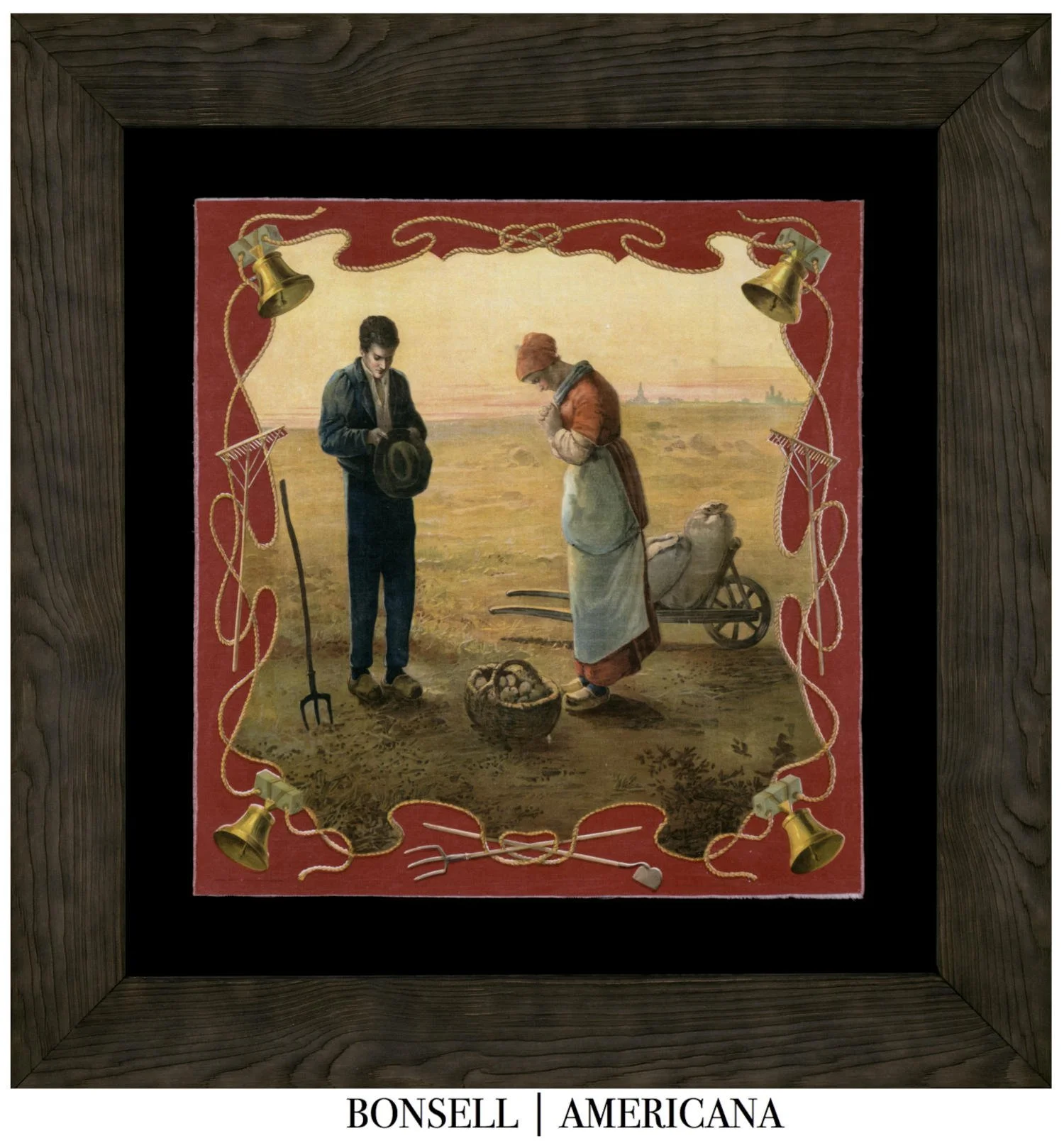


Antique Printed Textile Featuring The Angelus by Millet | Farm Life and Devotion | Made by Campbell, Metzger & Jacobson | Circa 1900
Frame Size (H x L): 34.5” x 33”
Textile Size (H x L): 22.5” x 21.5”
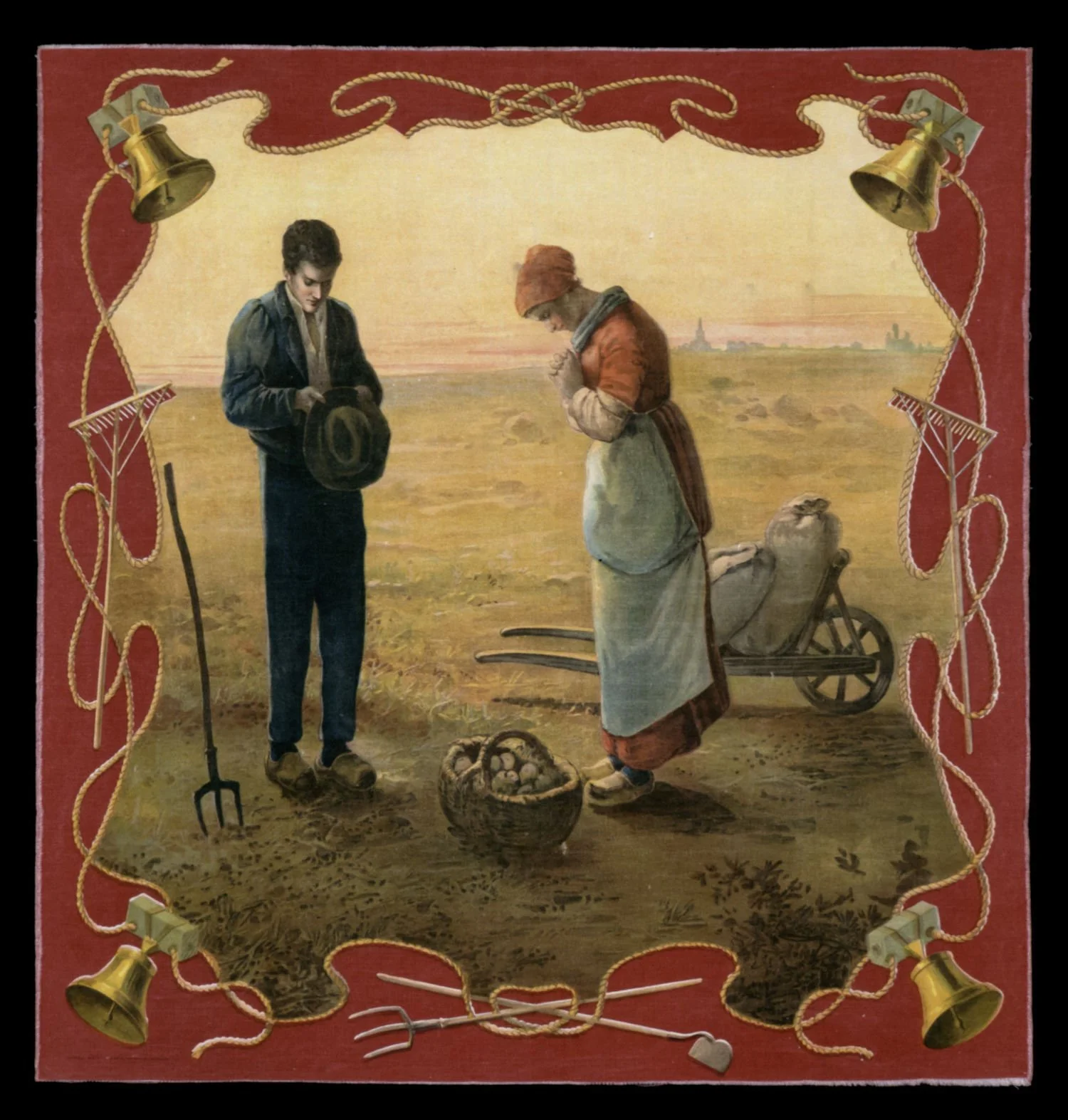
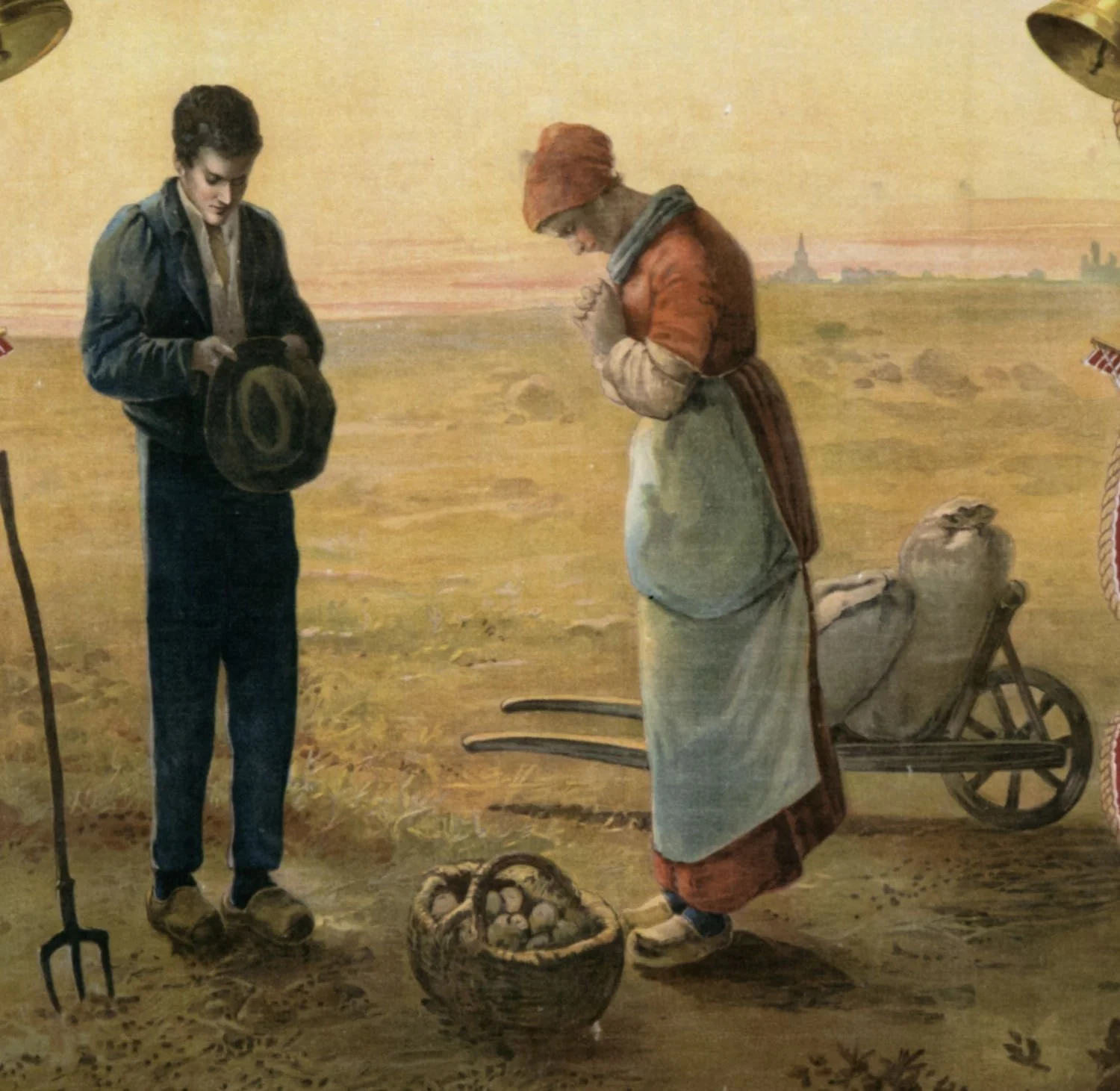
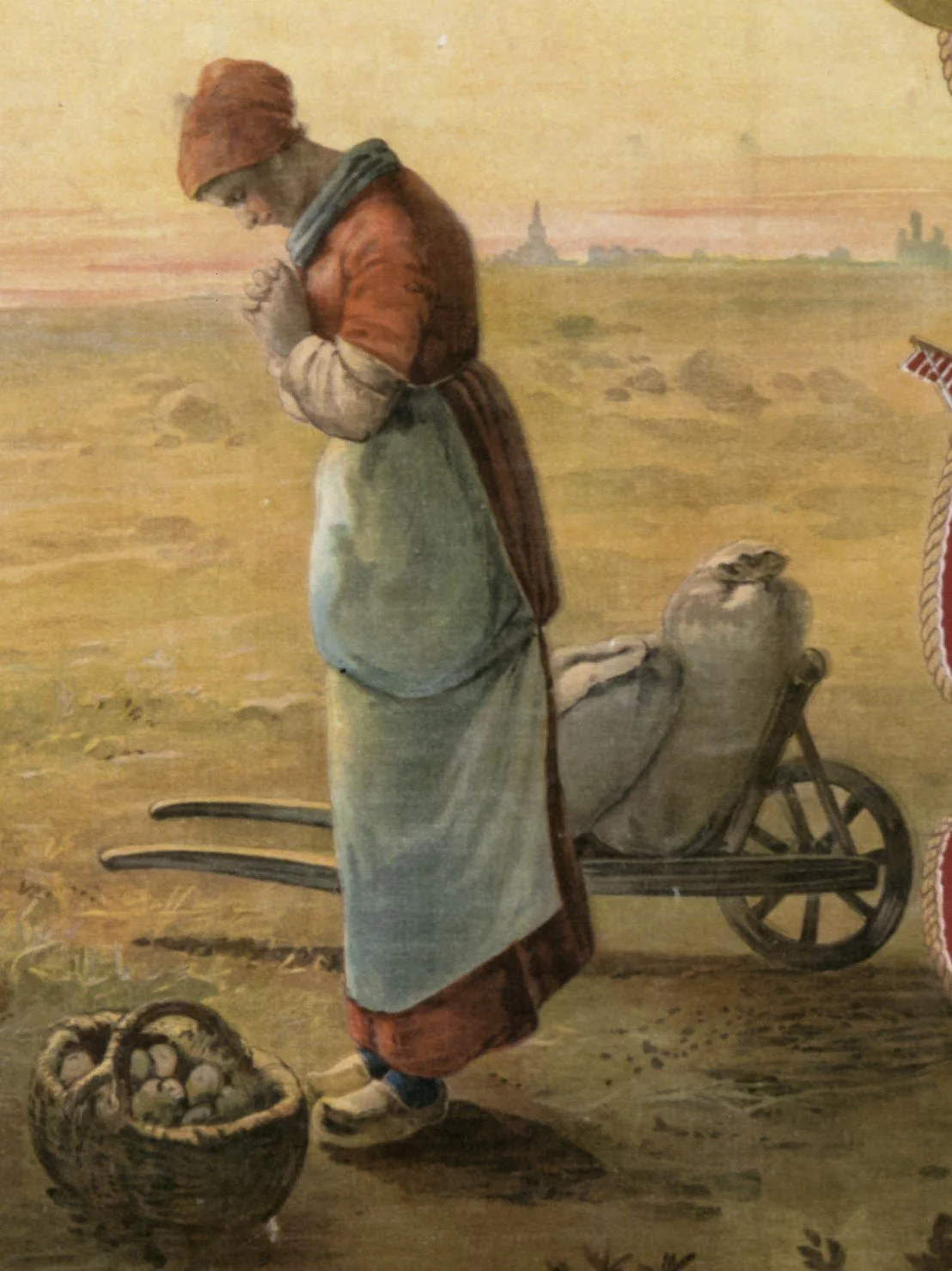
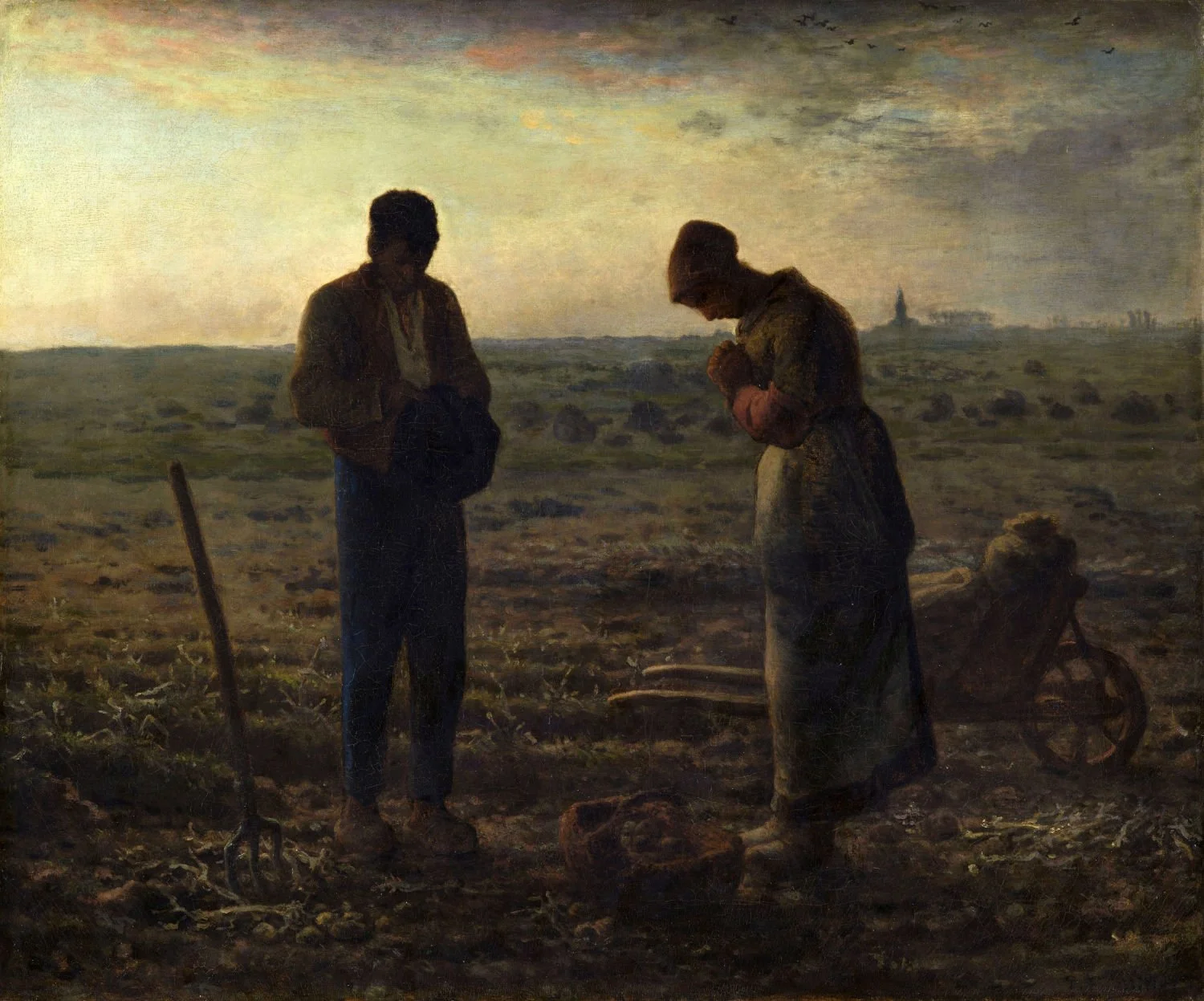
Offered is a printed cotton textile dating to 1900, featuring a reproduction of The Angelus, the well-known painting by French artist Jean-François Millet. Originally painted between 1857 and 1859, The Angelus depicts two peasants in a field at dusk, bowing their heads in prayer as the church bell tolls. The figures stand beside a wheelbarrow and a basket of potatoes, underscoring the theme of rural labor and humility. The image highlights the rhythms of agricultural life and the connection between work and devotion. The painting became one of the most widely reproduced religious and sentimental works of the 19th century.
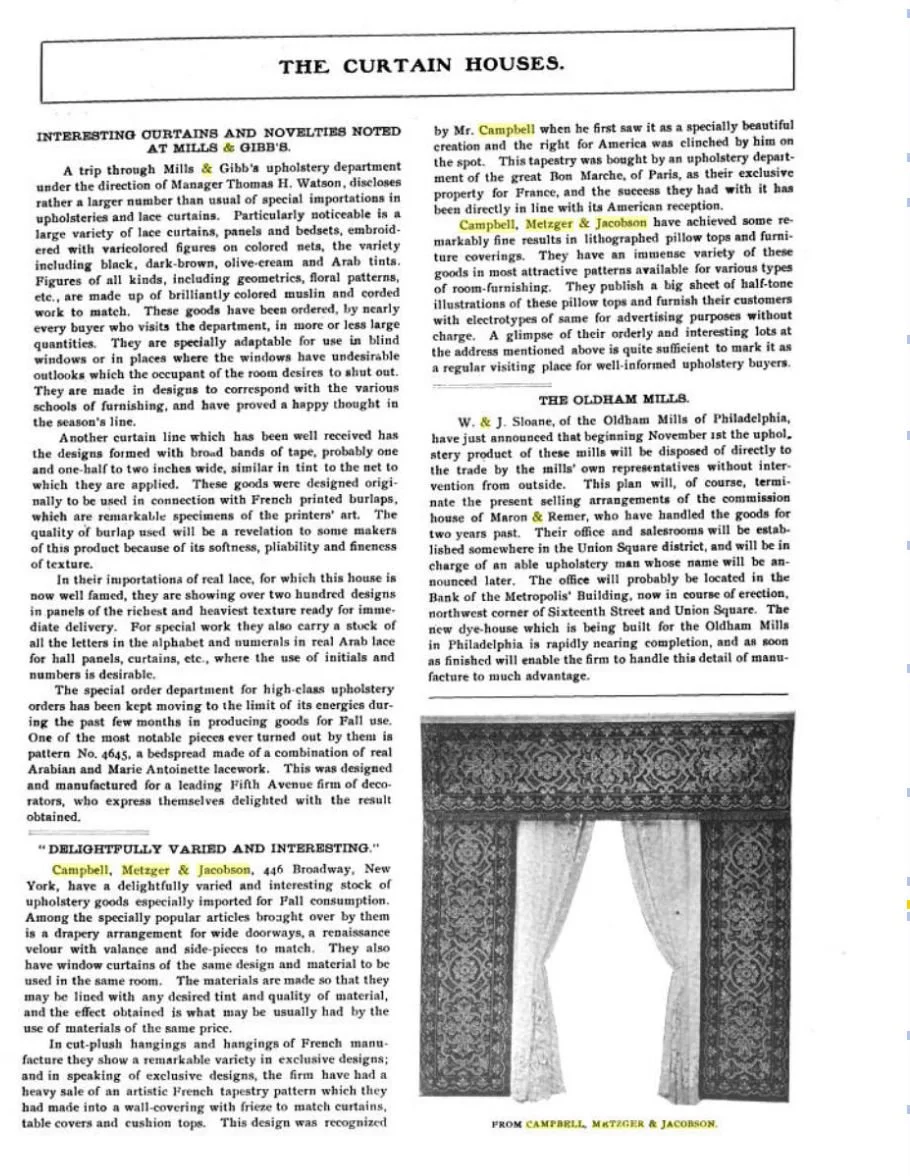
This textile adaptation was published and copyrighted in 1900 by Campbell, Metzger & Jacobson, a decorative textile and lithography firm based at 446 Broadway in New York City. The company was active around the turn of the 20th century and specialized in printed pillow fronts, wall panels, and other home furnishings. Their products were distributed widely through upholstery suppliers and dry goods retailers. The copyright line, printed along the lower edge of the textile, reads: “Copyright 1900 by Campbell, Metzger & Jacobson.”
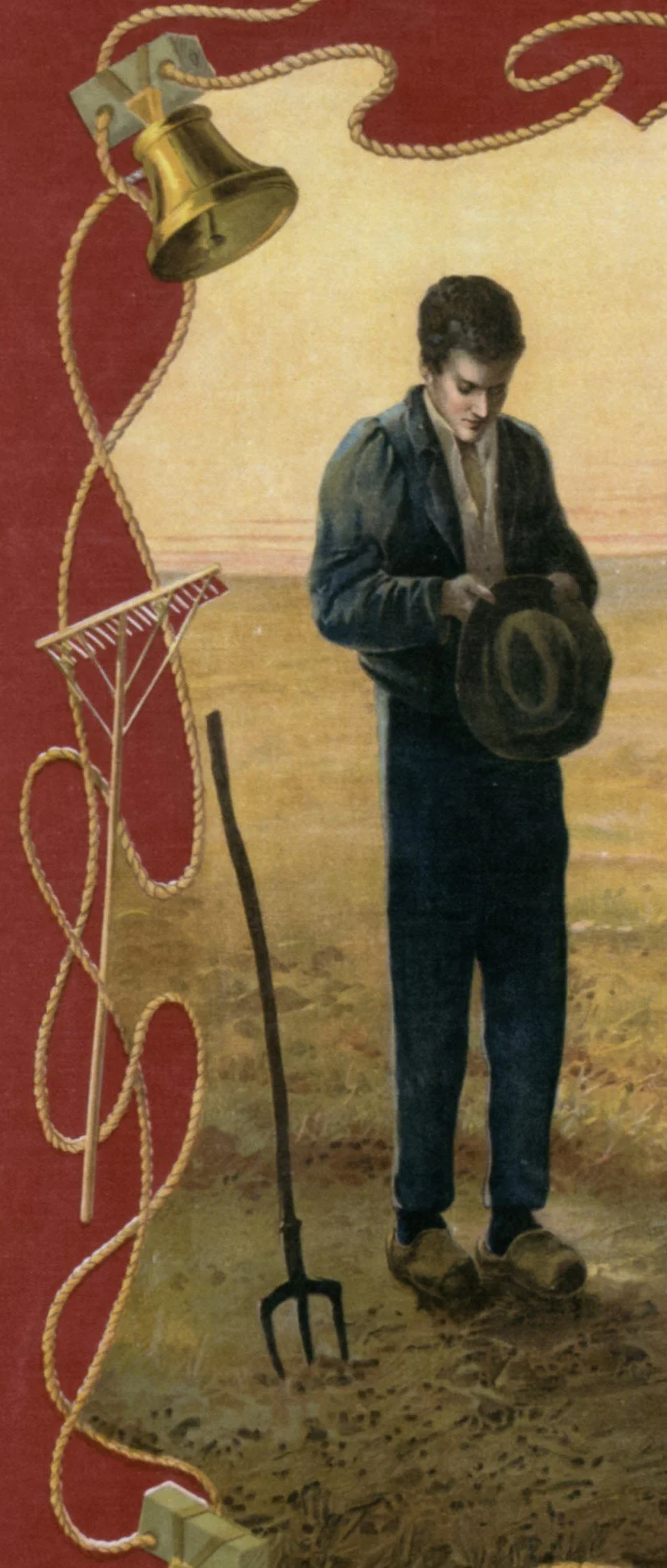
The scene is framed by a red printed border containing rope, brass bells, and agricultural tools such as pitchforks and rakes. These design elements complement the setting of the central image and reinforce its agrarian character. The printing technique is chromolithography, applied using multiple passes of oil-based ink to produce rich color and tonal variation. The textile was likely intended as a pillow front or decorative wall panel, suitable for use in homes that identified with themes of faith, farming, and hard work.
The base fabric is a 2/1 cotton twill, identified by its subtle diagonal rib pattern. This weave provided both durability and a smooth surface for detailed printing. Unlike the wool felts used in lower-cost tobacco premiums of the era, this cotton textile would have been marketed toward the upholstery and home furnishing trade, where clearer image reproduction and sewing ease were priorities.
Three supporting images are included to help document and contextualize the piece. The first is a period trade article describing Campbell, Metzger & Jacobson’s offerings, including lithographed pillow fronts. The second is an early 20th-century photograph of the firm's storefront at 446 Broadway. The third is a modern-day photograph of the same building, which still stands in lower Manhattan. These references help confirm the publisher’s identity and provide visual evidence of their business operations at the time this textile was produced.
This piece reflects the intersection of printed art, domestic decoration, and agricultural symbolism in the early 1900s. It connects a prominent European painting to the American market through chromolithographic textile printing. The result is a well-documented example of a decorative object rooted in both fine art and the values of rural labor.
Conservation Process: This textile was hand sewn to cotton fabric, and both were hand sewn to a mounting board. To prevent the black dye in the cotton fabric from seeping into the textile, it was first washed in a standard wash and then in a dye setting wash. The textile is positioned behind Optium Museum Acrylic.
Frame: The frame is constructed from dark-stained wood with a visible grain pattern and a wide, flat profile. It features a clean, modern design
Condition Report: The textile is in sound condition, with strong color retention and no major losses. Minor wear is visible at the edges, along with a few small surface marks consistent with age. The printed image remains clear and well-preserved.
Collectability Level: The Good – Perfect for Beginning Collectors and Gifts
Date of Origin: 1900