Antique “Votes for Women” Hatband or Armband | An Excellent Early Suffrage Movement Textile | Circa 1910–1920

Antique “Votes for Women” Hatband or Armband | An Excellent Early Suffrage Movement Textile | Circa 1910–1920
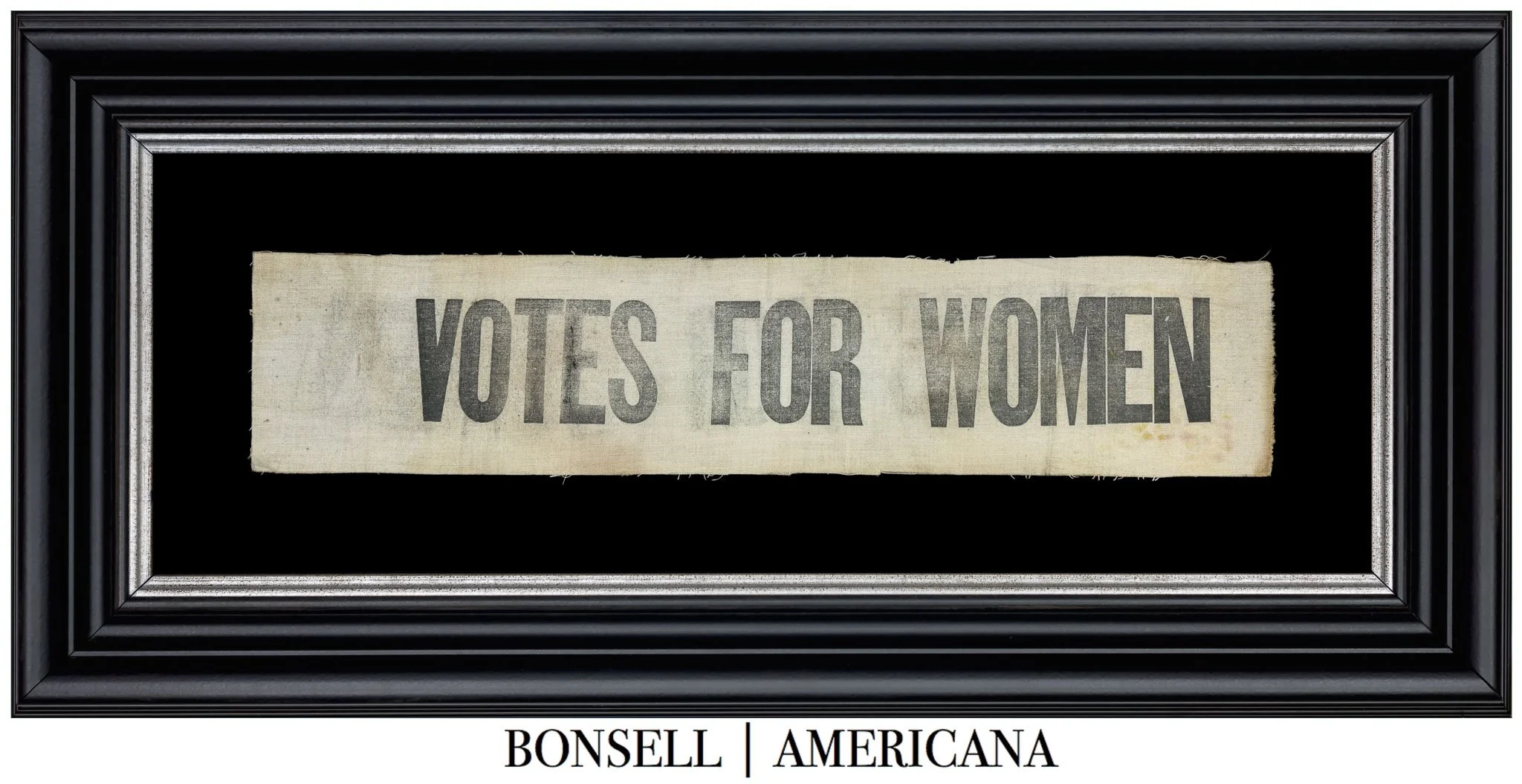
Frame Size (H x L): 10.5” x 23.5”
Textile Size (H x L): 3.25” x 16”
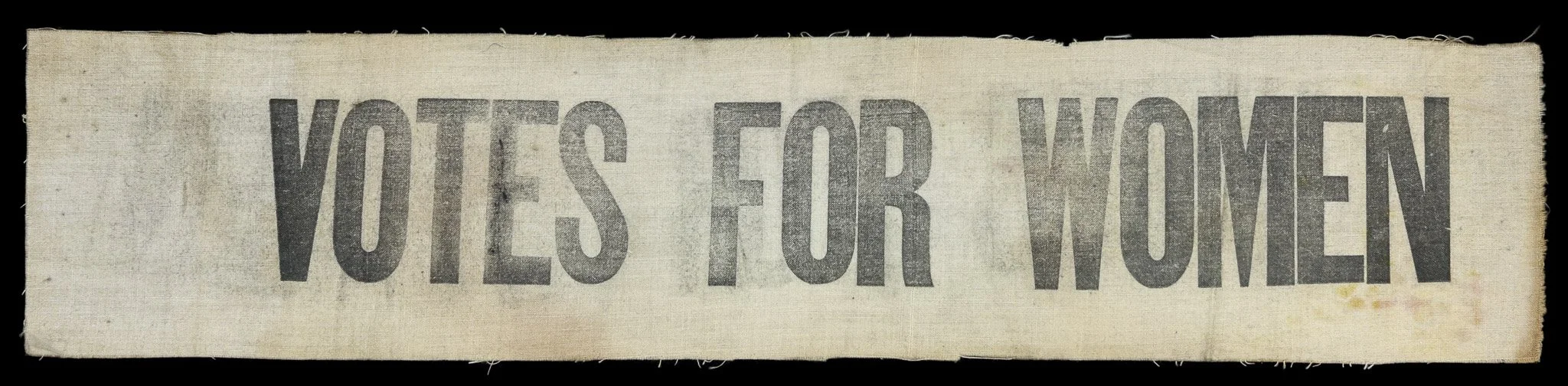
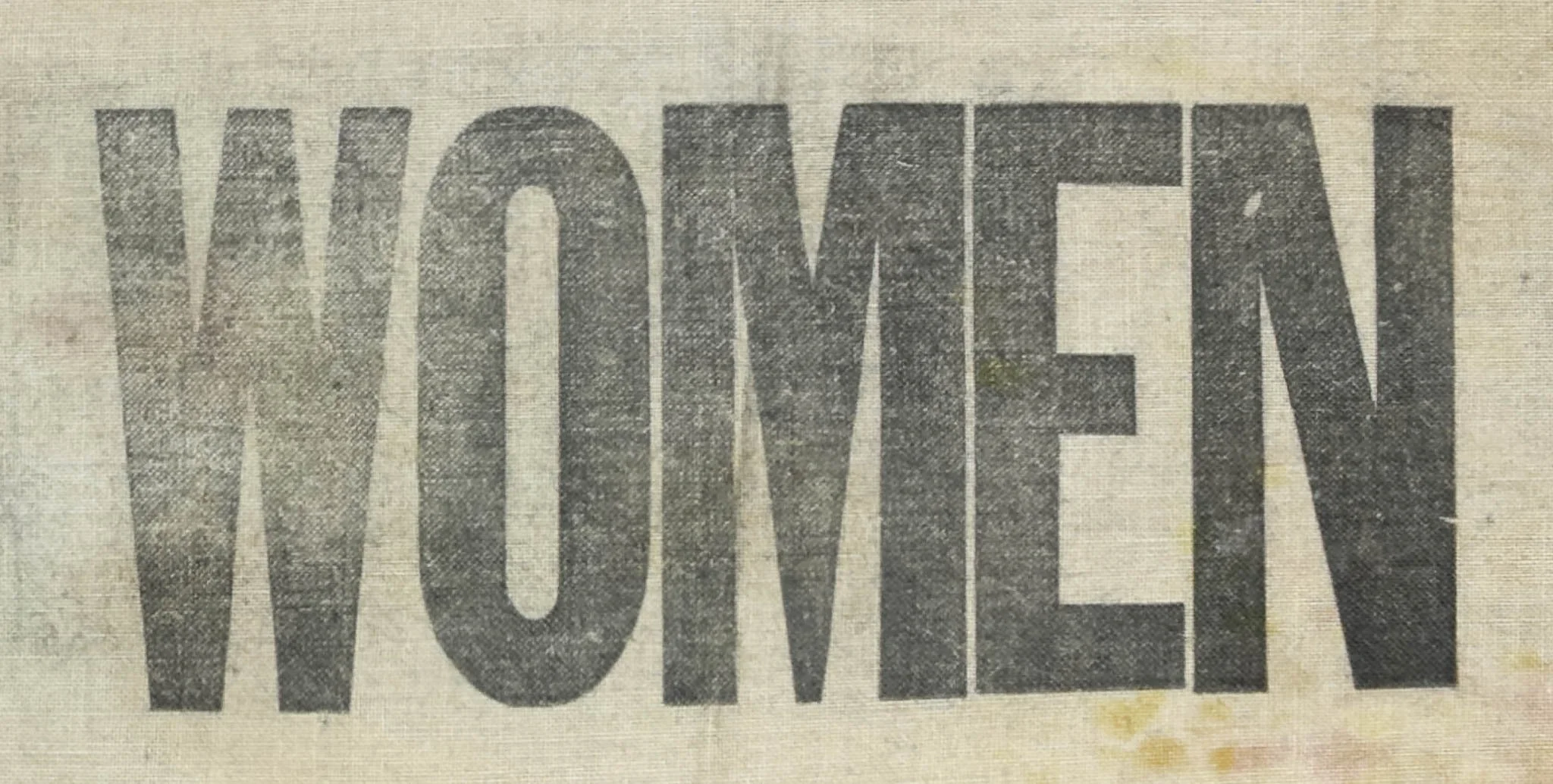
Offered is an original early 20th-century “VOTES FOR WOMEN” textile, printed in bold, black, condensed Gothic lettering on a narrow strip of plain-weave cotton. Pieces of this type were produced for suffrage parades and public demonstrations and were intended for use either as hatbands—wrapped around a boater-style hat with a slight overlap at the back—or as armbands, pinned into place during marches and outdoor rallies. The elongated, horizontal format and right-weighted placement of the slogan are consistent with hatbands, while the narrow profile also made such pieces suitable for the arm when secured with a pin. Surviving examples of these grassroots, low-cost textiles are scarce, especially in this monochrome printed form.
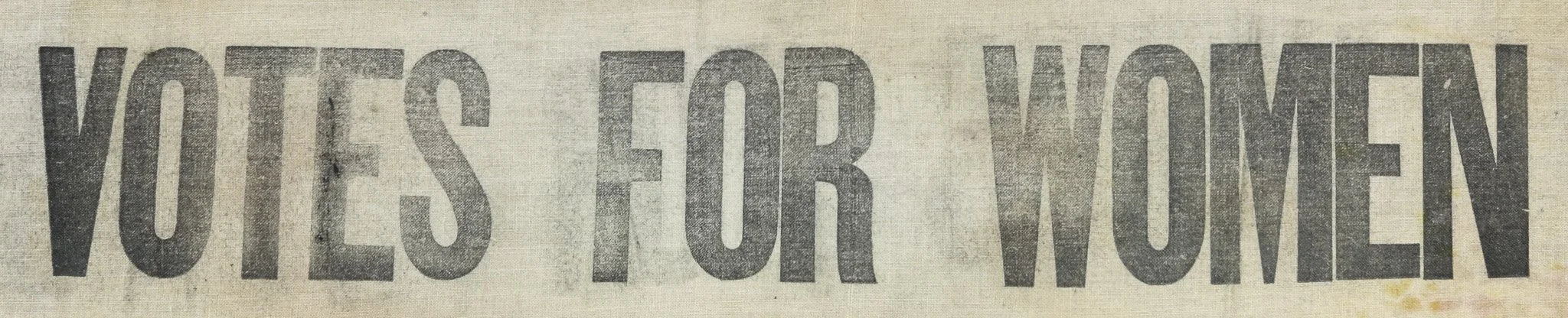
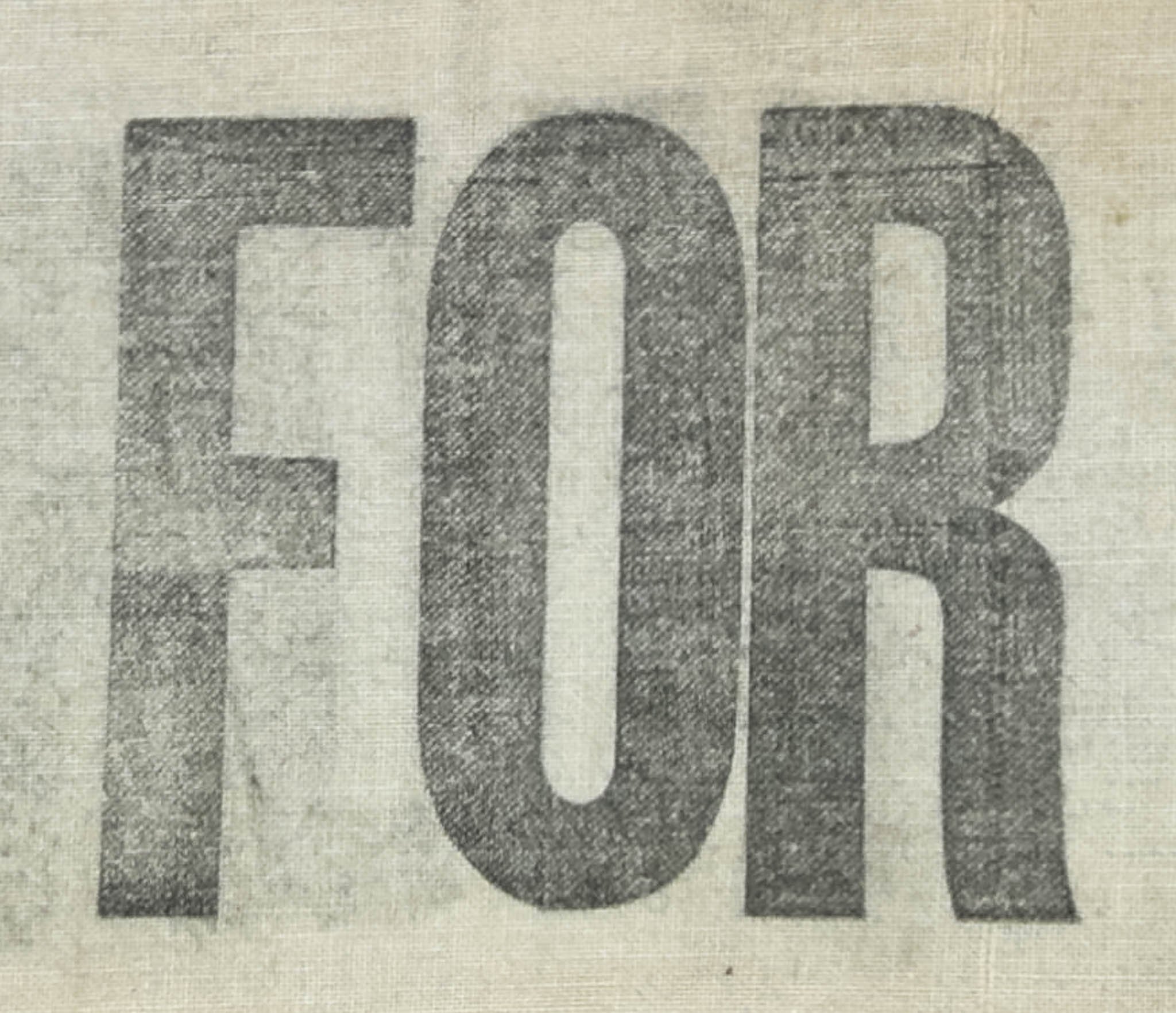
The fabric is a utilitarian plain-weave cotton typical of inexpensive political and social-movement ephemera of the era. The material displays the smooth, balanced 1×1 structure of early machine-woven cotton, and the black pigment shows soft wicking into the fibers—a clear sign of block or roller printing on untreated cloth. The raw, unhemmed ends indicate quick, economical production, likely cut from long printed lengths and distributed to marchers, volunteers, or supporters during public demonstrations.
By the late 19th century, the push for women’s suffrage had evolved from scattered state campaigns into a coordinated national effort. Early victories in Western states—beginning with full suffrage in Wyoming in 1869 and Colorado in 1893—demonstrated that political rights for women were viable on a broad scale, but these successes also revealed the limitations of a state-by-state strategy. National organizations such as the National American Woman Suffrage Association (NAWSA), led at various times by Susan B. Anthony, Carrie Chapman Catt, and Anna Howard Shaw, shifted their focus toward securing a constitutional amendment that would guarantee voting rights nationwide.
Despite growing momentum, resistance in Washington remained strong. Amendments introduced in 1878 and 1914 were defeated, reflecting persistent political opposition and entrenched social beliefs about women's proper role in public life. Suffrage organizations adjusted by diversifying their strategies: NAWSA continued its steady, methodical lobbying and state outreach, while the National Woman’s Party under Alice Paul embraced more assertive tactics, including large-scale parades, high-visibility demonstrations, silent vigils, and picketing in front of the White House. These actions—some of which resulted in arrest and imprisonment—kept suffrage squarely in the national spotlight and intensified pressure on lawmakers.
World War I proved to be a decisive turning point. Women’s extensive wartime service in factories, farms, government offices, and humanitarian organizations strengthened the argument that they were essential participants in public life and deserved full political rights. By 1918, both major political parties formally endorsed suffrage. The proposed amendment passed the House in January 1918 and the Senate in June 1919. Ratification by the states culminated on August 18, 1920, when Tennessee became the 36th state to approve the measure. With this, the Nineteenth Amendment was adopted, affirming that the right to vote could not be denied “on account of sex,” and finally securing political enfranchisement for millions of American women.
Textiles bearing the “VOTES FOR WOMEN” slogan—whether banners, sashes, hatbands, or armbands—were powerful tools of visibility during this multi-decade struggle. Their survival today offers an evocative, tangible reminder of the courage, organization, and persistence that defined the American women’s suffrage movement.
Conservation Process: The textile was hand sewn to cotton fabric, and both were hand sewn to a mounting board. To prevent the black dye in the cotton fabric from seeping into the textile, it was first washed in a standard wash and then in a dye setting wash. The textile is positioned behind Optium Museum Acrylic.
Frame: The textile is housed in a contemporary black-and-silver frame with simple, stepped moulding that offers a clean and unobtrusive presentation. A narrow metallic inner liner provides a bit of contrast.
Condition Report: The textile shows some light discoloration, particularly in a few areas of the field, consistent with age and long-term storage. The black printing is somewhat faint in places, and there appears to be minor ink transfer, likely from contact with other freshly printed pieces during production. Some fraying is present along the raw edges, but there are no significant losses or structural issues. Overall, it remains well-preserved and displays cleanly.
Collectability Level: The Great – Perfect for Rising Collectors
Date of Origin: 1910-1920