Rare “Votes for Women” Suffrage Banner | Striking Yellow & Black Campaign Display | Rex & Patti Stark Collection | Circa 1910–1920
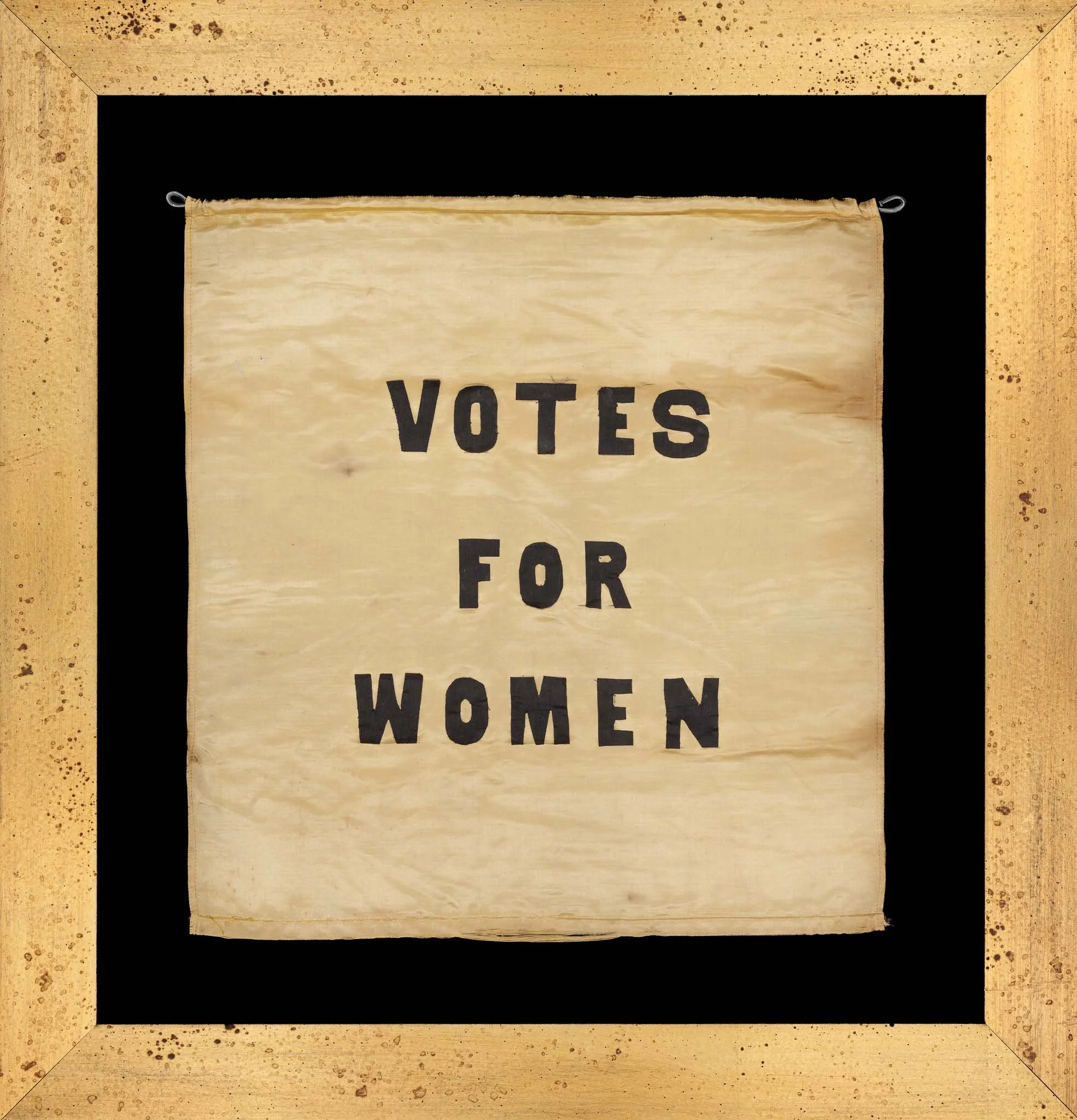

Rare “Votes for Women” Suffrage Banner | Striking Yellow & Black Campaign Display | Rex & Patti Stark Collection | Circa 1910–1920
Price: Call 618-553-2291, or email info@bonsellamericana.com
Frame Size (H x L): 27” x 26”
Banner Size (H x L): 18” x 17”
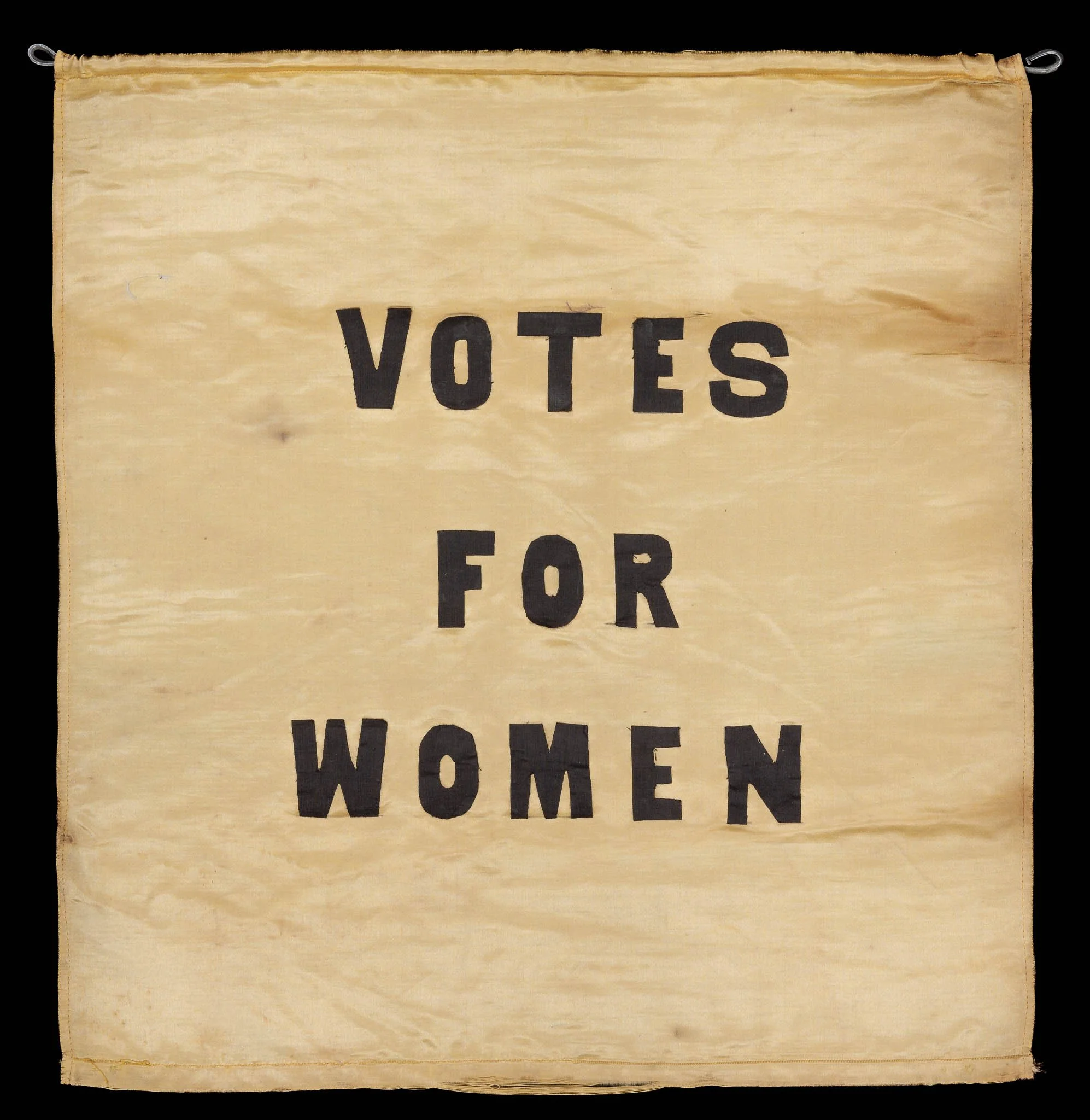
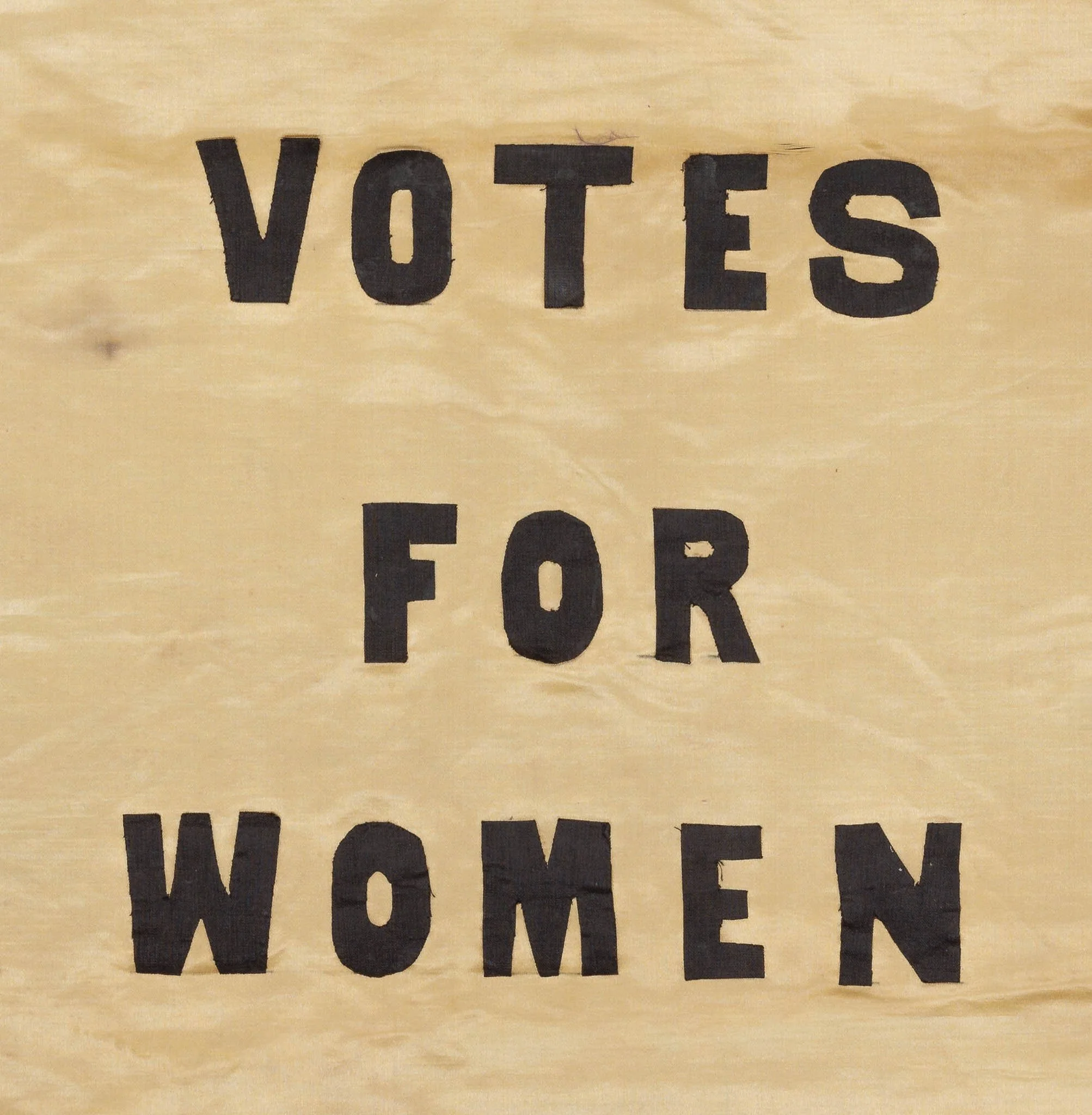
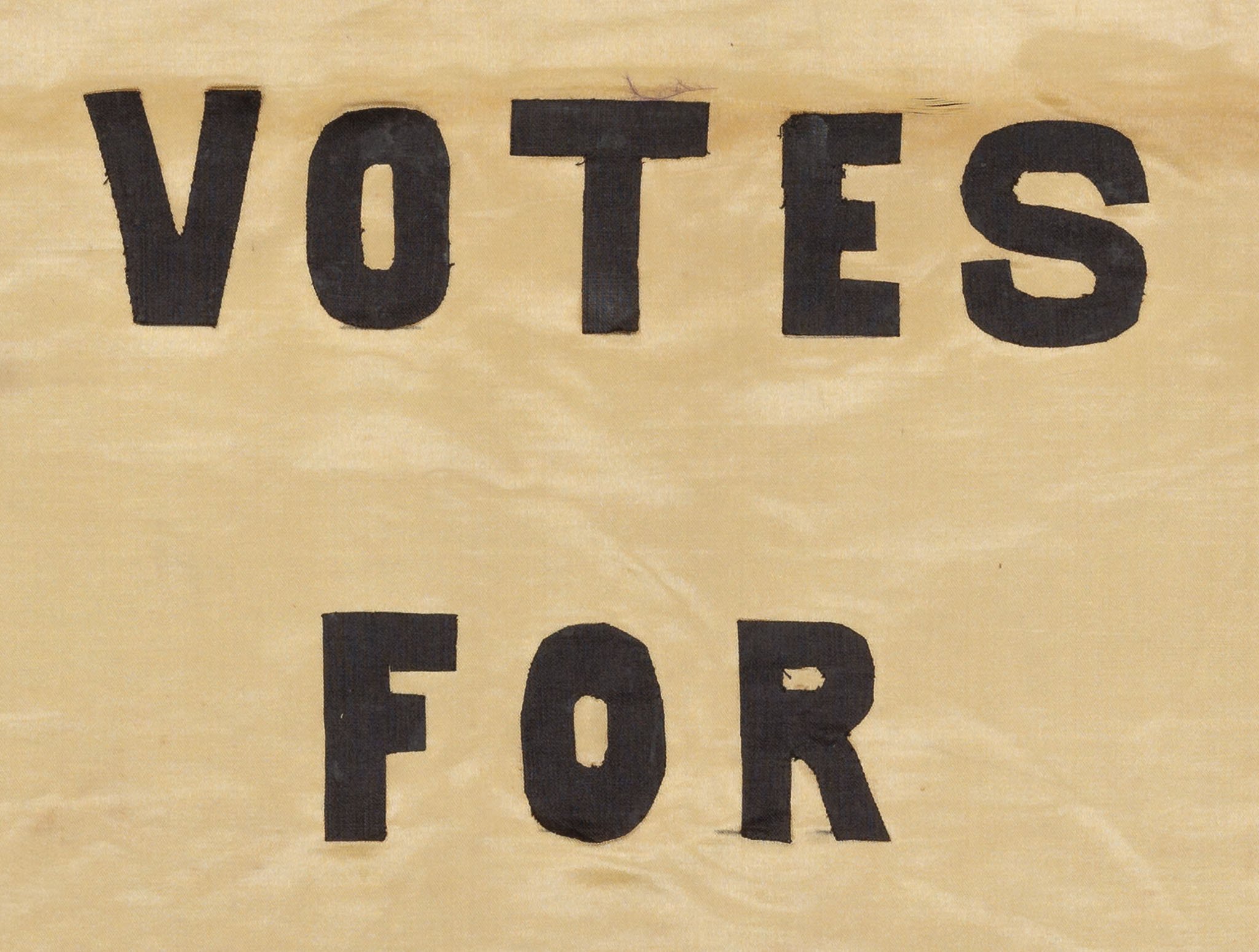
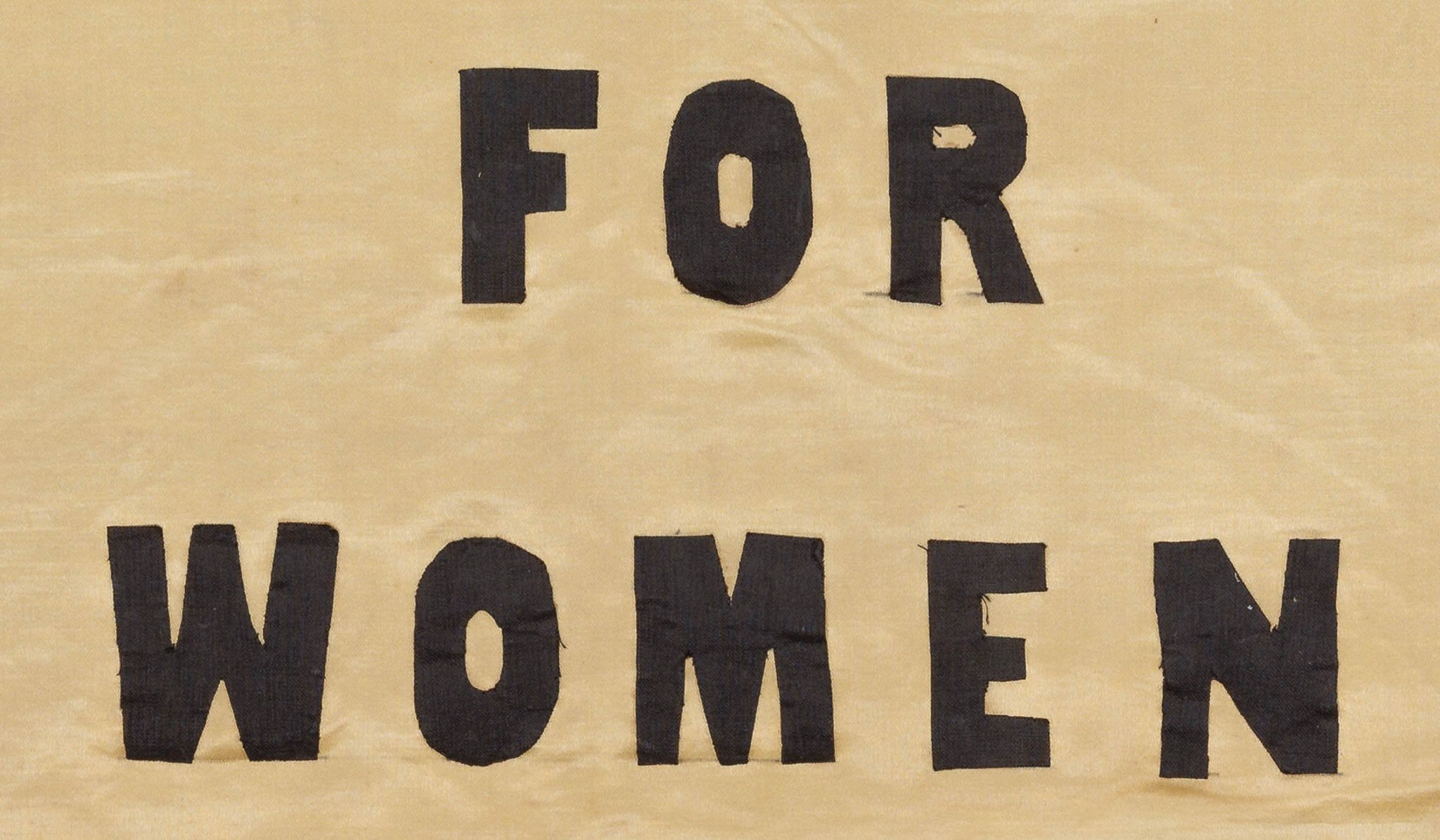
Offered is an impressive early 20th-century “VOTES FOR WOMEN” suffrage banner, dating to approximately 1910–1920 and formerly in the collection of noted Americana dealers and collectors Rex and Patti Stark. Bold in both scale and message, the banner consists of a golden-yellow cotton sateen ground with individually applied black cotton letters arranged in three lines. Its direct wording, unmistakable coloration, and utilitarian hanging apparatus are characteristic of the visual language developed by the American woman suffrage movement during the years immediately preceding passage of the 19th Amendment.
The body of the banner appears to be constructed of cotton sateen, a satin-weave cotton fabric that produces a smooth, lustrous face and a comparatively duller, slightly coarser reverse. Sateen offered much of the visual richness associated with silk while retaining the greater body and durability of cotton, qualities well suited to banners intended for rallies, meetings, marches, and other public displays. Surviving suffrage textiles of the period are encountered in silk, satin, mercerized cotton, sateen, and other fabrics, reflecting the wide range of materials employed by organizations and individual supporters.
Applied to the yellow ground are large block letters spelling “VOTES / FOR / WOMEN.” The letters appear to be cut from a thin black cotton fabric of notably stiff character, possibly the result of an original sizing or finish. Their irregularities and slight variations are readily apparent upon close examination and lend the banner an appealing handmade quality. Rather than the mechanically uniform typography of a commercially printed campaign piece, the lettering has the immediacy of a banner assembled specifically to communicate its message at a distance.
The upper edge is turned to form a casing around a stiff steel wire rod. At either end, the rod has been bent into an elongated loop, providing a simple means by which the banner could be suspended or carried. The hardware is distinctly utilitarian, with the loops apparently formed directly from the rod rather than added as separate manufactured fittings. This straightforward construction is particularly evocative of the banner's original purpose as an object made for active use rather than permanent decoration.
“Votes for Women” was among the simplest and most recognizable slogans of the American suffrage movement. Its effectiveness lay in its clarity. Unlike lengthy arguments concerning constitutional rights, citizenship, taxation, or political representation, the phrase reduced the movement's objective to three words that could be read almost instantaneously from a street, parade route, meeting hall, or railway platform. It appeared on banners, pennants, ribbons, buttons, sashes, postcards, and countless other forms of suffrage material during the opening decades of the 20th century.
The banner's yellow and black coloration is equally significant. Yellow had been associated with American woman suffrage since the Kansas suffrage campaign of 1867, when supporters adopted the sunflower—the state flower—as an emblem of their cause. The color subsequently became deeply embedded in suffrage imagery and was especially associated with the National American Woman Suffrage Association and its predecessors. By the early 20th century, yellow banners, ribbons, sashes, and badges bearing bold black lettering had become an immediately recognizable element of the movement's public identity. While the coloration alone does not permit attribution of this particular banner to a specific organization, it places it squarely within the established visual vocabulary of American suffrage.
The probable 1910–1920 date encompasses the movement's decisive final decade. During these years suffragists dramatically expanded their use of parades, public demonstrations, political campaigns, banners, and other forms of visual propaganda. A constitutional amendment providing for woman suffrage passed Congress in June 1919 and was ratified on August 18, 1920. Certified shortly thereafter as the 19th Amendment, it prohibited the United States and the individual states from denying the right to vote on account of sex.
Adding considerably to the banner's appeal is its provenance from the Rex and Patti Stark Collection. Rexford A. Stark (1947–2023) was a prominent dealer and collector of American political and historical material whose career in the field spanned nearly five decades. Stark was particularly respected for his knowledge of political Americana and handled a broad range of important objects relating to American elections, personalities, social movements, and national history.
With its bold “Votes for Women” message, yellow-and-black coloration, original suspension rod, and provenance from the Rex and Patti Stark Collection, this banner is a strong surviving example of early 20th-century American suffrage material.
Conservation Process: This banner was hand sewn to cotton fabric, and both were hand sewn to a mounting board. To prevent the black dye in the cotton fabric from seeping into the banner, it was first washed in a standard wash and then in a dye setting wash. The banner is positioned behind Optium Museum Acrylic.
Frame: The banner is housed in a wide, sloped molding with an aged gold surface, intentionally distressed to evoke the appearance of early gilded frames.
Condition Report: The banner remains in very good overall condition, with light soiling, scattered small stains, and minor surface wear consistent with age and use. There is some fraying and separation along the lower edge, including a more noticeable split near the center, as well as modest wear at the corners and along the upper sleeve. The applied black lettering remains strong and legible, with only minor edge wear and small losses.
Collectability Level: The Great – Perfect for Rising Collectors
Date of Origin: 1910-1920