Scarce 27 Star Antique American Parade Flag | Possibly From the 1893 Chicago World’s Fair | Florida Statehood | Circa 1890-1895
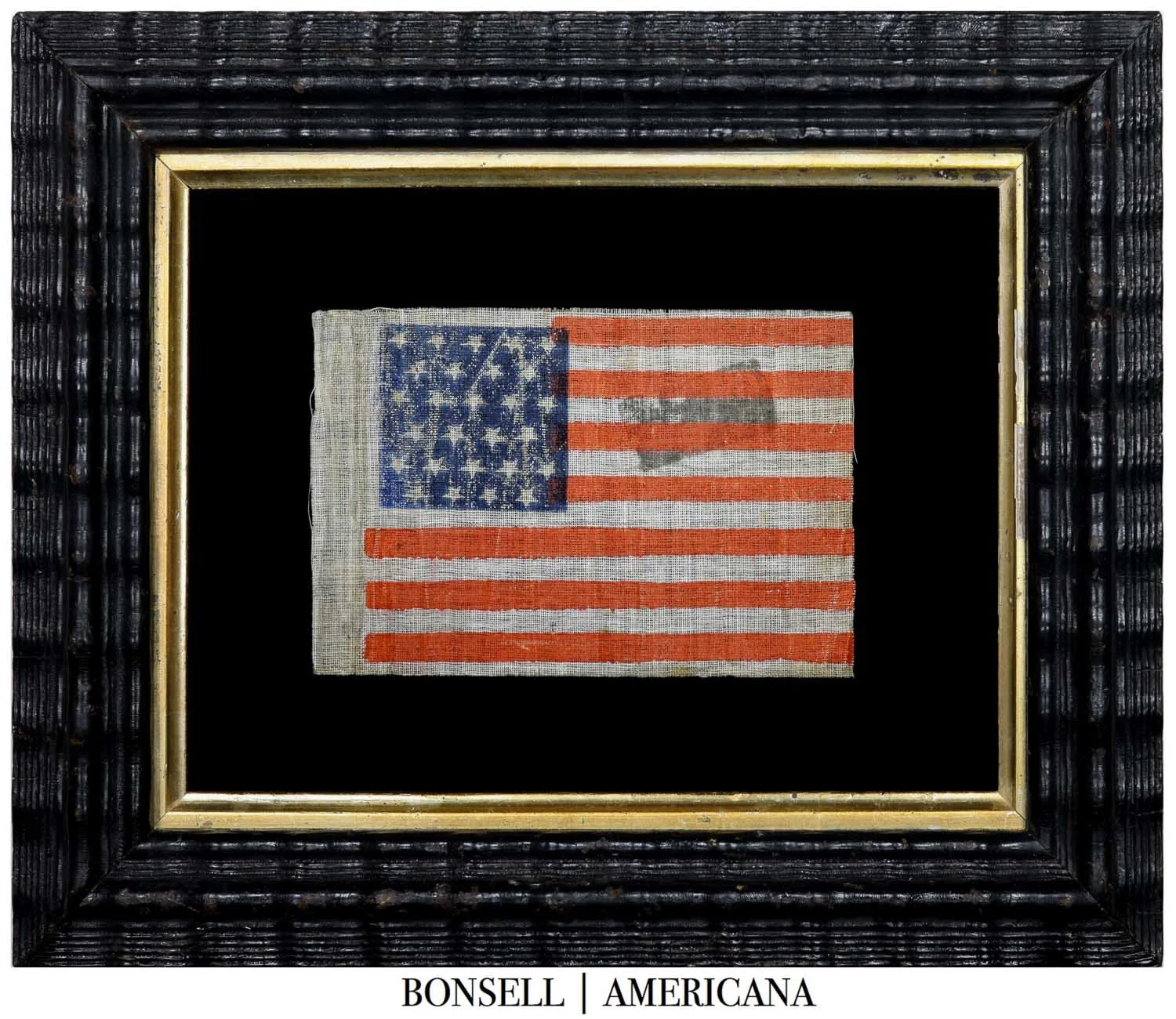
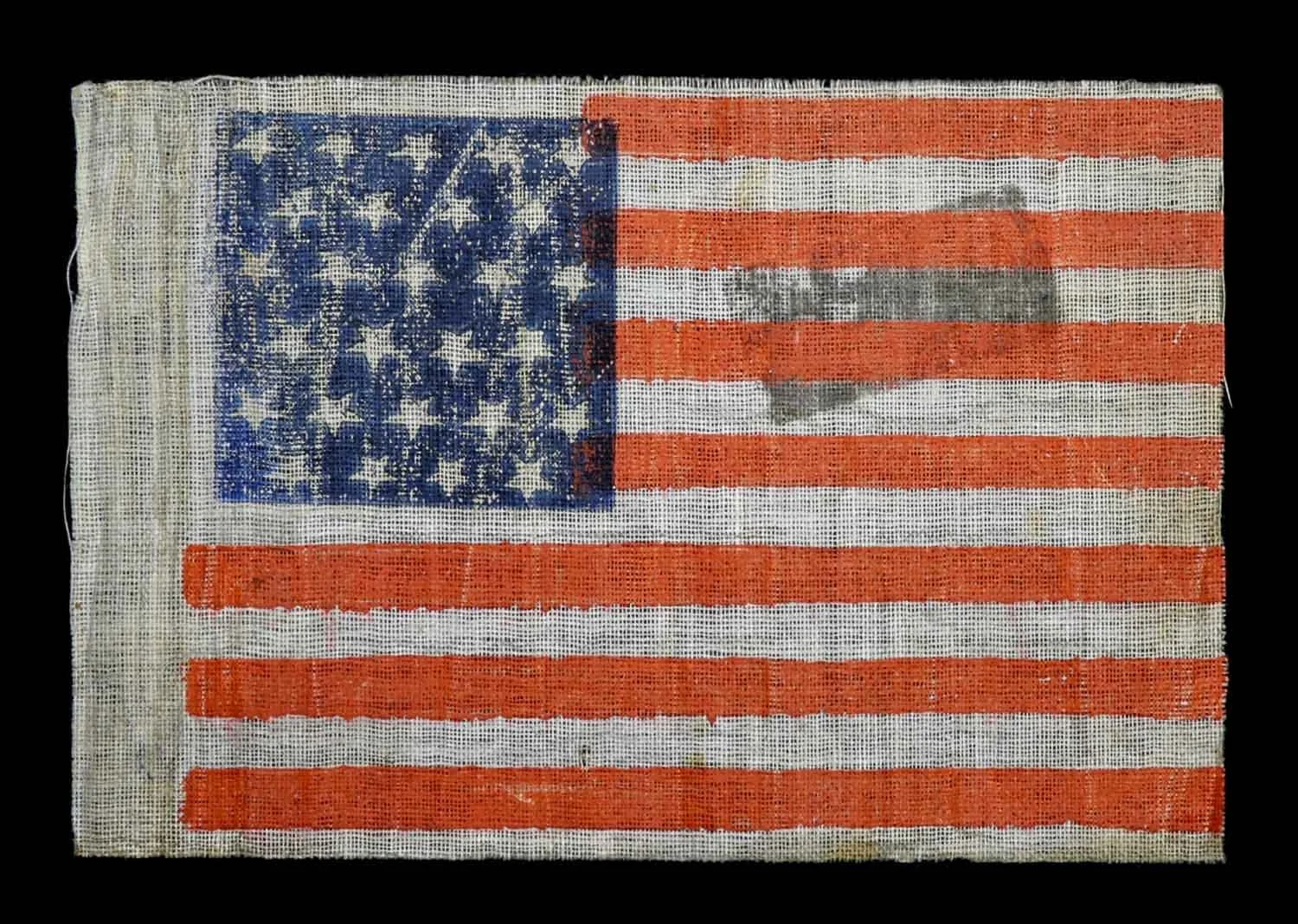
Scarce 27 Star Antique American Parade Flag | Possibly From the 1893 Chicago World’s Fair | Florida Statehood | Circa 1890-1895
Price: Call 618-553-2291, or email info@bonsellamericana.com
Frame Size (H x L): 8” x 9.25”
Flag Size (H x L): 3” x 4.5”
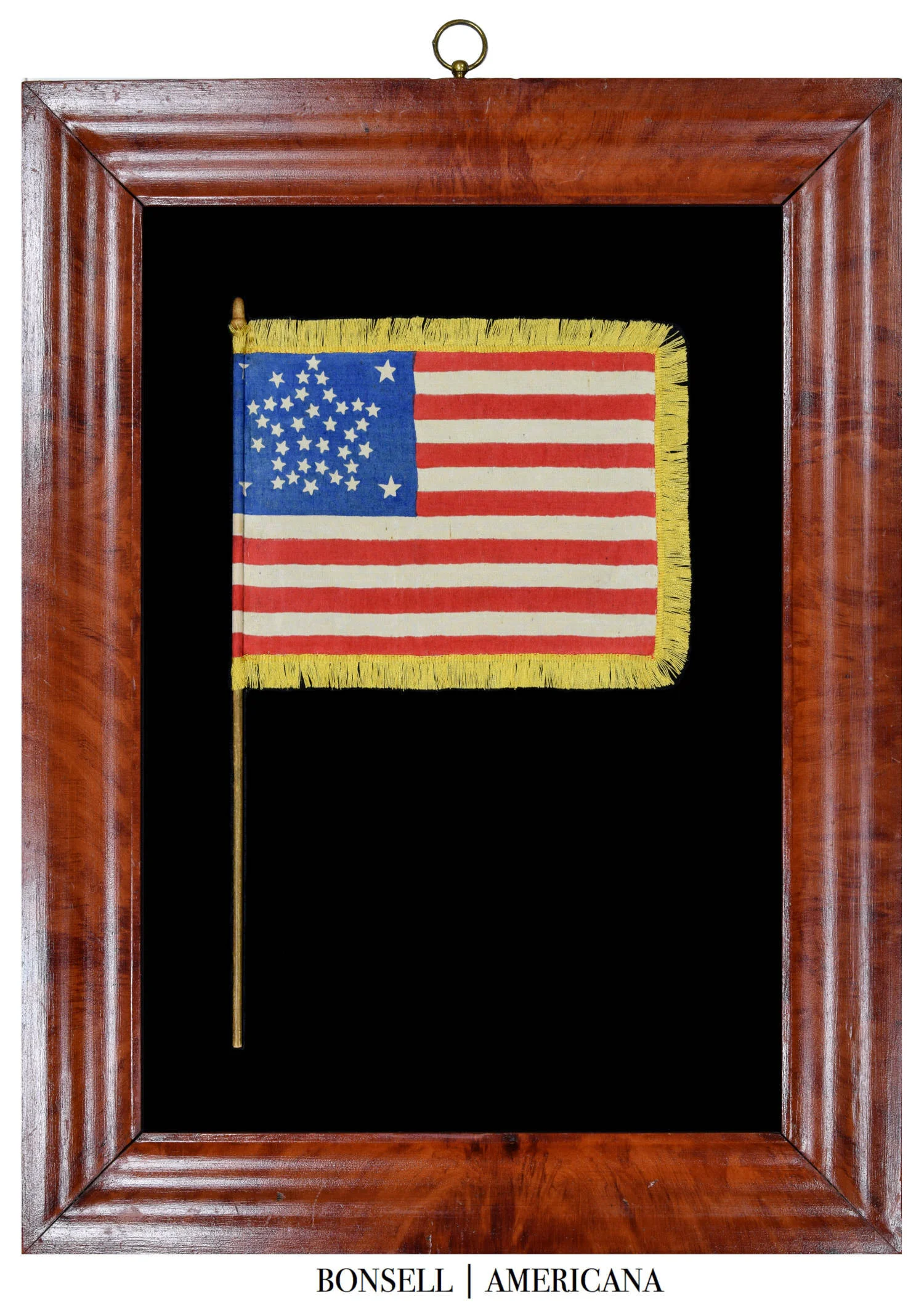
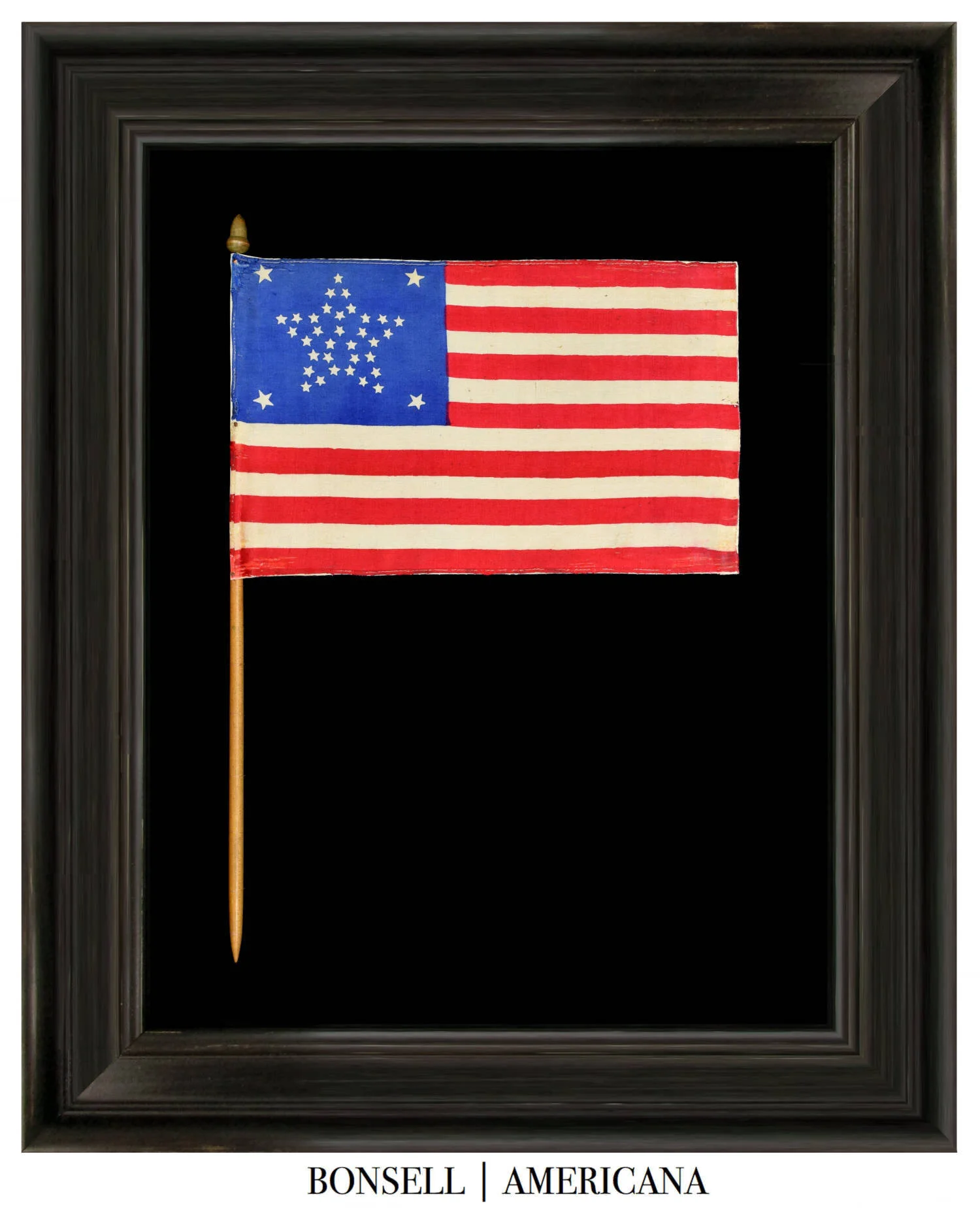
Offered is a rare 27-star American parade flag, printed on cotton and arranged in a 4-5-4-5-4-5 star pattern. This configuration is both balanced and distinctive, setting it apart from more common arrangements seen in 19th-century flags. Produced sometime between approximately 1889 and 1895, this example belongs to a small group of known 27-star flags. Fewer than ten are believed to survive. The stars represent the admission of Florida as the 27th state in 1845, but the flag was made as a commemorative item rather than as a contemporary artifact of that brief period.
The flag’s printing method is unusual and aids in dating. The white portions were applied first, with red and blue pigments printed on top. This method, which appears in only a small fraction of 19th-century parade flags, is most often associated with production from 1889 to 1908. It was used in flags tied to major national events and expositions, such as statehood commemorations and centennial observances. The presence of this feature supports the attribution to a commemorative context in the late 19th century.
The most likely origin is the 1893 World’s Columbian Exposition in Chicago. Florida’s exhibit at the fair was a one-fifth scale model of the Castillo de San Marcos (also known as Fort Marion), the oldest masonry fort in the continental United States. Built of frame and plaster and decorated with native coquina shells, the structure was designed to showcase Florida’s natural resources and history. Souvenir flags were commonly distributed at fairs and exhibitions during this era, and a 27-star flag referencing Florida’s admission to the Union would have been appropriate for the occasion. The use of a defunct star count would have given the flag a historical focus, distinguishing it from the national flag in use at the time.
Florida became the 27th state on March 3, 1845. According to the flag law then in place, the 27th star would have been officially added on July 4, 1845, and remained current until July 3, 1846. However, the practical use of 27-star flags was limited. The national flag was not yet widely used by civilians, and even within the military, its use was restricted. Infantry were not authorized to carry the national flag until 1841, and cavalry not until 1862. As a result, few flags were made specifically to mark Florida’s statehood, and almost none survive from that era. This helps explain why even commemorative examples like the one offered here are exceedingly scarce.
Flag-makers in the 19th century often disregarded the formal timing of star additions. They frequently added stars early, in hopeful anticipation of statehood, or late, depending on local sentiment or commercial interest. An example from the 1844 presidential campaign of James Polk shows 27 stars—including one printed outside the canton—made in anticipation of Texas entering the Union. Ironically, Florida was admitted first, underscoring the complexity and inconsistency of flag production practices in the period.
Other possible contexts for the flag’s creation include the 1876 Centennial Exposition in Philadelphia or the 1895 Cotton States and International Exposition in Atlanta. However, Florida’s presence at the 1876 fair was limited, and the 1895 event focused more on southern industrial development than on commemorative displays. By contrast, the 1893 Chicago fair featured a large, historically themed Florida exhibit and emphasized both national pride and state identity—making it a logical setting for the distribution of a historically specific flag like this one.
In sum, this is a rare and historically significant example of a late 19th-century American parade flag. It reflects a brief moment in U.S. flag history, with a narrow star count seldom produced even in its own time. Its possible connection to the 1893 World’s Fair, combined with its distinctive construction and symbolic purpose, makes it a strong example for collectors of antique flags, political Americana, or exposition material. Flags with 27 stars are among the hardest to find from the 19th century, and this example offers both visual strength and solid 19th century attribution.
Conservation Process: The flag was hand sewn to cotton fabric, and both were hand sewn to a mounting board. To prevent the black dye in the cotton fabric from seeping into the flag, it was first washed in a standard wash and then in a dye setting wash. The flag is positioned behind Optium Museum Acrylic.
Frame: The flag is housed in an antique ripple frame, dating to the mid-19th century. The outer molding features a deeply carved wave pattern, paired with an inner gold liner that provides a subtle contrast.
Condition Report: The flag remains in strong overall condition, with expected wear consistent with age. Most notably, there is an angled, rectangular area of discoloration near the center, the cause of which is unknown. The surface displays light soiling and minor irregularities typical of 19th-century printed cotton flags.
Collectability Level: The Best – Perfect for Advanced Collectors
Date of Origin: 1890-1895
Number of Stars: 27
Associated State: Florida