Women’s Political Union “Votes for Women” Suffrage Pennant | Circa 1910–1917
Women’s Political Union “Votes for Women” Suffrage Pennant | Circa 1910–1917
Price: Call 618-553-2291, or email info@bonsellamericana.com
Frame Size (H x L): 22” x 42”
Pennant Size (H x L): 11” x 30”
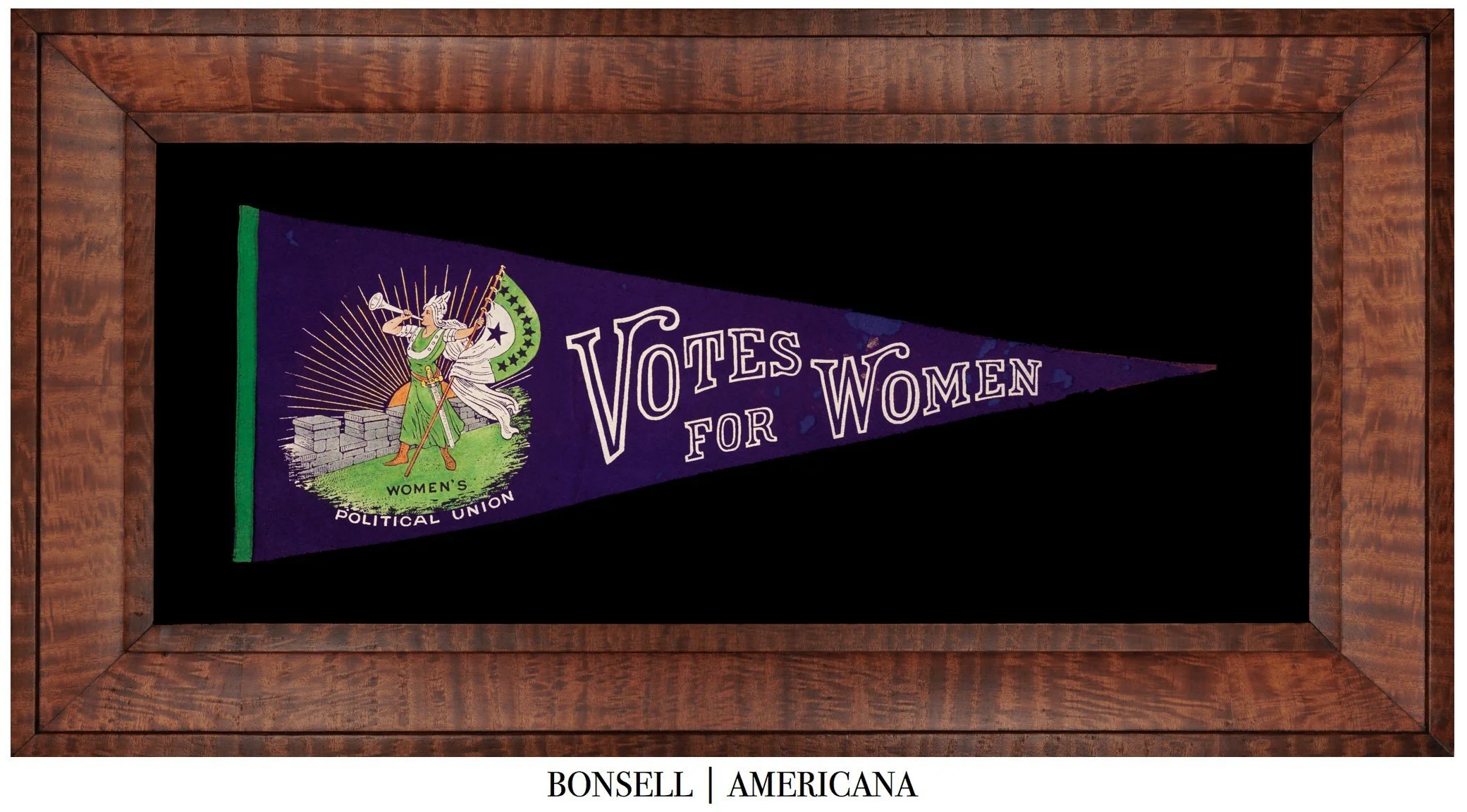
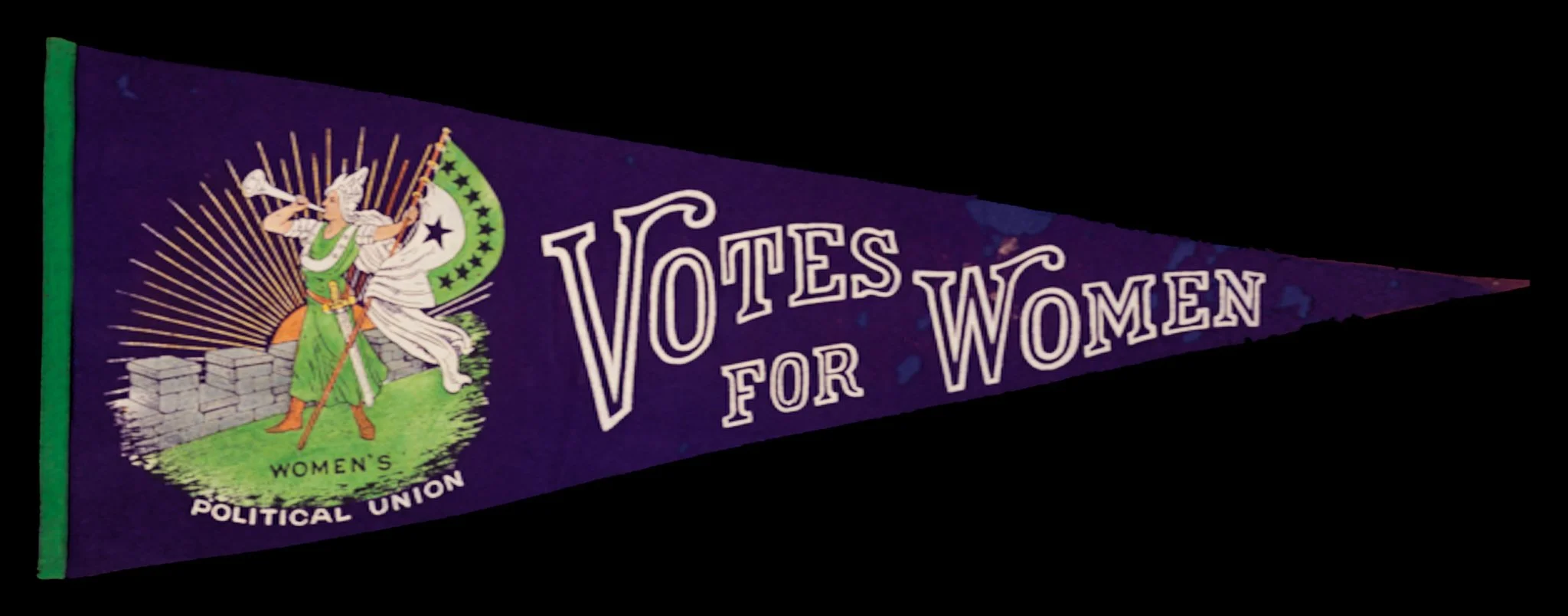
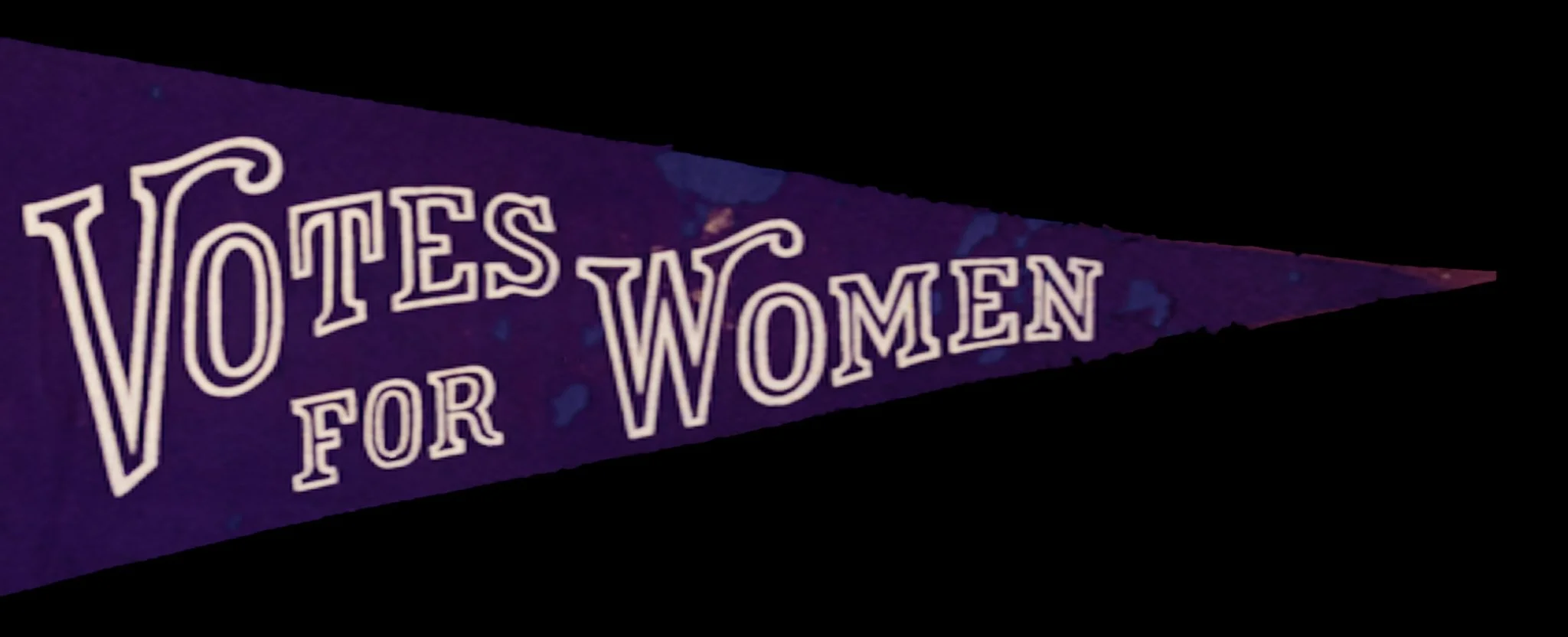
Offered is a women’s suffrage pennant produced for the Women’s Political Union of New York, and one of the more visually accomplished pieces of American suffrage material from the years immediately preceding passage of the Nineteenth Amendment. Printed on a rich purple felt ground, the pennant combines the words “VOTES FOR WOMEN” with an elaborate allegorical figure, radiating lines, stars, and the name “WOMEN’S POLITICAL UNION.” The combination of purple, green, white, and gold distinguishes it from the comparatively simple lettering and limited palettes found on many surviving suffrage pennants.
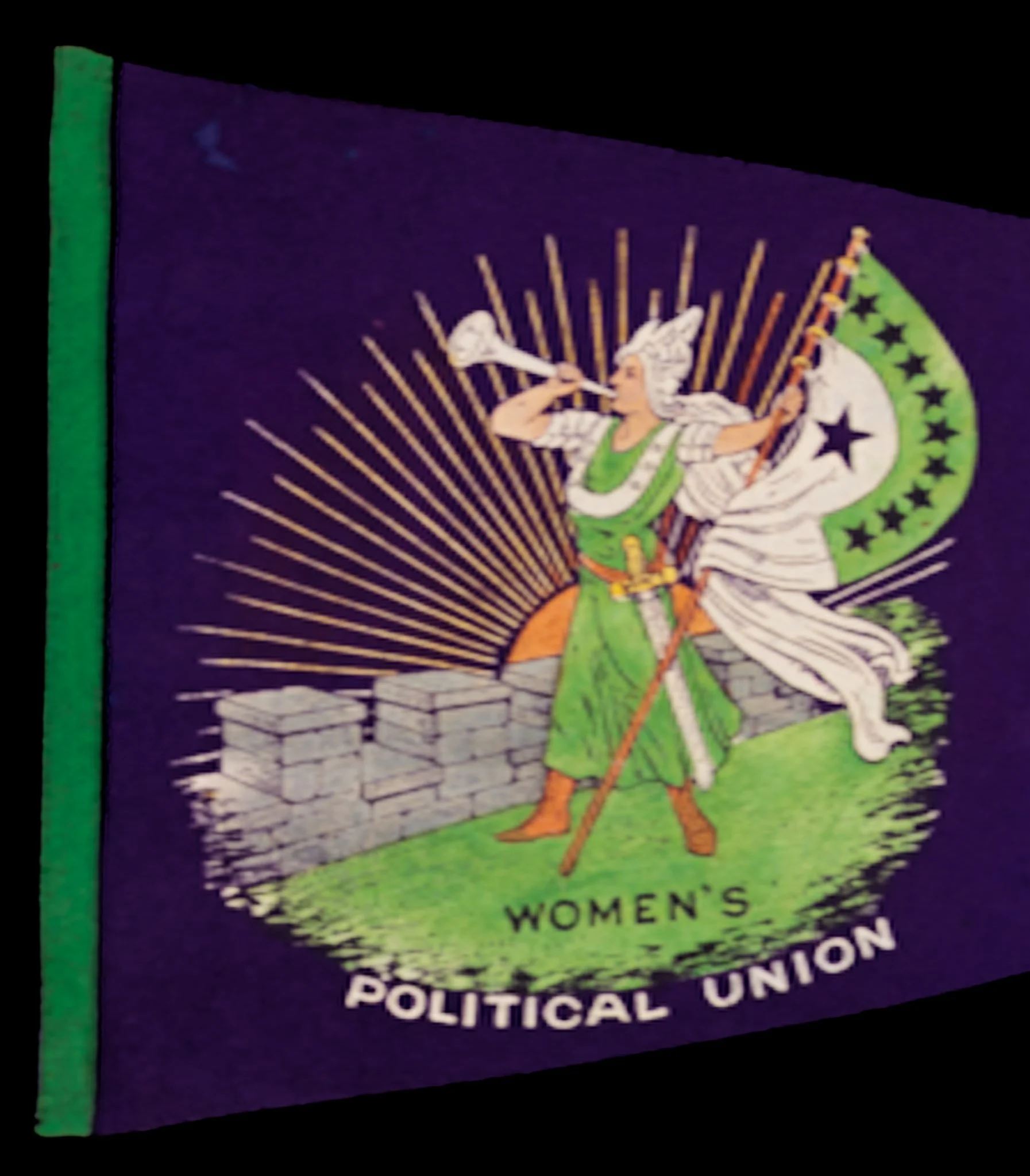
The central image is generally known as the “Bugler Girl” or “Clarion Girl,” an important suffrage emblem whose origins lie in the British movement for women’s voting rights. The figure was created by British artist and suffragist Caroline Watts and depicts an armored female herald sounding a bugle while advancing forward. The imagery was direct and purposeful: the clarion call announces the movement, while the advancing woman represents determination and progress. Behind her are radiating lines and a crescent-like arrangement of stars, creating one of the more elaborate graphic compositions found on suffrage material of the period.
Harriot Stanton Blatch adopted the imagery for use by the Women’s Political Union in the United States. Blatch was the daughter of Elizabeth Cady Stanton, one of the foundational figures of the American women’s rights movement, but became an important suffrage leader in her own right. After spending many years in England, where she became familiar with the increasingly active British suffrage campaign, Blatch returned to the United States and helped introduce some of its organizational methods and visual language to the American movement.
In 1907, Blatch founded the Equality League of Self-Supporting Women in New York. The organization was intended in part to broaden the constituency of the suffrage movement by bringing working women into organized political activity. In 1910, the group became the Women’s Political Union, or WPU. Blatch favored highly visible public campaigning, including open-air meetings, parades, banners, pennants, and other forms of political advertising intended to move the suffrage question beyond meeting halls and into the streets.
The present pennant is a strong example of that strategy. Its message could hardly be more direct. “VOTES FOR WOMEN” occupies most of the field in large decorative lettering, while the more elaborate image at the hoist gives the viewer something immediately recognizable to associate with the cause. At a time when political organizations increasingly understood the value of visual identity, the WPU produced material intended not simply to communicate a position, but to attract attention and remain memorable.
Its purple, green, and white coloration also reflects the transatlantic history of the design. Those colors had strong associations with the British women’s suffrage movement and differ markedly from the yellow and black more frequently encountered on American suffrage material. Blatch’s use of the British-derived imagery and palette makes the pennant particularly useful as evidence of the exchange of ideas, tactics, and graphic language between the British and American movements.
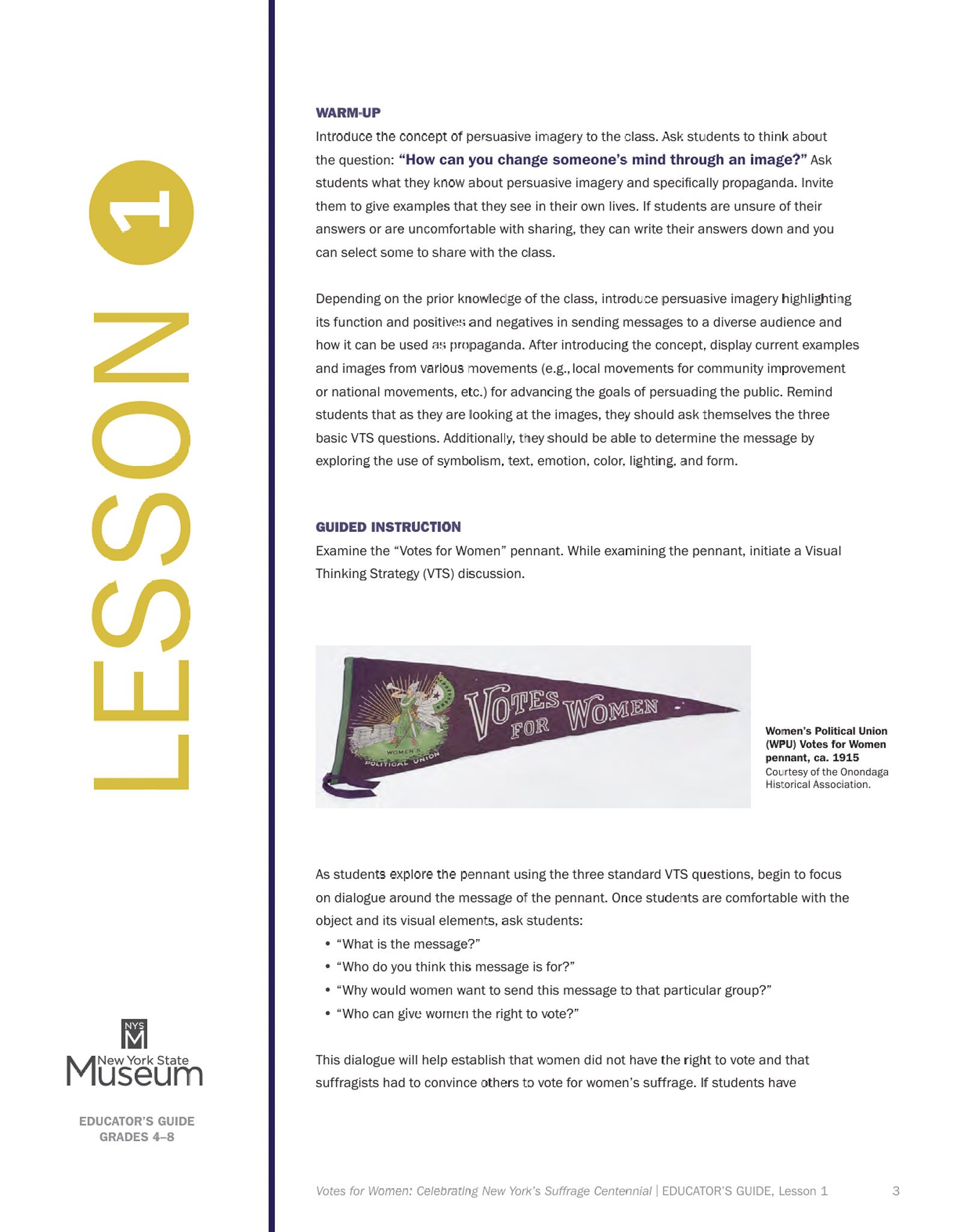
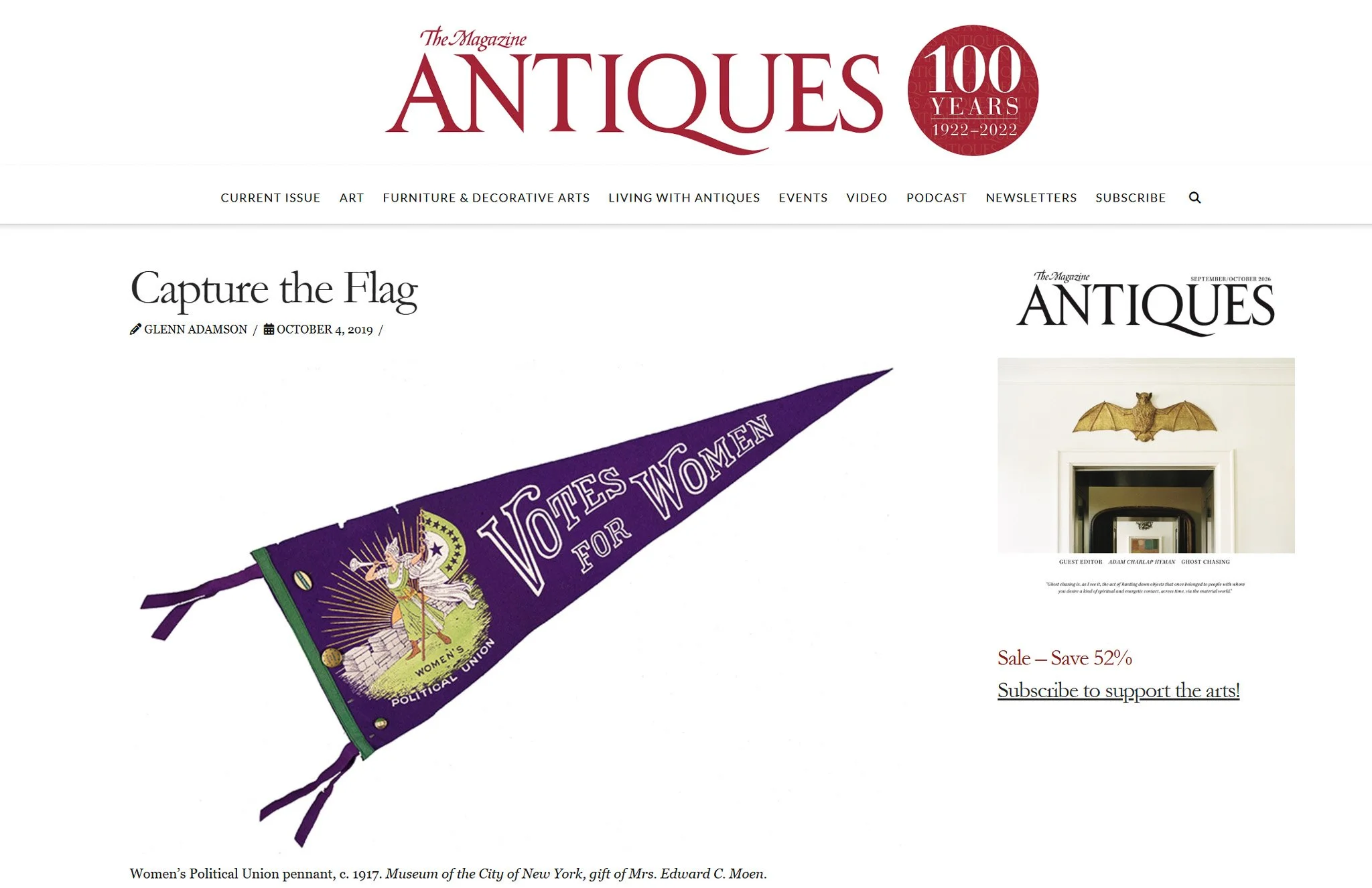
The pennant belongs to a recognizable WPU design represented in institutional collections. An example held by the Onondaga Historical Association has been reproduced by the New York State Museum in educational material devoted to the women’s suffrage movement and dated circa 1915. Another example is in the collection of the Museum of the City of New York and has been published by The Magazine Antiques, where it was dated circa 1917. These surviving examples help place the design firmly within the active campaigning years of the Women’s Political Union and document its place within the material culture of the suffrage movement.
Dating examples of this type with absolute precision can be difficult. The Women’s Political Union name came into use in 1910, while the organization’s activities increasingly overlapped with the broader national suffrage campaign during the middle of the decade. Blatch eventually aligned the WPU with Alice Paul’s Congressional Union, and the Women’s Political Union ceased operating as a distinct organization during this period. Taken together with the dating of surviving institutional examples, a circa 1910–1917 date range is appropriate for the present pennant.
One particularly interesting aspect of this example is its later history of use. When acquired, the pennant had been incorporated into a pillow, paired with another example of the same suffrage pennant with stuffing placed between the two. Political textiles of this type were often ephemeral objects, intended for rallies, marches, meetings, and public display rather than long-term preservation. Converting the pennants into a household object may have contributed to their survival long after the campaign for which they were originally produced.
The reverse of the pennant offered here adds another unusual element to its history. On the opposite side is printing for Hartford, Connecticut. The combination strongly suggests that the textile had a meaningful connection with Hartford. While the precise circumstances cannot presently be established, the Hartford association is worth noting, particularly because Connecticut itself had an active suffrage movement during this period and Hartford served as one of the state’s principal political and civic centers.
Among surviving women’s suffrage pennants, this design is notable for the amount of visual information it incorporates. Many suffrage textiles rely almost entirely upon wording or simple color symbolism. Here, the Women’s Political Union combined an unmistakable political slogan with sophisticated illustration, striking color, patriotic symbolism, and one of the movement’s recognizable allegorical figures.
Conservation Process: This pennant was hand sewn to cotton fabric, and both were hand sewn to a mounting board. To prevent the black dye in the cotton fabric from seeping into the pennant, it was first washed in a standard wash and then in a dye setting wash. The pennant is positioned behind Optium Museum Acrylic.
Frame: The pennant is housed in an exceptional antique tiger maple frame of substantial scale and unusually strong figure. The frame is constructed in two primary sections, with the outer molding wrapping around the stepped inner elements to create a layered, architectural profile; the richness of the maple and quality of construction make this one of the best frames we have handled.
Condition Report: The pennant presents well overall, with strong surviving color and graphics. There is visible discoloration at the pointed end, along with several holes and areas of loss throughout the felt; these have been discreetly backed with purple fabric so the missing areas blend closely with the original ground when viewed in person. The losses remain visible on close inspection, but the backing substantially reduces their visual impact and allows the design to read clearly.
Collectability Level: The Best – Perfect for Advanced Collectors
Date of Origin: 1910-1917