Young Louden Tam Glazed Cotton Broadside | Illinois Draft Horse Advertising | Circa 1875
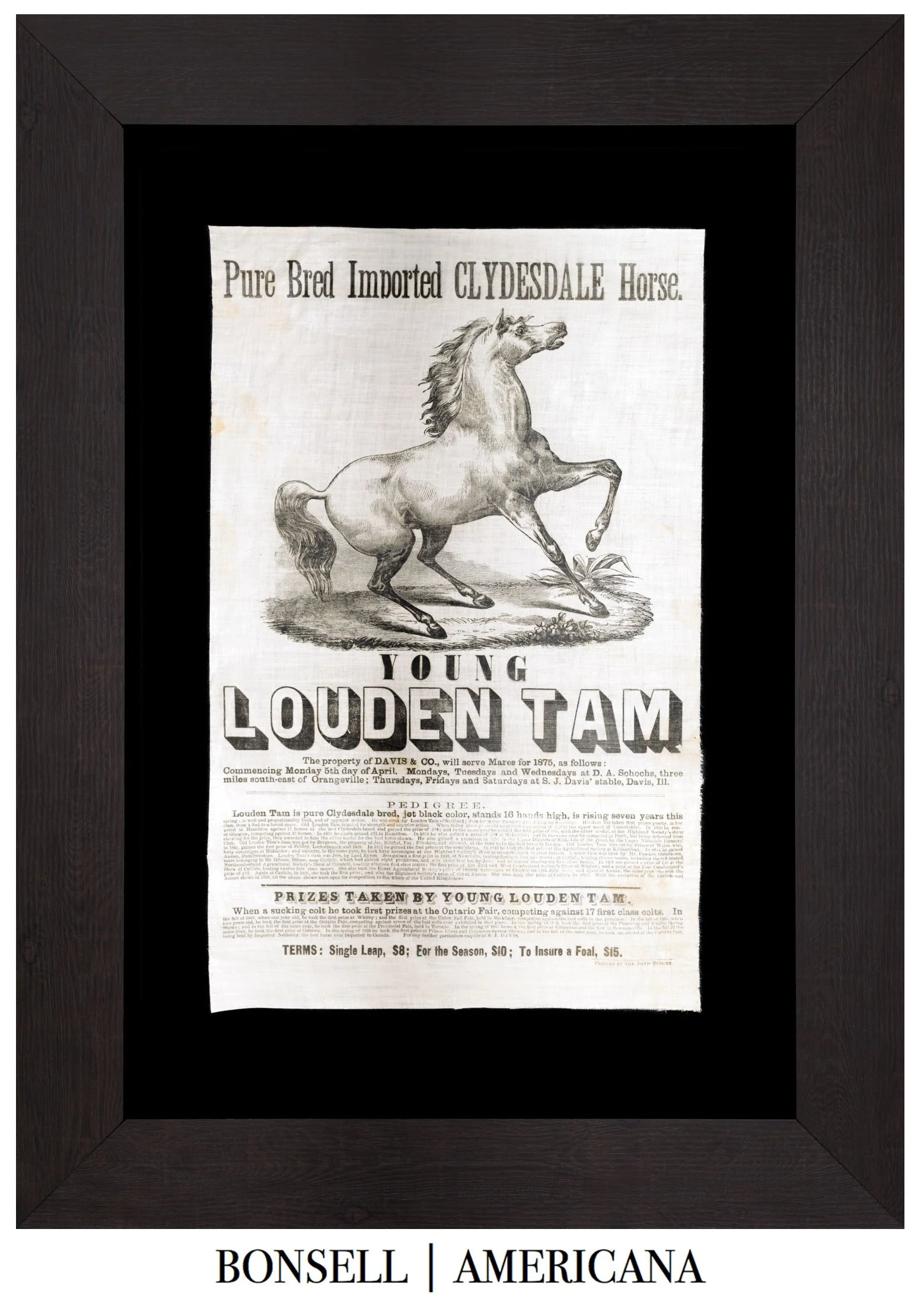
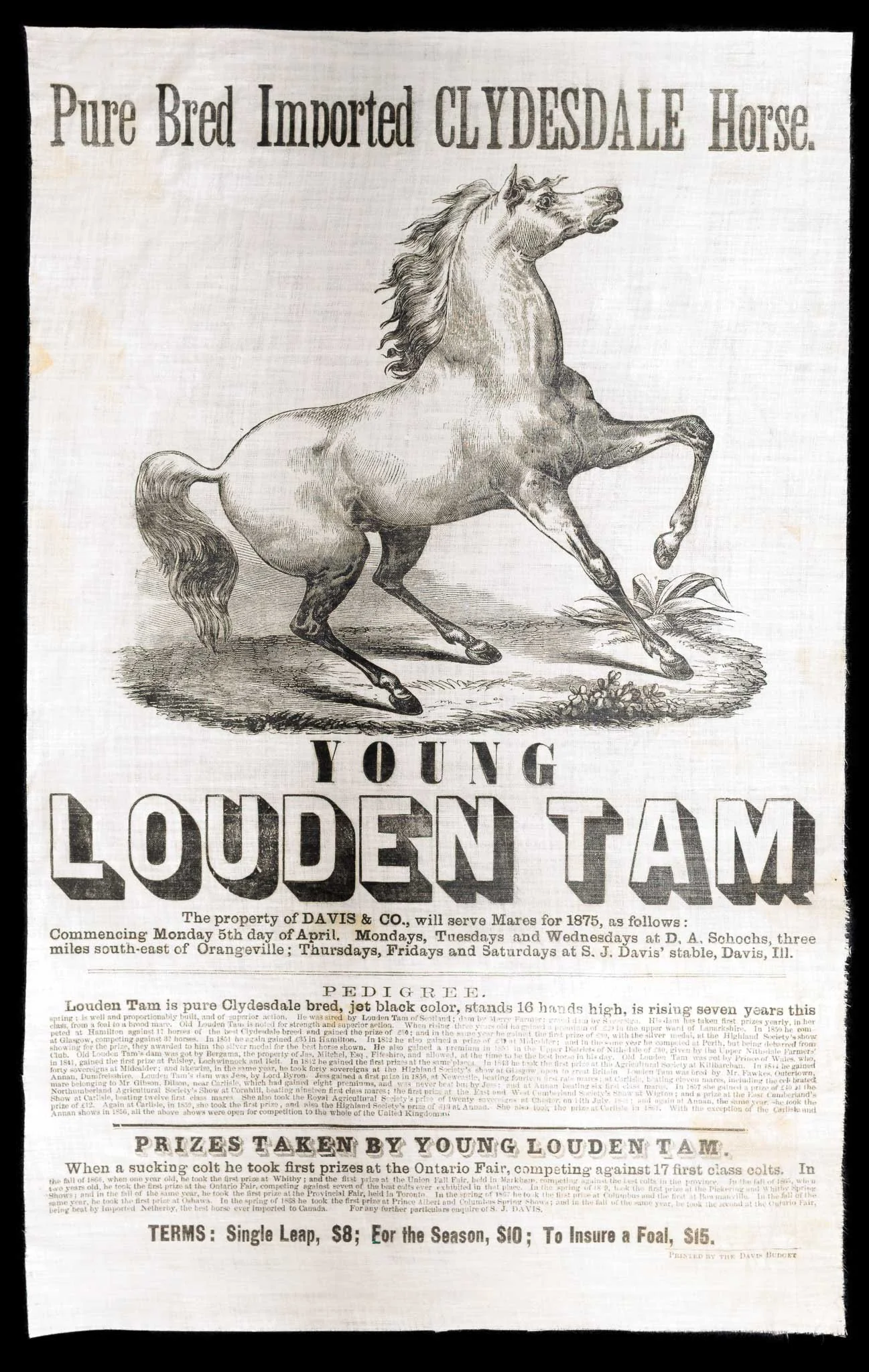
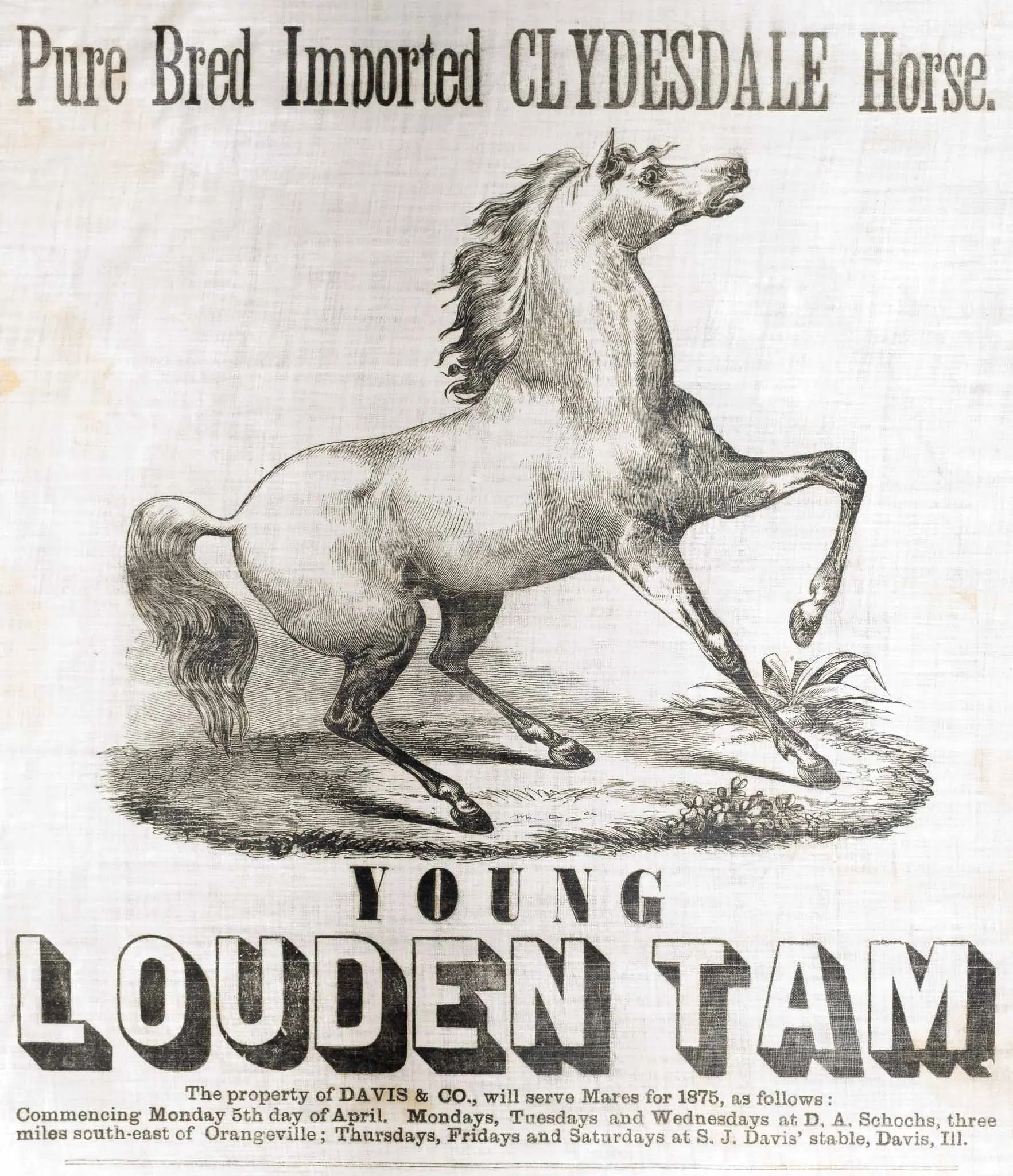
Young Louden Tam Glazed Cotton Broadside | Illinois Draft Horse Advertising | Circa 1875
Frame Size (H x L): 30” x 22.5”
Broadside Size (H x L): 21” x 13”
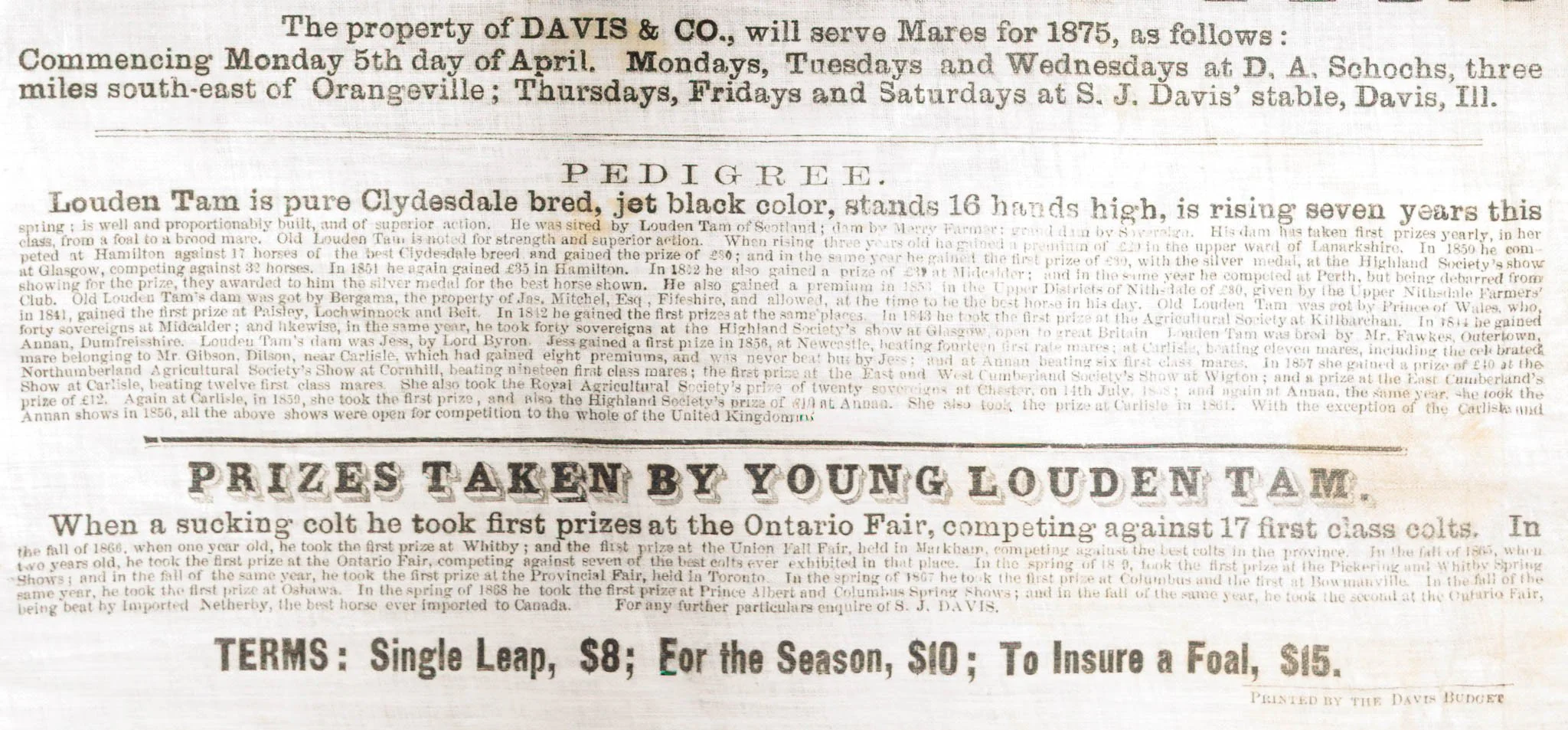
Offered is a rare nineteenth-century American livestock advertising broadside, promoting the breeding services of the purebred imported Clydesdale stallion Young Louden Tam. Printed on glazed cotton and issued for the 1875 breeding season, the broadside was produced for use in northern Illinois, with service locations listed near Orangeville and at S. J. Davis’s stable in Davis, Illinois. It reflects a period when draft-horse breeding was central to agricultural productivity and regional commerce in the Midwest.
Broadsides of this type were created for temporary public display in livery stables, feed stores, fairgrounds, and other agricultural centers. They announced a stallion’s availability, outlined pedigree and terms, and circulated locally during a single breeding season before being replaced. As a result, examples that remain today—particularly those produced on textile substrates rather than paper—are uncommon.
Young Louden Tam is described as a jet-black Clydesdale stallion, standing 16 hands high and rising seven years of age in 1875, an age regarded as ideal for breeding. He is identified as the son of Louden Tam of Scotland, with extended pedigree text noting show prizes and premiums earned abroad. In the decades following the Civil War, Illinois farmers actively sought imported British draft stock to improve strength, size, and consistency in working horses. Clydesdales were especially valued for their combination of power and sound movement, qualities well suited to the demands of Midwestern farming and freight work.
The terms of service reflect the structured and increasingly professional nature of horse breeding at the time. Fees ranged from $8 for a single leap to $15 to insure a foal, amounts that represented a serious investment for farmers. The listed schedule and multiple service locations illustrate how stallions were moved between communities to reach a wider clientele. In Illinois, where mixed grain farming, hauling, and land improvement all depended on animal power, access to a proven imported stallion carried both economic and practical importance.
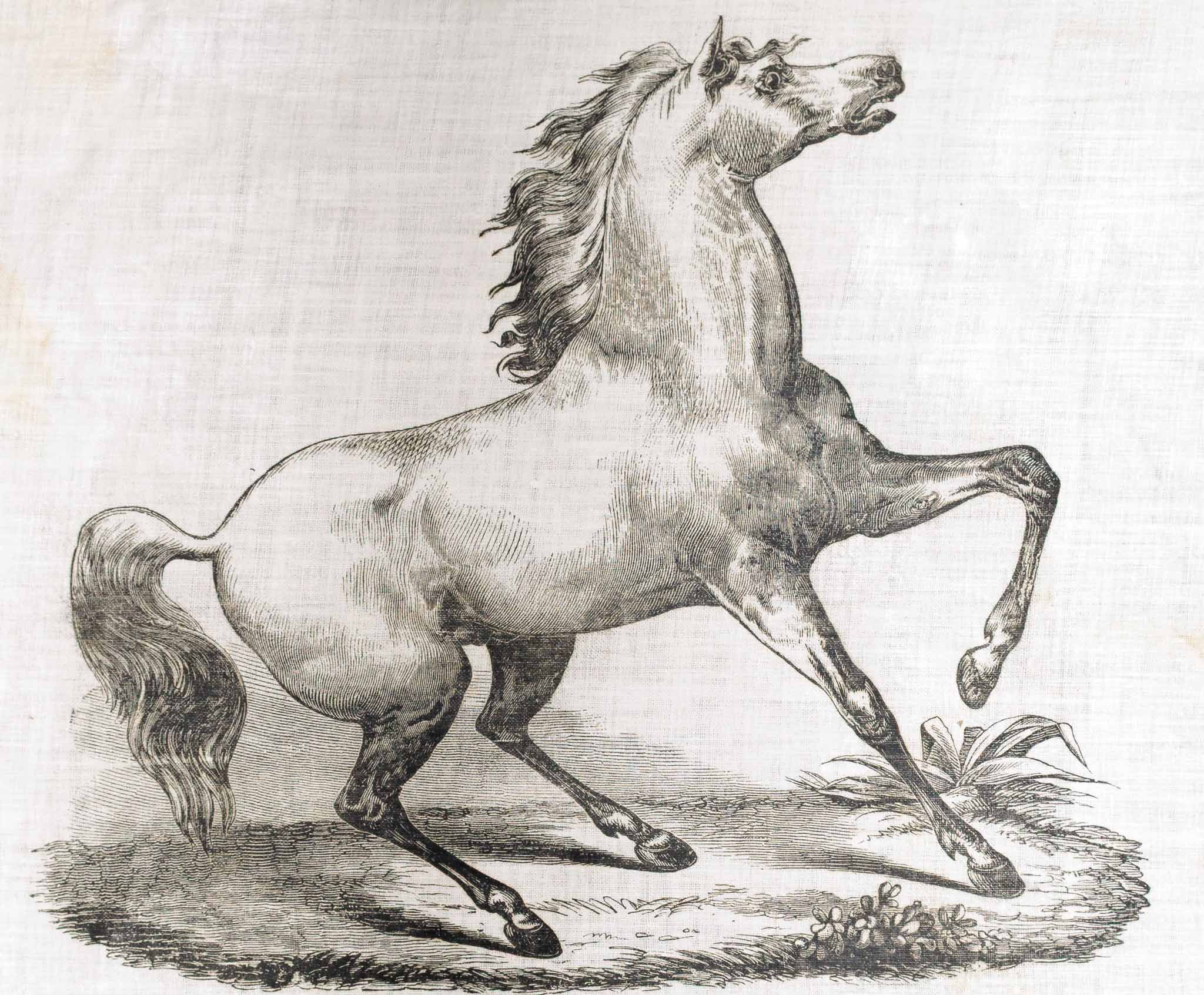
This broadside is printed on glazed cotton, a durable textile sometimes used for agricultural advertising intended for repeated handling and display. The surface treatment provided greater resilience than paper and helps explain the survival of examples such as this. The central image is a wood engraving of the stallion, paired with bold, utilitarian typography designed for clear visibility in public settings. The overall layout prioritizes clarity and information, combining image, pedigree, schedule, and terms in a direct commercial format.
Taken as a whole, this broadside offers a clear window into nineteenth-century horse breeding in Illinois, where imported bloodlines, regional circulation of stallions, and printed advertising worked together to support an agricultural economy still fundamentally dependent on draft power. It stands as a well-preserved document of that system, valued both for its historical content and for its survival on an uncommon textile medium.
Conservation Process: The broadside was hand sewn to a cotton fabric backing, which was then hand sewn to a mounting board. To prevent dye migration from the black cotton, the fabric was pre-washed and treated with a dye-setting wash prior to mounting. The broadside is displayed behind Optium Museum Acrylic.
Frame: The frame features a wide, flat-profile wood molding finished in dark walnut. Its clean lines and subdued grain provide a strong, understated presentation. The profile offers visual weight without distraction.
Condition: The surface shows light, uneven discoloration, most noticeable in the lighter areas of the field, consistent with age and historical use. These tonal variations do not obscure the printed text or imagery and are typical of glazed cotton advertising from the period. Overall presentation remains clear and well preserved for a nineteenth-century working textile.
Collectability Level: The Great – Perfect for Rising Collectors
Date of Origin: 1875