American Flag Form Trade Card, Hamlin’s Wizard Oil | Medicine Show Wagon Canton | M.P. Carroll Imprint | Circa 1880–1890
American Flag Form Trade Card, Hamlin’s Wizard Oil | Medicine Show Wagon Canton | M.P. Carroll Imprint | Circa 1880–1890
Price: Call 618-553-2291, or email info@bonsellamericana.com
Frame Size (H x L): 17” x 14”
Flag Size (H x L): 4.5” x 7” and Affixed to a 9.75” Staff
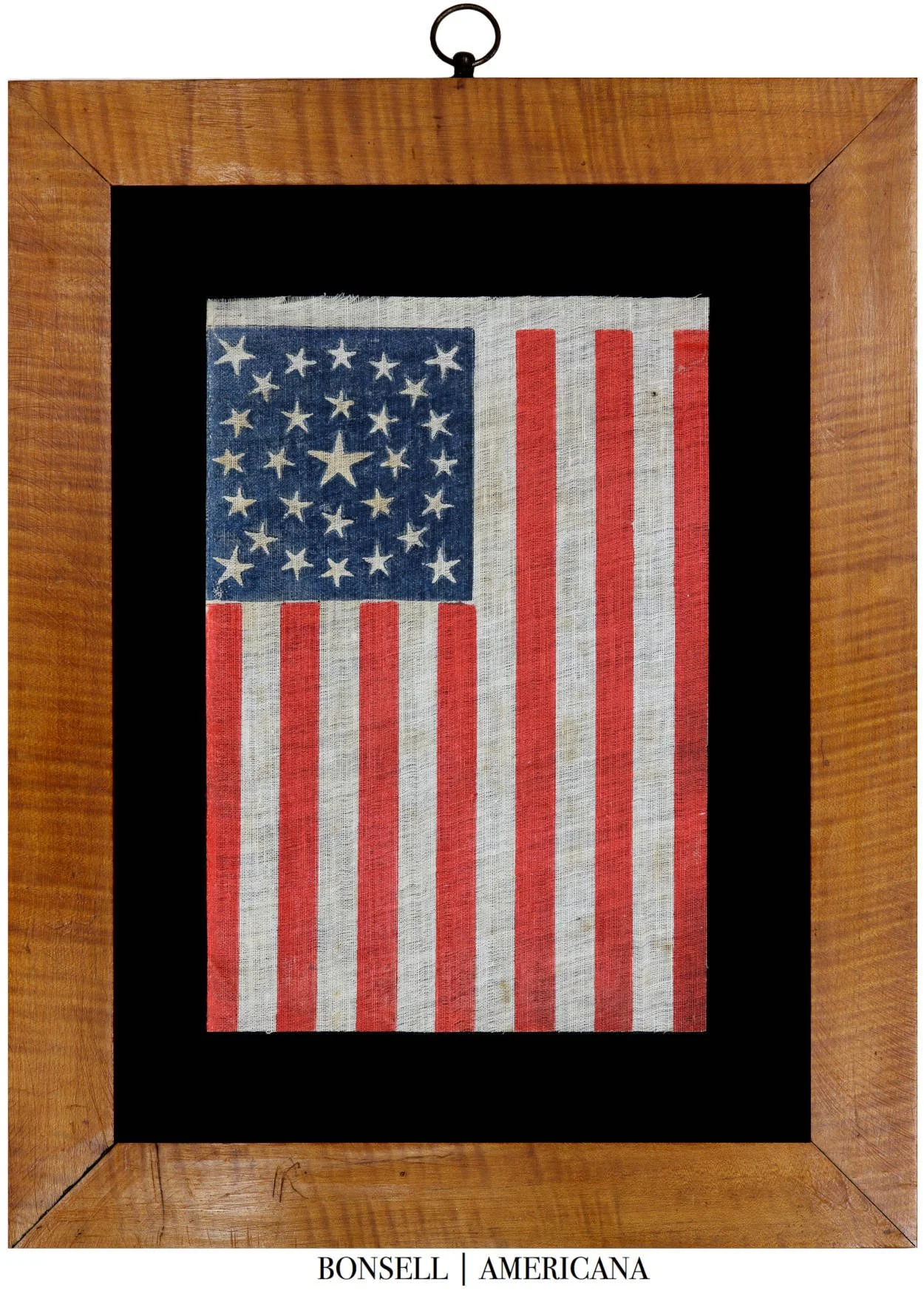
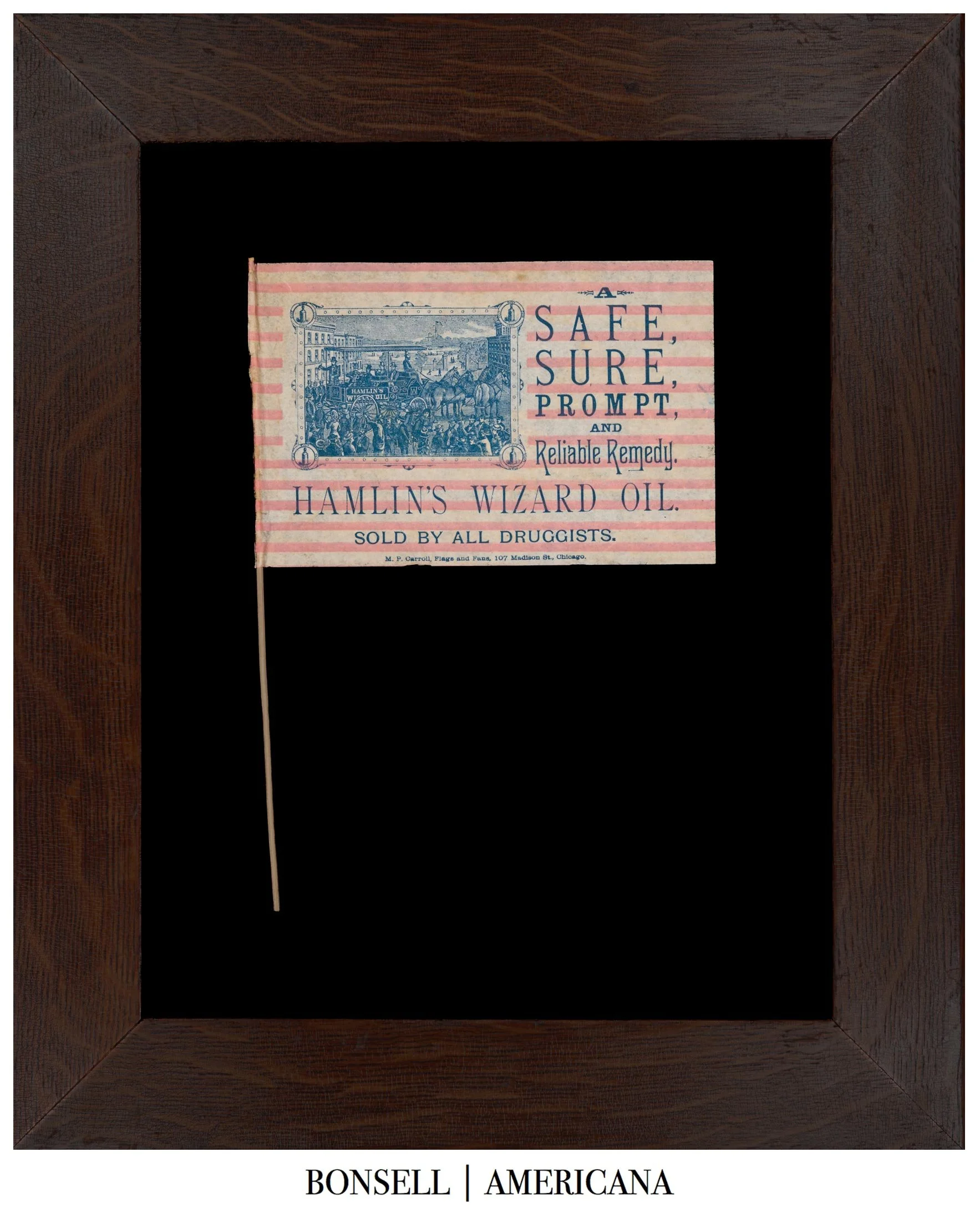
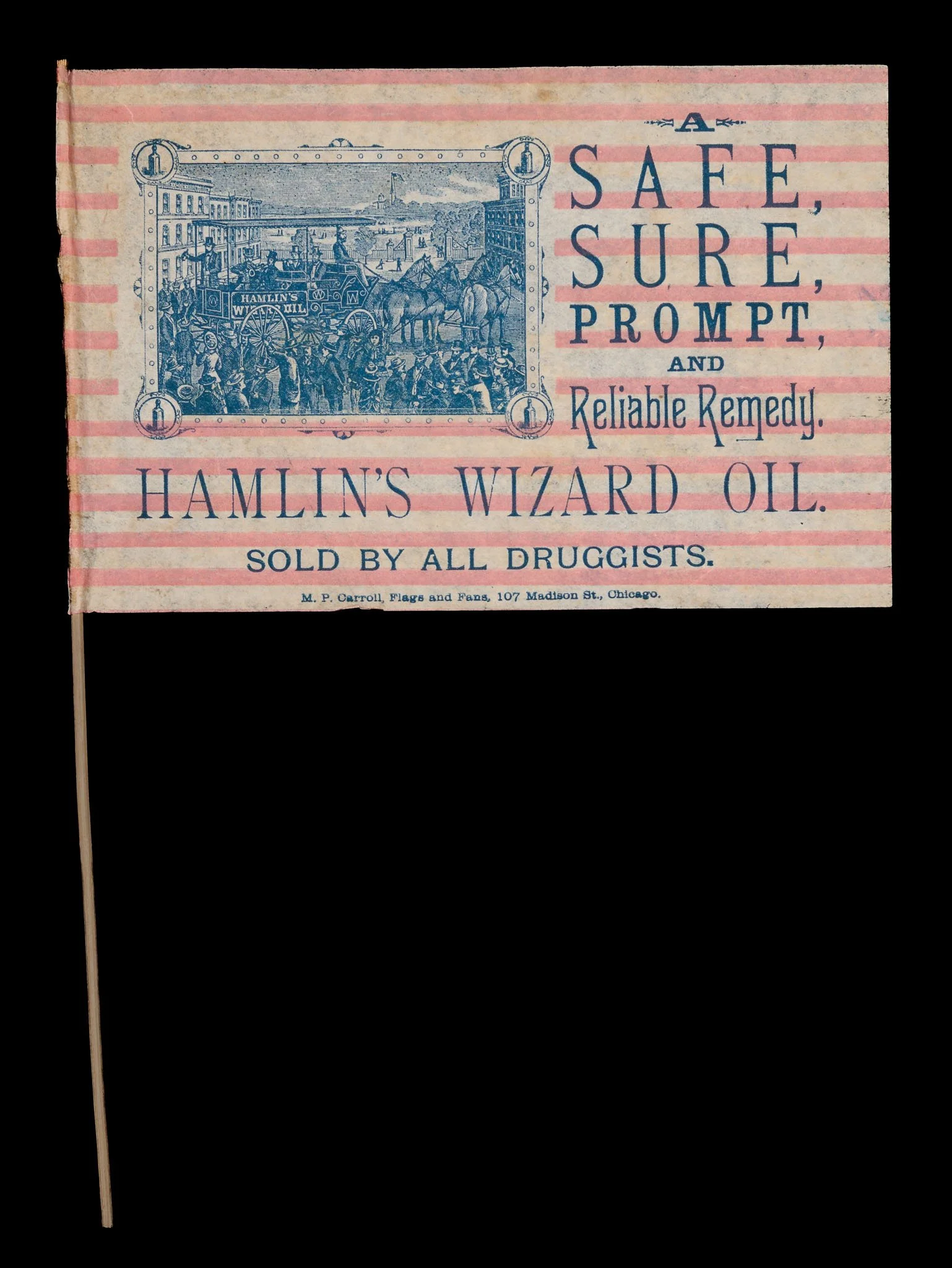
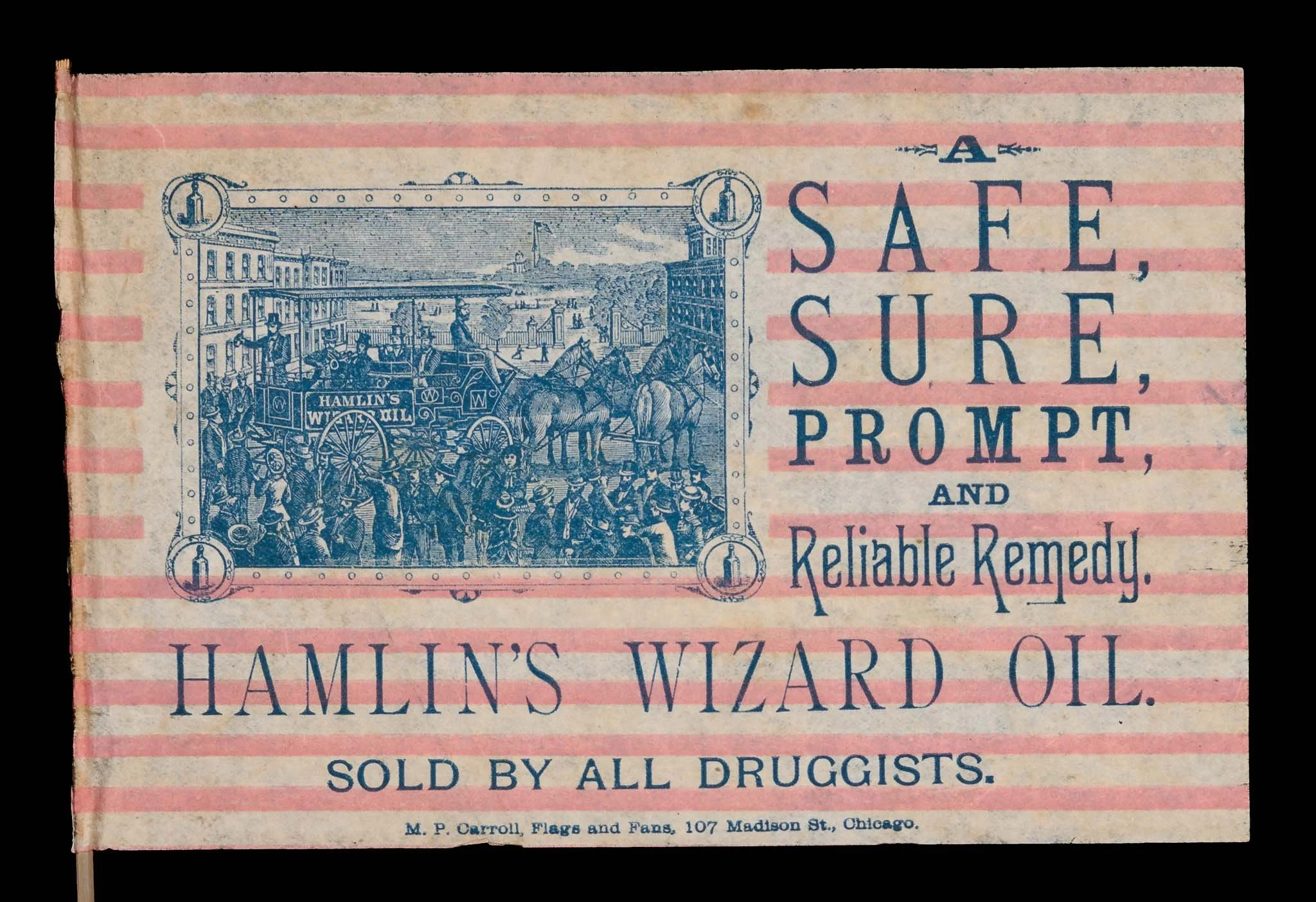
Offered is an American flag-form advertising trade card, printed on paper and affixed to its original wooden staff, with an overprint for Hamlin’s Wizard Oil. This is the first example of this specific type that we have encountered.
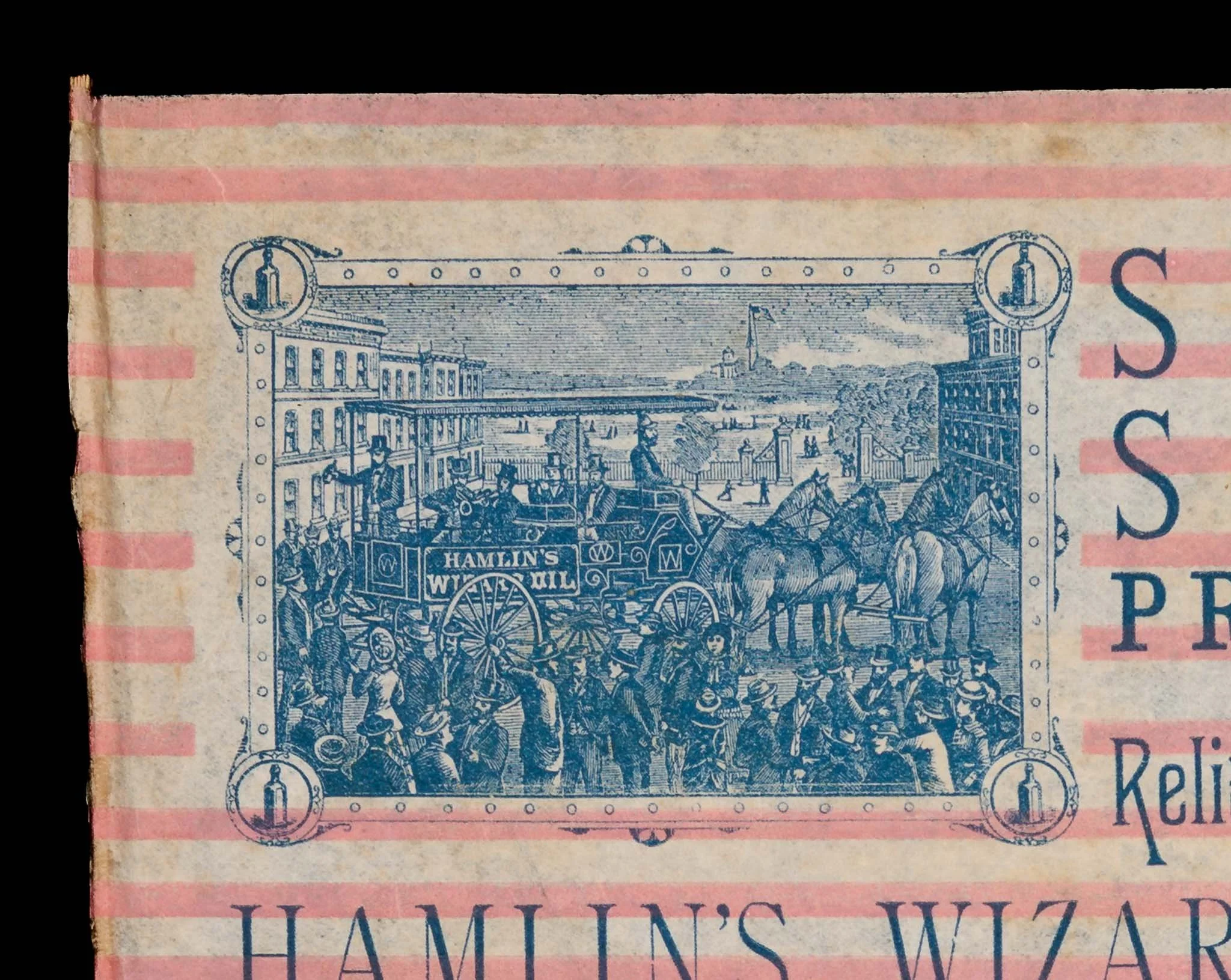
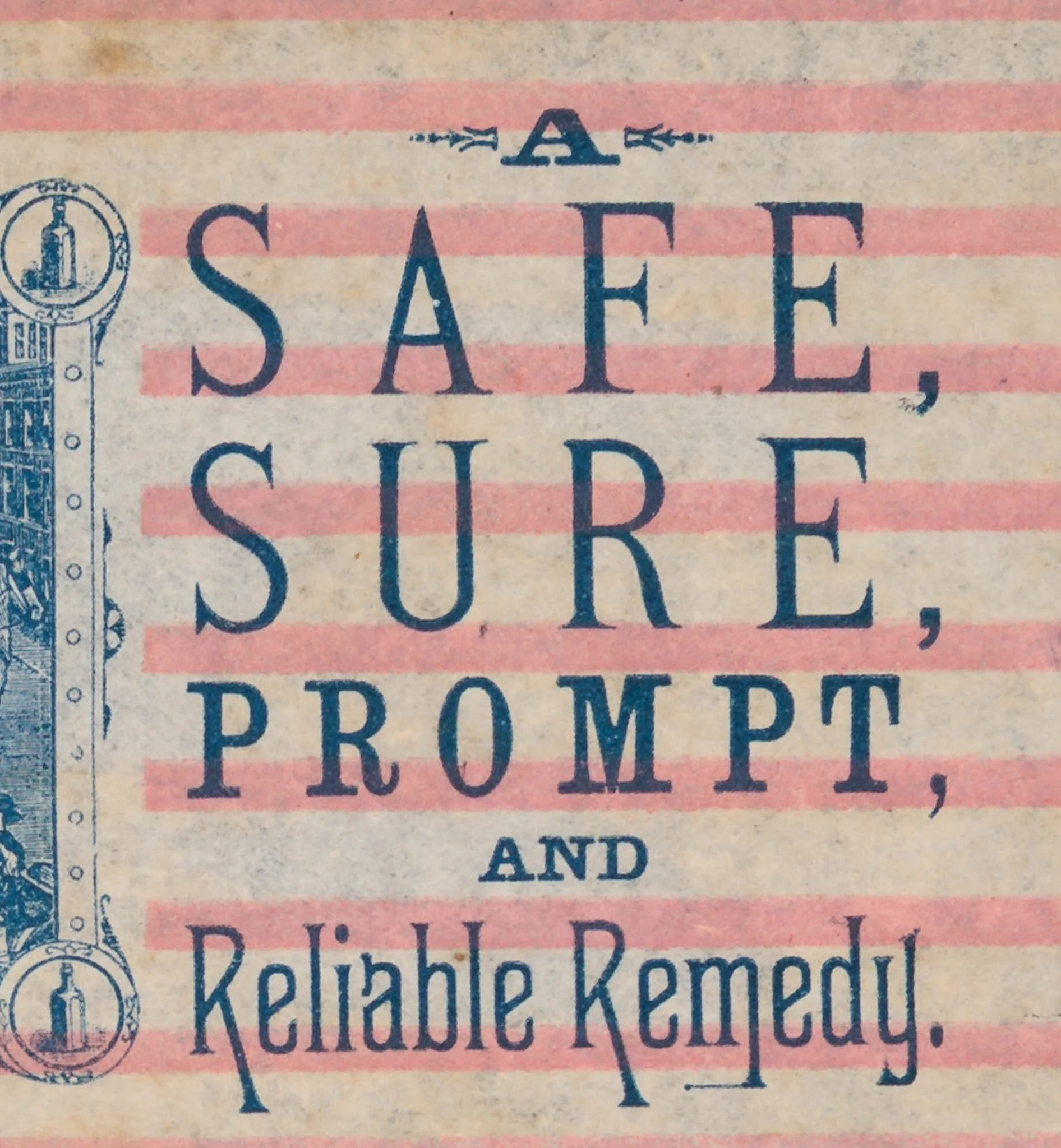
The canton departs from the expected star field and instead features a detailed printed vignette. The scene depicts a crowded urban street centered around a horse-drawn wagon prominently labeled “Hamlin’s Wizard Oil.” The wagon serves as a mobile stage, surrounded by a dense gathering of spectators. Figures in period attire—men in brimmed hats and long coats, women in full skirts—stand closely packed, while multi-story buildings line the street behind. The composition closely reflects documented Wizard Oil promotions, in which traveling troupes arrived by wagon, set up in public spaces, and staged musical and spoken performances to draw a crowd before selling the product. The level of organization shown—wagon, crowd, and structured presentation—aligns with the more developed phase of these medicine shows.
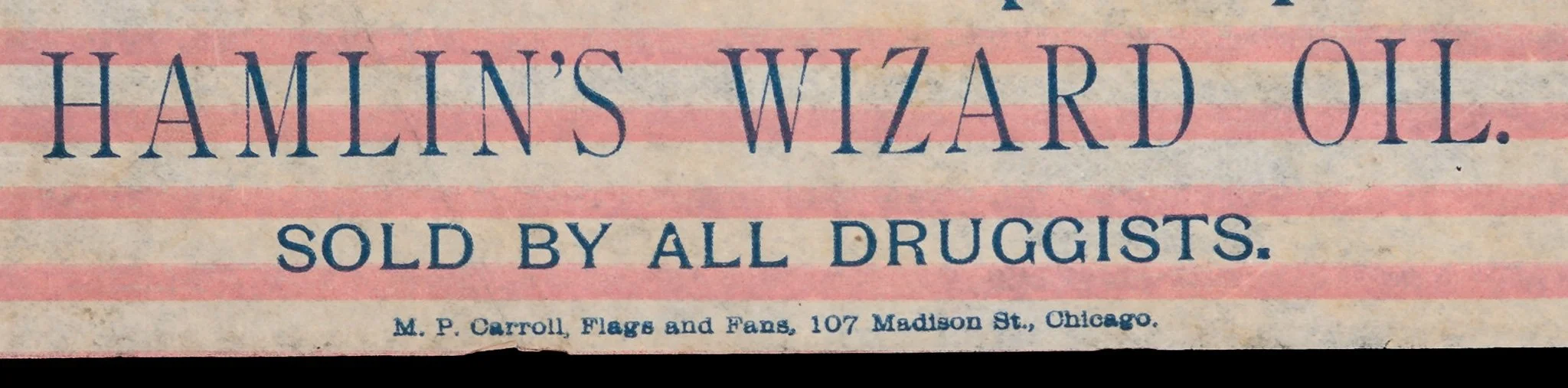
The printed slogan reads: “A SAFE, SURE, PROMPT, AND Reliable Remedy. HAMLIN’S WIZARD OIL. SOLD BY ALL DRUGGISTS.” This corresponds with the brand’s broader advertising language, which included the claim: “There is no Sore it will Not Heal, No Pain it will not Subdue.”
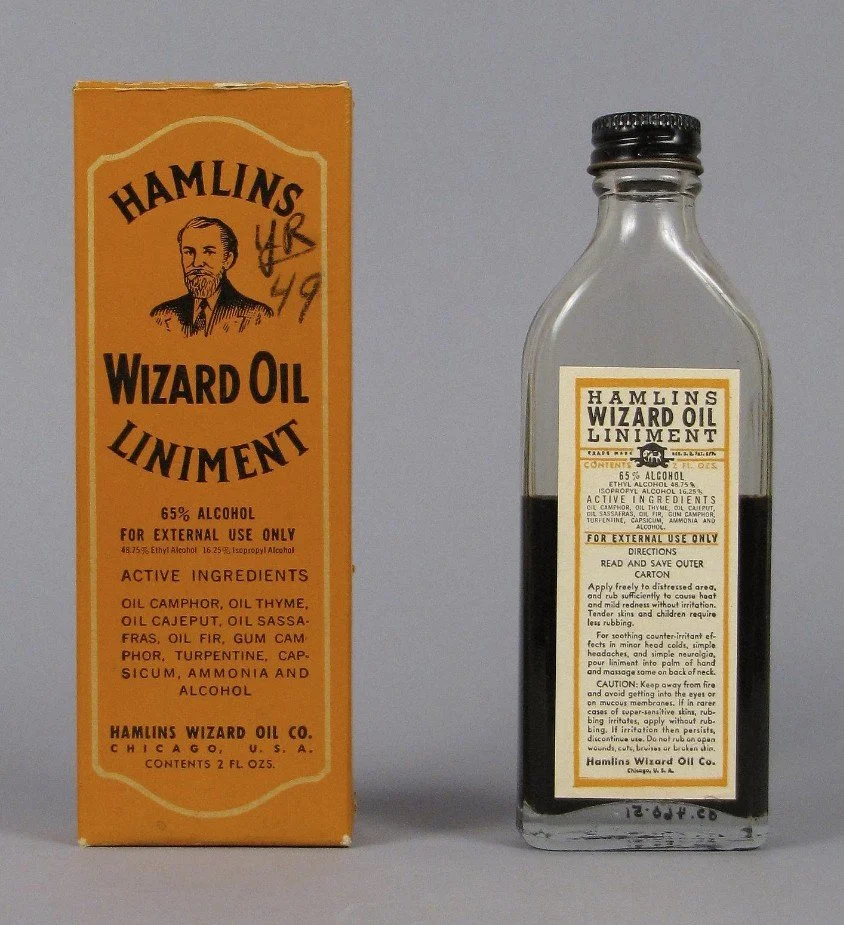
Hamlin’s Wizard Oil was introduced in 1861 in Chicago by John Austin Hamlin and his brother Lysander Butler Hamlin. It was sold primarily as a liniment for rheumatic pain and sore muscles, but was advertised as a treatment for a wide range of ailments, including pneumonia, diphtheria, toothache, headache, and cancer. The formula—typically 50–70% alcohol combined with camphor, ammonia, chloroform, sassafras, cloves, and turpentine—produced a pronounced counterirritant effect. Its commercial success was closely tied to its method of promotion. Traveling “Wizard Oil” units toured extensively throughout the Midwest, often remaining in a town for extended periods, performing from wagons like the one depicted here. These groups typically included a lecturer and musicians, and performances blended entertainment with product demonstration. Printed materials, including trade cards and songbooks, were distributed as part of these campaigns. Profits from the enterprise later funded the establishment of Chicago’s Grand Opera House. Following the Pure Food and Drug Act of 1906, some of the company’s claims were challenged, including a 1916 fine related to cancer cure advertising.
A notable feature is the maker’s imprint along the lower margin: “M. P. Carroll, Flags and Fans, 107 Madison St., Chicago.” The presence of a named maker on a flag-form advertising piece is uncommon. The specific Chicago address places production within the city’s post-1871 commercial expansion, when small manufacturers of novelty flags and advertising items were active along corridors such as Madison Street.
The stripe configuration is highly unusual. Instead of the standard 13 total stripes, this example presents 13 red stripes and 13 white stripes, for a total of 26. Variations of this type appear in decorative and advertising flags of the late 19th century, where visual impact often took precedence over official specifications.
The piece remains mounted on its original wooden staff, indicating intended hand-held use, likely in a promotional or public setting tied to live advertising.
Based on the subject matter, the developed form of the medicine show depicted, the style of advertising, and the Chicago maker’s imprint, this example can be dated more narrowly to circa 1880–1890, with characteristics that align most closely with the early to mid-1880s, when Wizard Oil’s traveling promotional operations were at their height and patriotic novelty items of this type were widely produced.
Overall, this is a scarce example of late 19th-century advertising ephemera that combines patriotic imagery with commercial promotion. The image-based canton, vignette tied directly to documented marketing practices, maker’s imprint, unusual stripe count, and survival on its original staff distinguish it within the category.
Frame: The flag has been mounted in a late 19th century Arts & Crafts frame in quarter-sawn oak, with a medium-brown finish. The form is simple and square-shouldered, consistent with the straightforward construction of the period.
Condition Report: The trade card shows moderate, even toning with scattered soiling and minor staining, consistent with age and use. There is light wear along the edges, including small areas of loss and minor creasing, most notably along the hoist side and upper edge. The surface retains strong color and legibility throughout. The piece has been professionally conserved by a paper conservator, resulting in stable overall condition.
Collectability Level: The Best – Perfect for Advanced Collectors
Date of Origin: 1880-1890
Associated War: The Indian Wars (1860-1890)