Rare and Historically Significant Whipple Flag | A Noted Contender in the Movement Toward the 48-Star Standard | Circa 1909-1912
Rare and Historically Significant Whipple Flag | A Noted Contender in the Movement Toward the 48-Star Standard | Circa 1909-1912
Price: Call 618-553-2291, or email info@bonsellamericana.com
Frame Size (H x L): 24.75” x 33”
Flag Size (H x L): 14” x 22.5”
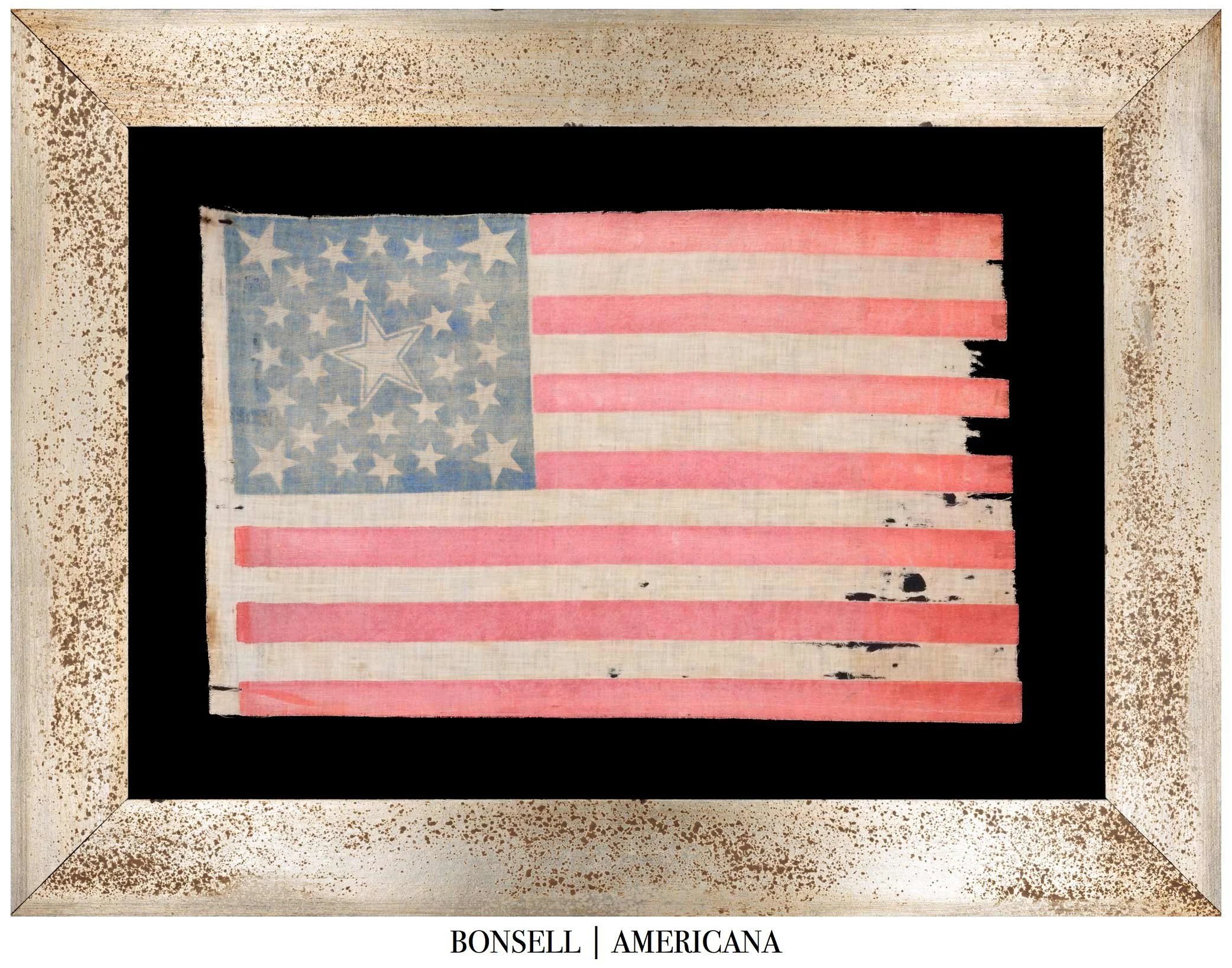
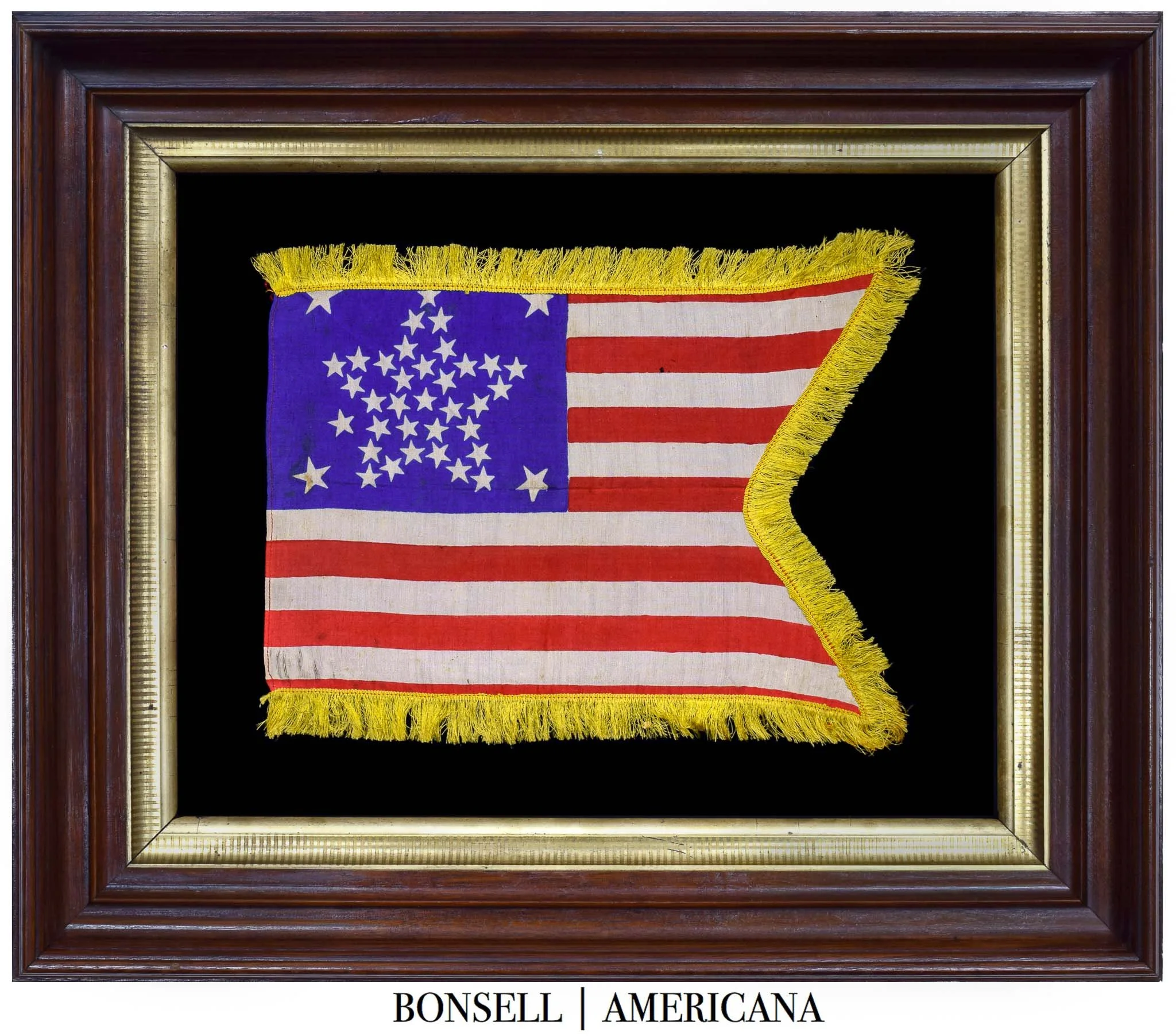
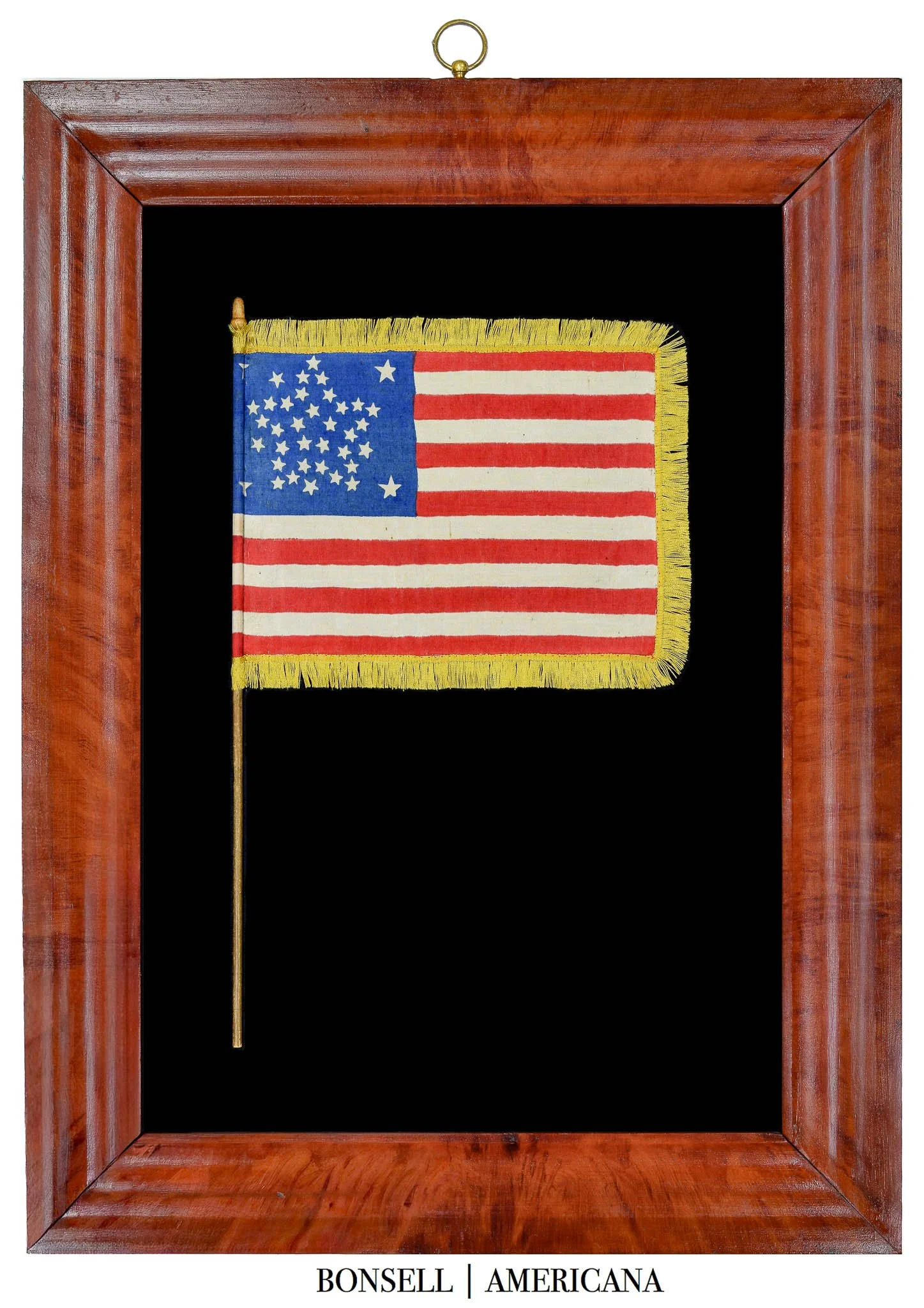
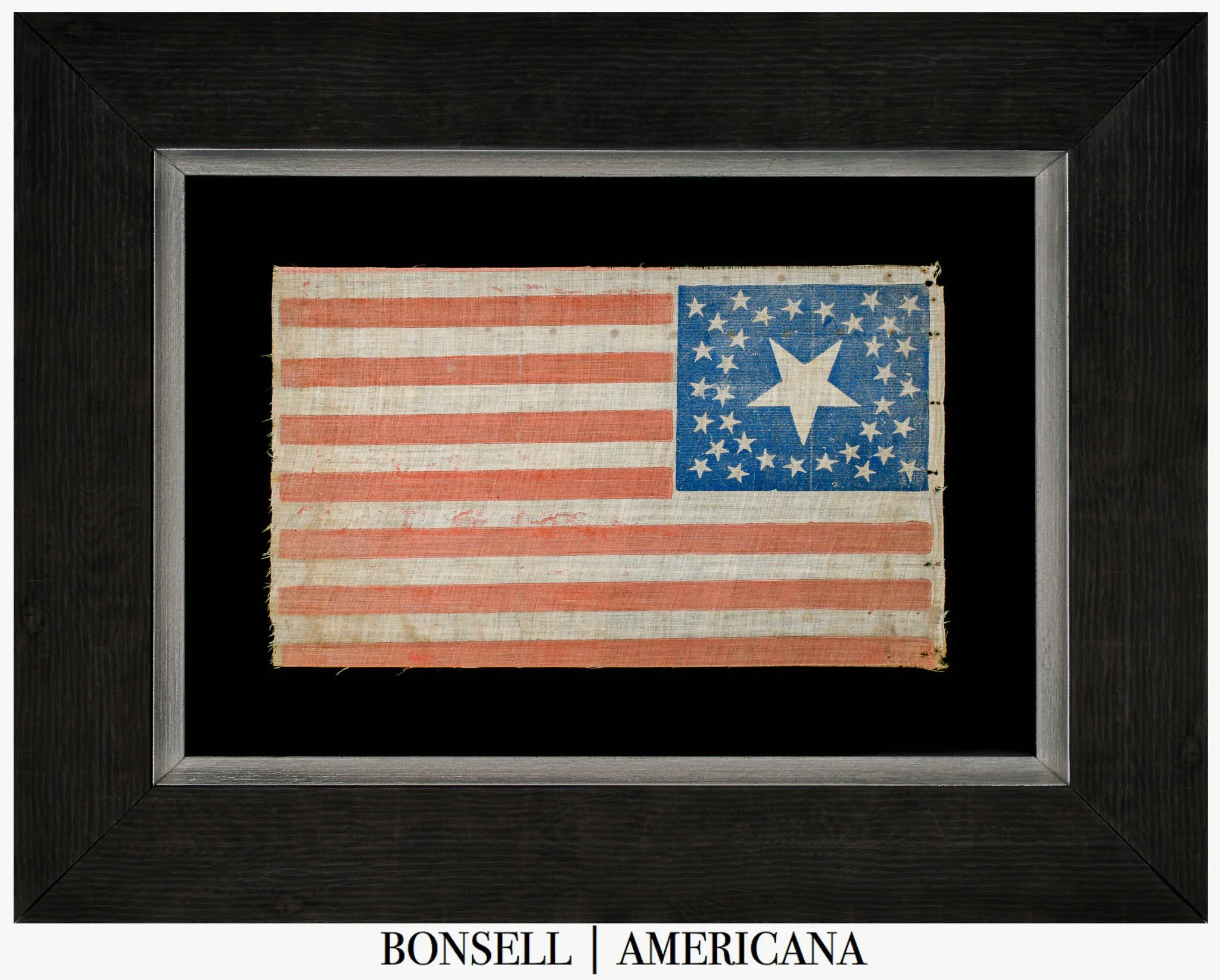
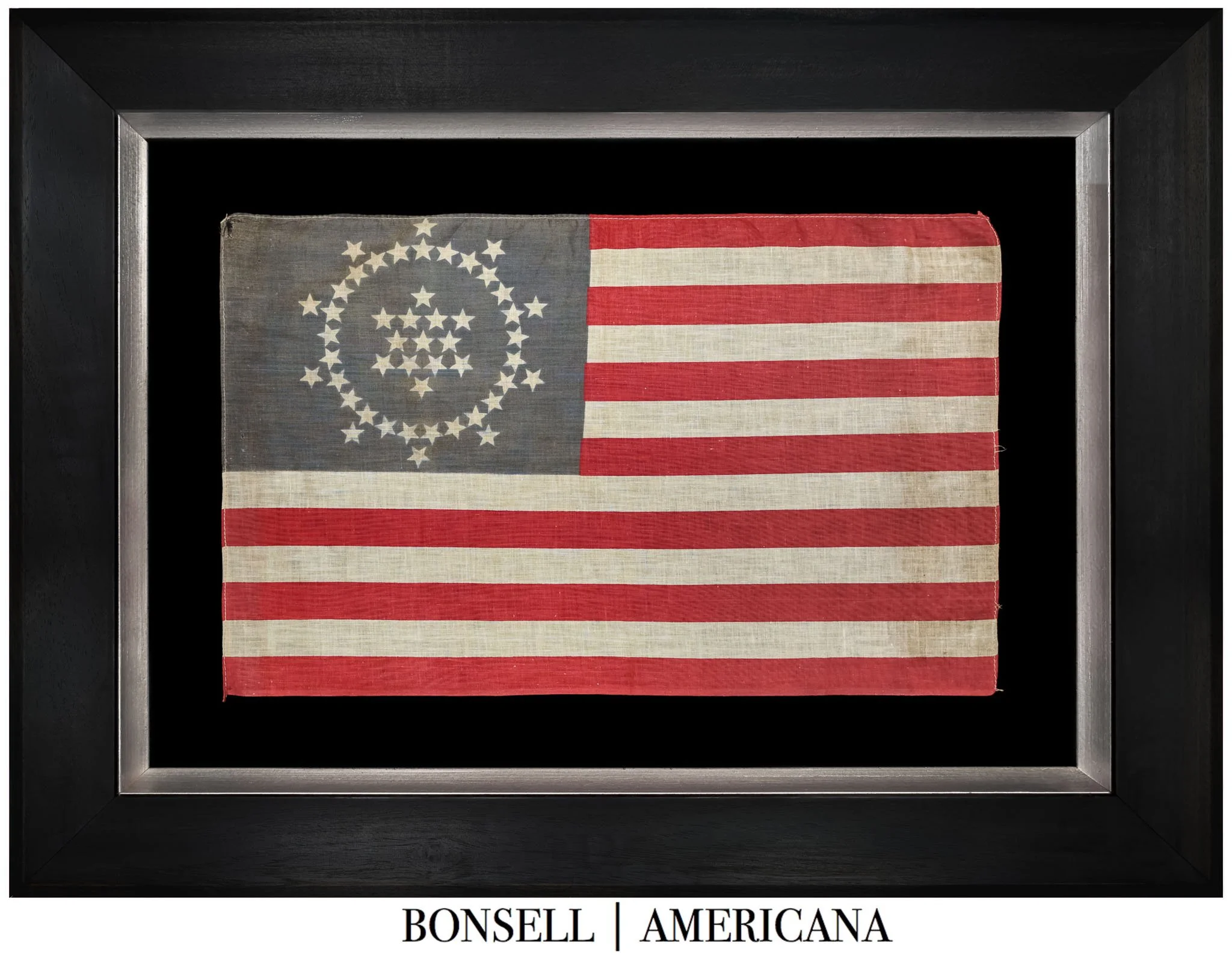
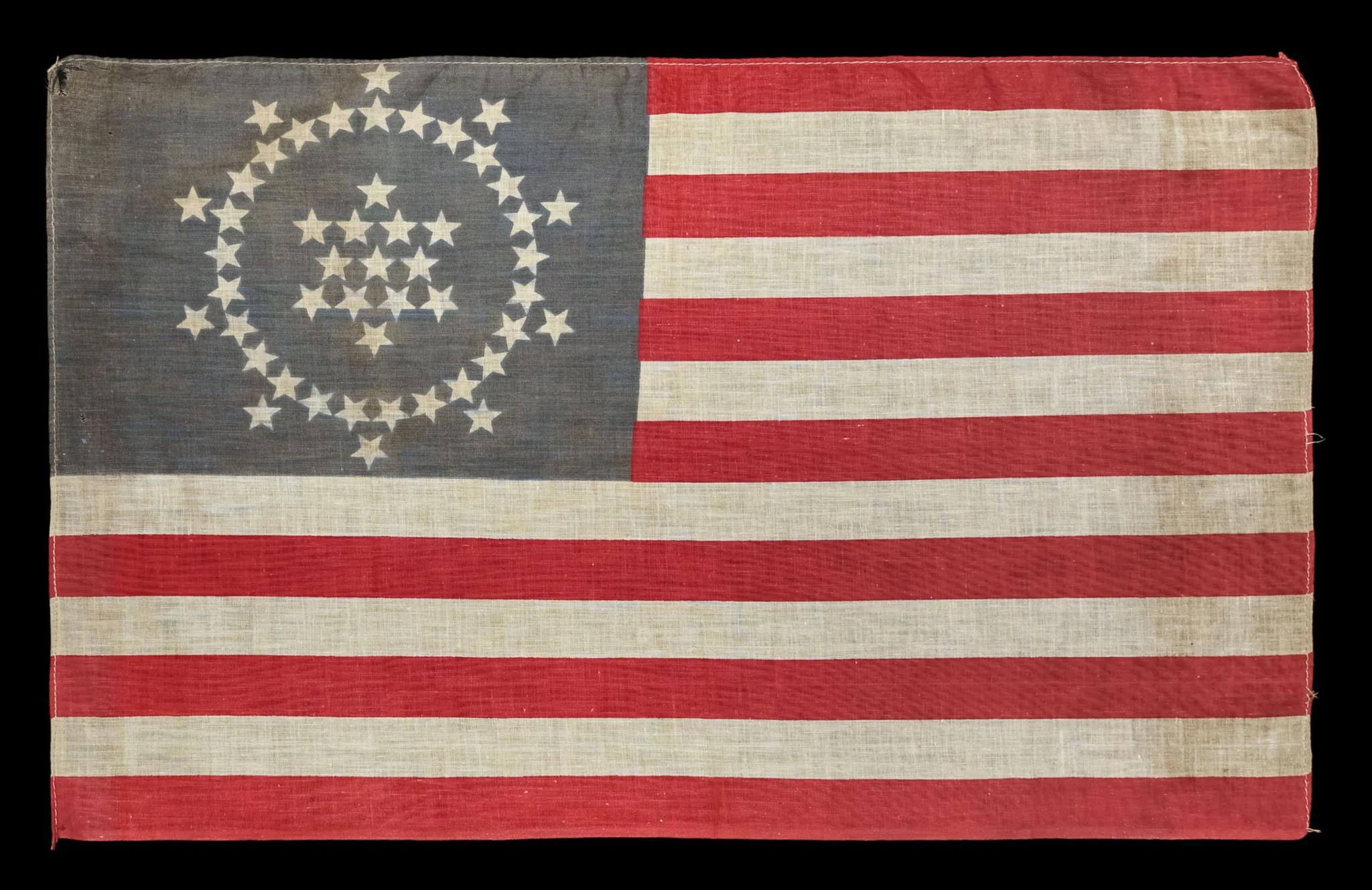
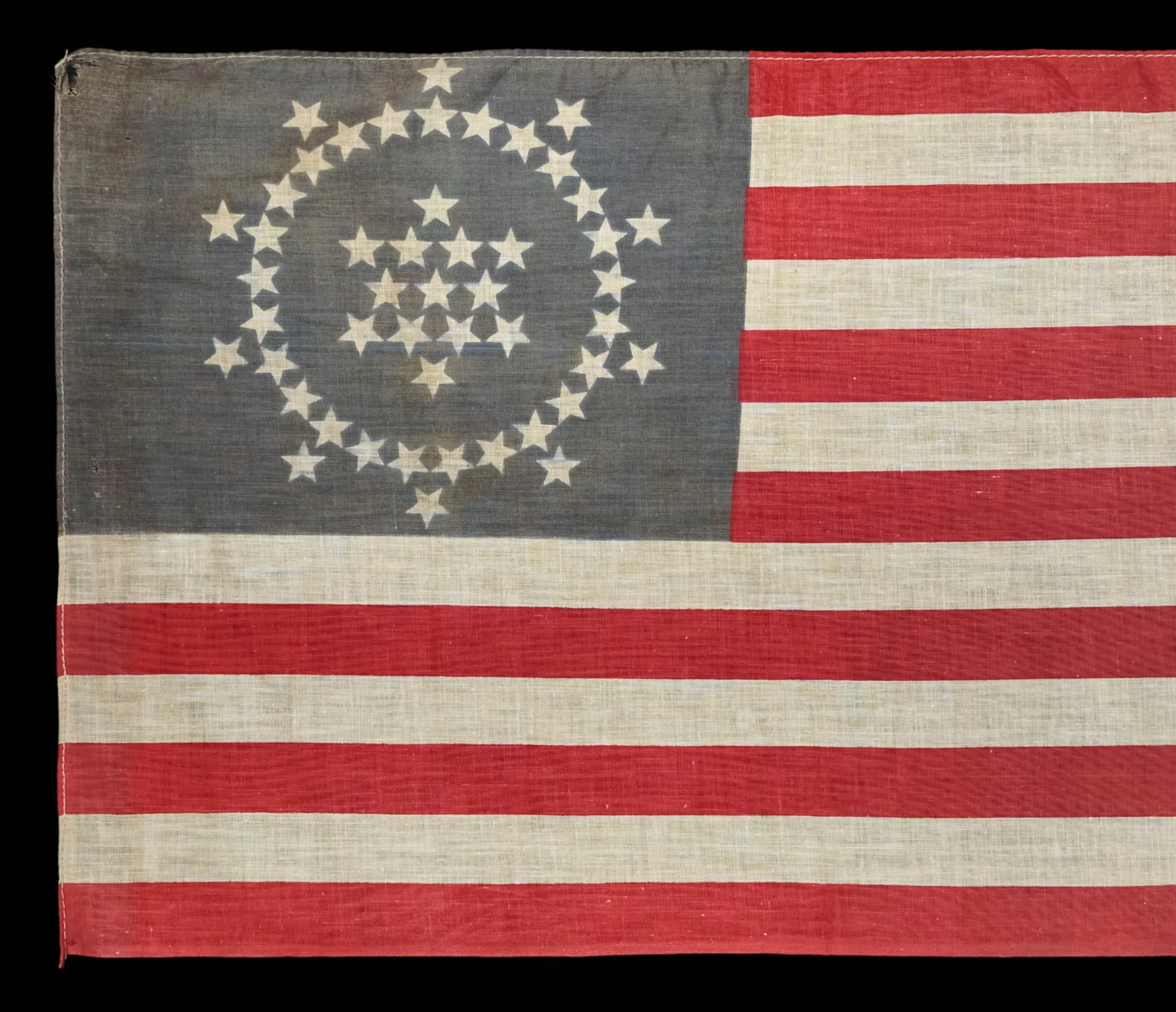
Offered is an exceptional and historically meaningful printed cotton flag featuring the celebrated Whipple pattern, produced between 1909 and 1912. This rare early 20th-century design represents one of the most ambitious alternative star configurations proposed just before the federal government standardized the forty-eight-star flag in 1912.
From the earliest years of the Republic, American flag makers enjoyed considerable freedom in arranging the stars. Although the First Flag Act of 1777 established the basic elements of the flag, no law specified how the stars should be configured. The result was more than a century of extraordinary variety—sunbursts, wreaths, great stars, medallions, and countless regional or maker-specific arrangements—each reflecting artistic preference, patriotic symbolism, or contemporary sentiment.
This long period of experimentation came to an end as the nation approached the admission of New Mexico and Arizona in 1912. To settle the matter, President William Howard Taft issued Executive Order 1556, which established a fixed pattern of six rows of eight stars and formalized the proportions of the U.S. flag. With a single directive, the era of creative unofficial star configurations drew to a close.
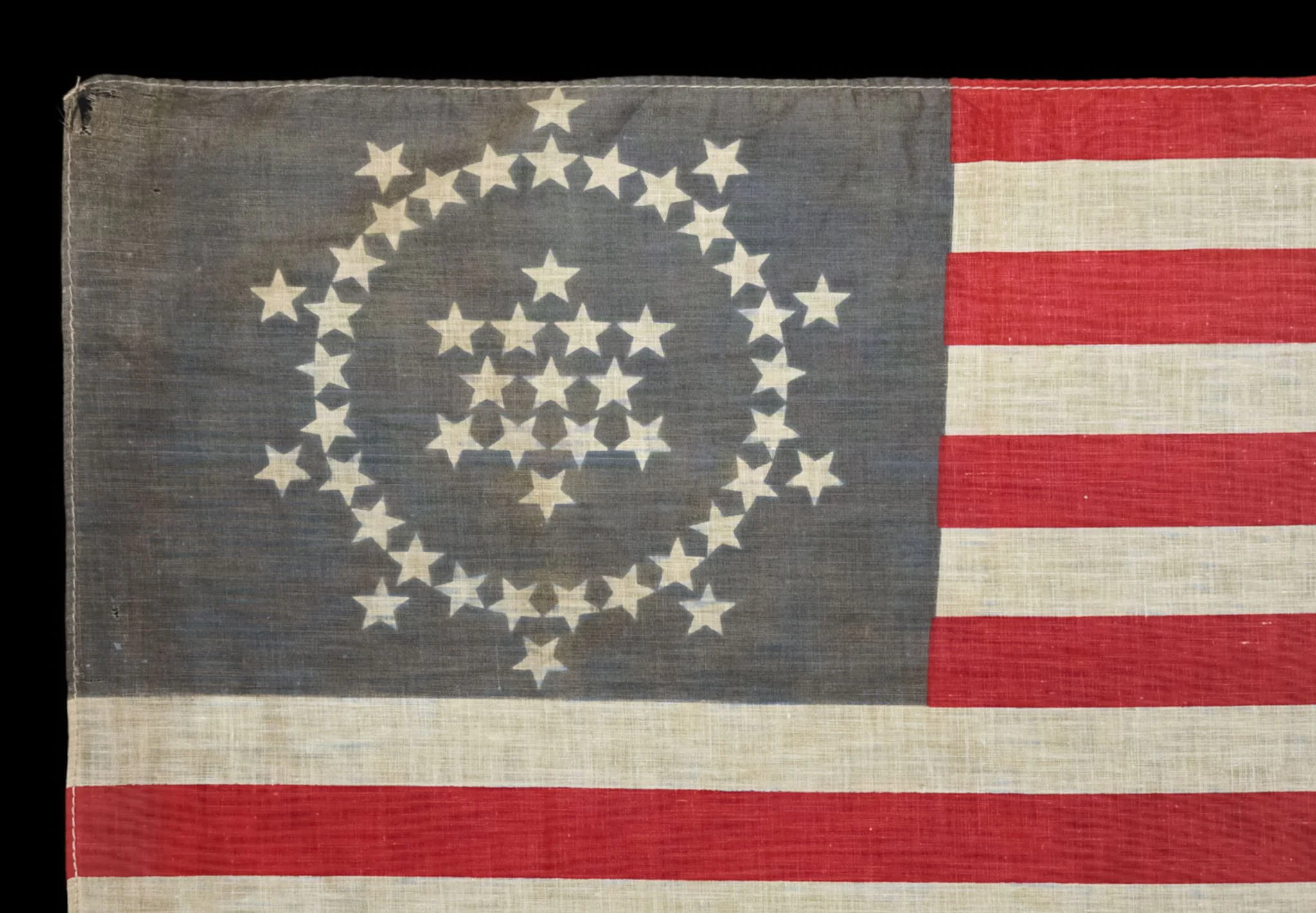
Among the most compelling designs proposed during the run-up to this change was the Whipple Peace Flag, created by author and historian Wayne Whipple of Philadelphia. Whipple sought a design that honored both the origins and the growth of the Union. At its center is a large Great Star composed of thirteen stars for the original colonies. Surrounding this are two rings: an inner ring of twenty-five stars representing states admitted between 1776 and 1876, and an outer ring of ten stars for those added afterward. The wide spacing of the outer ring was intentional, allowing room for future expansion. Whipple viewed the design as a symbol of unity, continuity, and national optimism, and he promoted it widely; it even drew the interest of President Taft.
Whipple’s proposal did not emerge in isolation. By the early 20th century, newspapers regularly published speculative star patterns, and patriotic organizations debated which arrangements best embodied the expanding nation. Whipple—already known nationally as a historian and author of patriotic literature—became one of the most visible advocates for a symbolic, historically grounded design. He published pamphlets, contributed articles, and delivered public lectures explaining the layered meaning behind his concentric rings of stars.
His design gained additional momentum in 1910 and 1911, when the federal government explored how a future standardized flag might be constructed. Whipple submitted his model to the War Department and to the White House, where numerous proposals were reviewed. Period newspapers reported that President Taft personally examined Whipple’s design and appreciated its symbolism. For a brief but notable period, the Whipple configuration appeared in editorials and patriotic publications as a serious contender for the official U.S. flag. Its eventual rejection—in favor of a simpler, more industrially efficient grid—captures the tension of the era, as the United States shifted from expressive, artisanal variations to a standardized national emblem aligned with modern manufacturing.
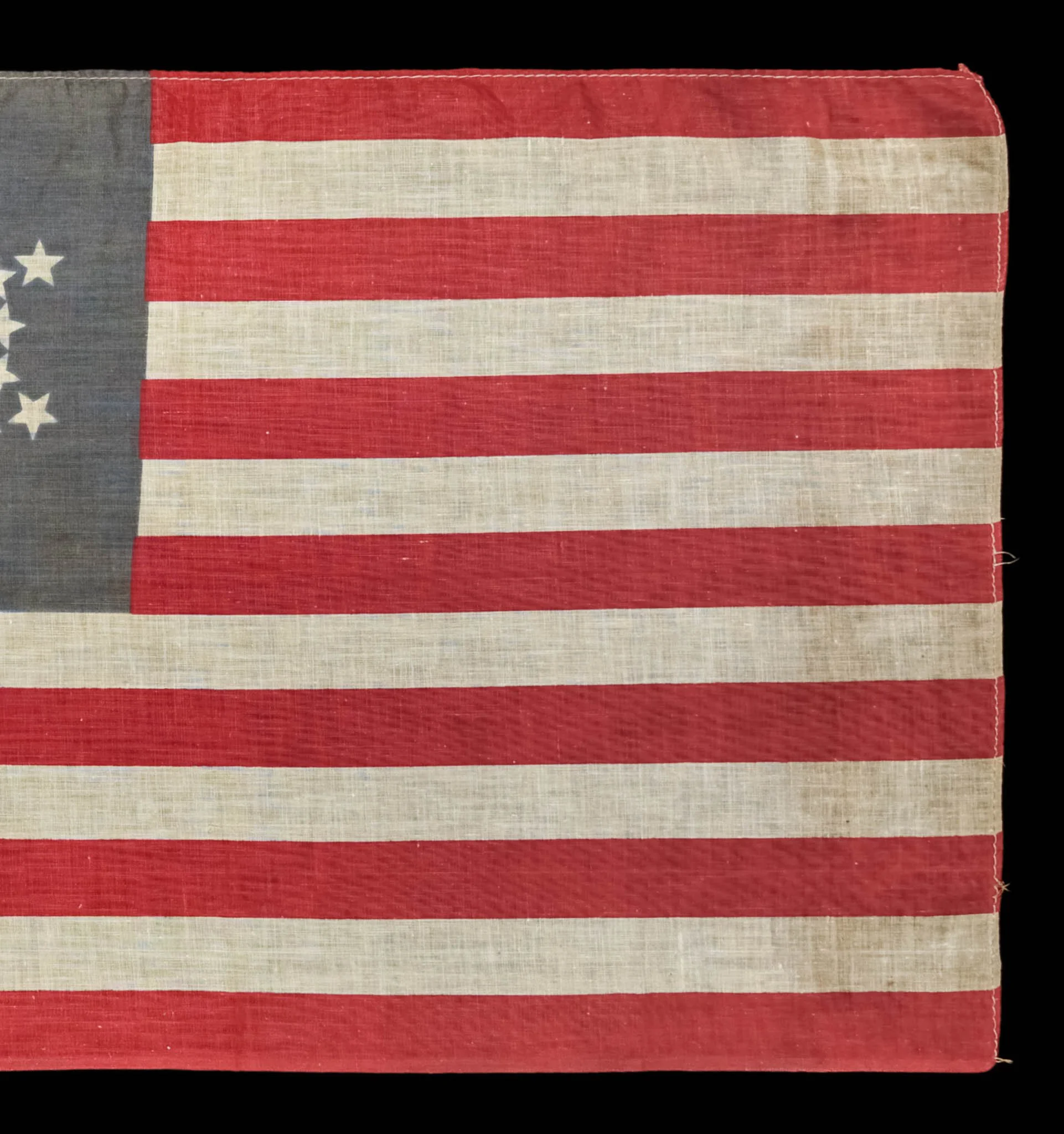
This example is printed on a lightweight, plain-weave cotton with clearly defined warp and weft yarns, typical of commercially produced parade flags of the early 20th century. The flagmaker finished the hoist, fly, and top edges with machine stitching. In contrast, the bottom edge was left unstitched because it is the original woven selvage of the fabric, which is naturally stable and does not fray. Together, these construction details reflect the practical, straightforward methods used for printed cotton flags intended for patriotic use in the years immediately preceding the adoption of the standardized forty-eight-star design. As both a patriotic artifact and an alternative vision for the national flag, this Whipple-pattern example stands as a compelling piece of pre–World War I Americana.
Conservation Process: This flag was hand sewn to cotton fabric, and both were hand sewn to a mounting board. To prevent the black dye in the cotton fabric from seeping into the flag, it was first washed in a standard wash and then in a dye setting wash. The flag is positioned behind Optium Museum Acrylic.
Frame: The flag is presented in a striking two-part custom frame composed of a wide, matte black outer moulding paired with a contrasting inner liner in a soft metallic tone. The combination creates depth and visual separation, allowing the flag to sit prominently.
Condition Report: The flag remains in attractive overall condition, with strong color in the red stripes and good clarity in the Whipple star configuration. Light discoloration appears along portions of the fly edge, likely the result of long-term storage in a rolled state, where the outermost layers were more exposed to ambient conditions. Of the minor fabric breaks present, the most notable is a small tear at the upper hoist corner; its placement suggests it may relate to early tacking—whether to a staff, a wall, or another display surface is uncertain.
Collectability Level: The Best – Perfect for Advanced Collectors
Date of Origin: 1909-1912
Number of Stars: 48
Associated State: Arizona