Antique American Children’s Overalls | Cone Deeptone Denim | “Look Out” Brand Label | Circa 1930-1949
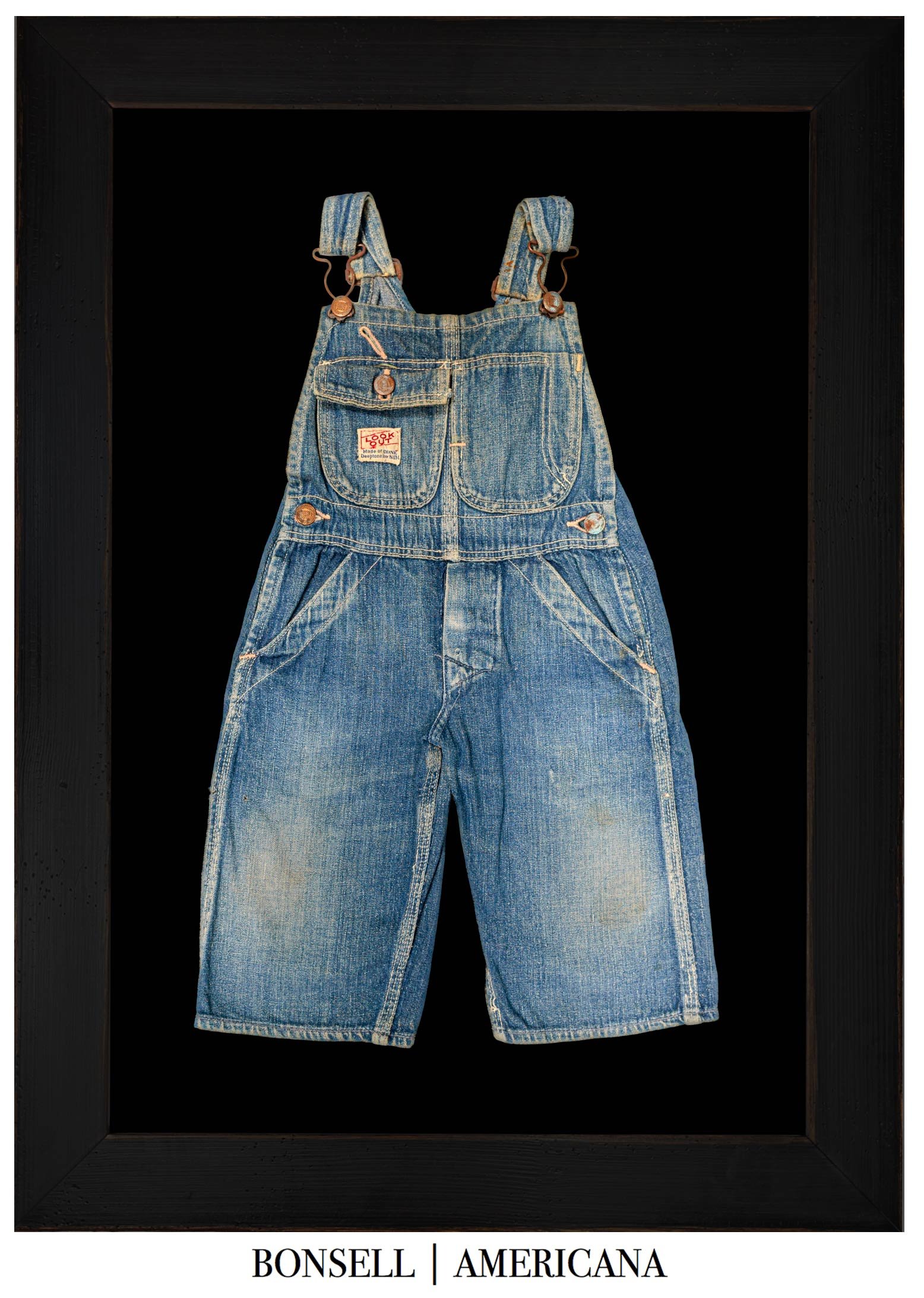
Antique American Children’s Overalls | Cone Deeptone Denim | “Look Out” Brand Label | Circa 1930-1949
Frame Size (H x L): 33.5” x 24.75”
Overalls Size (H x L): 12” x 23”
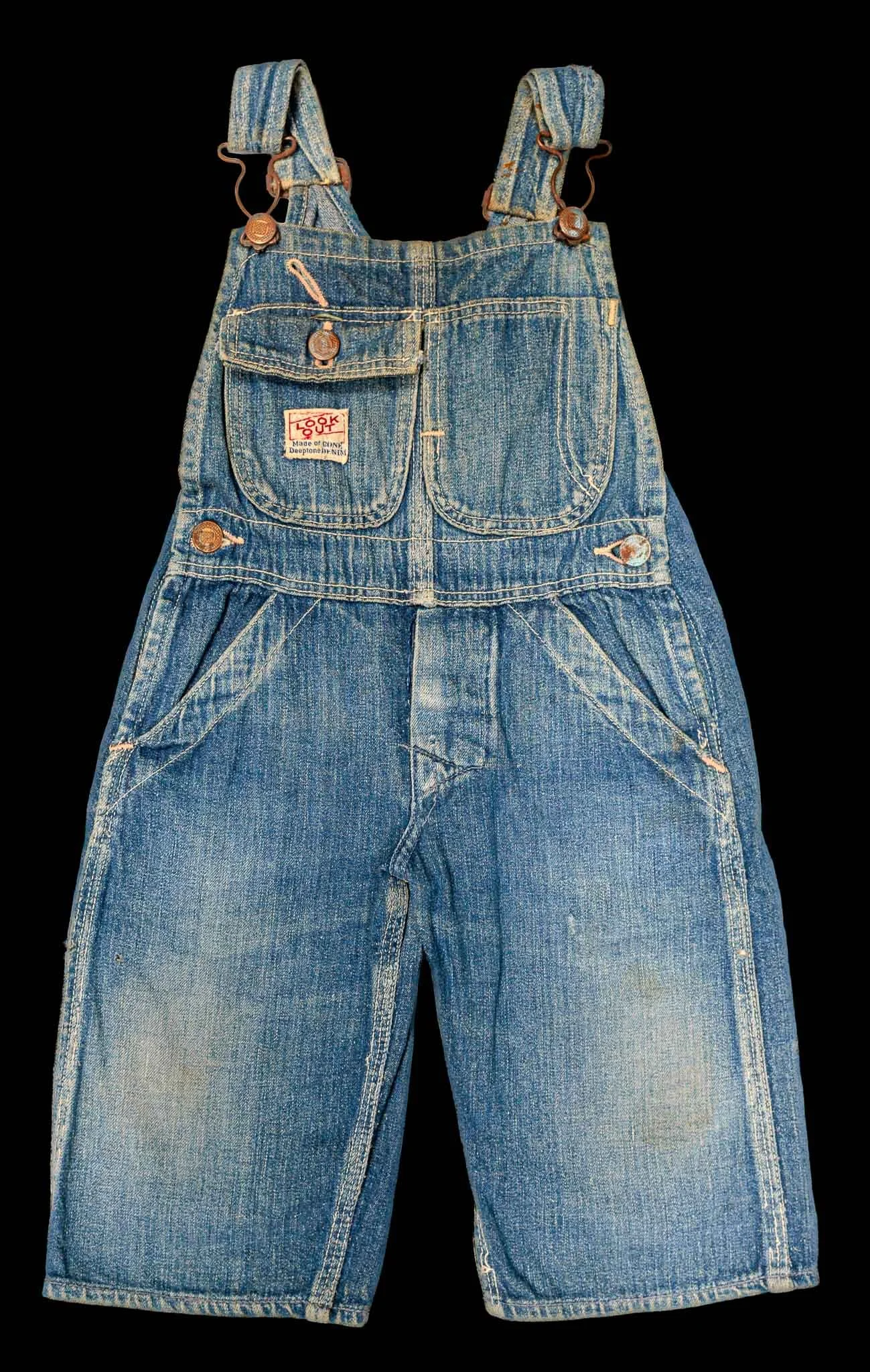
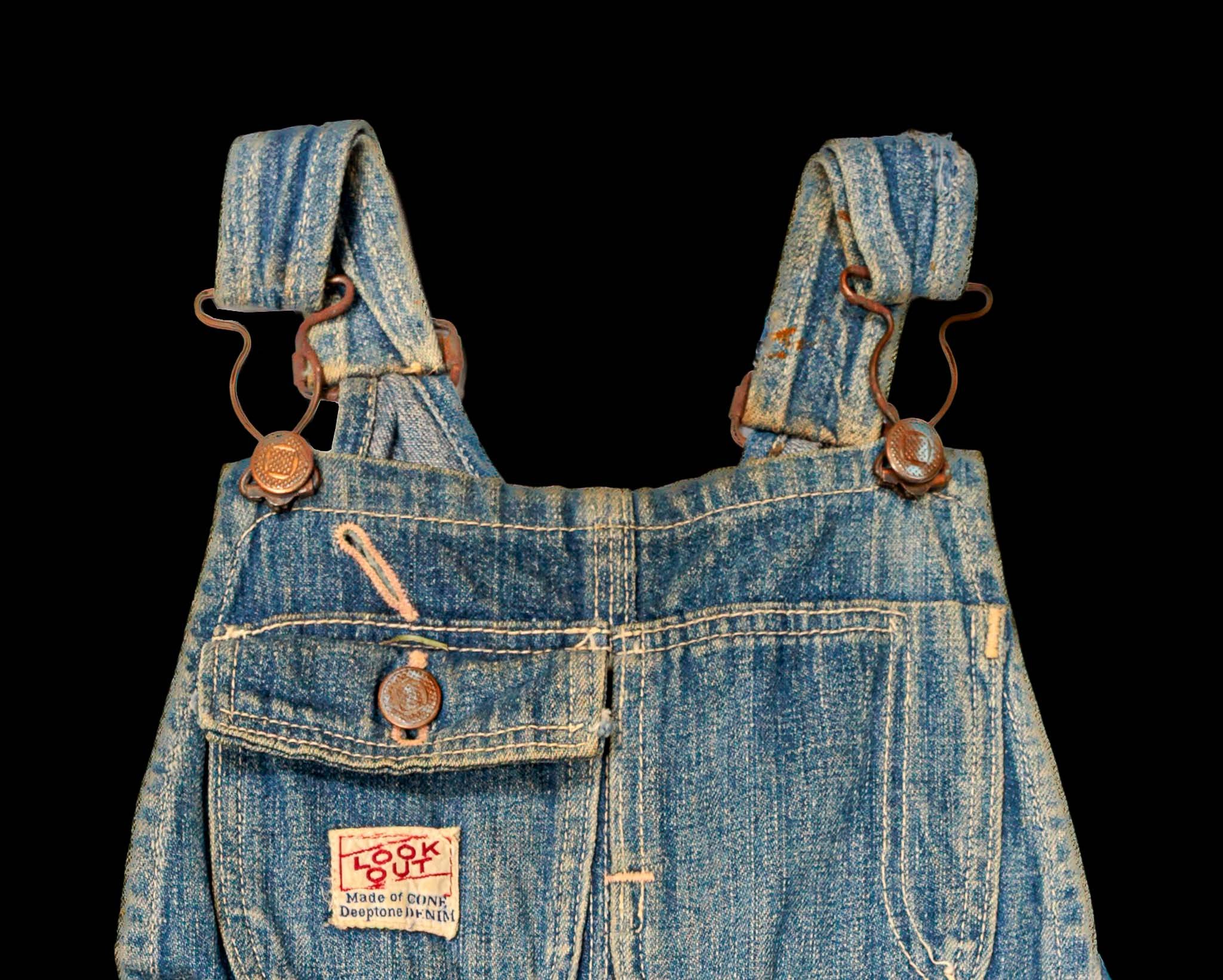
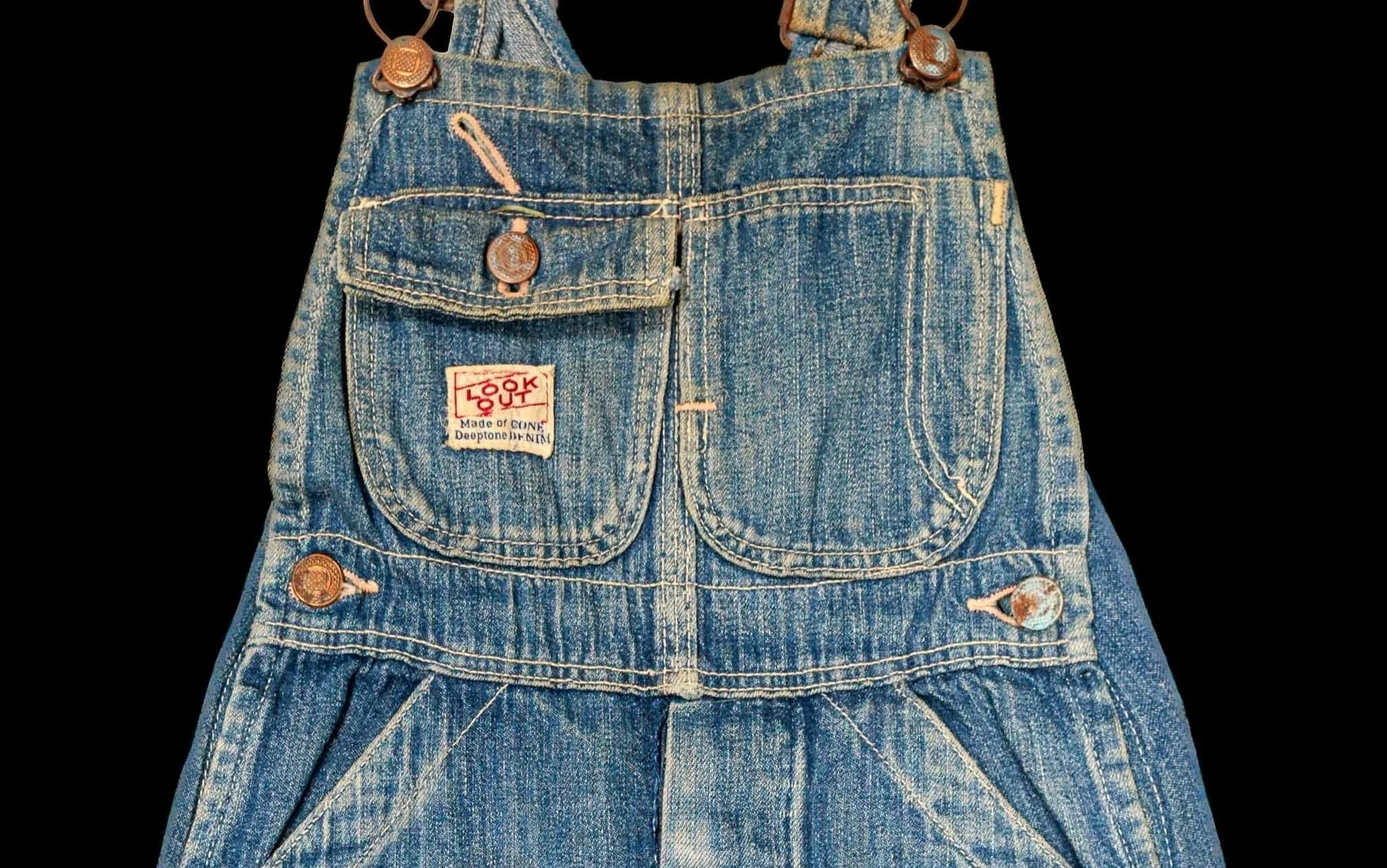
Offered is a pair of antique children’s denim overalls produced under the “Look Out” brand and constructed of Cone “Deeptone” denim, dating to approximately the 1930s–1940s. The surviving cloth label on the bib pocket reads “LOOK OUT – Made of Cone Deeptone Denim,” identifying both the brand name and the textile source. Cone Mills of Greensboro, North Carolina, was the most influential American manufacturer of denim during the twentieth century, supplying fabric to many of the country’s best-known workwear companies. Garments bearing references to Cone denim reflect the widespread reliance on this durable indigo cloth in the manufacture of utilitarian clothing intended for both labor and everyday wear.
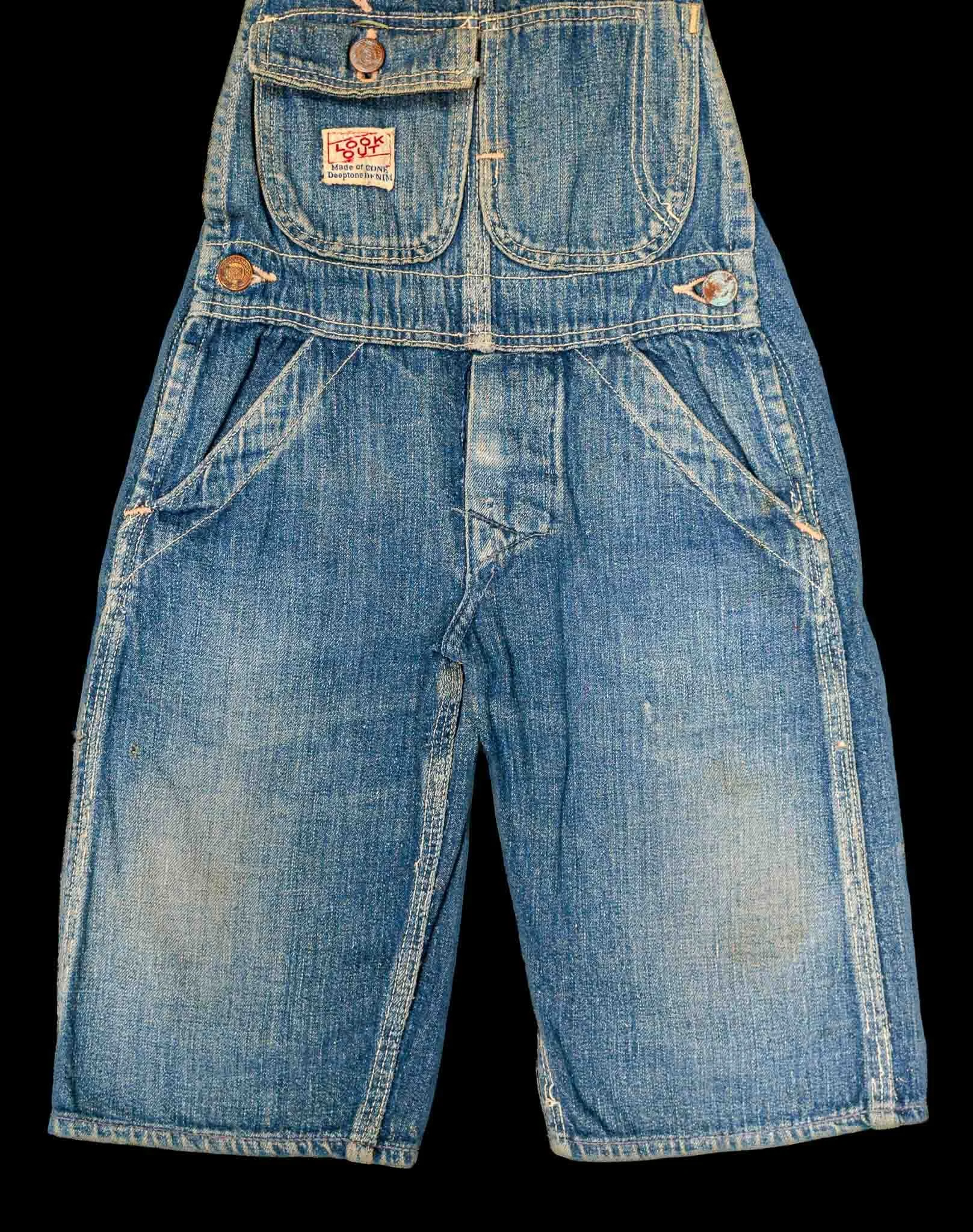
The overall style reflects classic early twentieth-century American workwear construction, scaled for children. The garment features a traditional bib front with shoulder straps secured by metal hook fasteners, a configuration commonly used on bib overalls prior to the widespread adoption of later adjustable clasp systems. The bib includes a central pocket with a flap closure and button, beneath which the “Look Out” label is sewn. Two additional front pockets appear at the waist, with reinforcement stitching at points of stress. The legs are cut wide in the manner typical of period work garments, allowing freedom of movement for active wear.
Children’s overalls of this type were widely worn throughout the United States during the early twentieth century. They served both practical and economical purposes, providing a durable outer garment that protected clothing beneath while allowing children to participate in farm work, chores, and play. Denim overalls became a particularly common sight in rural communities and small towns, where sturdy garments were essential and clothing was expected to withstand heavy use. The association between overalls and childhood in America during the 1930s and 1940s is well documented in photographs, advertisements, and mail-order catalogs from the period.
The use of Cone “Deeptone” denim reflects the emphasis placed on durability and colorfastness in workwear fabrics of the era. Cone Mills developed several branded denim lines to promote the quality of its indigo-dyed cloth, and the “Deeptone” designation referred to the deep coloration achieved through repeated indigo dyeing of the warp yarns. This process produced denim that aged attractively with wear, gradually developing lighter areas and soft contrasts where the fabric was repeatedly flexed or abraded.
Surviving examples such as this illustrate the durable clothing commonly worn by American children during the first half of the twentieth century and reflect the widespread use of Cone Mills denim in garments intended for everyday wear.
Conservation Process: The overalls were hand sewn to cotton fabric, and both were hand sewn to a mounting board. To prevent the black dye in the cotton fabric from seeping into the overalls, the cotton was first washed in a standard wash and then in a dye setting wash. The overalls are positioned behind Optium Museum Acrylic.
Frame: The frame has a relatively flat profile with a matte black finish. The surface shows intentional distressing with subtle texture and light variation in the finish, giving it a restrained, aged appearance.
Condition Report: The overalls show honest wear consistent with age and use, including areas of fading, light fraying, and minor scattered wear to the denim. The metal hardware shows oxidation and age, while the fabric exhibits attractive, natural distressing throughout. Overall, the garment presents very well, with the kind of authentic wear that collectors appreciate in early denim workwear.
Collectability Level: The Good – Perfect for Beginners and Gifts
Date of Origin: 1930-1949