Antique “Votes for Women” Suffrage Armband | Yellow & Black Women’s Suffrage Textile | Circa 1910–1920


Antique “Votes for Women” Suffrage Armband | Yellow & Black Women’s Suffrage Textile | Circa 1910–1920
Price: Call 618-553-2291, or email info@bonsellamericana.com
Frame Size (H x L): 9” x 32 ½”
Textile Size (H x L): 1 ¼” x 25 ½”
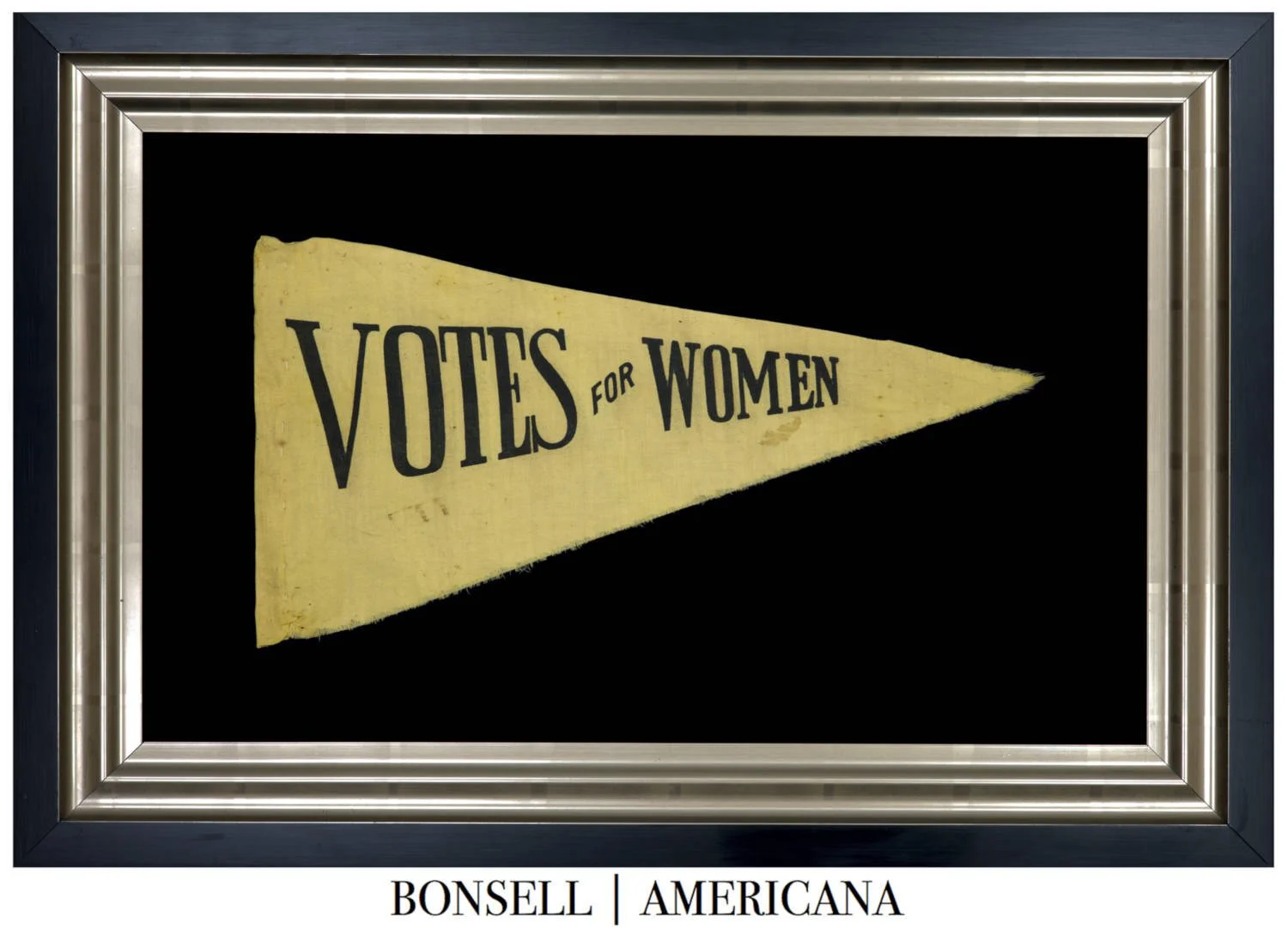
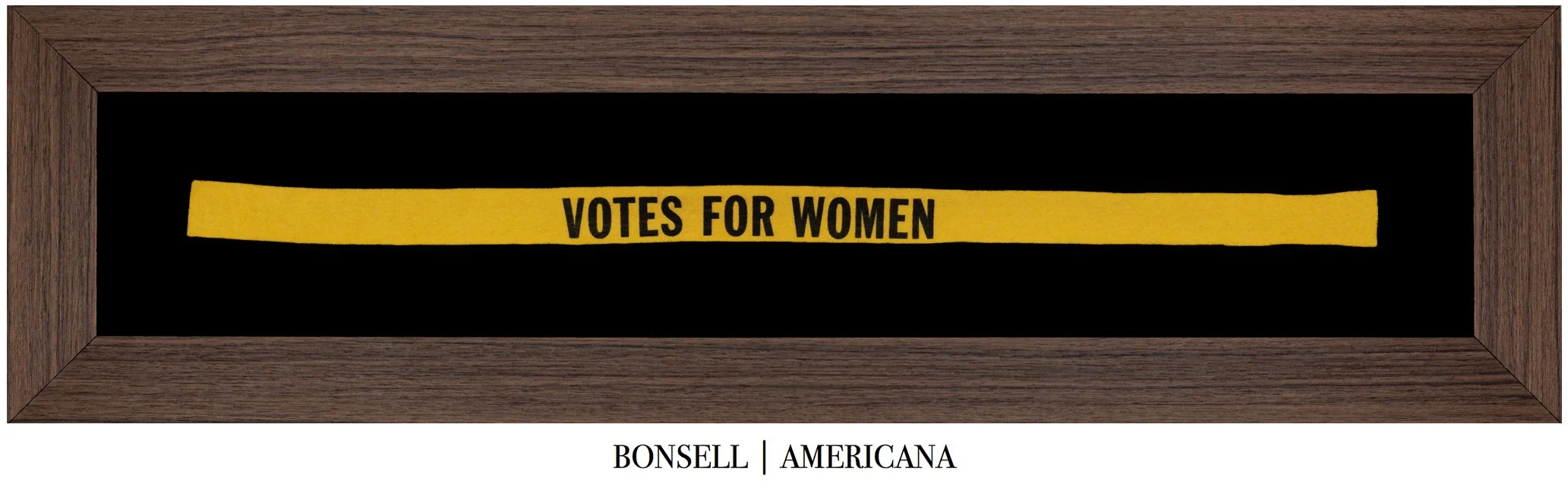
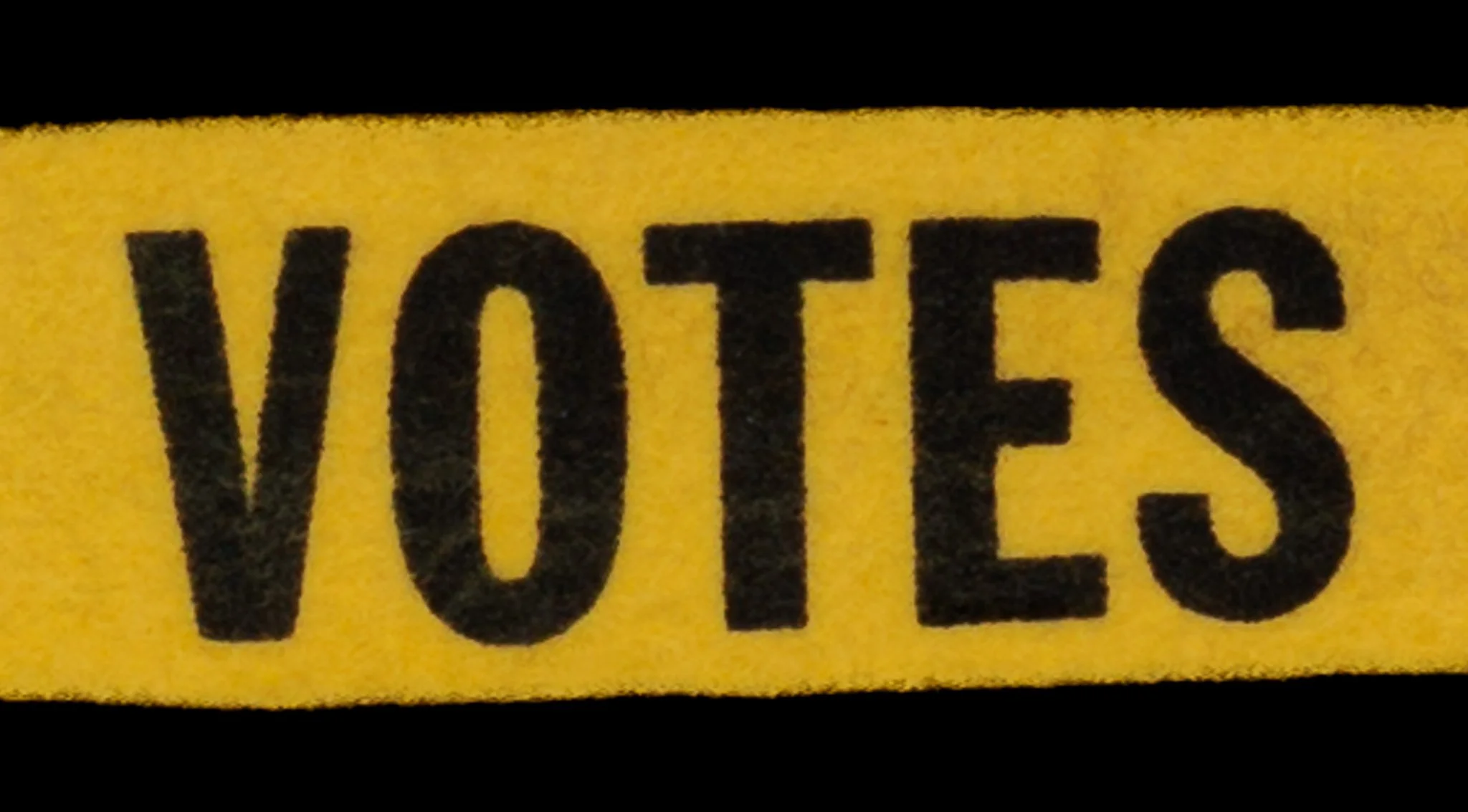
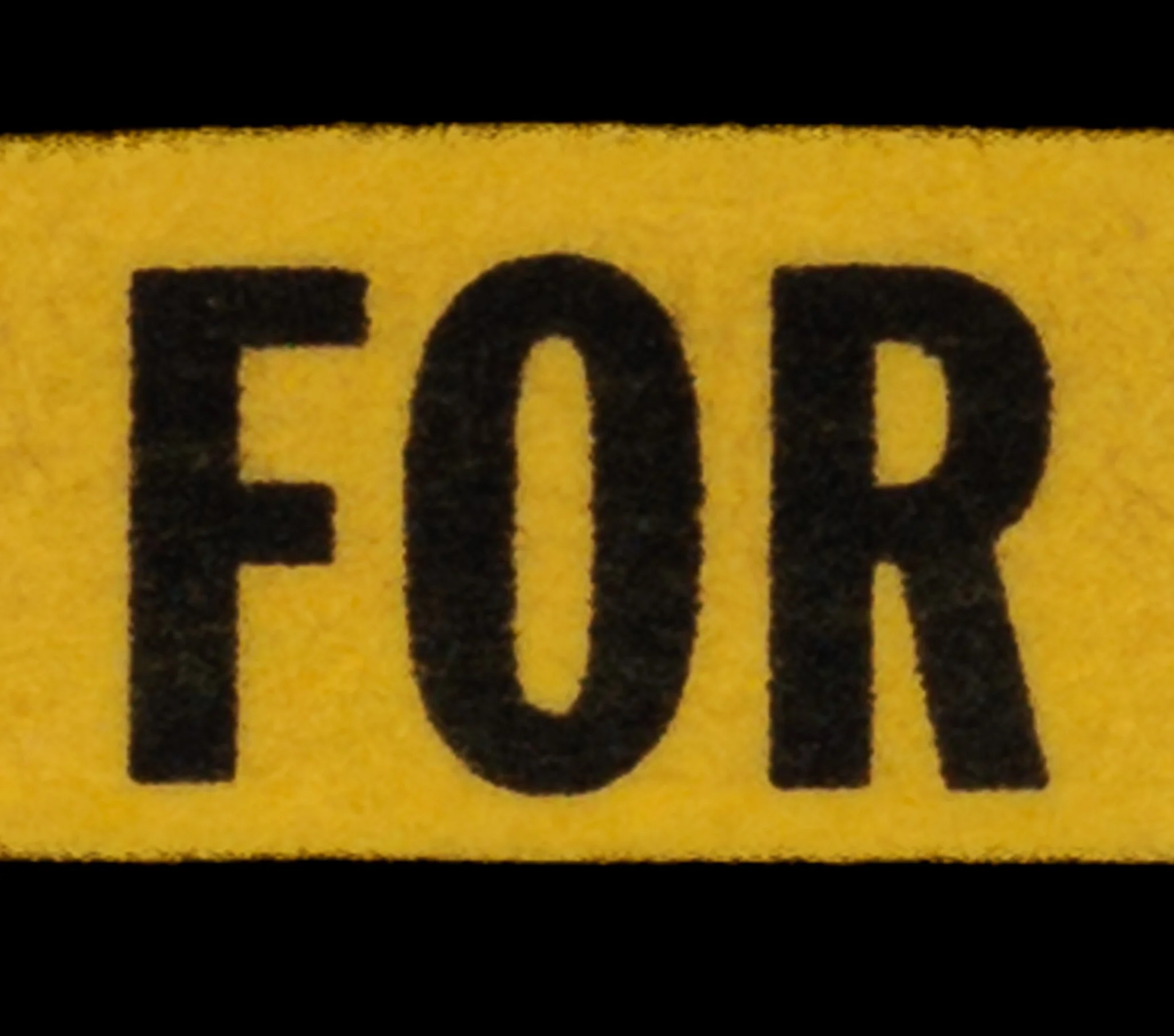
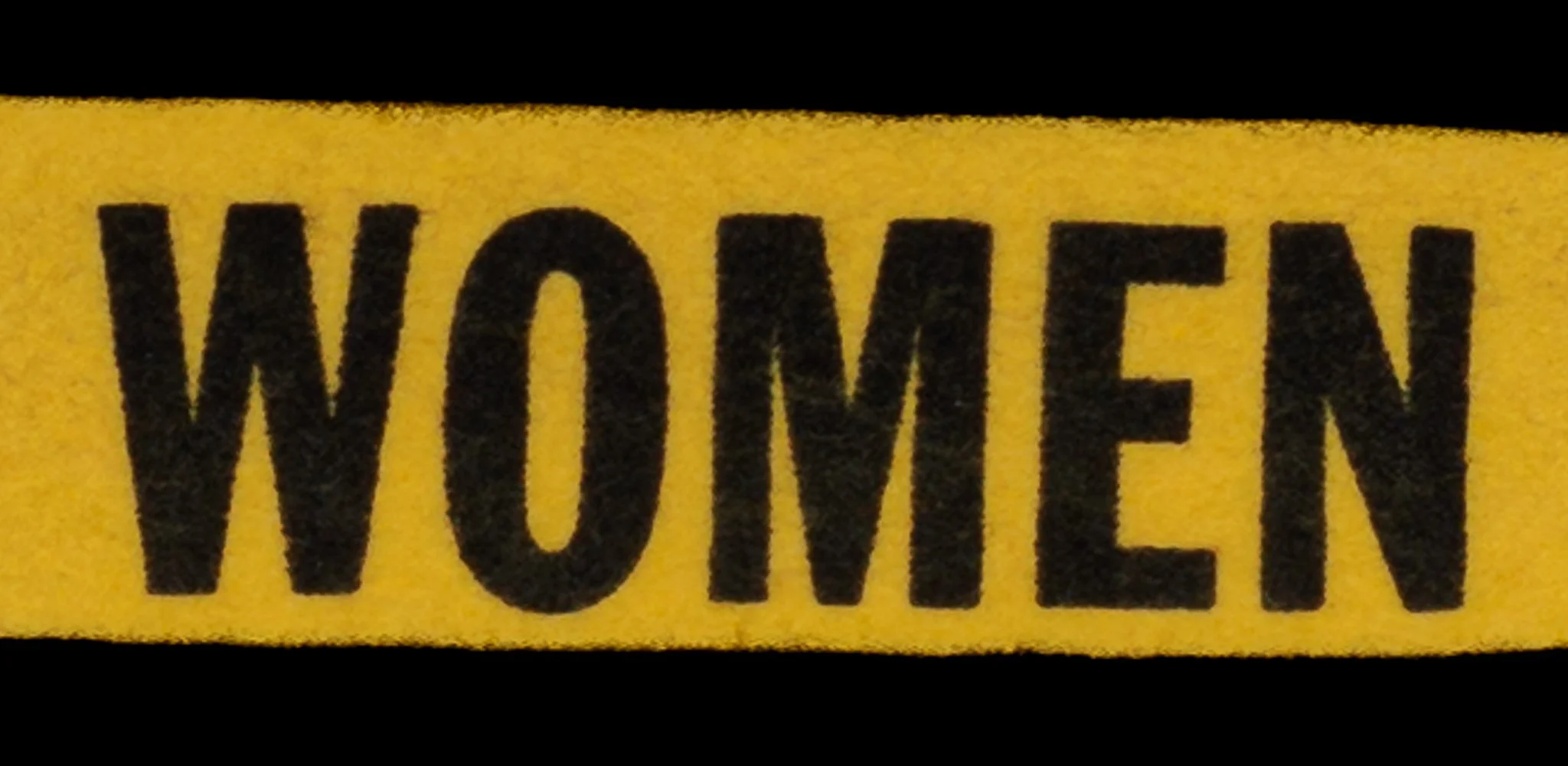
Offered is a rare “VOTES FOR WOMEN” suffrage armband, fashioned from yellow felt with bold black lettering. Bands of this form were worn around the arm and, in some instances, around a hat, providing supporters with a simple and highly visible way to identify themselves with the women’s suffrage movement. The direct slogan, strong contrast, and unmistakable yellow-and-black color scheme made pieces such as this particularly effective at rallies, conventions, parades, and other public demonstrations.
Yellow became one of the most recognizable colors associated with the American women’s suffrage movement. Its use can be traced to the campaign for suffrage in Kansas in 1867, where the sunflower—Kansas’s state flower—was adopted as a symbol by supporters. The color was later embraced by major national suffrage organizations and appeared extensively on banners, ribbons, sashes, pennants, buttons, and other campaign material. Yellow was frequently paired with black lettering, as seen here, producing a combination that was both visually striking and easily legible from a distance.
The organized American women’s rights movement is generally traced to the Seneca Falls Convention of 1848, organized principally by Elizabeth Cady Stanton and Lucretia Mott. The convention produced the Declaration of Sentiments, modeled in part on the Declaration of Independence, which outlined a broad series of grievances regarding the legal, political, educational, and economic status of women. Among its most consequential demands was the assertion that women should possess the right to vote.
Over the following decades, suffrage advocates organized conventions, petition drives, speaking tours, publications, marches, and political campaigns throughout the country. Progress initially came largely on a state-by-state basis, particularly in the West, where a number of states enfranchised women before a federal amendment was adopted. At the same time, national organizations increasingly focused their efforts on securing an amendment to the United States Constitution that would prohibit the denial of voting rights on the basis of sex.
A federal women’s suffrage amendment was first introduced in Congress in 1878. For decades it failed to receive sufficient support, despite the increasingly organized efforts of suffragists across the country. By the 1910s, however, the movement had gained substantial political momentum. Highly visible demonstrations, coordinated lobbying campaigns, and the prominent role played by women during World War I helped place suffrage at the center of national political debate.
The proposed amendment passed the House of Representatives on May 21, 1919, followed by the Senate on June 4. It was then submitted to the states for ratification. On August 18, 1920, Tennessee became the 36th state to ratify the amendment, providing the three-fourths majority then required. The 19th Amendment was formally certified on August 26, 1920, declaring:
“The right of citizens of the United States to vote shall not be denied or abridged by the United States or by any State on account of sex.”
Small wearable textiles such as this armband represent the public-facing side of the suffrage campaign. Unlike formal banners intended for organizational headquarters or large demonstrations, armbands and hatbands could be worn directly by individual supporters, effectively turning the wearer into a moving advertisement for the cause. Their relatively ephemeral nature also contributes to their scarcity today, as pieces made for active campaign use were far less likely to be preserved than medals, buttons, or printed ephemera.
With its bold “VOTES FOR WOMEN” message and classic yellow-and-black suffrage coloration, this is an excellent surviving example of the material culture produced during one of the most consequential political reform movements in American history.
Conservation Process: This armband was hand sewn to cotton fabric, and both were hand sewn to a mounting board. To prevent the black dye in the cotton fabric from seeping into the armband, it was first washed in a standard wash and then in a dye setting wash. The armband is positioned behind Optium Museum Acrylic.
Frame: The armband is presented in a flat-profile dark walnut frame with a clean, understated finish.
Condition Report: The armband remains in excellent condition, with exceptionally strong yellow coloration and crisp, bold black lettering. The felt is remarkably well preserved, showing only the slightest age-related surface variation and no significant staining, losses, or damage.
Collectability Level: The Great – Perfect for Rising Collectors
Date of Origin: 1910-1920