Attractive 13 Star Antique US Flag with a 3-2-3-2-3 Pattern | Ideal Display Size | Circa 1900-1940
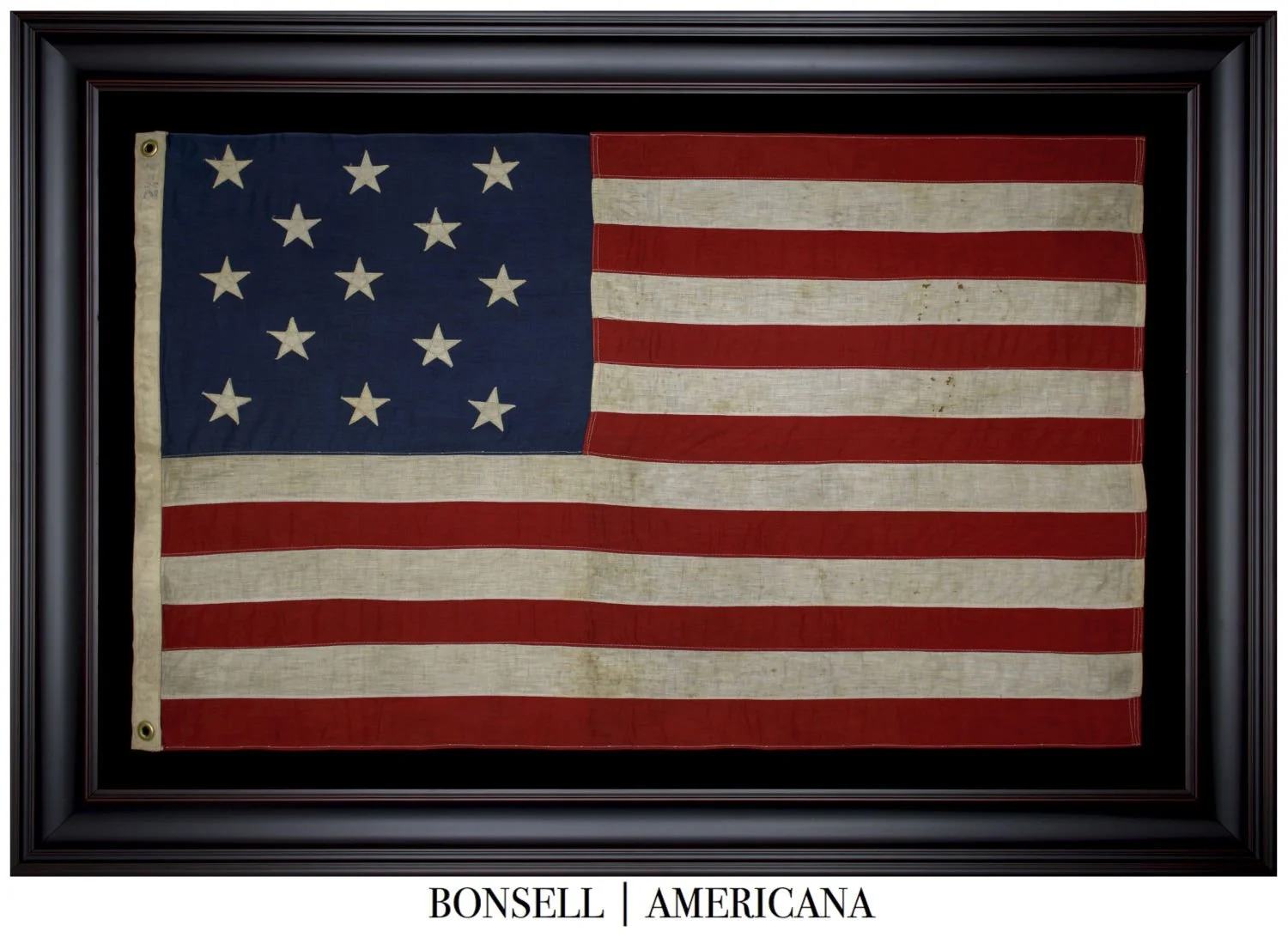
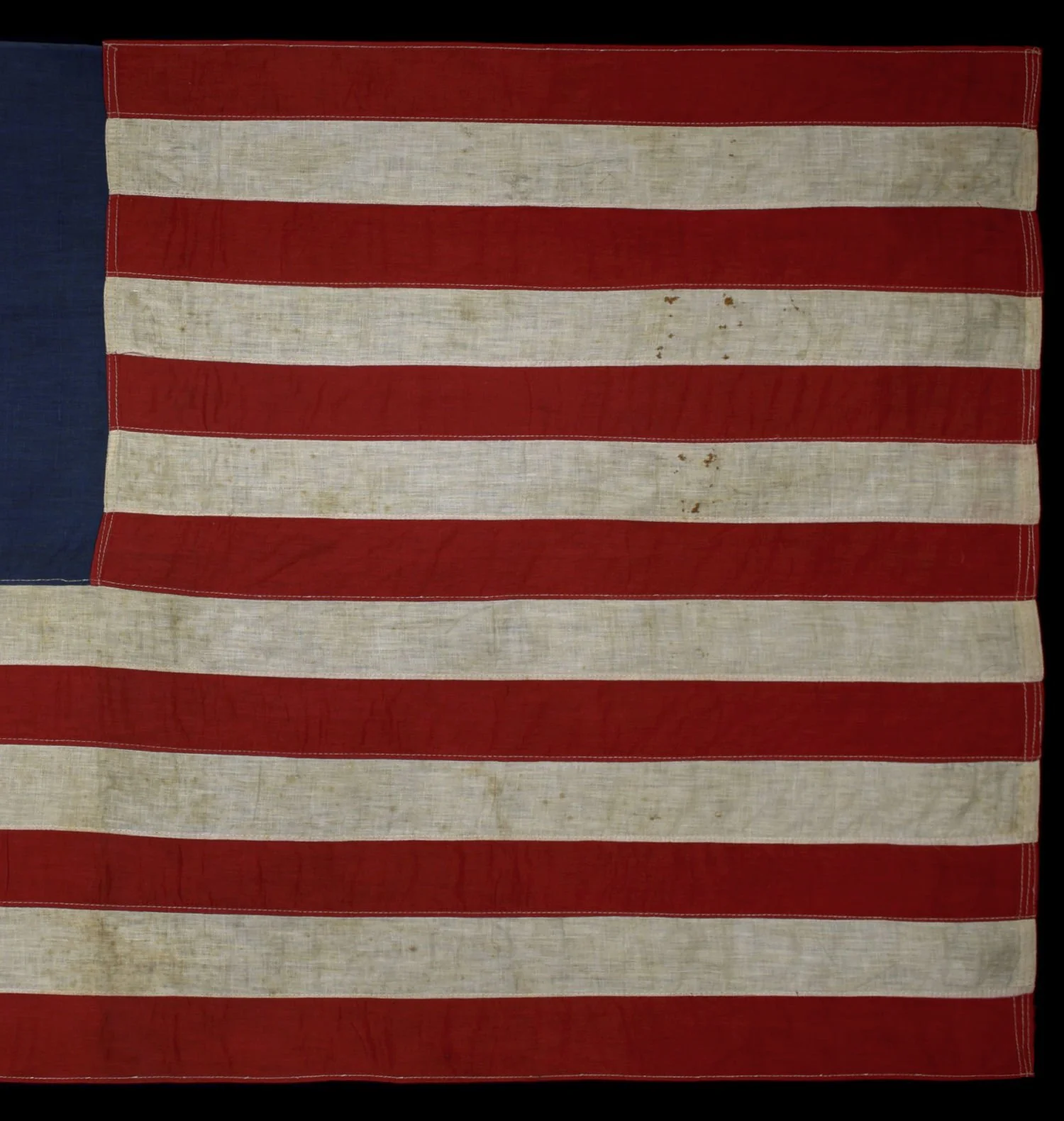
Attractive 13 Star Antique US Flag with a 3-2-3-2-3 Pattern | Ideal Display Size | Circa 1900-1940
Frame Size (H x L): 40” x 58.5”
Flag Size (H x L): 28.5” x 47”
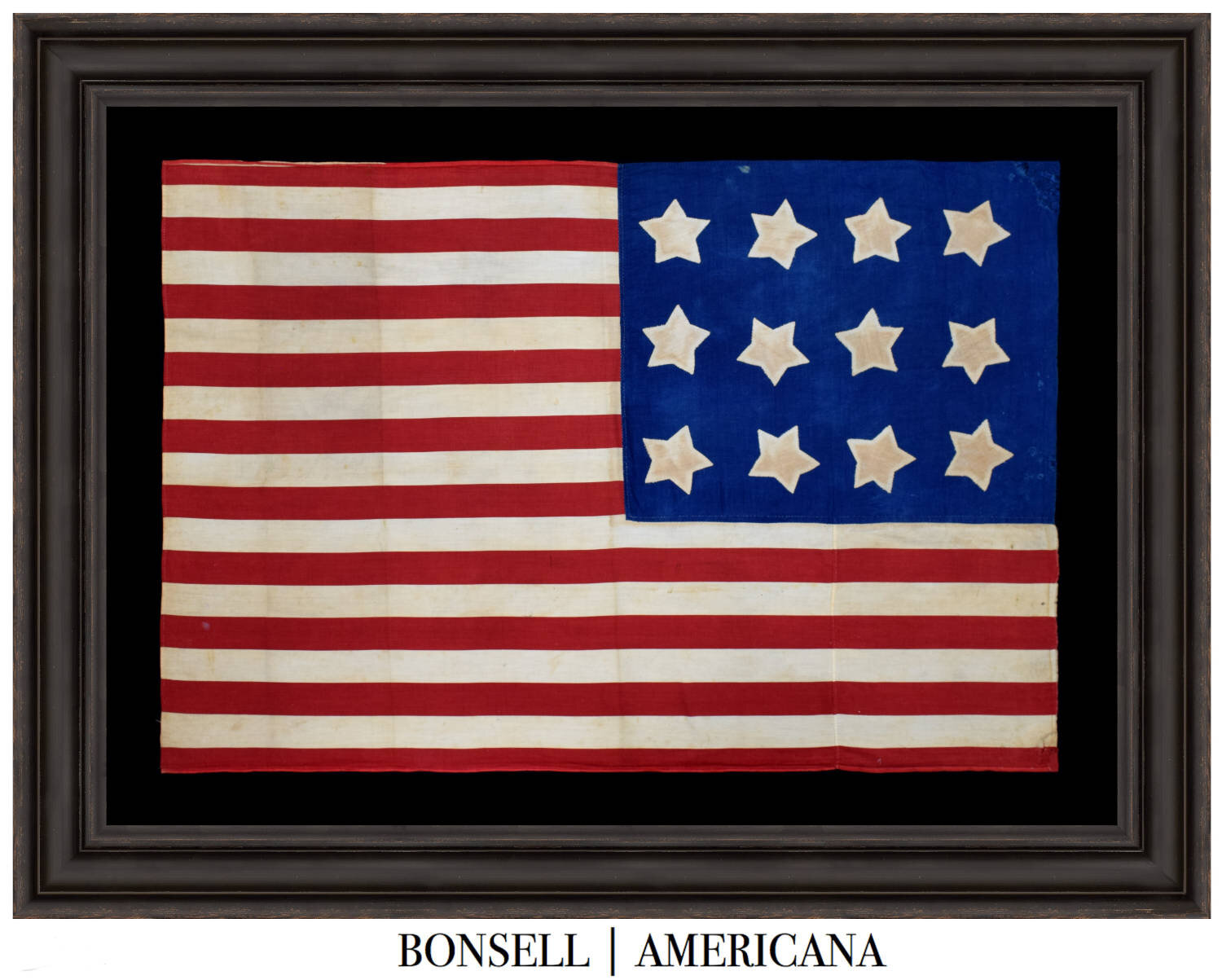
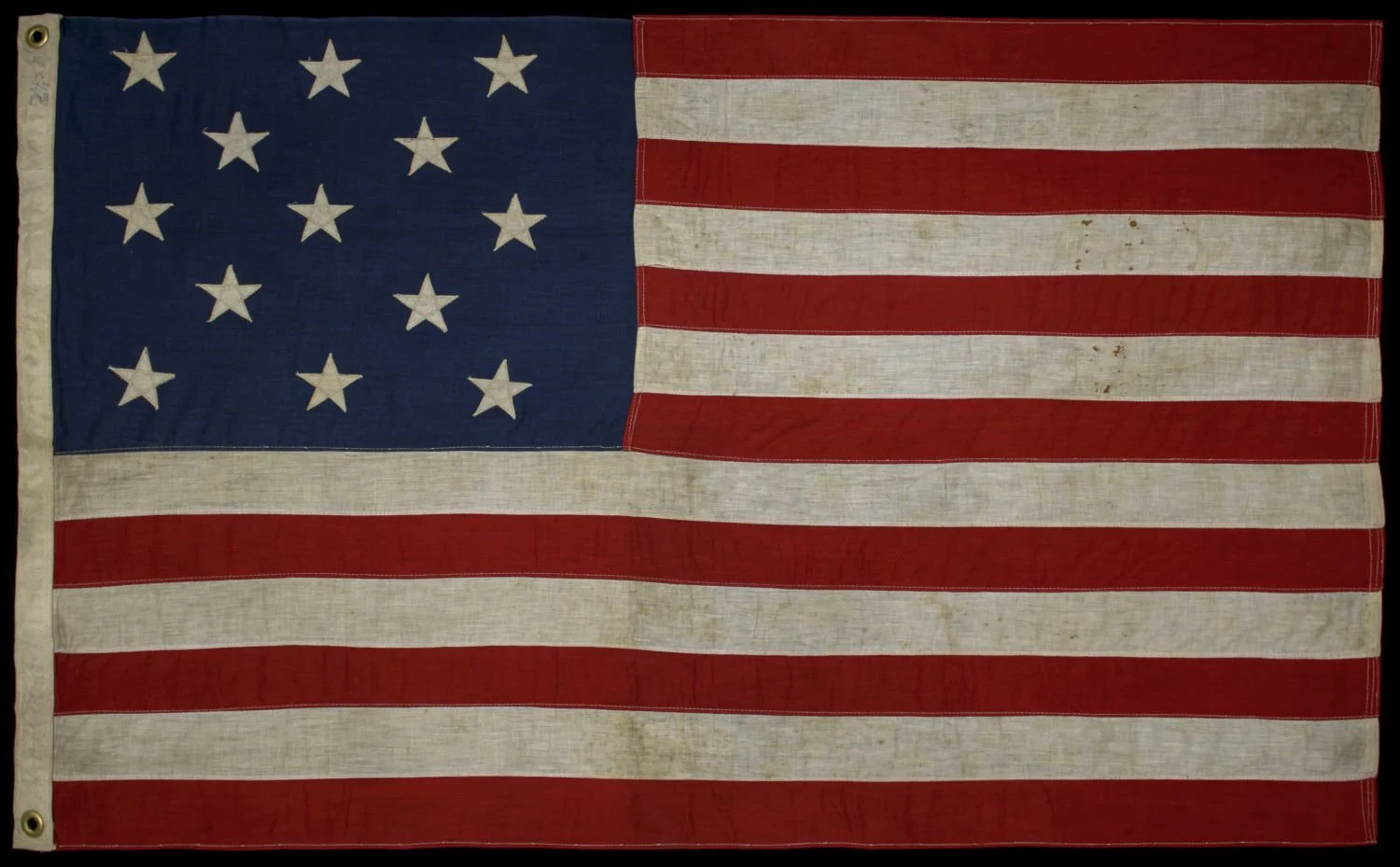
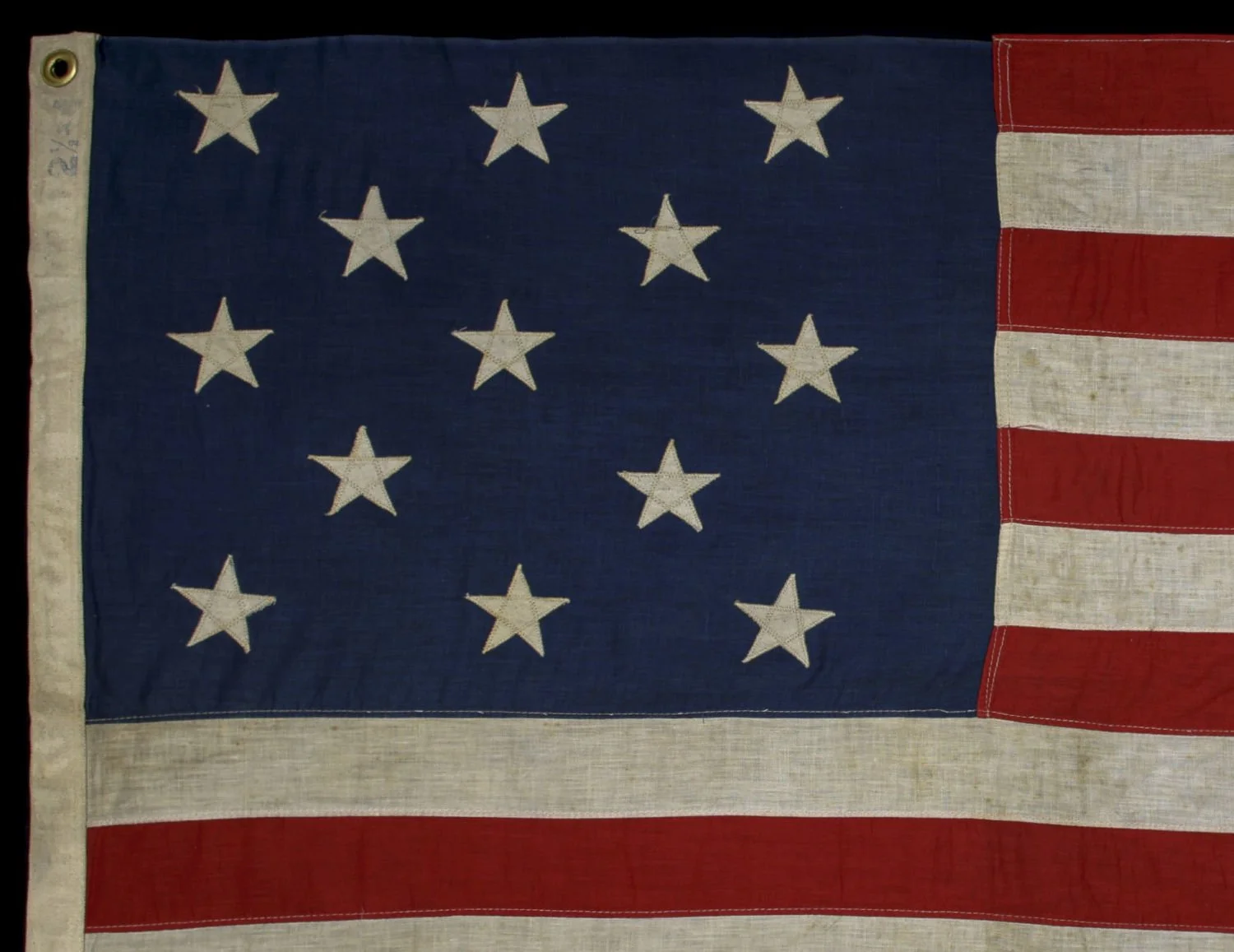
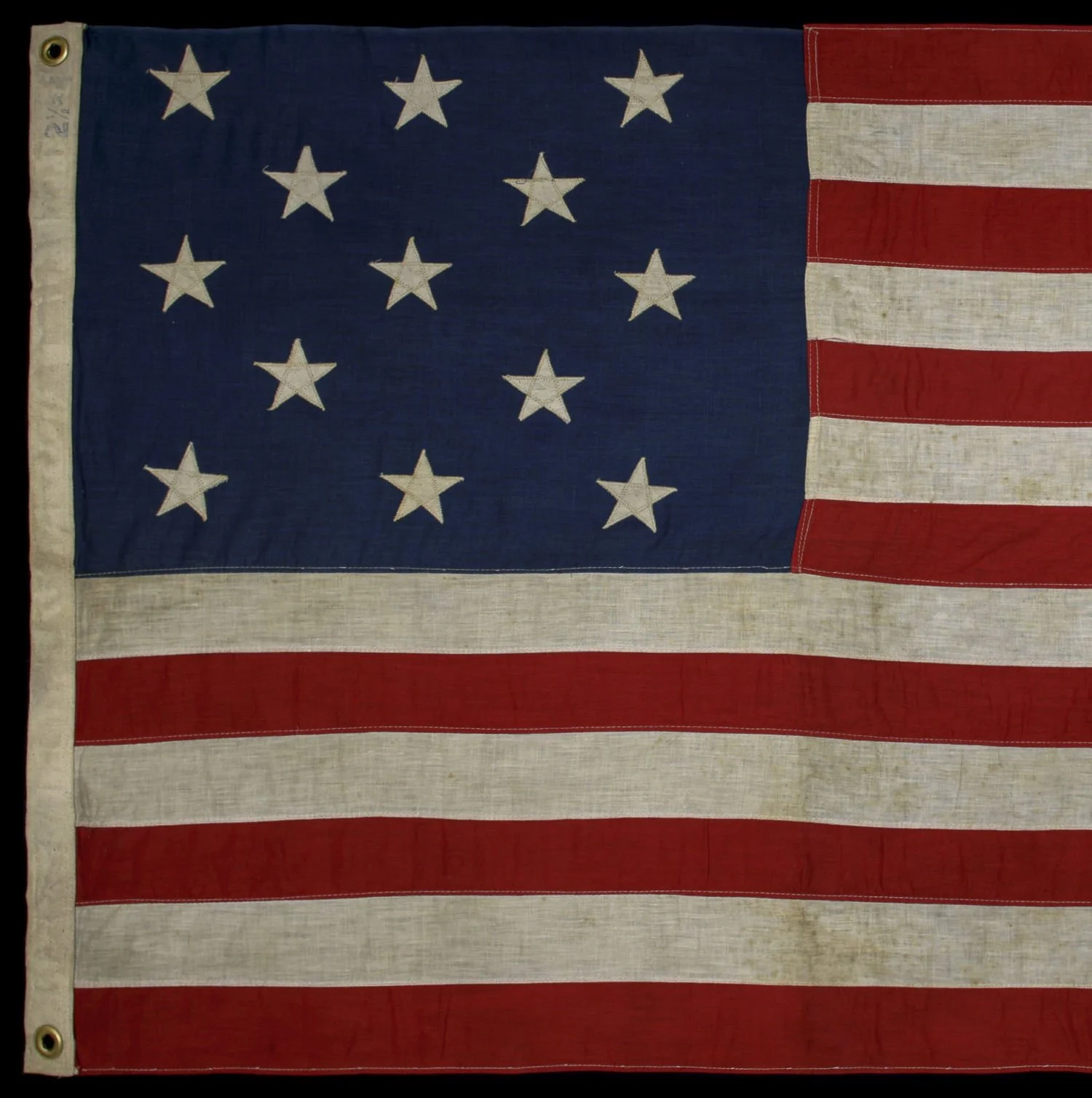
Offered is a thirteen-star antique American flag, featuring a 3-2-3-2-3 star configuration. This pattern, which resembles a central diamond of stars surrounded by corner stars, is sometimes referred to as the Hopkinson pattern—named for Francis Hopkinson, a member of the Continental Congress, signer of the Declaration of Independence, and likely designer of the first American flag. While the Betsy Ross story remains culturally significant, there is no documentary evidence that she designed or sewed the first flag. In contrast, Hopkinson submitted a request for payment to Congress for his work on the flag’s design, including a claim for a quarter-cask of wine and later for $1,440 in Continental currency. Both requests were denied, though Congress acknowledged his contributions.
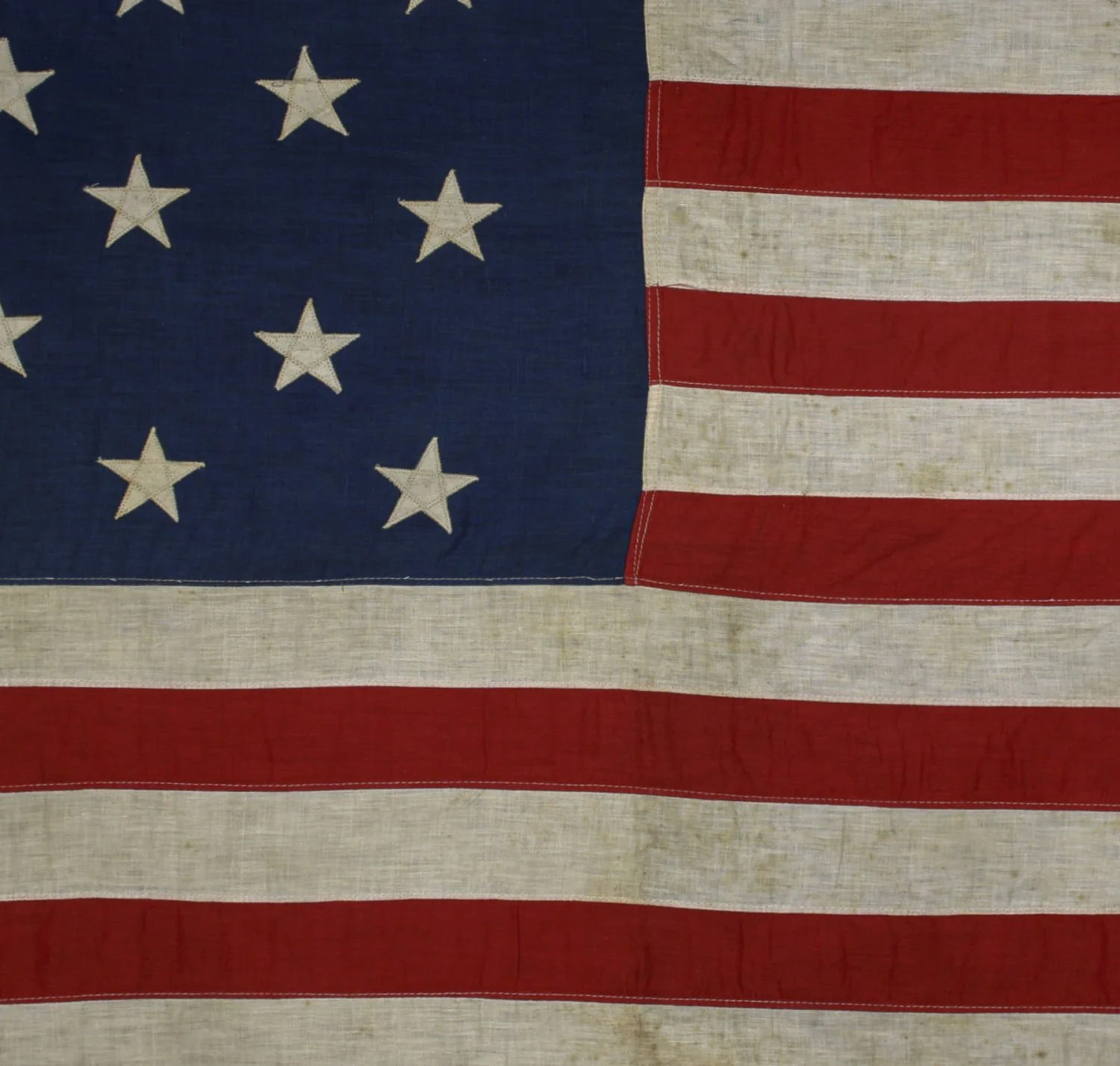
This example is constructed entirely of cotton, including the red and white stripes, the blue canton, and the stars. The stars are double-appliquéd to both sides of the canton using a zig-zag machine stitch—a method patented in 1892 and commonly used through the early 20th century. The flag's hoist is made of heavy, unbleached cotton sailcloth, stamped in blue ink with the dimensions “2½ x 4,” and fitted with brass grommets. These characteristics—particularly the all-cotton fabric, zig-zag stitching, stamped hoist, and brass hardware—support a manufacture date between 1900 and 1940. It may have been produced for patriotic display during World War I, the 1926 Sesquicentennial, or another commemorative event in the early 20th century.
The original adoption of the thirteen-star flag occurred on June 14, 1777, when the Continental Congress passed the first Flag Act, resolving: “That the flag of the United States be made of thirteen stripes, alternate red and white; that the union be thirteen stars, white in a blue field, representing a new constellation.” This early version of the flag symbolized unity among the original thirteen colonies and quickly became one of the most enduring icons of the American Revolution. However, the Flag Act did not prescribe the arrangement of the stars, proportions of the flag, or specific design elements—resulting in a wide variety of star patterns and flag forms during the Revolutionary era and beyond.
Although the thirteen-star flag was technically only “official” from 1777 to 1795—after which a star was added for each new state—its use continued well beyond that period in symbolic and ceremonial contexts. It was flown during significant national moments, including the death of George Washington in 1799, when Americans mourned the passing of the country’s foremost Revolutionary leader. In 1824, it reappeared prominently during the 50th anniversary of independence and the celebrated U.S. tour of General Marquis de Lafayette, the French hero of the American Revolution. That year, parades and public receptions across the nation used thirteen-star flags as a conscious nod to the founding generation.
Throughout the 19th century, the thirteen-star flag continued to serve as a visual connection to America’s Revolutionary origins. It was flown during the Mexican-American War (1846–1848), the Civil War (1861–1865)—particularly in Union states where Revolutionary imagery reinforced the idea of national unity—and again during the 1876 Centennial Exhibition in Philadelphia. In each case, the flag was not used for its legal accuracy but rather for its symbolic resonance: a tribute to the nation’s founding ideals and to the enduring legacy of the original thirteen states. This symbolic function continued well into the 20th century, as the flag became a favored motif during anniversaries, educational commemorations, and patriotic events that sought to evoke America’s early history.
Conservation Process: This flag was hand sewn to cotton fabric, and both were hand sewn to a mounting board. To prevent the black dye in the cotton fabric from seeping into the flag, it was first washed in a standard wash and then in a dye setting wash. The flag is positioned behind Optium Museum Acrylic.
Frame: The flag is housed in a frame featuring a black finish with subtle red undertones that complement the flag’s colors beautifully. The presentation is clean and modern.
Condition Report: The flag is in good condition, with strong color retention and only minor wear consistent with early 20th-century use. The cotton fabric shows some light soiling and a few small areas of fraying along the edges, but no major losses or tears. The stars remain firmly stitched, and the hoist is intact with clearly legible inked size markings and both original brass grommets present.
Collectability Level: The Good – Perfect for Beginning Collectors and Gifts
Date of Origin: 1900-1940
Number of Stars: 13
Associated War: Spanish-American War (1898) and World War I (1914-1918)
Associated State: Original 13 Colonies