Attractive Mid-Century Texas State Flag | Small-Format Printed Example | Circa 1945-1960
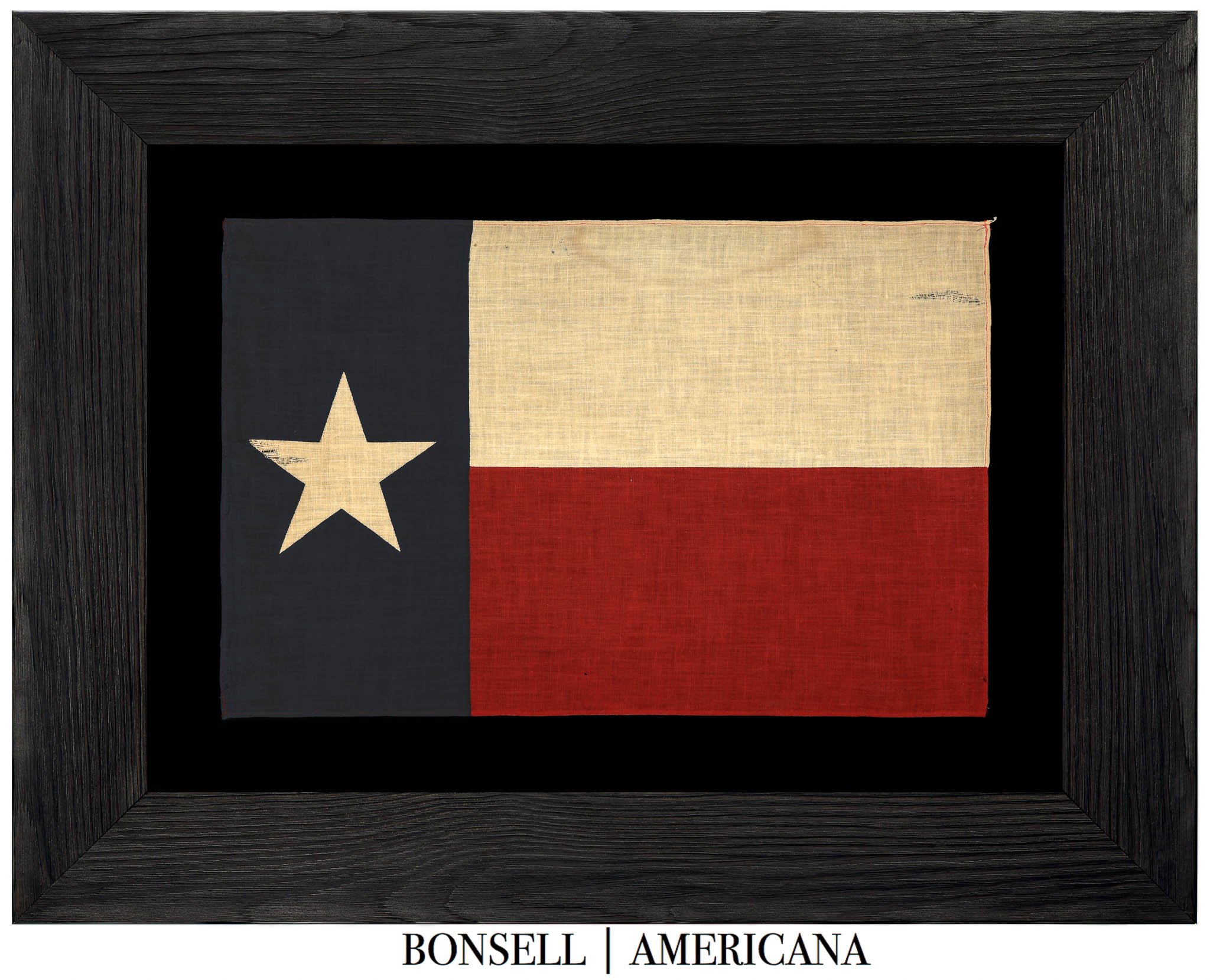
Attractive Mid-Century Texas State Flag | Small-Format Printed Example | Circa 1945-1960
Frame Size (H x L): 21” x 27”
Flag Size (H x L): 11” x 17”
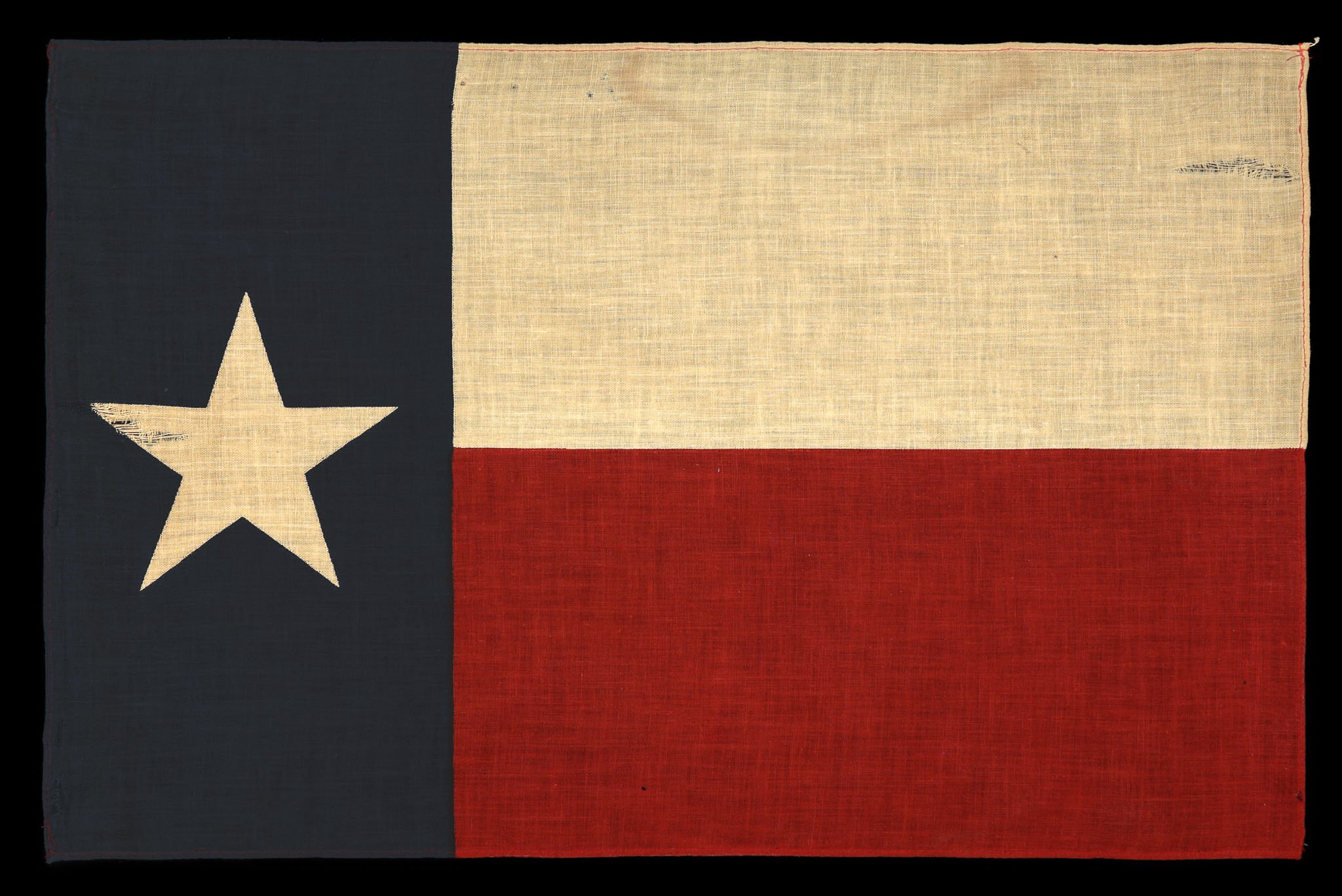
Offered is a small-format Texas state flag, printed on cotton and dating to the mid-20th century, most likely the 1950s. This example reflects a type produced for indoor, institutional, or educational use rather than for outdoor display. Flags of this form were commonly used in classrooms, government offices, and civic buildings, where clarity of design and ease of handling were prioritized over long-term exposure to the elements.
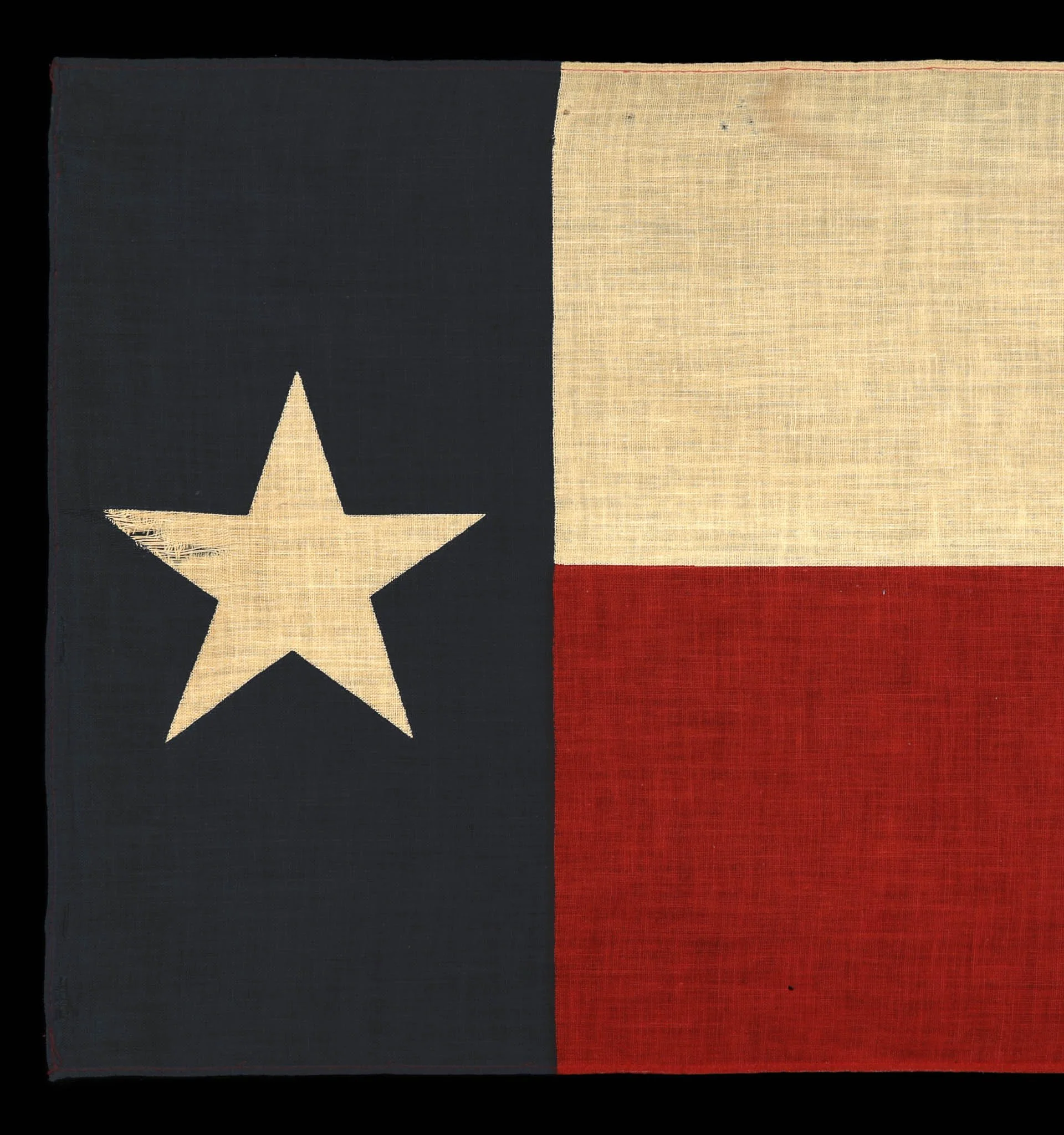
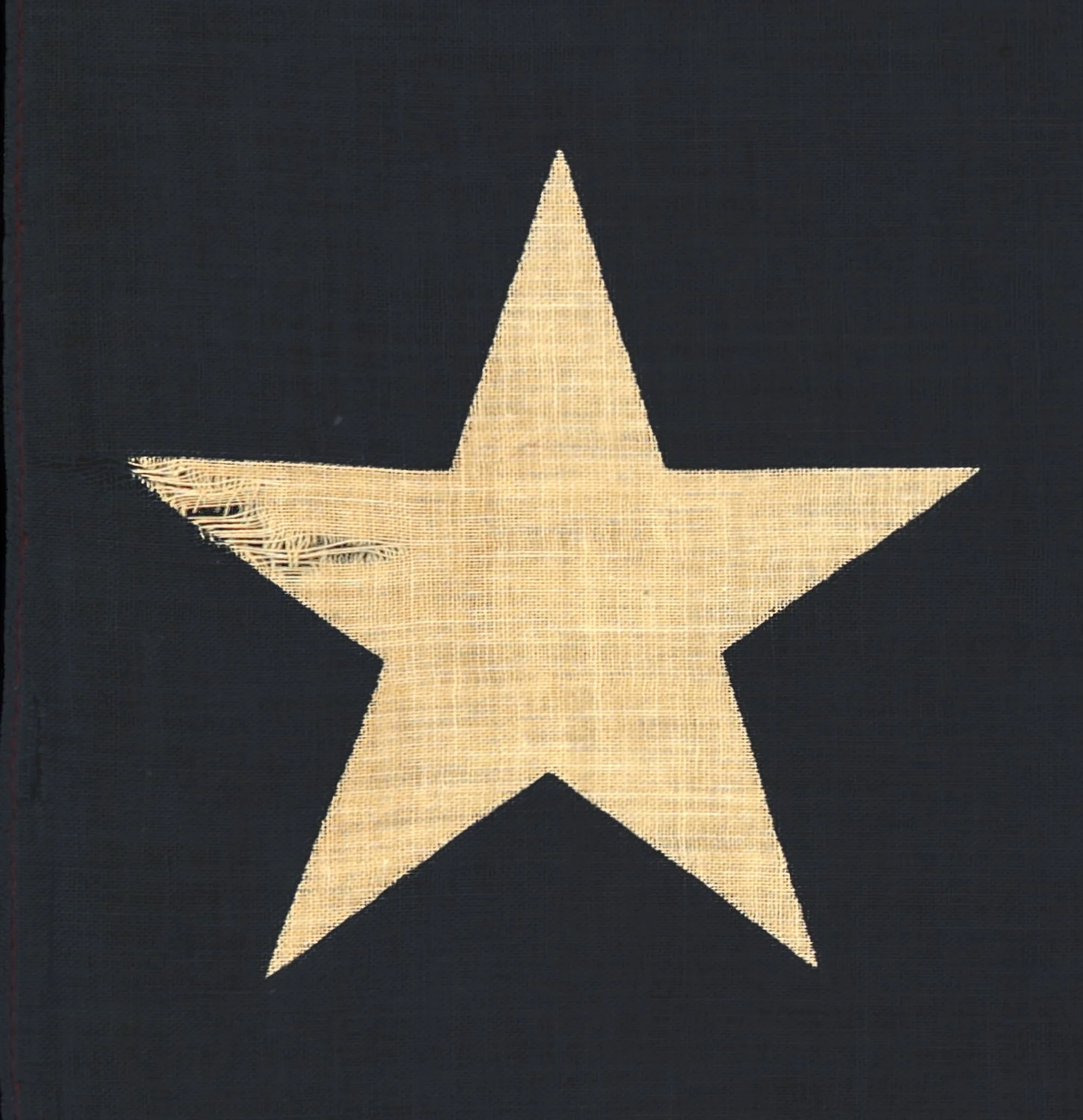
The flag is printed on a lightweight, open-weave cotton fabric. The weave is plainly visible and loosely constructed, with a soft hand and natural drape consistent with economical cotton textiles of the period. The design is printed on a single piece of cloth rather than assembled from separate panels. The blue vertical field at the hoist, the white upper horizontal stripe, the red lower stripe, and the single white star are all rendered as part of one continuous textile.
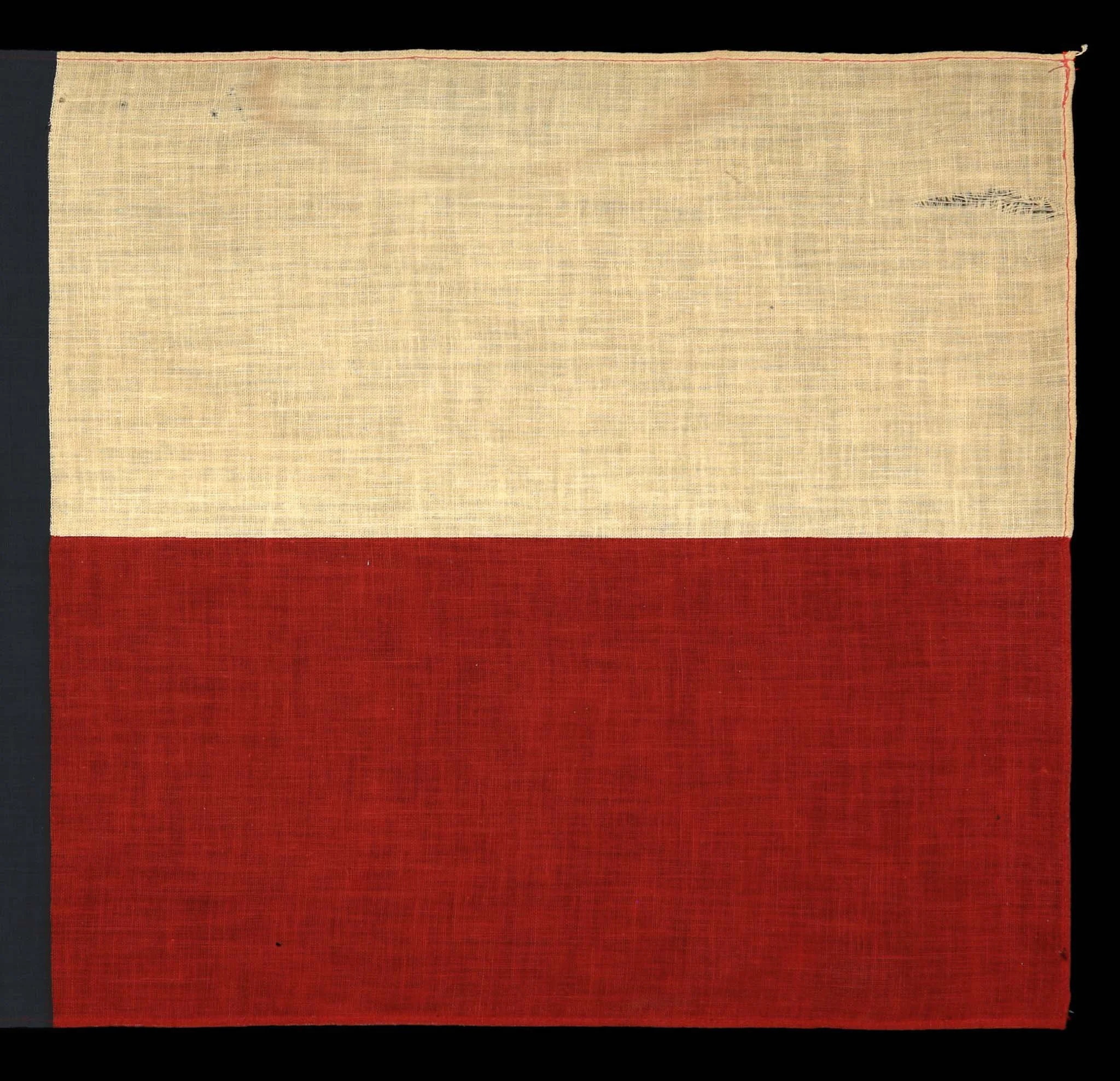
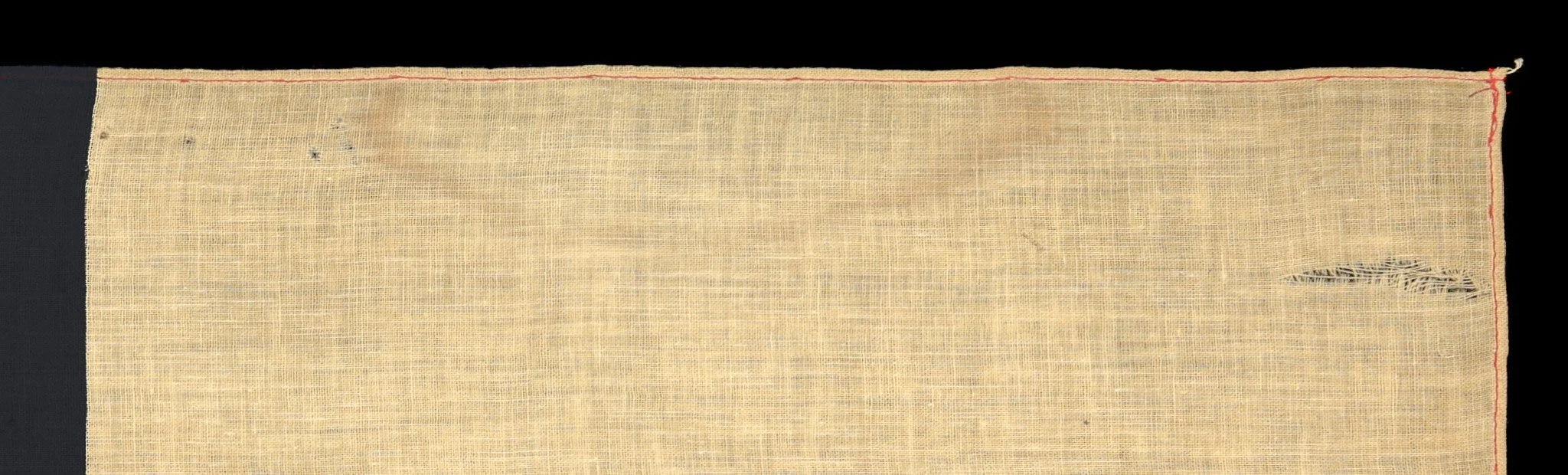
The flag is finished with a simple, machine-turned hem along the perimeter, sewn with red thread. This straightforward finishing method is typical of flags produced in quantity for interior display. There is no sleeve, canvas hoist, grommets, header tape, or evidence of tack holes, indicating that the flag was intended for temporary or light mounting—pinned, clipped, or displayed flat—rather than flown outdoors. No maker’s marks, labels, or stamps are present, a common characteristic of mid-century institutional flags.
The dating of this example is based on its materials, construction, and overall format. Printed cotton construction, an open weave, modest machine finishing, and the absence of synthetic fibers are all consistent with mid-20th-century manufacture. By the later 1960s, nylon and other synthetics became increasingly common even for interior flags, while this example remains firmly rooted in natural cotton. Taken together, the evidence supports a date of circa 1945–1960, with the 1950s the most likely period of manufacture.
The Texas flag is among the most distinctive and symbolically resonant state flags in the United States. Its origins lie in the period when Texas existed as an independent republic following the Texas Revolution of 1835–1836. The single white star—known as the “Lone Star”—emerged as a symbol of independence, unity, and self-determination during this period. When Texas was admitted to the Union in 1845 as the 28th state, the Lone Star motif was retained, reinforcing a strong and enduring state identity.
The modern form of the Texas flag—featuring a vertical blue field with a single white star paired with horizontal white and red stripes—was formally adopted in 1933. The colors intentionally echo those of the United States flag and are traditionally associated with loyalty (blue), purity (white), and bravery (red). By the mid-20th century, this design had become deeply embedded in civic life across Texas, widely displayed in schools, courthouses, and other public institutions, particularly during the post–World War II period of renewed civic education and patriotic presentation.
This example represents an authentic mid-century Texas flag produced for interior use. Its printed cotton construction and utilitarian finish reflect its intended role as a functional educational and civic object rather than a ceremonial or outdoor flag. As such, it stands as a well-preserved artifact of everyday patriotic display in Texas during the postwar era, illustrating how the Lone Star emblem was encountered, taught, and understood in daily public life.
Conservation Process: This flag was hand sewn to cotton fabric, and both were hand sewn to a mounting board. To prevent the black dye in the cotton fabric from seeping into the flag, it was first washed in a standard wash and then in a dye setting wash. The flag is positioned behind Optium Museum Acrylic.
Frame: The flag is housed in a black-painted wood frame with a broad, flat profile and visible linear grain beneath the finish. The surface has a restrained satin sheen, giving it a clean, contemporary appearance without high gloss.
Condition Report: Overall, the flag presents well, with modest wear consistent with age and light use. There is a small area of fraying and thread loss within the white star (near the left arm), along with a longer horizontal split with associated fraying in the white field toward the upper right. In addition, a noticeable brownish discoloration is present along the upper edge of the white stripe, accompanied by scattered minor soiling, small spot stains, and light edge wear at the corners and along the perimeter.
Collectability Level: The Good – Perfect for Beginners and Gifts
Date of Origin: 1945-1960