Early 20th-Century French Tricolor Felt Flag with Documented Maker | Samuel Mortensen & Co., Chicago | Circa 1910–1925
Early 20th-Century French Tricolor Felt Flag with Documented Maker | Samuel Mortensen & Co., Chicago | Circa 1910–1925
Frame Size (H x L): 28” x 40”
Flag Size (H x L): 17” x 28.75”
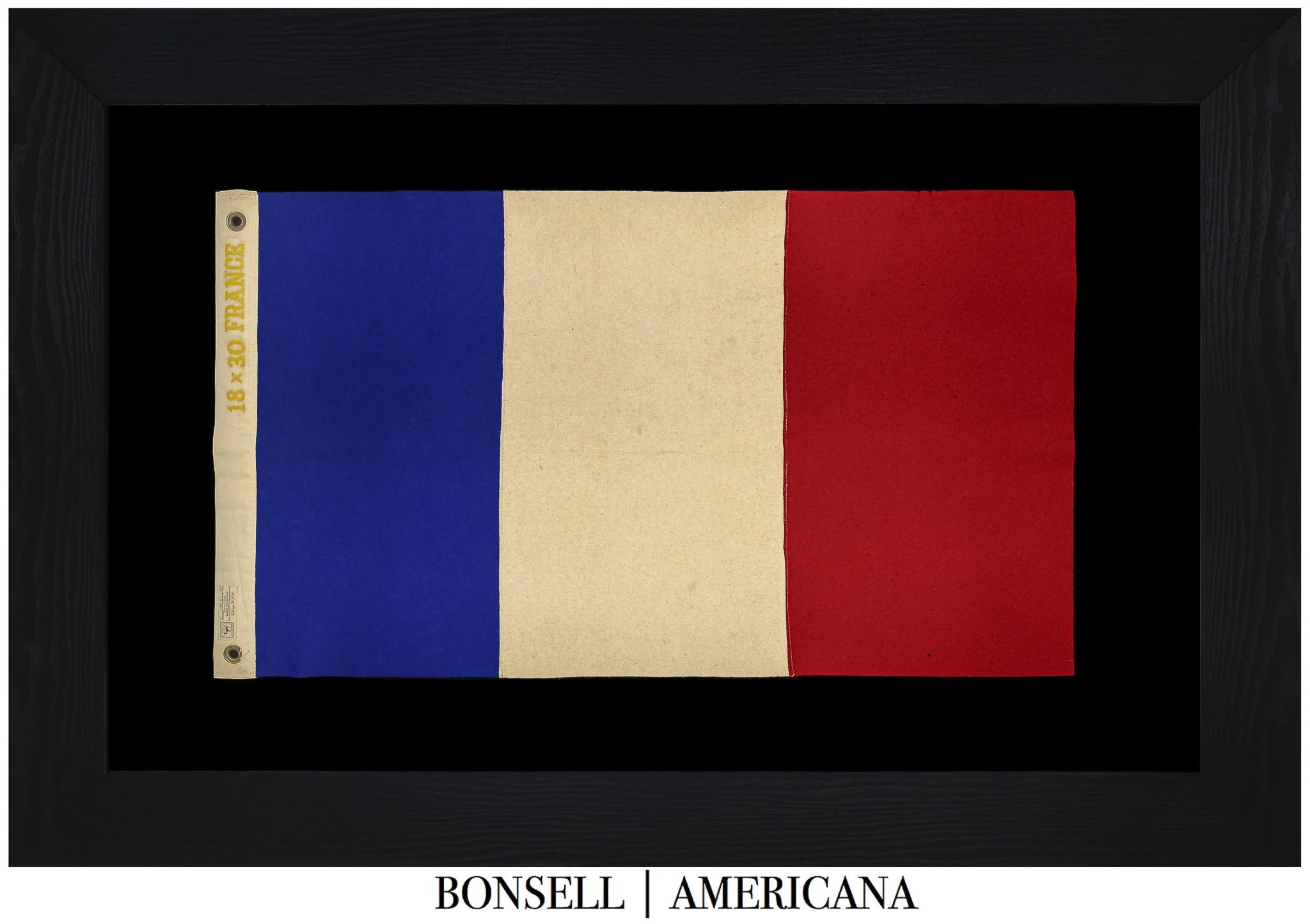
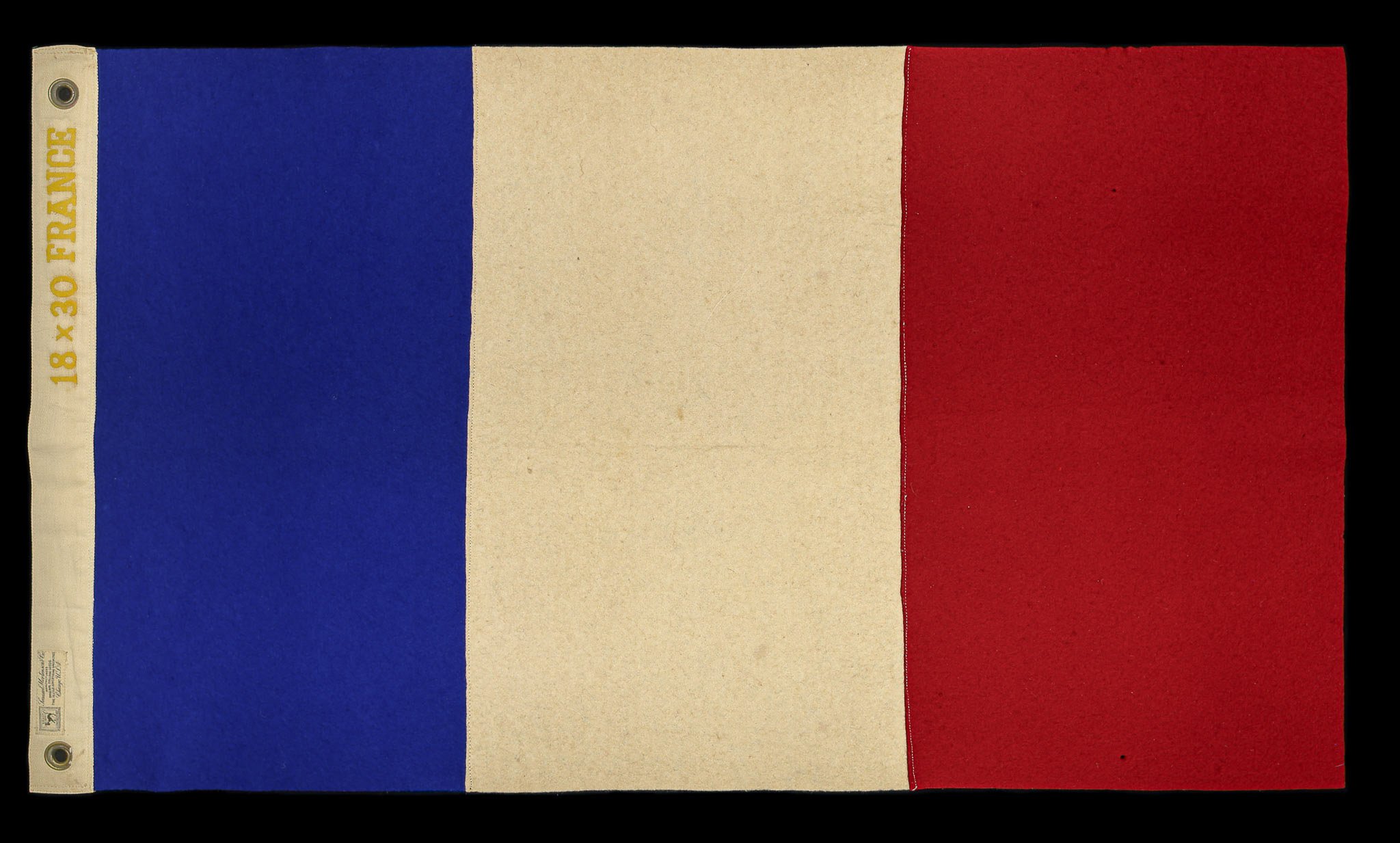
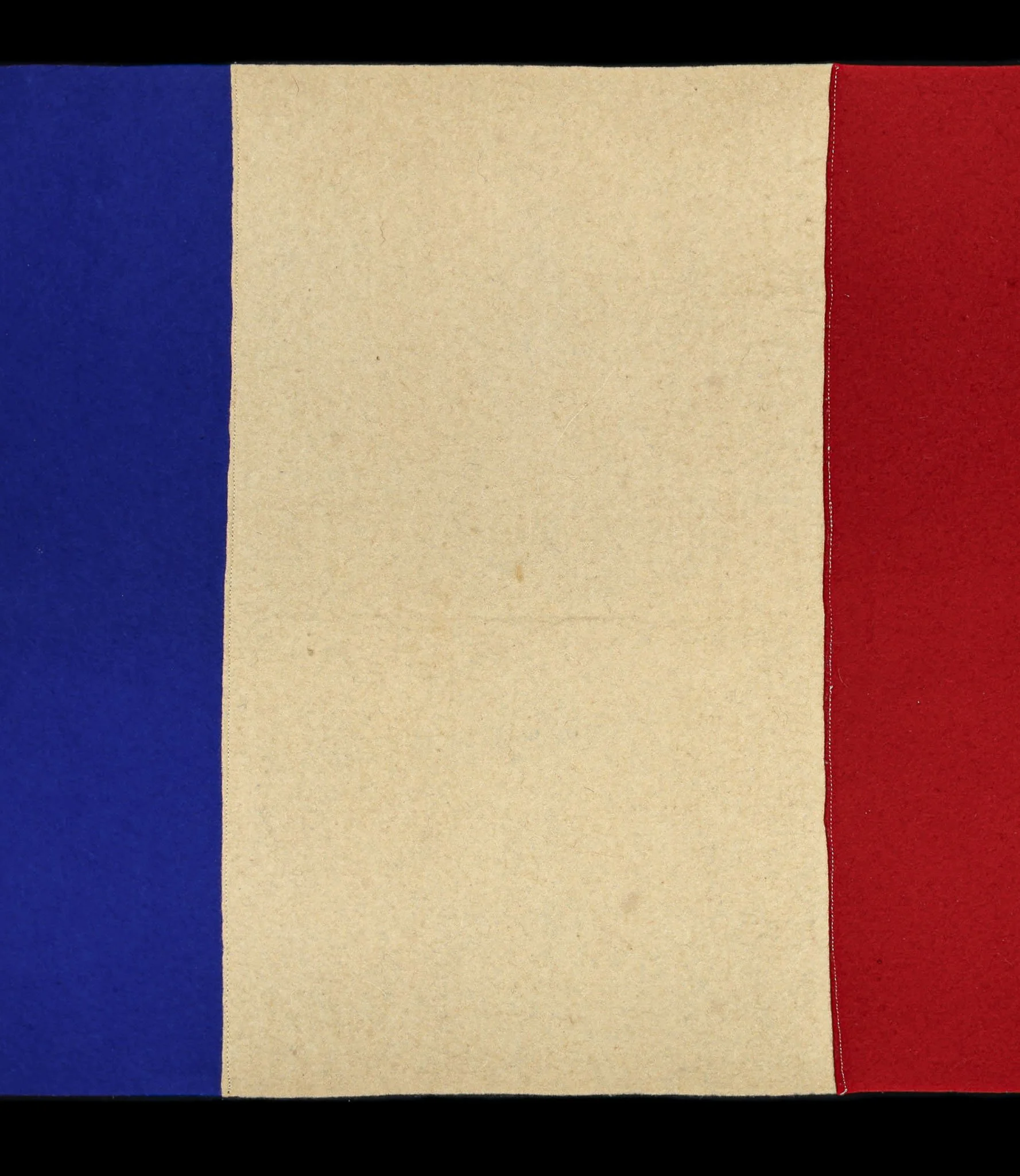
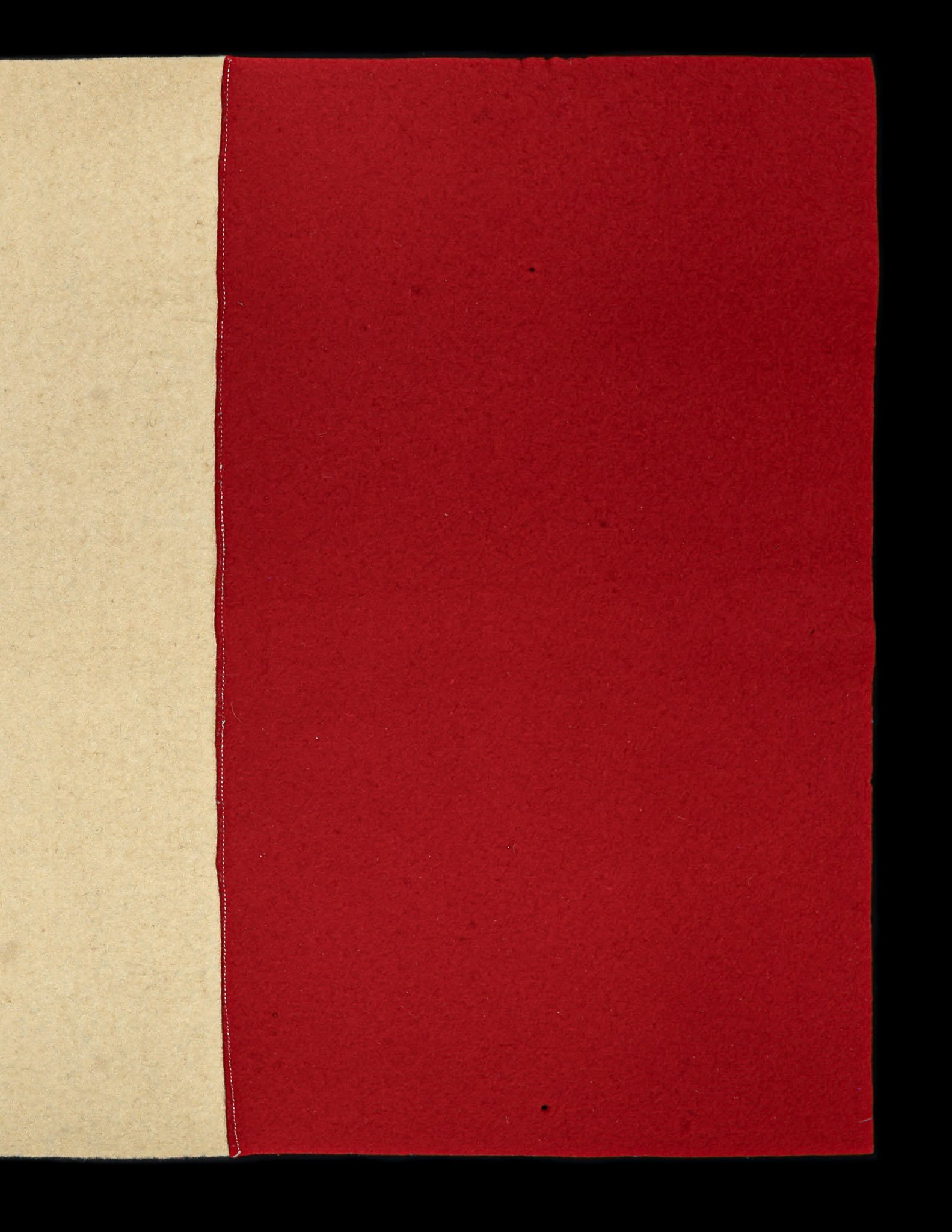
Offered is an early 20th-century French tricolor flag, executed in a bold and visually compelling format, with the blue, white, and red fields rendered in felt. The use of felt—rather than woven wool bunting—produces a soft surface texture and saturated coloration that differs markedly from standard maritime or government-issue examples, indicating a decorative or ceremonial purpose rather than long-term outdoor hoisting.
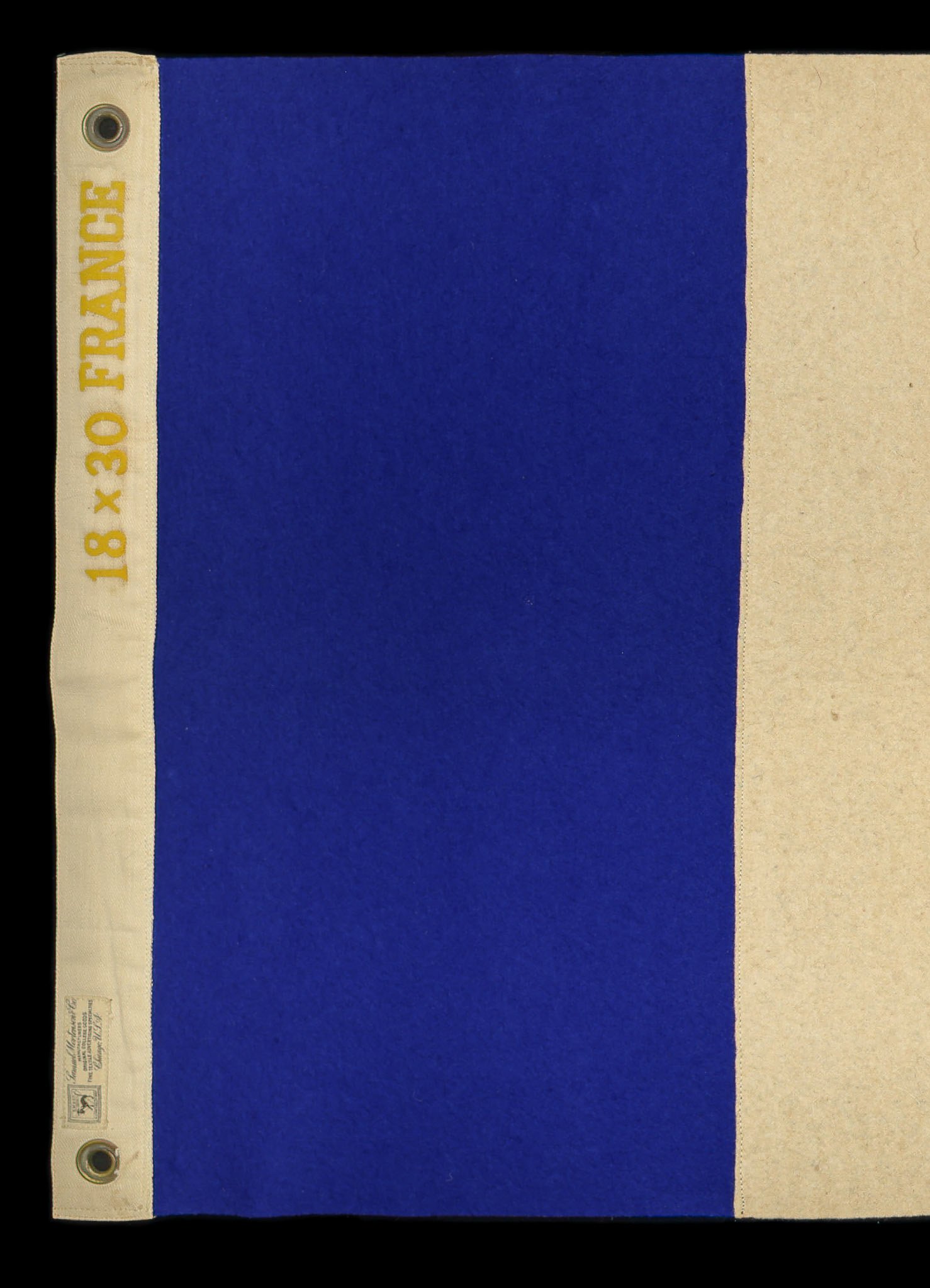
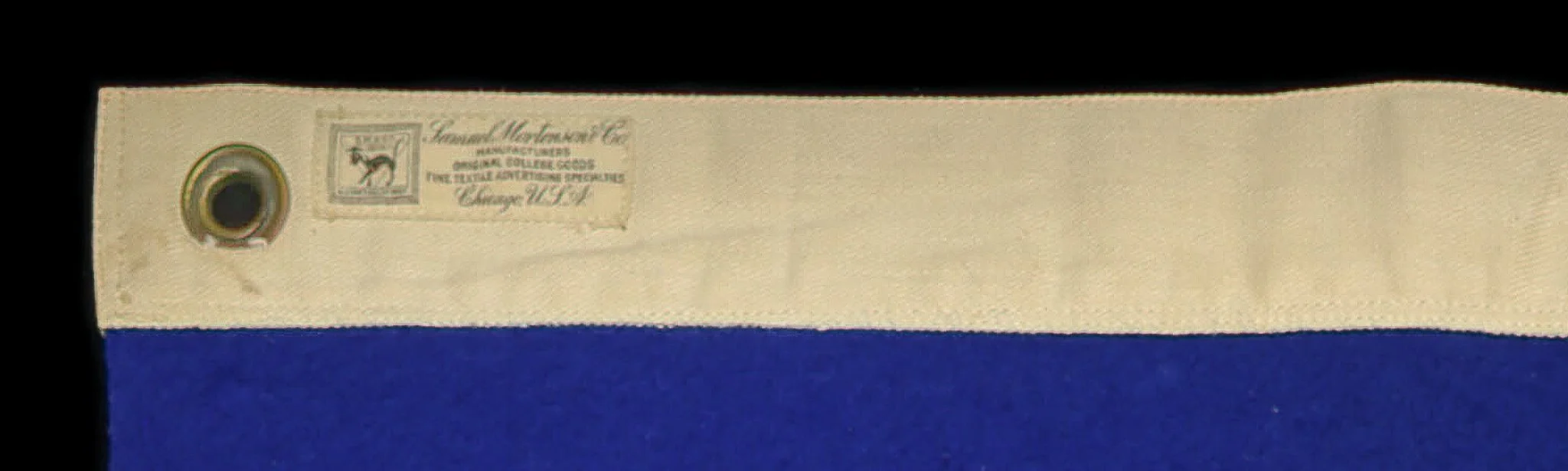
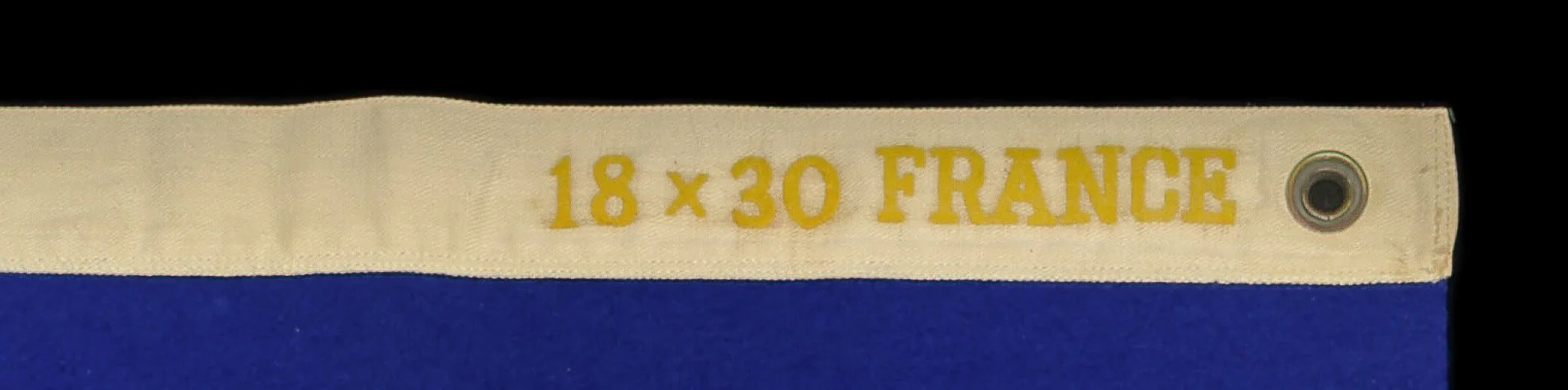
The hoist is constructed of sturdy cotton twill and fitted with brass grommets, with all elements machine sewn, consistent with professional American commercial manufacture of the period. The hoist bears stenciled dimensional and country identification reading “18 × 30 FRANCE,” indicating the flag’s approximate size in inches, a practical marking commonly used for institutional supply. Affixed alongside is a sewn maker’s label identifying Samuel Mortensen & Co., Chicago, U.S.A., described as manufacturers of Original College Goods and Fine Textile Advertising Specialties. Original labels of this nature are uncommon and provide direct, primary documentation of origin.
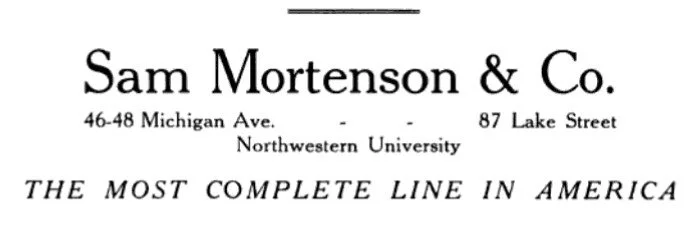
Samuel Mortensen & Co. is documented in university advertising by at least 1910 and appears as an active business in the 1912 Lakeside Annual Directory of the City of Chicago. The firm specialized in felt and textile goods produced for schools, colleges, and other formal institutions, including flags, banners, and pennants.
The French tricolor—blue, white, and red—has served as the national flag of France since the late 18th century, its origins rooted in the French Revolution. The colors combine those of Paris (blue and red) with white, long associated with the French monarchy, symbolizing national unity and the revolutionary ideals of liberty, equality, and fraternity. Officially adopted in 1794, the tricolor has endured through successive political regimes and remains one of the most recognizable national flags in the world.
By the late 19th and early 20th centuries, the French flag had assumed broader international significance, particularly within educational and institutional settings outside of France. In the United States, foreign national flags were frequently displayed in schools, universities, civic buildings, armories, and fraternal halls as tools for instruction, cultural awareness, and the visual expression of diplomatic relationships. This practice intensified during periods of increased global engagement, including the years surrounding World War I, when France held a central role as a major ally and symbol of republican governance.
Although French national flags were produced both domestically and abroad, this example reflects American manufacture intended for educational, civic, or patriotic display rather than official government issue. Based on the documented activity of the maker, the label format, felt construction, machine sewing, cotton twill hoist, and brass grommets, this flag can be confidently dated to the 1910s, extending conservatively into the early 1920s. The survival of the original maker’s label materially strengthens the historical context and distinguishes this example from otherwise similar but undocumented tricolors.
Conservation Process: This flag was hand sewn to cotton fabric, and both were hand sewn to a mounting board. To prevent the black dye in the cotton fabric from seeping into the flag, it was first washed in a standard wash and then in a dye setting wash. The flag is positioned behind Optium Museum Acrylic.
Frame: A square-profile molding with a deep, charcoal-toned surface that mimics the look of hand-grained wood. Subtle linear patterning adds quiet texture and depth, while the finish maintains a restrained sophistication suitable for both period and modern interiors.
Condition Report: Condition is very good overall, with the felt fields retaining strong color and a pleasing, even surface. The white center panel shows expected age toning with scattered, light soiling, while the red field exhibits a few tiny dark specks consistent with age. The cotton twill hoist shows minor wrinkling and light discoloration near the grommets, and the maker’s label remains intact and clearly legible.
Collectability Level: The Good – Perfect for Beginners and Gifts
Date of Origin: 1910-1925