Striking 13 Star Antique American Flag with a 3-2-3-2-3 Star Pattern | Made by the U.S. Bunting Company | Circa 1895–1926
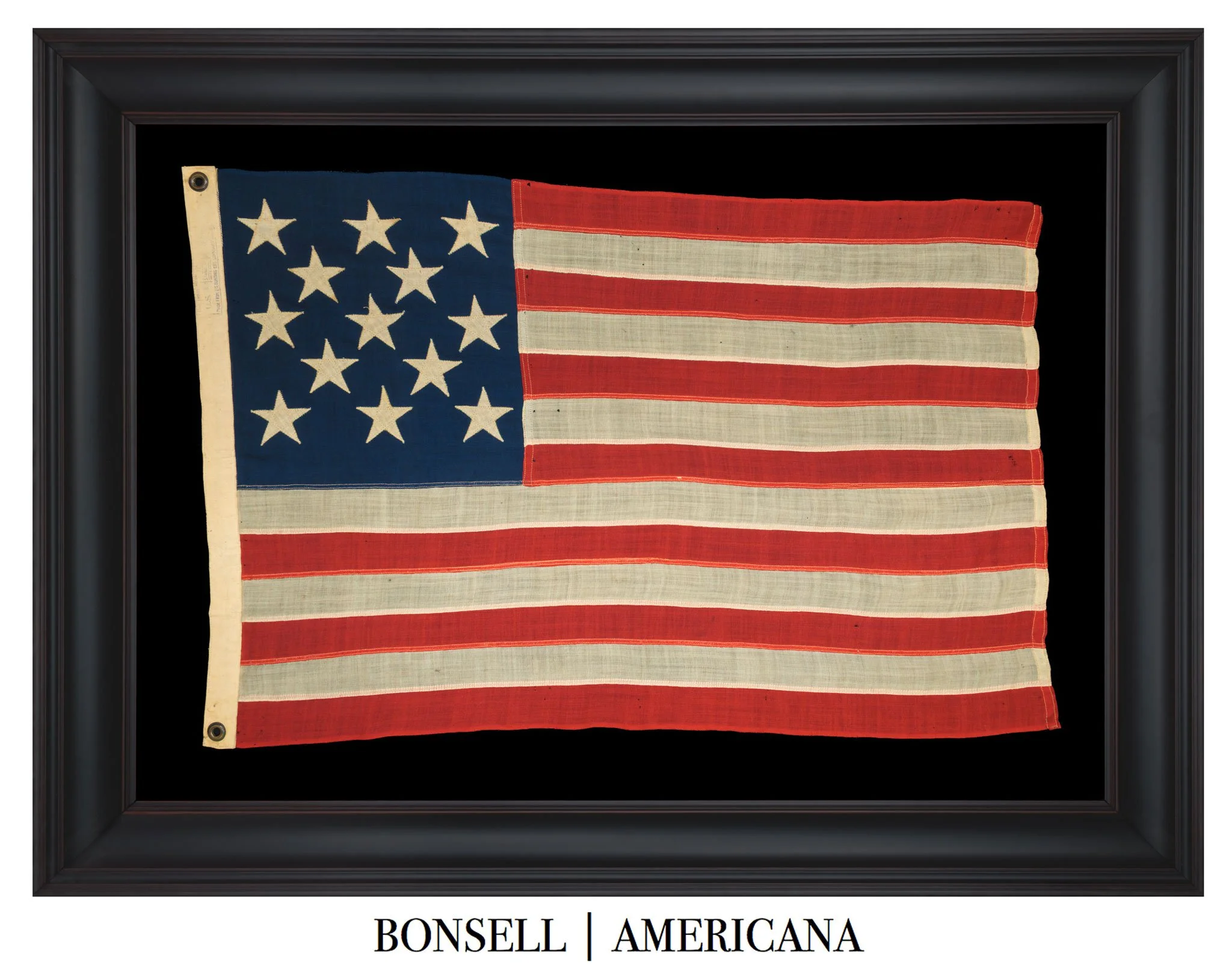
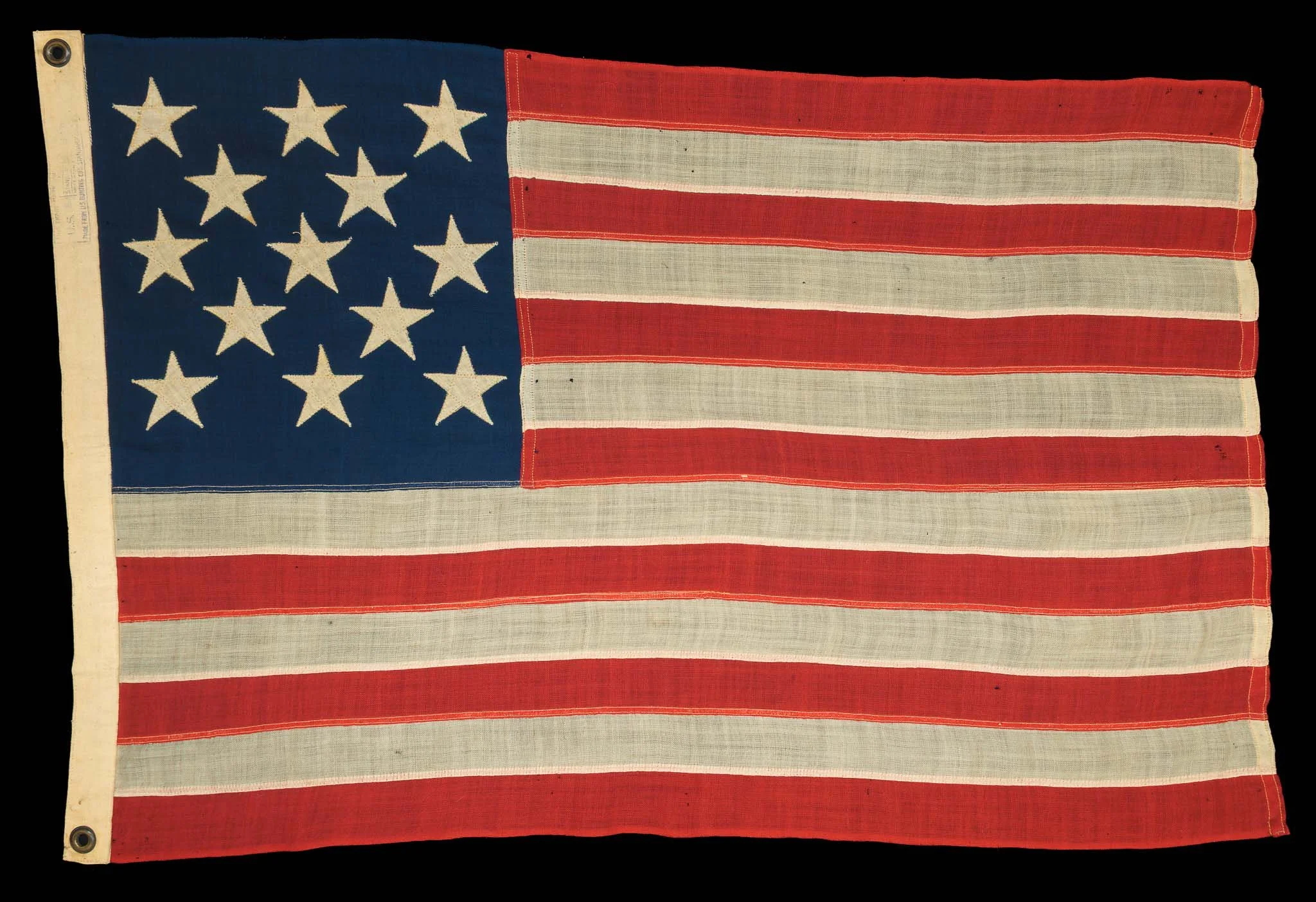
Striking 13 Star Antique American Flag with a 3-2-3-2-3 Star Pattern | Made by the U.S. Bunting Company | Circa 1895–1926
Frame Size (H x L): 35.5” x 47.5”
Flag Size (H x L): 24” x 36”
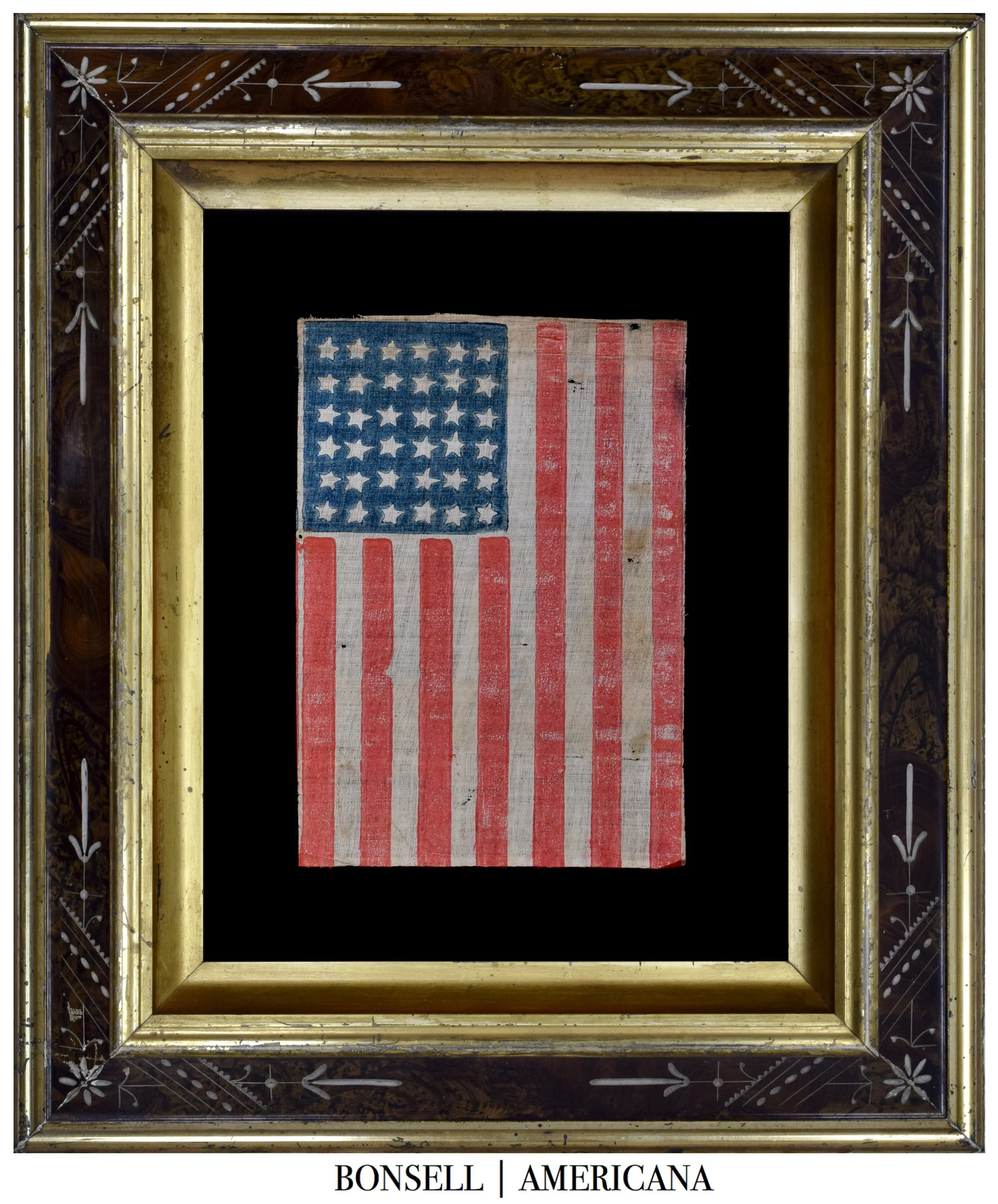
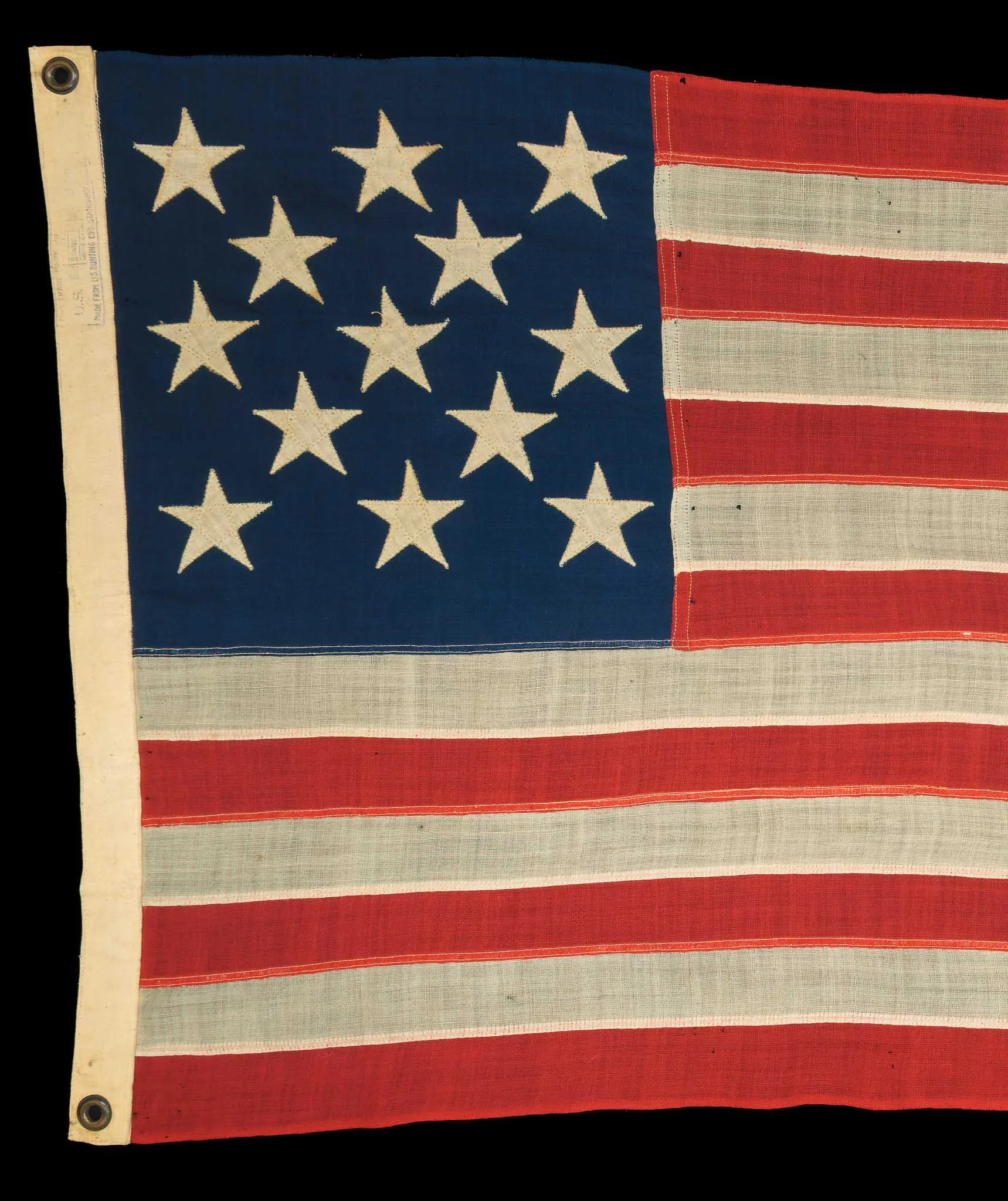
Offered is a thirteen-star antique American flag with a 3-2-3-2-3 star pattern. It was produced by a commercial flag maker who elected to retain the thirteen original stars, a choice that both honored the founding states and simplified manufacture relative to producing a flag with a star for each state in the Union.
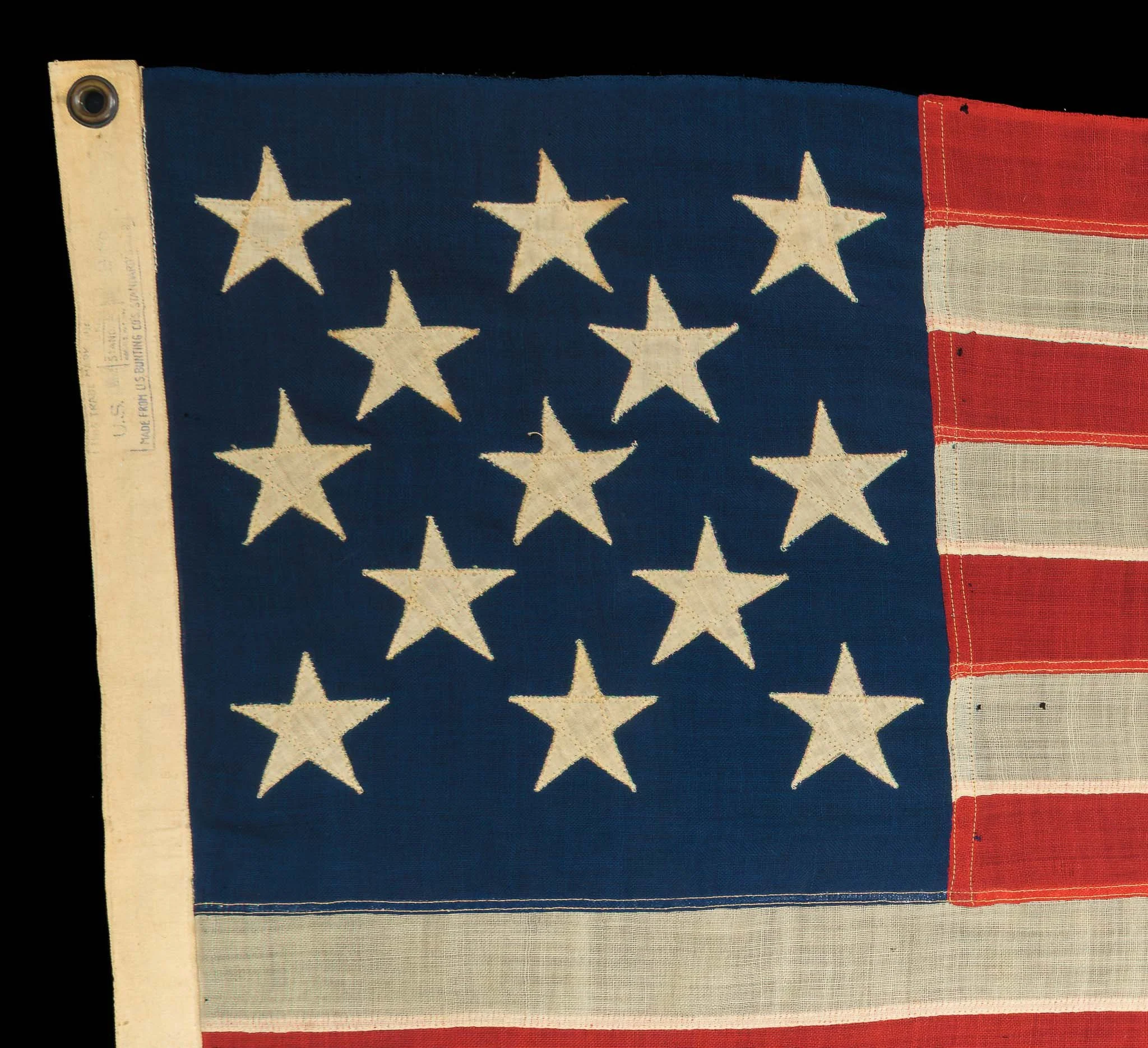
The 3-2-3-2-3 configuration, forming a diamond-like arrangement with surrounding corner stars, is sometimes referred to as the Hopkinson pattern, after Francis Hopkinson. While its precise origins are not definitively known, many historians believe this configuration may represent the earliest conceptual arrangement for the American flag. Although Betsy Ross is documented as having made flags in Philadelphia during the 1770s, there is no surviving documentary evidence—letters, journals, or official records—confirming that she designed or produced the first national flag. Most scholars instead credit Hopkinson, a member of the Continental Congress, signer of the Declaration of Independence, and lawyer, who formally petitioned Congress for compensation for having furnished the design of “the flag of the United States of America.” His request—first for a quarter cask of public wine and later for monetary compensation—was ultimately denied, though Congress acknowledged his role in the design.
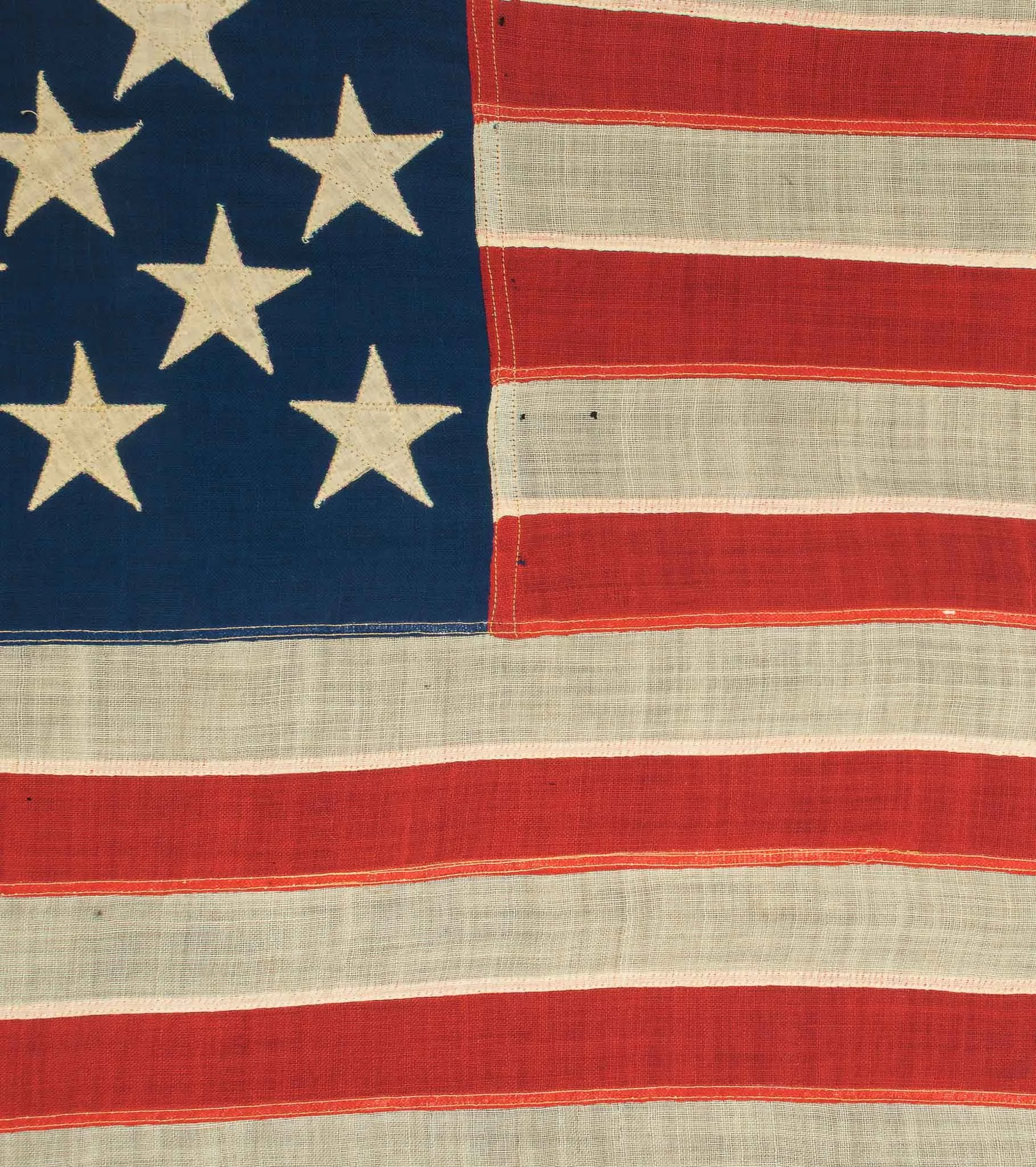
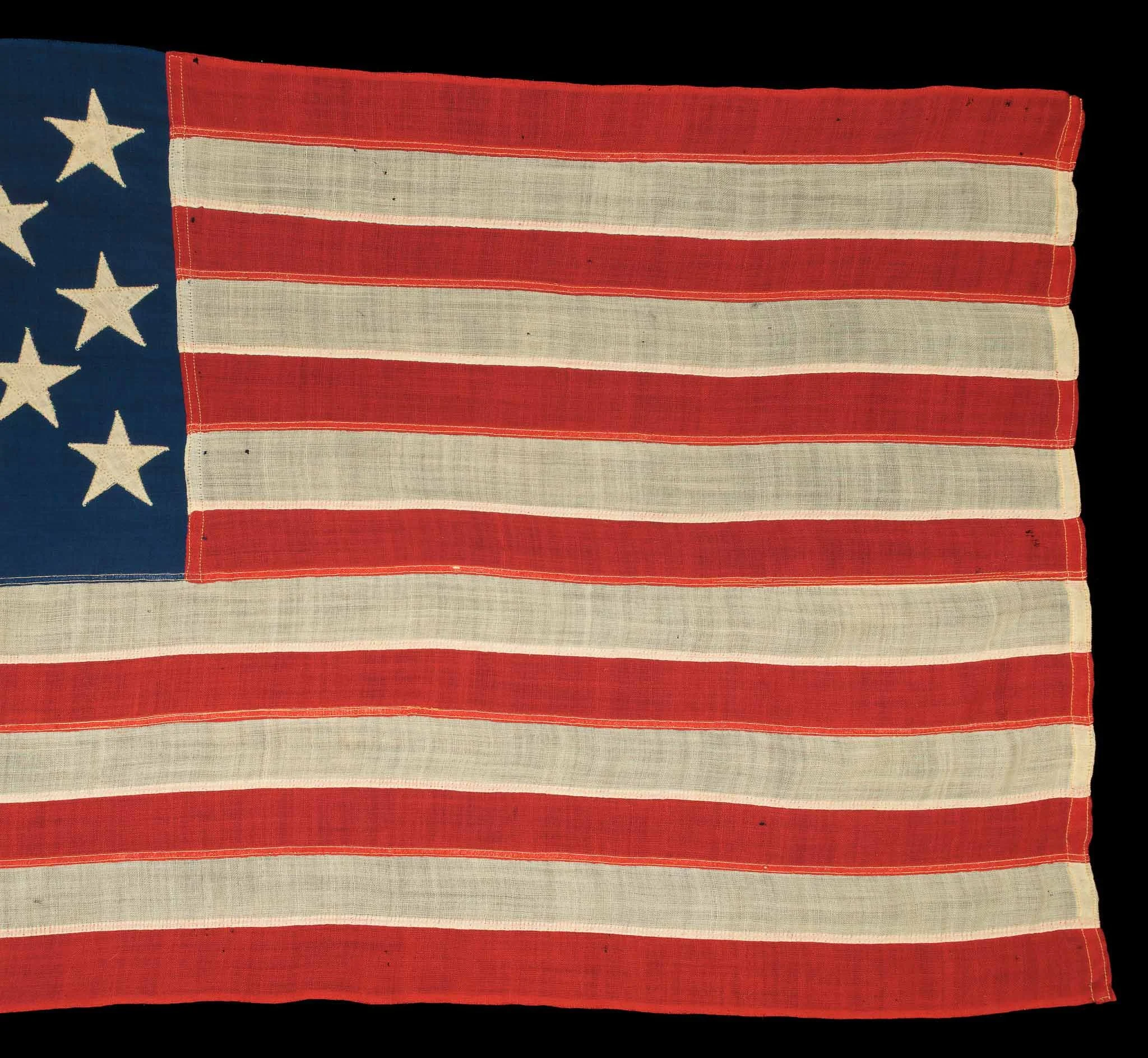
The stripes and canton of this flag are constructed of wool bunting, with each element machine sewn. The hoist is made of cotton twill and fitted with brass grommets. The stars are of cotton and are double-appliquéd, sewn to both sides of the canton using a zig-zag stitch patented in 1892, providing a useful terminus post quem for production.
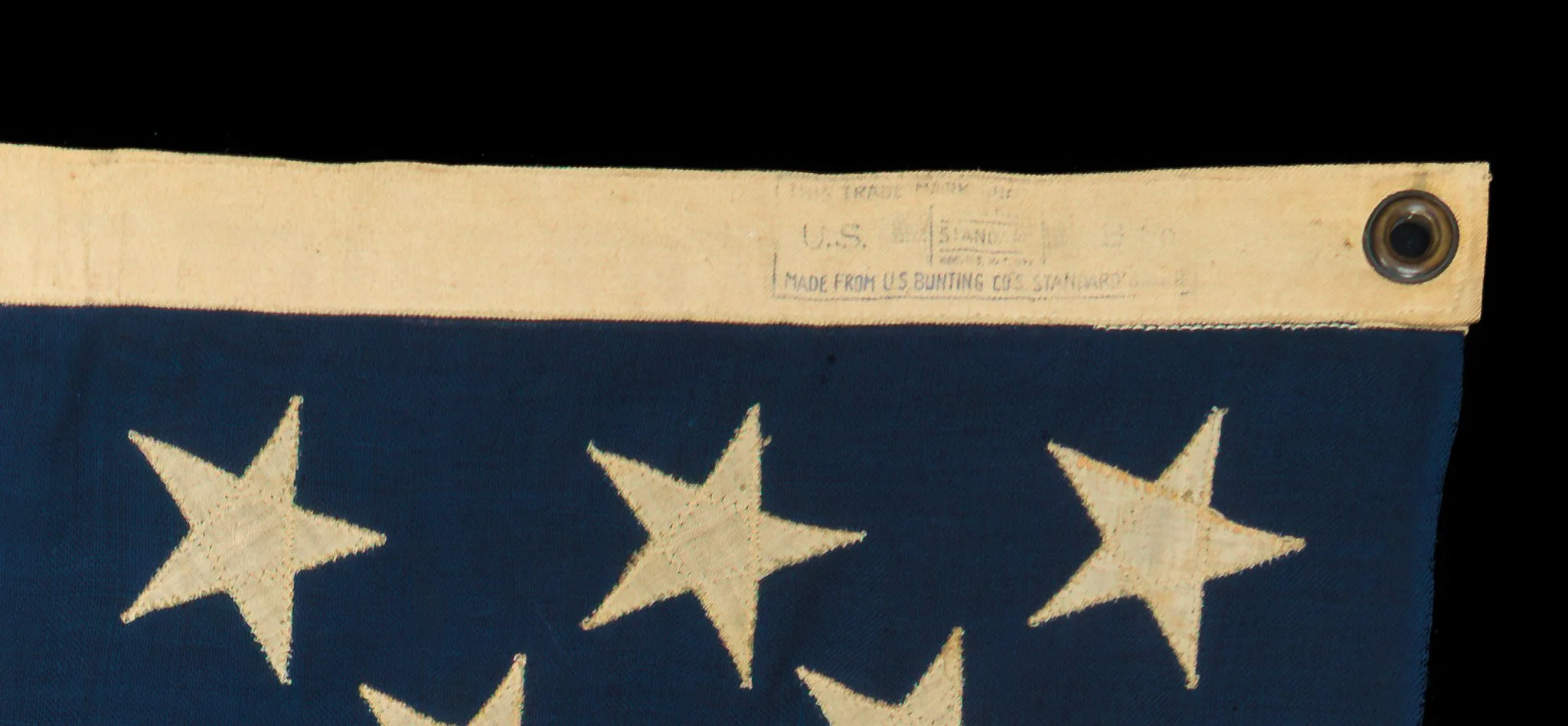
Notably, the hoist bears a faint but legible ink stamp identifying the bunting as having been produced by the United States Bunting Company of Lowell, Massachusetts. Founded in 1865 by Civil War General Benjamin F. Butler, United States Bunting Company was the first American firm to successfully manufacture high-quality flag bunting domestically, breaking the nation’s dependence on imported English cloth. The company quickly became the most important supplier of bunting in the United States, furnishing material for military, governmental, and commercial flag production from the post–Civil War era through the early 20th century. Maker’s marks of this nature are uncommon on small decorative flags and are highly desirable, as they provide direct evidence of material origin and firmly anchor the flag within a documented American manufacturing tradition.
The original authorization for thirteen-star flags dates to June 14, 1777, when the Continental Congress resolved that “the flag of the United States be made of thirteen stripes, alternate red and white, that the union be thirteen stars, white on a blue field, representing a new constellation.” Thirteen-star flags were official from 1777 to 1795, but their use continued long afterward for ceremonial, commemorative, and patriotic display.
Such flags were flown at the time of George Washington’s death in 1799, during celebrations of the nation’s 50th anniversary in 1824, and in honor of General Lafayette’s return to the United States that same year. They were also commonly displayed during the Mexican War (1846–1848) and the Civil War (1861–1865), periods marked by heightened national sentiment and expanding public use of flags. Thirteen-star flags experienced renewed popularity during the Centennial celebrations of 1876, including those held in Philadelphia at the Centennial International Exhibition, reinforcing their enduring symbolic association with the nation’s founding.
Conservation Process: This flag was hand sewn to silk organza, and both were hand sewn to cotton fabric. The silk organza provides a strong layer of protection and a professional appearance. The flag, the silk organza, and the cotton fabric were then hand sewn to a mounting board. To prevent the black dye in the cotton fabric from seeping into the flag, it was first washed in a standard wash and then in a dye setting wash. The flag is positioned behind Optium Museum Acrylic.
Frame: A bold yet refined black frame with a deep molded profile encloses the flag.
Condition Report: The flag presents in excellent overall condition, with honest, period-appropriate wear. There is light, scattered soiling and minor surface marks, along with a few small pin-sized holes in the stripes, consistent with age and use. The colors remain strong and well-balanced, the fabric is structurally sound, and the hoist with grommets and maker’s stamp remains intact and legible, contributing positively to both display and desirability.
Collectability Level: The Great – Perfect for Rising Collectors
Date of Origin: 1895-1926
Number of Stars: 13
Associated War: Spanish-American War (1898) and World War I (1914-1918)
Associated State: Original 13 Colonies