48-Star American Flag | “52 Ohio Vol. Inf. Veterans Reunion” Overprint | Civil War Veterans Reunion Flag | Circa 1912–1915
48-Star American Flag | “52 Ohio Vol. Inf. Veterans Reunion” Overprint | Civil War Veterans Reunion Flag | Circa 1912–1915
Price: Call 618-553-2291, or email info@bonsellamericana.com
Frame Size (H x L): 30.5” x 47”
Flag Size (H x L): 19.5” x 36”
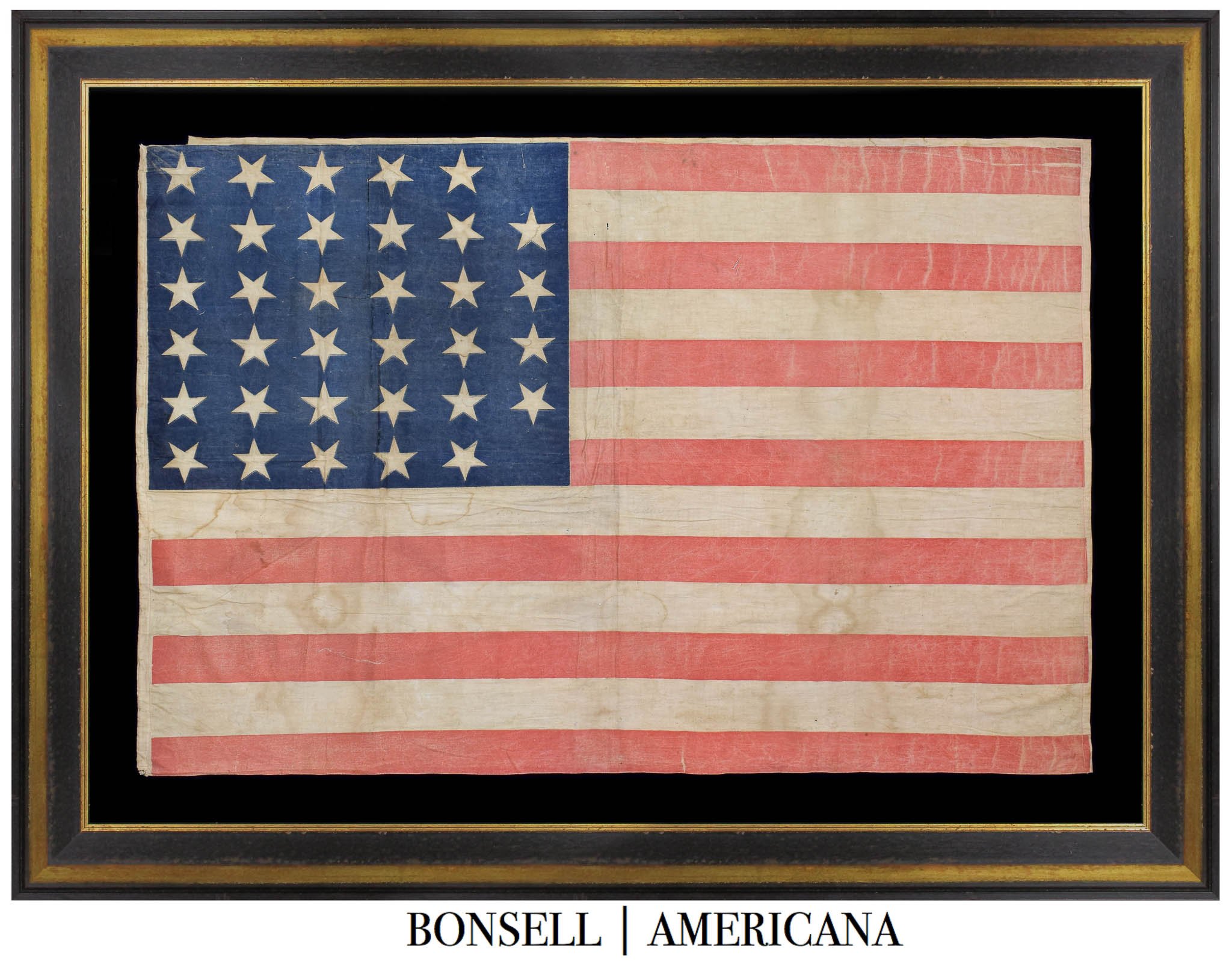
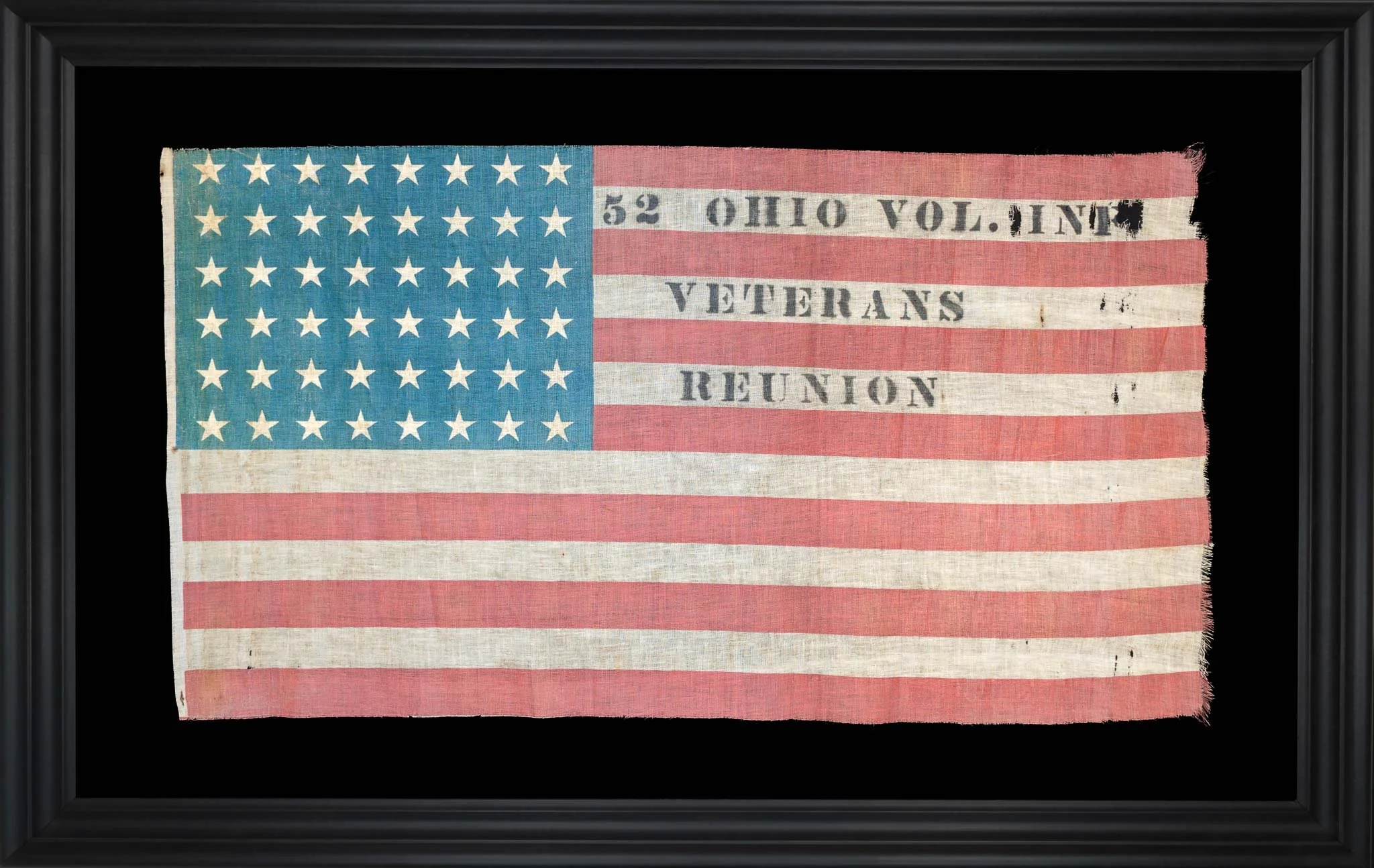
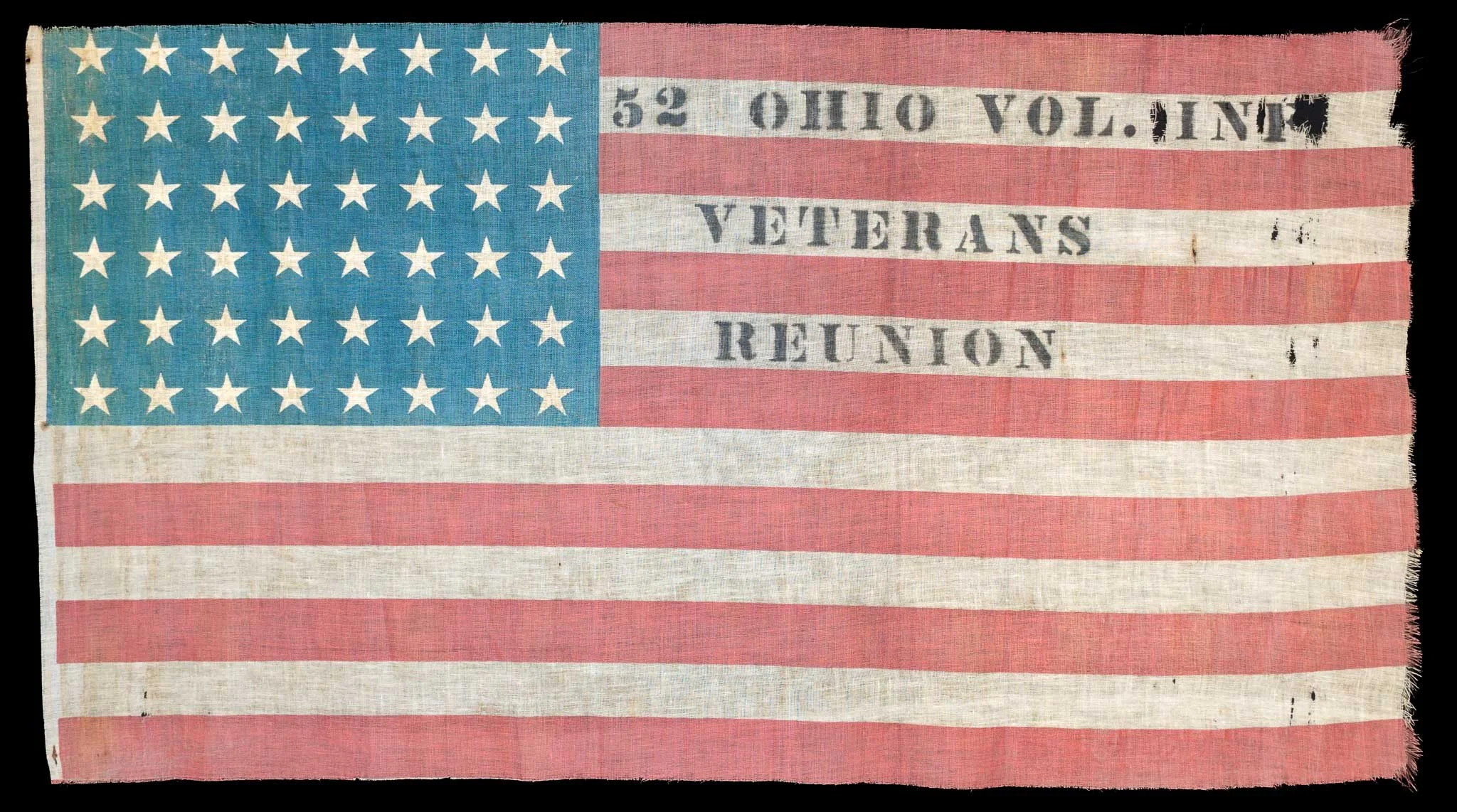
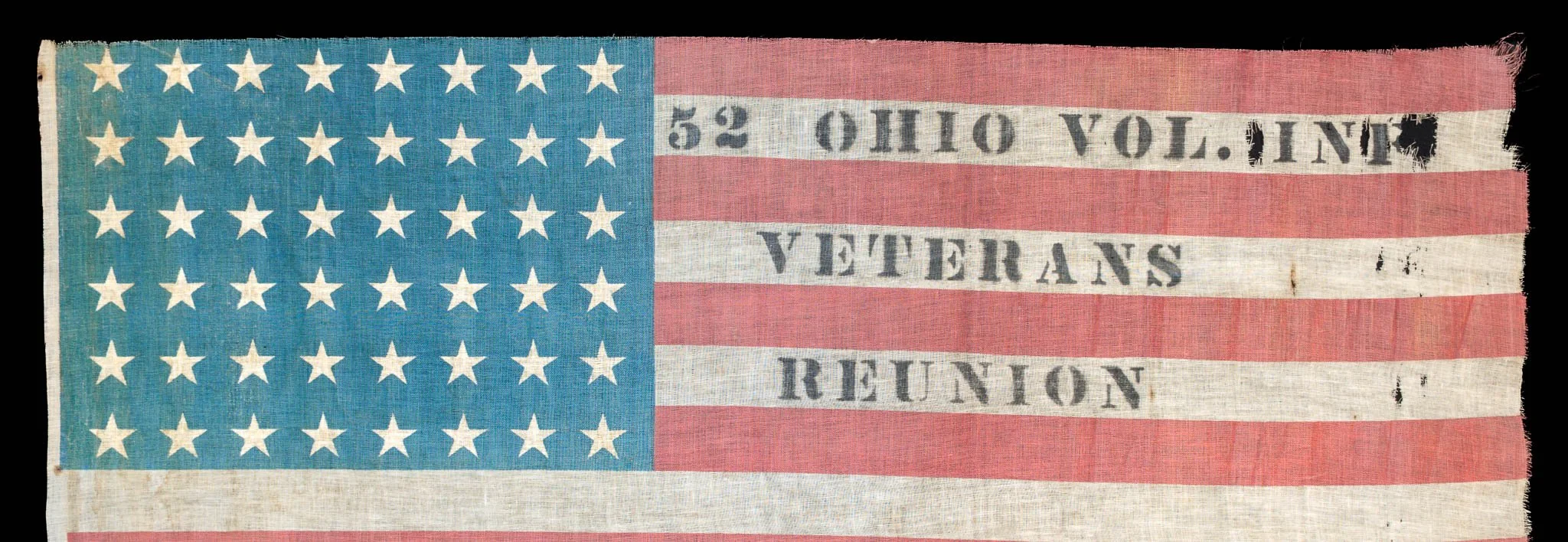
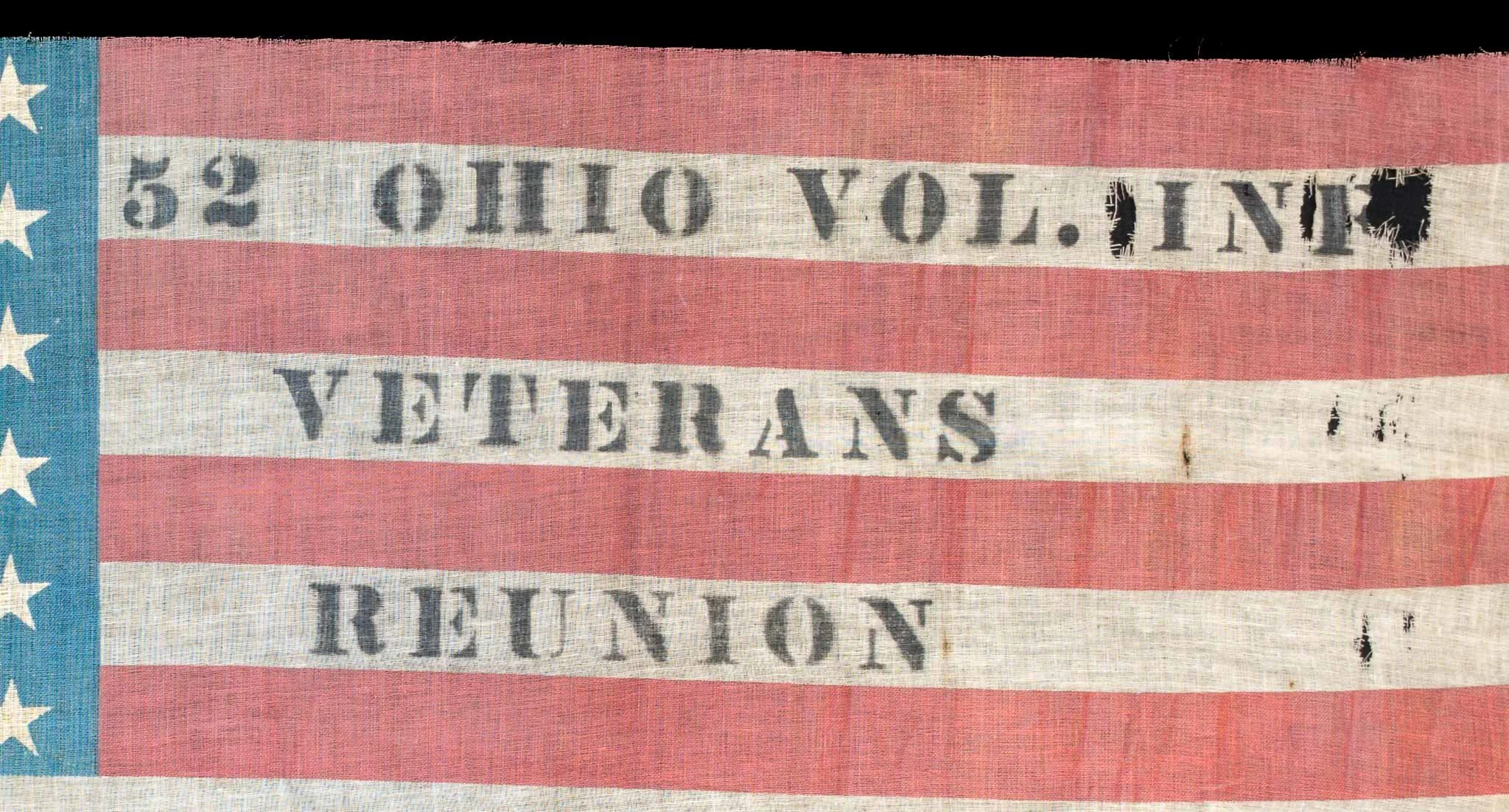
Offered is a printed cotton 48-star American national flag bearing an overprinted inscription reading “52 OHIO VOL. INF. | VETERANS | REUNION.” The text references the 52nd Ohio Volunteer Infantry, a Union regiment organized during the Civil War, and identifies the flag as having been produced for a reunion of surviving veterans of the regiment.
The overprinted lettering identifying the 52 Ohio Volunteer Infantry Veterans Reunion was applied after the flag’s manufacture, almost certainly by a small commercial printer. Flags of this type were typically produced in limited quantities for a specific reunion or encampment and served either as display banners or identifying emblems for attending veterans.
The flag presents in a size that collectors and designers often consider especially desirable. It is large enough to have strong visual presence when displayed, yet remains manageable in scale, allowing it to be easily framed and placed within a wide range of interior settings. Flags of this proportion strike a balance between impact and practicality, making them particularly appealing for both private collectors and interior display.
The 52nd Ohio Volunteer Infantry was organized at Camp Dennison near Cincinnati in August of 1862 and served three years in the Union army. The regiment was initially commanded by Colonel Daniel McCook, Jr., a member of the well-known “Fighting McCook” family of Union officers. During the war the regiment served with the Army of the Ohio and later the Army of the Cumberland, participating in numerous campaigns in the western theater. Colonel McCook was mortally wounded during the Battle of Kennesaw Mountain in June of 1864 while leading an assault against Confederate positions.
Following the war, veterans of the regiment maintained connections through regimental reunions and through membership in the Grand Army of the Republic (GAR), the principal fraternal organization of Union veterans. Reunions of Civil War units were common from the 1870s through the early twentieth century and provided opportunities for former soldiers to gather, commemorate their service, and maintain the bonds formed during the war. Flags and banners identifying individual regiments were sometimes produced for these gatherings and displayed during parades, meetings, and other commemorative events.
One event that provides useful context is the Department of Ohio Grand Army of the Republic encampment held in Springfield, Ohio, in 1912, a major statewide gathering of Civil War veterans that took place in June of that year. The encampment brought together thousands of veterans and visitors from across Ohio and included parades, ceremonies, and meetings of individual regimental groups. While this flag cannot be definitively linked to that event, its reunion overprint and early twentieth-century characteristics are consistent with material produced for veteran gatherings of this period, including large GAR encampments where regimental delegations often carried identifying banners or flags.
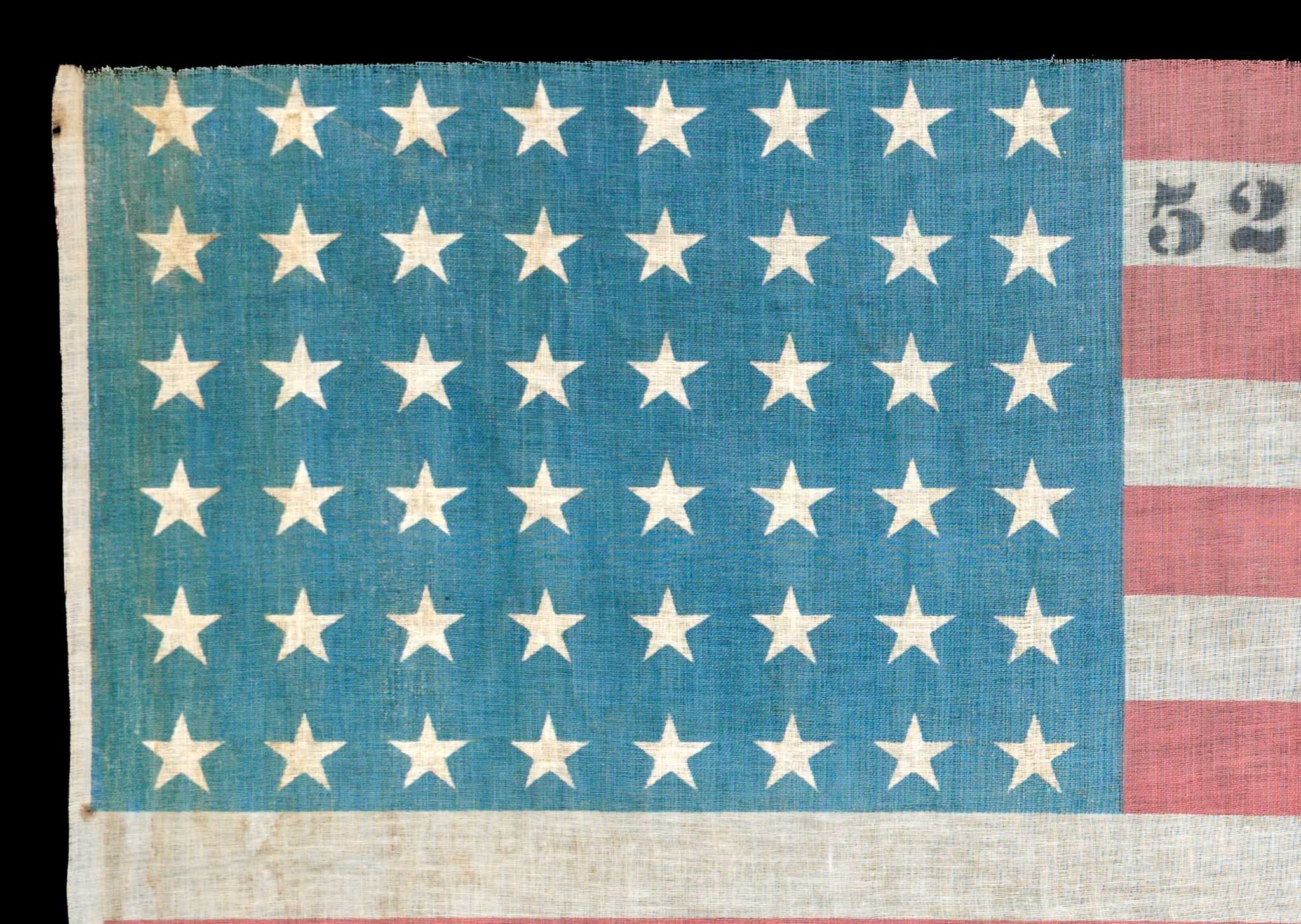
The flag displays 48 stars arranged in linear rows, reflecting the national flag configuration adopted following the admission of New Mexico and Arizona in 1912. The 48-star flag became official on July 4 of that year, and later that same year President William Howard Taft issued an executive order standardizing the arrangement of stars on the national flag, establishing the familiar linear configuration of six rows of eight stars. Because this example follows that standardized layout, its manufacture likely dates to 1912 or shortly thereafter, during the period when Civil War veterans were still actively gathering for reunions and GAR encampments.
Examples of 48-star American flags bearing regimental reunion overprints are uncommon and relate to the reunion culture that developed among Civil War veterans in the decades after the war.
Conservation Process: This flag was hand sewn to cotton fabric, and both were hand sewn to a mounting board. To prevent the black dye in the cotton fabric from seeping into the flag, it was first washed in a standard wash and then in a dye setting wash. The flag is positioned behind Optium Museum Acrylic.
Frame: The frame is a deep-profile moulding with a simple, classical profile, finished in a dark cocoa-brown tone. Its broad face provides visual support without ornament, allowing the flag to remain the primary focus. The subdued finish is well suited to the display of nineteenth-century textiles.
Condition Report: The flag shows moderate wear consistent with age and period use, including scattered staining, areas of minor pigment loss, and modest fraying along portions of the fly end. There are several small holes and areas of fabric loss, most notably within the white stripe bearing the regimental overprint, as well as a few scattered minor losses elsewhere. The colors remain attractive overall, and the printed stars and overprinted lettering remain clearly legible. The overall wear is consistent with use and contributes to the flag’s authentic early twentieth-century character.
Collectability Level: The Great – Perfect for Rising Collectors
Date of Origin: 1912-1915
Number of Stars: 48
Associated War: WWI
Associated State: Arizona