48 Star Antique Parade Flag | Early Standardized Star Pattern | Circa 1912–1930
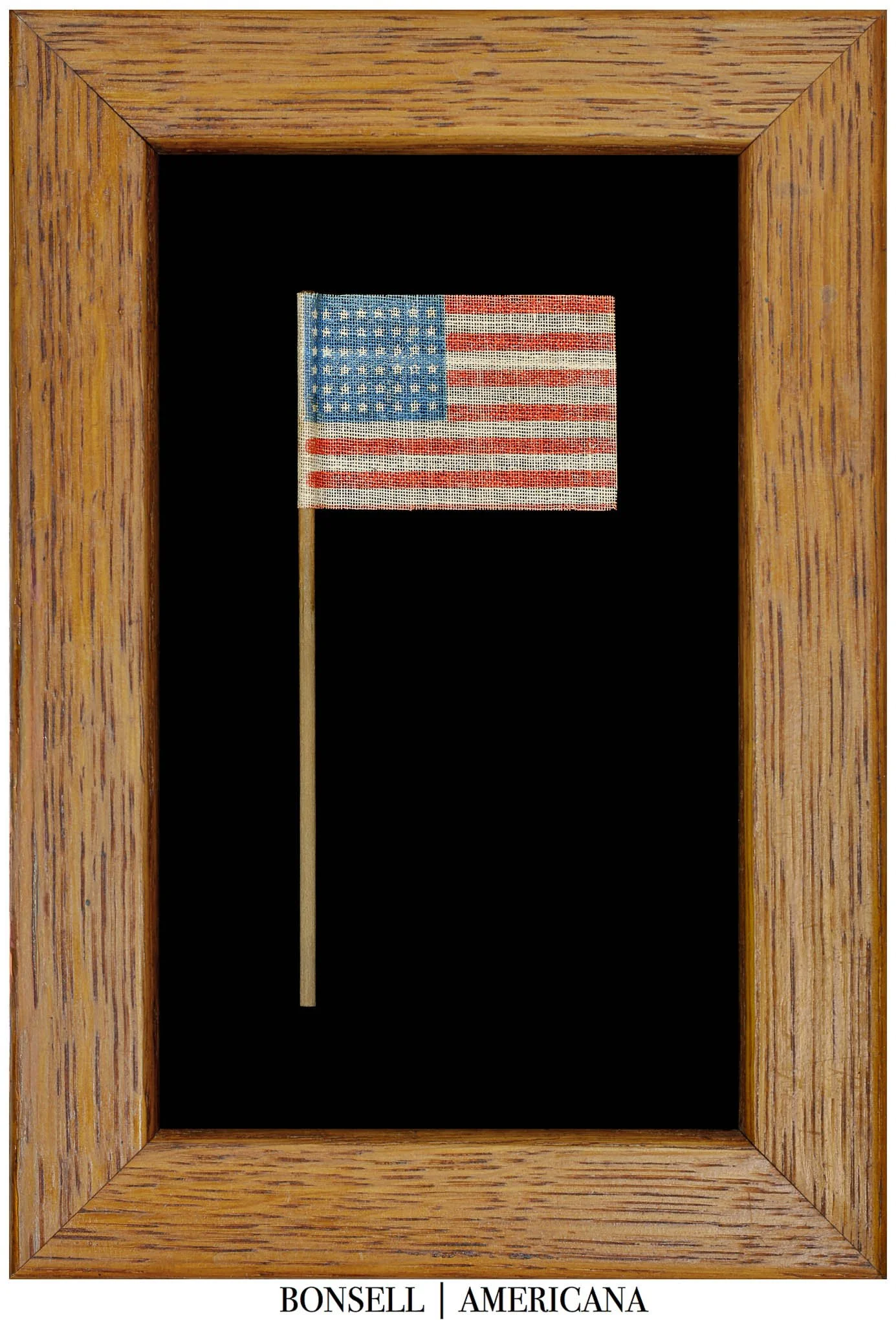
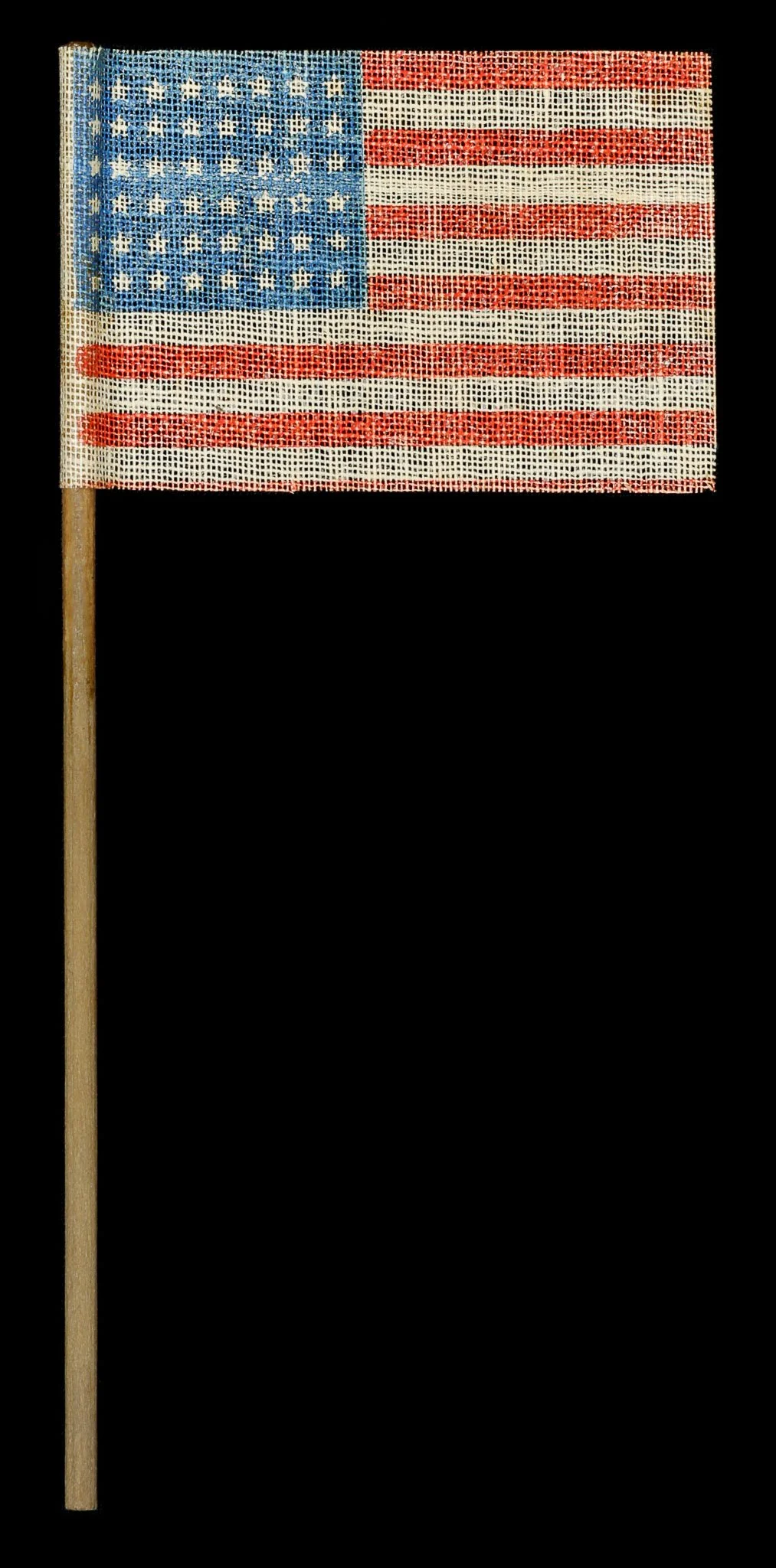
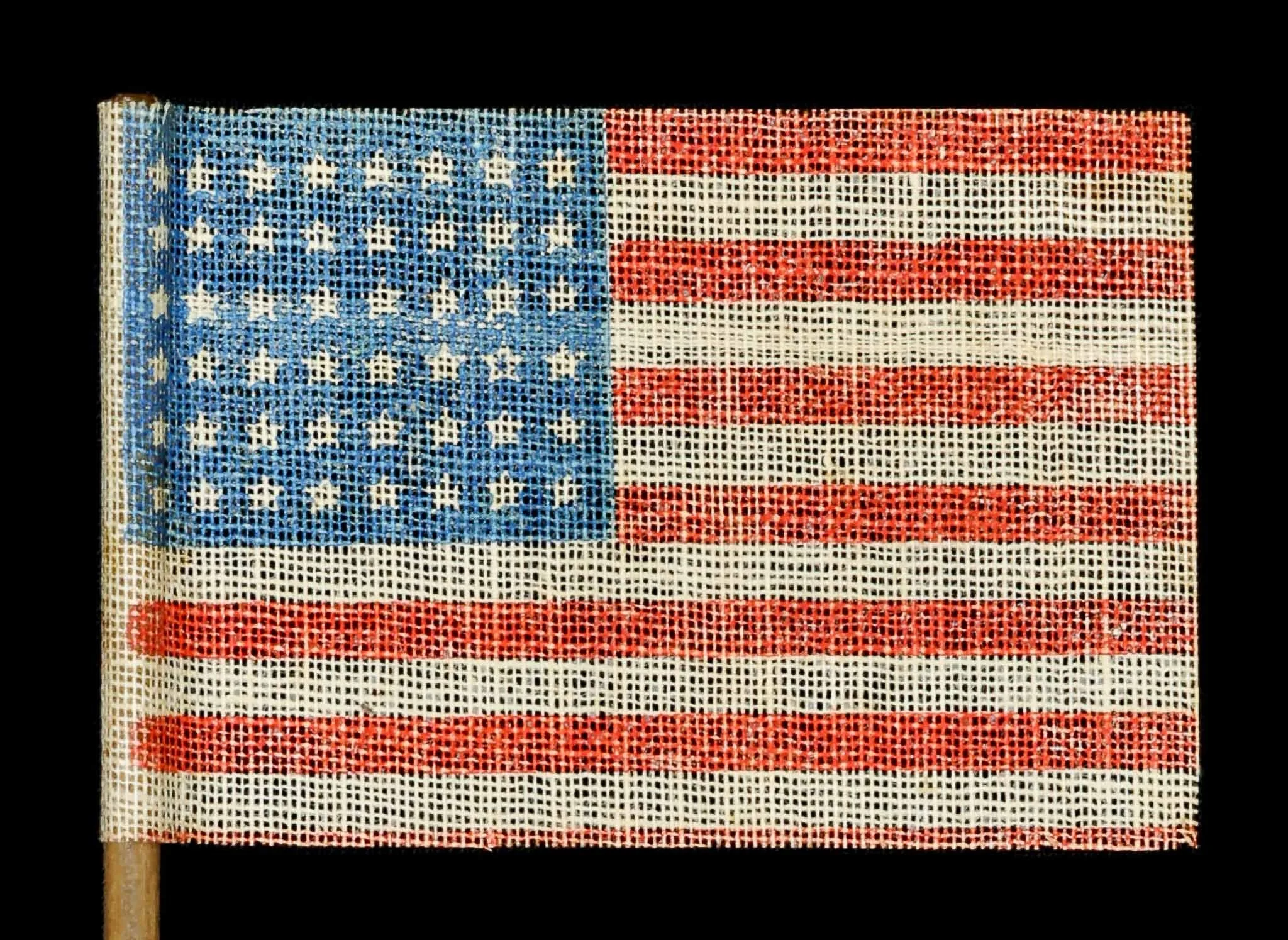
48 Star Antique Parade Flag | Early Standardized Star Pattern | Circa 1912–1930
Frame Size (H x L): 10.75” x 7.25”
Flag Size (H x L): 2” x 3” and Affixed to a 6” Staff
Offered is a 48-star American national flag printed on glazed cotton and mounted on its original wooden staff. The fabric displays a distinctive open-weave texture visible between the printed elements and retains a faint surface sheen from the original glazing. This treatment, typical of parade flags from the early 20th century, stiffened the cloth, enhanced brightness, and provided limited resistance to moisture during outdoor use. The weave and finish are consistent with printed parade flags made between 1912 and 1930, when lightly glazed cotton was the preferred medium for economical yet visually striking patriotic display.
The stars are arranged in six straight horizontal rows of eight—known as the 8-8-8-8-8-8 configuration—adopted as the official layout following President William Howard Taft’s Executive Order of June 24, 1912. This rectilinear pattern replaced the varied and often irregular designs of earlier flags, marking the first formal standardization of the American flag’s star arrangement. The compact canton and irregular ink saturation seen here reflect early printing methods, likely achieved by roller or block press before the widespread use of rotary or screen processes.
The 48-star flag represents the admission of New Mexico (January 6, 1912) and Arizona (February 14, 1912) as the 47th and 48th states. Officially adopted on July 4th of that year, it remained the national banner for forty-seven years—longer than any design before it. During this period, the flag accompanied the United States through both World Wars, the Great Depression, and the Korean War, symbolizing a nation emerging as a global power. It was flown at countless milestones in American history—from the dedication of the Lincoln Memorial and the raising at Iwo Jima to the presidencies of Taft, Wilson, Harding, Coolidge, Hoover, Roosevelt, Truman, and Eisenhower. Its longevity and ubiquity make the 48-star flag one of the most recognizable and enduring designs in the evolution of the Stars and Stripes.
Small parade flags such as this were distributed at patriotic celebrations, political rallies, and community parades throughout the early decades of the 20th century. Their lightweight construction and bright printed colors made them inexpensive to produce yet expressive symbols of civic pride. Surviving examples are prized for their authenticity and connection to a formative era in America’s national identity.
Conservation Process: This flag was hand sewn to cotton fabric, and both were hand sewn to a mounting board. To prevent the black dye in the cotton fabric from seeping into the flag, it was first washed in a standard wash and then in a dye setting wash. The flag is positioned behind Optium Museum Acrylic.
Frame: The frame is made of solid oak with a warm golden finish and pronounced quarter-sawn grain. Its clean lines and straightforward joinery reflect early 20th-century craftsmanship and design sensibilities.
Condition Report: The flag remains in excellent condition with vibrant color and only mild, natural oxidation to the white cotton. Minor wear appears along the hoist where the fabric was wrapped around the original wooden staff, but there are no tears, losses, or repairs.
Collectability Level: The Good – Perfect for Beginning Collectors and Gifts
Date of Origin: 1912-1930
Number of Stars: 48
Associated War: WWI, WWII, and Korean War
Associated State: Arizona