33 Star Antique American Flag with a Medallion Configuration | Oregon Statehood | Circa 1859-1861
33 Star Antique American Flag with a Medallion Configuration | Oregon Statehood | Circa 1859-1861
Frame Size (H x L): 12” x 15”
Flag Size (H x L): 6” x 9”
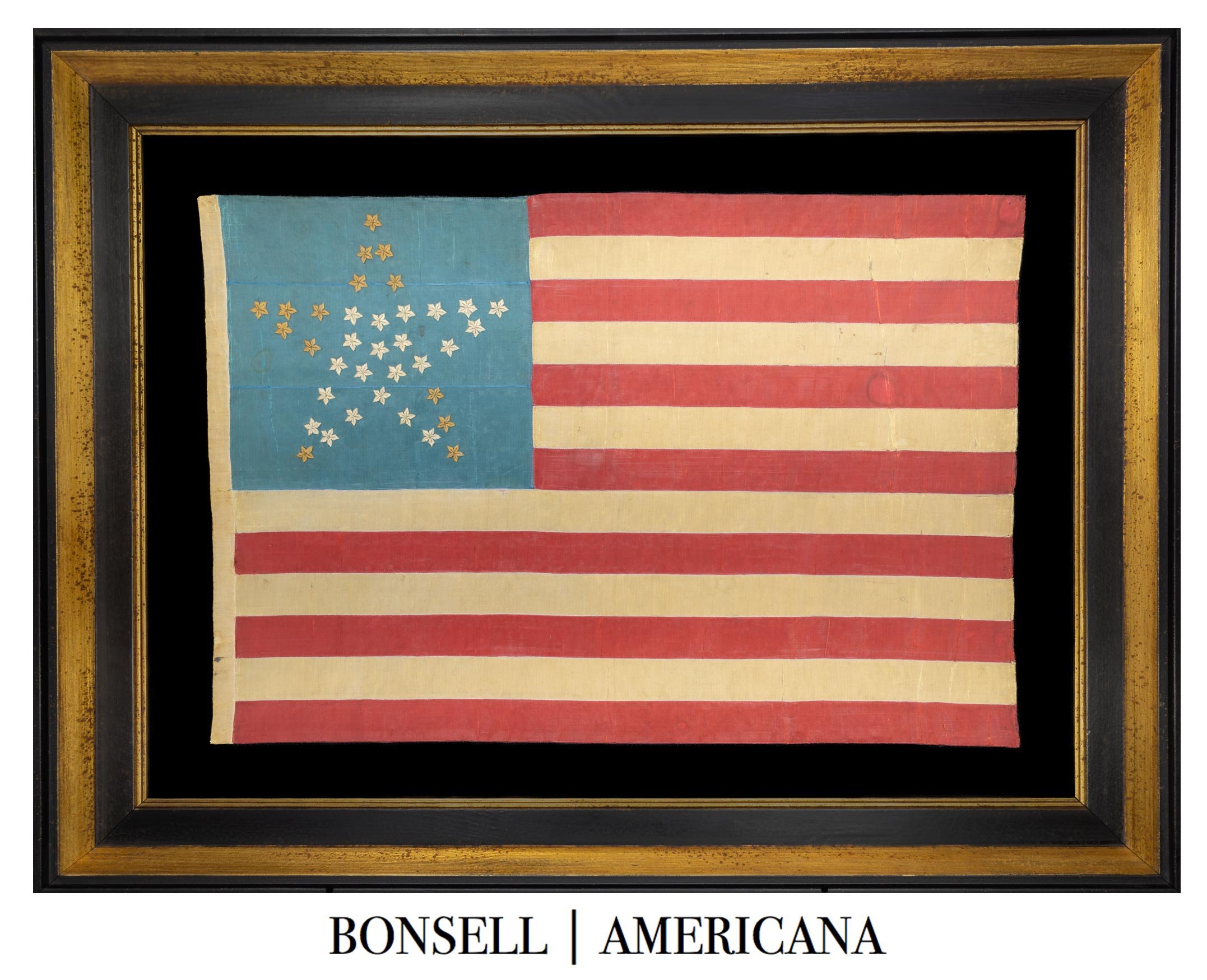
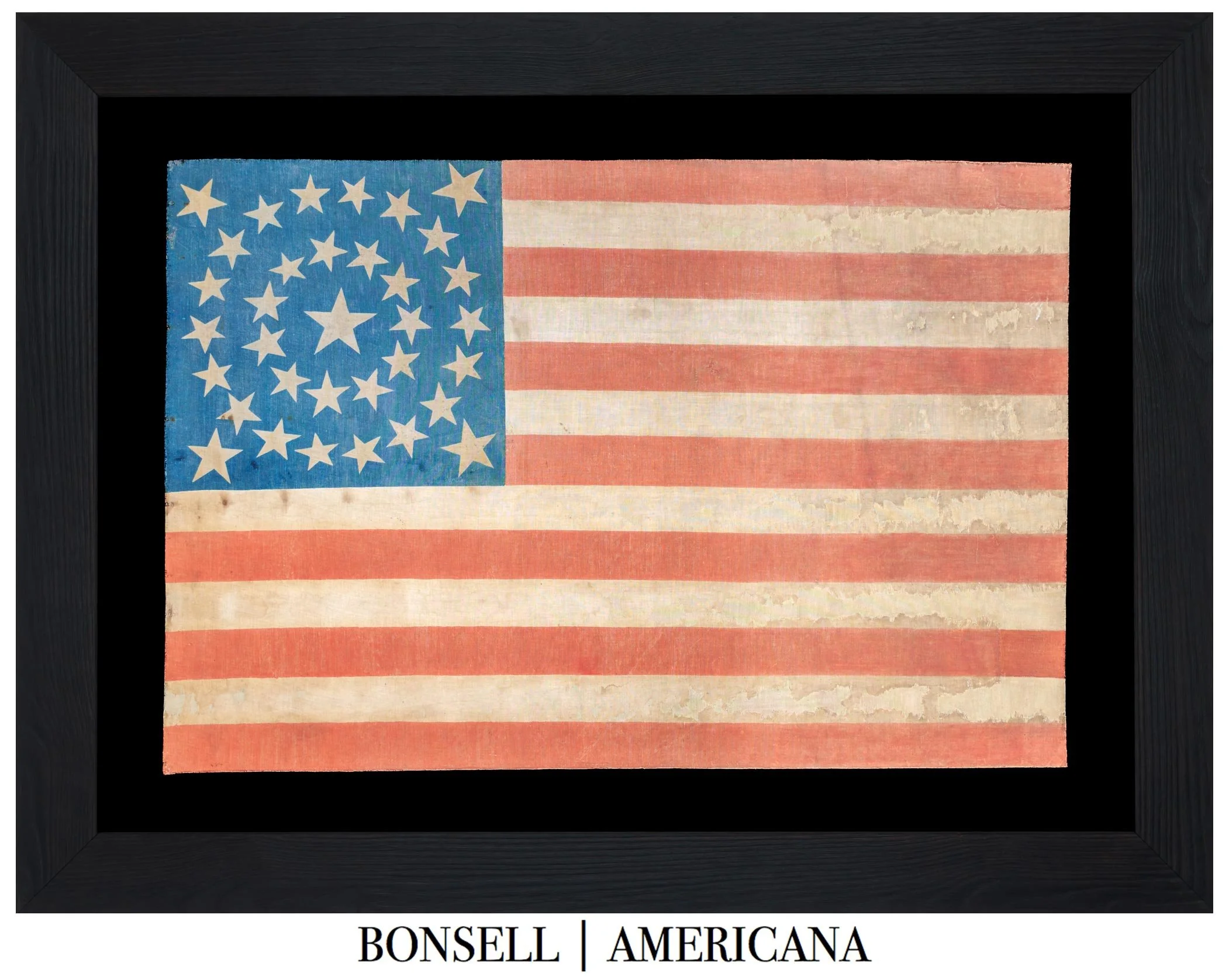
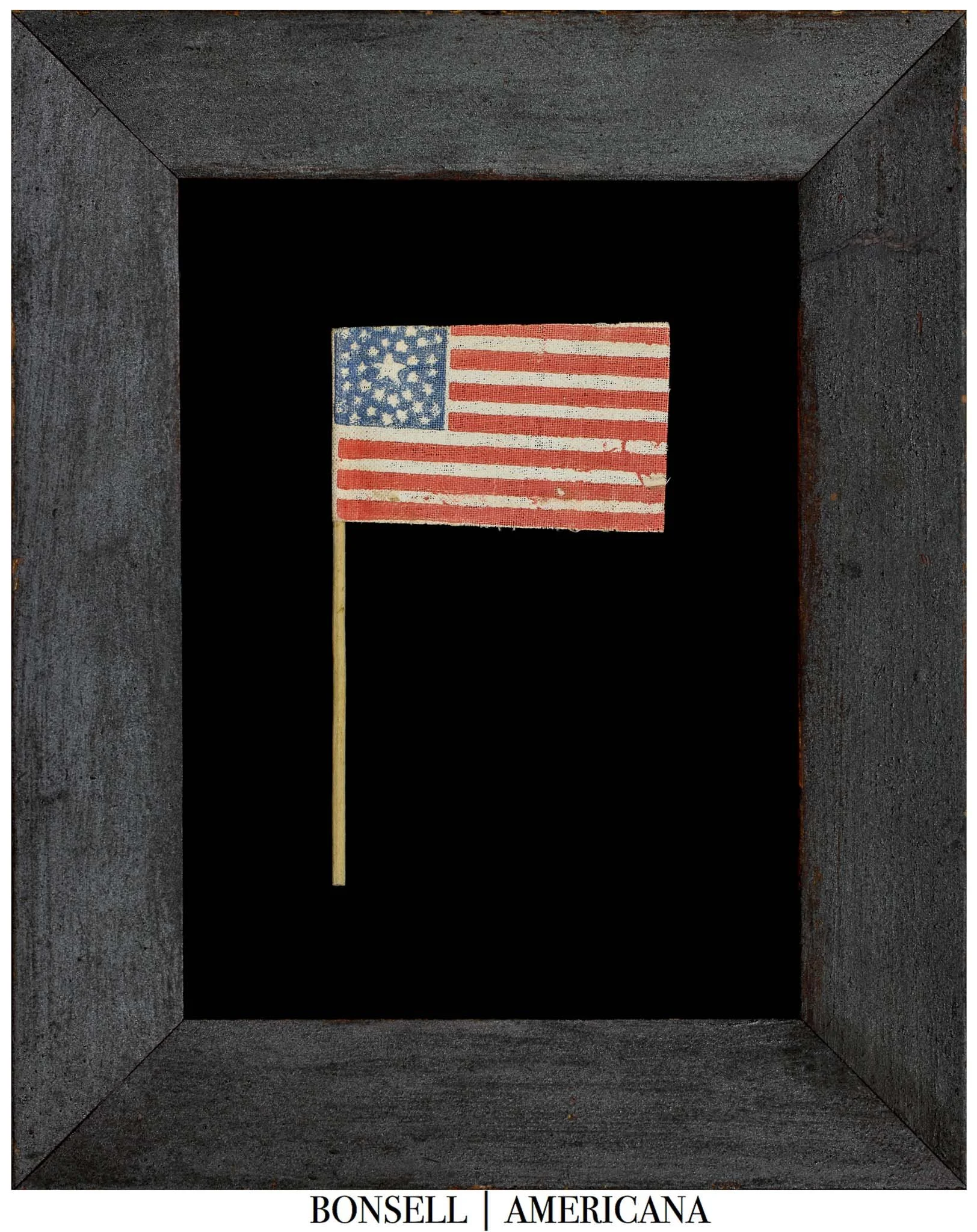
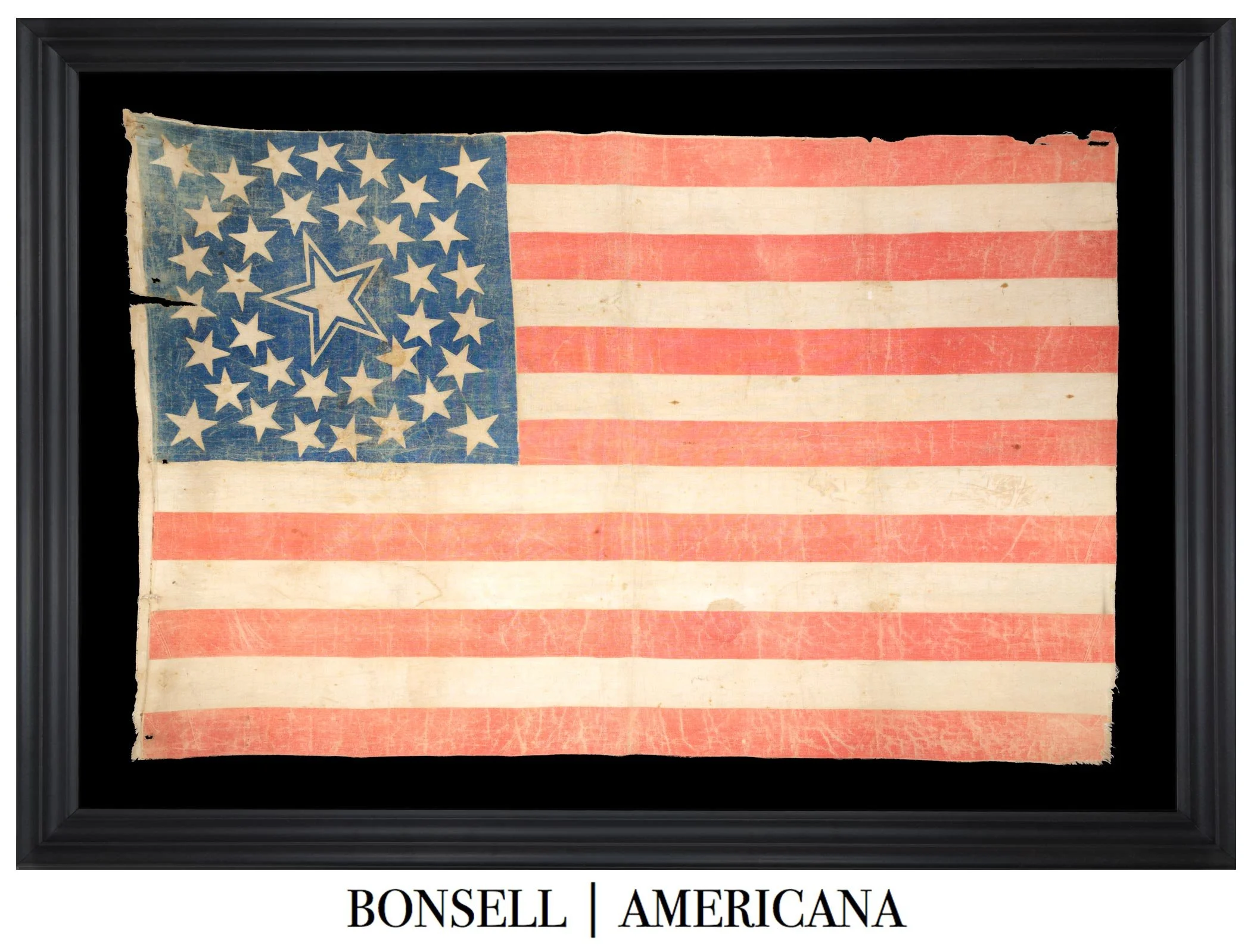
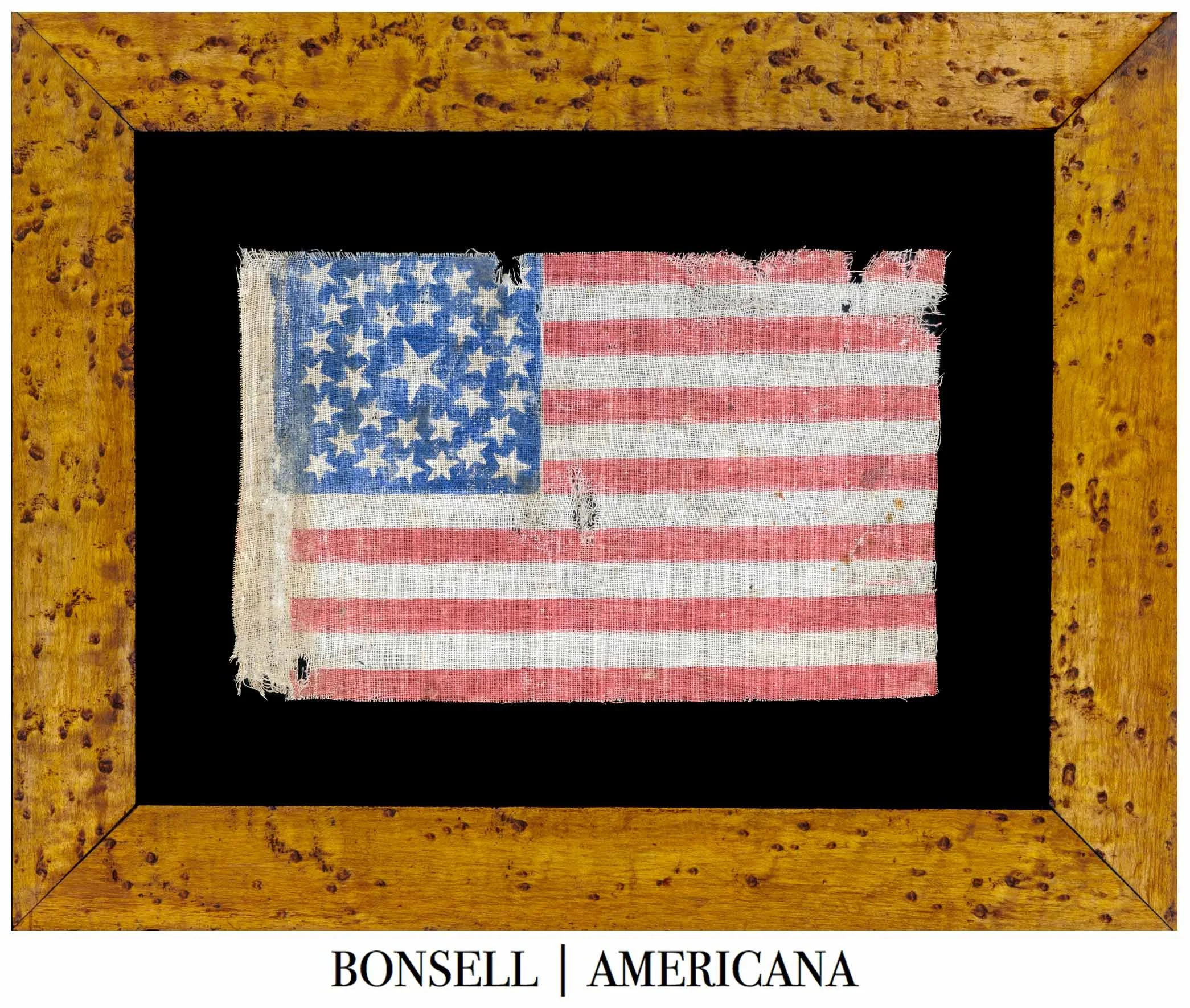
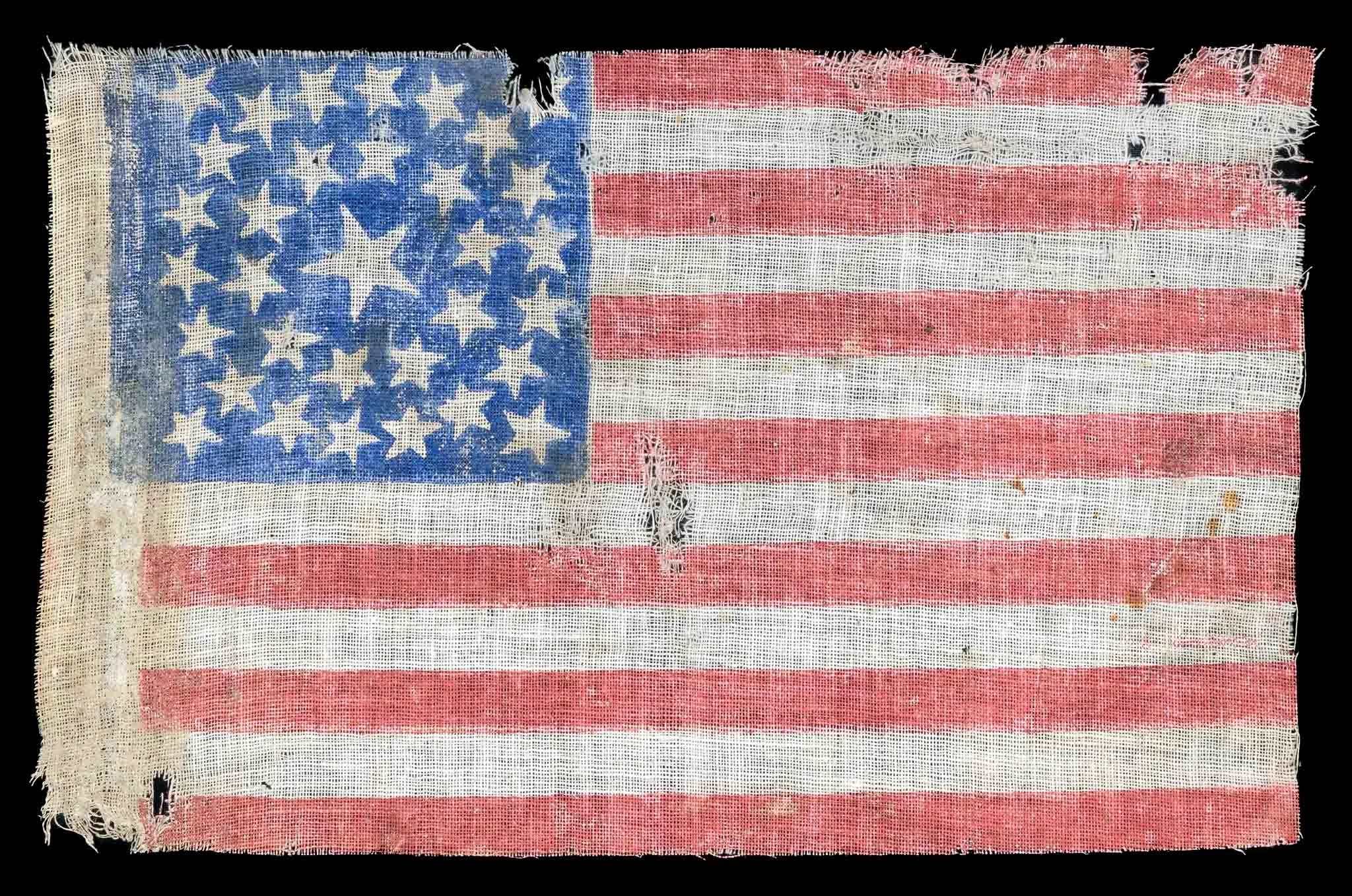
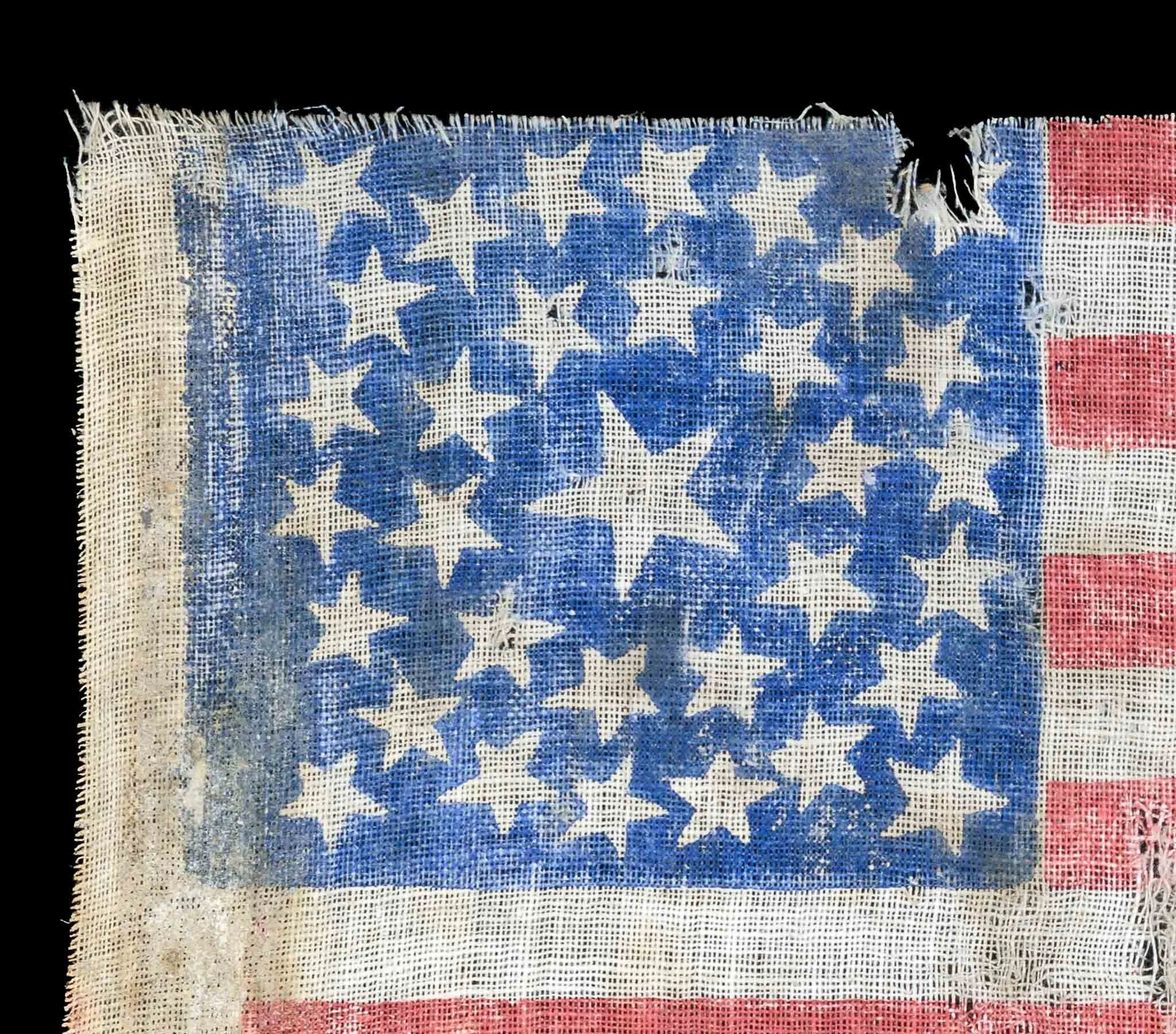
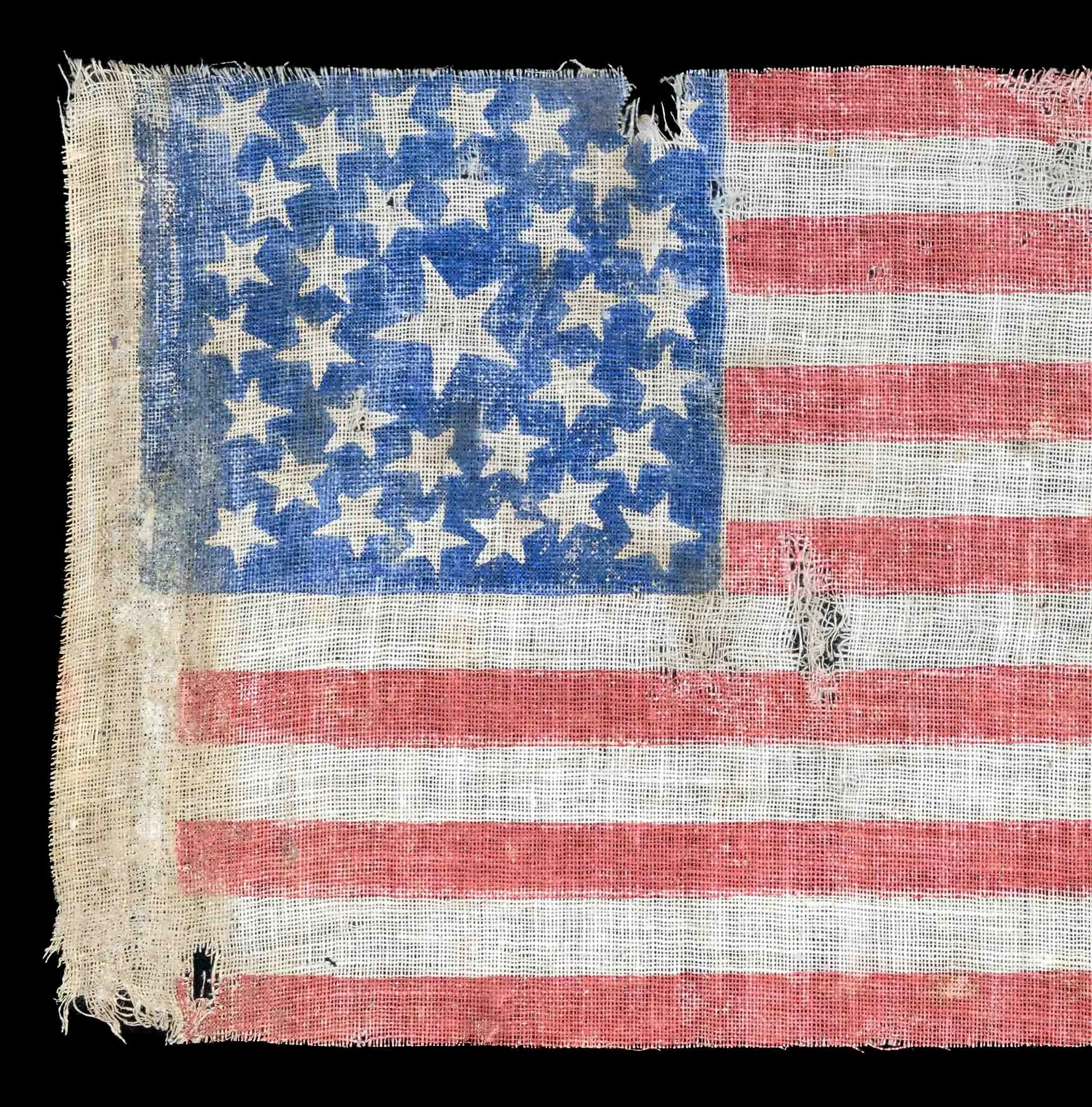
Offered is a 33-star American national flag, printed on glazed cotton and executed in a highly distinctive medallion-style star configuration. At the center of the canton is a single, oversized “center star,” canted to approximately the 11:00 position. This center star is widely understood to represent the most recently admitted state—Oregon in the case of the 33-star flag. Surrounding the center star are two concentric rings of smaller stars, with four additional stars positioned in the corners of the canton, completing the design.
The stars are notably pointy and irregular in form, lending the flag a distinctly folksy, hand-rendered appearance. They are tightly packed within the canton, a visual characteristic emblematic of a small and well-recognized family of mid-19th-century printed flags. Although the maker of this example remains unidentified, the star shapes, spacing, and overall layout are consistent across a limited group of flags known to have originated from the same workshop.
This workshop is documented to have produced flags in 6 different star counts, all sharing the same stylistic vocabulary: 7-star, 13-star, 15-star, 29-star, 33-star, and 35-star examples. Each star count corresponds to a specific historical or commemorative purpose. Flags with 7 stars acknowledged the first seven states to secede from the Union; 13-star flags referenced the original colonies; 15-star flags commemorated Kentucky’s centennial; and the 29-star, 33-star, and 35-star flags celebrated the admission of Iowa, Oregon, and West Virginia, respectively. The recurrence of this design across multiple star counts suggests a commercially oriented maker responding quickly to current events and prevailing public sentiment.
The 33-star flag represents the admission of Oregon, which became the 33rd state on February 14, 1859. In accordance with federal law, the star count was updated on the following Independence Day, making July 4, 1859, the official beginning of the 33-star flag’s period of use. It remained the official national flag until July 4, 1861, when the 34-star flag—reflecting the admission of Kansas—was formally adopted.
The historical timing of the 33-star flag is particularly significant. Its official period of use overlaps directly with the secession crisis and the opening months of the Civil War. At the time the 33-star flag became official, multiple Southern states had already left the Union, yet no stars were ever removed from the flag. As a result, the 33-star flag represents a Union that was legally intact but politically fractured—an important and meaningful distinction for collectors.
This association is underscored by a notable historical reference: a 33-star flag was flying at Fort Sumter when Confederate forces launched their attack in April of 1861. Because of this, the 33-star flag is among the earliest star counts directly tied to the Civil War and is often regarded as a visual symbol of the nation on the brink of armed conflict.
Although the 33-star flag was officially replaced in July of 1861, it continued to be used well into the Civil War. Wartime supply constraints meant that existing flags remained in service, and manufacturers did not immediately discard earlier printing blocks or designs. As a result, 33-star flags are documented in both pre-war and early-war contexts, adding to their historical depth and complexity.
From a broader collecting perspective, flags from the Civil War era are among the most sought-after of all antique American flags. Prior to the late 1850s, flags were not commonly displayed by civilians for patriotic purposes, and even military use was relatively limited. Earlier flags were typically produced for maritime identification and were often very large in scale. The mass production of smaller, affordable flags—intended for rallies, political events, and personal display—emerged with the election of Abraham Lincoln and accelerated rapidly with the onset of the Civil War. The 33-star flag sits squarely at the beginning of this transformation.
Taken as a whole, the 33-star flag occupies a uniquely compelling position in the history of American national flags. It represents the Union at a moment of profound tension—legally whole, yet politically fractured—while also marking the transition from large, utilitarian flags to smaller examples made expressly for public display and personal expression. Combined with its association with the opening chapter of the Civil War, its relatively brief official lifespan, and the bold medallion-style configuration seen here, the 33-star flag stands among the most historically resonant and visually distinctive star counts available to collectors today.
Conservation Process: This flag was hand sewn to cotton fabric, and both were hand sewn to a mounting board. To prevent the black dye in the cotton fabric from seeping into the flag, it was first washed in a standard wash and then in a dye setting wash. The flag is positioned behind Optium Museum Acrylic.
Frame: The flag is housed in a solid birdseye maple frame, chosen for its warm tone and distinctive figured grain. Its restrained profile provides a clean, complementary presentation without distracting from the flag itself.
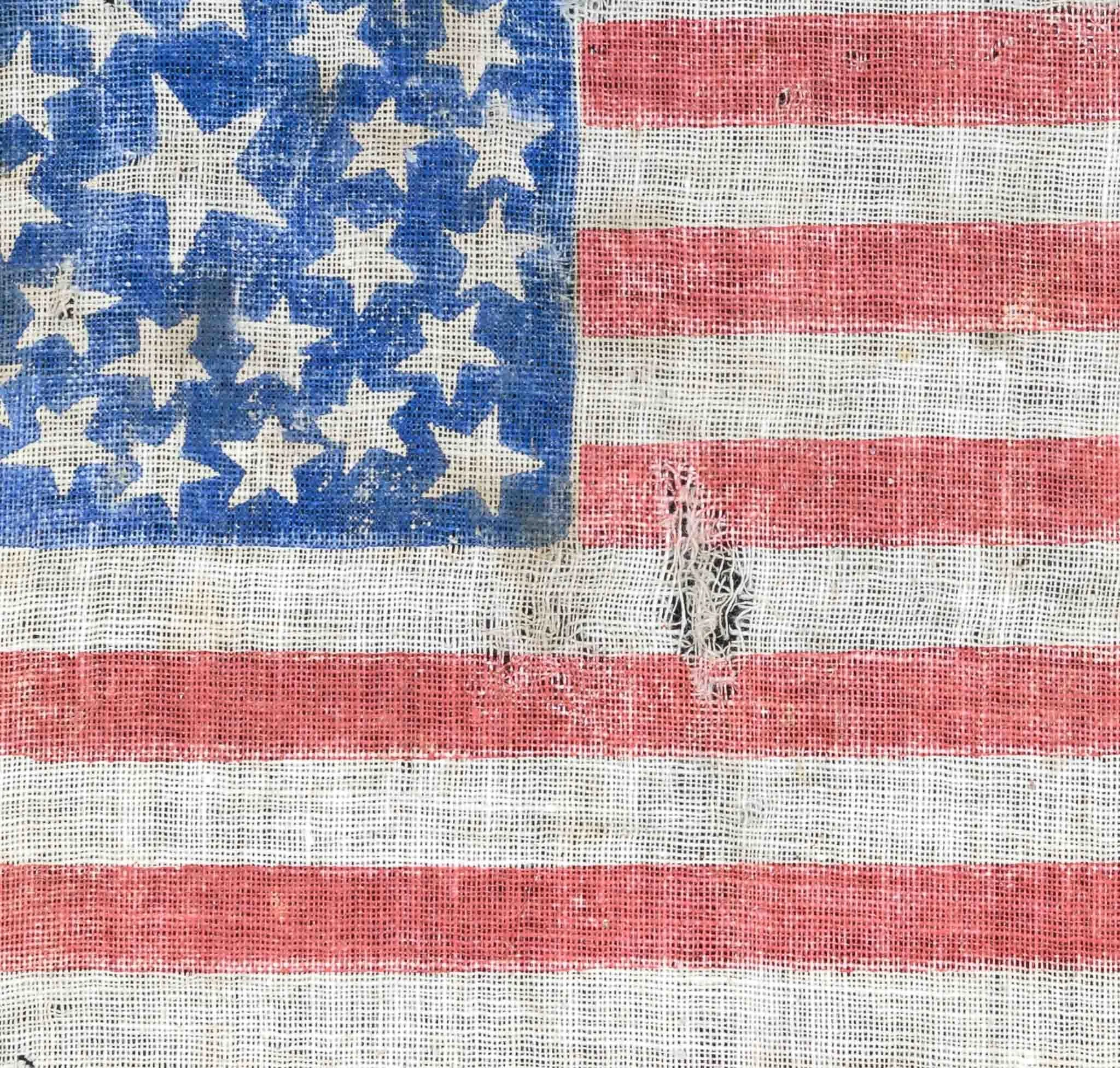
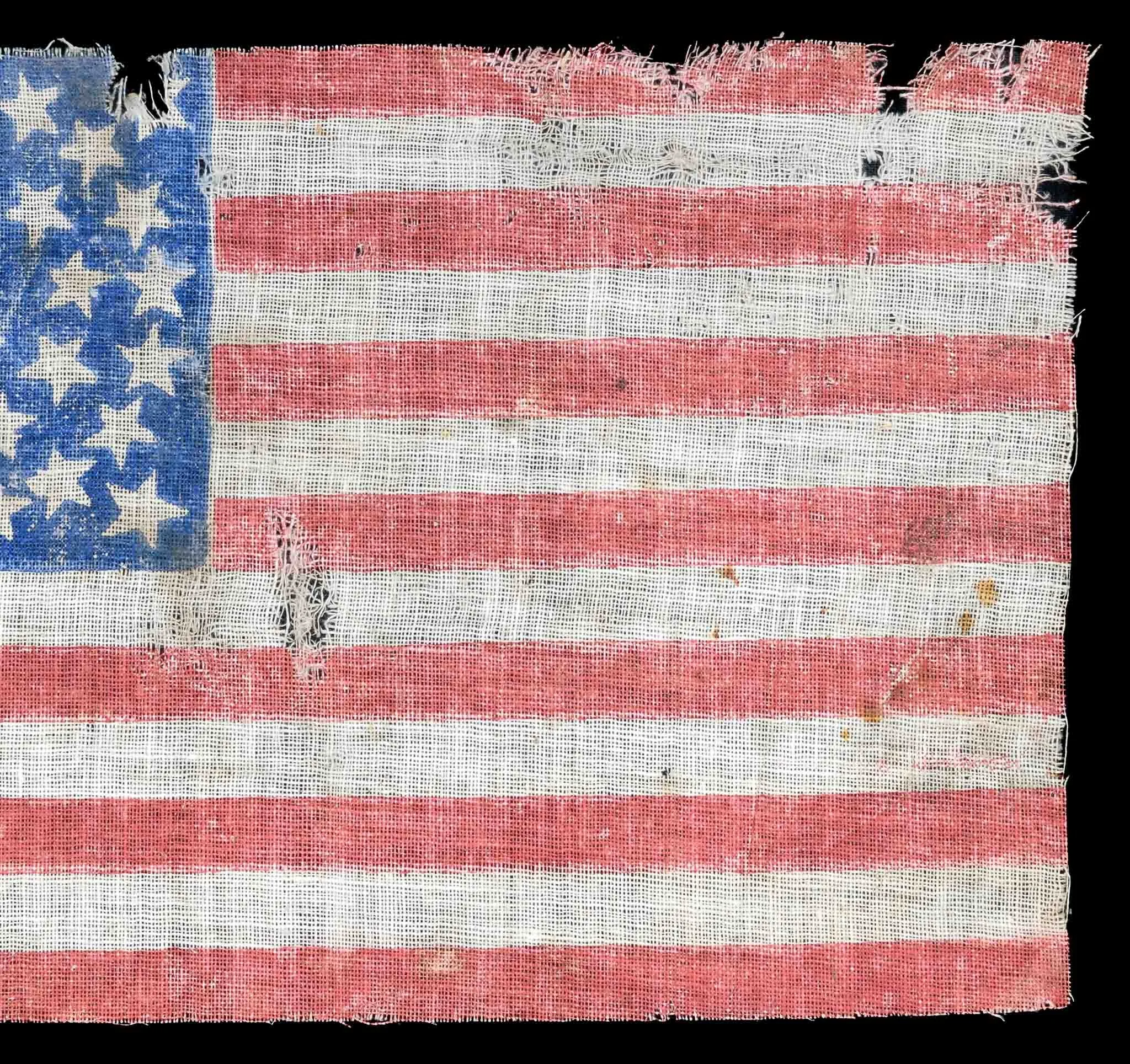
Condition Report: The flag presents with expected wear consistent with age and use, including overall fabric softening, light surface soiling, and moderate fraying along the edges. There is a small area of fabric loss and a short vertical tear within the striped field, accompanied by scattered minor holes and thread loss elsewhere. Despite these condition issues, the flag remains stable, visually compelling, and well suited for display.
Collectability Level: The Great – Perfect for Rising Collectors
Date of Origin: 1859-1861
Number of Stars: 33
Associated War: Pre-Civil War
Associated State: Oregon