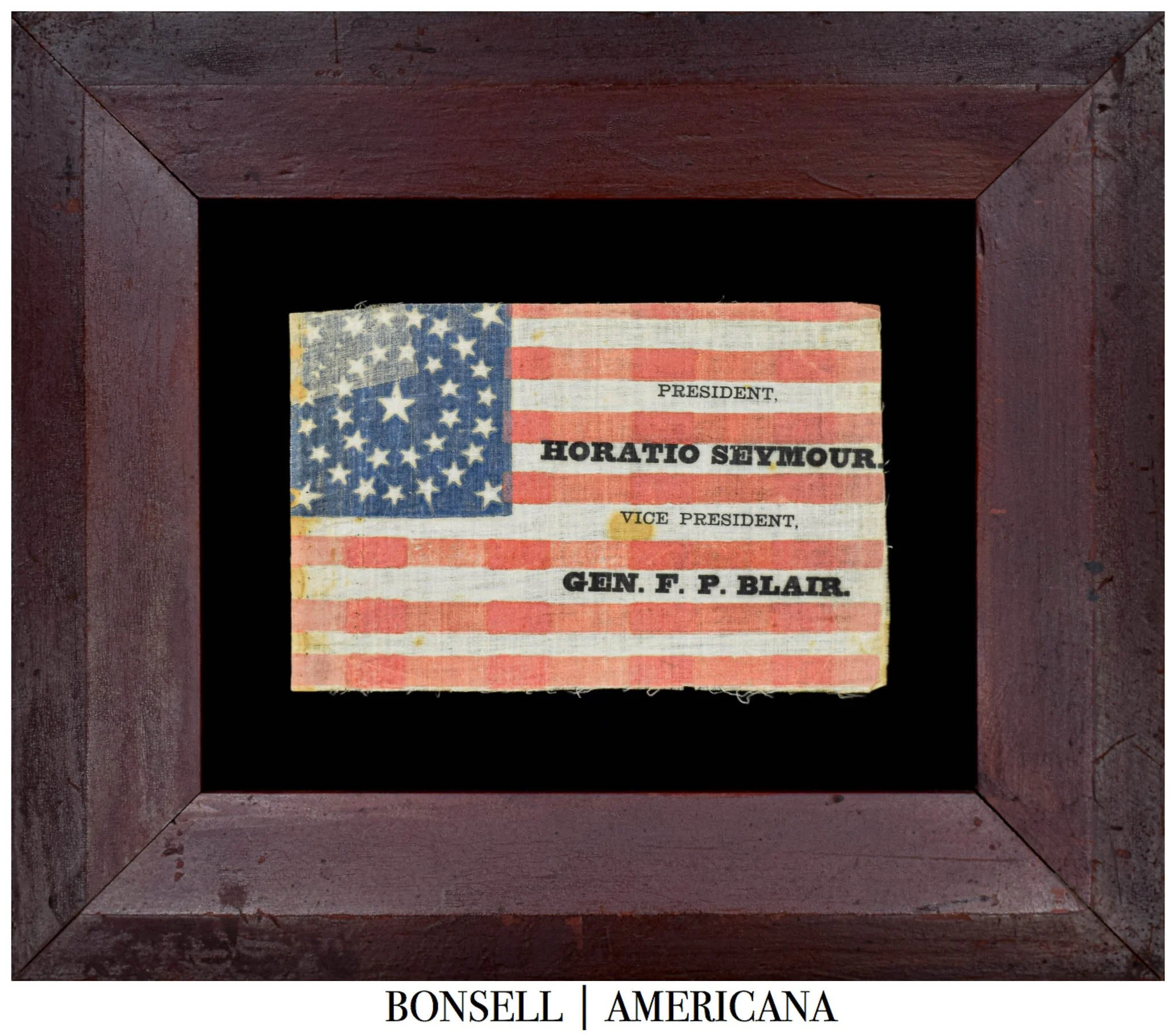
48 Star Antique American Flag with Opening Day Baseball and Legislative Overprint | Arizona Statehood | Circa 1911
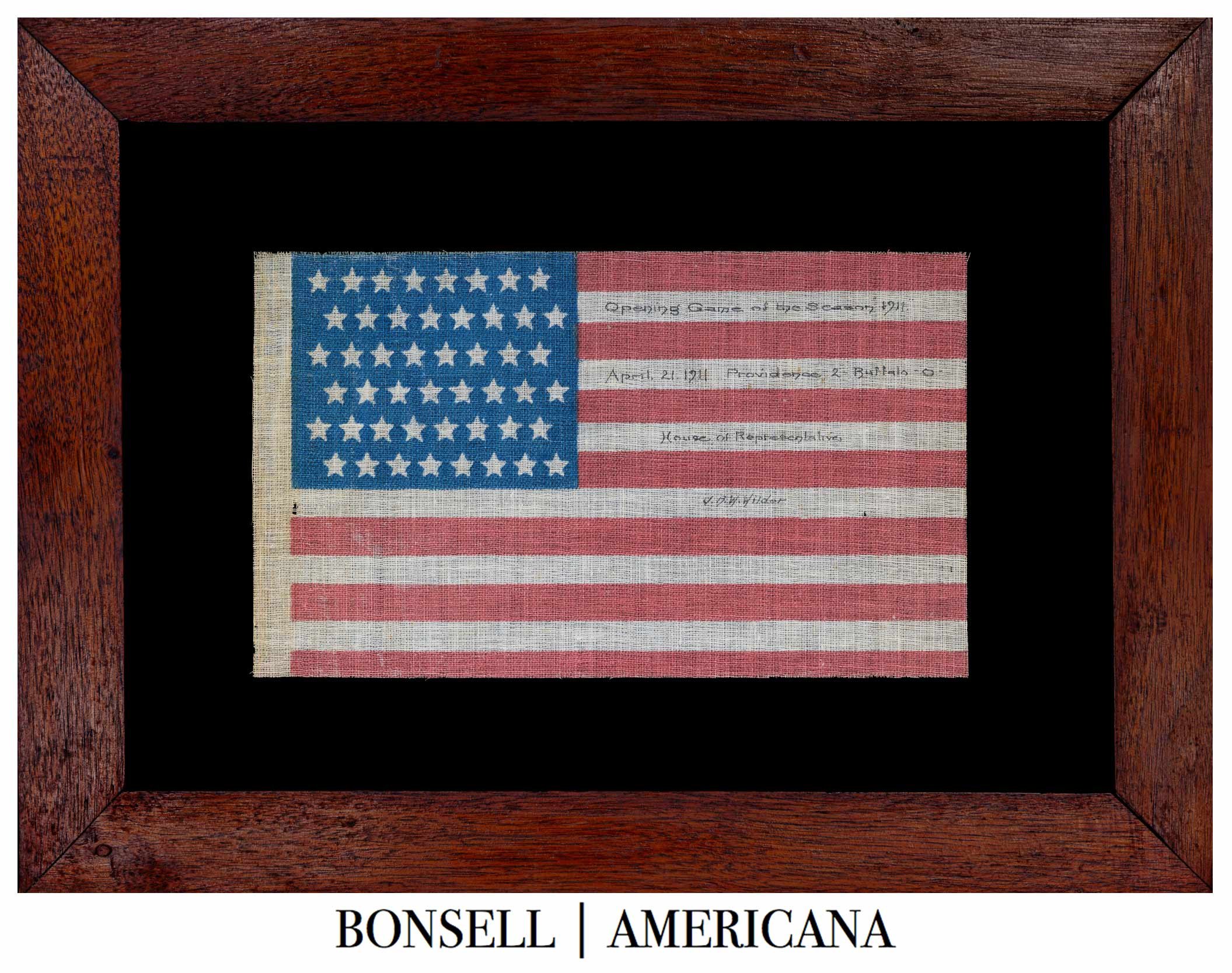
48 Star Antique American Flag with Opening Day Baseball and Legislative Overprint | Arizona Statehood | Circa 1911
Frame Size (H x L): 12” x 16”
Flag Size (H x L): 6” x 9.75”
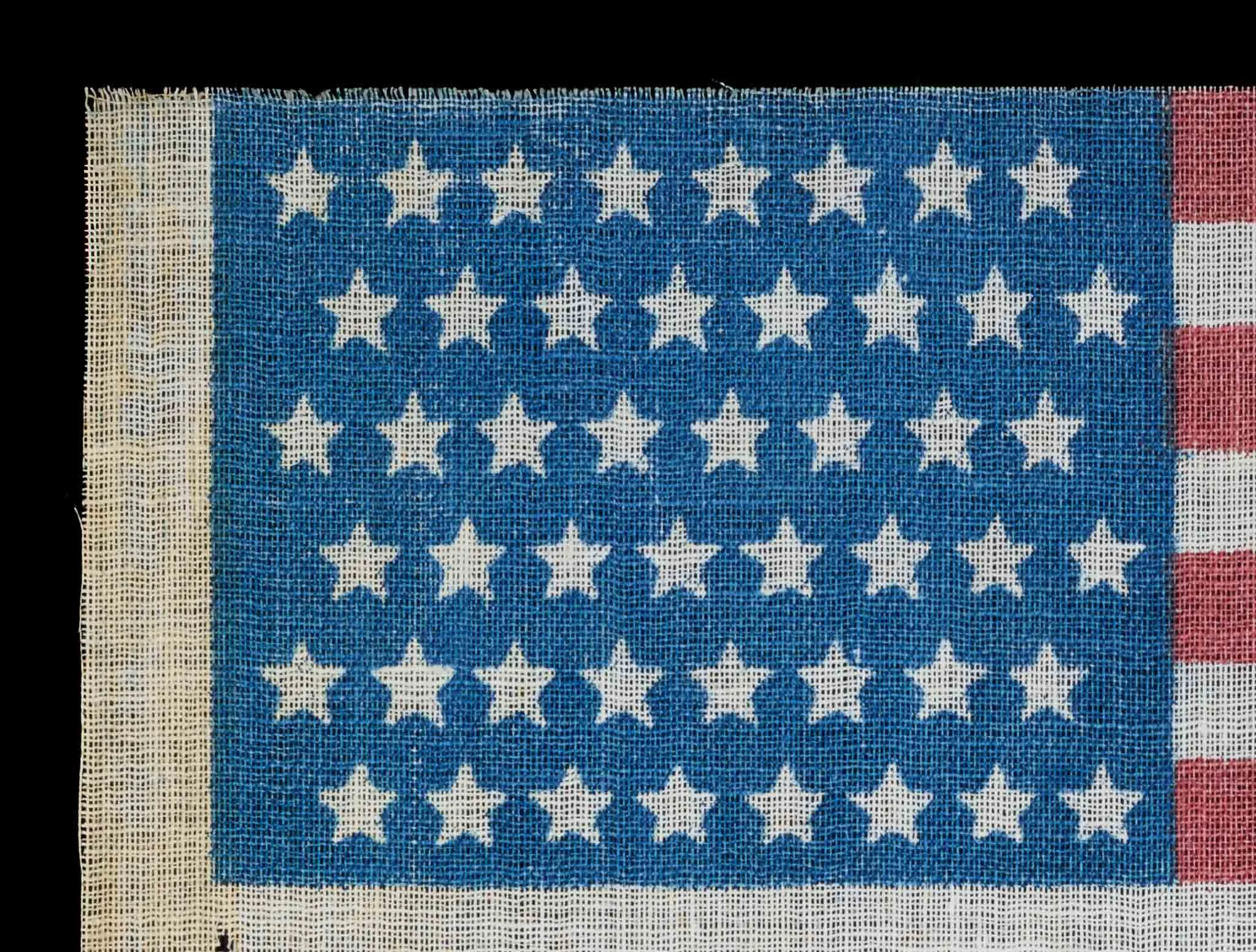
Offered is an early-20th-century American flag commemorating the Opening Game of the 1911 Eastern League season, contested between the Providence Grays and the Buffalo Bisons, played on April 21, 1911. The flag documents a specific civic and sporting event and reflects the intersection of professional baseball, state politics, and patriotic display in the early twentieth century.
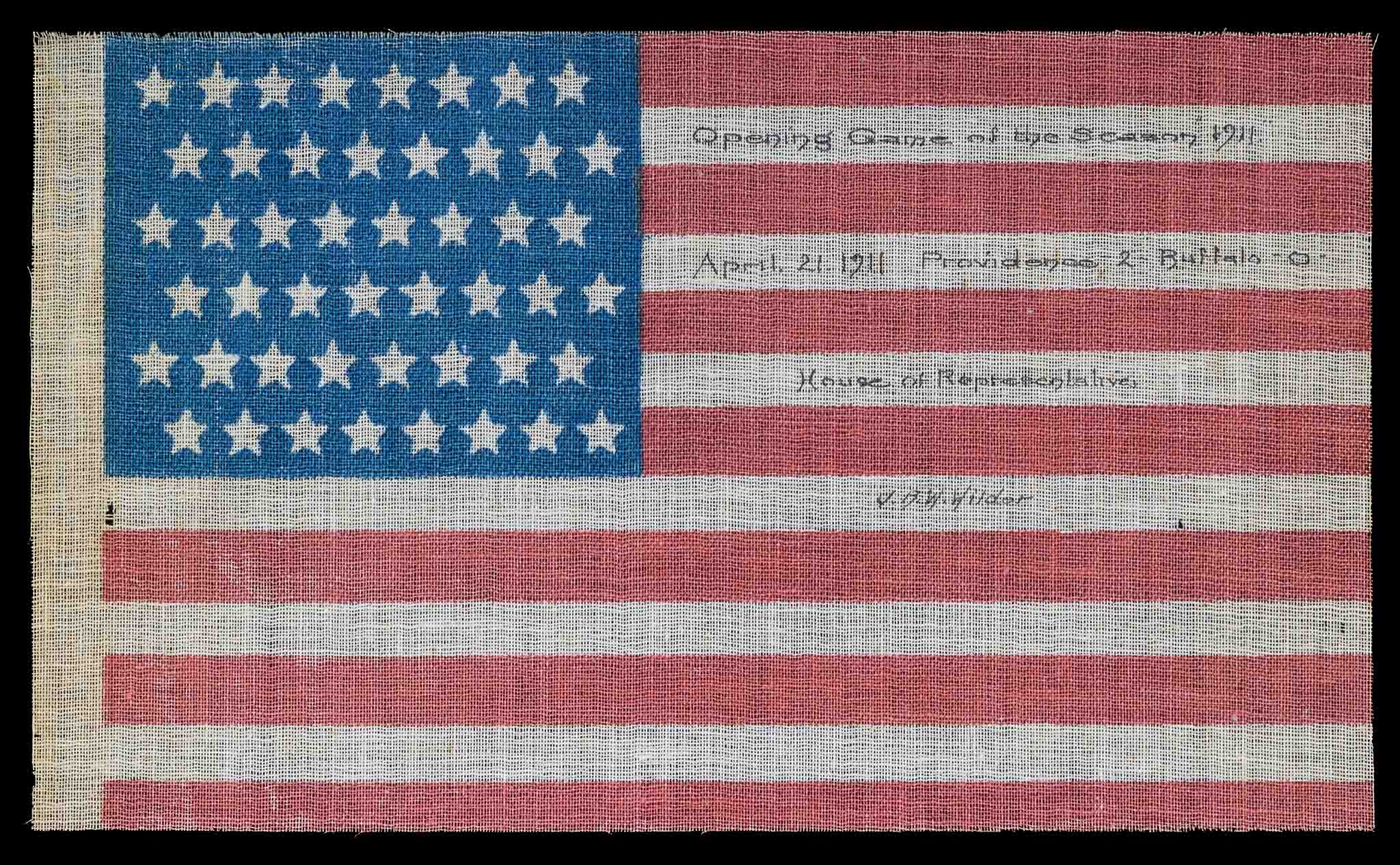
The flag is printed on glazed cotton, a calendared textile finish that compresses the fibers and produces a slight surface sheen. This finish was commonly used for commemorative and ceremonial flags of the period because it allowed for sharper ink definition and improved durability. The underlying cotton weave remains visible, consistent with commercial flag production of the era. The stars are arranged in a staggered configuration, a layout frequently employed by early-twentieth-century flag makers. While star arrangements were not yet federally standardized, staggered patterns were widely favored for their visual balance and suitability for mechanical printing.
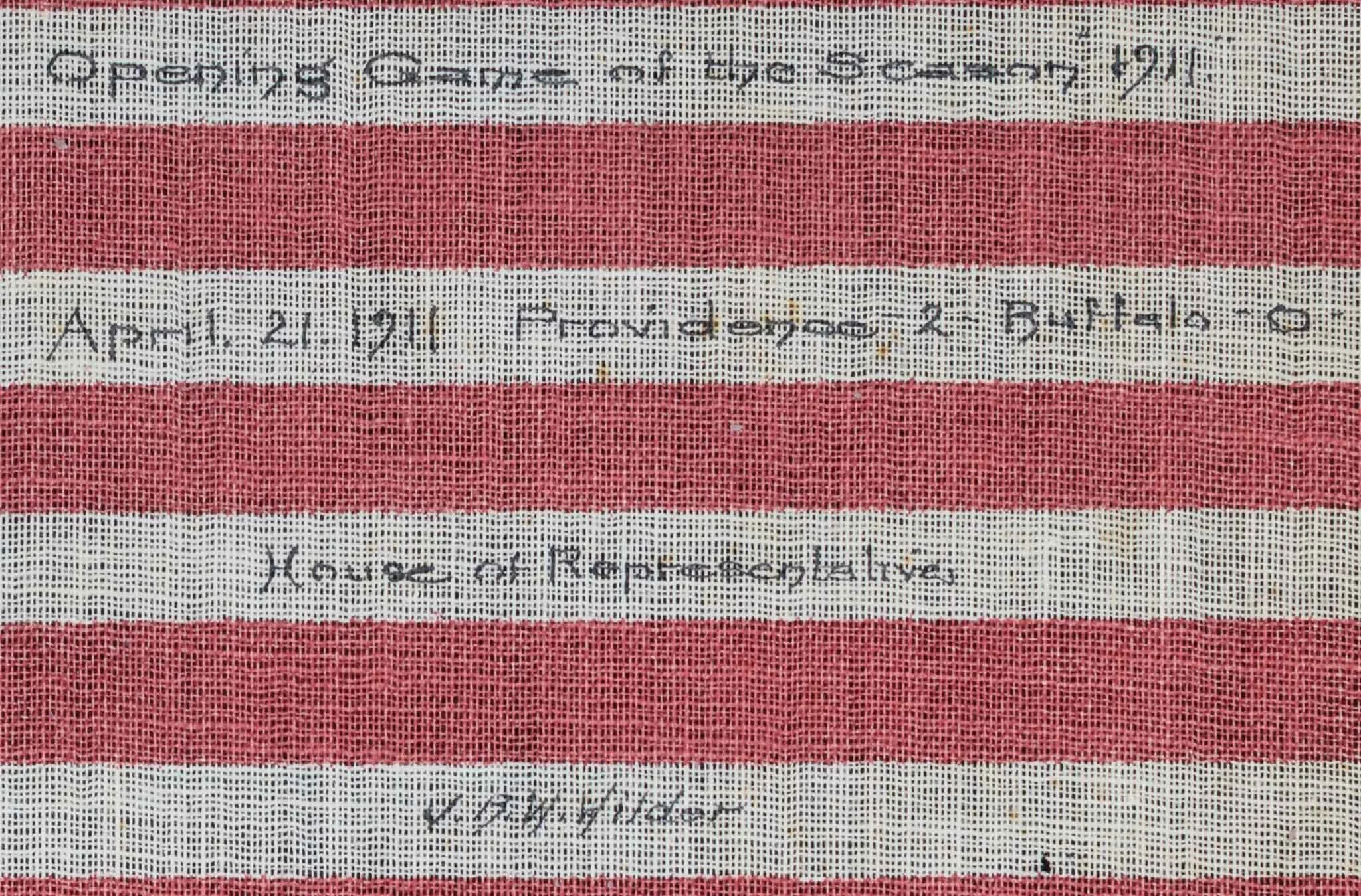
The flag bears a finely printed overprint reading, “Opening Game of the Season 1911,” followed by “April 21, 1911 | Providence 2 | Buffalo 0,” recording the final score of the contest. Beneath this appears the designation “House of Representatives,” followed, on a separate line, by the name “J. B. W. Wilder.” The inclusion of the final score establishes that the flag was produced after the game’s conclusion and functioned as a commemorative record of the event rather than a pre-game or in-stadium distribution. The overprint transforms the flag from a general patriotic textile into a document tied to a specific date, outcome, civic body, and individual.
The text is mechanically printed, but close inspection reveals minor variation among individual letterforms, indicating that the printing derived from a hand-lettered source. This method was common in small-batch commemorative textile production during the early twentieth century, in which lettering was first drawn by hand and then transferred mechanically using a stencil, plate, or roller. The result combines consistent ink application with subtle irregularities characteristic of hand-origin printing. The name and all text appear to be part of the original production and not later additions.
The two clubs represented were among the most established franchises in early twentieth-century minor-league baseball. The Providence Grays traced their origins to the nineteenth century and carried a name associated with Providence’s earlier major-league team of the 1880s, maintaining a strong local following and a reputation for competitive play within the Eastern League. The Buffalo Bisons, likewise, were one of the league’s cornerstone franchises, reflecting Buffalo’s status as a major industrial and transportation center. Both clubs occupied prominent roles within the Eastern League, which at the time was regarded as one of the strongest and most professionally organized minor leagues in the country, frequently serving as a proving ground for players and managers who would later advance to the major leagues.
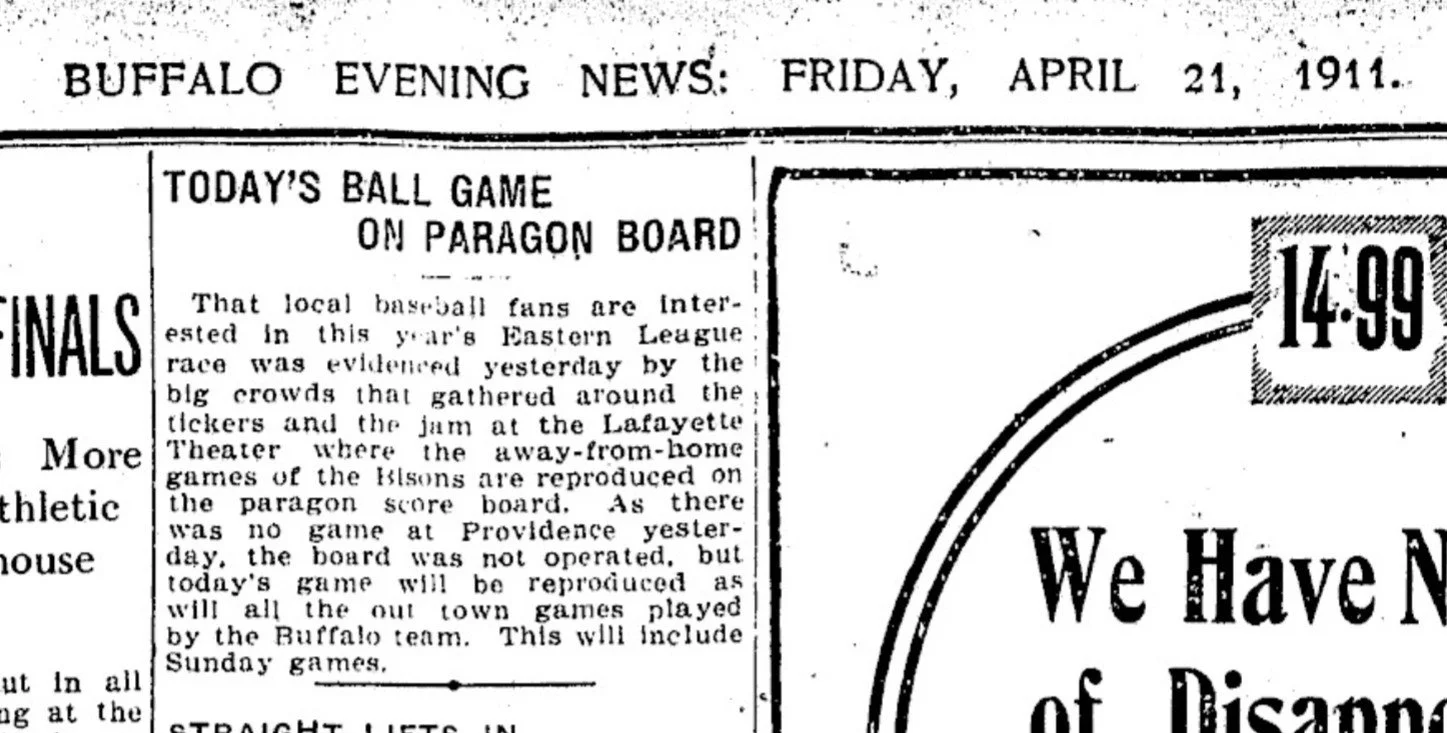
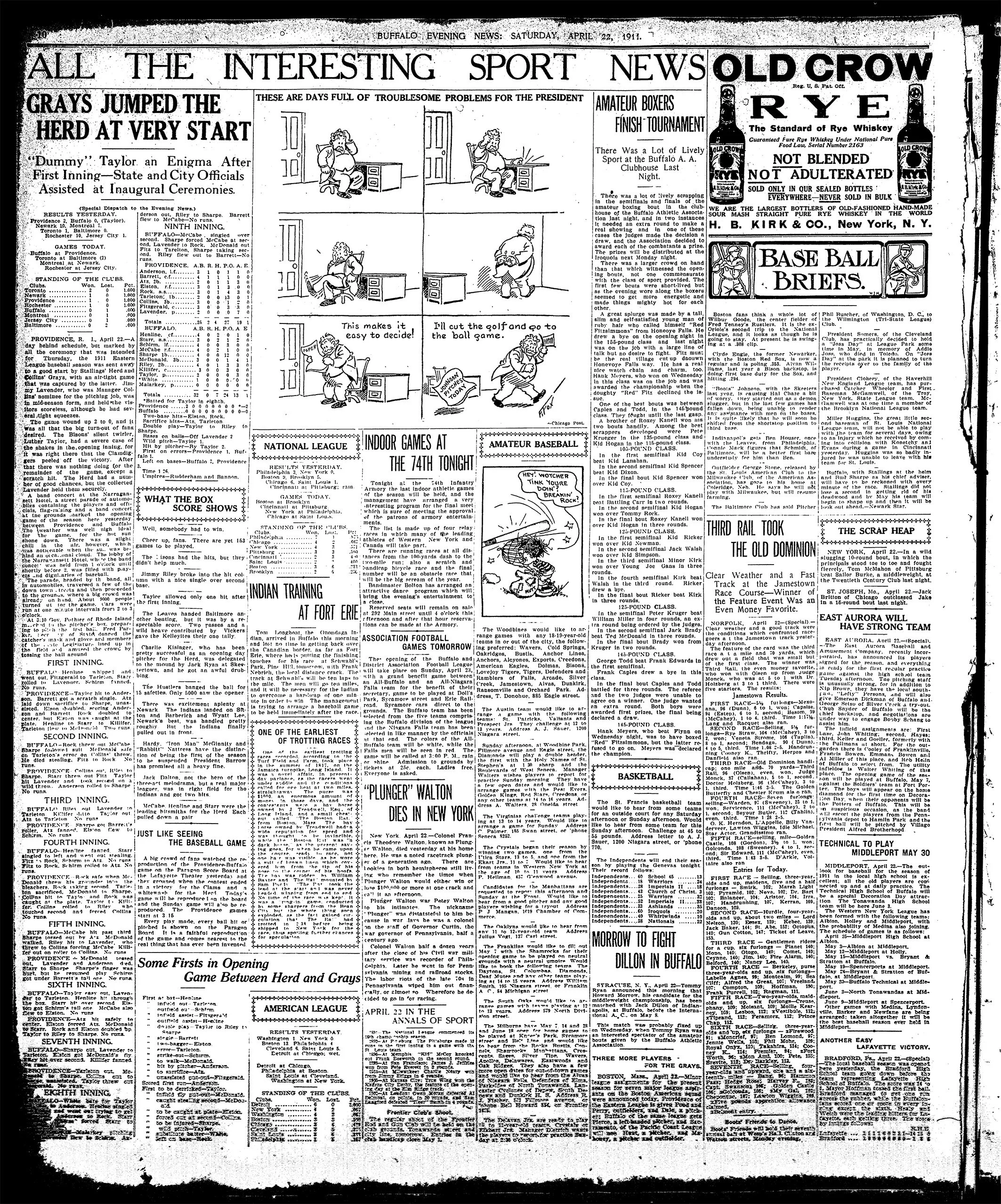
The April 21, 1911 game marked the Opening Day of the Eastern League season. Contemporary newspaper coverage documents organized ceremonies surrounding the event, including parades, band performances, flag-raising, and the participation of state and municipal officials. In this period, Opening Day baseball games functioned as formal civic occasions as well as sporting contests, particularly in regional and minor-league cities where professional teams were closely tied to local identity and public life.
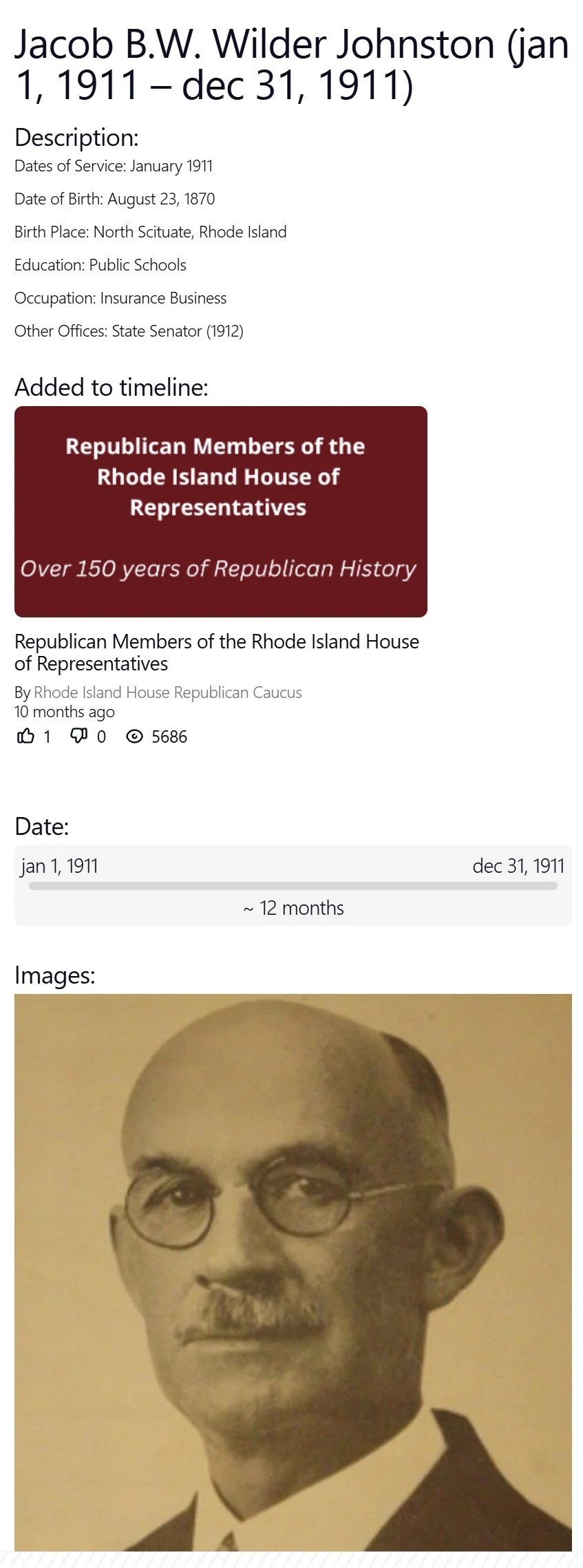
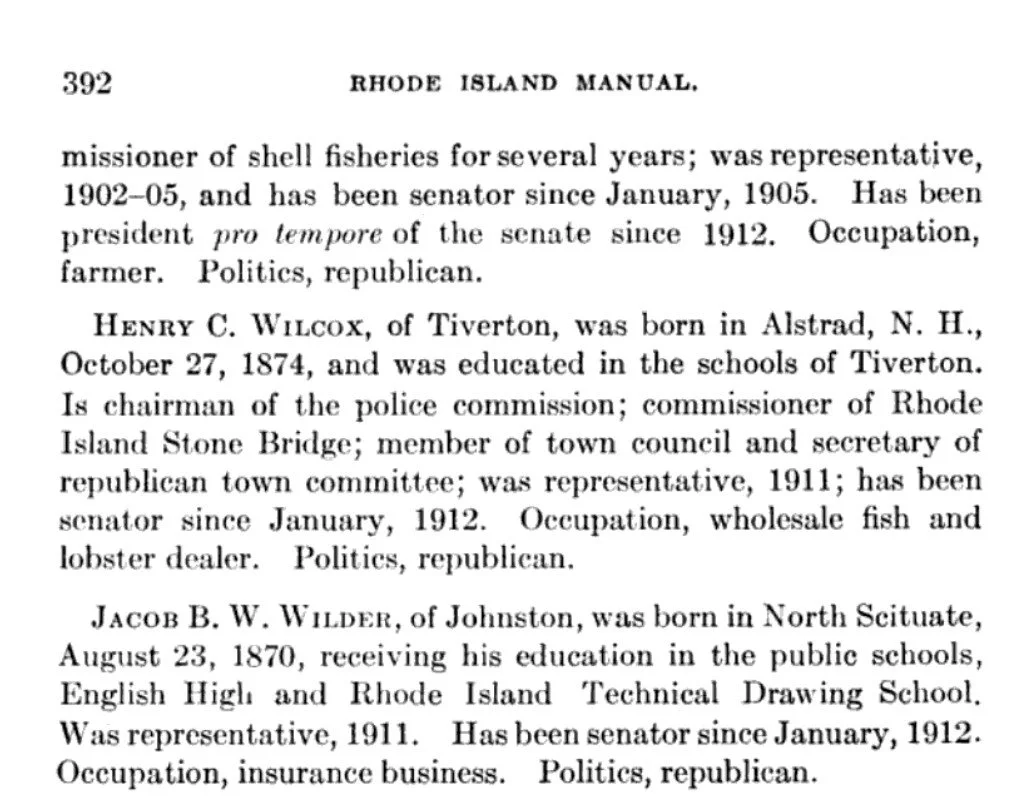
The name printed on the flag, Jacob B. Wilder, identifies a Rhode Island legislator representing Johnston who was active in state government during the 1910s. Legislative records confirm his service in the Rhode Island General Assembly, including later service in the State Senate. His association with the House of Representatives on this flag aligns with period practices, as legislators commonly served in both chambers over time. Attendance at prominent civic events such as Opening Day baseball games formed part of the public role of state officials, and the presence of Wilder’s name suggests that the flag was either presented to him or retained as a personal record of official participation.
The flag displays a 48-star canton, reflecting the impending admission of Arizona and New Mexico as states. Although the official 48-star flag did not become effective until July 4, 1912, manufacturers frequently anticipated changes in star count, particularly when statehood was imminent. This practice was common in commercial flag production during the late nineteenth and early twentieth centuries, resulting in early examples of new star counts appearing before their official adoption.
Flags with 48-stars occupy a significant place in American flag history. The 48-star design remained the official national flag from 1912 until 1959, making it the longest-used star count in U.S. history. It was the flag flown during World War I, World War II, and throughout the Great Depression. As a result, 48-star flags are closely associated with major national, political, and military developments of the first half of the twentieth century. Early or pre-official examples are of particular interest for their placement within the transitional period preceding federal standardization.
This flag is notable for the way it brings together several distinct aspects of early-twentieth-century American life within a single object. It combines a national flag produced during a transitional moment in federal standardization, a documented professional baseball Opening Day, and the recorded participation of a state legislator and legislative body. In our experience, it is uncommon to encounter a single artifact that so clearly and directly unites patriotic display, organized sport, and political presence. Such objects were not produced in large numbers and rarely survive with this level of specificity. As a result, the flag represents a particularly strong example of Americana, illustrating how baseball, civic ritual, and public office intersected in everyday American culture during the Progressive Era.
Conservation Process: This flag was hand sewn to cotton fabric, and both were hand sewn to a mounting board. To prevent the black dye in the cotton fabric from seeping into the flag, it was first washed in a standard wash and then in a dye setting wash. The flag is positioned behind Optium Museum Acrylic.
Frame: The flag is housed in an antique mahogany frame dating to the mid-19th century, with a flat profile and mitered corners typical of the period. The wood exhibits age-related wear and visible grain, consistent with long-term use, and the straightforward construction reflects utilitarian craftsmanship rather than later decorative styles.
Condition Report: The flag is housed in an antique mahogany frame dating to the mid-19th century, with a flat profile and mitered corners typical of the period. The wood exhibits age-related wear and visible grain, consistent with long-term use, and the straightforward construction reflects utilitarian craftsmanship rather than later decorative styles.
Collectability Level: The Great – Perfect for Rising Collectors
Date of Origin: 1911
Number of Stars: 48
Associated War: WWI
Associated State: Arizona