Attractive 13 Star Antique Yacht Ensign | Annin “Sterling” Trademark | Circa 1913–1926



Attractive 13 Star Antique Yacht Ensign | Annin “Sterling” Trademark | Circa 1913–1926
Frame Size (H x L): 37.5” x 52”
Flag Size (H x L): 27” x 41”
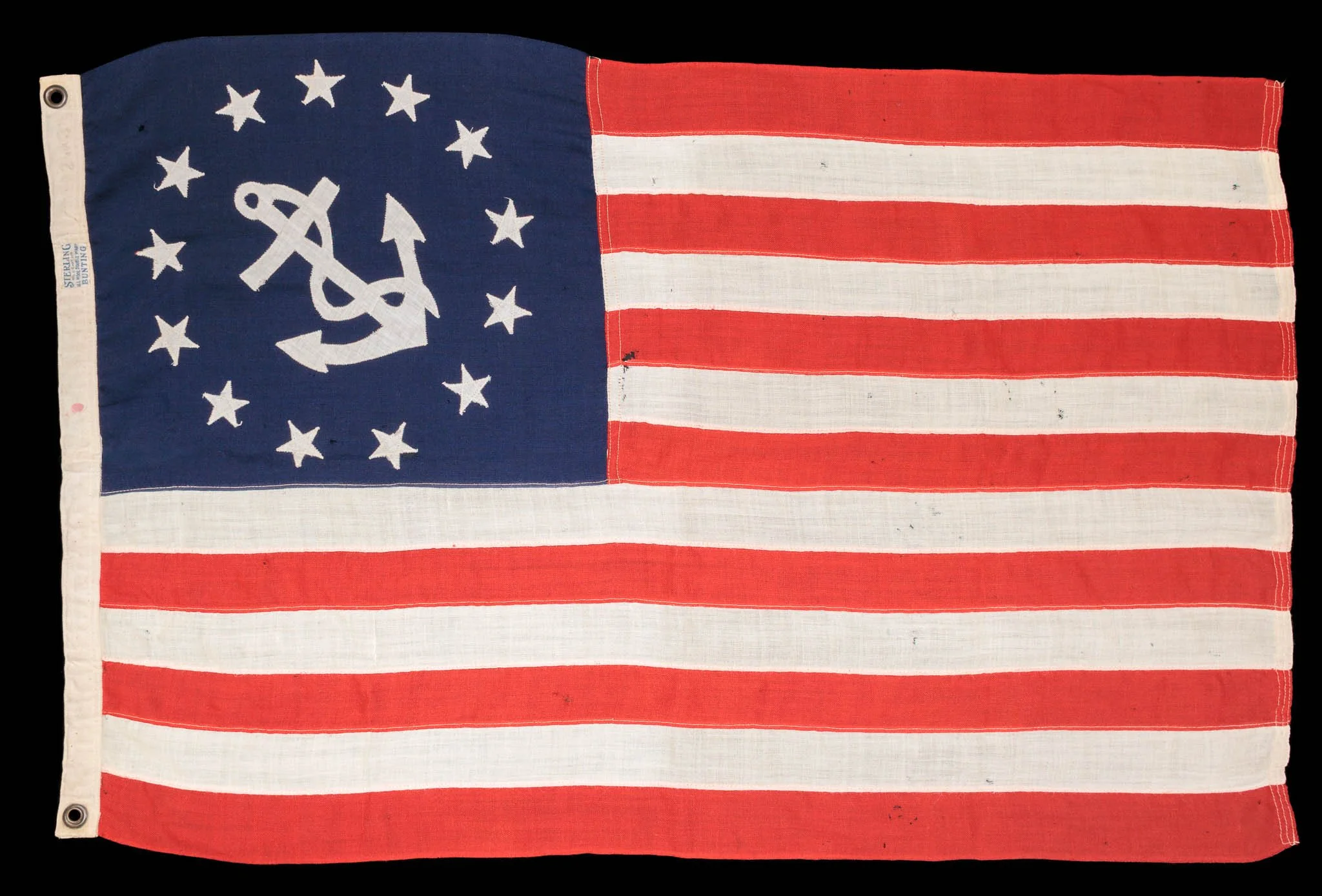
Offered is a 13-star American yacht ensign, made by Annin & Co. and bearing the firm's “Sterling” trademark, produced between 1913 and 1926. Constructed of wool bunting with cotton-appliqued stars and anchor, the flag represents an early 20th century example of one of America's most recognizable maritime signals. It was intended for active use aboard a pleasure craft and survives with its original brass grommets and maker's mark intact.
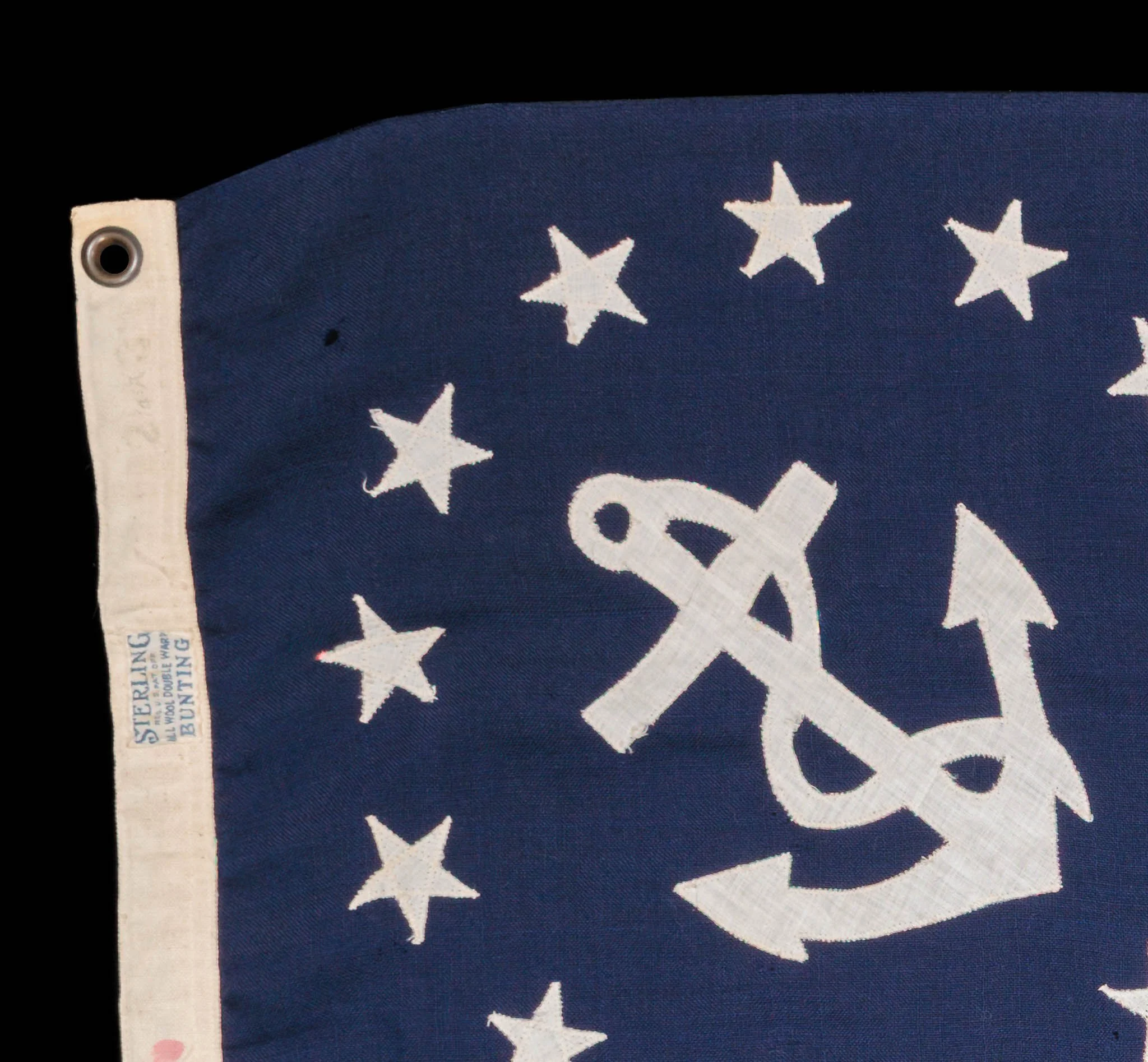
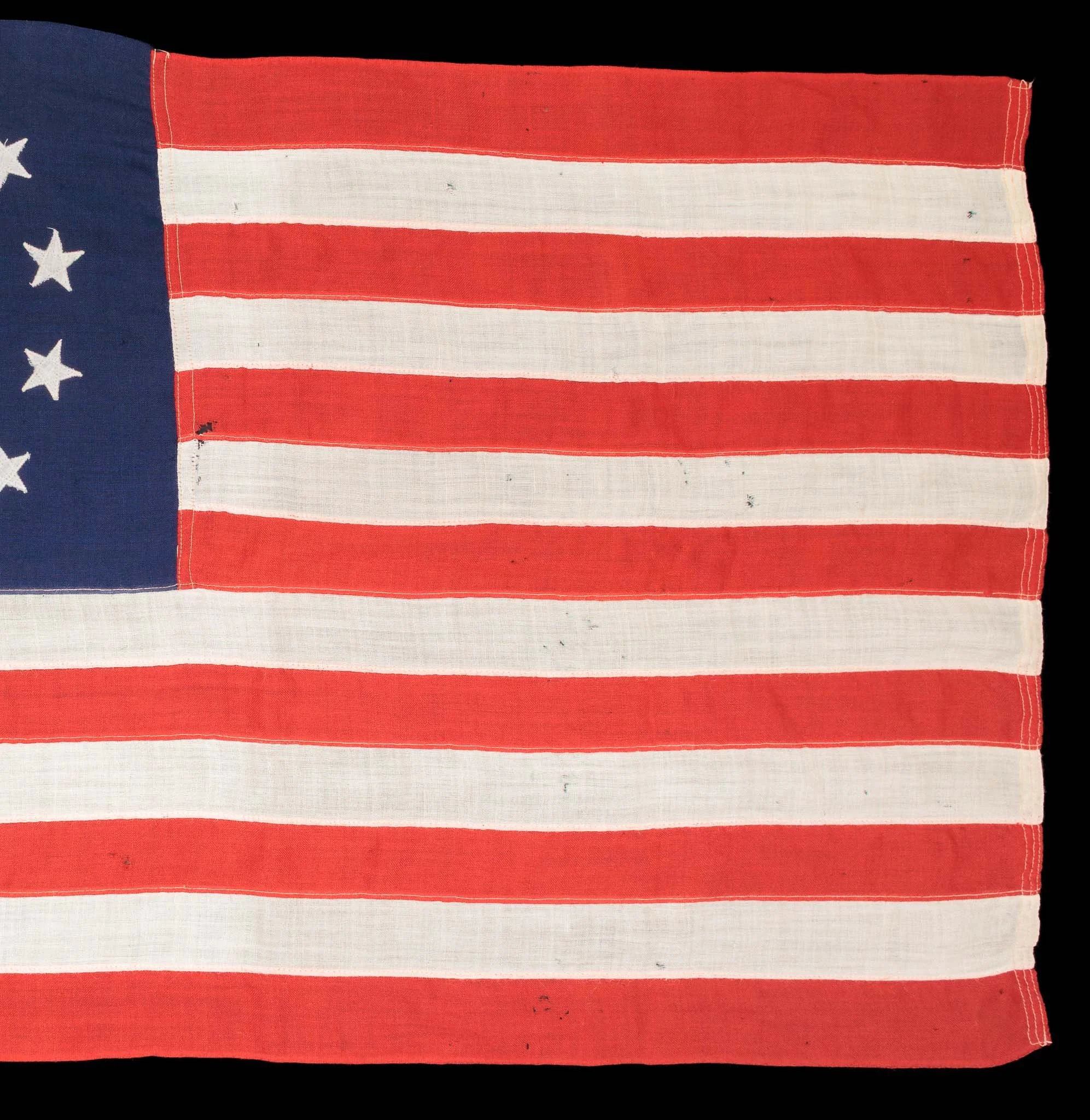
The canton is made of dark navy wool bunting and displays a fouled anchor surrounded by a wreath of thirteen stars. Both the stars and anchor are fashioned from cotton and are applied with zig-zag machine stitching. The red and white stripes are made of wool bunting and joined with machine stitching throughout. The hoist is bound in a heavy plain-weave cotton heading fitted with brass grommets. Along the hoist appears a tag stating the following:
STERLING
REG. U.S. PAT. OFF.
ALL WOOL DOUBLE WARP
BUNTING
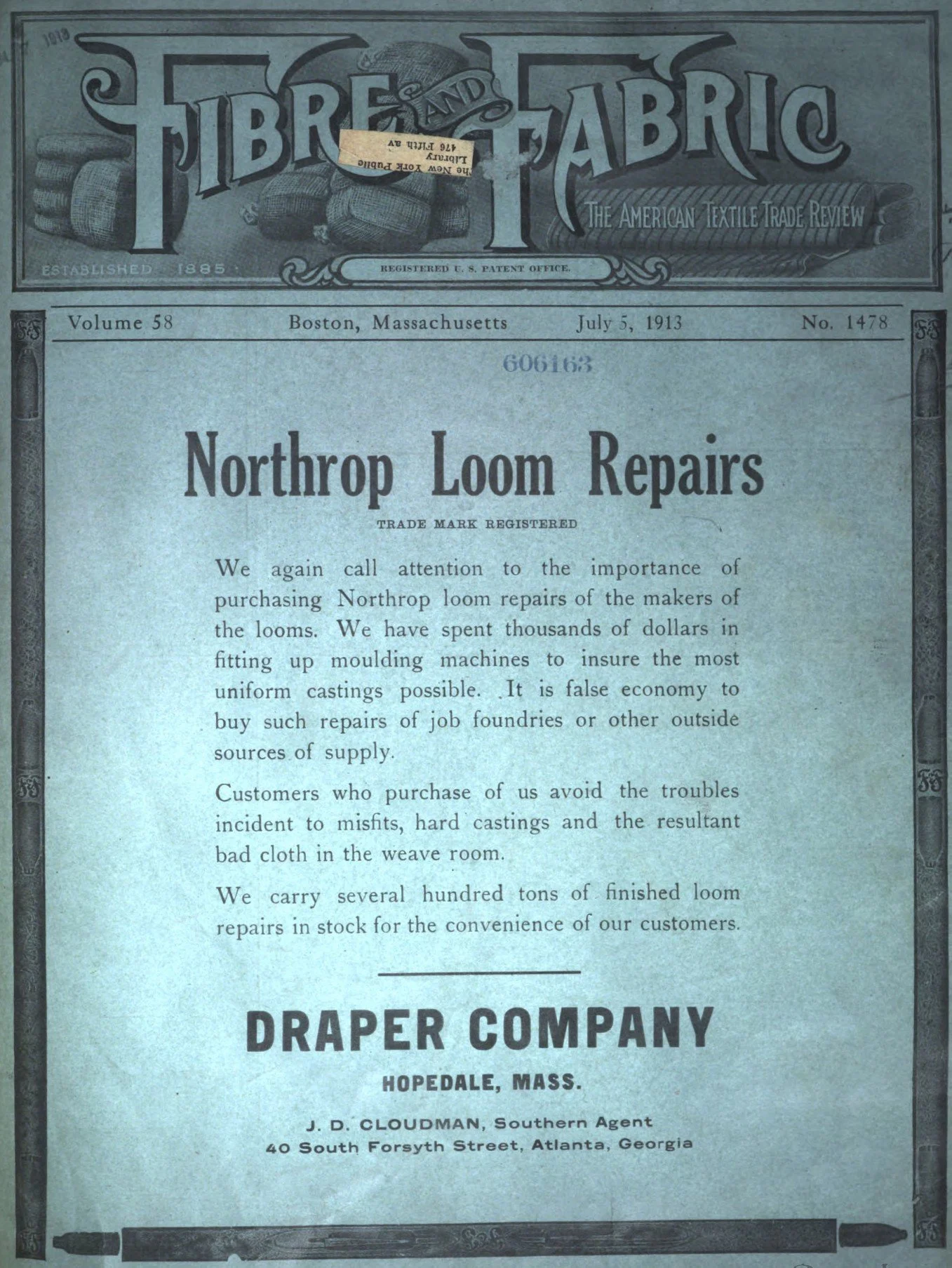
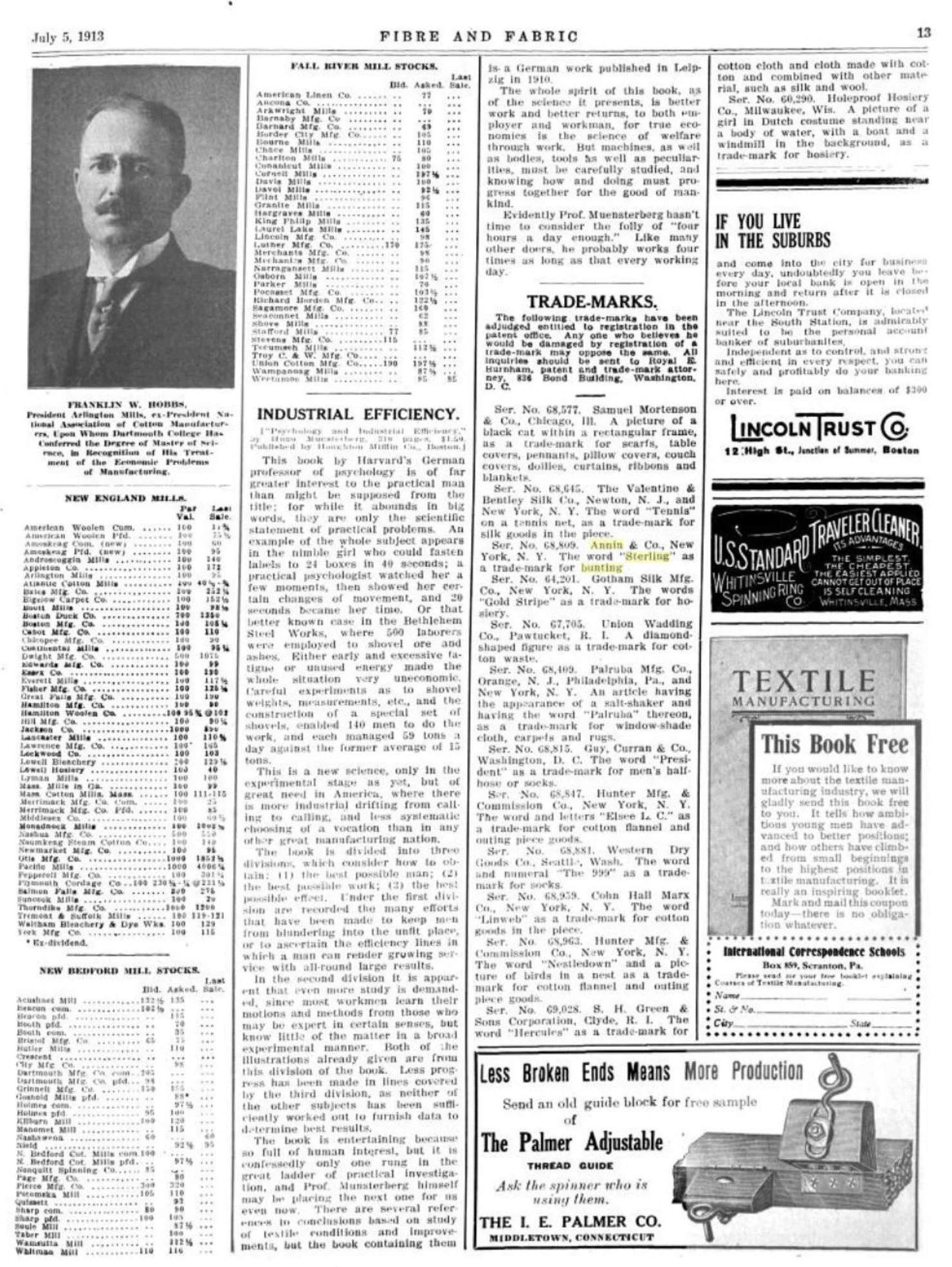
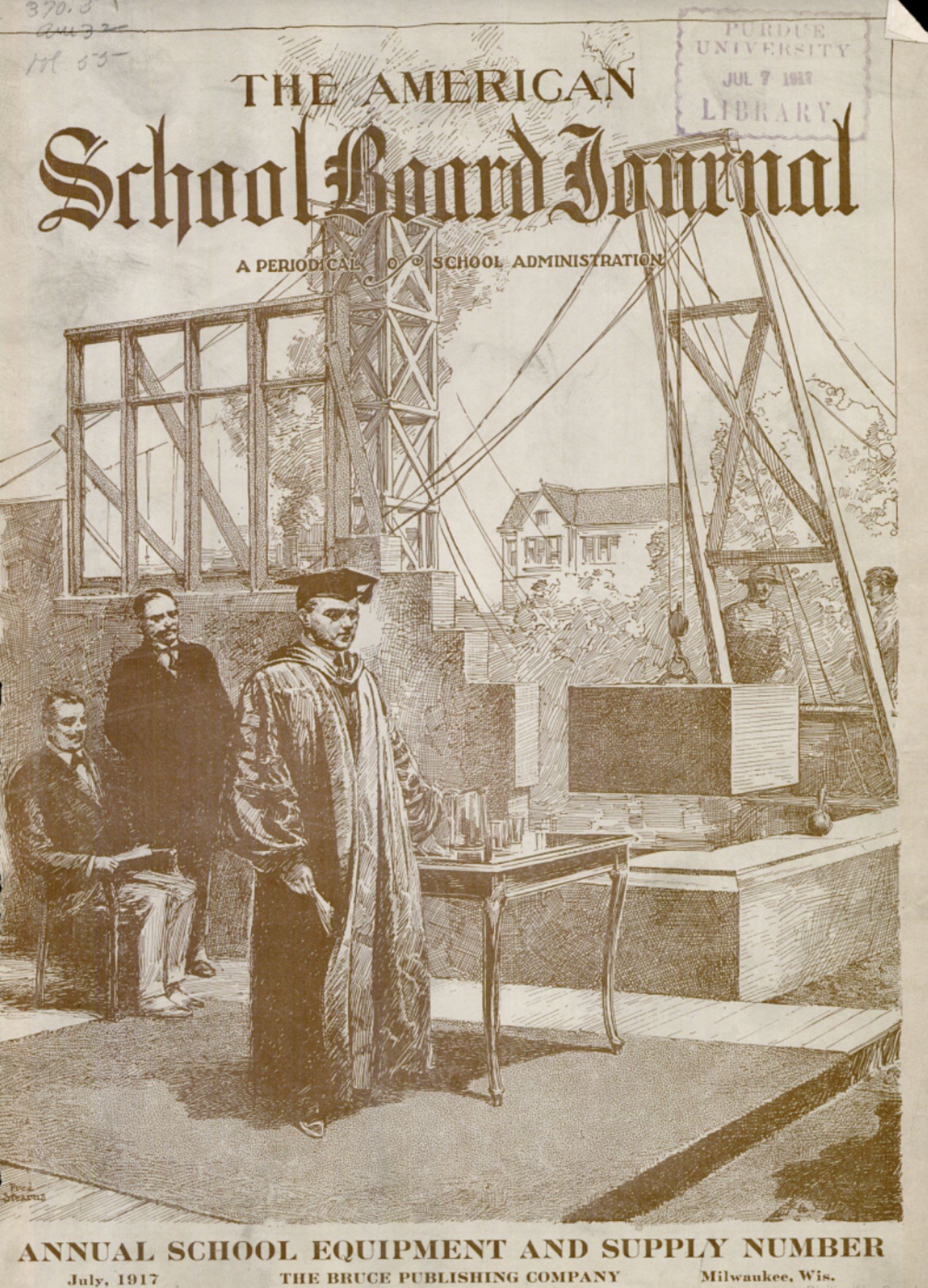
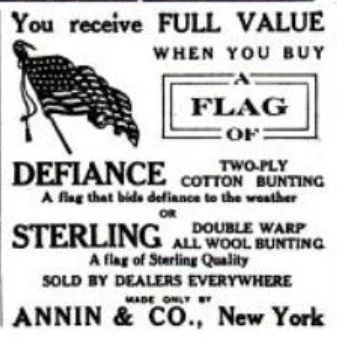
“Sterling” was a trademark of Annin, America's oldest and longest-operating flag manufacturer. The trademark was formally registered for bunting in 1913. A July 5th, 1913 trade publication notice records that “Annin Co., New York, N.Y.” had been granted registration of the word “Sterling” as a trademark for bunting. By 1917 the trademark was appearing in national advertising, and by the early 1920's Annin was actively promoting Sterling as its premium grade of all-wool bunting. The presence of the Sterling mark establishes a firm earliest possible date of 1913, while the overall construction and materials suggest manufacture during the period extending through the mid-1920's.
Founded in New York City in 1847, Annin is recognized as the nation's oldest flag manufacturer and remains in operation today. The company supplied flags for military, governmental, maritime, commercial, and patriotic use throughout the nineteenth and twentieth centuries, earning a reputation for quality construction and innovation in flag-making. During the early twentieth century, Annin expanded significantly, establishing a major manufacturing facility in Verona, New Jersey, while maintaining offices and production operations in New York. The firm's products were widely distributed throughout the United States, and its branded lines, such as Sterling, reflected a commitment to producing premium-grade flags for demanding outdoor service.
The yacht ensign occupies a unique place in American maritime history. Although often mistaken for a naval flag, it was developed for civilian recreational vessels. The design combines the familiar thirteen-star arrangement associated with America's earliest national flags with a fouled anchor, the traditional symbol of maritime service and seamanship. The thirteen stars reference the original colonies and the nation's founding era, while the anchor communicates a connection to navigation, commerce, and life at sea.
The origins of the yacht ensign date to the nineteenth century and are tied to the growing popularity of recreational boating among America's expanding middle and upper classes. In 1848 Congress granted vessels enrolled in qualifying yacht clubs the privilege of flying a distinctive ensign featuring a fouled anchor within the canton. The purpose was practical as well as symbolic. The special ensign identified pleasure craft that were exempt from certain customs inspections and distinguished privately owned yachts from commercial vessels. As boating culture expanded during the late nineteenth and early twentieth centuries, the yacht ensign became one of the most familiar and enduring symbols of American recreational sailing.
By the turn of the twentieth century, yacht ensigns were widely available through commercial makers such as Annin, who produced examples in a variety of sizes for use aboard everything from small launches to substantial sailing yachts. Examples intended for active service were typically constructed of wool bunting, then considered the preferred material for outdoor flags because of its strength, relatively light weight, and ability to shed wind. Cotton elements were commonly used for appliqued devices and stars, while reinforced cotton headings and brass grommets provided durability at the point of greatest stress.
The present example displays all of the characteristics collectors associate with quality commercial manufacture during the period. The wool bunting remains attractive in color, the cotton anchor and stars are crisply executed, and the heavy plain-weave cotton heading reflects a higher-grade construction than the lighter twill bindings often encountered on lesser examples. Particularly noteworthy is the Sterling trademark, which links the flag to Annin's premium wool bunting line and provides a useful point of reference for dating.
Today, antique yacht ensigns are collected both for their maritime associations and for their visual appeal. The combination of the fouled anchor and thirteen-star configuration creates one of the most distinctive flag designs employed in the United States. Their connection to America's boating traditions, combined with the symbolism of the nation's founding era, makes them equally at home in collections focused on maritime history, early American symbolism, patriotic textiles, or decorative Americana.
Conservation Process: This flag was hand sewn to cotton fabric, and both were hand sewn to a mounting board. To prevent the black dye in the cotton fabric from seeping into the flag, it was first washed in a standard wash and then in a dye setting wash. The flag is positioned behind Optium Museum Acrylic.
Frame: The frame is a dark-stained hardwood molding with a clean square profile and subtle variations in grain and tone that lend warmth and visual depth.
Condition Report: There is minor soiling and scattered small dark stains in limited areas, accompanied by a few tiny losses and areas of wear consistent with age and use. A small pink stain is present on the cotton hoist. The colors remain vibrant, the wool bunting retains strong integrity, and the flag presents beautifully overall. The brass grommets, Sterling maker's mark, and all primary design elements remain intact.
Collectability Level: The Great – Perfect for Rising Collectors
Date of Origin: 1913-1926
Number of Stars: 13
Associated War: World War I (1914-1918)
Associated State: Original 13 Colonies