Antique 1776–1876 American Centennial Flag | Extraordinary Numeric Star Design | Colorado Statehood | Circa 1876
Antique 1776–1876 American Centennial Flag | Extraordinary Numeric Star Design | Colorado Statehood | Circa 1876
Price: Call 618-553-2291, or email info@bonsellamericana.com
Frame Size (H x L): 39” x 56.5”
Flag Size (H x L): 28” x 44.5”
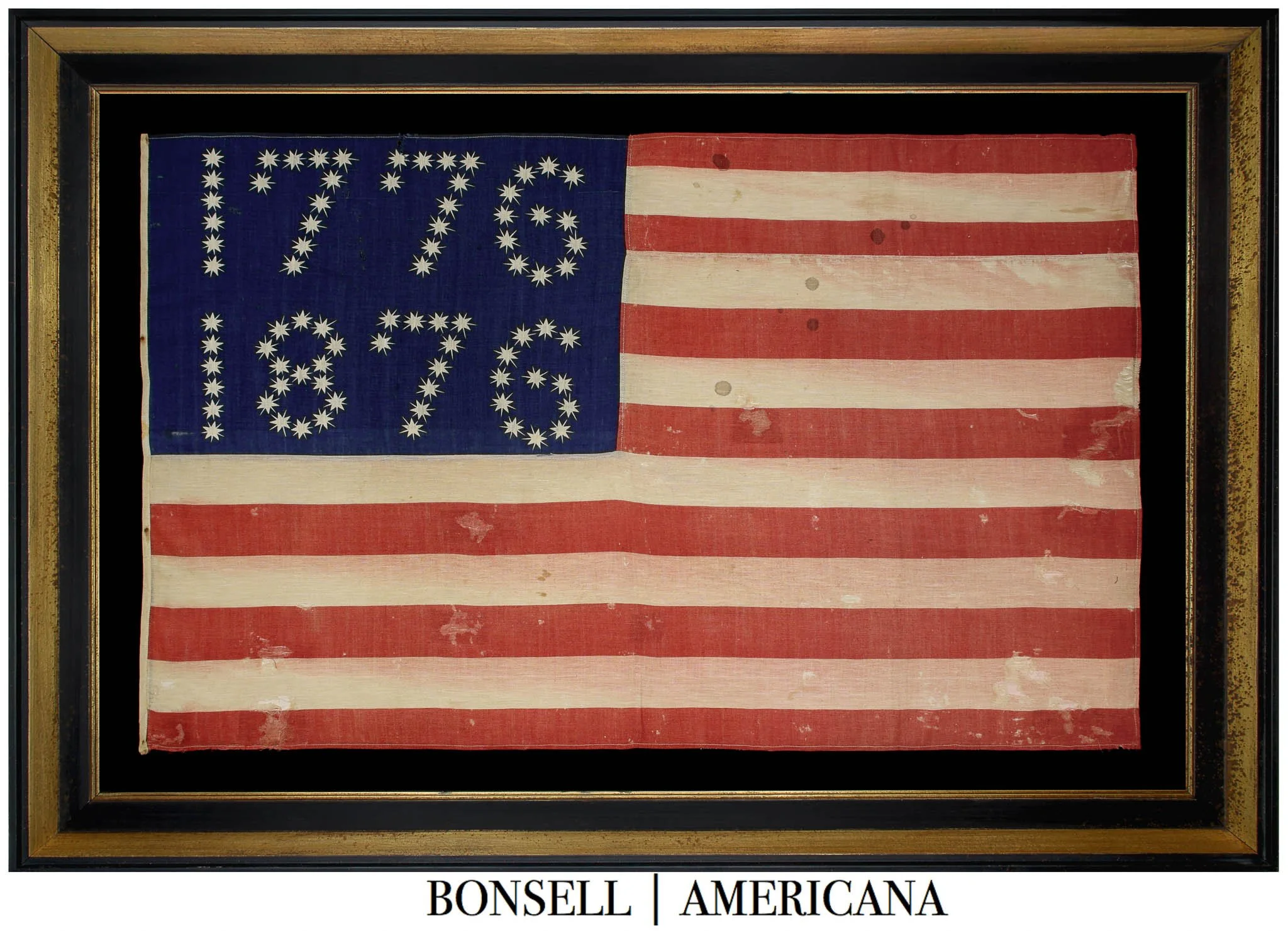
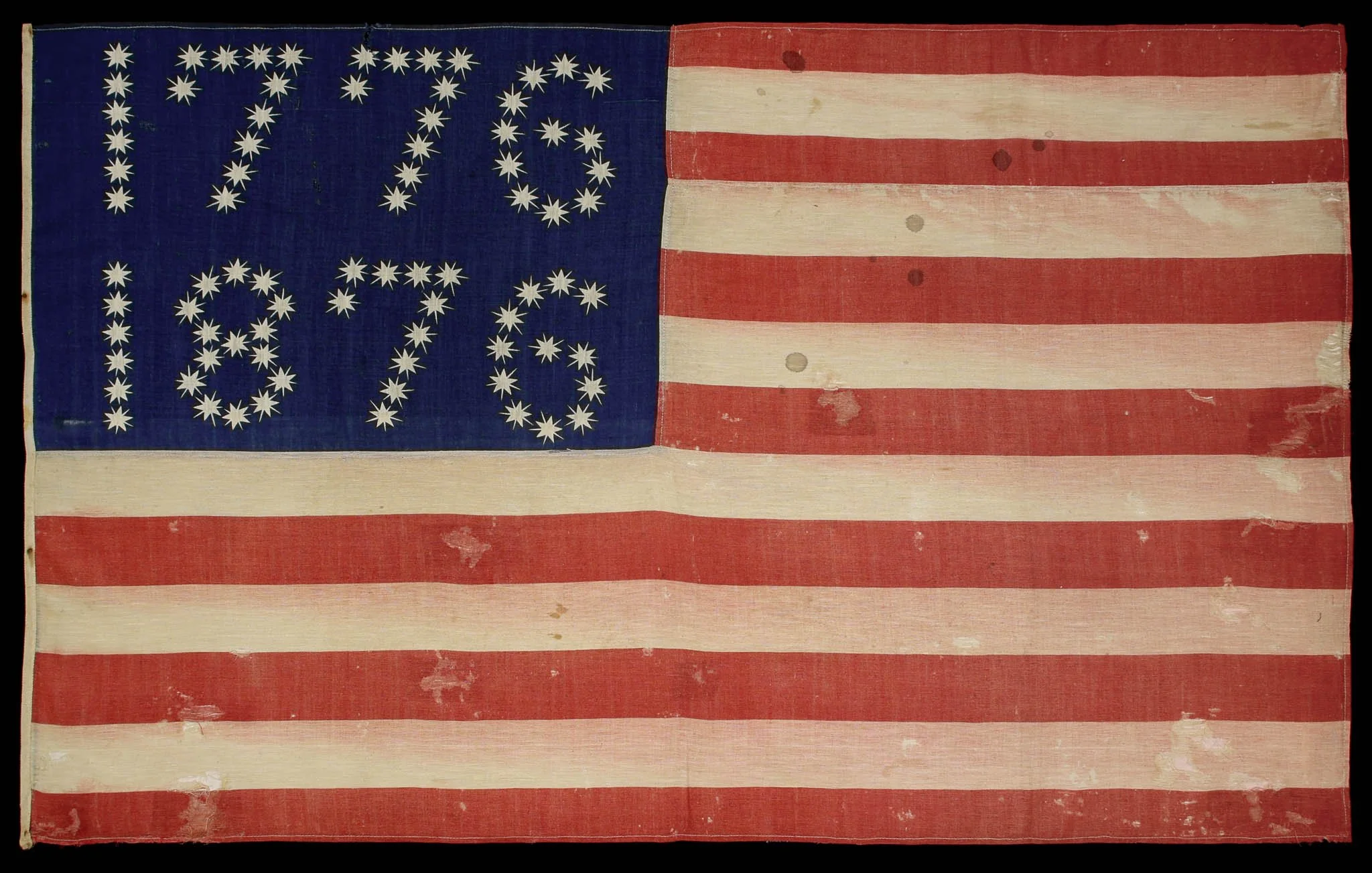
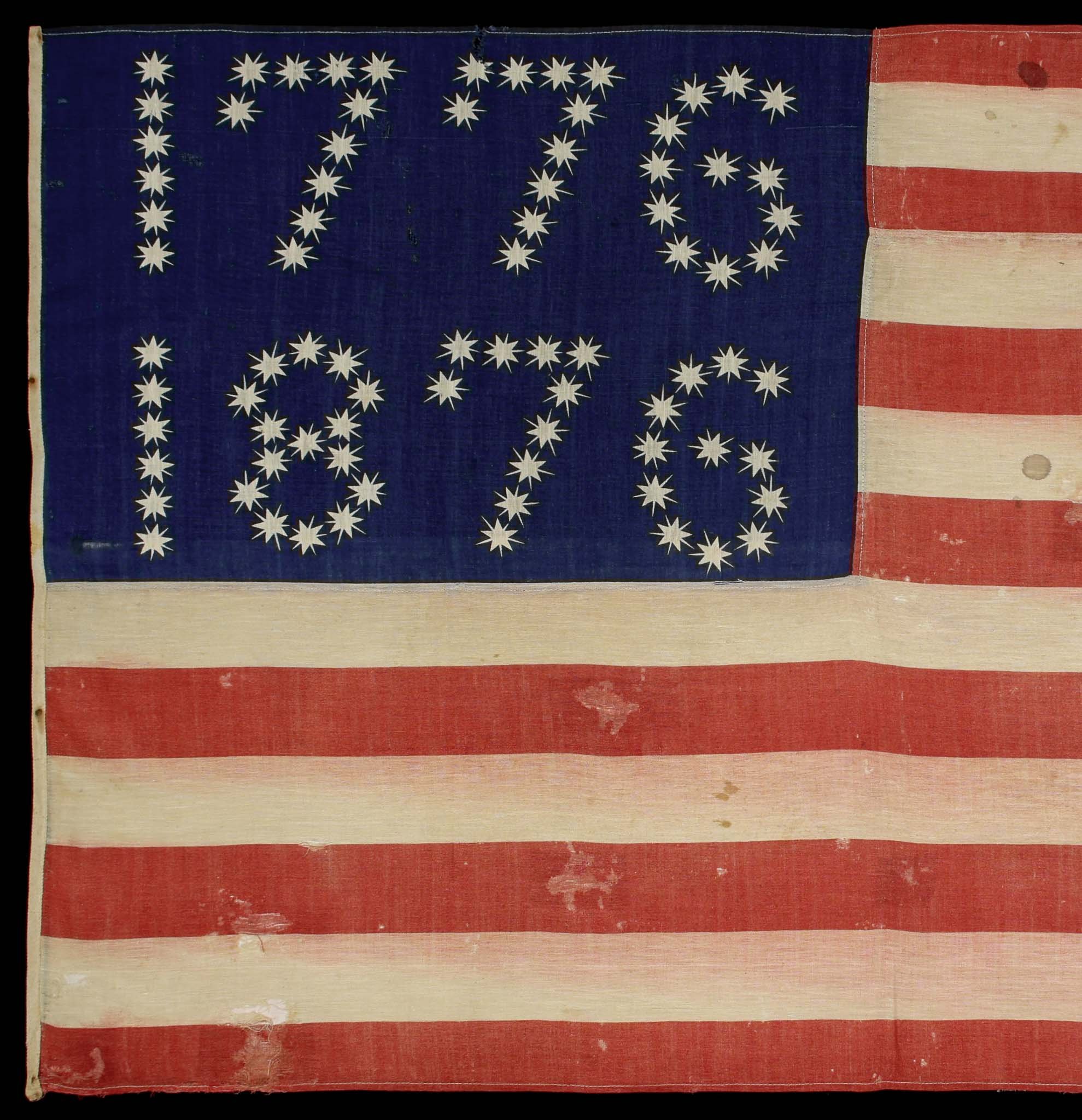
Offered is an exceptional American flag featuring a highly unusual 1776–1876 centennial star configuration, created to commemorate the 100th anniversary of the Declaration of Independence. The nation’s centennial inspired an extraordinary wave of patriotic expression and served as a symbolic reunification following the Civil War. Communities across the country marked the occasion with parades, public ceremonies, and elaborate decorations, with flags serving as the most prominent and potent emblem of national identity. Centennial-period flags are particularly noted for their inventive and symbolic star arrangements, and this example stands among the most sophisticated and visually compelling of the period.
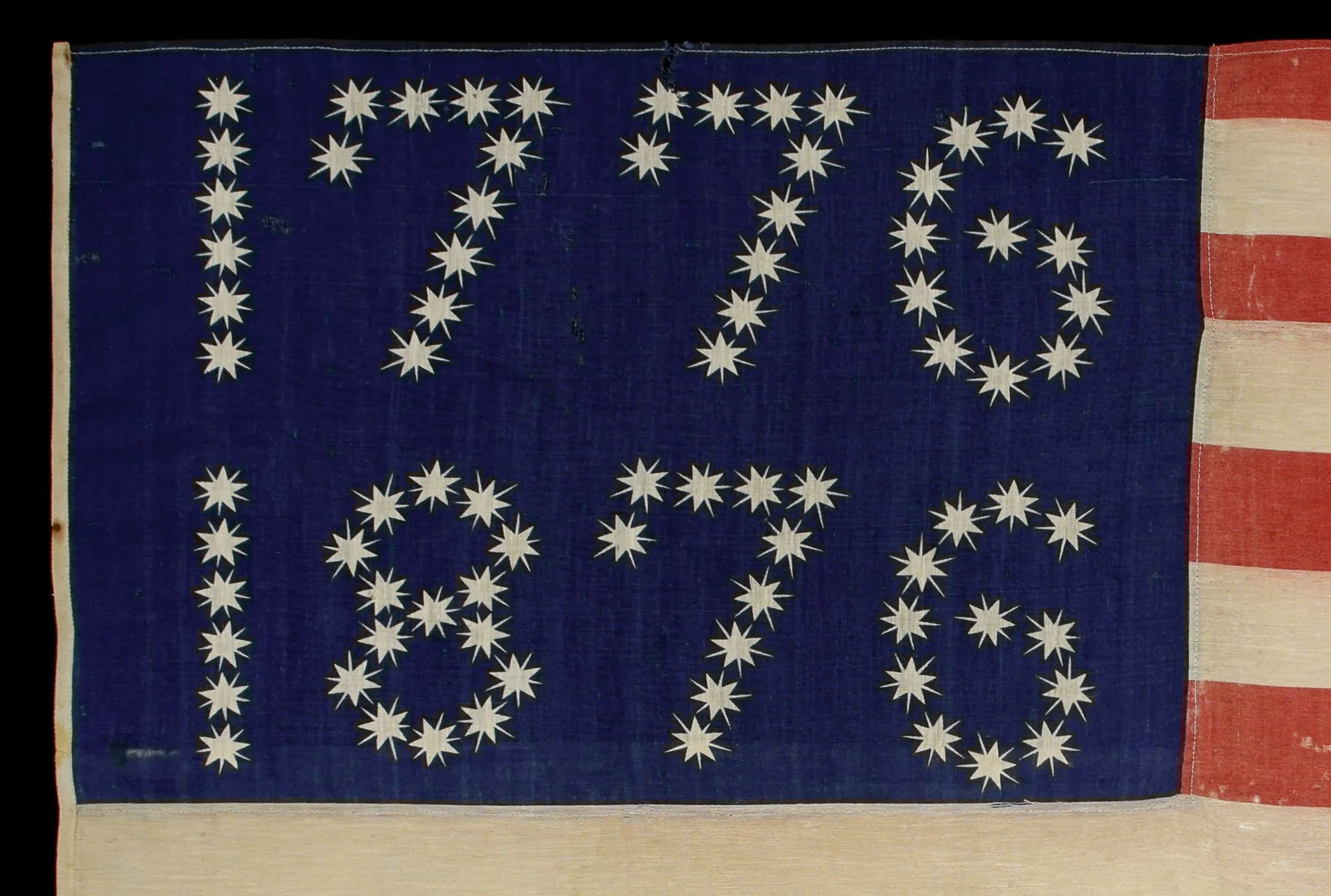
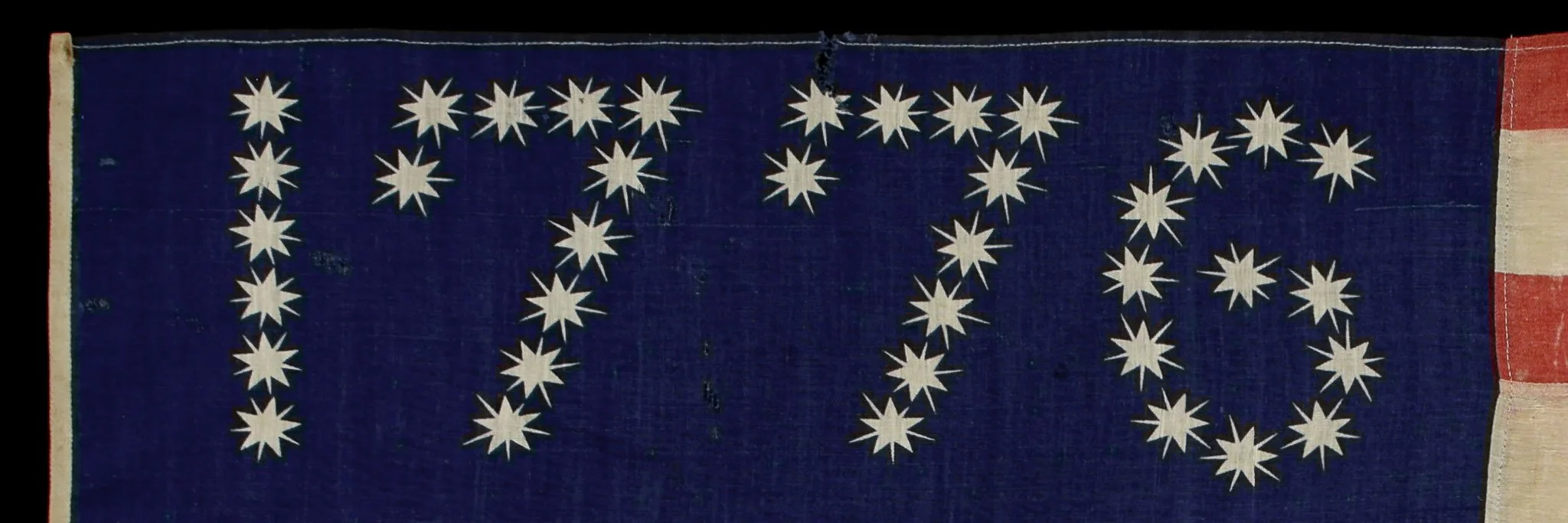
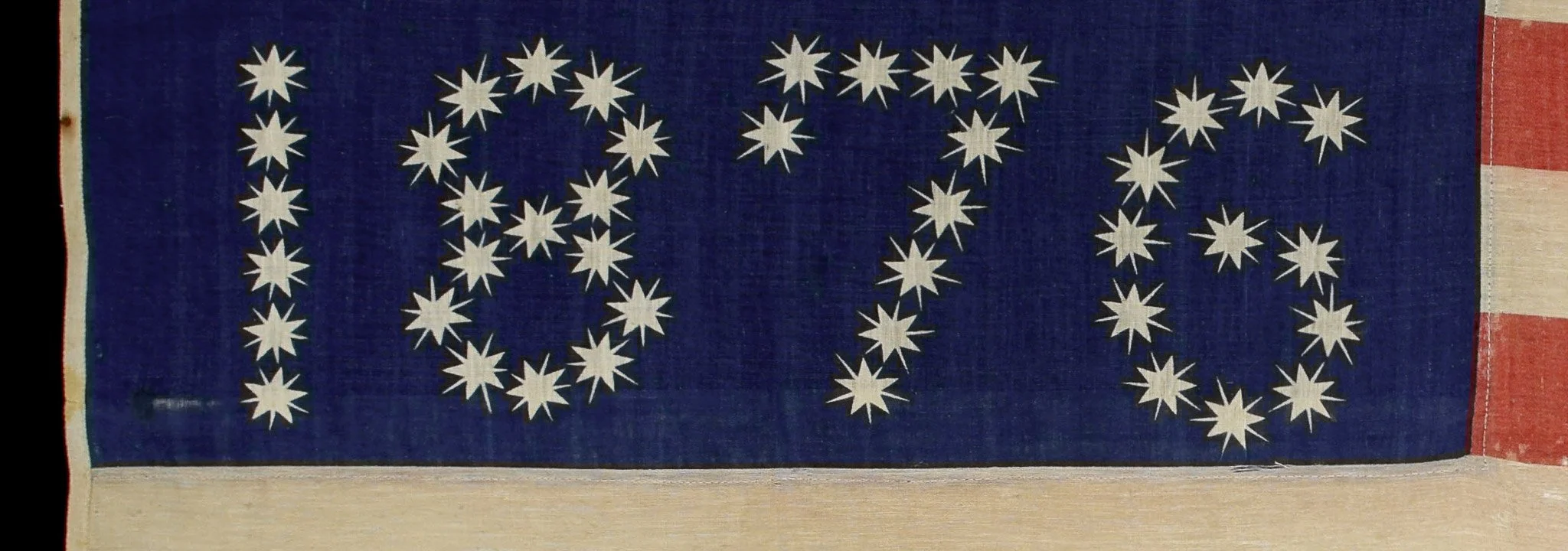
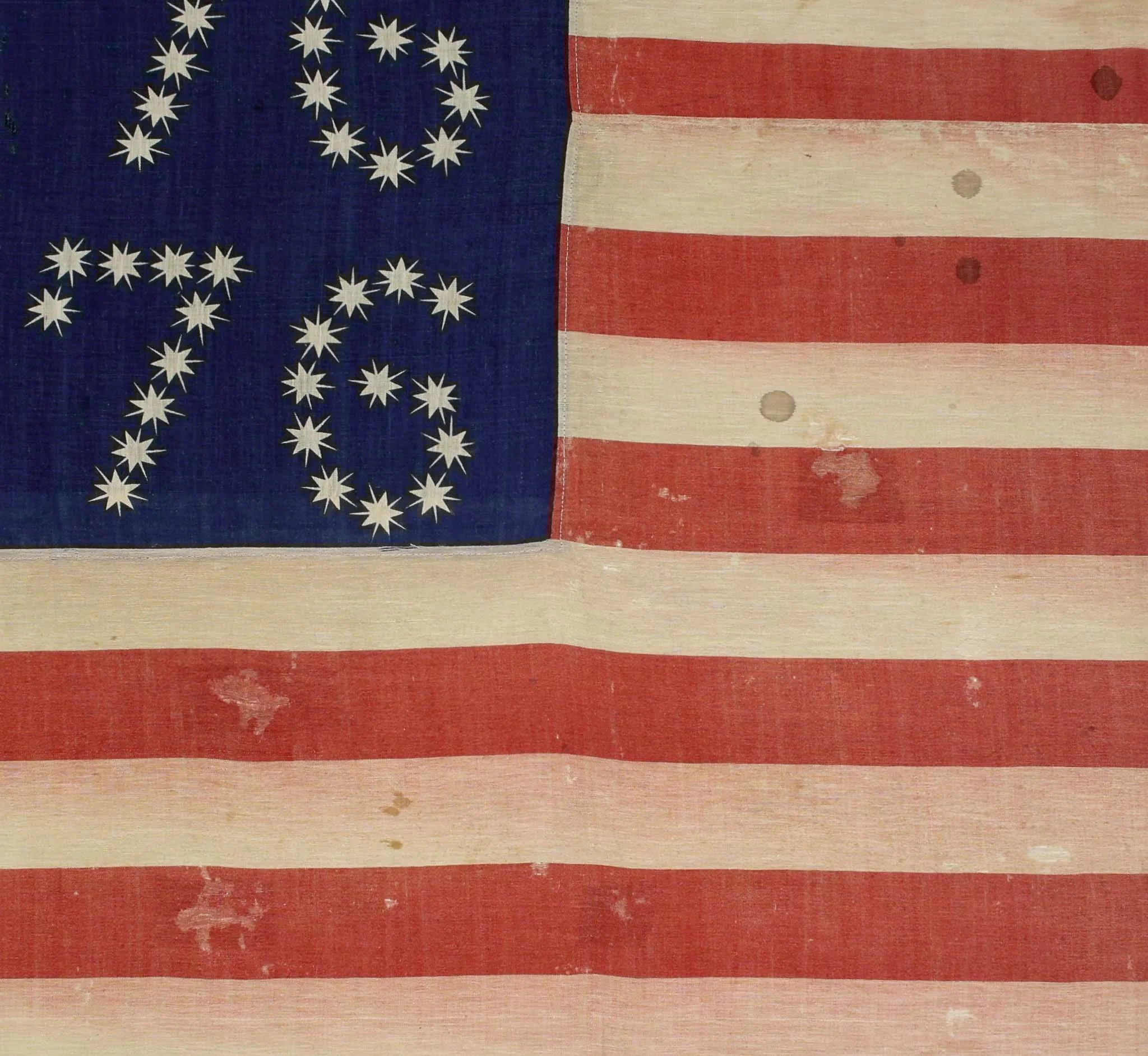
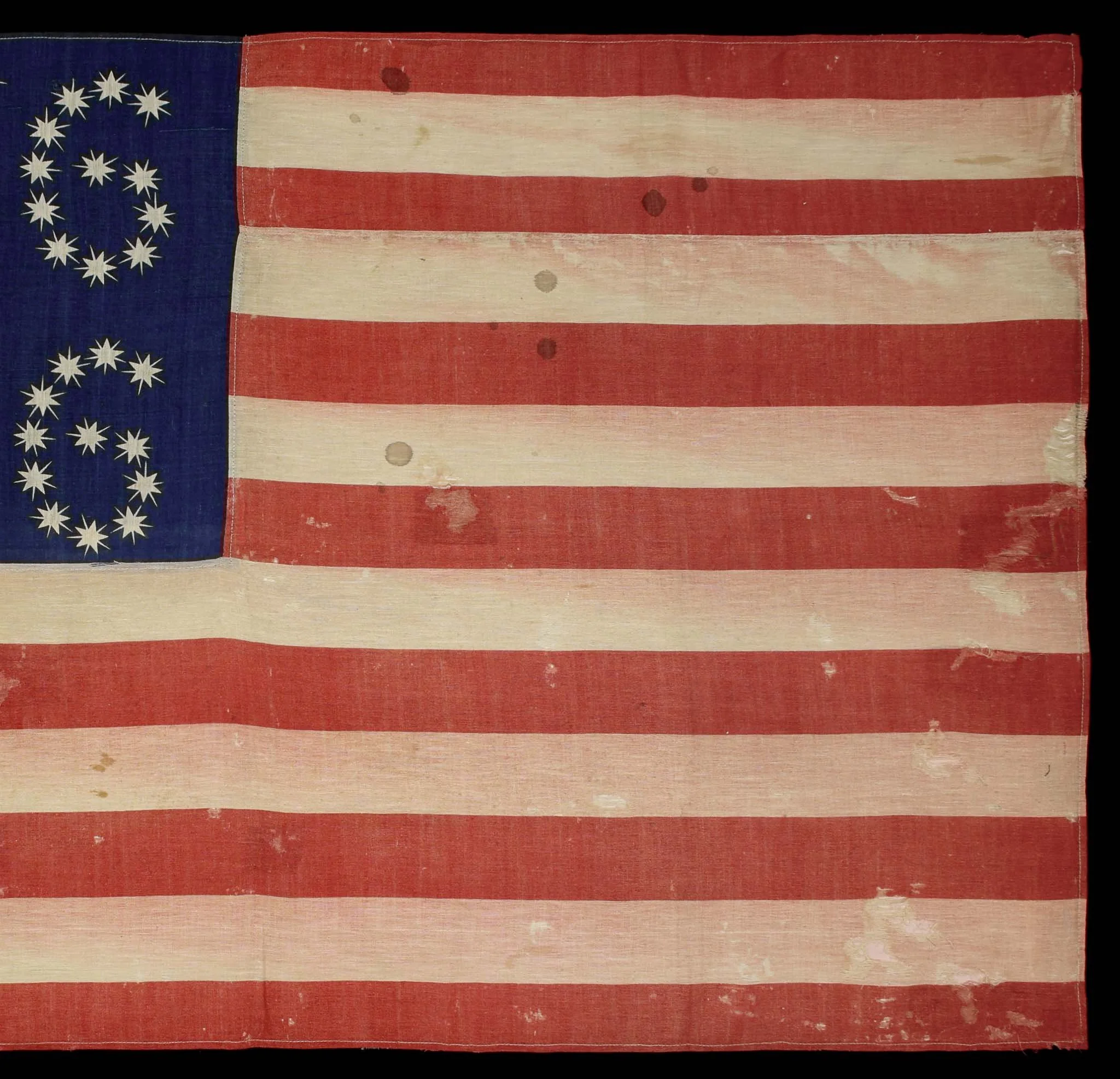
The stars are arranged to form the dates “1776” and “1876,” a design that is both celebratory and emblematic of late-19th-century graphic ingenuity. The composition is balanced, legible, and striking, elevating the flag beyond a simple patriotic object into a carefully conceived commemorative textile. Flags of this specific configuration are rare, and examples with this level of visual impact are scarcer still.
The flag is constructed of a cotton-and-wool blend. The inclusion of wool is significant and suggests that the flag was intended for extended display rather than brief outdoor use. This material choice, along with the complexity of the design, strongly indicates production for Philadelphia’s Centennial International Exposition of 1876. Unlike most parade flags of the era—which were commonly made of cotton or silk and intended for short-term use—the wool component provided greater durability, allowing the flag to withstand prolonged exhibition over the exposition’s six-month duration.
The Centennial International Exposition was the most important centennial celebration in the United States, drawing nearly ten million visitors and showcasing American innovation, industry, and culture. Among its most famous exhibits were the Corliss Steam Engine and Alexander Graham Bell’s telephone, both emblematic of the technological optimism that defined the era. Flags such as this were integral to the visual language of the exposition and were produced in comparatively limited numbers for this singular event.
The flag was produced using a method known as press dyeing, an early textile-printing technique patented in the mid-19th century. This process employed a dye vat in combination with a fitted dyeing frame designed to block dye from selected areas of the fabric—such as stars and white stripes—while allowing color to penetrate elsewhere. Although innovative, press dyeing was never widely adopted due to its tendency to produce minor irregularities and printing blemishes, characteristics that are consistent with early examples and that underscore their handmade, experimental nature.
The stars themselves are particularly noteworthy. Each features five primary arms, with five additional thin arms extending outward between them, creating a radiant, almost luminary effect. This star form is extraordinarily rare, and we are not aware of another American flag employing this precise design.
The “1776” portion of the composition contains thirty-eight stars, referencing the admission of Colorado to the Union. Colorado achieved statehood on August 1, 1876, just weeks after the centennial celebrations, earning its enduring nickname, the Centennial State. Although the official national flag during 1876 remained the thirty-seven-star count, it was common for flag makers to produce anticipatory designs in advance of official adoption dates. As a result, both thirteen-star and thirty-eight-star flags were among the most frequently displayed during centennial festivities.
The thirty-eight-star flag became official on July 4, 1877, and remained so until July 4, 1890. The “1876” portion of the design contains forty-three stars. The “7” is composed of ten stars, while the “8” contains fifteen. The rationale for the forty-three-star count is not definitively known. It may reflect anticipation of future state admissions, or it may have been selected to achieve visual balance and symmetry across the overall composition—an approach commonly seen in centennial-era graphic design.
Construction details further support a high level of craftsmanship. The canton is made from a single piece of cotton-and-wool fabric, while the striped field is constructed from two joined sections of the same material. The hoist is formed of twill-weave cotton, and the components are joined with treadle stitching, consistent with period production methods.
Attribution has not been conclusively established, though the flag may plausibly be associated with John Holt or the Horstmann Brothers, both of whom were active in Philadelphia during the centennial period and are known to have experimented with press dyeing techniques. Both were also directly connected to the Centennial International Exposition.
Documented examples of this flag appear in several major institutional and private collections. One was held in the Mastai Collection and sold as Lot 109 in Sotheby’s Important Americana auction on October 10, 2002. Another was part of the Connelly Collection and sold as Lot 136 in Sotheby’s Important Americana auction on May 23, 2002. A further example resides in the permanent collection of the Smithsonian Institution and is illustrated as item 441 in Threads of History by Herbert Ridgeway Collins, former curator of political history at the Smithsonian.
Conservation Process: This flag was hand sewn to cotton fabric, and both were hand sewn to a mounting board. To prevent the black dye in the cotton fabric from seeping into the flag, it was first washed in a standard wash and then in a dye setting wash. The flag is positioned behind Optium Museum Acrylic.
Frame: This offering is in our Large Distressed Black and Gold Frame.
Condition Report: The flag presents in honest, period-appropriate condition, with moderate fabric wear consistent with extended 19th-century use and display. There are scattered areas of loss, small holes, and minor tears throughout, several of which have been stabilized with early matching fabric patches that blend well with the surrounding material and do not detract from the overall presentation. Light soiling and scattered staining are present, along with minor dye migration, where the red has lightly bled into adjacent white stripes
Collectability Level: The Extraordinary – Museum Quality Offerings
Date of Origin: 1876
Associated War: The Indian Wars (1860-1890)
Associated State: Colorado