Attractive 38 Star Antique American Flag with Offset Medallion Configuration | Colorado Statehood | Circa 1876–1889

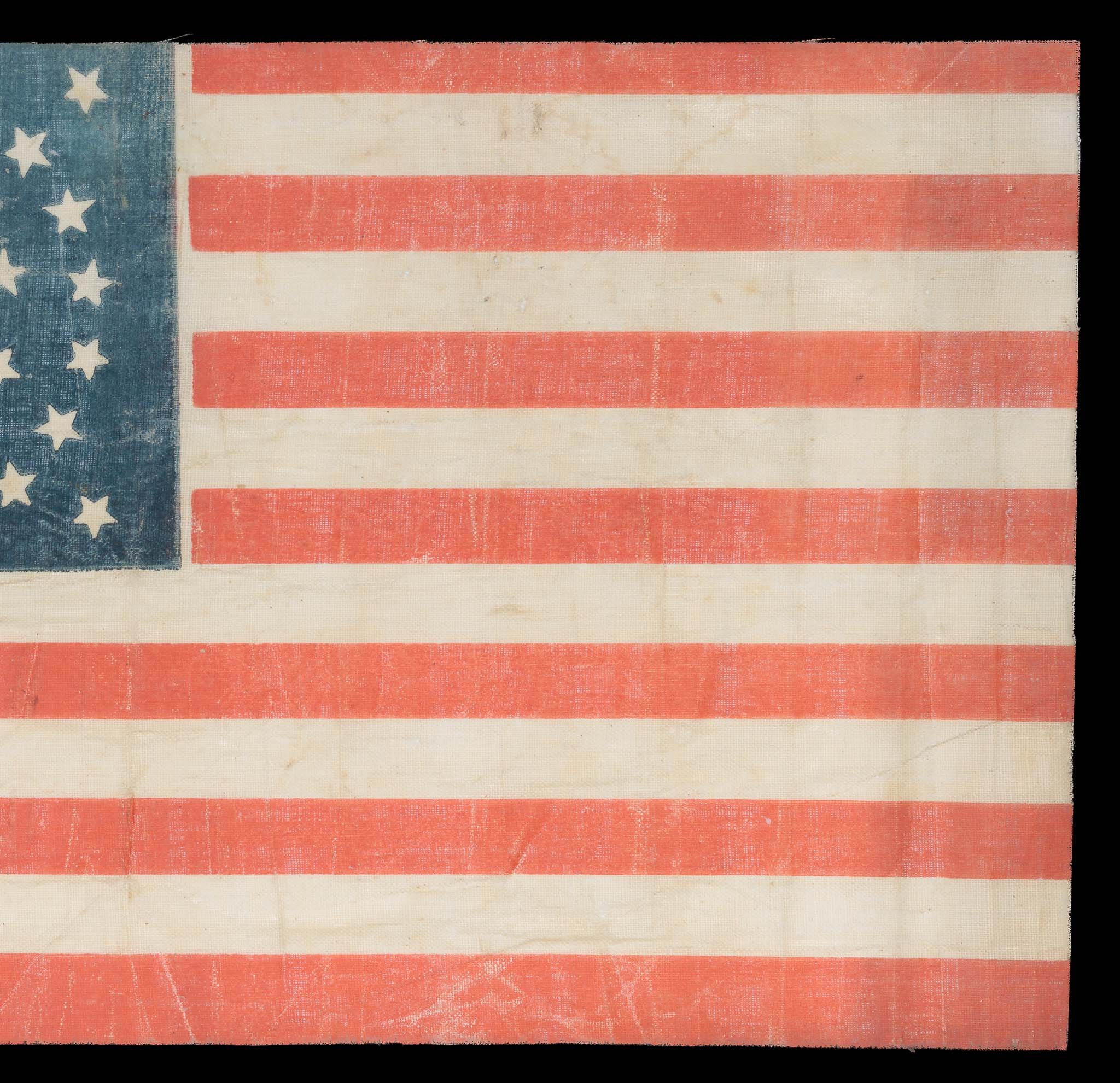
Attractive 38 Star Antique American Flag with Offset Medallion Configuration | Colorado Statehood | Circa 1876–1889
Frame Size (H x L): 14” x 19”
Flag Size (H x L): 7.5” x 12.5”
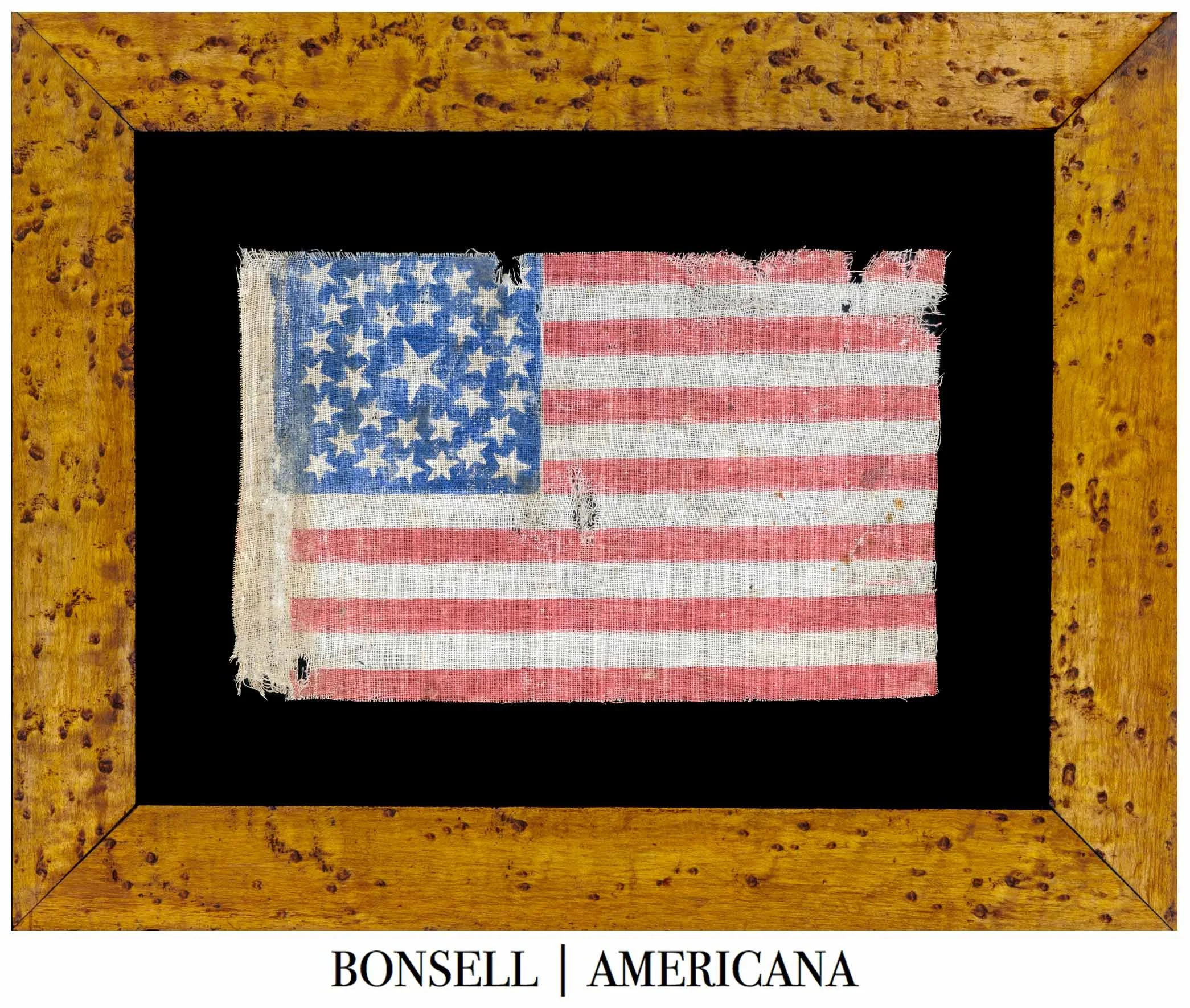
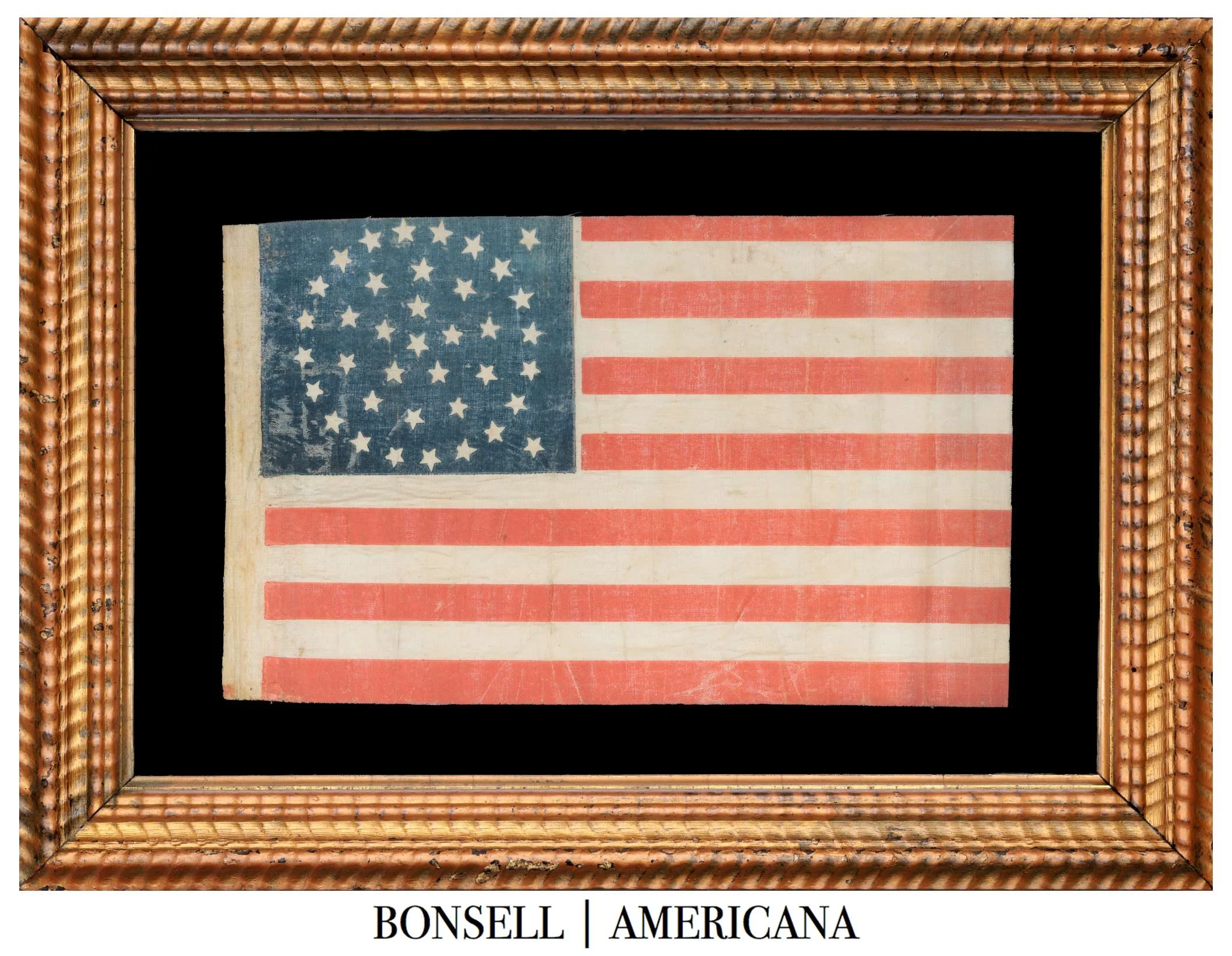
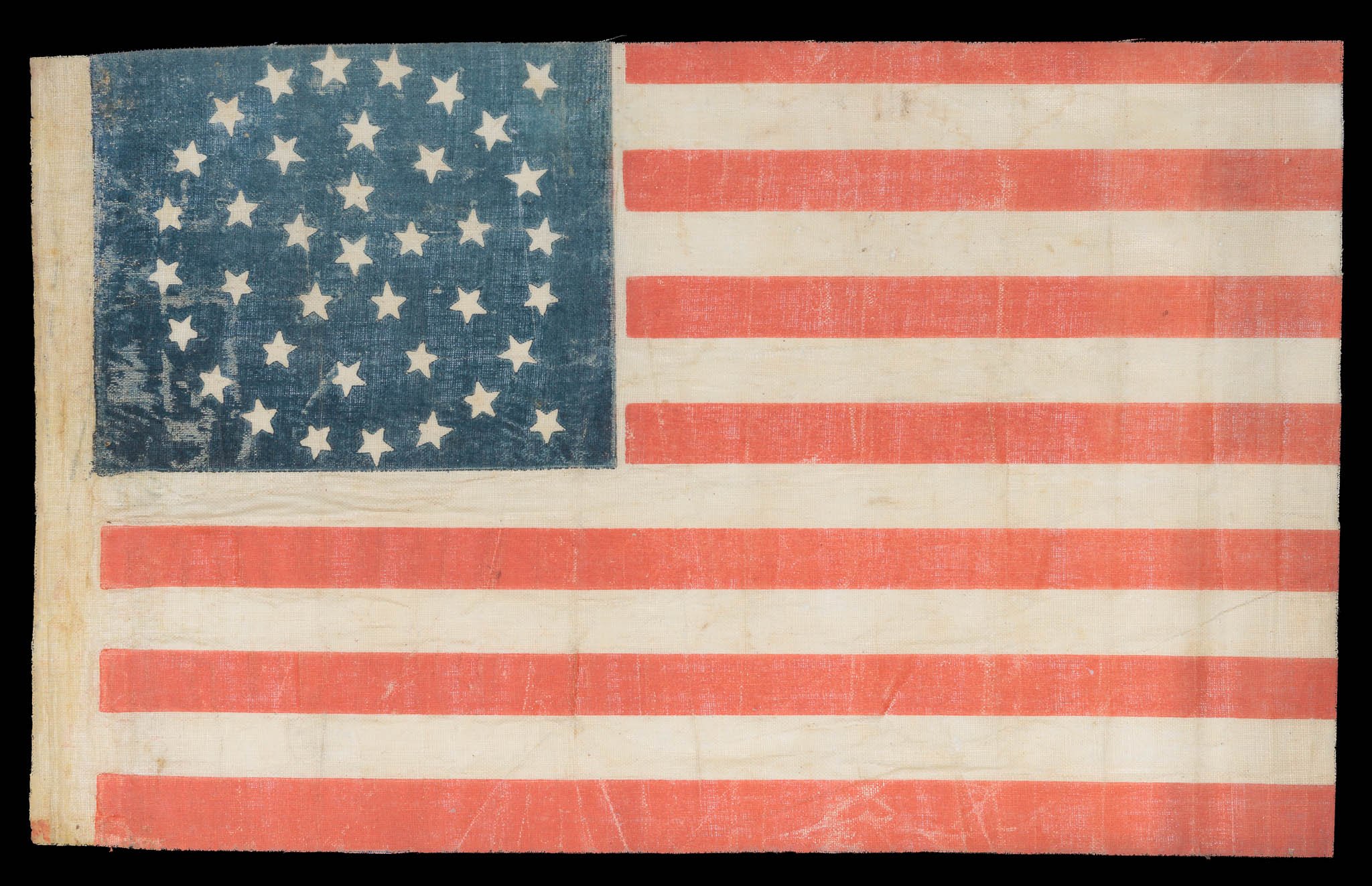
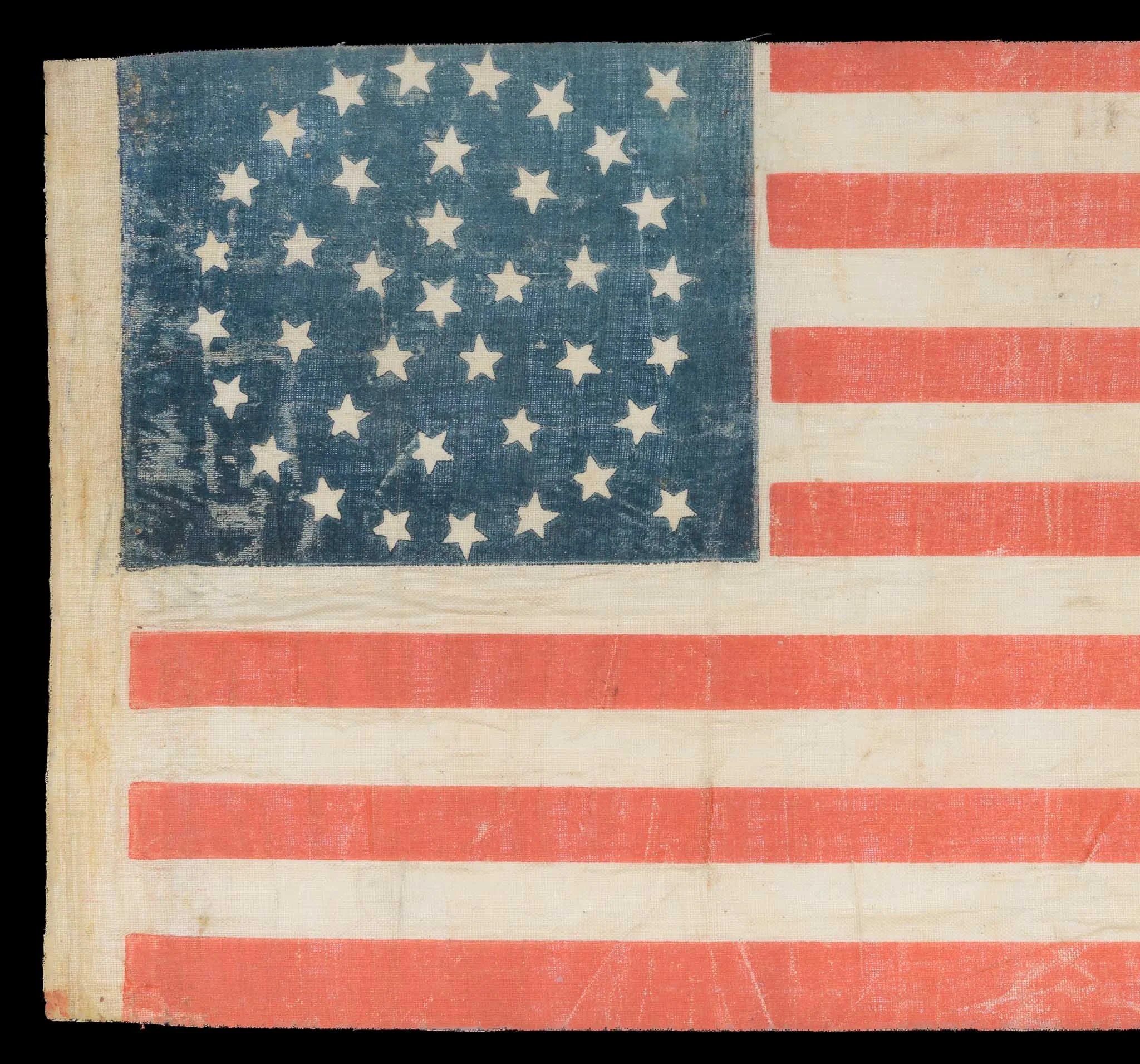
Offered is a 38-star antique American flag, printed on glazed cotton and dating to the late nineteenth century. The star configuration features a classic offset medallion pattern, composed of a large central star encircled by three concentric rings. The inner ring contains five stars, the middle ring ten stars, and the outer ring twenty stars. Completing the design are two additional stars positioned at the upper right and lower right of the outer ring, creating the asymmetry that defines the offset medallion format. This arrangement is among the most visually compelling and historically favored patterns found on nineteenth-century printed flags.
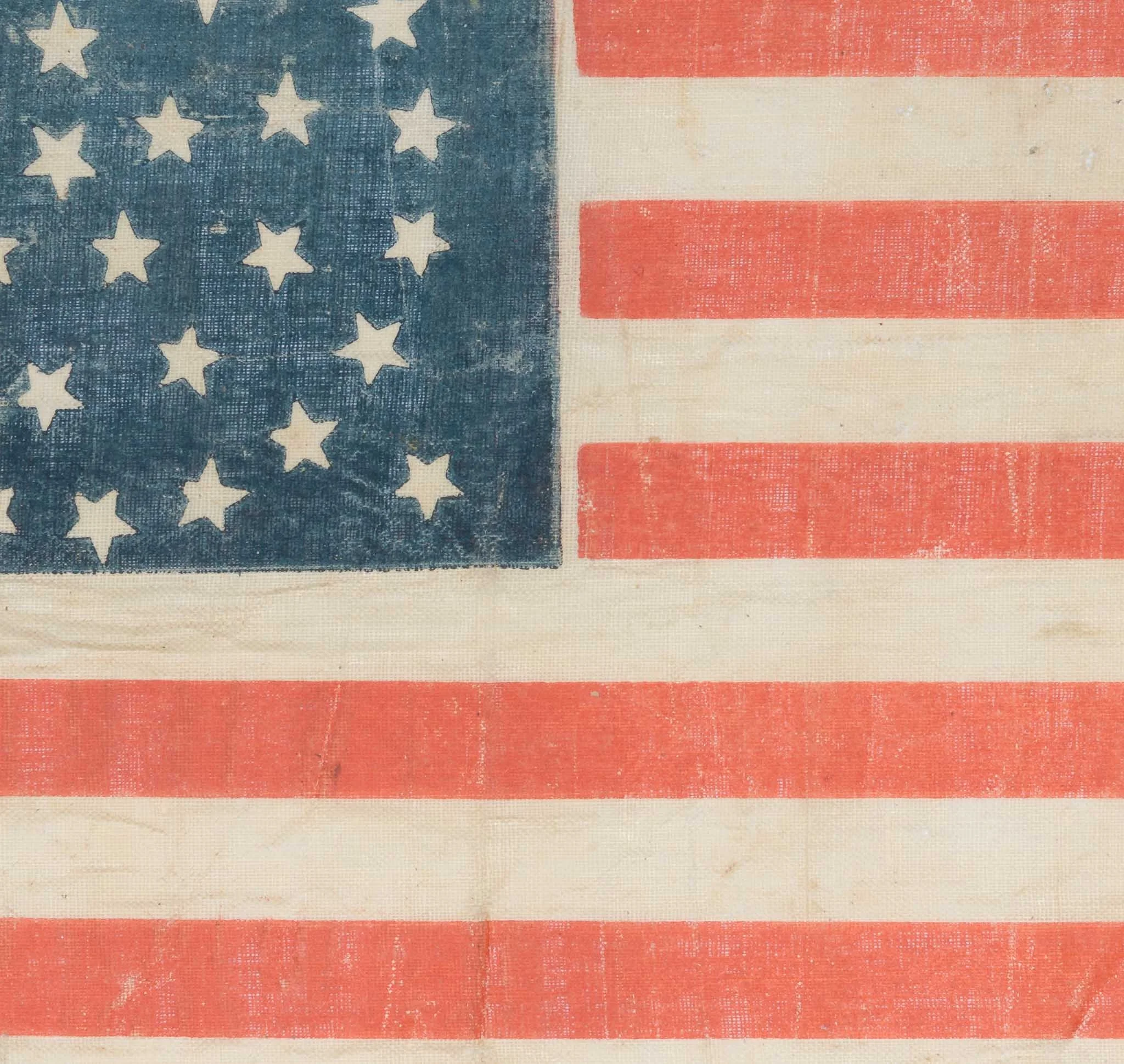
Flags of this type were produced using stamp-printing methods, in which pigment was applied directly to the cotton using carved wooden or composite stamps. The canton and stripes were typically applied in separate stages, with stars stamped individually or in grouped arrangements and the stripes printed as long horizontal bands. This process allowed for relatively efficient production while still yielding subtle variations in ink density, edge definition, and registration—hallmarks of authentic nineteenth-century stamped flags and characteristics evident in this example.
The canton presents as a deep, slate-blue field, while the stripes retain a warm, light orange tone. This coloration is characteristic of early red dyes derived from madder root, a natural dye commonly used prior to the widespread adoption of synthetic aniline dyes in the late 1880s. The presence of madder-based red strongly supports a nineteenth-century manufacture date and is frequently encountered in flags produced between roughly 1850 and 1880.
The 38-star flag represents the admission of Colorado, which entered the Union on August 1, 1876. In accordance with federal flag law, the additional star became official on July 4, 1877. Colorado earned the nickname the “Centennial State” because its statehood occurred just twenty-eight days after the nation’s one-hundredth anniversary. Notably, while the official flag count during the Centennial year of 1876 remained the 37-star flag, flag makers widely produced anticipatory 38-star flags in advance of the official change. As a result, the 38-star flag and the 13-star flag were the most displayed flags during Centennial celebrations.
Colorado’s path to statehood was shaped by rapid population growth and economic development following the Pikes Peak Gold Rush of 1858–1861, which drew tens of thousands of settlers to the region. Originally organized as the Colorado Territory in 1861, the area played a strategic role during the Civil War, supplying gold to the Union and maintaining political alignment with the North. Despite several failed attempts at statehood during the 1860s and early 1870s—largely due to debates over population thresholds and governance—Colorado’s continued growth and economic stability ultimately secured its admission. President Ulysses S. Grant signed the proclamation granting statehood in 1876, marking Colorado as the final state admitted during the Reconstruction era.
The nation’s Centennial inspired a surge of patriotism and civic unity in the years following the Civil War. Cities and towns across the country hosted parades, public ceremonies, and large-scale displays of national symbolism, with American flags serving as the primary emblem of identity and renewal. The most prominent celebration was the Centennial International Exposition held in Philadelphia, which welcomed nearly ten million visitors over six months and featured landmark innovations such as the Corliss Steam Engine and Alexander Graham Bell’s telephone.
The 38-star flag remained the official national flag until July 4, 1890, when the 43-star flag was adopted to reflect the admission of North Dakota, South Dakota, Montana, Washington, and Idaho. While the 43-star flag was short-lived in theory, the 38-star flag enjoyed a comparatively long period of use and remains one of the most historically resonant star counts of the nineteenth century.
Conservation Process: This flag was hand sewn to cotton fabric, and both were hand sewn to a mounting board. To prevent the black dye in the cotton fabric from seeping into the flag, it was first washed in a standard wash and then in a dye setting wash. The flag is positioned behind Optium Museum Acrylic.
Frame: The flag is housed in an antique ripple frame, distinguished by its repeating undulating surface and warm, aged patina.
Condition Report: The flag exhibits expected, period-consistent wear, including discoloration along the left vertical hoist edge where it was once affixed to a staff. Additional toning is present along the right edge, the result of long-term rolled storage, with the outer surface of the roll receiving greater exposure. Overall, the cotton remains structurally sound and visually strong, with the surface wear contributing to its authenticity rather than detracting from its presentation.
Collectability Level: The Great – Perfect for Rising Collectors
Date of Origin: 1876-1889
Number of Stars: 38
Associated War: The Indian Wars (1860-1890)
Associated State: Colorado