Outstanding Antique 48 Star Overprinted Flag | St. Peter’s High School Basketball Champions | New Brunswick, NJ | Arizona Statehood | Circa 1938
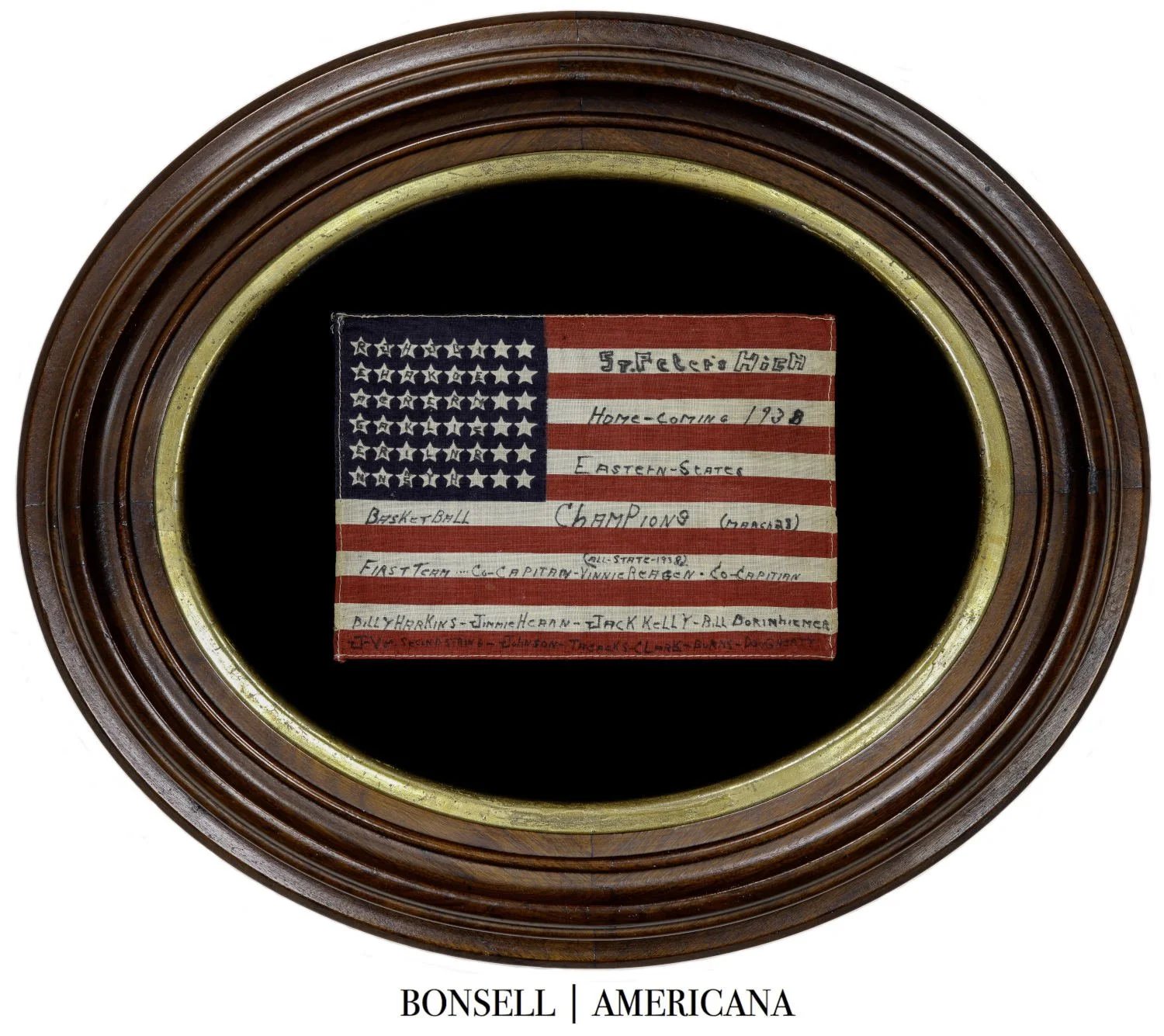
Outstanding Antique 48 Star Overprinted Flag | St. Peter’s High School Basketball Champions | New Brunswick, NJ | Arizona Statehood | Circa 1938
Frame Size (H x L): 16.5” x 19.5”
Flag Size (H x L): 6” x 8.5”
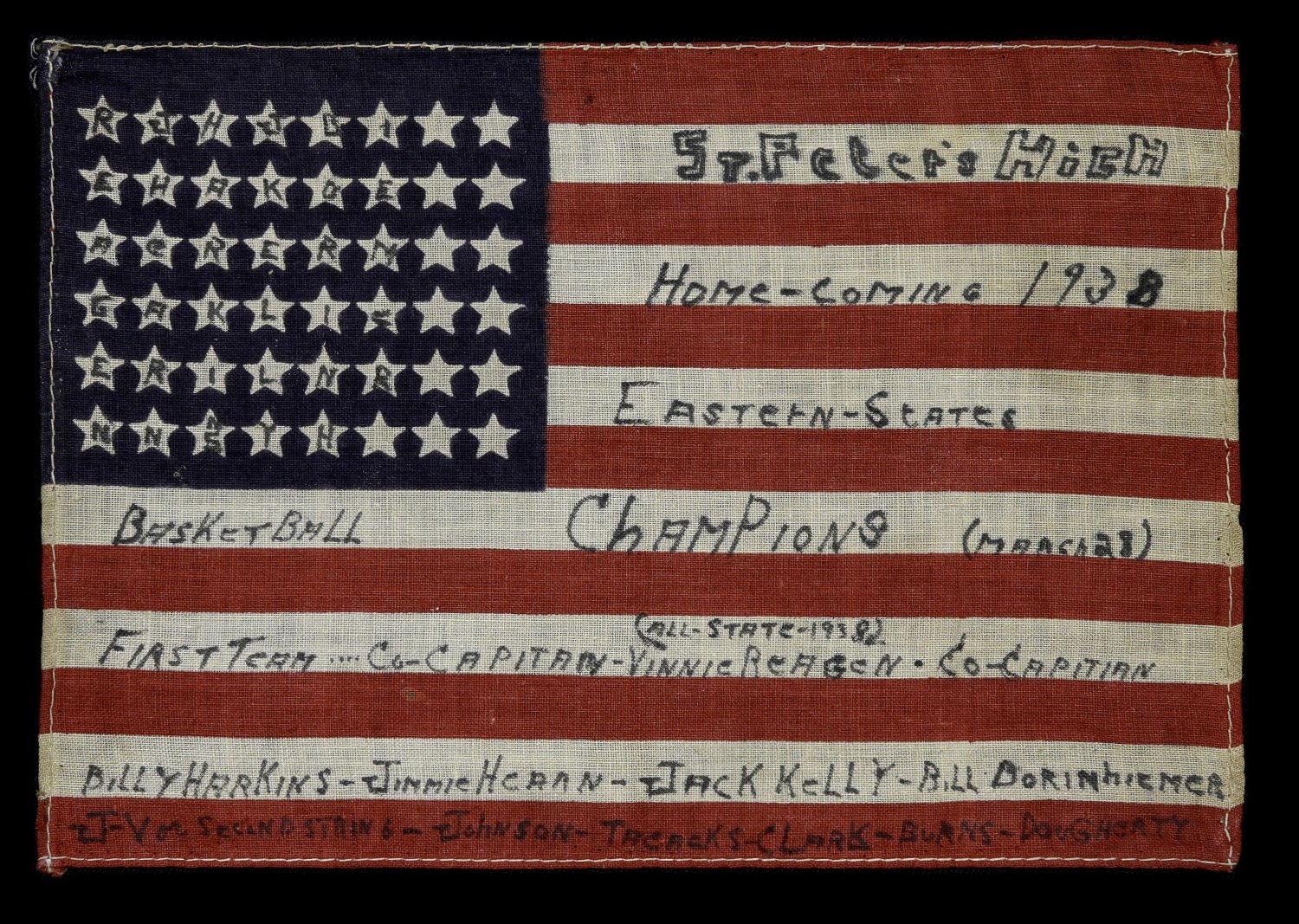
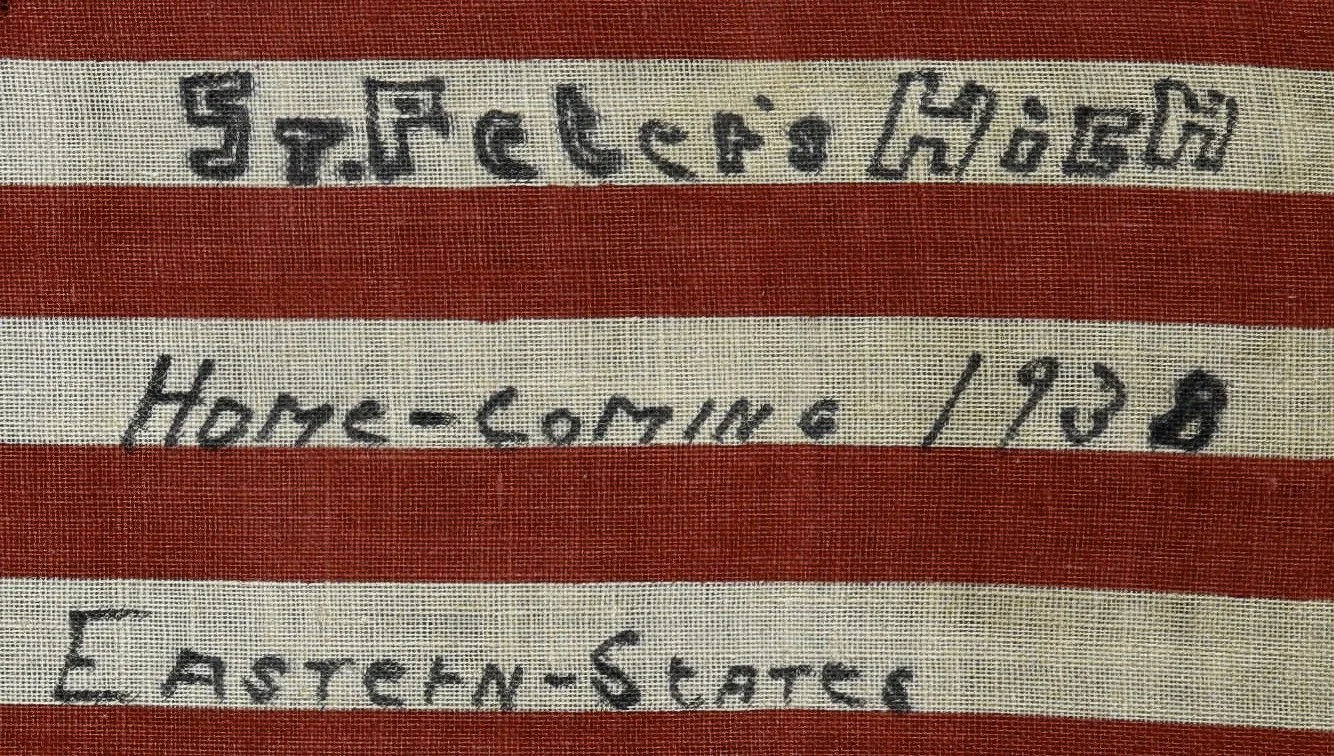
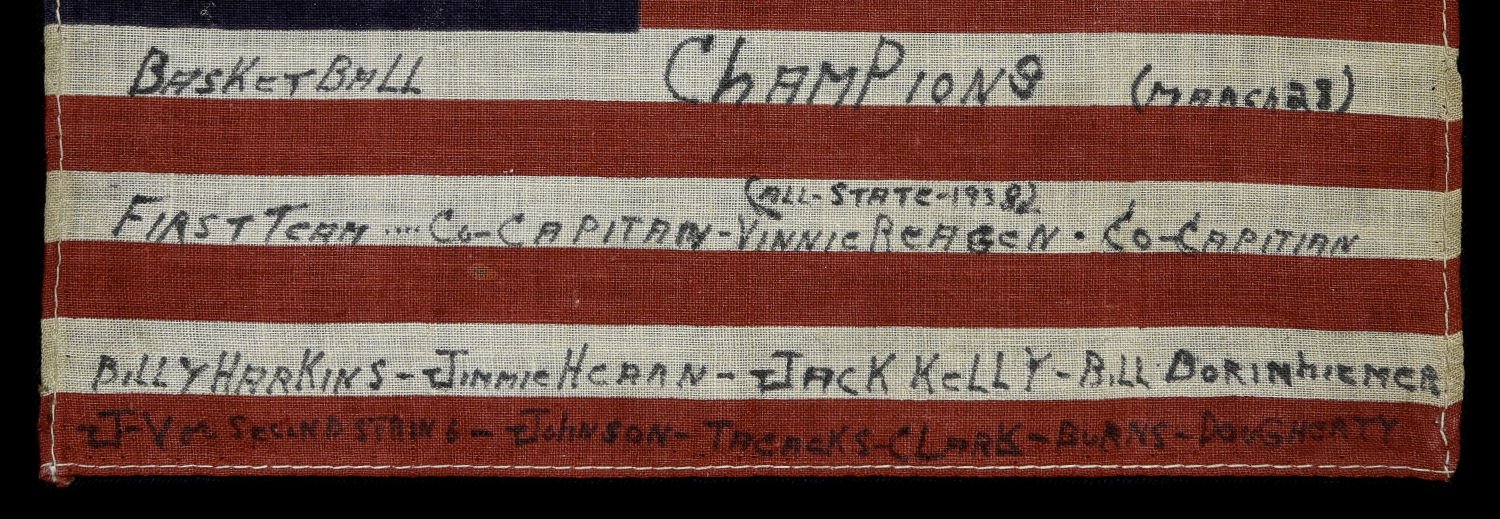
Offered is a rare and personal example of an overprinted American flag, used to commemorate the 1938–1939 basketball season at St. Peter’s High School in New Brunswick, New Jersey. Printed on cotton, the flag features 48 stars and 13 stripes, in keeping with national standards at the time. Onto this standard design, names and inscriptions were added by hand in ink, turning the flag into a localized artifact tied to a specific team.
The overprint marks the school’s basketball team winning the Eastern States Invitational Tournament Championship. Regional tournaments like the Eastern States Invitational brought together top teams from across the Northeast.
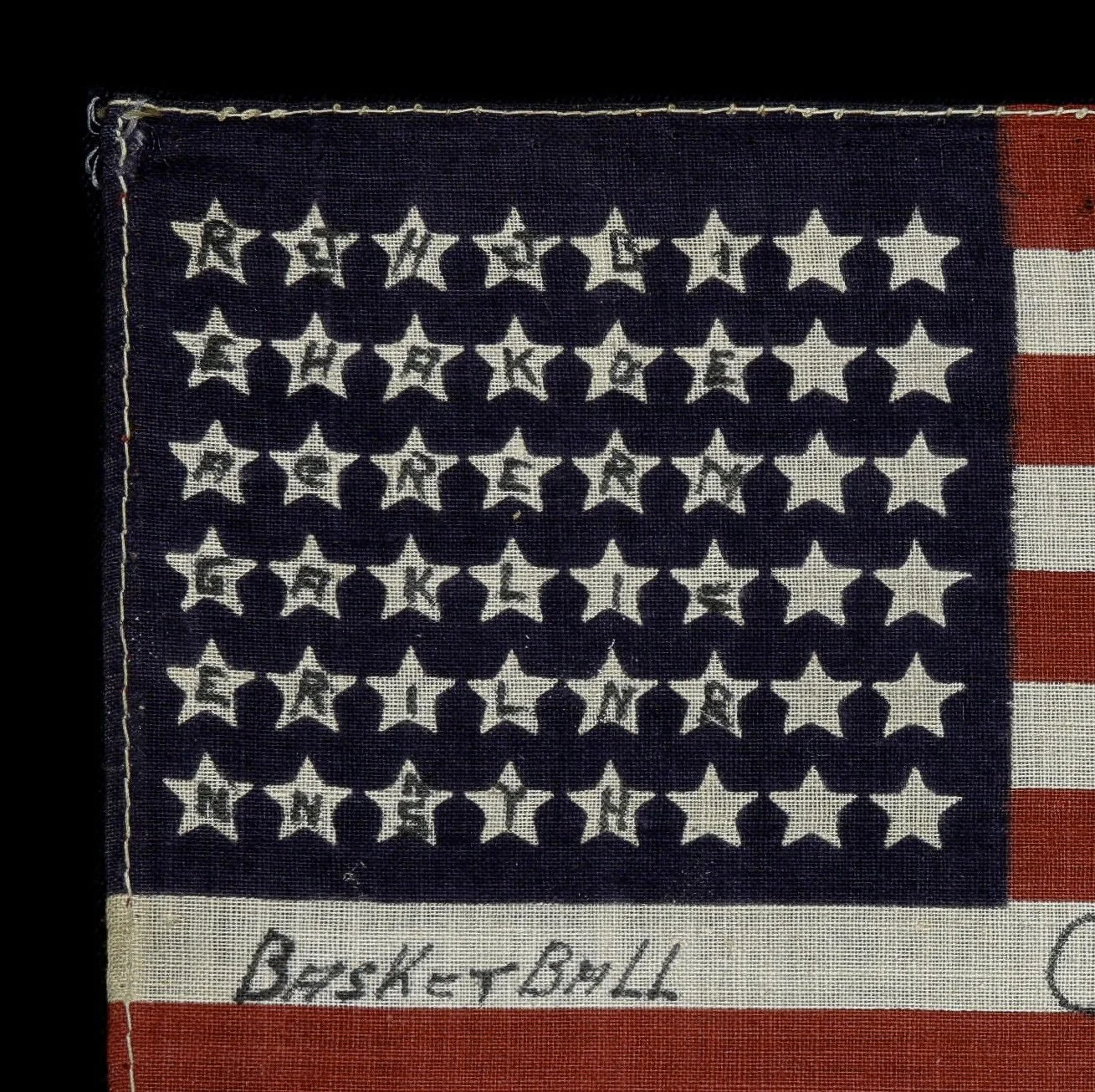
The inscriptions list the starting lineup: Co-Captain Vinnie Reagen (named All-State in 1938), Co-Captain Billy Harkins, Jimmie Hearn, Jack Kelly, and Bill Borinheimer. Second-string players are also named: Johnson, Tacacks, Clark, Burns, and Dougherty. Five of the starters’ names are written vertically on the stars in the canton, further integrating player recognition into the flag’s design. The flag is dated March 28, 1938, and references “Home-Coming,” suggesting use in a celebratory event, such as a parade or school gathering.
This flag was featured in the 2011–2012 exhibition The Stars and Stripes: Fabric of the American Spirit at the Morven Museum & Garden in Princeton, New Jersey. The exhibition presented highlights from The Pierce Collection of American Parade Flags, one of the most respected collections of patriotic textiles in the country. The show examined how Americans have used the flag to commemorate political, civic, and personal milestones. This example stood out for its use as a tool of local recognition, blending national symbolism with school achievement.
The flag also reflects the broader history of American flag design. Prior to 1912, flag makers were free to arrange the stars in any pattern. Early 48-star flags often featured staggered or offset arrangements. That changed with Executive Order 1556, issued by President William Howard Taft in 1912, which standardized the layout to a rectilinear pattern of six rows of eight stars (8-8-8-8-8-8). The flag offered here follows that design. Based on materials and construction.
The 48-star flag became official on July 4, 1912, following the admissions of New Mexico (January 6, 1912) and Arizona (February 14, 1912) as the 47th and 48th states. It remained in use for forty-seven years—longer than any other official U.S. flag design—until July 4, 1959, when Alaska's statehood introduced the 49-star version. It flew during the administrations of Presidents Taft through Eisenhower, and during World War I, World War II, and the Korean War.
Conservation Process: This flag was hand sewn to cotton fabric, and both were hand sewn to a mounting board. To prevent the black dye in the cotton fabric from seeping into the flag, it was first washed in a standard wash and then in a dye setting wash. The flag is positioned behind Optium Museum Acrylic.
Frame: The flag is housed in an antique walnut frame, likely dating between 1860 and 1890. The frame features a plain walnut molding with an inner gilt liner.
Condition Report: The flag is in excellent condition. There is some light soiling and toning. The ink inscriptions remain clearly legible throughout.
Collectability Level: The Best – Perfect for Advanced Collectors
Date of Origin: 1938
Number of Stars: 48
Associated War: WWI
Associated State: Arizona