“Welcome Brave Boys” Banner | Swallowtail Form with 13 Stars Around the Border | An Exceptional Civil War Veteran Banner | Circa 1876-1885
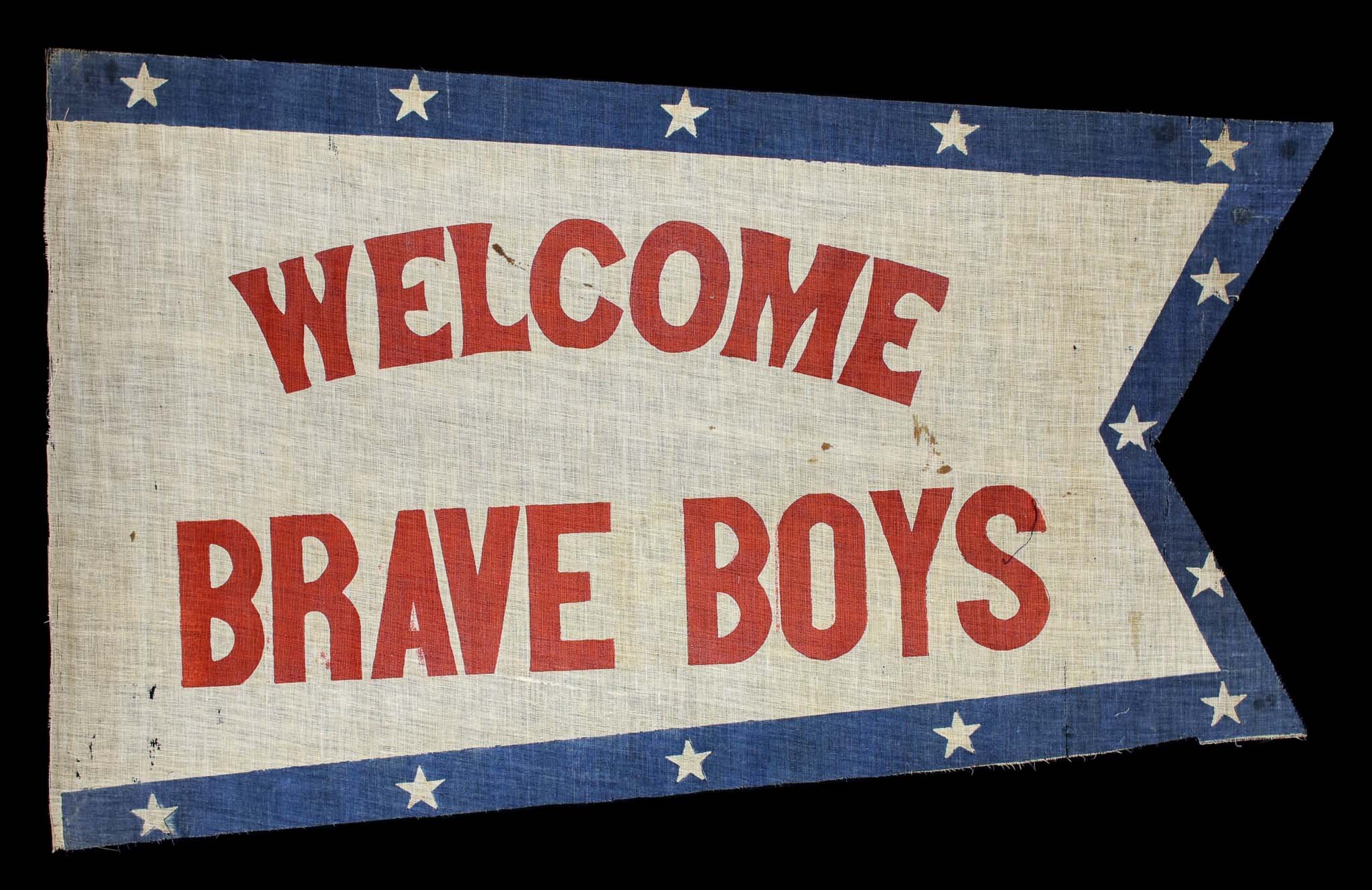
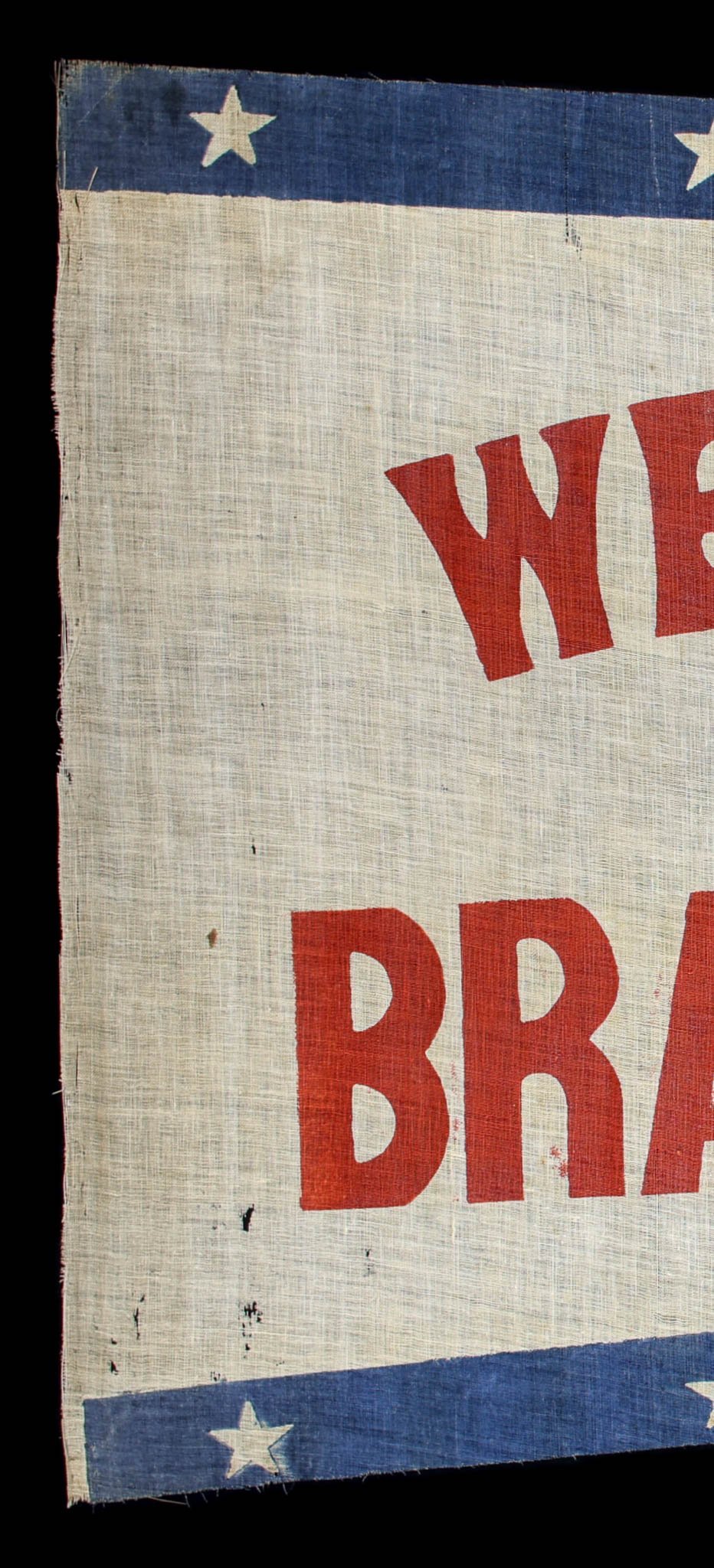
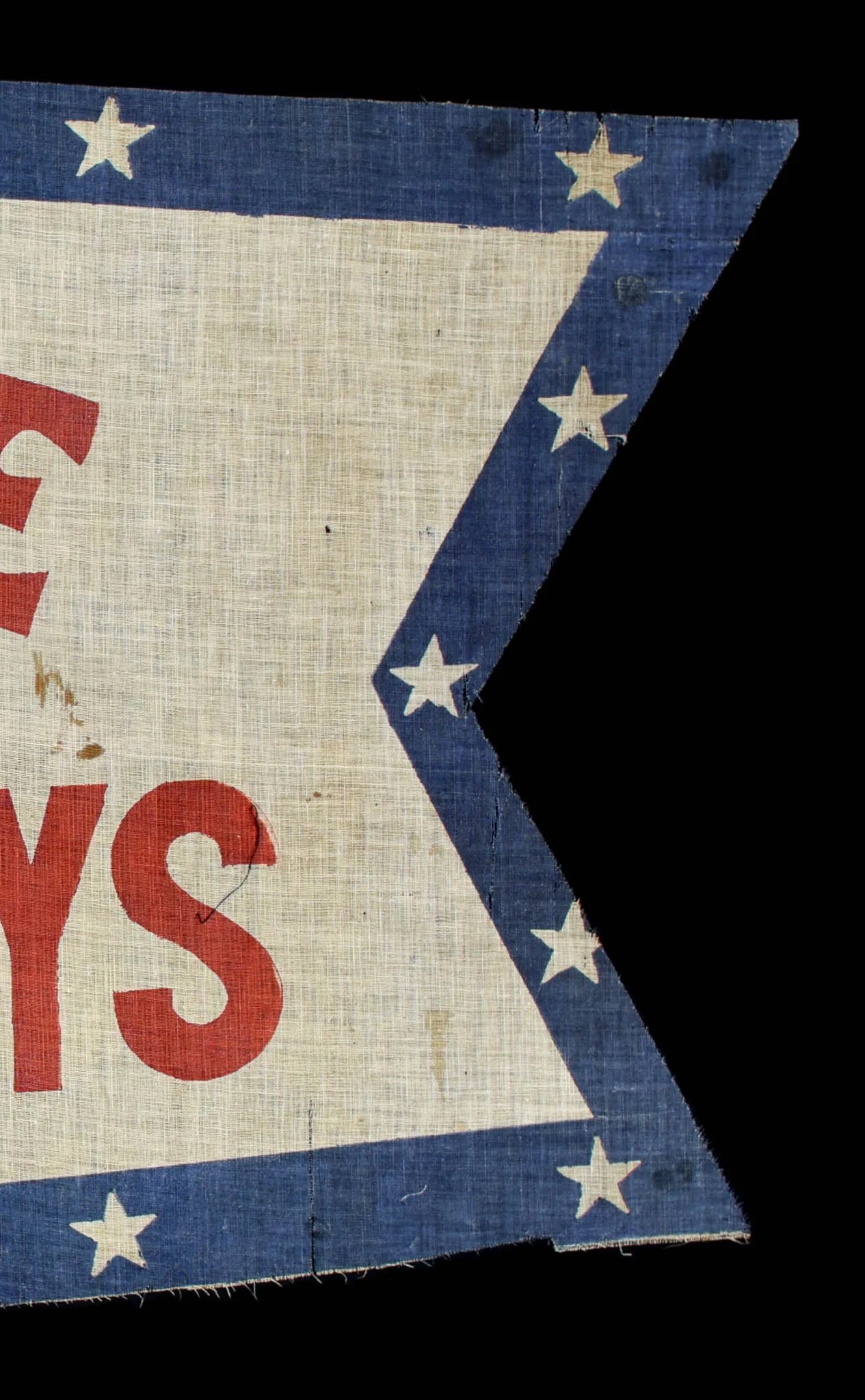
“Welcome Brave Boys” Banner | Swallowtail Form with 13 Stars Around the Border | An Exceptional Civil War Veteran Banner | Circa 1876-1885
Frame Size (H x L): 33” x 47”
Pennant Size (H x L): 22” x 36”
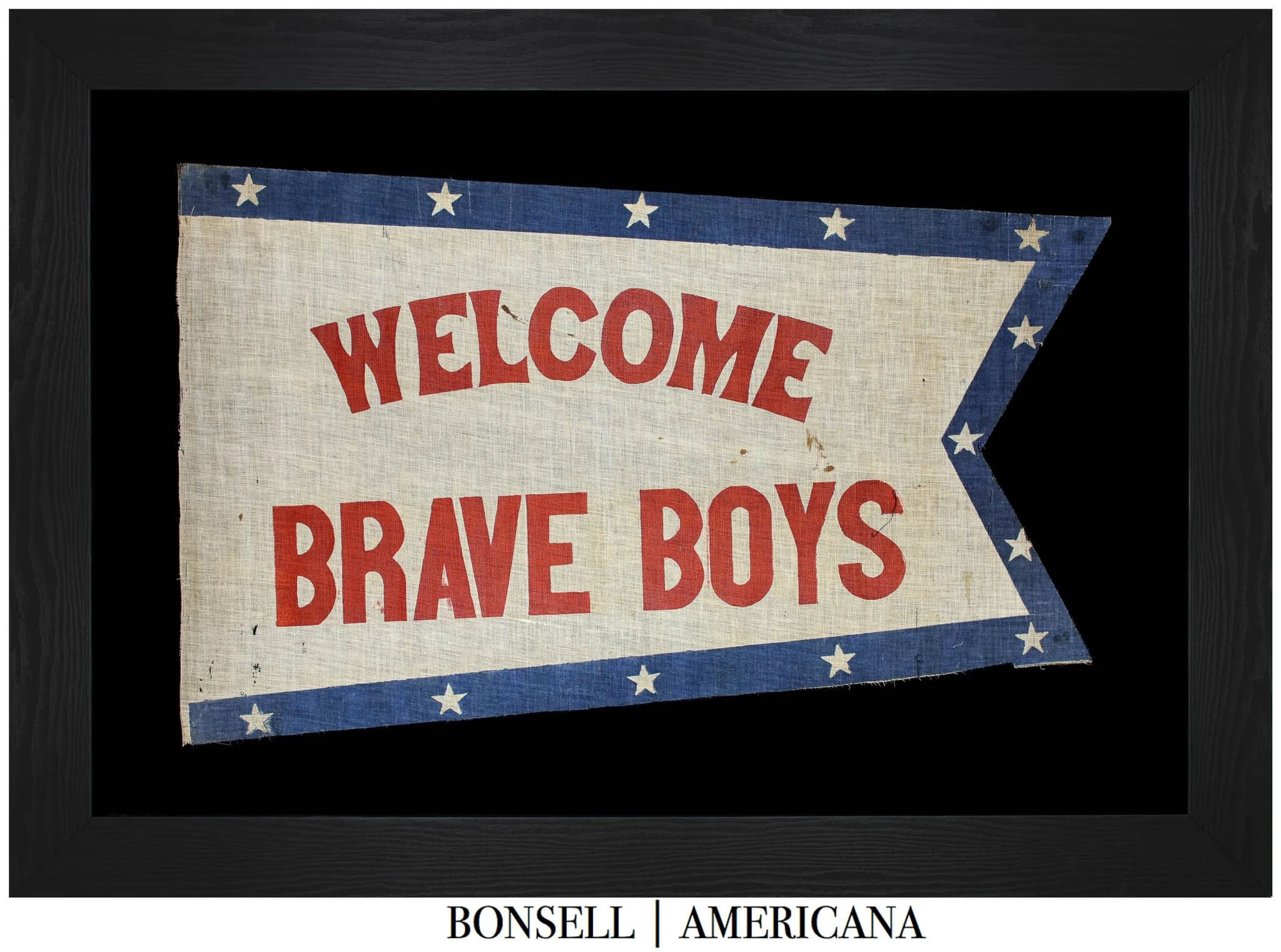
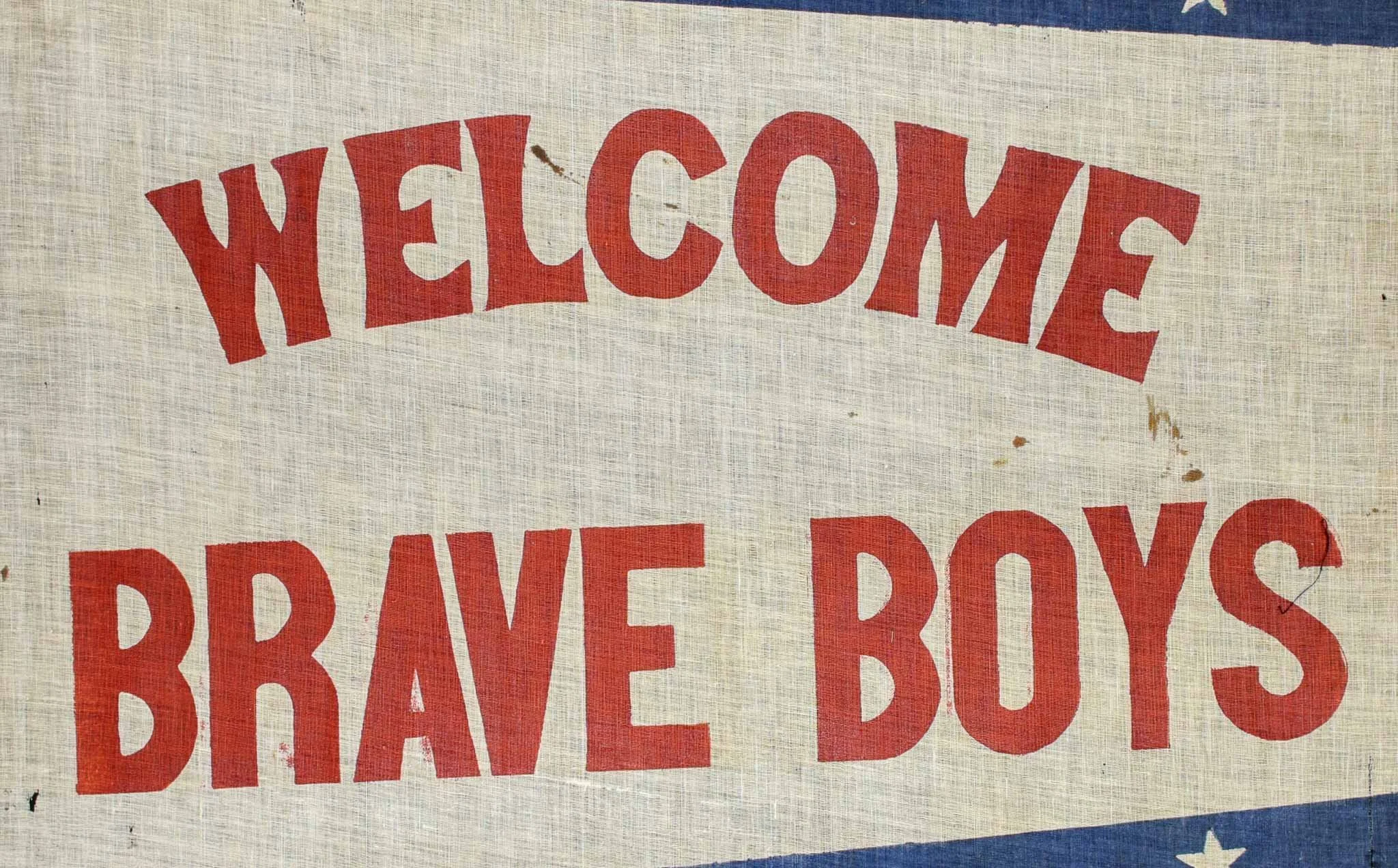
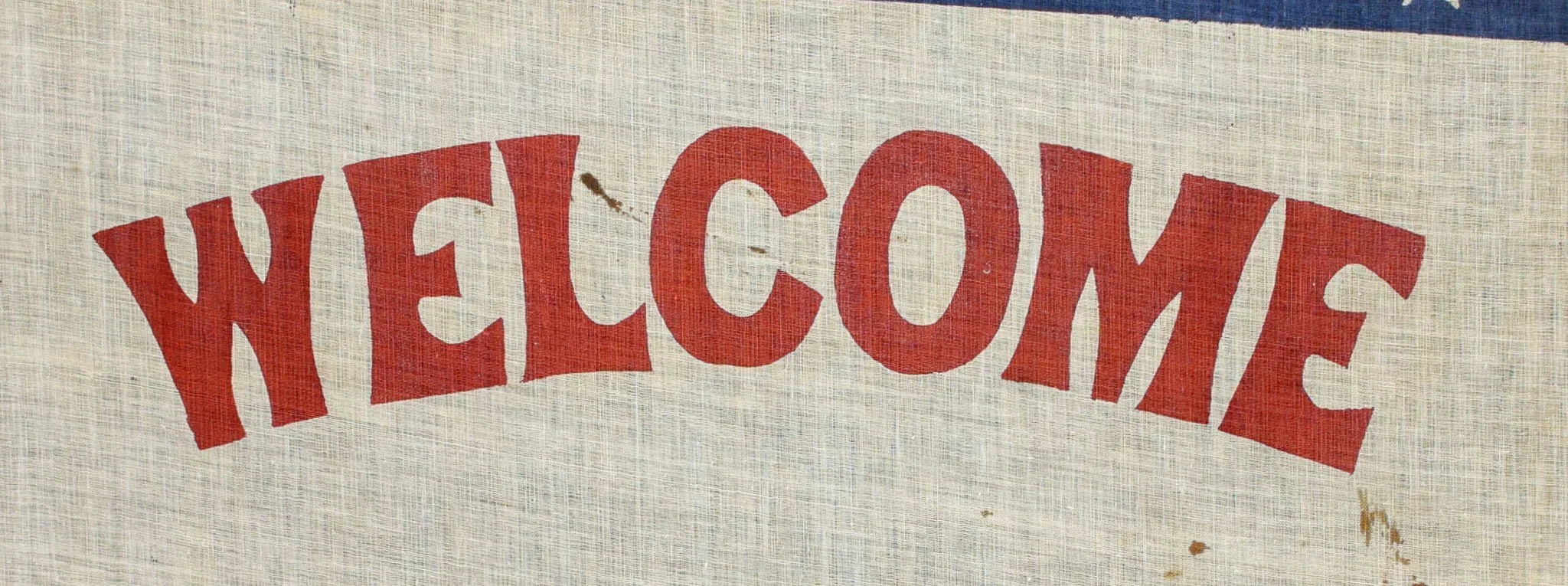
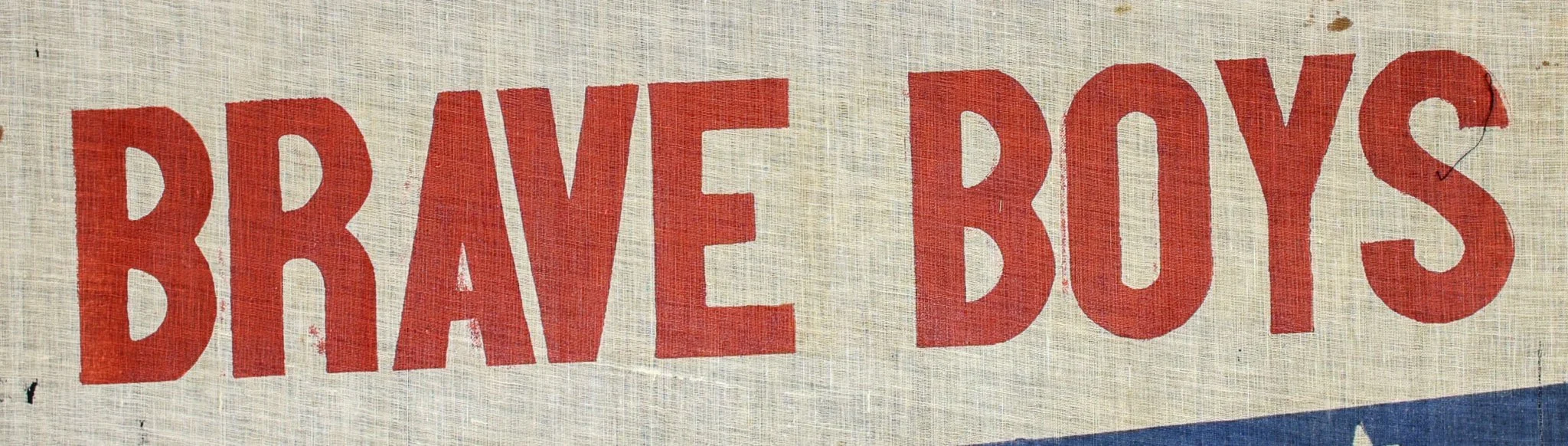
Offered is a rare patriotic banner reading “WELCOME BRAVE BOYS,” printed on glazed cotton muslin in swallowtail form, measuring approximately 36 inches in length. The banner features a blue border of 13 white stars surrounding the red block lettering, a striking motif that ties Civil War memory to the Revolutionary founding during the Centennial era.
The verbiage “Brave Boys” was one of the most widely used expressions of the Civil War period, appearing in newspaper headlines, song lyrics, and speeches throughout 1861–65. Union soldiers were affectionately referred to as “our brave boys at the front” or “the brave boys in blue.” When the war ended, towns across the country raised banners to welcome their veterans home, and the phrase endured through Grand Army of the Republic (GAR) reunions for decades. To display a banner reading “Welcome Brave Boys” in 1876 was to both honor Civil War veterans and link their service directly to the patriots of 1776.
The use of 13 stars is no accident. Though the official star count was 37 in 1876, the Centennial celebration in Philadelphia and nationwide sparked a conscious revival of 13-star symbolism as a tribute to the original colonies. Centennial flags, banners, and souvenirs frequently used 13-star designs to invoke the Revolution, creating a sense of continuity between the nation’s founding, the preservation of the Union during the Civil War, and the Centennial moment itself. This banner, with its bold 13-star border, reflects that impulse perfectly.
The material is printed muslin, exactly the fabric one would expect for inexpensive parade and decoration pieces of the period. Muslin was lightweight, easy to print, and suited to short-term outdoor use at parades, homecomings, and public celebrations. It was the democratic fabric of the Centennial—widely affordable, mass-produced, and visually effective when draped across porches, streets, and public halls. The swallowtail form added both visual flair and a sense of martial tradition, echoing the shape of cavalry guidons and military banners.
Direct comparison can be made to examples in Threads of History (Smithsonian, 1979). Item 324, a campaign pennant for Grant & Wilson (1872), employs the same swallowtail muslin format with a star border and red stenciled lettering. Later items, such as the Bryan & Hobart (1896) pennants, are explicitly marked as products of the American Flag Company of New York. The continuity in form, materials, and decoration demonstrates how firms like American Flag Co. developed this style in the 1870s and carried it into the late 19th century.
The connection to the American Flag Company is further supported by a surviving company catalog, issued from its headquarters at 45–47 Elizabeth Street, New York, with a western branch in Chicago. That catalog, dating to the early 20th century, illustrates a wide range of muslin swallowtail banners with nearly identical designs: blue star borders, red stenciled text, and stock phrases such as “WELCOME COMRADES,” “WELCOME FIREMEN,” and “WELCOME ELKS.” The standard size offered was 36 inches—precisely the length of this banner. While “Welcome Brave Boys” does not appear in the surviving catalog, its construction and format leave little doubt that it was part of the same commercial tradition, likely dating to the Centennial boom of the 1870s.
The banner thus exists at the intersection of several powerful themes: the Centennial revival of Revolutionary symbols (13 stars), the Civil War veteran experience (“Brave Boys”), and the rise of commercial flag and banner production by firms like the American Flag Company. It was designed to be draped across a street, a GAR hall, or a civic building, greeting returning soldiers or commemorating their service in the broader story of the American republic.
Few muslin decorations of this type survived, given their ephemeral purpose, which makes this a rare survivor of that patriotic culture. Its simple yet evocative design allows it to be both a decorative showpiece and a document of Civil War memory and Centennial symbolism.
Conservation Process: This banner was hand sewn to cotton fabric, and both were hand sewn to a mounting board. To prevent the black dye in the cotton fabric from seeping into the banner, it was first washed in a standard wash and then in a dye setting wash. The pennant is positioned behind Optium Museum Acrylic.
Frame: The banner is presented in a modern black frame with a simple, clean profile.
Condition Report: The banner survives in strong overall condition for a muslin decoration of its era, which were typically used outdoors and discarded after brief display. The printed red lettering remains bold, with only minor fading and scattered spots of soiling consistent with age. Some light fabric wear and small stains are present, along with expected irregularities along the swallowtail edges, but the textile retains excellent structural integrity. Overall, it presents exceptionally well, especially given the ephemeral nature of these Centennial-period patriotic banners.
Collectability Level: The Best – Perfect for Advanced Collectors
Date of Origin: Circa 1876–1885
Dating Justification: The phrase “Brave Boys” was one of the most common Civil War-era terms for Union soldiers, appearing in newspapers, songs, and banners during 1861–65 and persisting in GAR veteran culture through the 1870s–80s. The use of a 13-star border strongly suggests a Centennial context in 1876, when patriotic manufacturers revived 13-star designs to honor the original colonies. The banner’s printed muslin construction and swallowtail form are characteristic of commercial patriotic decorations of the 1870s, as documented in Threads of History (Smithsonian, 1979), which illustrates similar American Flag Company products from 1872 and 1896. Surviving company catalogs from the early 20th century confirm the continuity of this format—36" muslin swallowtail banners with blue star borders and red stenciled slogans—though the Centennial symbolism points to an earlier origin. Taken together, these factors support a date of circa 1876–1885.