Outstanding Antique Chicago Baseball Jersey | Board of Trade Team | Honus Wagner Sporting Goods Tag | Circa 1935–1940
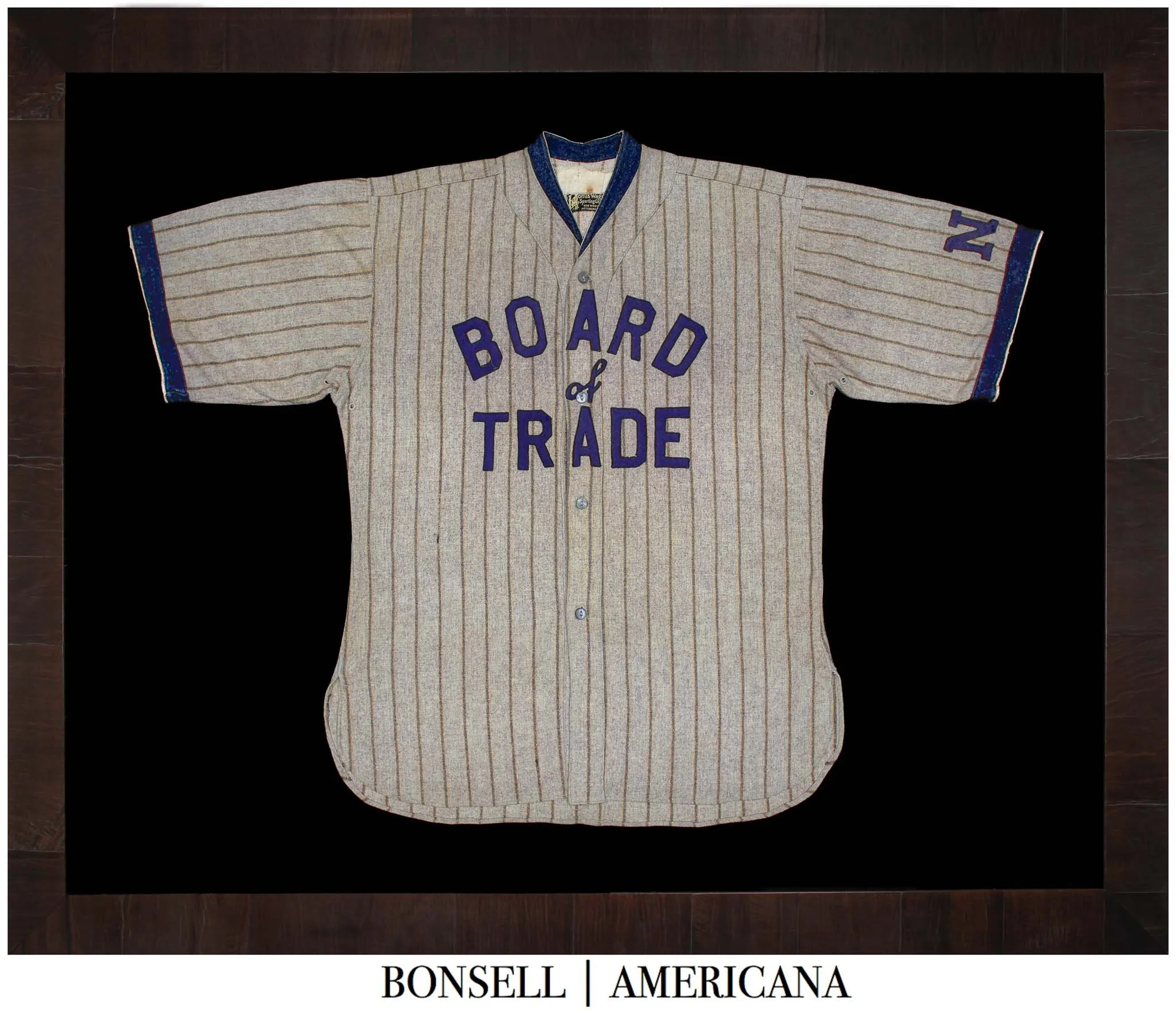
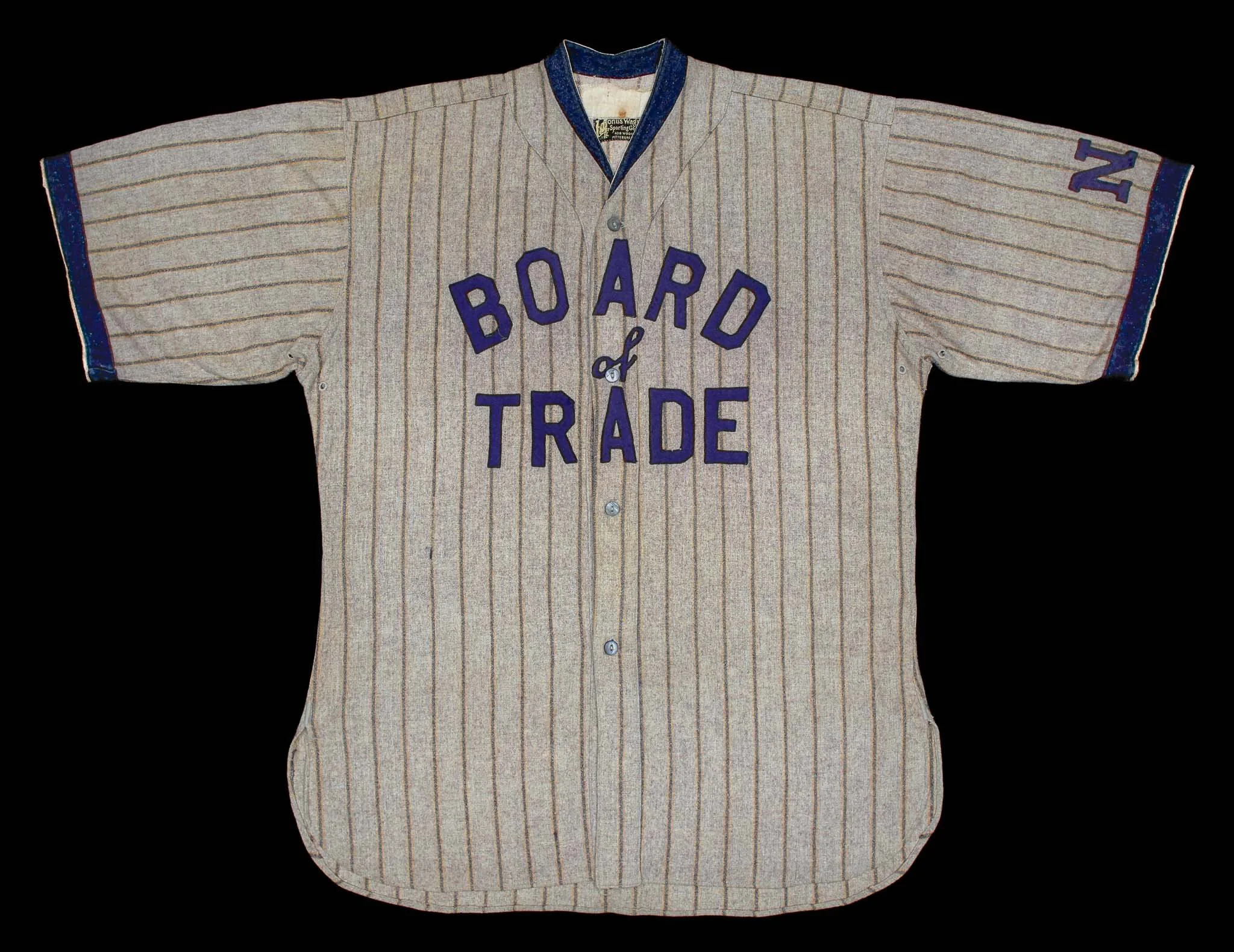
Outstanding Antique Chicago Baseball Jersey | Board of Trade Team | Honus Wagner Sporting Goods Tag | Circa 1935–1940
Frame Size (H x L): 45” x 55.5”
Jersey Size (H x L): 33.5” x 44”
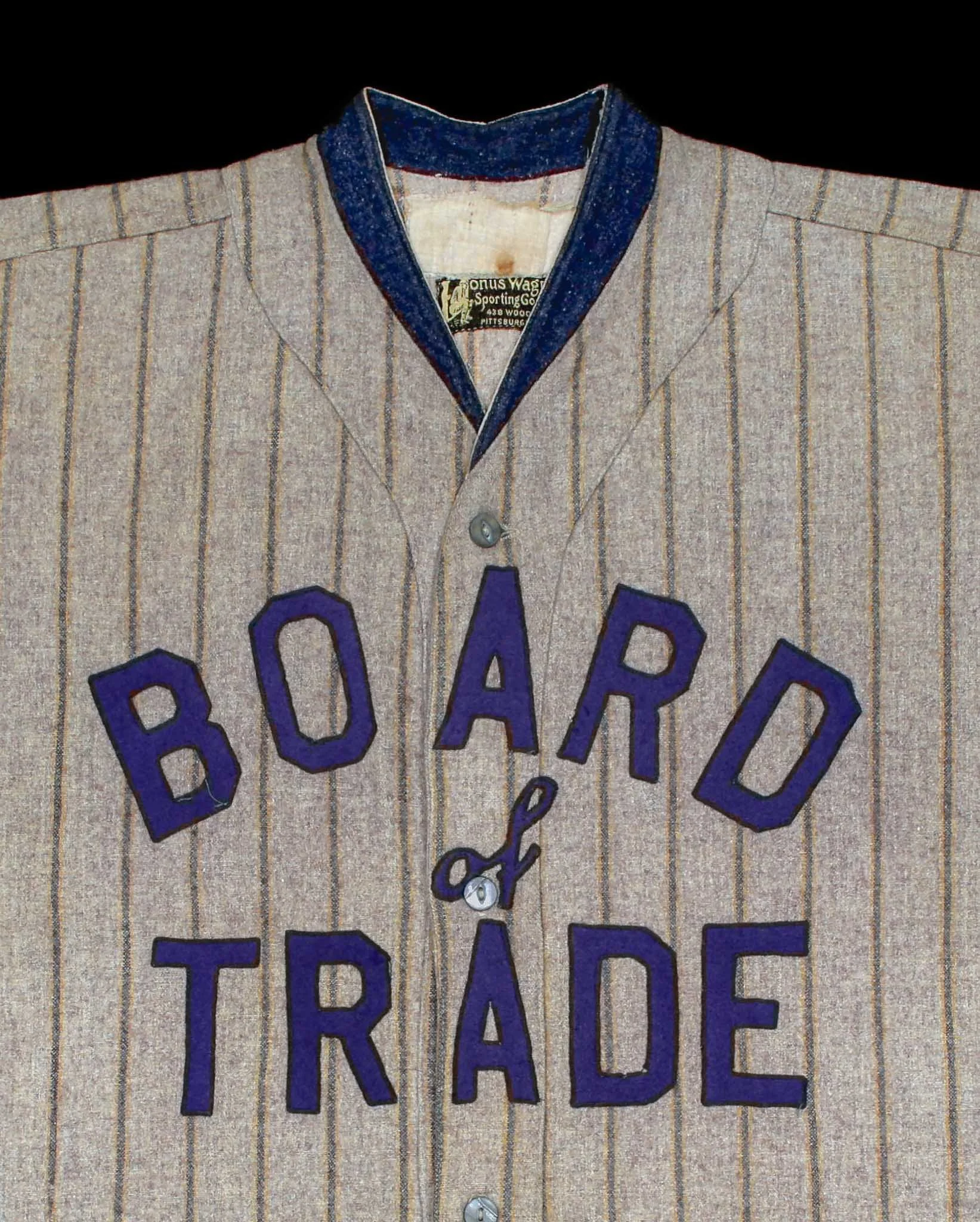
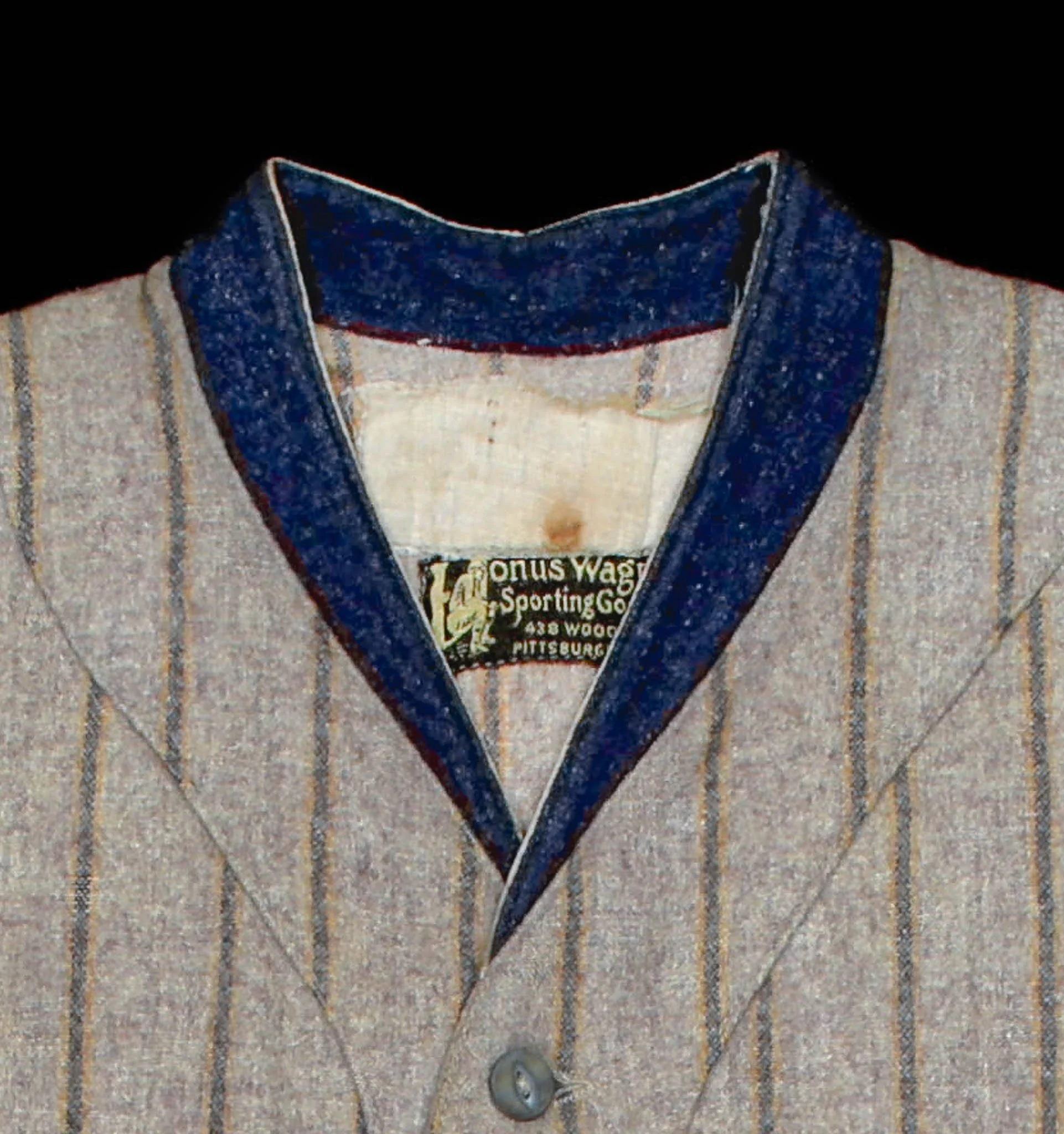
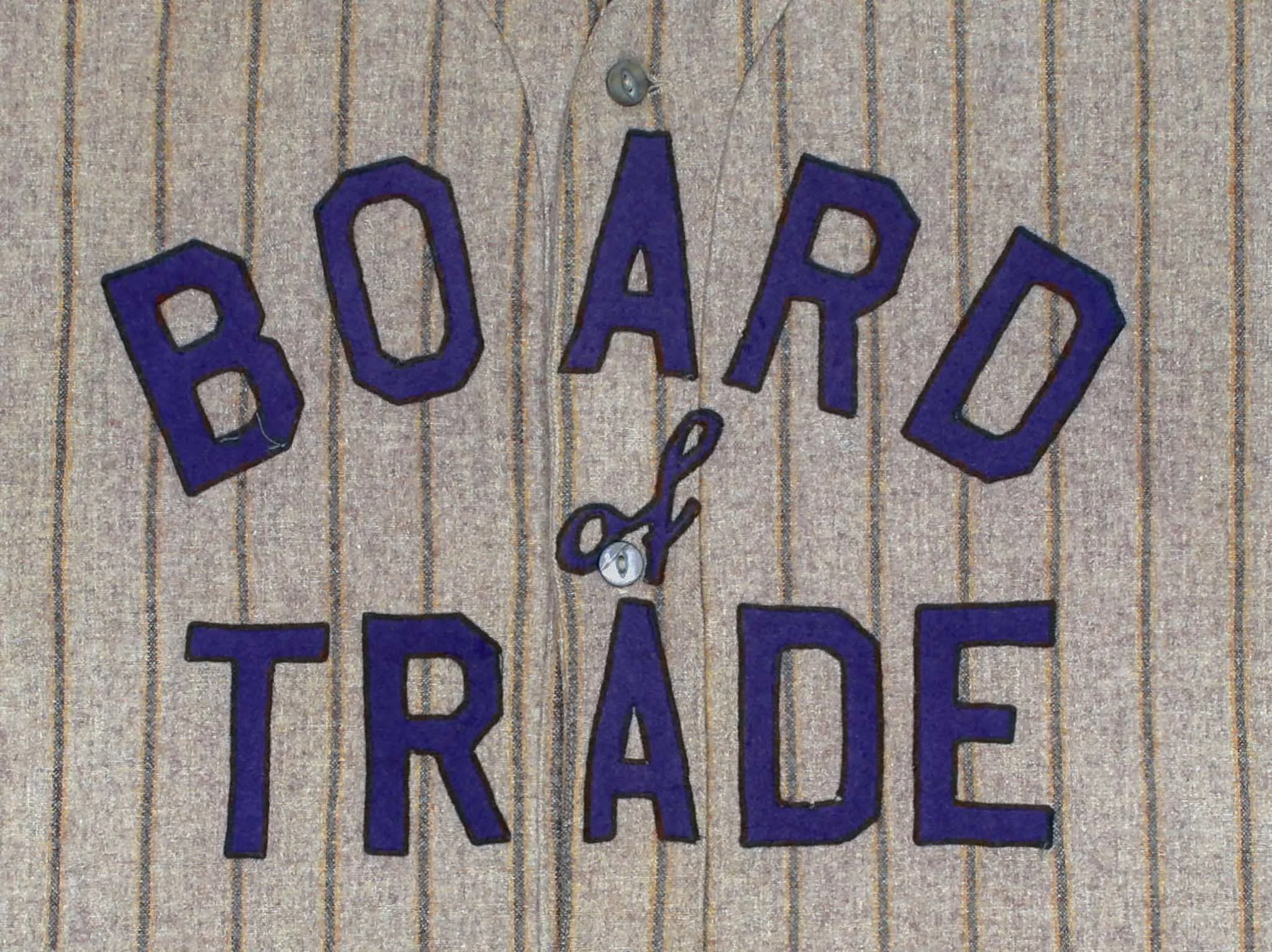
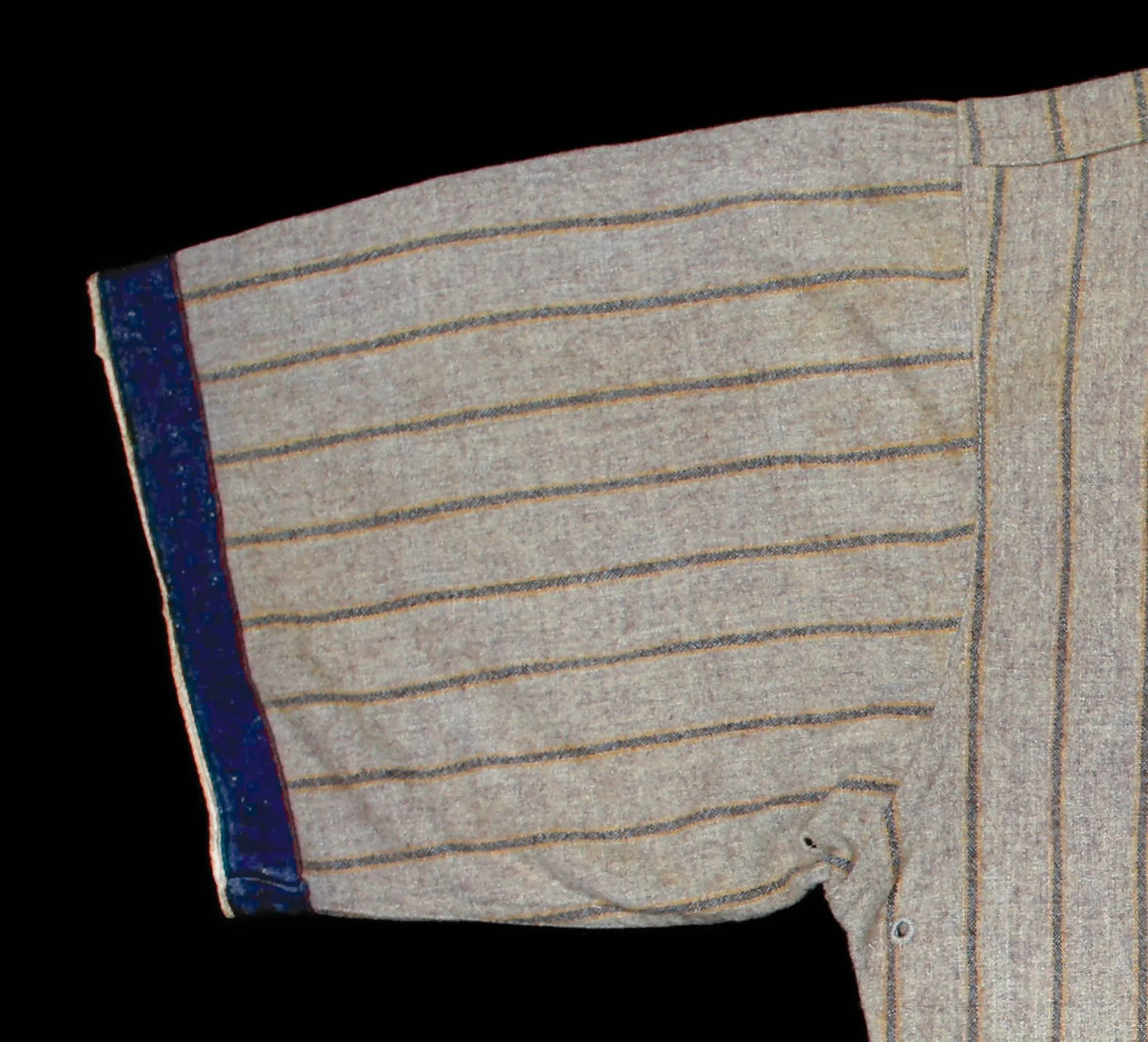
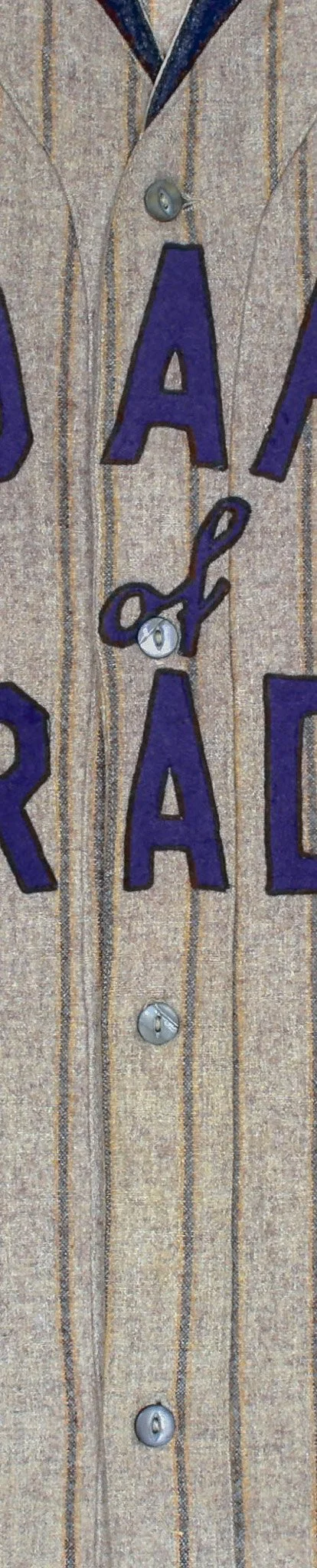
Offered is an early baseball jersey with “BOARD OF TRADE” spelled across the chest in dark navy wool felt letters arranged in an arc. The jersey is made of gray pinstriped flannel with narrow tan stripes, typical of uniforms from the 1930s and 1940s. It has a full button front, short tail, and blue trim along the collar and sleeve cuffs. Ventilation eyelets are set under each arm, and inside the collar is a woven label that reads “Honus Wagner Sporting Goods / 438 Wood Street / Pittsburgh.” Stitching, seams, and materials are consistent with the factory-made flannel uniforms of that period.
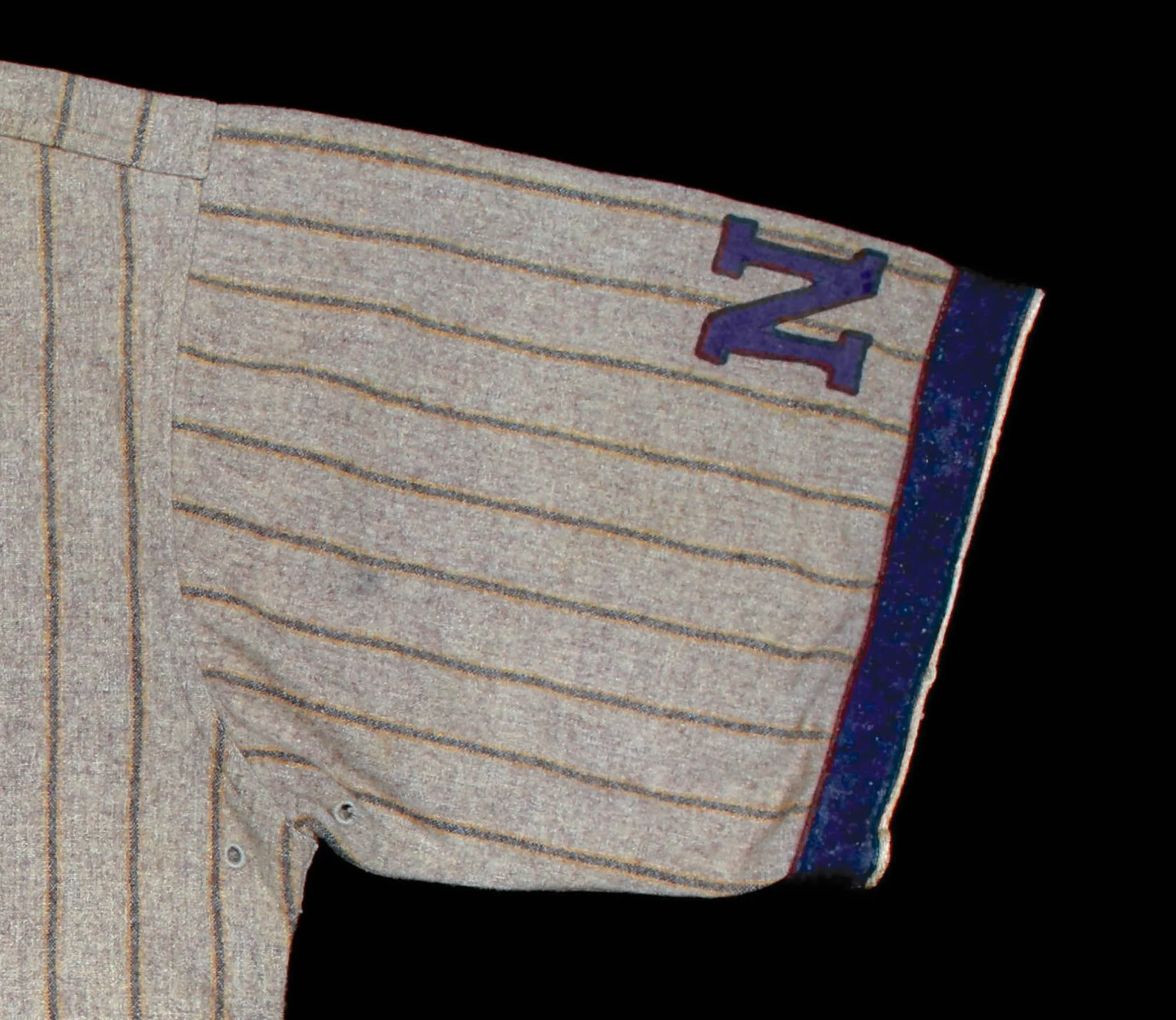
The left sleeve shows an “NS” monogram, which may refer to either North Side or North Shore—both of which would have been relevant to the Chicago Board of Trade (“CBOT”). Many CBOT members lived along Chicago’s North Shore suburbs—Evanston, Wilmette, and Winnetka among them—and it’s plausible that this jersey represented a Board of Trade club or team drawn from that community. The style and construction are consistent with factory-issued industrial-league uniforms of the late-Depression era.
Company and industrial baseball teams were an important part of American work and social life during the early to mid-1900s. Businesses, trade groups, and civic organizations often formed their own teams to play in local leagues. The reference to the Board of Trade almost certainly points to the Chicago Board of Trade, which had an active presence in those circles. Employees and members fielded teams that competed in business leagues around the city, and it was not uncommon for the CBOT to sponsor or affiliate with regional teams in surrounding communities such as the North Shore, where many of its members resided.
Among all boards of trade across the country, Chicago’s stood apart. Founded in 1848, the CBOT became America’s leading commodities exchange and one of the city’s defining institutions. By the 1930s, its trading floor was a symbol of Chicago’s economic strength and resilience during the Great Depression, with thousands of brokers, clerks, and laborers moving grain and livestock futures that kept the Midwest’s economy in motion. Athletic teams like this one offered both recreation and a way to strengthen camaraderie in a high-pressure environment. Baseball, in particular, became an outlet for workplace pride and a reflection of the city’s blue-collar energy.
That same spirit extended northward into the lakefront suburbs, where baseball held a prominent place in civic and recreational life. During the 1930s and 1940s, the North Shore hosted a network of amateur and semi-professional leagues—many sponsored by local businesses, civic clubs, and Chicago institutions whose employees lived outside the city. Games were played on public diamonds and school fields in Evanston, Wilmette, Winnetka, and Highland Park, often drawing crowds from the surrounding neighborhoods. Teams from the Board of Trade, the stockyards, and local manufacturers regularly traveled the North Shore circuit. These were competitive, well-organized games, blending business rivalry with the sense of community that small-town baseball brought to the region. For many white-collar Chicagoans, suiting up on a summer evening to play along the lakefront was as much a social tradition as it was a sport.
The Honus Wagner Sporting Goods Company, whose tag appears in the collar, adds another layer of significance. Founded in Pittsburgh by Hall of Fame shortstop Johannes Peter “Honus” Wagner shortly after his playing career ended, the firm produced uniforms, bats, and gloves from roughly 1919 through the early 1950s. Wagner was one of the most respected figures in baseball history—a cornerstone of the early Pittsburgh Pirates and an inaugural inductee into the National Baseball Hall of Fame in 1936. Known as “The Flying Dutchman,” he was admired not only for his remarkable skill but also for his integrity and sportsmanship, traits that made his name an ideal brand for quality athletic goods.
Wagner’s reputation gave the company immediate credibility among ballplayers, and his business drew steady demand from amateur, semi-professional, and industrial-league teams across the Midwest and Great Lakes regions. His involvement was more than nominal—he reportedly visited the shop and remained engaged in its operations well into his later years. The label inside this jersey, featuring the 438 Wood Street, Pittsburgh address, corresponds to the company’s mid-1930s to 1940s production period, and its woven script design matches other verified examples from that timeframe. When paired with the jersey’s flannel weight, pinstripe pattern, and reinforced underarms, these characteristics align squarely with a mid-to-late 1930s manufacture.
Taken together, the evidence points to a jersey made for a Chicago Board of Trade baseball team, likely one connected to the city’s North Shore. It stands as a rare surviving piece from the era when America’s corporate and civic institutions proudly fielded baseball clubs as part of daily life. The subject matter itself has wide appeal—connecting fans of the game, students of Chicago history, collectors of financial-market memorabilia, and anyone drawn to the intersection of American commerce and sport. Few objects capture that blend of competition, community, and identity as directly as a uniform worn by traders stepping off the exchange floor to play ball.
Conservation Process: The jersey was hand sewn to cotton fabric, and both were hand sewn to a mounting board. To prevent the black dye in the cotton fabric from seeping into the jersey, it was first washed in a standard wash and then in a dye setting wash. The jersey is positioned behind Optium Museum Acrylic.
Frame: The frame has a clean, substantial profile finished in a dark brown veneer called Cigar Leaf. Its surface has a soft, natural sheen that gives the impression of hand-rubbed wood rather than a heavy gloss. The overall look is simple but refined, with enough depth and warmth to complement the antique jersey.
Condition Report: The jersey shows moderate wear consistent with its age. The flannel fabric remains strong with a few light stains from use. The felt lettering is well preserved with only minor fraying at the edges, and the buttons and Honus Wagner tag remain intact and original.
Collectability Level: The Best – Perfect for Advanced Collectors
Date of Origin: 1935-1940