13 Star Antique American Flag | Classic Medallion Star Arrangement & STANDARD 2 X 3 Hoist Stamp | Circa 1895-1926
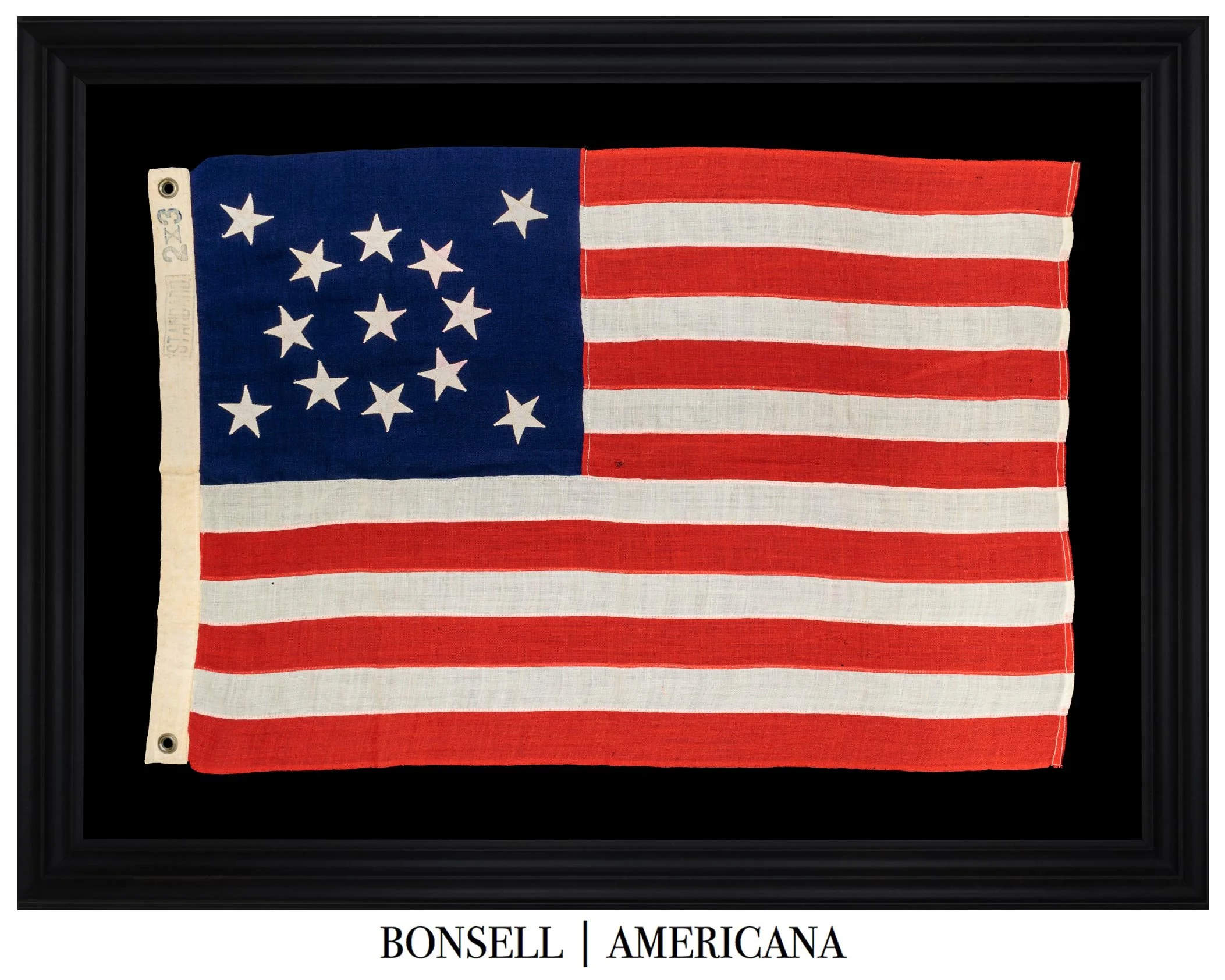
13 Star Antique American Flag | Classic Medallion Star Arrangement & STANDARD 2 X 3 Hoist Stamp | Circa 1895-1926
Frame Size (H x L): 35” x 47”
Flag Size (H x L): 24” x 36”
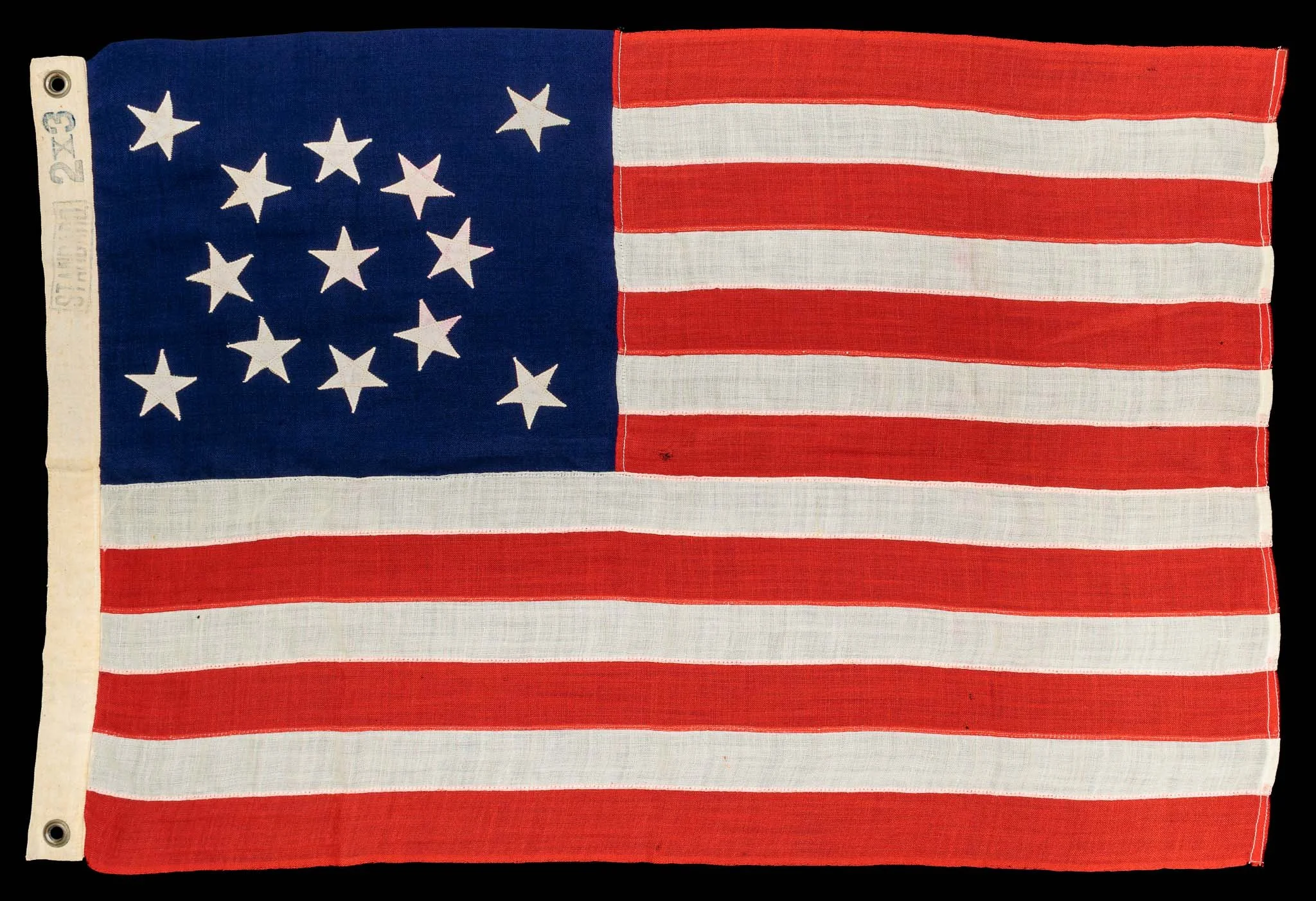
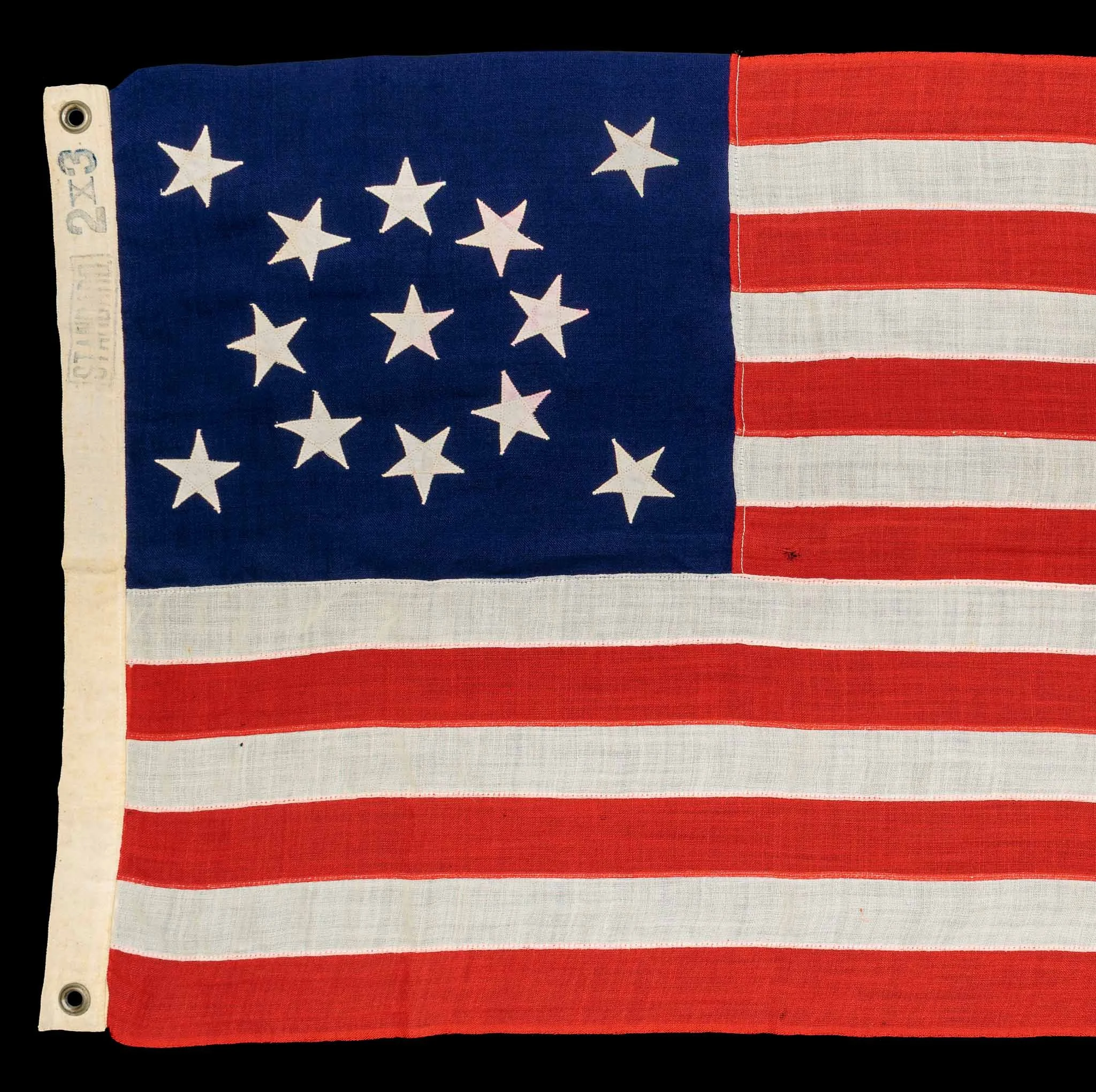
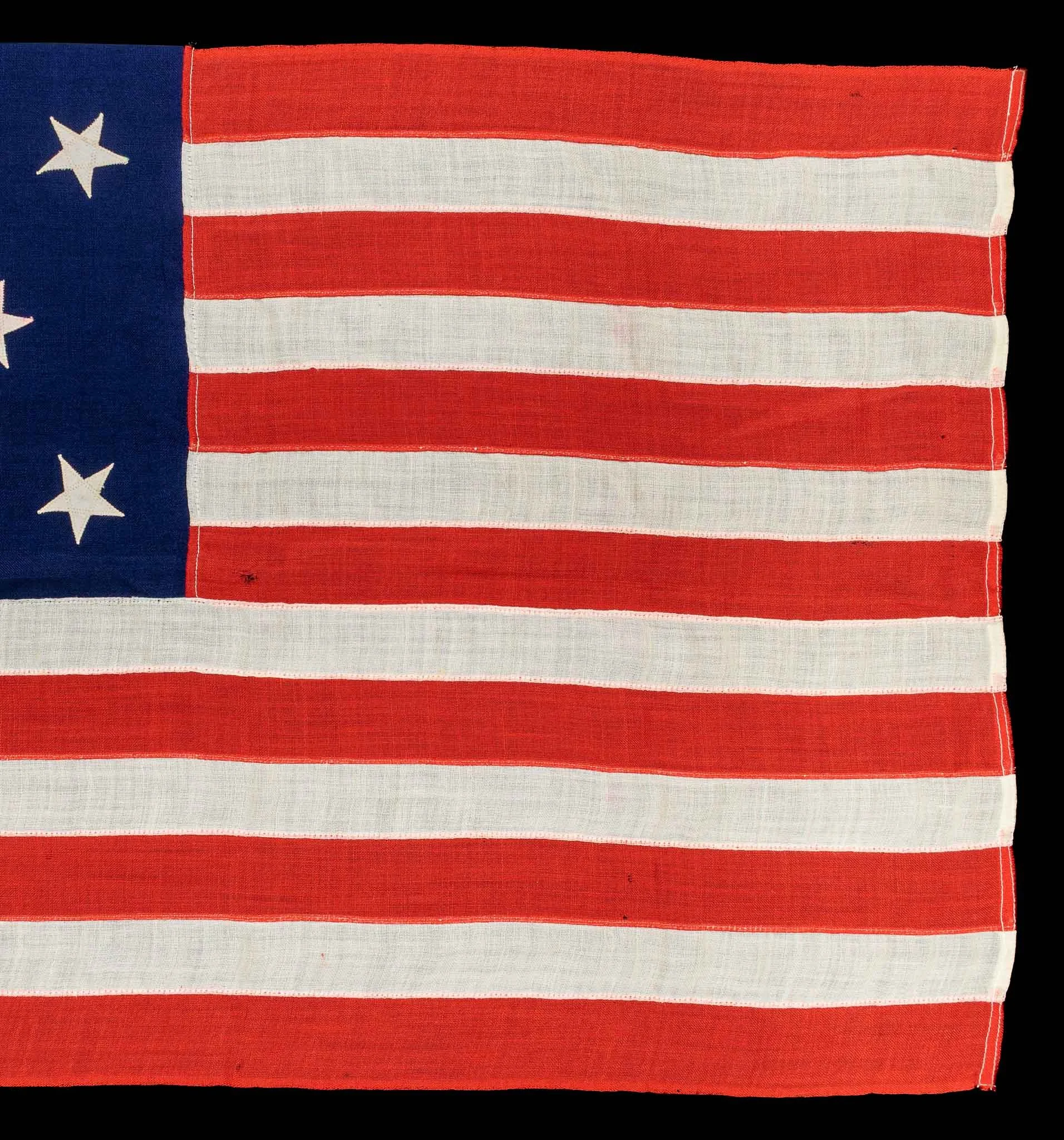
Offered is a 13-star American flag of wool bunting with cotton stars that are double-appliquéd—sewn to both sides of the canton so the design presents correctly on either face. This method of construction reflects quality commercial manufacture of the late 19th and early 20th centuries, when durability, clarity, and efficiency were central to flag production.
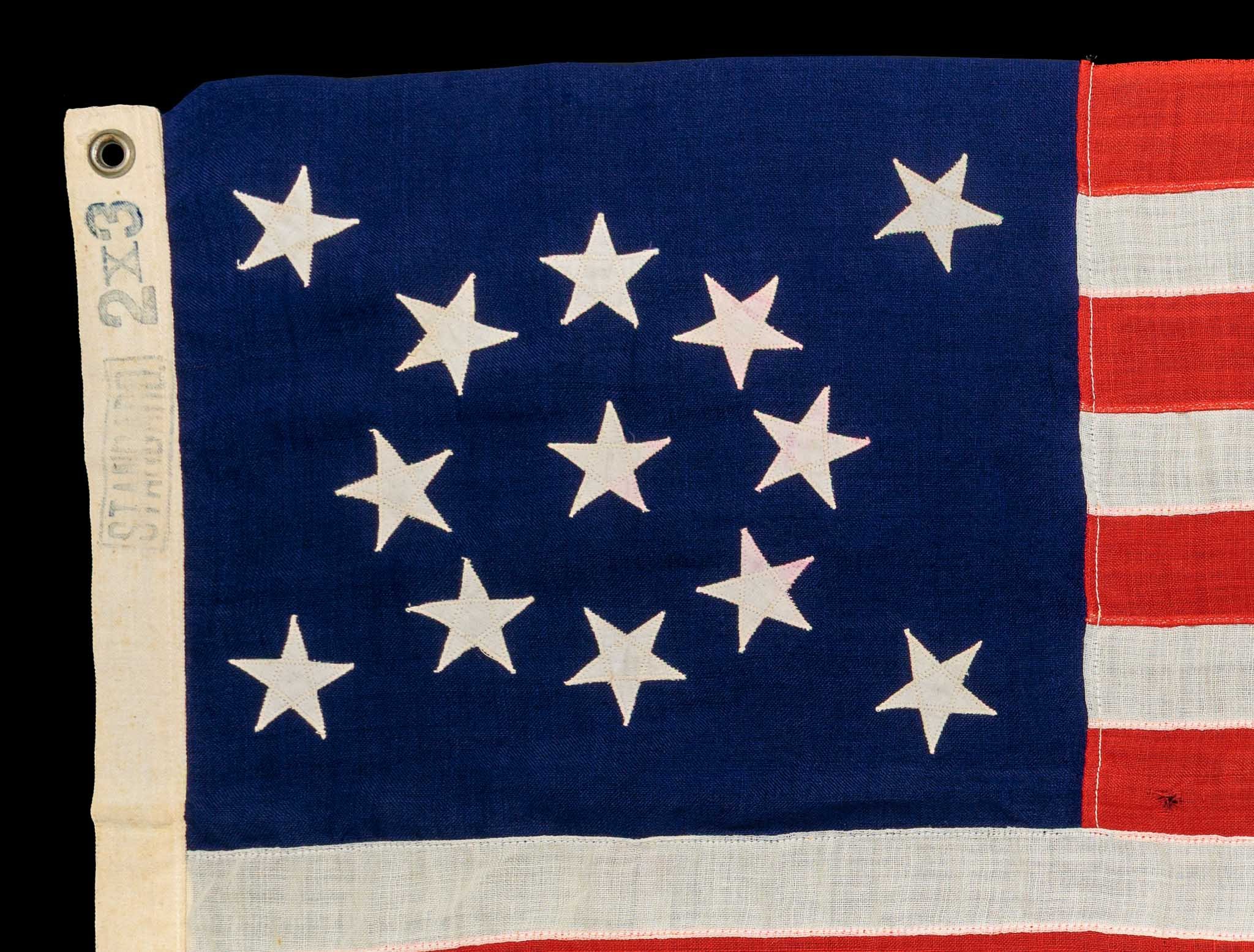
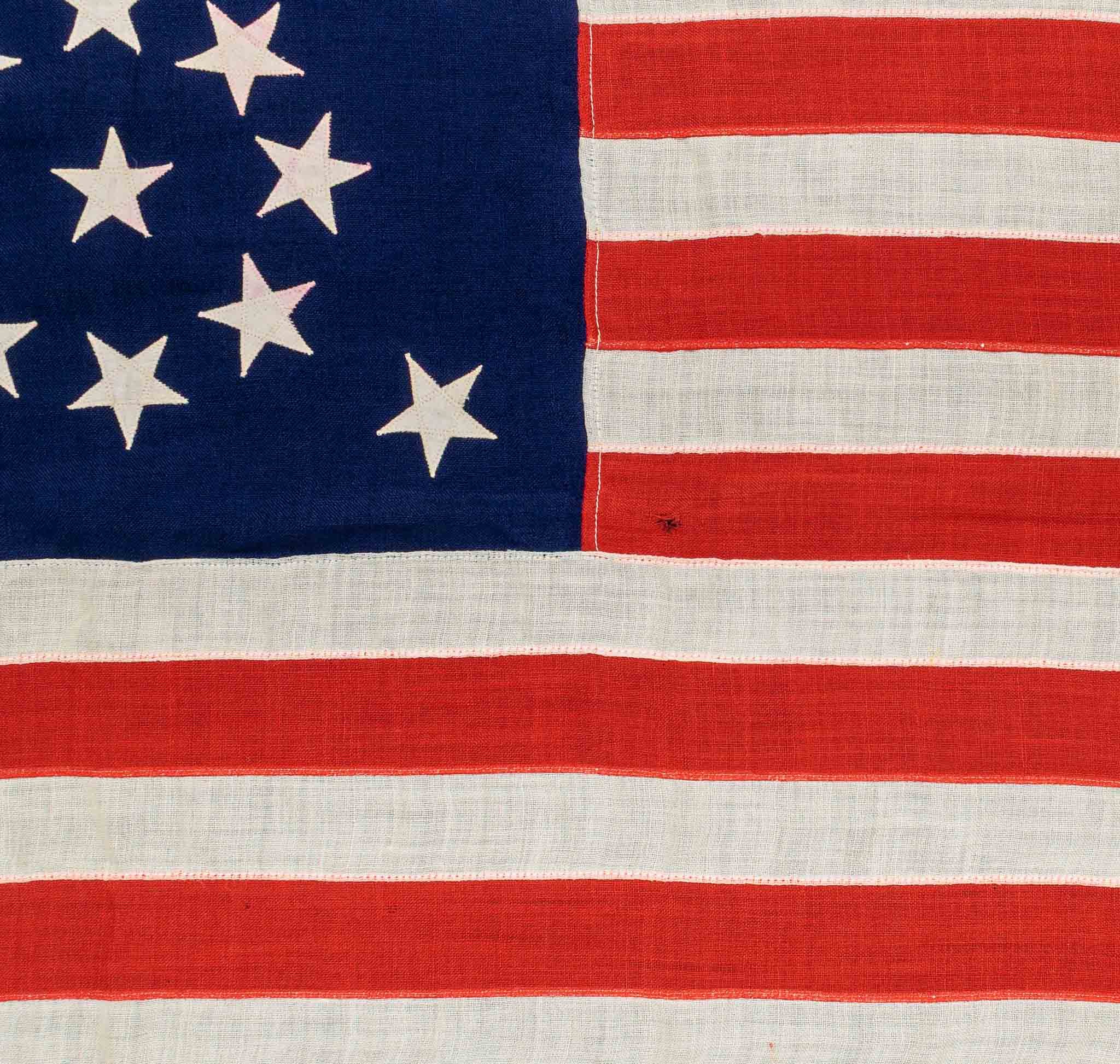
The stars are secured with a zig-zag machine stitch, a distinctive back-and-forth technique that provides meaningful chronological guidance. In August of 1889, Henry Bowman filed a patent application for a “method of making flags,” granted in February of 1892 as U.S. Patent No. 469,395. The patent specifically claimed the zig-zag stitch as applied to flag construction. As such, the 1889 filing date provides a reliable “not-earlier-than” reference point when this stitching is present. In practice, zig-zag stitching is most commonly encountered on flags produced from approximately 1895 through the early decades of the 20th century, whereas examples from the early 1890s more often display a linear treadle stitch.
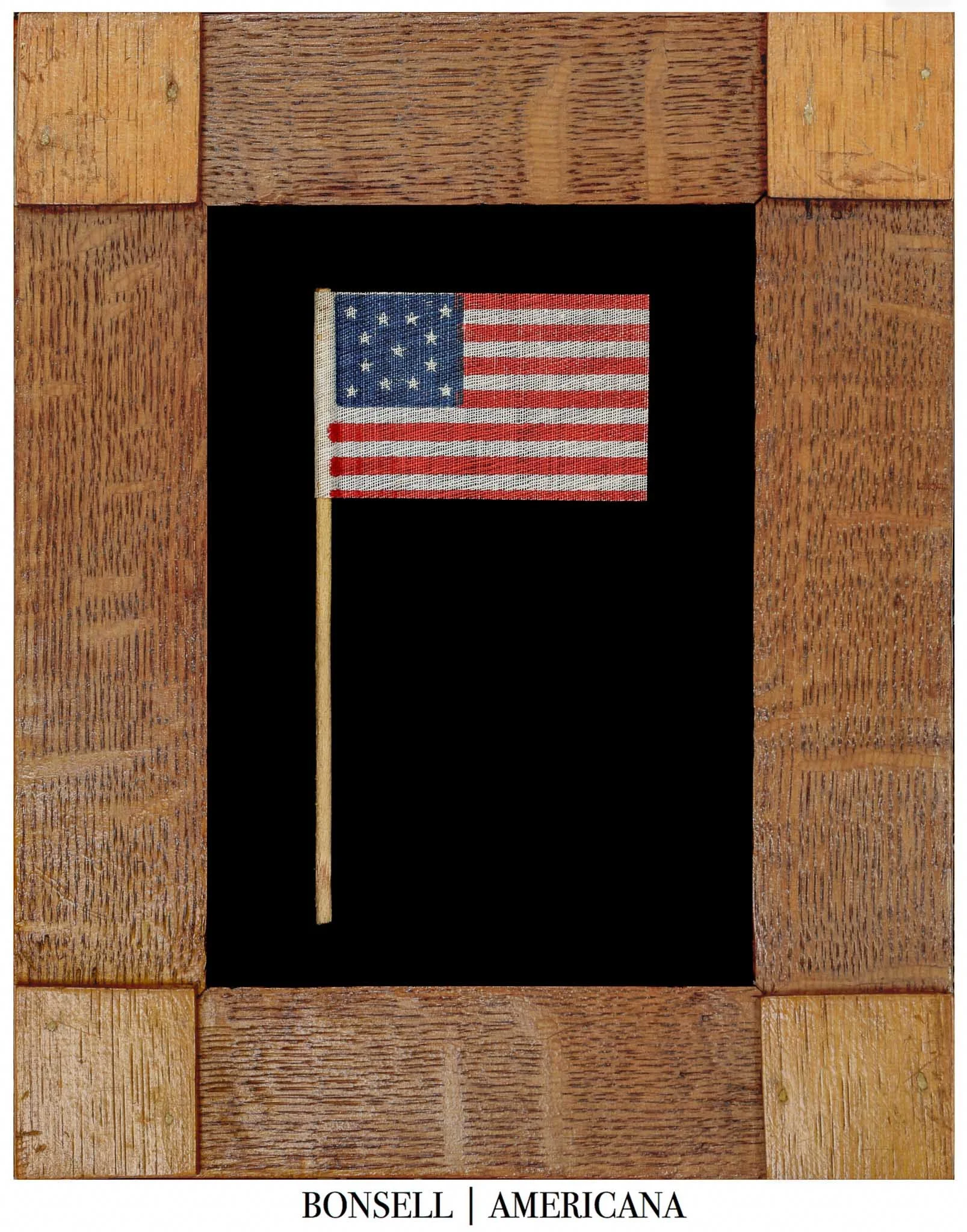
The canton displays a classic medallion configuration centered on a single star, surrounded by a wreath of eight stars forming an inner ring, with four additional stars placed in the corners to complete the thirteen. All stars are uniform in size, lending the arrangement a disciplined, balanced character. The corner stars visually anchor the composition, while the circular wreath establishes a strong radial rhythm around the center. The generous blue field between elements enhances legibility, allowing the medallion pattern to read with clarity even at a distance.
The hoist retains its original stencil reading “STANDARD 2 X 3.” “STANDARD” denotes standard-grade wool bunting, while “2 X 3” identifies the intended dimensions in feet. Flags of this scale were versatile and practical, well suited for small-boat use, civic display, fraternal organizations, and private patriotic presentation. The survival of the stencil reinforces the flag’s authenticity and firmly situates it within established late-19th- and early-20th-century commercial manufacturing practice.
The 13-star flag traces its origin to June 14, 1777, when the Continental Congress resolved: “That the flag of the United States be made of thirteen stripes, alternate red and white; that the union be thirteen stars, white in a blue field, representing a new constellation.”
Although the official star count increased in 1795, the 13-star configuration remained in continued and intentional use. Rather than disappearing, it evolved into a conscious emblem of the nation’s founding era. Throughout the 19th century, 13-star flags appeared at commemorations, anniversaries, and moments of heightened national identity. They were displayed during Lafayette’s celebrated return tour of 1824–1825, during the Mexican-American War, and prominently during the Civil War, when public exhibition of the national flag became widespread. The United States Navy continued to employ 13-star ensigns on small boats until 1916, reinforcing the design’s enduring official presence. Following the 1876 Centennial, Americans experienced renewed interest in Revolutionary symbolism, and manufacturers responded by producing 13-star flags as historical tributes.
Dating to approximately 1895–1920s based on its materials and stitching characteristics, this flag reflects the late-19th-century revival of the 13-star design. Its wool bunting construction, double-appliquéd cotton stars, Bowman-era zig-zag stitching, original brass grommets, and intact hoist stencil together define a strong and authentic medallion example from the period.
Conservation Process: This flag was hand sewn to silk organza, and both were hand sewn to cotton fabric. The silk organza provides a strong layer of protection and a professional appearance. The flag, the silk organza, and the cotton fabric were then hand sewn to a mounting board. To prevent the black dye in the cotton fabric from seeping into the flag, it was first washed in a standard wash and then in a dye setting wash. The flag is positioned behind Optium Museum Acrylic.
Frame: The frame is a deep-profile moulding with a simple, classical profile, finished in a dark cocoa-brown tone. Its broad face provides visual support without ornament, allowing the flag to remain the primary focus. The subdued finish is well suited to the display of nineteenth-century textiles.
Condition Report: The flag is in excellent overall condition. There are a handful of tiny holes consistent with light, honest period wear. Several of the cotton stars show very slight red dye bleed from adjacent stripes, a common occurrence in wool bunting examples of this era. The colors remain strong, and the fabric retains its structural integrity.
Collectability Level: The Great – Perfect for Rising Collectors
Date of Origin: 1895-1926
Number of Stars: 13
Associated War: Spanish-American War (1898)
Associated State: Original 13 Colonies