Outstanding "Make Ohio Dry" Prohibition Campaign Pennant | Issued by the State Central Committee of the County Dry Federations | Circa 1915
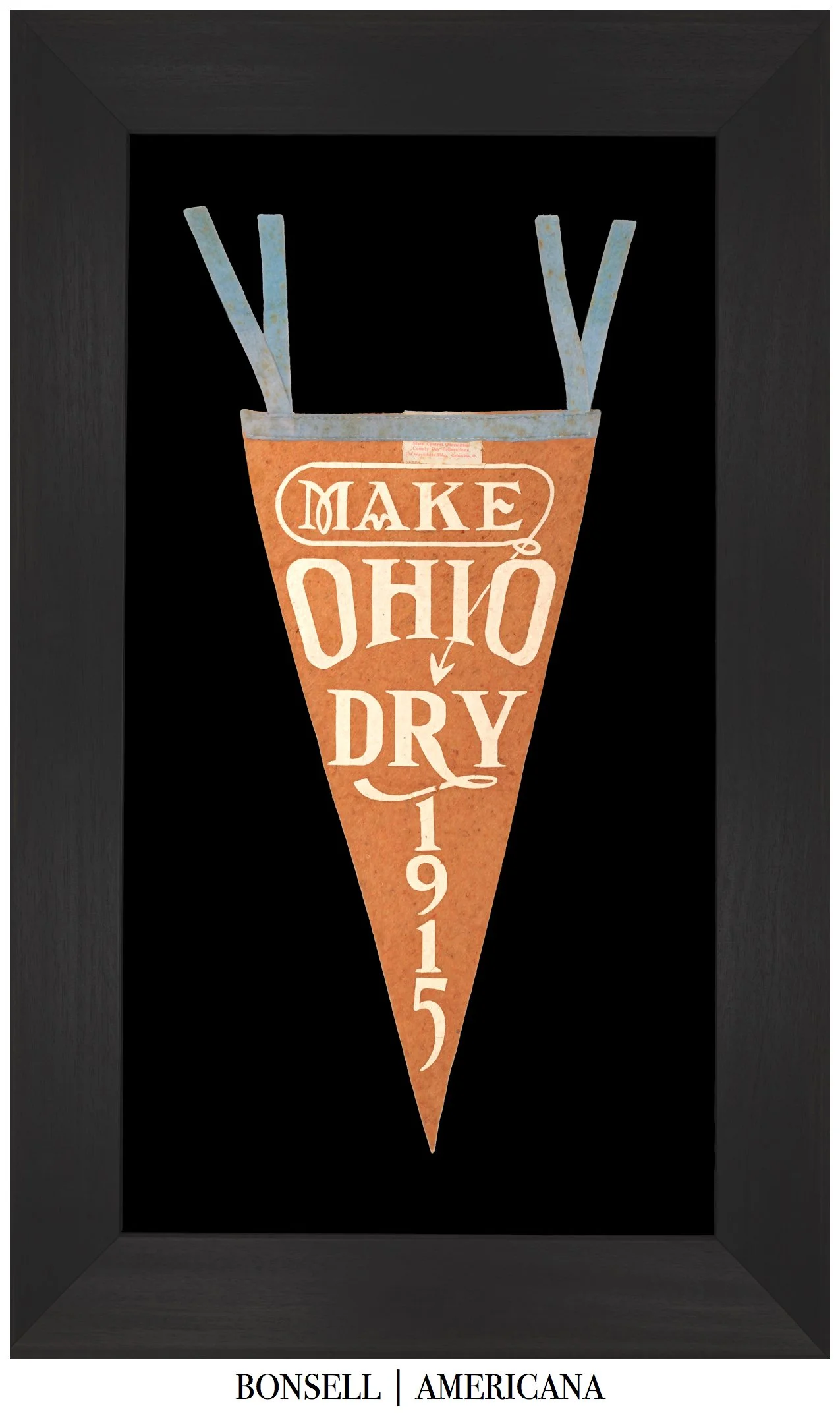
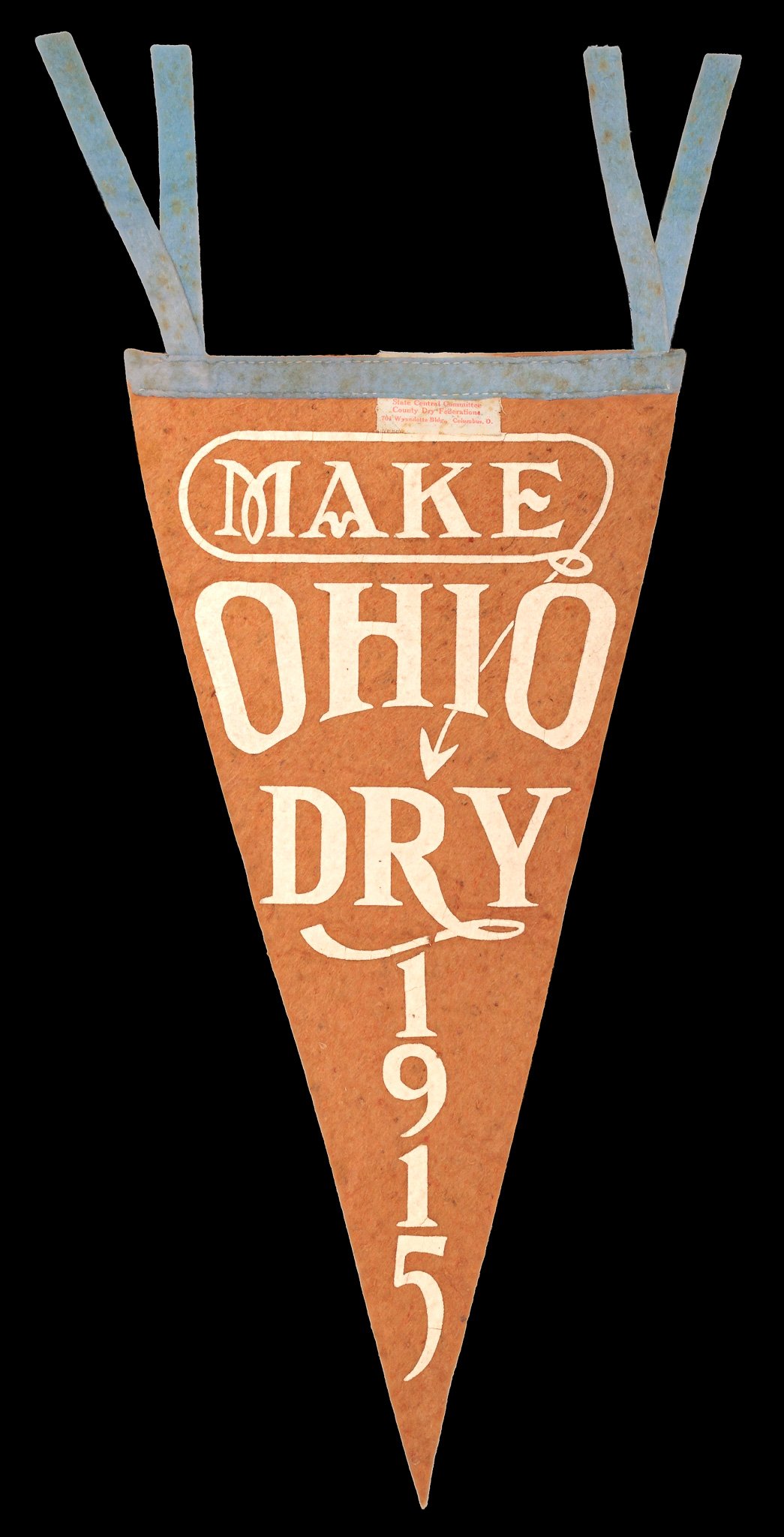
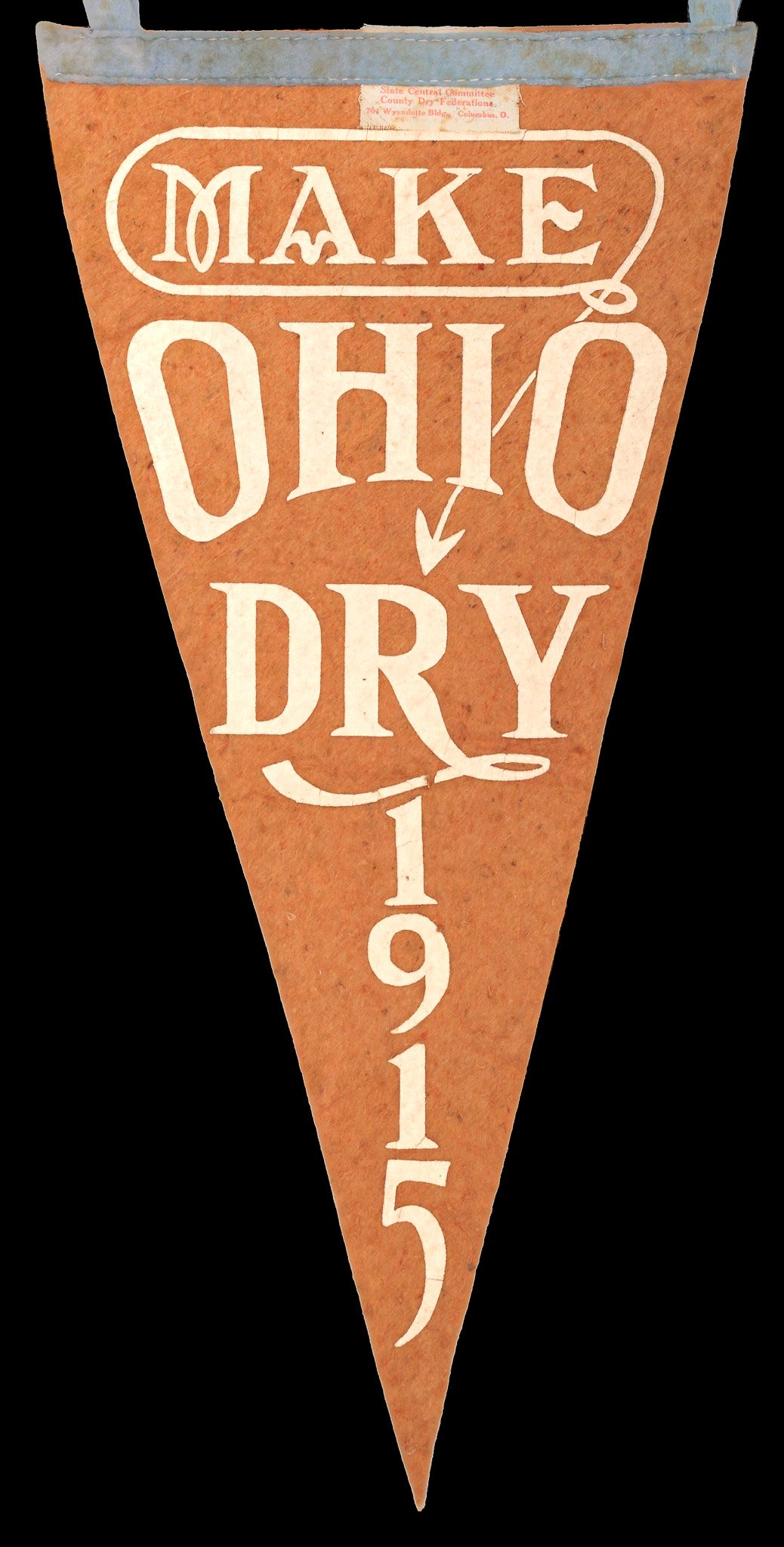
Outstanding "Make Ohio Dry" Prohibition Campaign Pennant | Issued by the State Central Committee of the County Dry Federations | Circa 1915
Price: Call 618-553-2291, or email info@bonsellamericana.com
Frame Size (H x L): 30.5” x 19”
Pennant Size (H x L): 17” x 8.25” with 4.75” ties
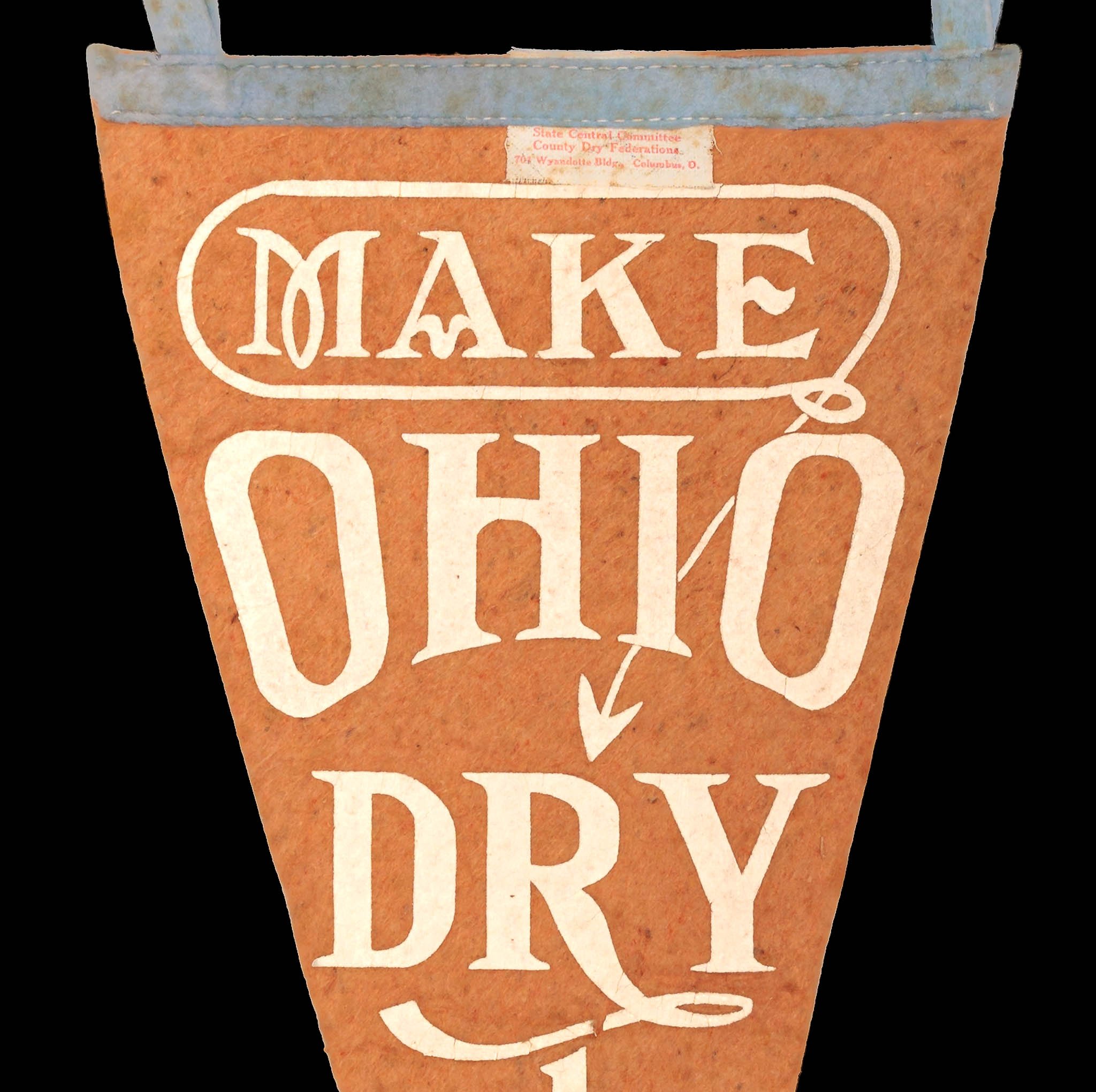
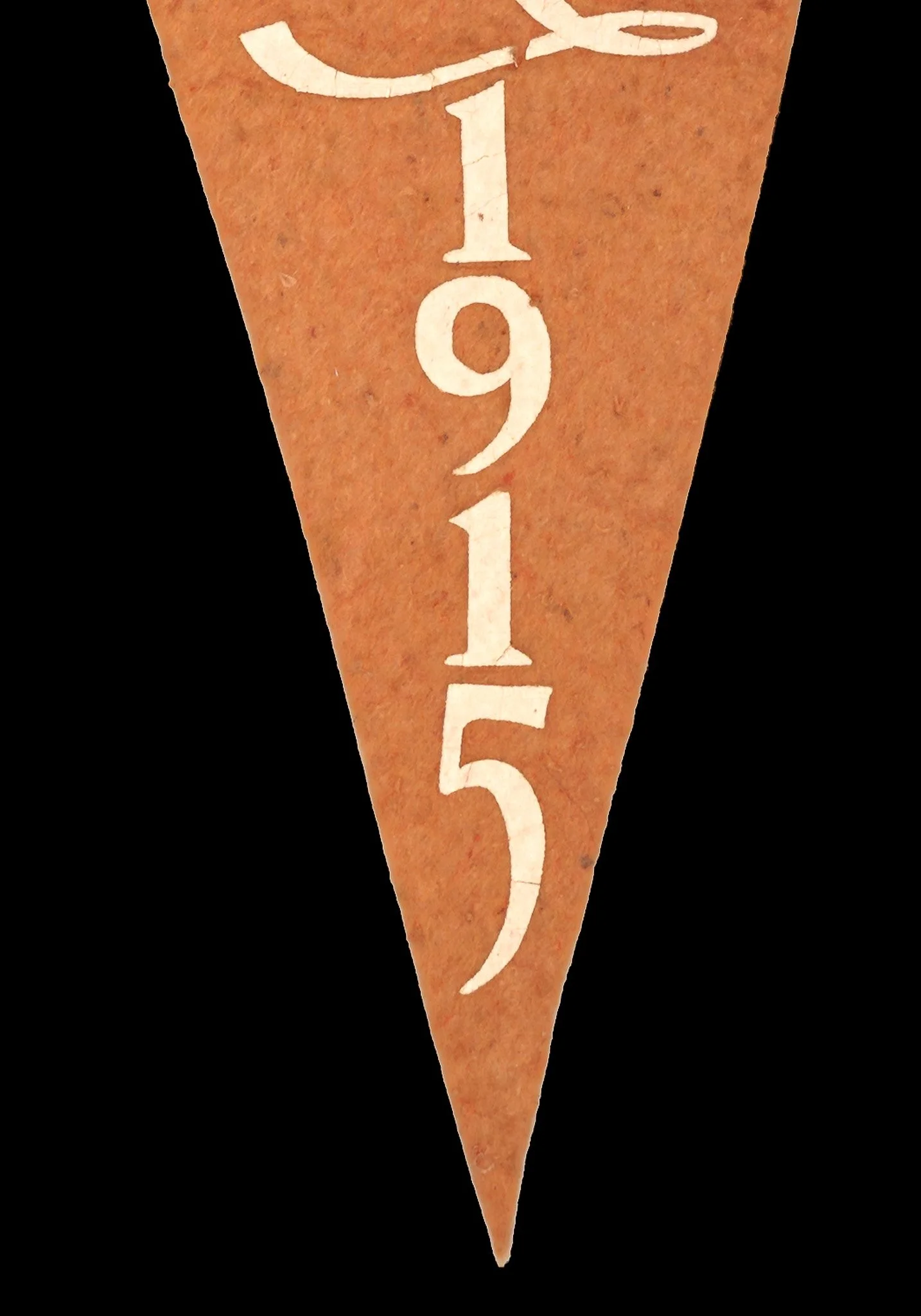
Offered is a rare political campaign pennant produced for Ohio's landmark 1915 statewide prohibition referendum, boldly printed "MAKE OHIO DRY 1915" in white lettering against an orange wool felt field. The pennant is of classic early twentieth-century construction, with a tapered felt body, stitched blue felt binding across the hoist, and matching blue felt ties designed for attachment to clothing, a vehicle, or display at rallies and public gatherings. Intended as a highly visible campaign accessory, it represents one of the more recognizable surviving slogans associated with Ohio's statewide prohibition movement.
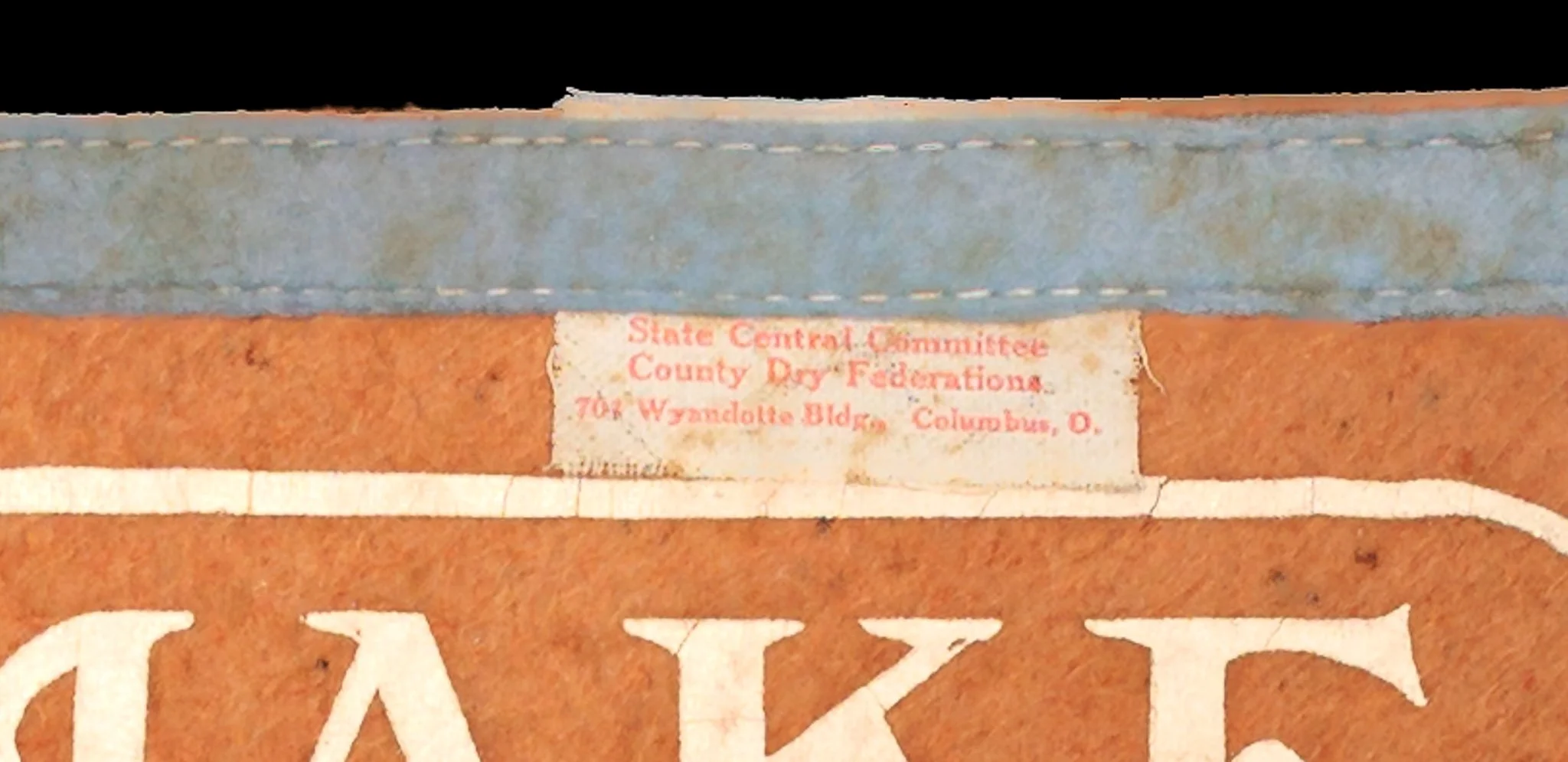
The pennant survives with two original identifying labels, an unusual and important feature that documents both the organization responsible for the campaign and the Columbus firm that produced or supplied the piece. Sewn beneath the blue felt binding on the front is a printed label reading:
State Central Committee
County Dry Federations
701 Wyandotte Bldg.
Columbus, O.
Rather than identifying a commercial maker, this label attributes the pennant to the statewide committee representing Ohio's network of County Dry Federations. Contemporary records confirm that county dry federations operated throughout Ohio during this period, bringing together churches, temperance organizations, civic leaders, and local supporters in a coordinated effort to secure statewide prohibition. While the Ohio Anti-Saloon League remained the movement's best-known organization, period publications demonstrate that the statewide campaign functioned as a broad coalition of cooperating groups rather than a single organization acting alone. The committee headquartered in Columbus coordinated these county organizations during the statewide referendum campaign of 1915.
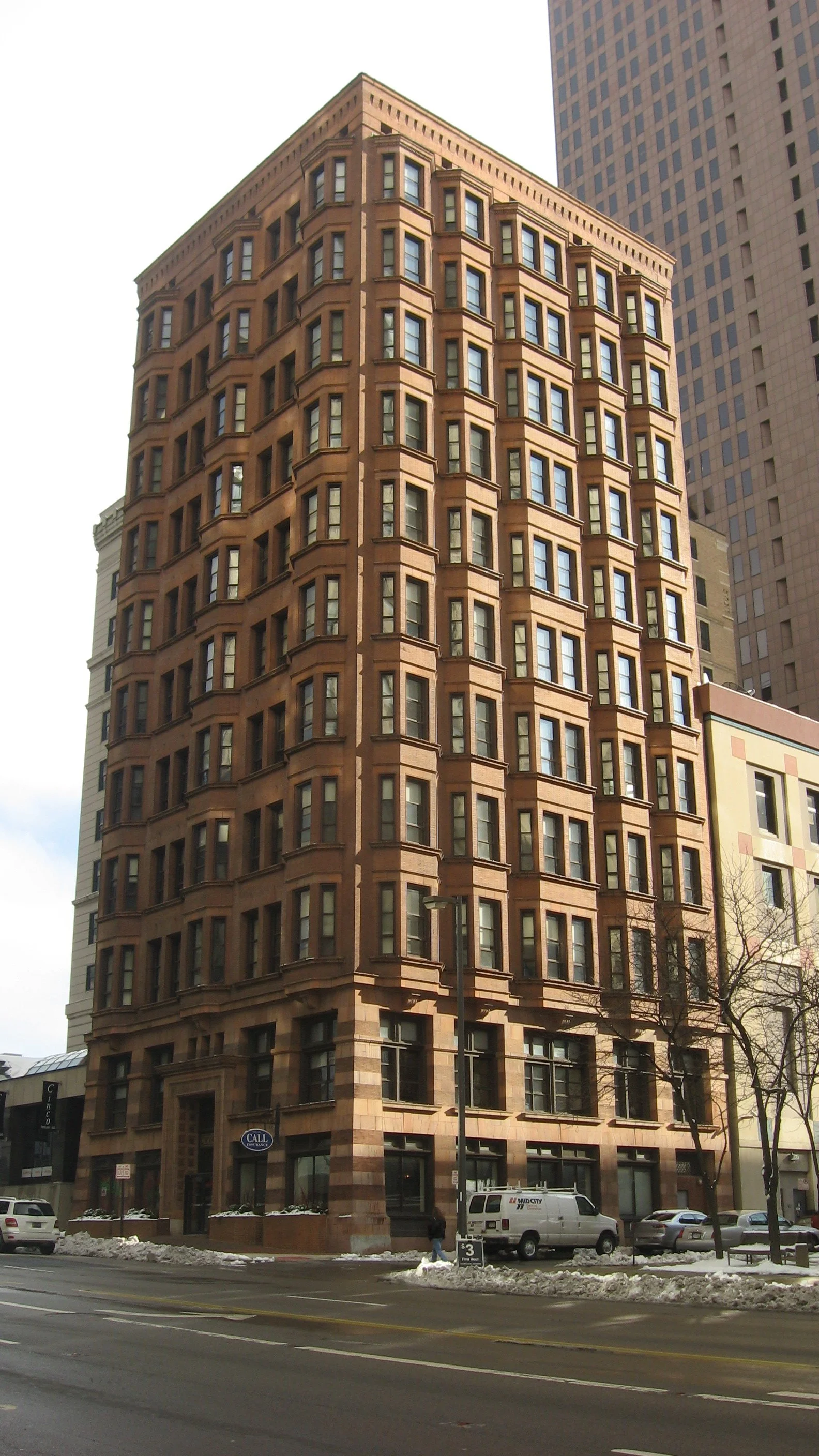
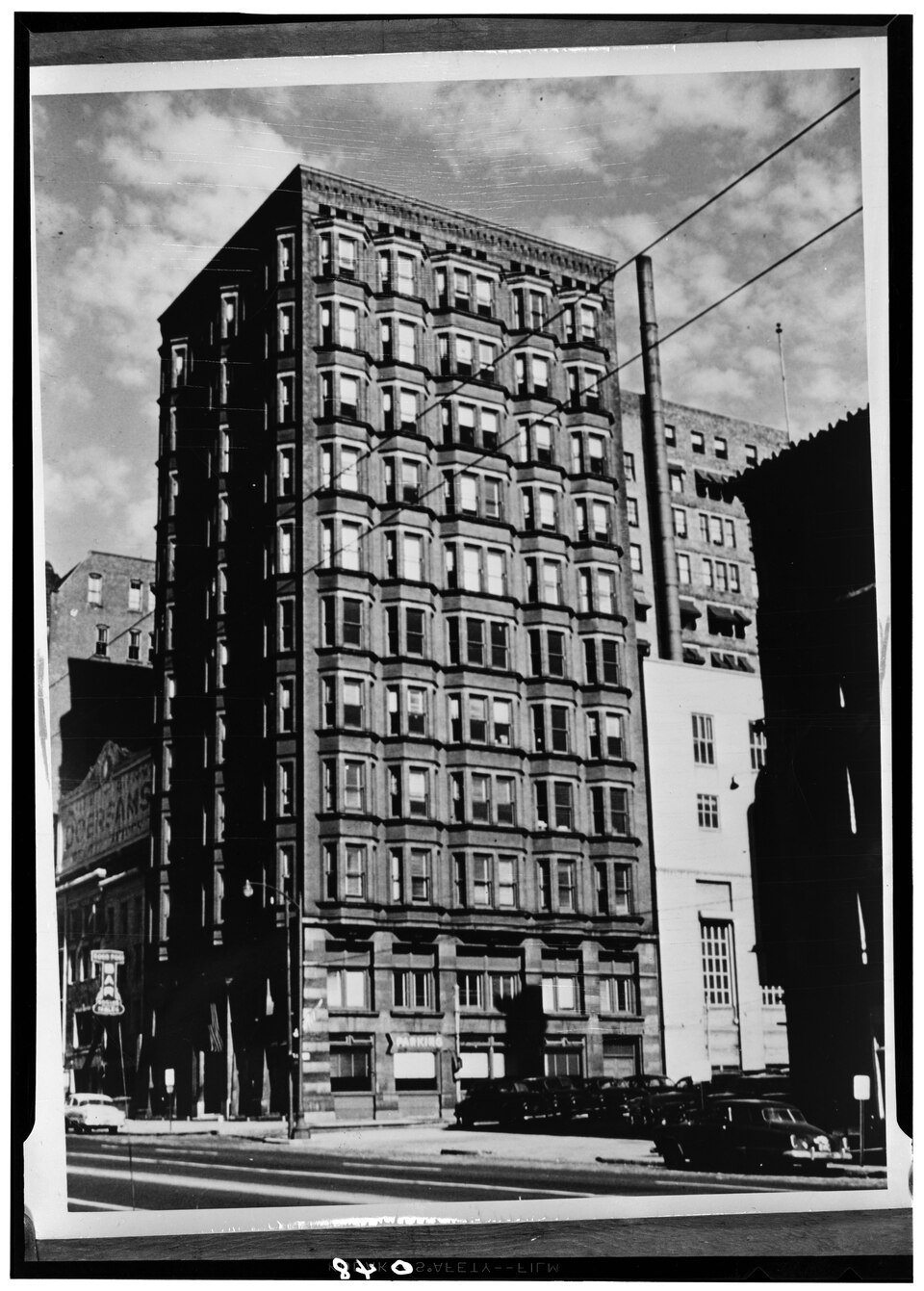
The Columbus address itself is noteworthy. The committee occupied offices in the Wyandotte Building, one of the city's most prominent commercial office buildings. Completed in 1898 and designed by Daniel Burnham & Company, the steel-frame structure was Columbus's first skyscraper and remained among the city's premier business addresses during the early twentieth century. Housing the campaign headquarters in the Wyandotte Building reflects the organized, professional character of the prohibition movement, which by 1915 had developed an extensive statewide administrative structure capable of coordinating thousands of local volunteers and supporters.
Equally important is the original label retained on the reverse, identifying:
Shipley & Company
Advertising Specialists
Columbus, Ohio
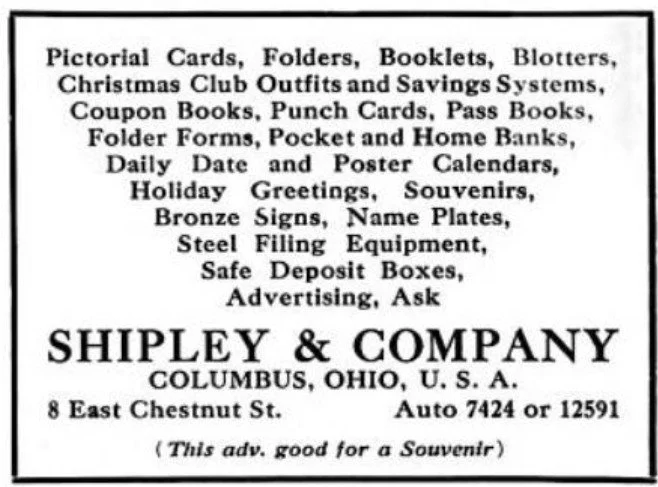
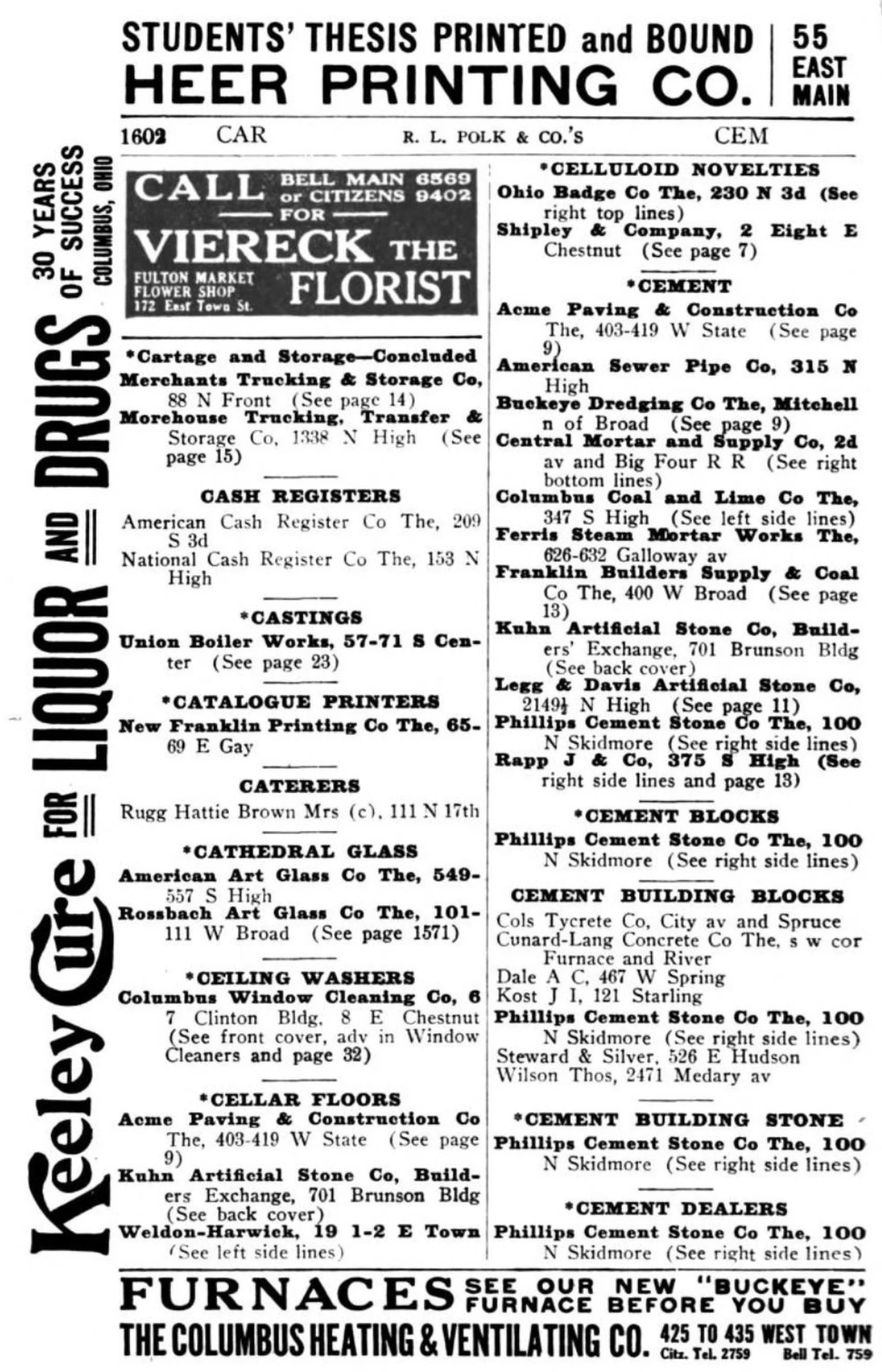
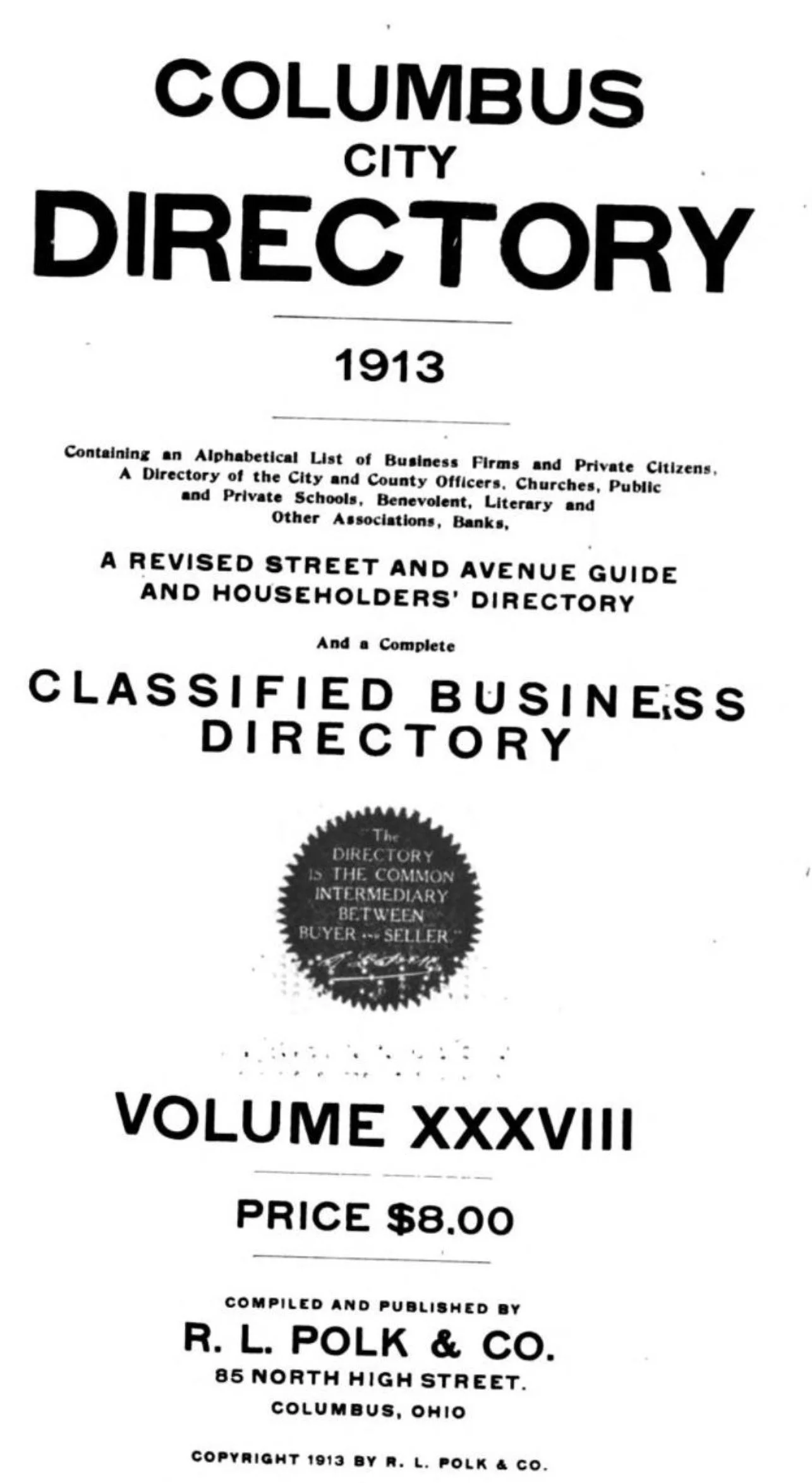
Contemporary Columbus city directories and period advertising establish Shipley & Company as one of the city's leading advertising specialty firms. The company supplied a remarkably broad range of custom promotional merchandise, including banners, badges, calendars, celluloid novelties, leather goods, metal souvenirs, and other advertising specialties produced for businesses, civic organizations, and political campaigns. Their own advertising promoted custom souvenirs among their principal offerings, making the firm a logical supplier for campaign material such as this pennant. The presence of both original labels provides an uncommon level of documentation, identifying not only the organization responsible for distributing the pennant but also the Columbus advertising firm that produced or supplied it.
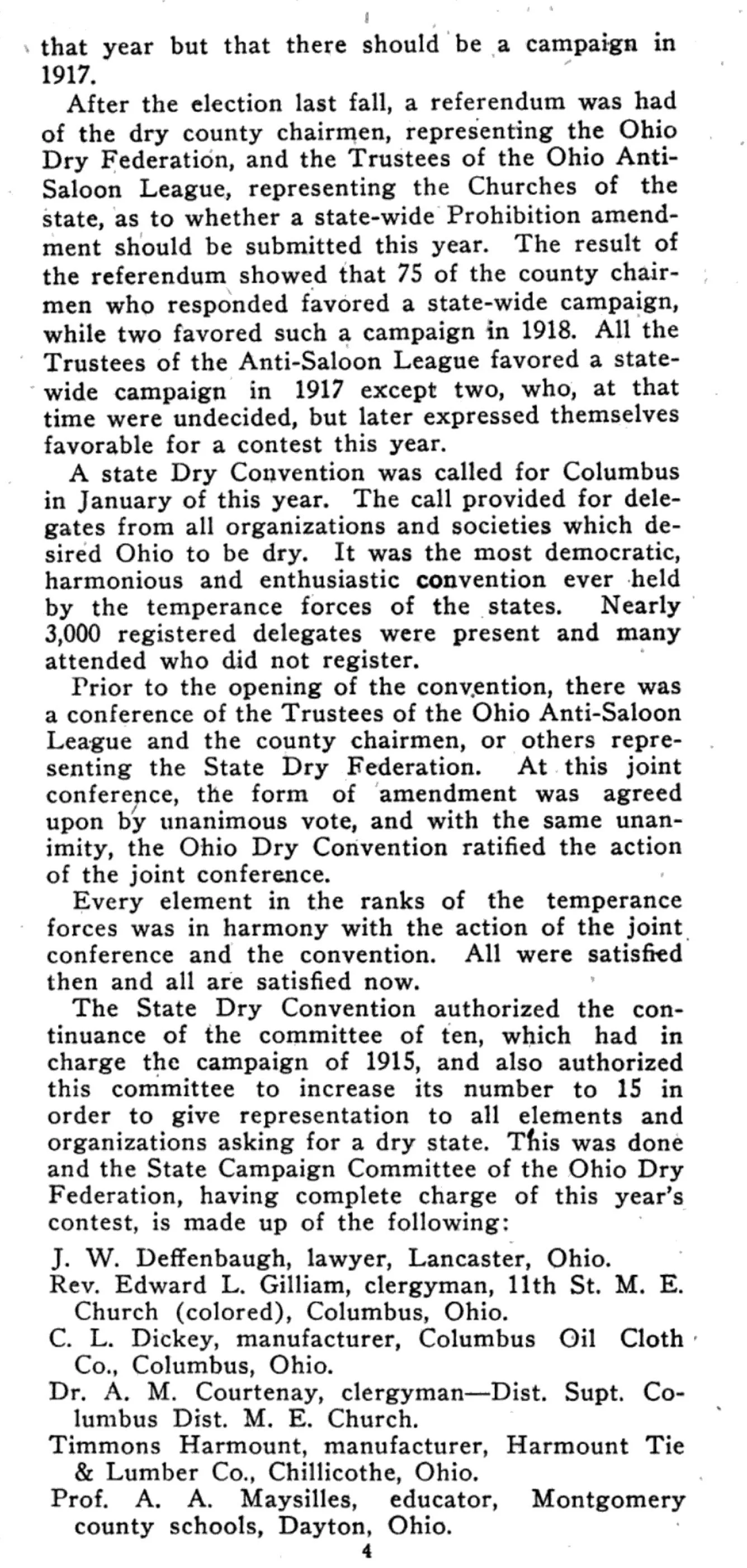
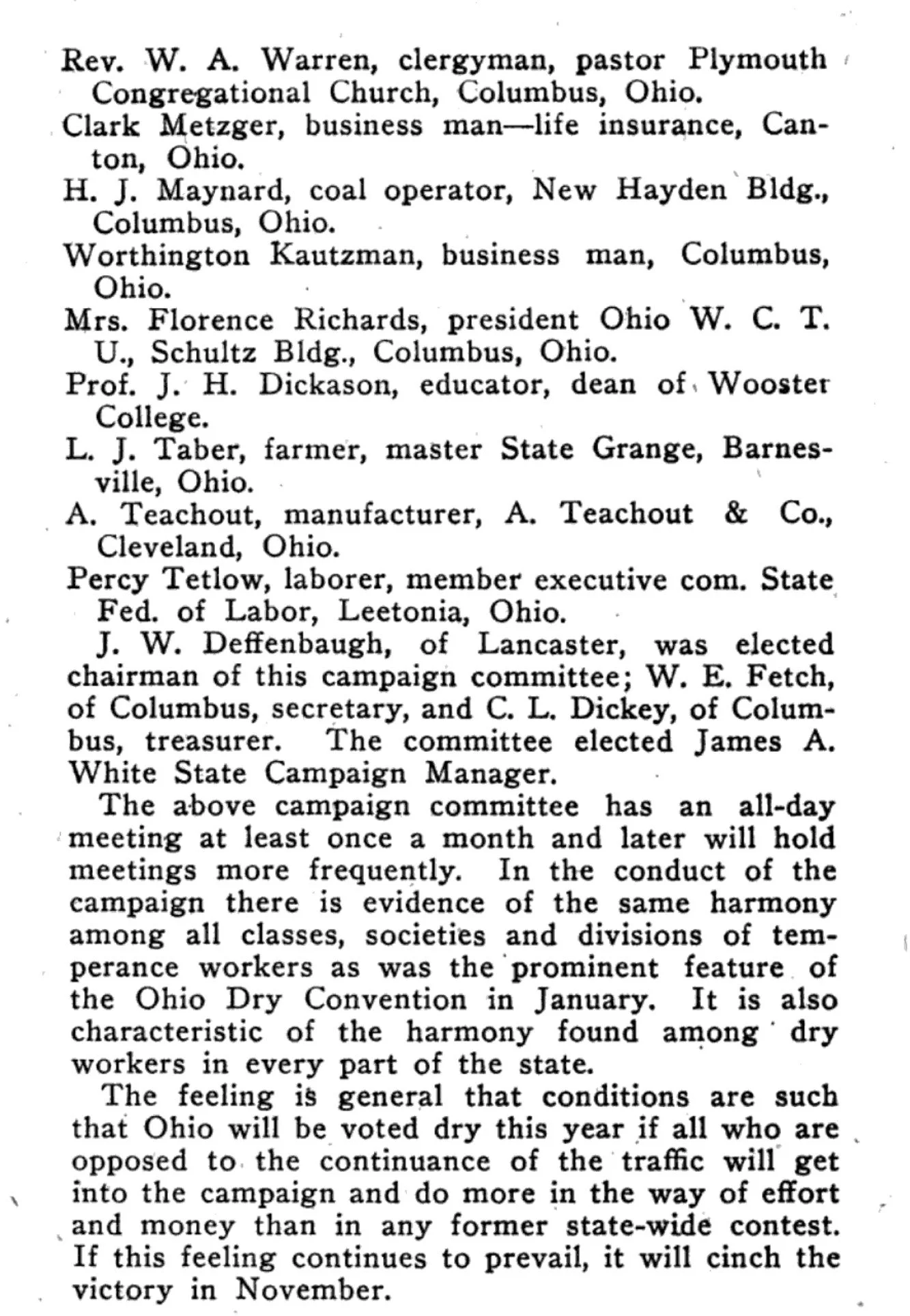
The campaign represented by this pennant sought to unite a diverse cross-section of Ohio society. Contemporary publications identify ministers, businessmen, educators, farmers, labor representatives, members of the Woman's Christian Temperance Union, and other civic leaders among those directing the statewide effort. One such figure was Worthington Kautzman of Columbus, a prominent businessman and former Adjutant General of Ohio, whose name appears in contemporary campaign literature associated with the movement. Rather than functioning as a narrow political organization, the campaign emphasized cooperation among the various "dry" organizations operating throughout the state, a theme repeatedly stressed in contemporary publications.
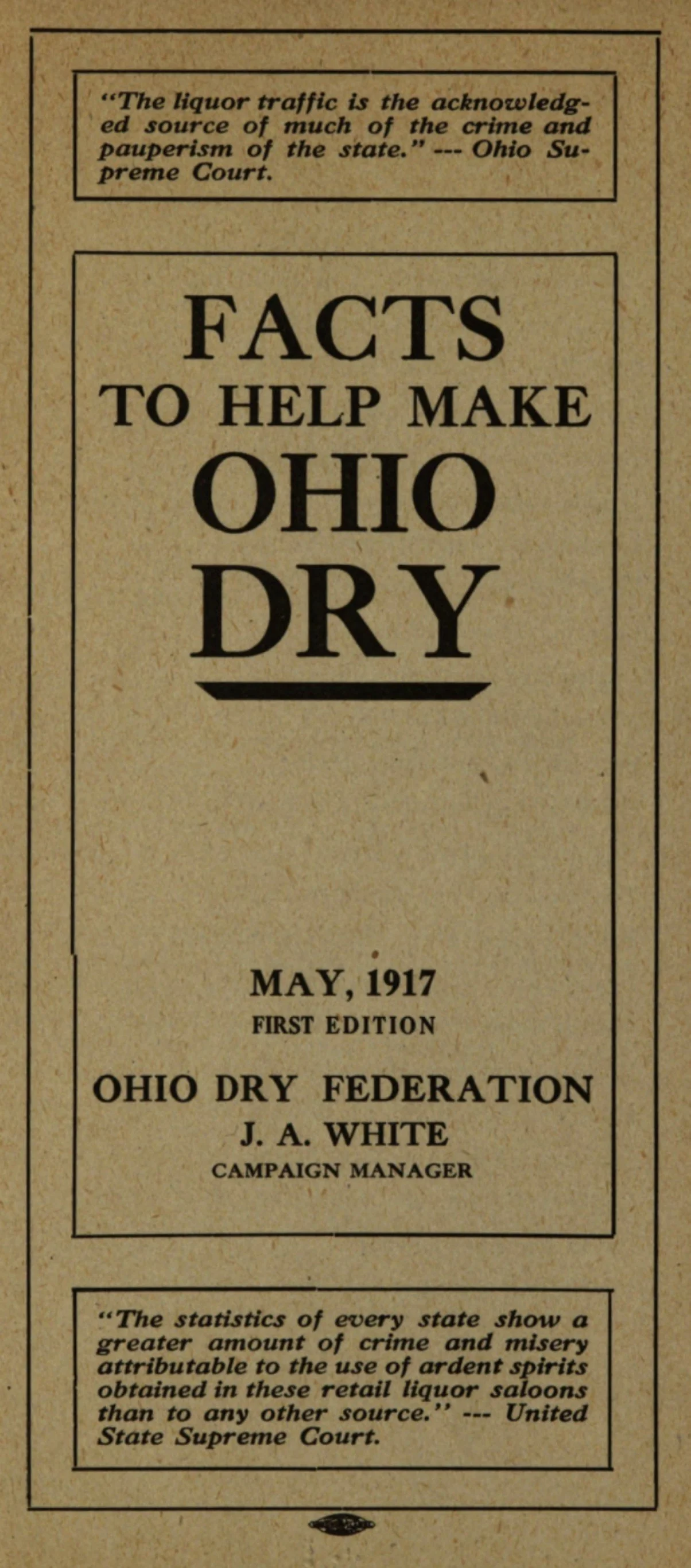
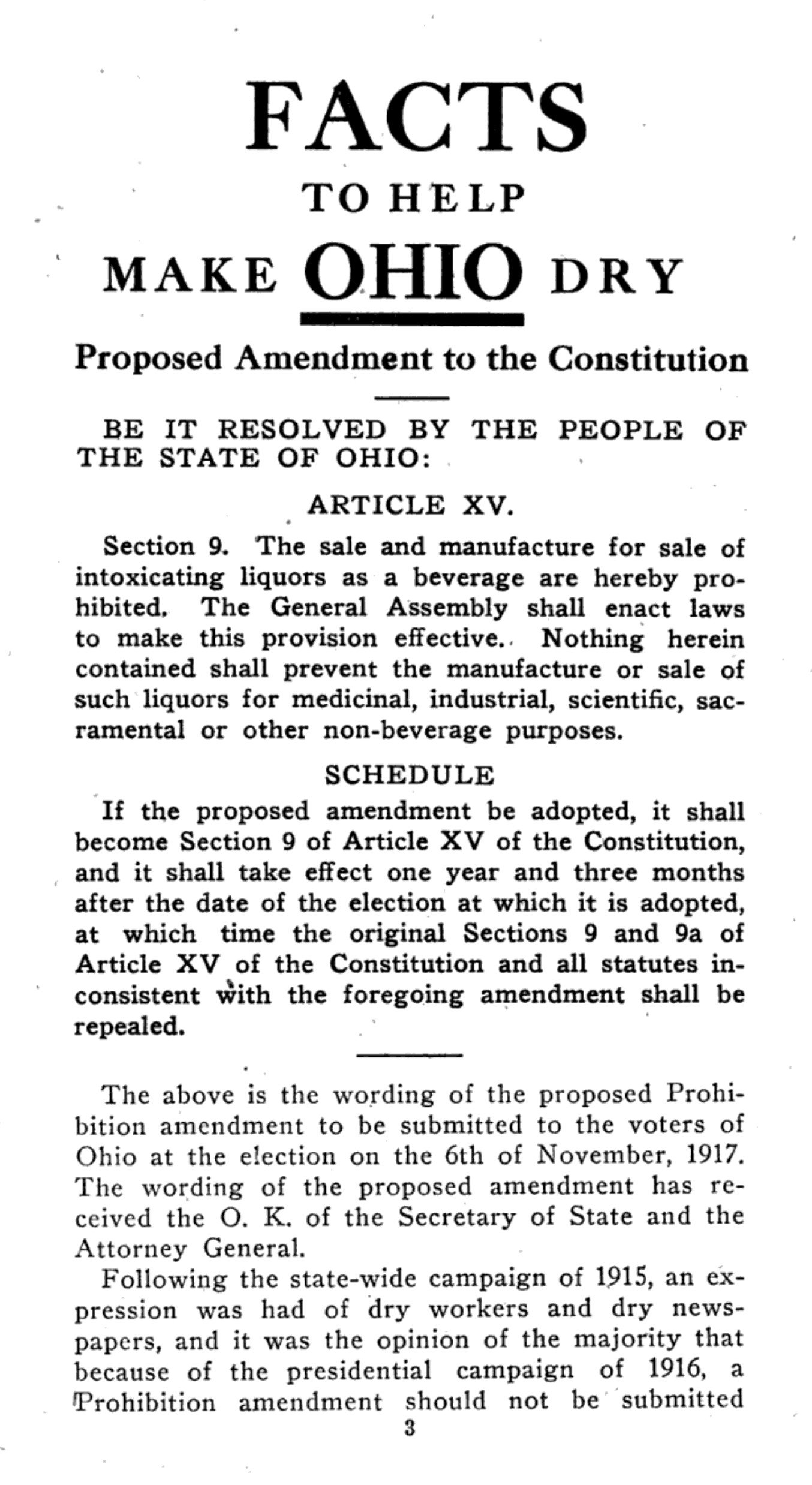
The significance of this pennant extends beyond the unsuccessful referendum of 1915. Although Ohio voters rejected the proposed constitutional amendment that November, the campaign itself did not end. Instead, the statewide organization remained intact, retaining the familiar "Make Ohio Dry" slogan and continuing under campaign manager James A. White. Publications issued by the Ohio Dry Federation in 1917 demonstrate the direct continuation of the movement, describing the cooperation between county chairmen, the Ohio Dry Federation, and the Ohio Anti-Saloon League as they prepared a renewed statewide campaign. That effort proved successful. In November 1918, Ohio voters approved statewide prohibition legislation, making Ohio a dry state months before national prohibition took effect. The following January, Ohio became one of the states to ratify the Eighteenth Amendment to the United States Constitution, helping secure the national prohibition of intoxicating liquor, which went into effect on January 17, 1920.
As a result, this pennant represents more than a souvenir of a single political campaign. It is an artifact from the opening phase of the movement that ultimately transformed Ohio law and contributed directly to one of the most significant constitutional changes in American history. Political textiles documenting statewide reform campaigns are encountered far less frequently than those associated with presidential elections, and examples retaining original organizational and maker's labels are rarer still. Combining bold graphic appeal with exceptional historical documentation, this is an outstanding surviving example from Ohio's determined campaign to "Make Ohio Dry."
Conservation Process: This pennant was hand sewn to cotton fabric, and both were hand sewn to a mounting board. To prevent the black dye in the cotton fabric from seeping into the pennant, it was first washed in a standard wash and then in a dye setting wash. The pennant is positioned behind Optium Museum Acrylic.
Frame: The pennant has been presented in an Italian molding with a broad, flat profile and a satin black finish. Crisp, clean lines and gently beveled inner and outer edges lend the frame a refined, understated appearance that complements the textile without competing for attention.
Condition Report: There is modest, expected wear from age and use, accompanied by scattered soiling and oxidation throughout the felt, particularly along the blue binding and ties. Minor age-related crazing is present in the printed white lettering, with light surface wear elsewhere, while the original organizational label remains intact. Despite this honest wear, the pennant retains outstanding visual impact and displays exceptionally well.
Collectability Level: The Great – Perfect for Rising Collectors
Date of Origin: 1915