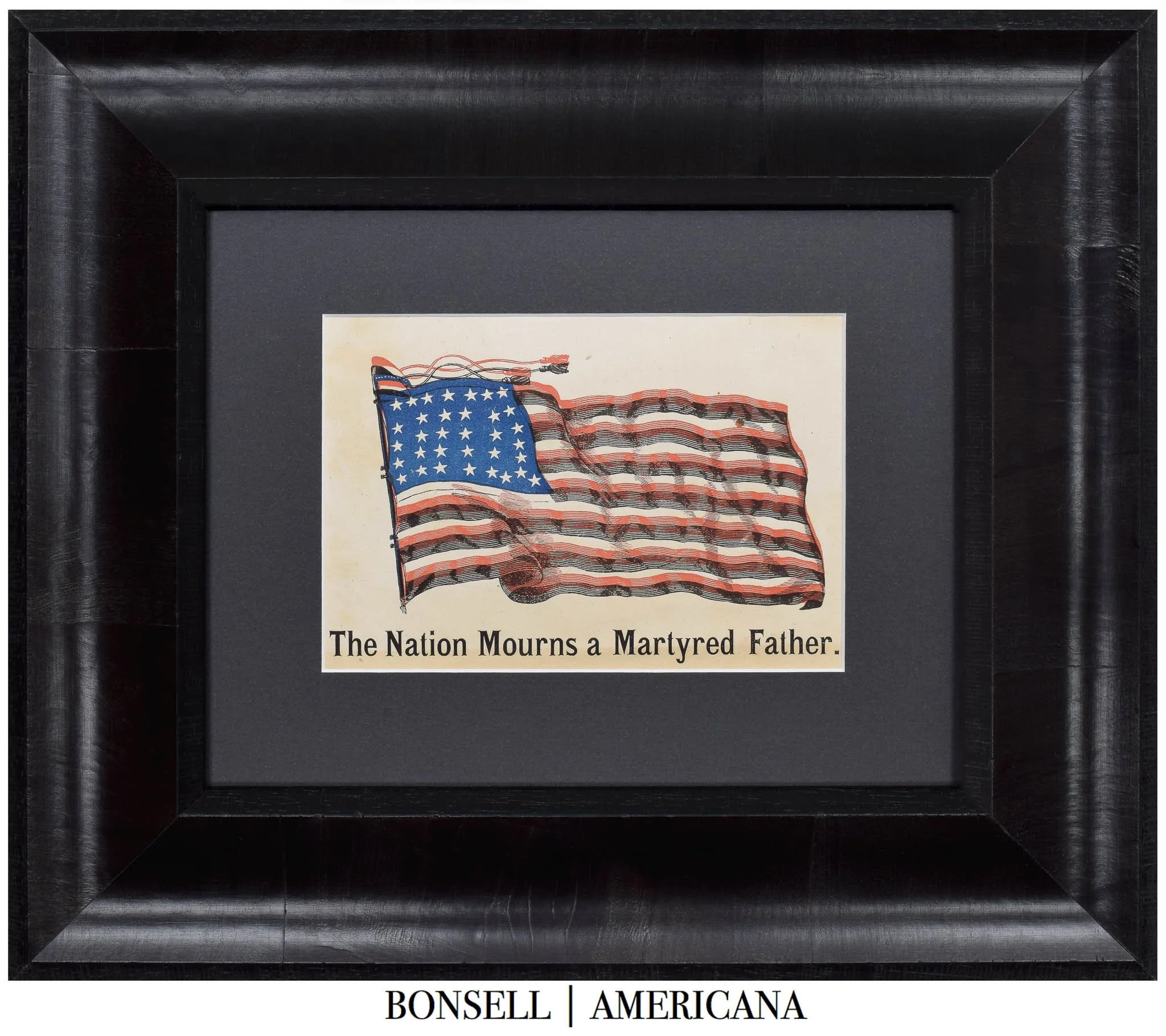
Rare 13 Star Antique Parade Flag | Attractive Medallion Star Pattern | Circa 1876


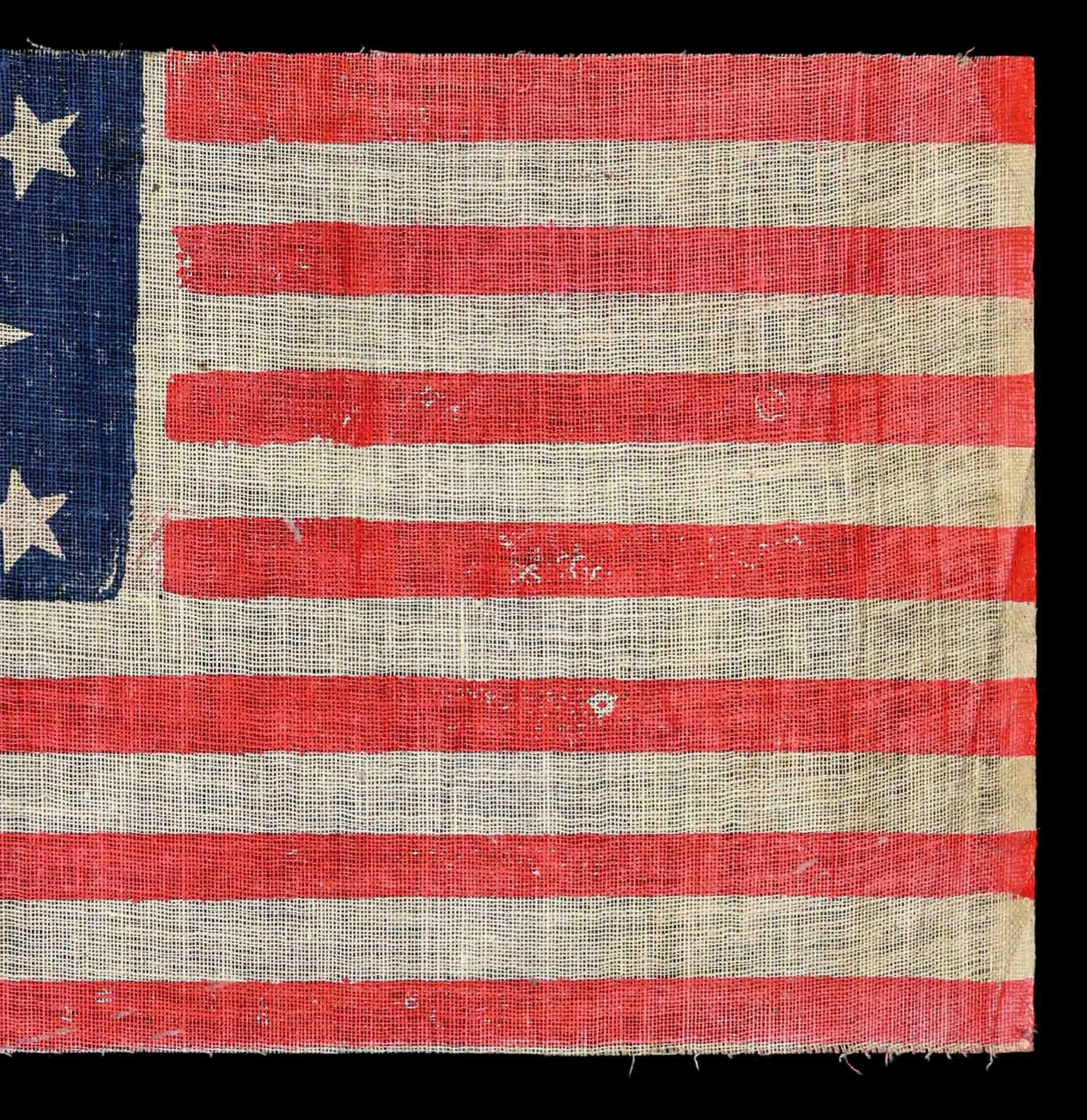
Rare 13 Star Antique Parade Flag | Attractive Medallion Star Pattern | Circa 1876
Frame Size (H x L): 15.25” x 14.5”
Flag Size (H x L): 6” x 9”
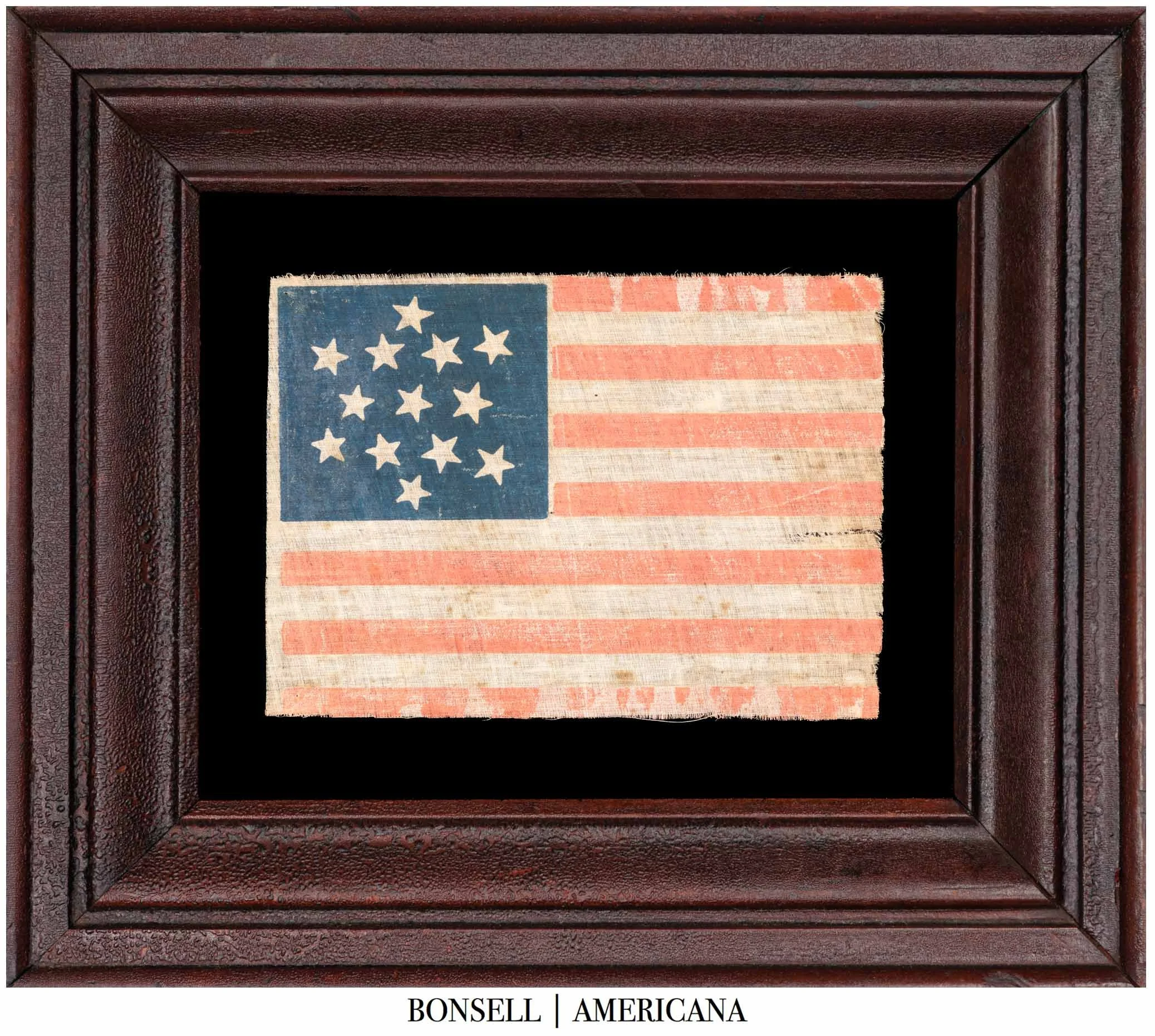
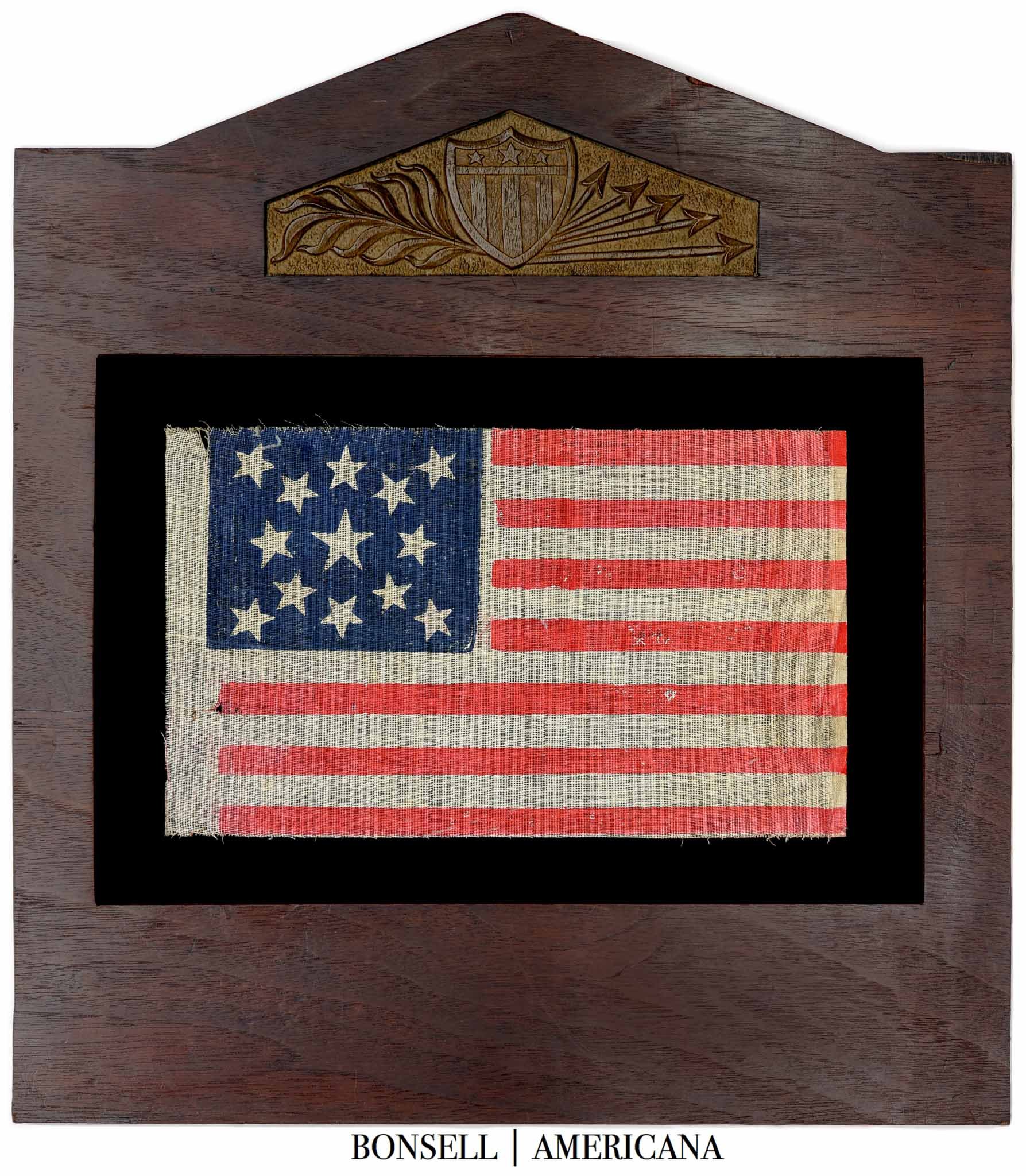
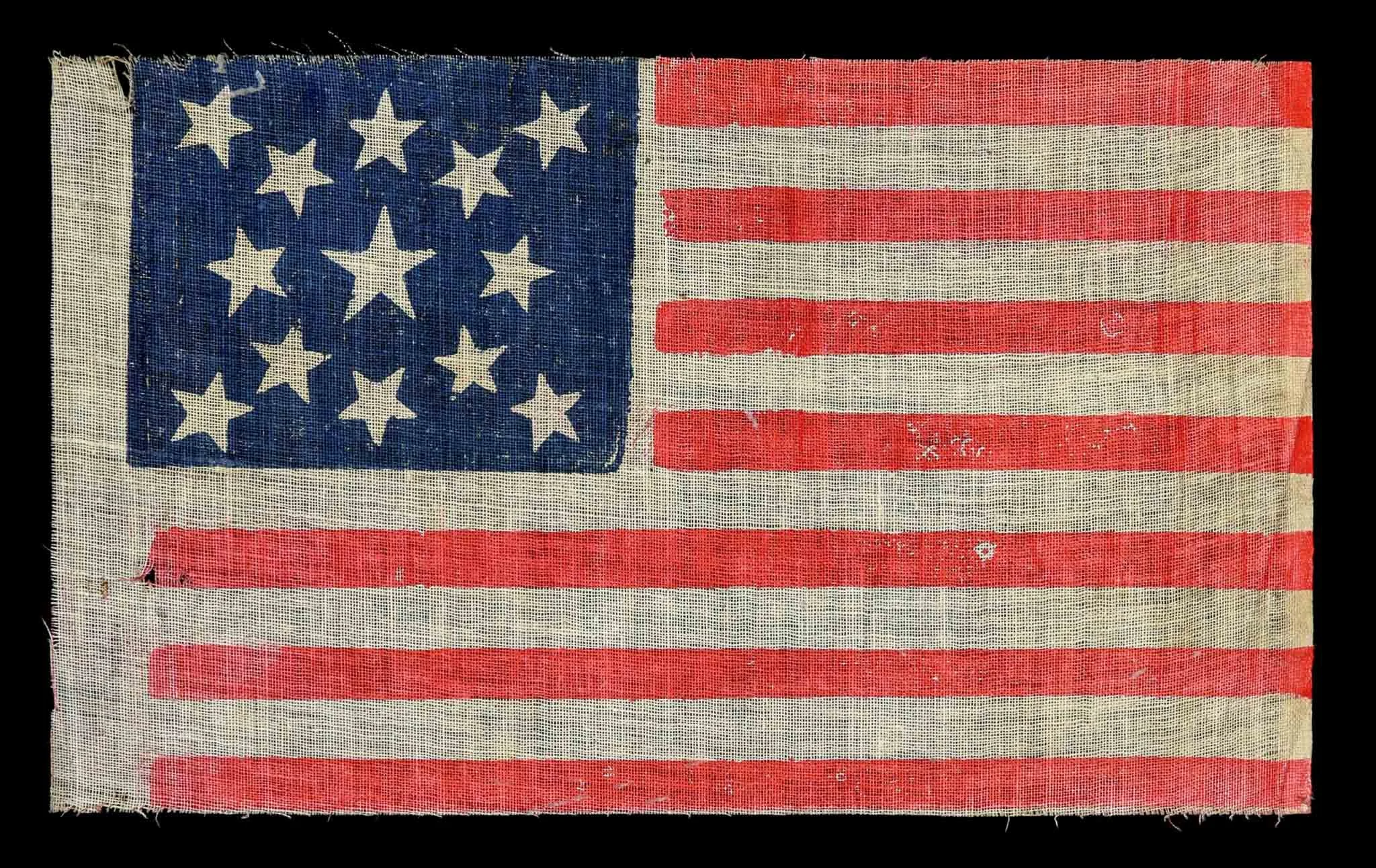
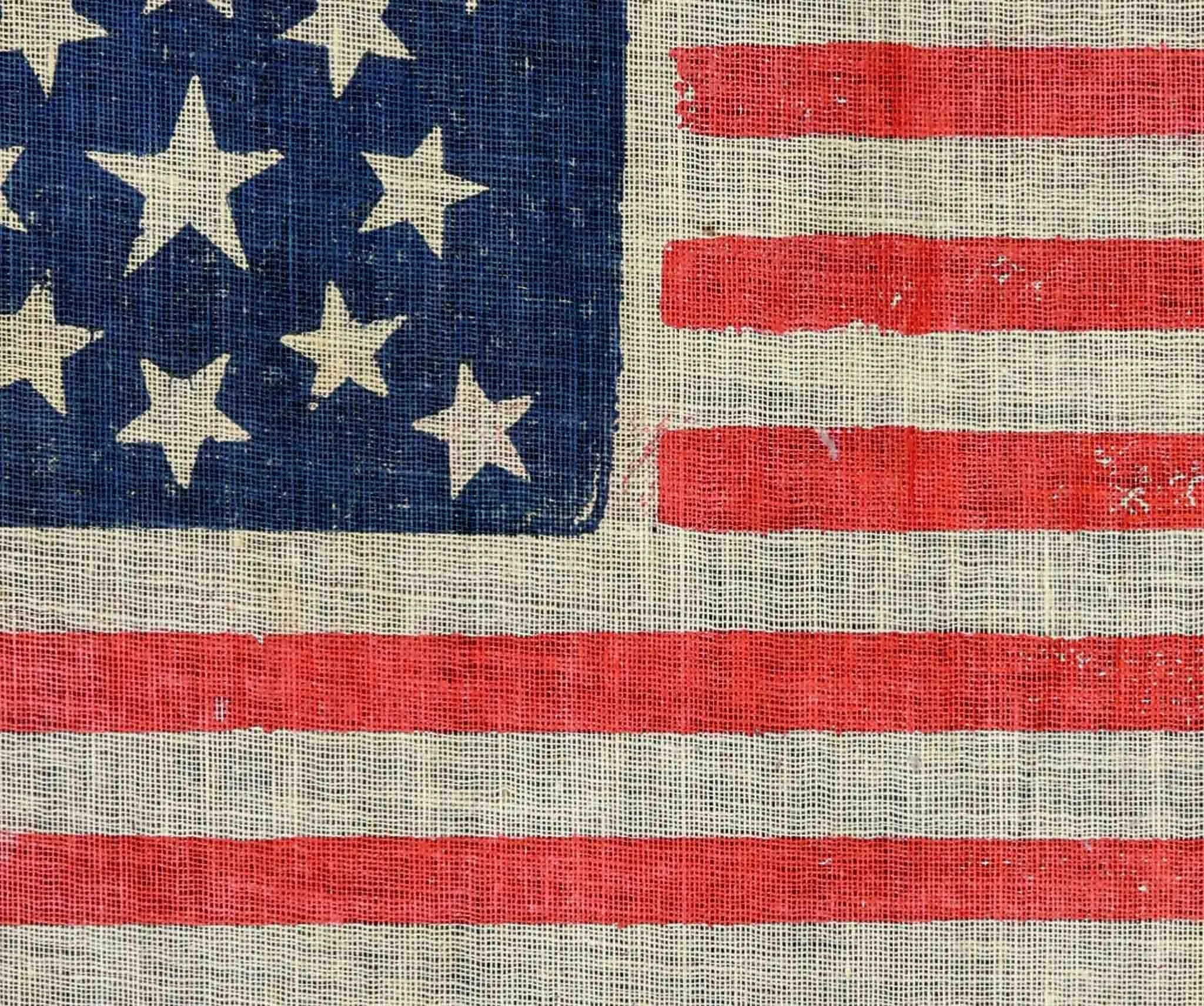
Offered is a 13-star American flag, printed on glazed cotton, that displays a bold and distinctly folk-like character. The canton features thirteen white stars arranged in a medallion pattern, with a large center star encircled by a ring of eight and complemented by one in each corner. The stars vary slightly in proportion and spacing, underscoring the hand-rendered quality of the design despite its printed manufacture. The stripes, rendered in alternating red and white, extend the full length of the flag, with areas of uneven inking and light wear. The glazed finish lends a subtle sheen, and the fabric presents a strong yet time-softened appearance typical of the period.
While the size of this flag may initially appear to be small, it is in fact an unusually large and rare size for the era. The most typical printed parade flags produced for the Centennial measured just 2" x 3", whereas the example offered here measures 6" x 9"—approximately three times larger than the common variety.
The nation’s Centennial in 1876 sparked widespread patriotism and served to reunite citizens in the decade following the Civil War. Communities across the country organized parades and public events, and homes and buildings were decorated with red, white, and blue. The largest celebration was the Centennial International Exposition in Philadelphia, which welcomed nearly ten million visitors over six months and introduced groundbreaking innovations such as the Corliss Steam Engine and Alexander Graham Bell’s telephone.
During the Centennial year, President Ulysses S. Grant signed the proclamation admitting Colorado as the 38th state. The official star count remained 37, but flag makers often produced 38-star flags in anticipation of Colorado’s addition. Thirteen-star flags also appeared widely, chosen for their historical connection to the nation’s origins. This echoed the original 1777 resolution of the Continental Congress, which specified a flag with thirteen stripes and thirteen stars to represent the new union.
Although officially replaced in 1795, 13-star flags remained in use for special occasions. They flew on small U.S. Navy boats until 1916, at George Washington’s death in 1799, and during the nation’s 50th anniversary in 1824, when they were displayed to honor General Lafayette’s return tour. They were also used during the Mexican War of 1846–48 and during the Civil War of 1861–65, both periods when patriotism encouraged the display of historical emblems. Their presence in the Centennial celebrations reinforced a direct link to the Revolutionary era and to the ideals on which the nation was founded. This 6" x 9" example reflects that tradition in both form and symbolism.
Conservation Process: The flag was hand sewn to cotton fabric, and both were hand sewn to a mounting board. To prevent the black dye in the cotton fabric from seeping into the flag, it was first washed in a standard wash and then in a dye setting wash. The flag is positioned behind Optium Museum Acrylic.
Frame: The flag is housed in a dark-stained wooden frame with a peaked crest, giving it an architectural form. At the top is a carved patriotic motif featuring a federal shield flanked by stylized rays and foliate elements, reinforcing its American theme. The frame shows some age and wear, consistent with an early 20th-century origin, and was chosen to complement the historic character of the flag while emphasizing its patriotic symbolism.
Condition Report: The flag shows moderate wear consistent with its age, including light fraying along the fly end and minor tears at the upper-left corner. The printed colors have softened over time, with scattered areas of fading and uneven inking visible in both the canton and the stripes. Overall, the flag remains strong and displays well, with condition that is very attractive for a Centennial-era printed example.
Collectability Level: The Great – Perfect for Rising Collectors
Date of Origin: 1876
Number of Stars: 13
Associated War: The Indian Wars (1860-1890)
Associated State: Original 13 Colonies