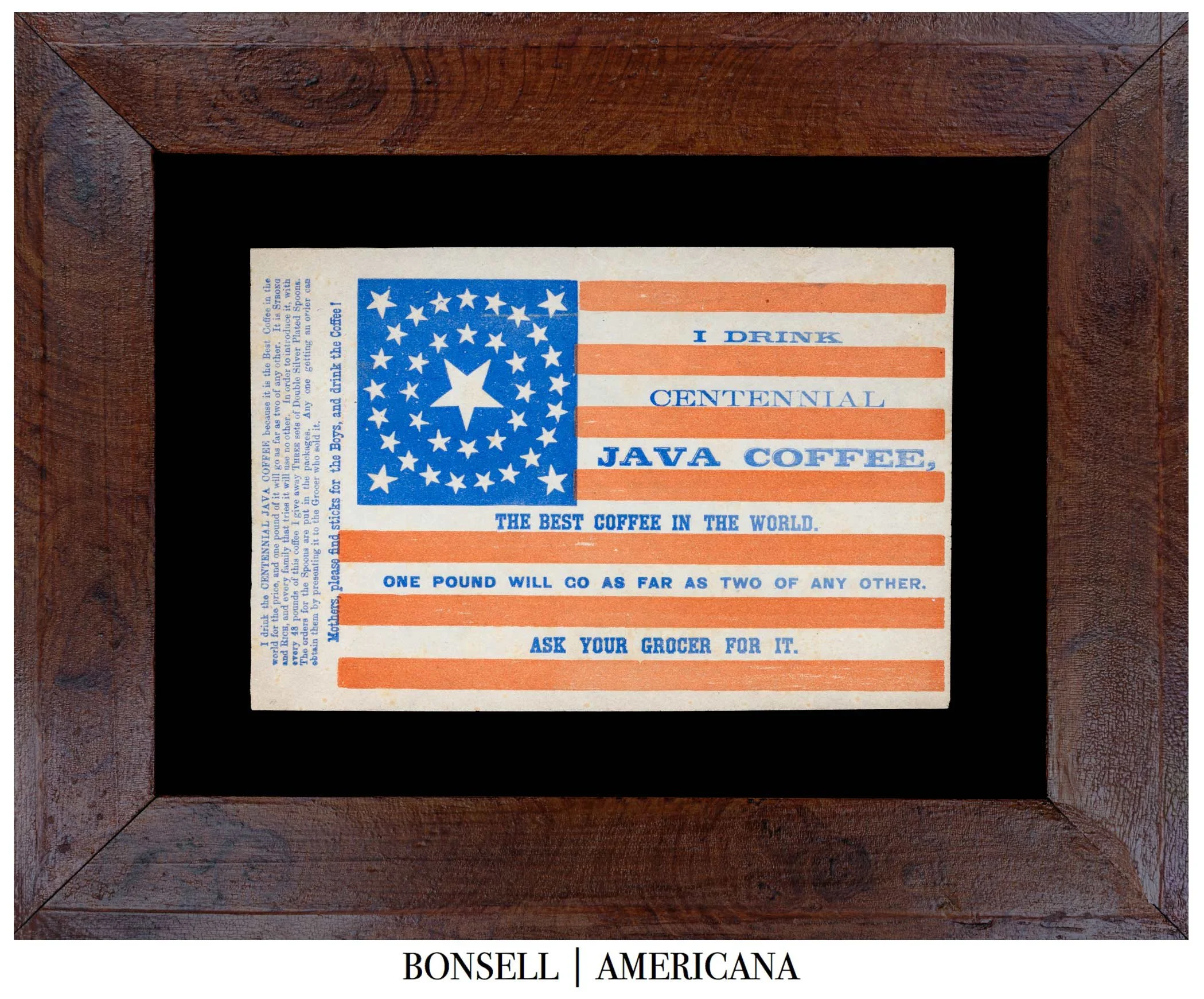
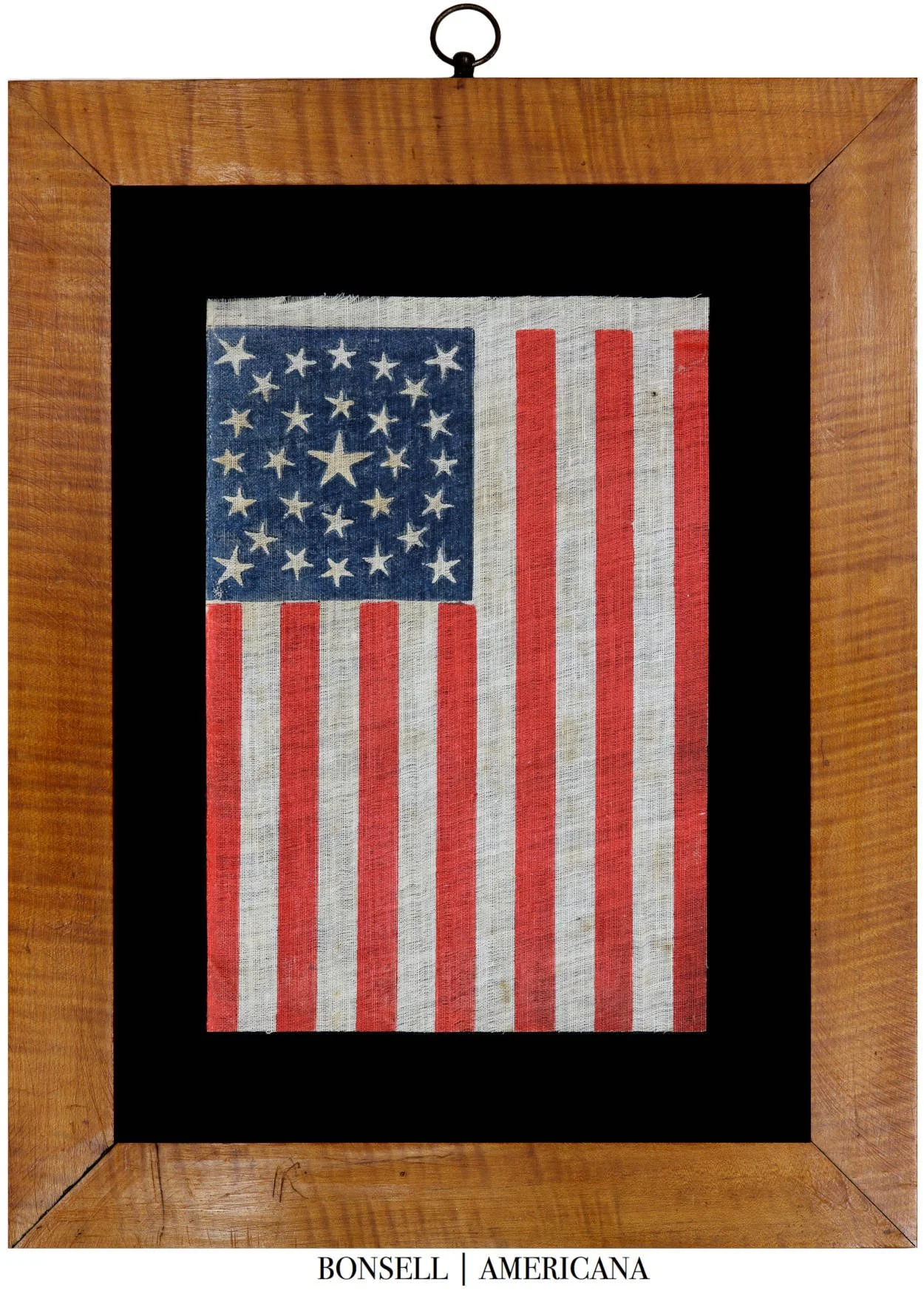
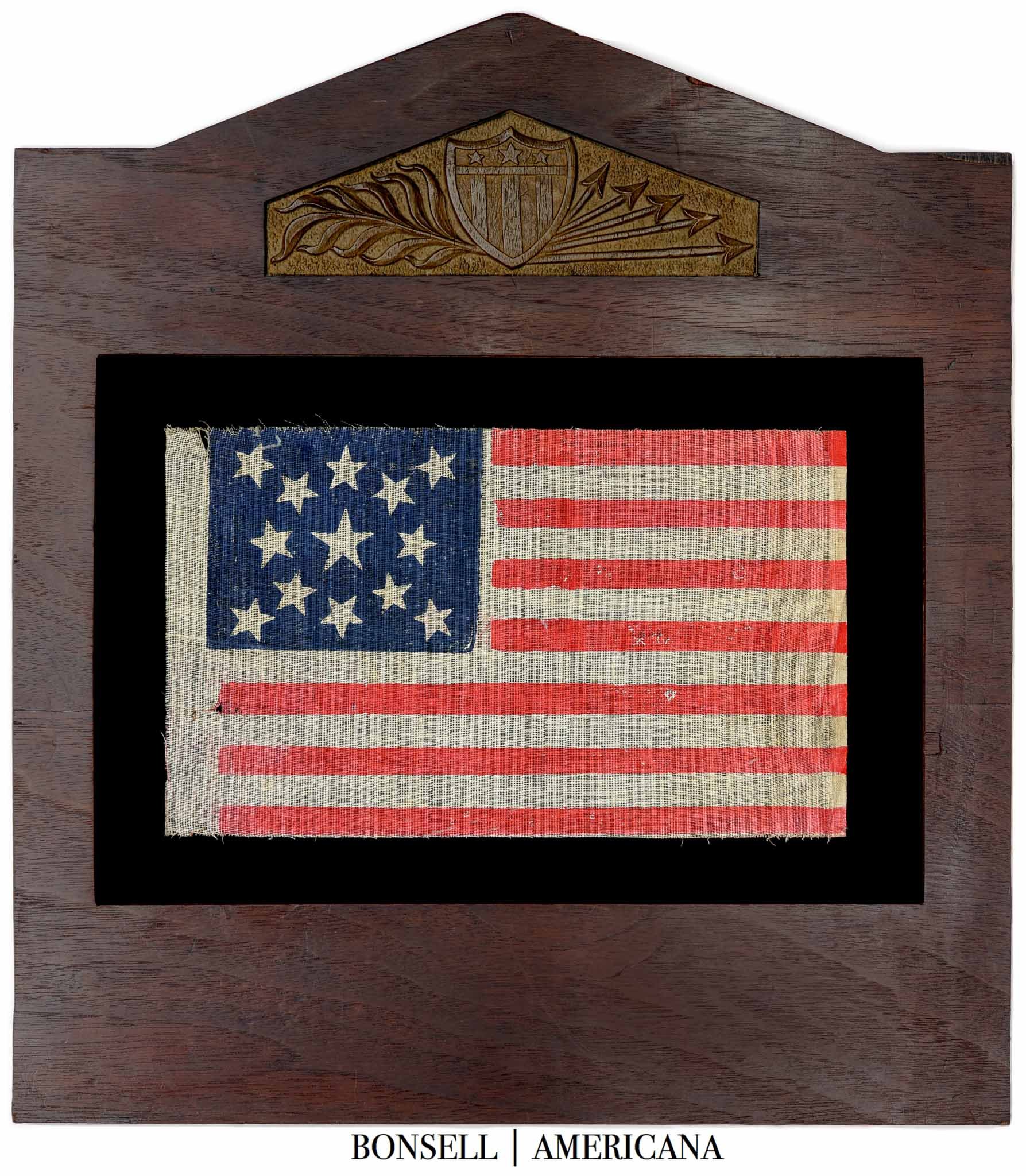
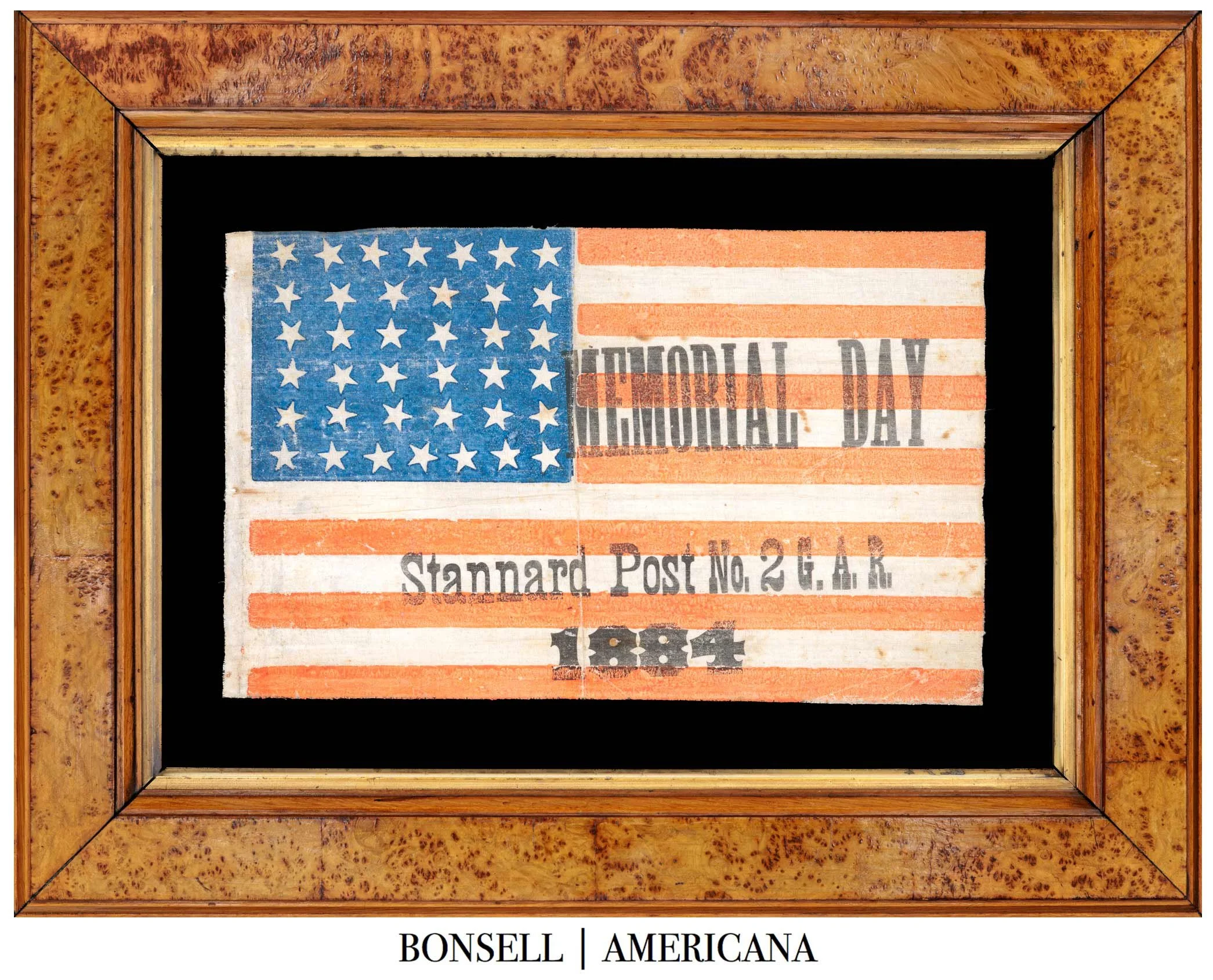
13 Star Antique American Parade Flag | Commemorating the Centennial of American Independence | Circa 1876
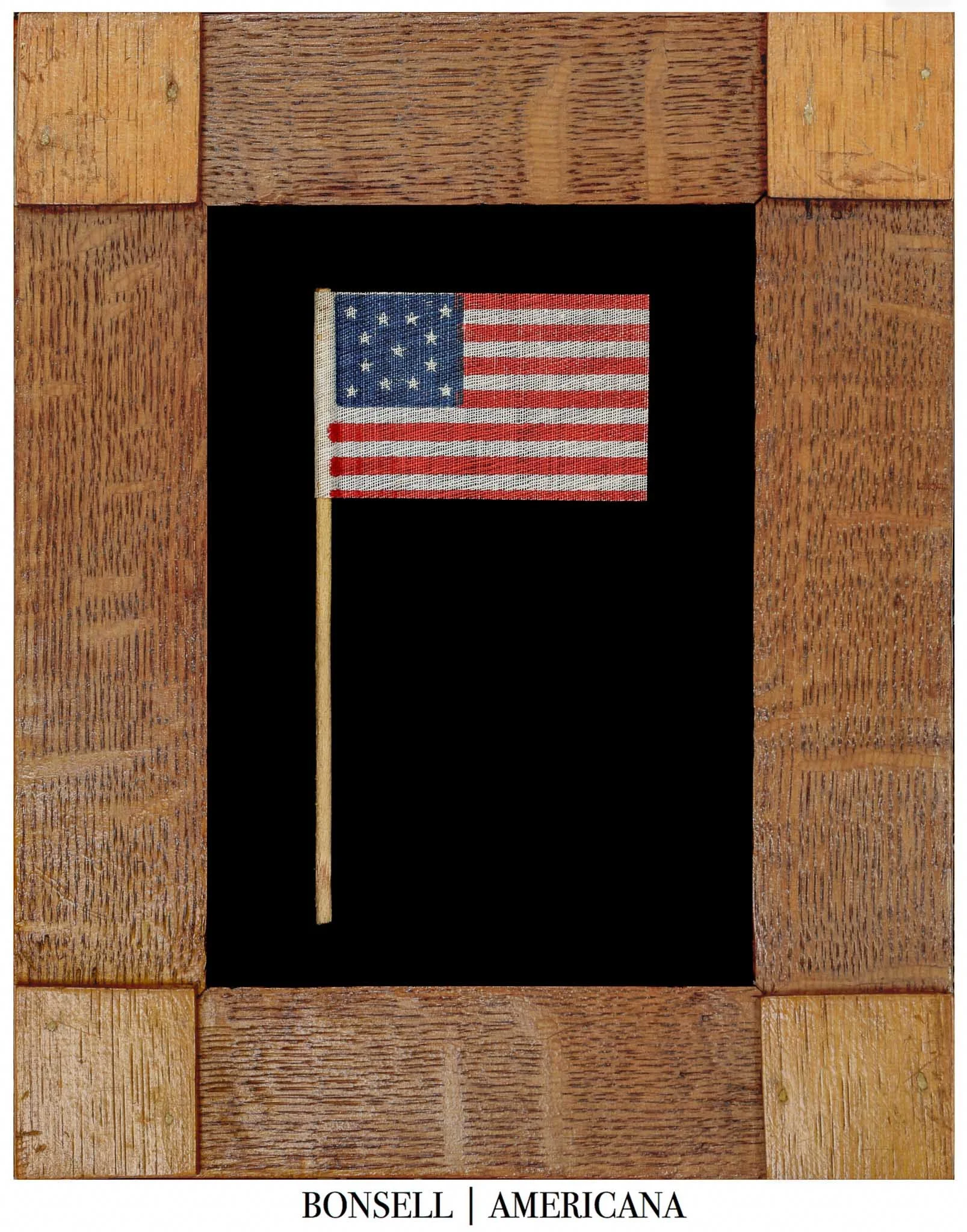
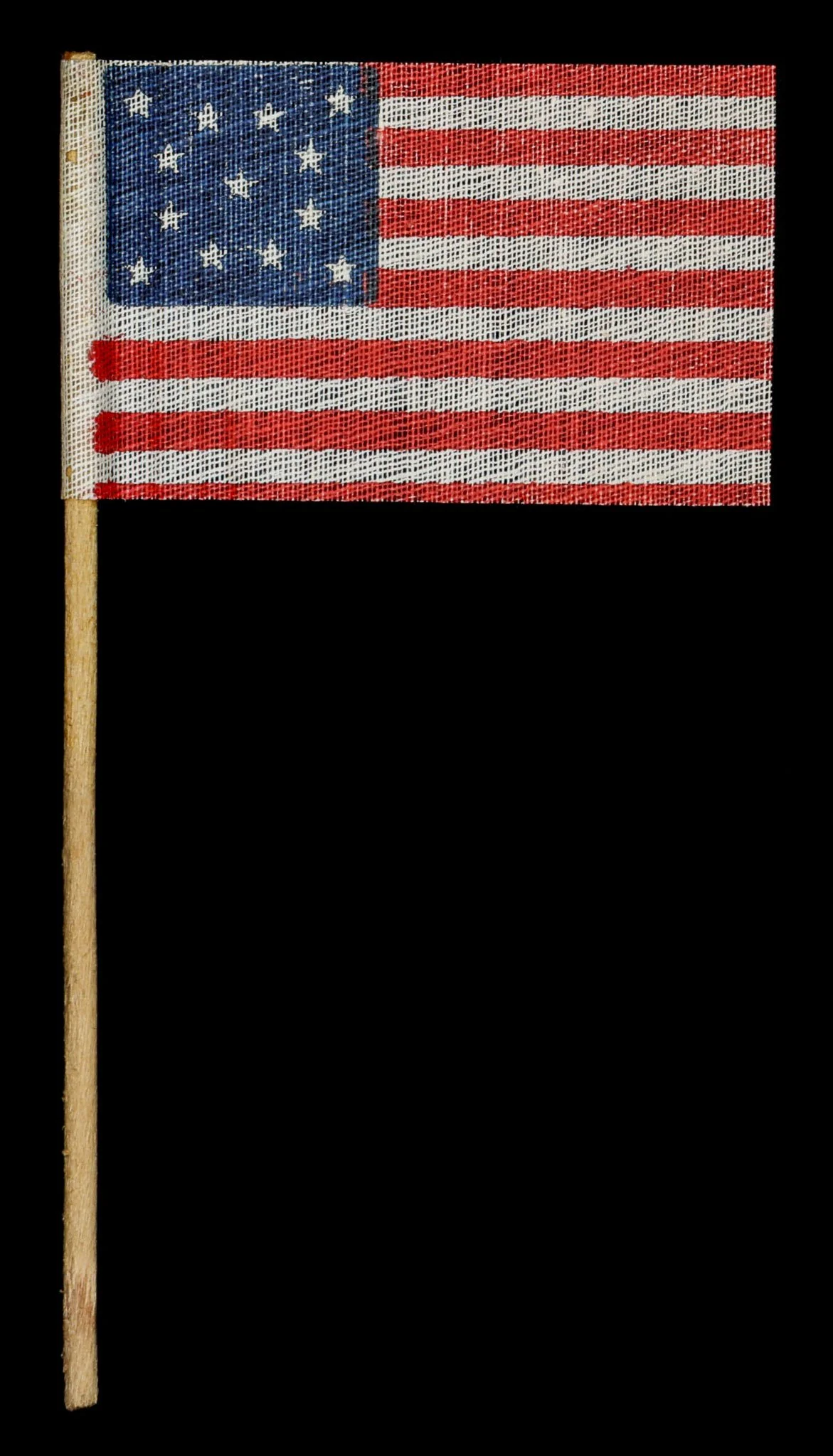
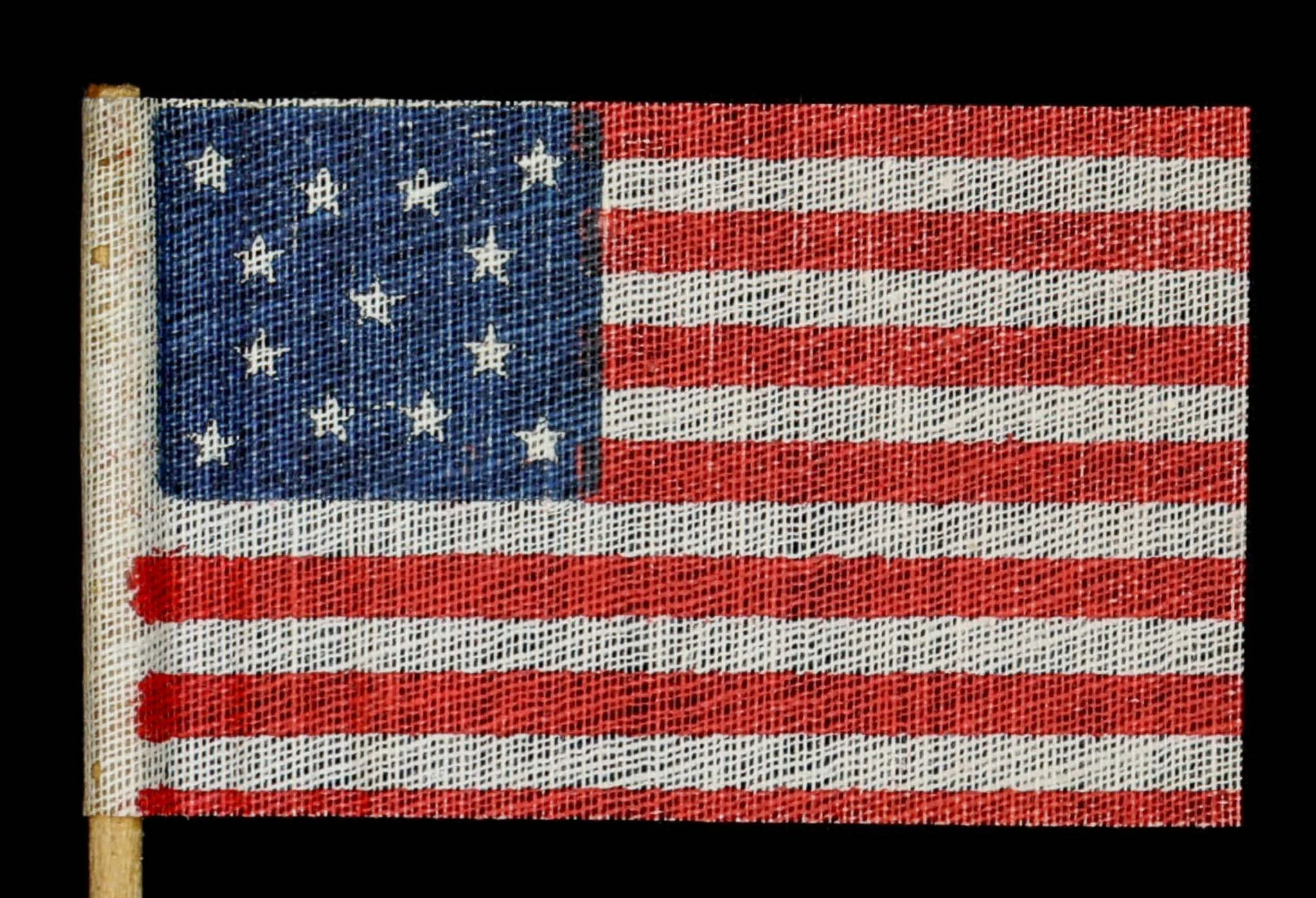
13 Star Antique American Parade Flag | Commemorating the Centennial of American Independence | Circa 1876
Frame Size (H x L): 10.75” x 8.5”
Flag Size (H x L): 2” x 3” and Affixed to a 6” Staff
Offered is a 13-star printed parade flag produced to commemorate the Centennial of American independence in 1876. A decade after the Civil War, the Centennial inspired an extraordinary outpouring of patriotism and national pride. Communities across the reunited states—large cities and small towns alike—organized parades, civic pageants, and decorative displays. Homes, schools, and public buildings were draped in red, white, and blue bunting, with the national flag serving as the central symbol of unity and renewal.
The most ambitious celebration was the Centennial International Exposition in Philadelphia, the first official World’s Fair held in the United States. Over six months, nearly ten million visitors attended, marveling at technological and cultural exhibits that defined America’s industrial ascendance. Among its landmark presentations were the debut of Alexander Graham Bell’s telephone and the Corliss Steam Engine—then the largest engine ever built.
At the time of the Exposition, the official star count of the United States flag was 37, reflecting the admission of Nebraska in 1867. Yet 1876 also marked the entry of Colorado as the 38th state, earning it the nickname “The Centennial State.” Flag makers, always eager to anticipate new additions, produced both 38-star flags and, for symbolic and historical reasons, 13-star flags—reviving the design of the original Revolutionary era as a nostalgic emblem of the nation’s birth. During the Centennial year, these 13-star flags were among the most popular decorative forms seen in parades, civic halls, and patriotic displays.
The use of the 13-star format dates to June 14, 1777, when the Continental Congress resolved: “That the flag of the United States be made of thirteen stripes, alternate red and white; that the union be thirteen stars, white on a blue field, representing a new constellation.” This pattern represented the original colonies and remained official until 1795, when two stars and two stripes were added for Vermont and Kentucky. Nonetheless, the 13-star configuration never disappeared.
It remained in continuous ceremonial use well into the nineteenth century. The U.S. Navy flew 13-star ensigns on small boats from 1795 through 1916 to maintain clear identification at sea. The design was hoisted at the death of George Washington in 1799, and again during the nation’s semicentennial in 1824, when General Lafayette toured the United States as a living link to the Revolution. Similar flags reappeared during subsequent patriotic moments—the Mexican War (1846–1848), the Civil War (1861–1865), and the Centennial celebrations of 1876—each time symbolizing a return to the founding ideals of the Republic.
By the time this example was produced, the 13-star flag had evolved from a functional design into a revered patriotic motif—an emblem not of a single moment, but of the enduring American story from independence through reconciliation and progress.
Conservation Process: The flag was hand sewn to cotton fabric, and both were hand sewn to a mounting board. To prevent the black dye in the cotton fabric from seeping into the flag, it was first washed in a standard wash and then in a dye setting wash. The flag is positioned behind Optium Museum Acrylic.
Frame: The flag is presented in a period-style cornerblock frame made of oak, modeled after late 19th-century designs. The frame itself likely dates to the mid-20th century and is joined at the miters with corrugated fasteners typical of that period.
Condition Report: The flag remains in excellent condition, with strong color retention and only light toning to the white areas. The glazed cotton is stable and well-preserved, showing no notable fraying or loss beyond a few small areas where the fabric was wrapped around the staff.
Collectability Level: The Good – Perfect for Beginning Collectors and Gifts
Date of Origin: 1876
Number of Stars: 13
Associated War: The Indian Wars (1860-1890)
Associated State: Original 13 Colonies