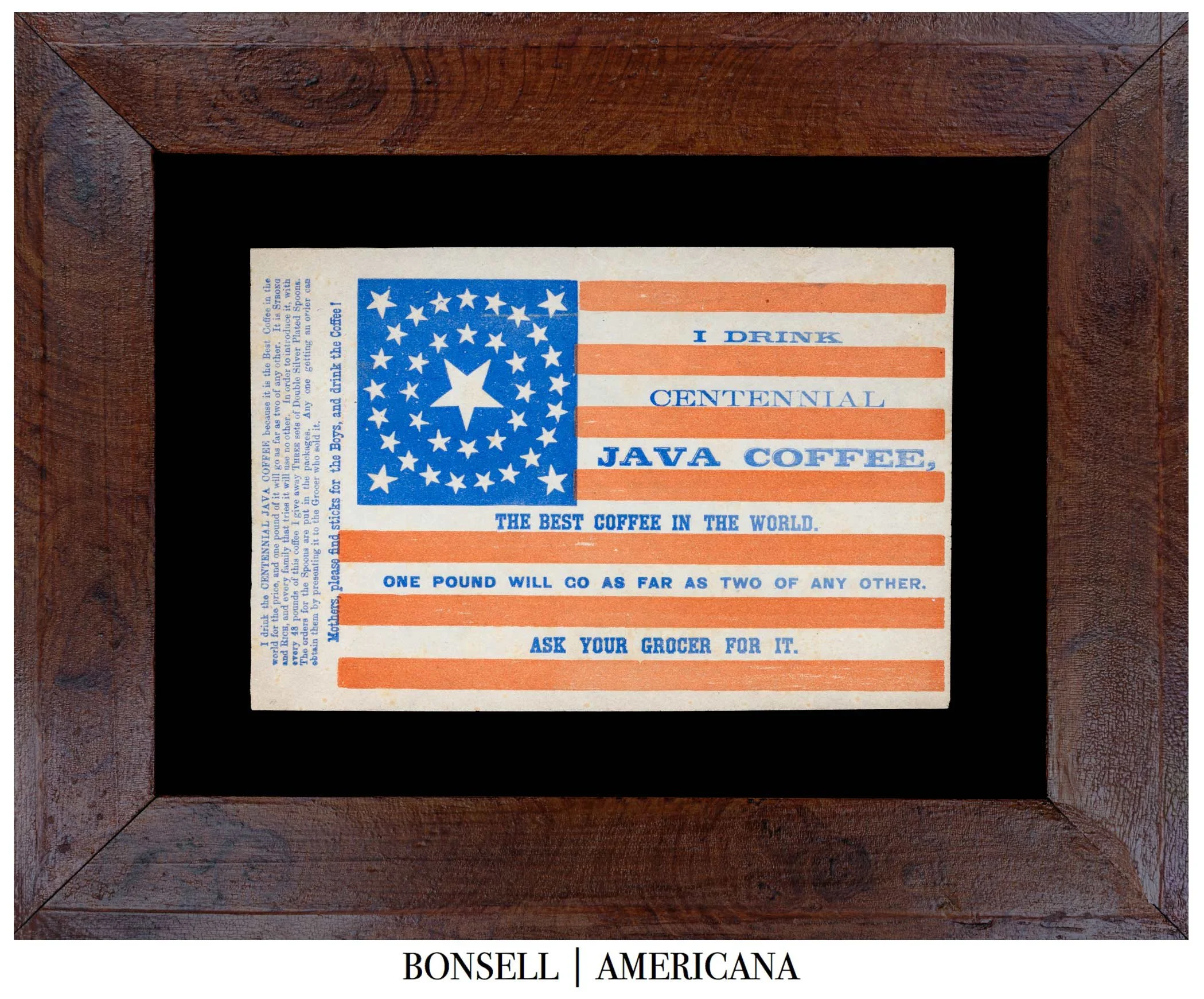
Anticipatory 46 Star American Parade Flag with “Reception to the Fighting 20th” Overprint | Oklahoma Statehood | Circa 1899


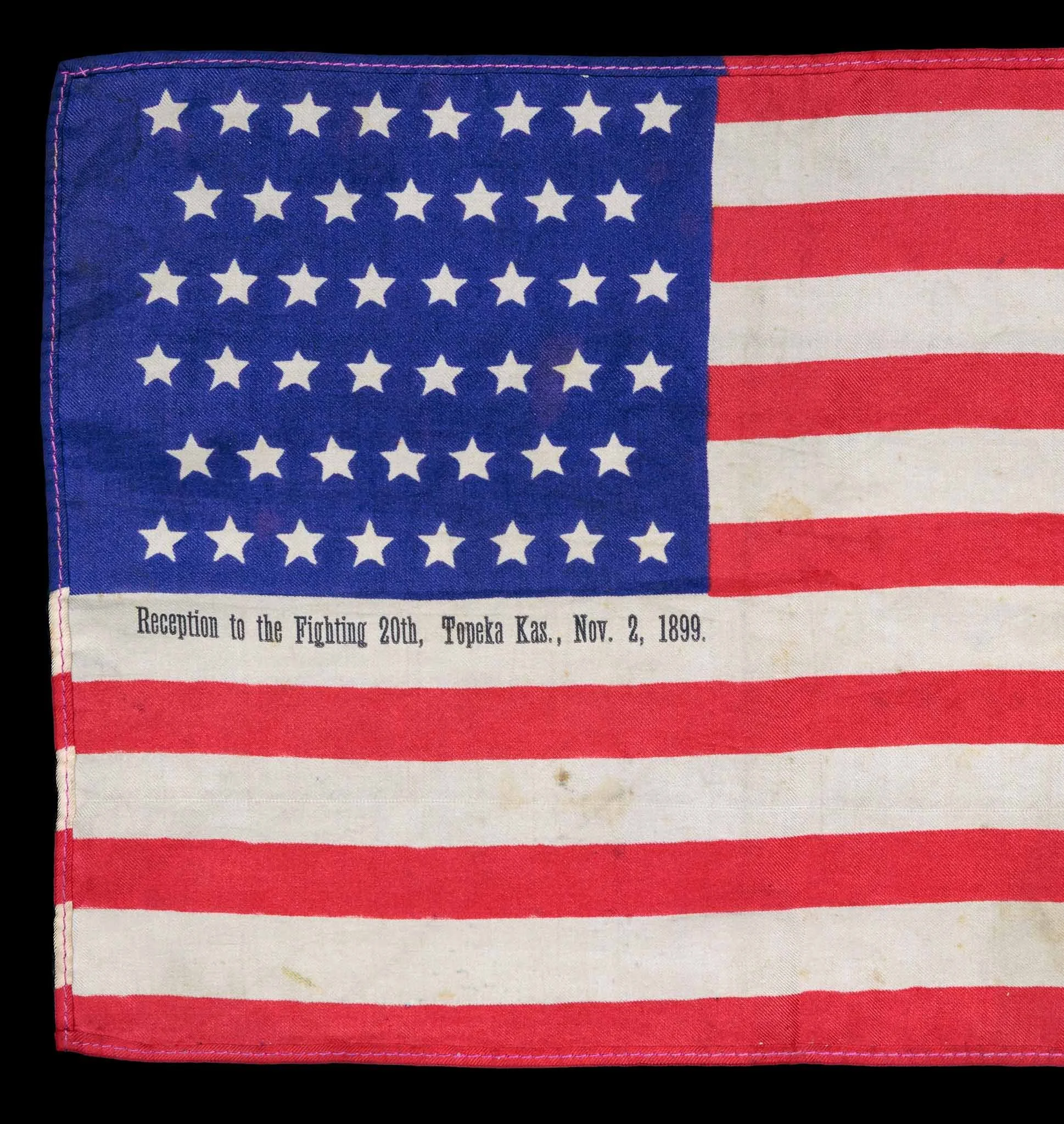
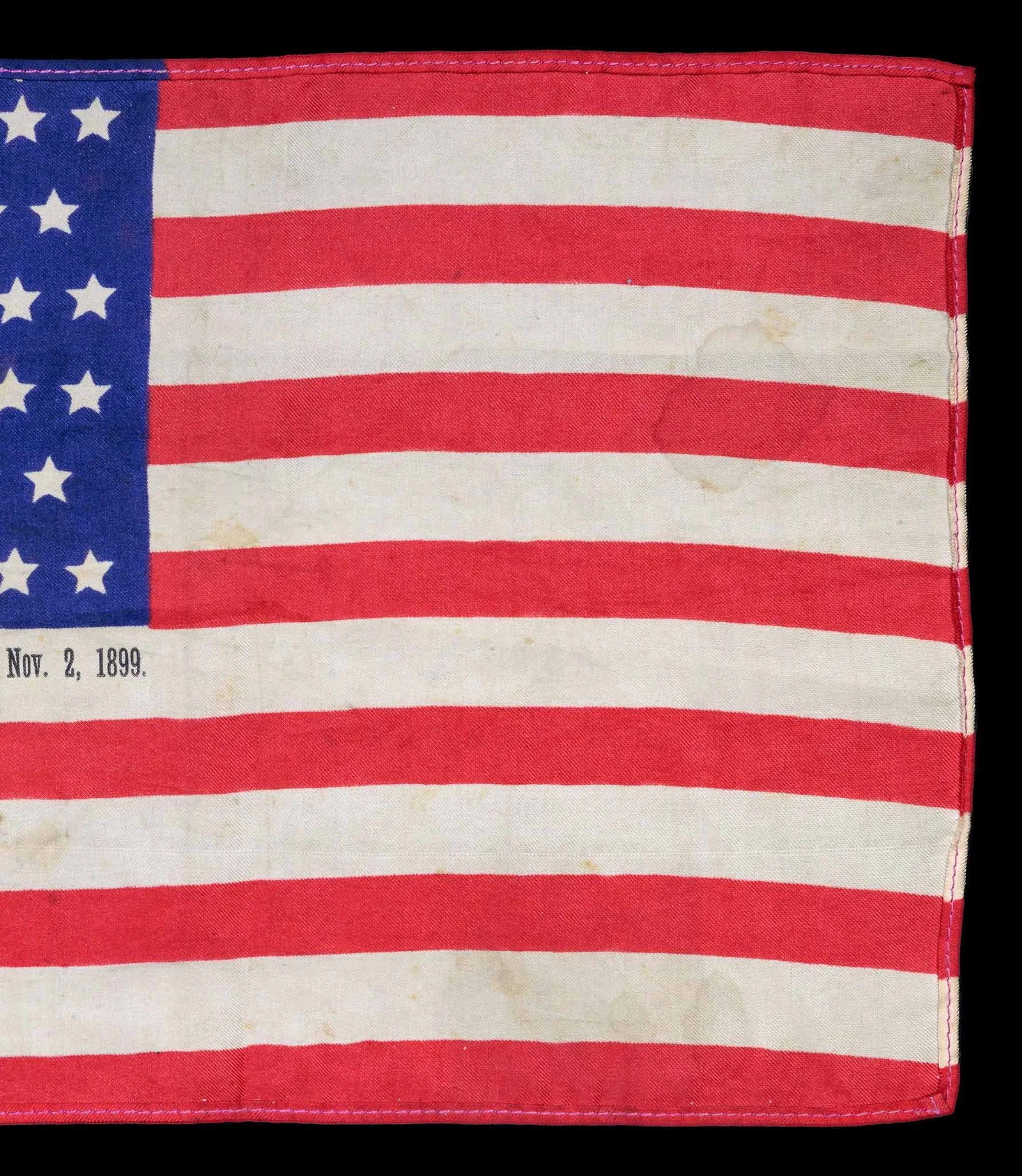
Anticipatory 46 Star American Parade Flag with “Reception to the Fighting 20th” Overprint | Oklahoma Statehood | Circa 1899
Frame Size (H x L): 13.25” x 17”
Flag Size (H x L): 7.5” x 10.5”
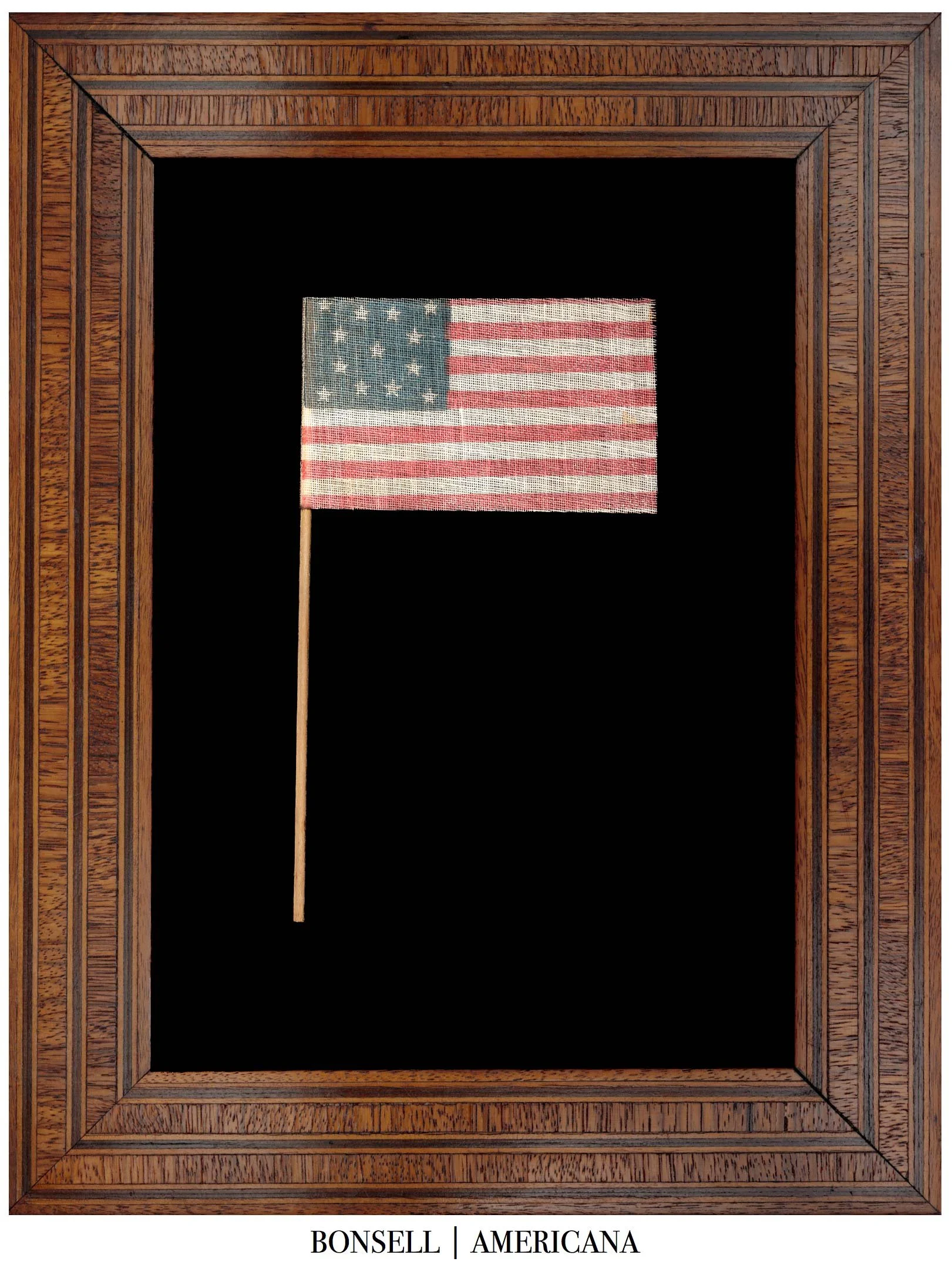
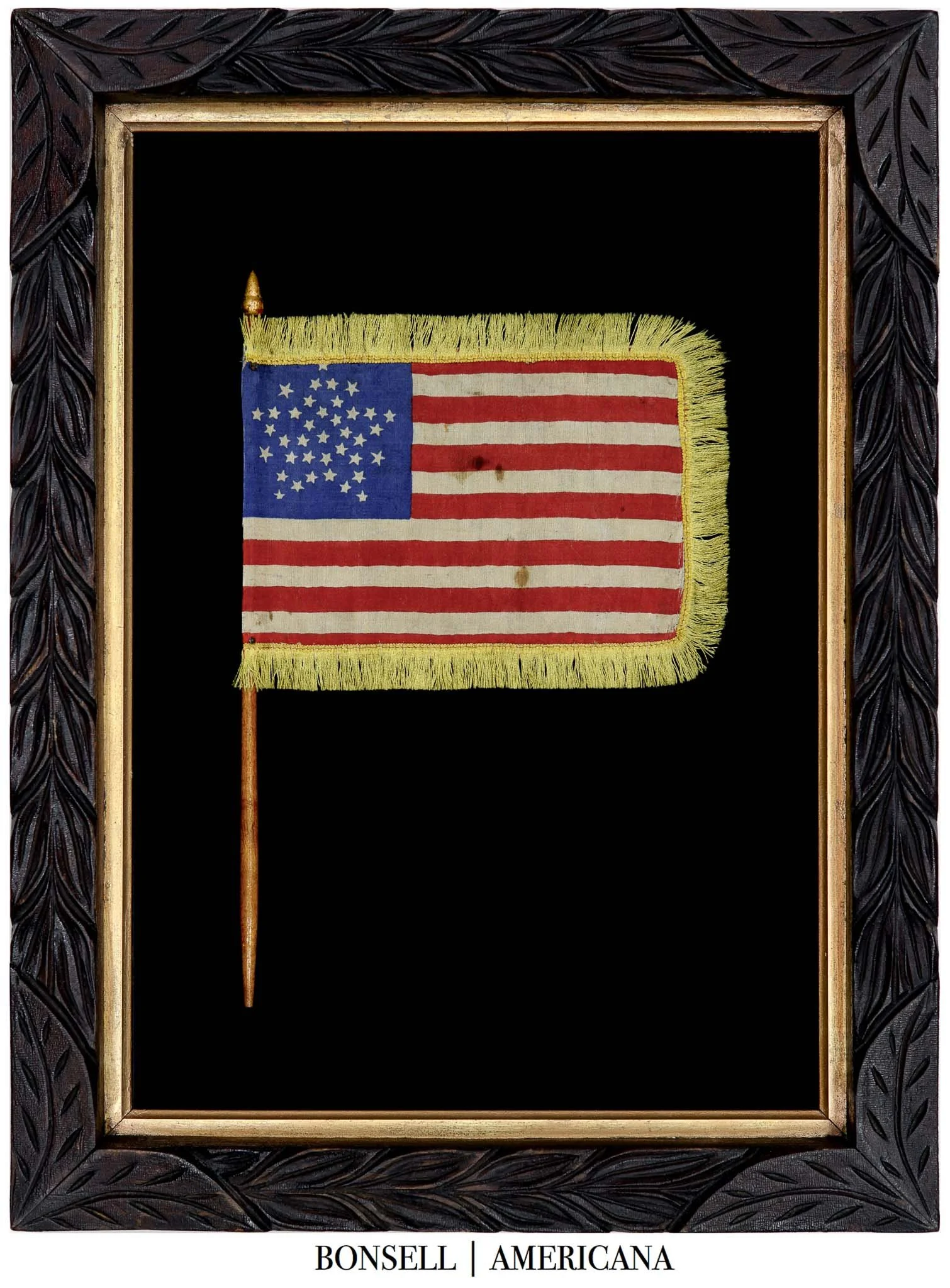
Offered is an American parade flag bearing an anticipatory 46-star count, printed on silk and overprinted to commemorate a specific civic and military event. The flag features a blue canton with white stars arranged in a lineal configuration, paired with red and white stripes. The stars display modest directional variation, a characteristic commonly encountered in printed parade flags of the late 19th century.
This example is overprinted with the following inscription:
Reception to the Fighting 20th, Topeka Kas., Nov. 2, 1899.
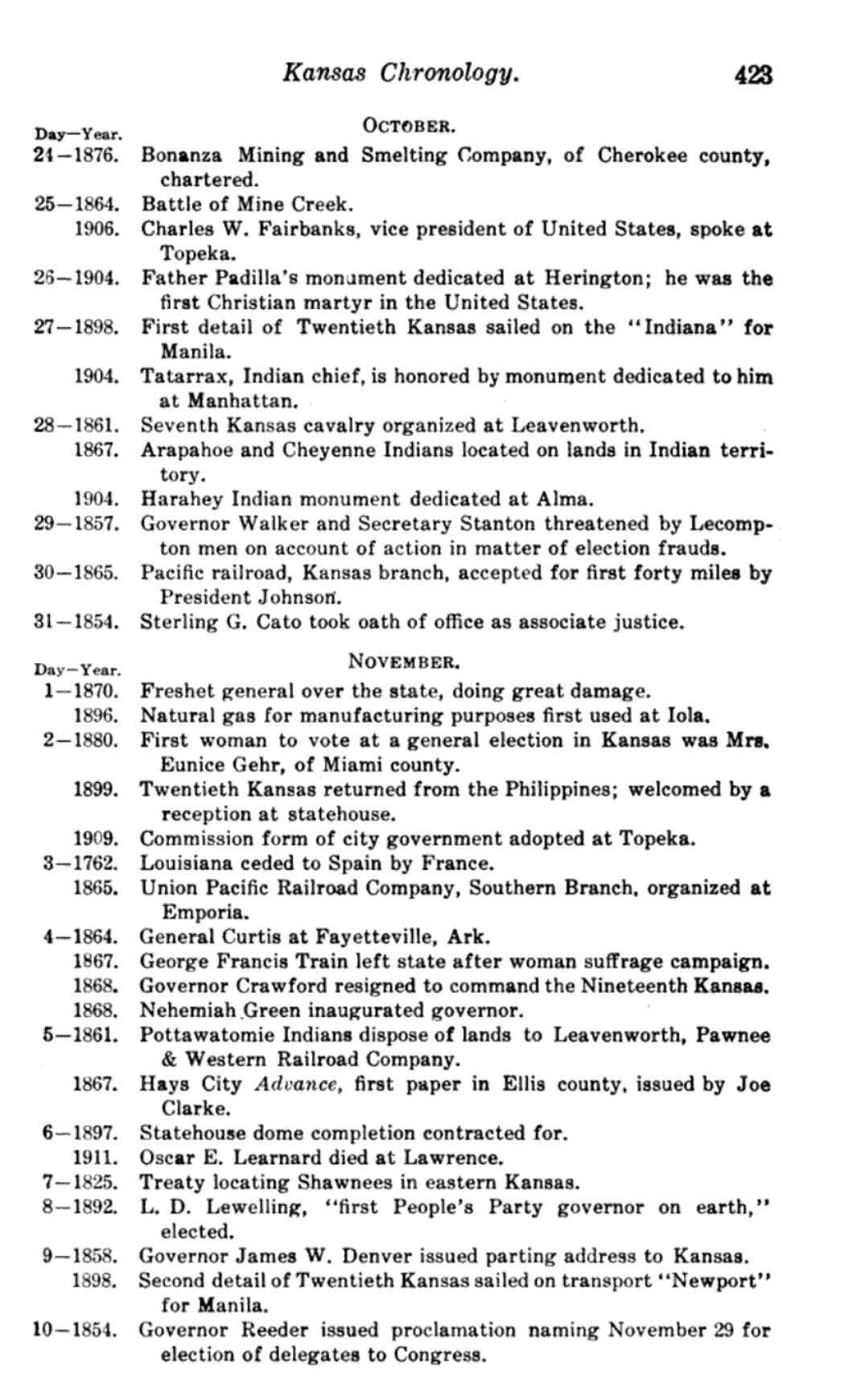
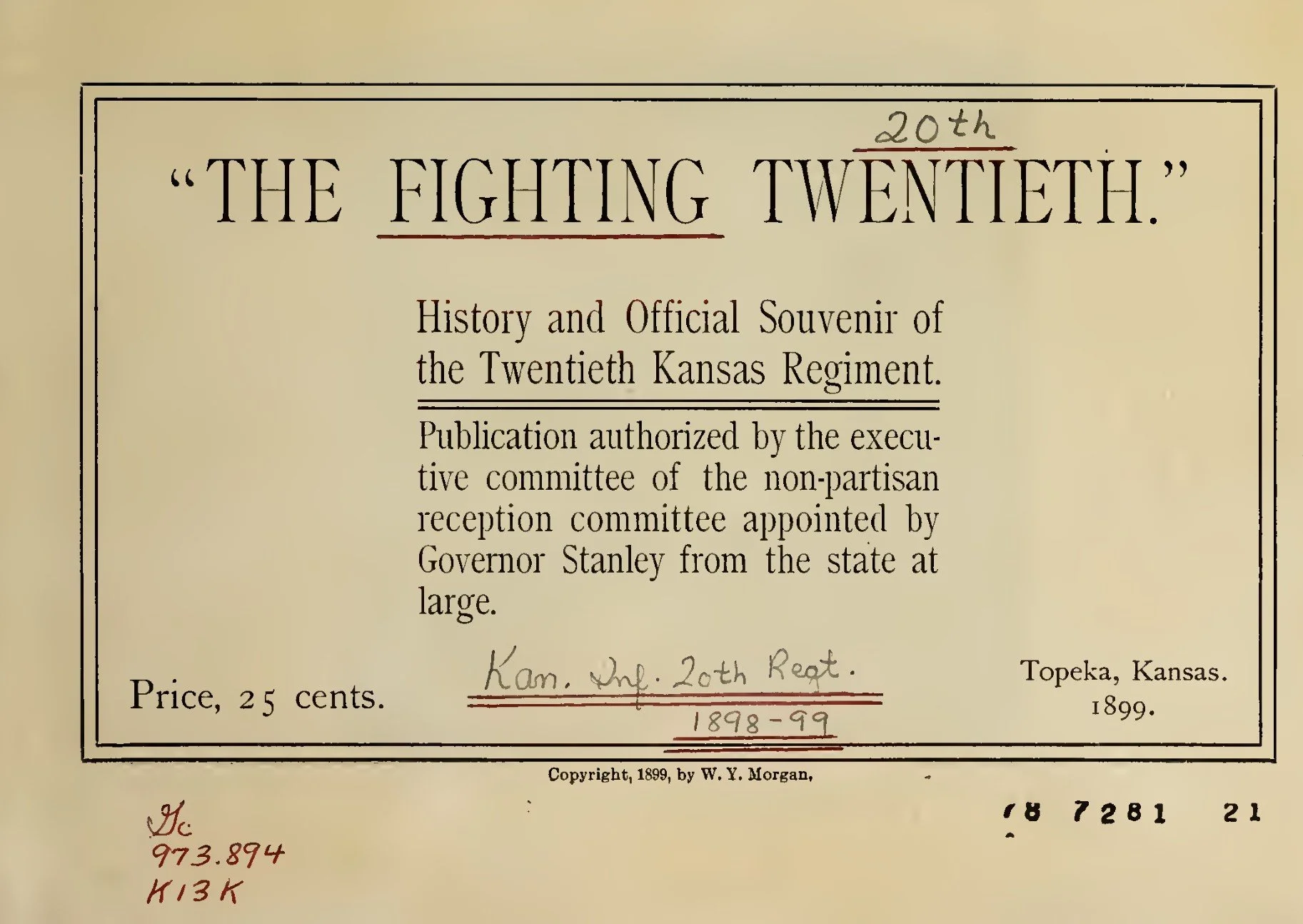
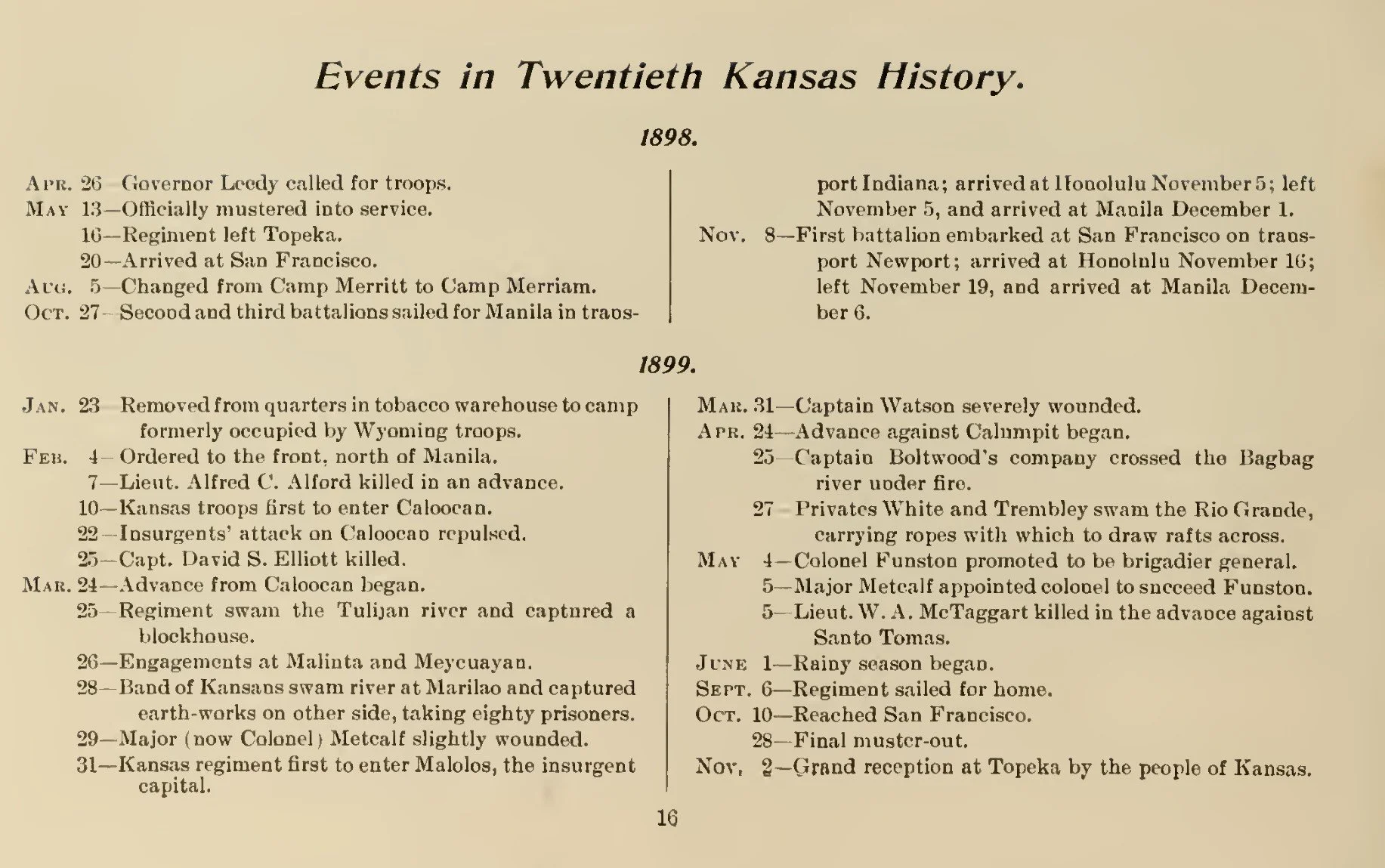
The text identifies the flag as having been produced for a public reception held in Topeka, Kansas, welcoming home the 20th Kansas Volunteer Infantry following its return from service in the Philippines. Contemporary Kansas records note that in November 1899 the regiment was formally received at the statehouse, confirming the civic nature and scale of the event referenced in the overprint.
The 20th Kansas Volunteer Infantry was among the volunteer regiments raised during the Spanish-American War and remained on duty beyond the formal conclusion of that conflict, serving during the Philippine-American War. Regiments that experienced extended or active service were often described in period sources as “fighting” units, a term used contemporaneously to distinguish them from units whose service was brief or limited to stateside duty. The language employed in the overprint reflects this period usage.
Although the 46-star flag did not become official until July 4, 1908, following Oklahoma’s admission to the Union in November 1907, flag manufacturers routinely produced designs in advance of anticipated state admissions. These anticipatory star-count flags were a recognized and accepted part of the American flag trade. Oklahoma’s statehood was widely expected well before its formal admission, and 46-star designs were prepared for patriotic use accordingly.
The overprint required a secondary printing step applied after the flag itself was produced, typically for a single event. Flags of this type were intended for short-term display during parades, receptions, and related public observances and were commonly subjected to outdoor use. Survival rates are low, particularly for examples with legible inscriptions tied to a specific regiment, place, and date.
This is the first parade flag we have encountered with this particular overprint. While it is not possible to state definitively that no others survive, examples of this exact type appear to be extremely limited in number. Whether unique or among only a few remaining, the flag represents a highly uncommon convergence of anticipatory manufacture and documented civic use.
Rather than serving as a generalized patriotic emblem, this flag documents a specific moment in Kansas and U.S. military history. Its star count reflects national expectation on the eve of statehood, while its overprint fixes it to a recorded homecoming reception honoring a returning regiment at the close of the 19th century.
Conservation Process: This flag was hand sewn to cotton fabric, and both were hand sewn to a mounting board. To prevent the black dye in the cotton fabric from seeping into the flag, it was first washed in a standard wash and then in a dye setting wash. The flag is positioned behind Optium Museum Acrylic.
Frame: The flag is housed in a period-painted wooden frame with reeded molding and applied star corner blocks, a style commonly produced in the early 20th century. The form and decorative elements are consistent with examples dating to circa 1900–1920, including the World War I era. The surface shows expected age and wear appropriate to its period.
Condition Report: The flag shows expected age-related wear consistent with use, including light soiling and scattered minor stains, most noticeable in the white stripes. Colors remain strong overall, and the fabric is stable, with the overprint clear and fully legible. There are no significant losses or structural issues that detract from display.
Collectability Level: The Great – Perfect for Rising Collectors
Date of Origin: 1899
Number of Stars: 46
Associated State: Oklahoma