Attractive 13 Star Antique American Flag | 3-2-3-2-3 Hopkinson Star Arrangement | Circa 1895–1926
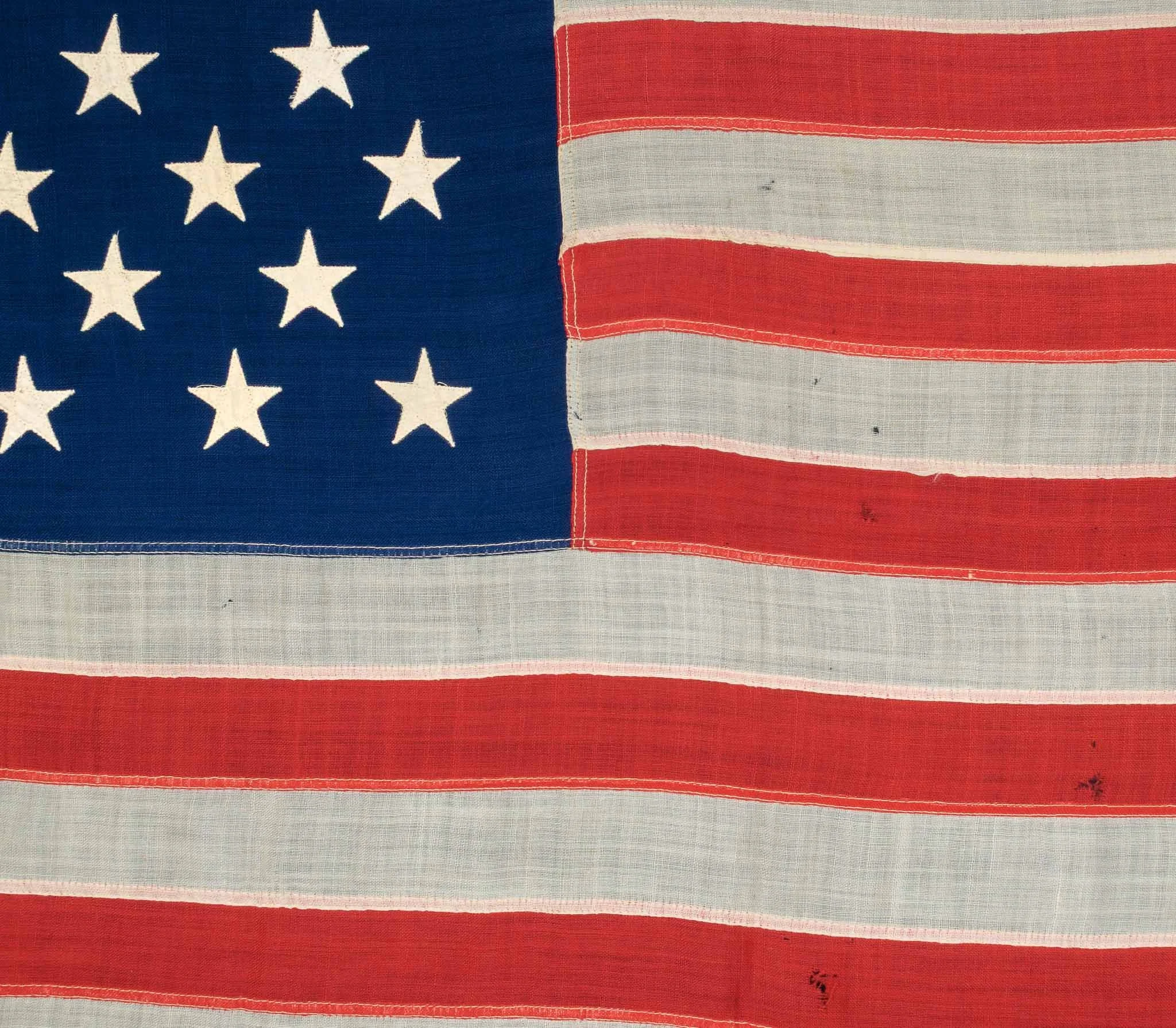

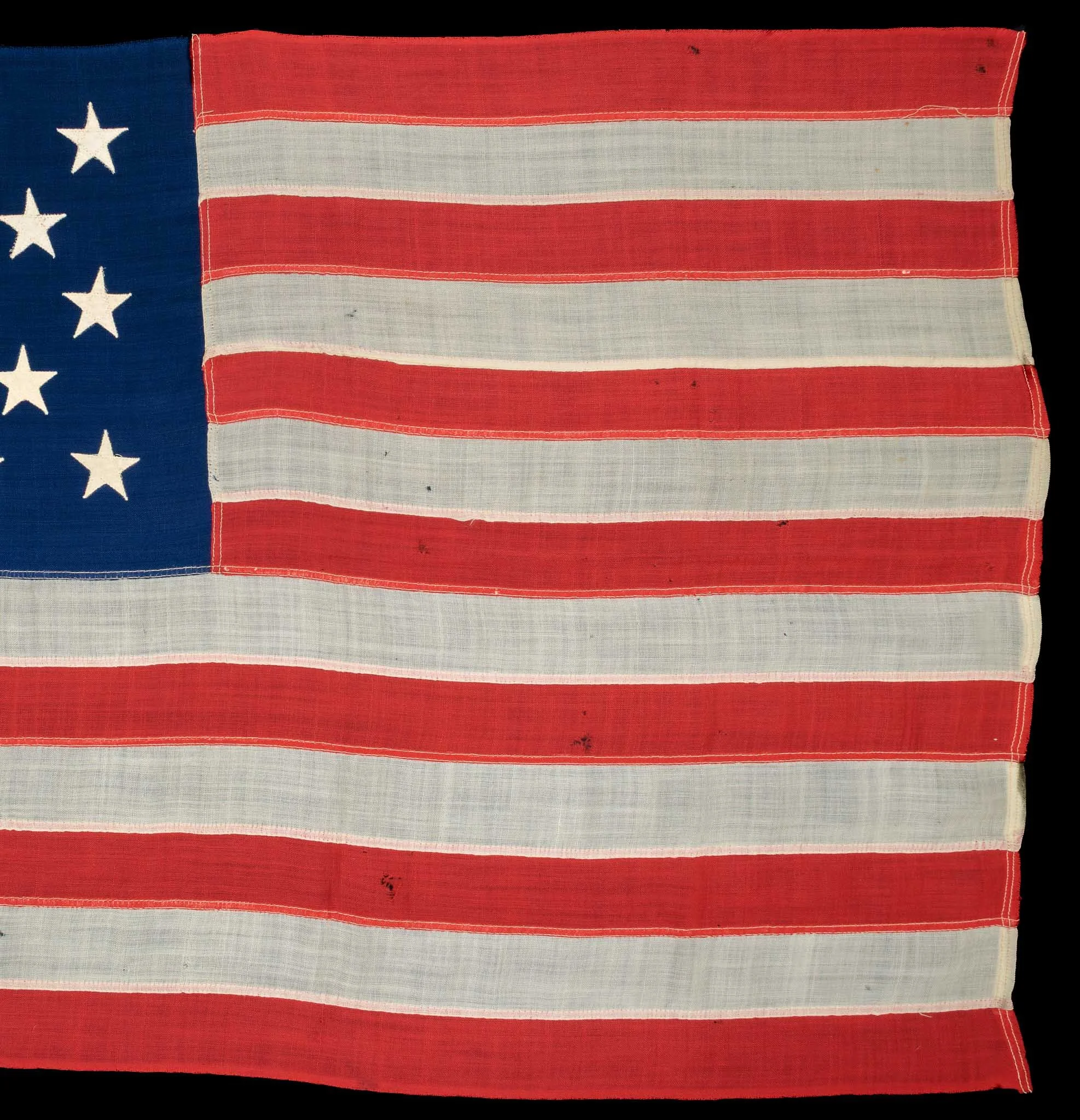
Attractive 13 Star Antique American Flag | 3-2-3-2-3 Hopkinson Star Arrangement | Circa 1895–1926
Frame Size (H x L): 38” x 48”
Flag Size (H x L): 21” x 35”
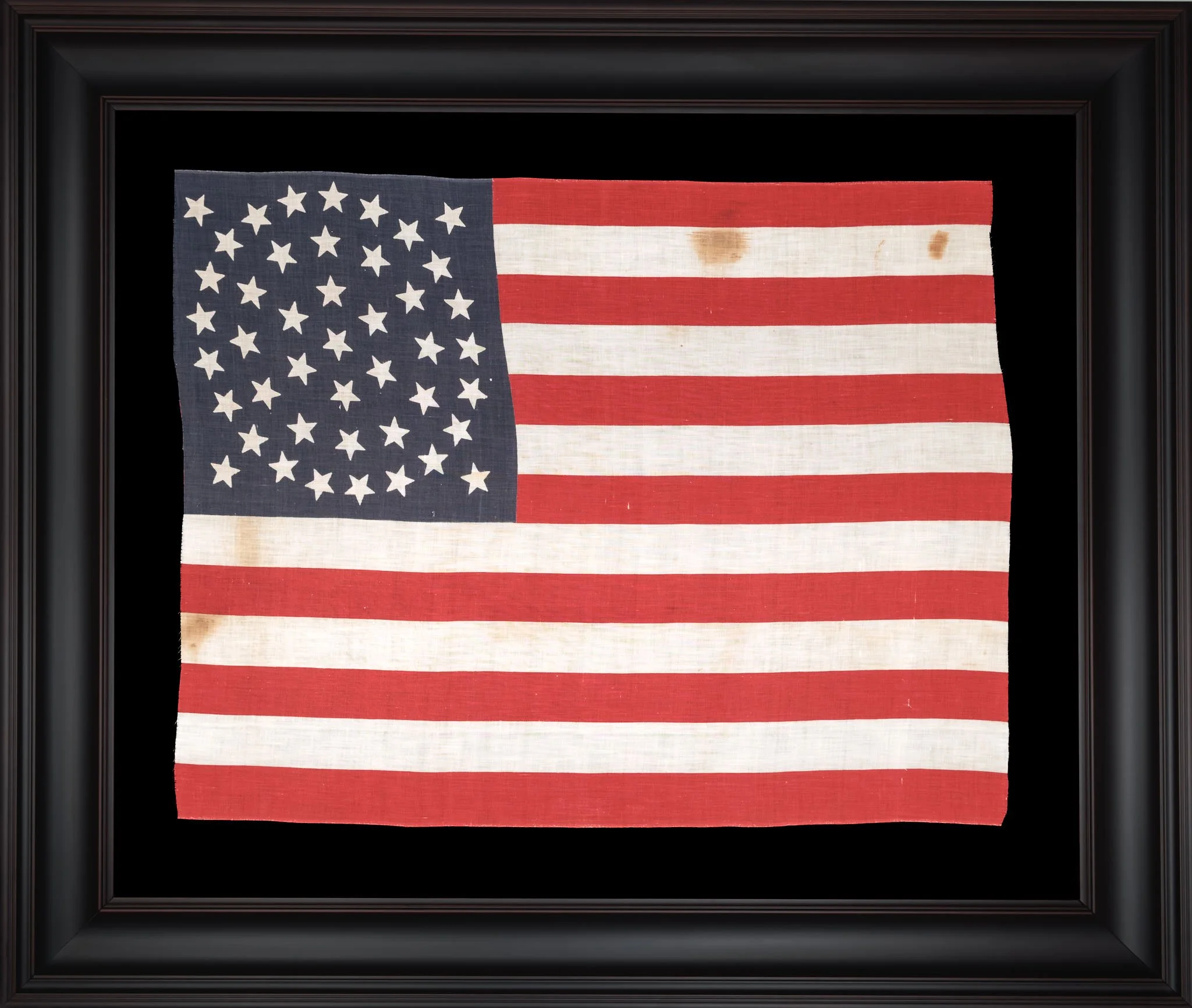
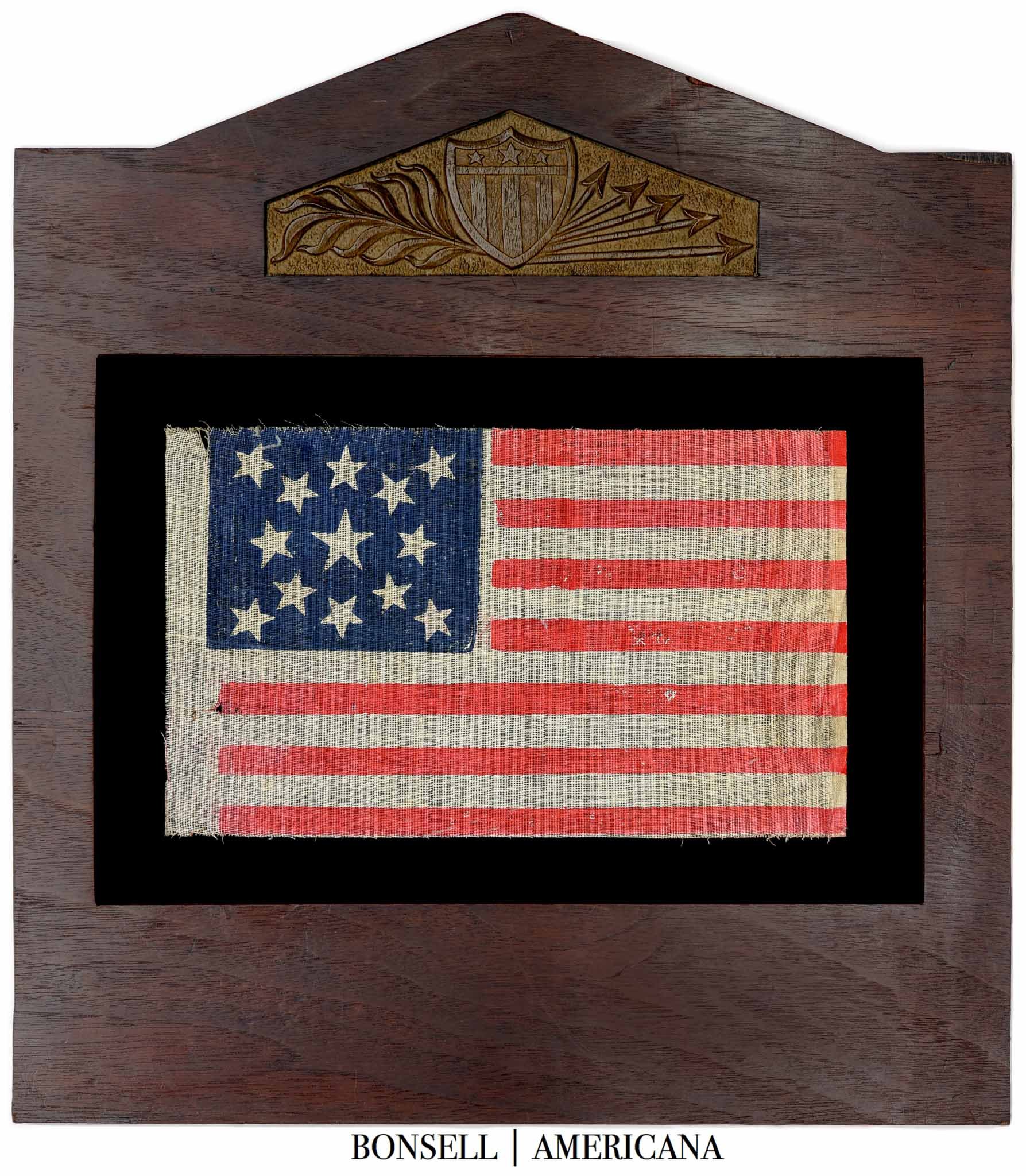
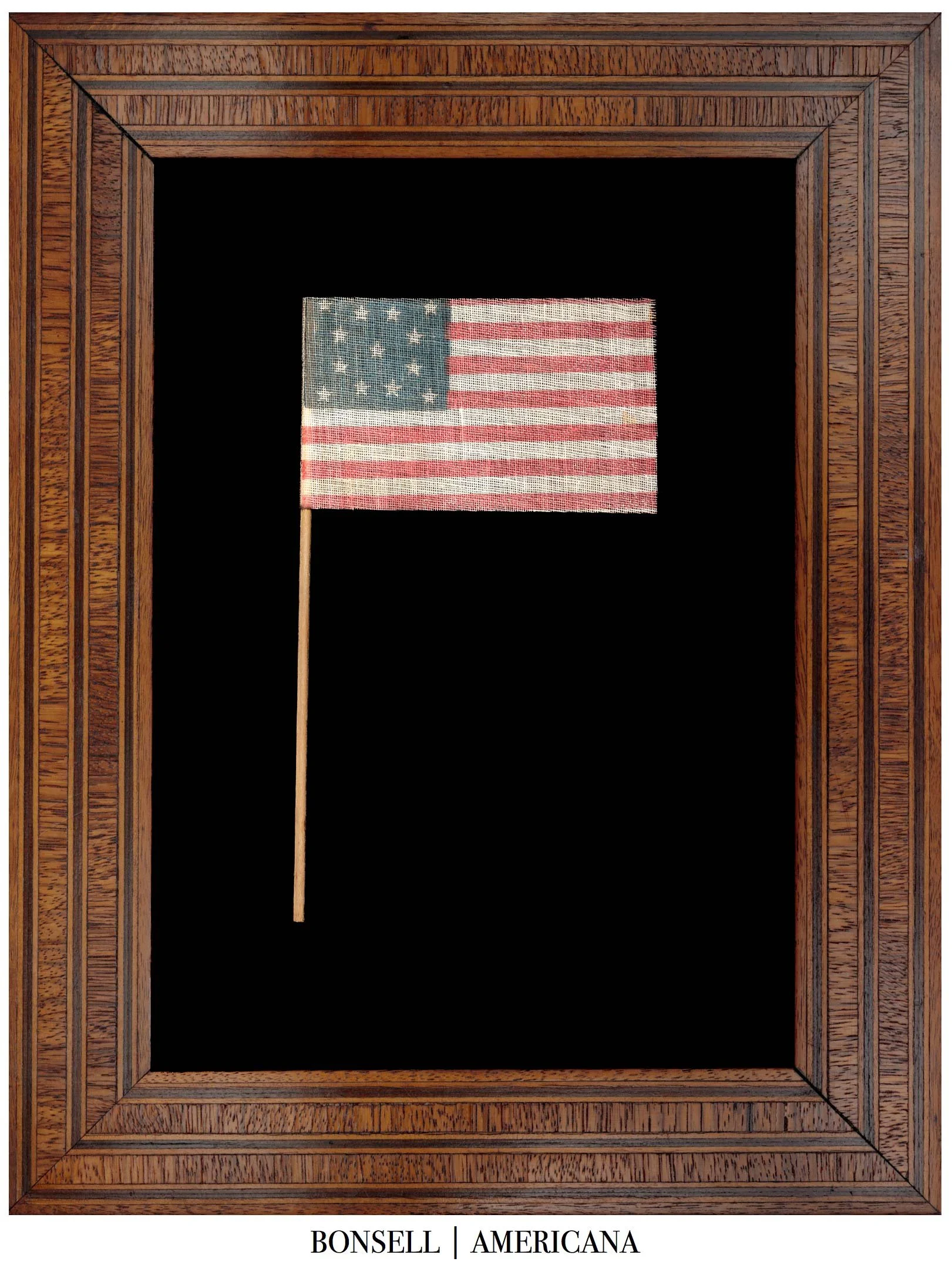
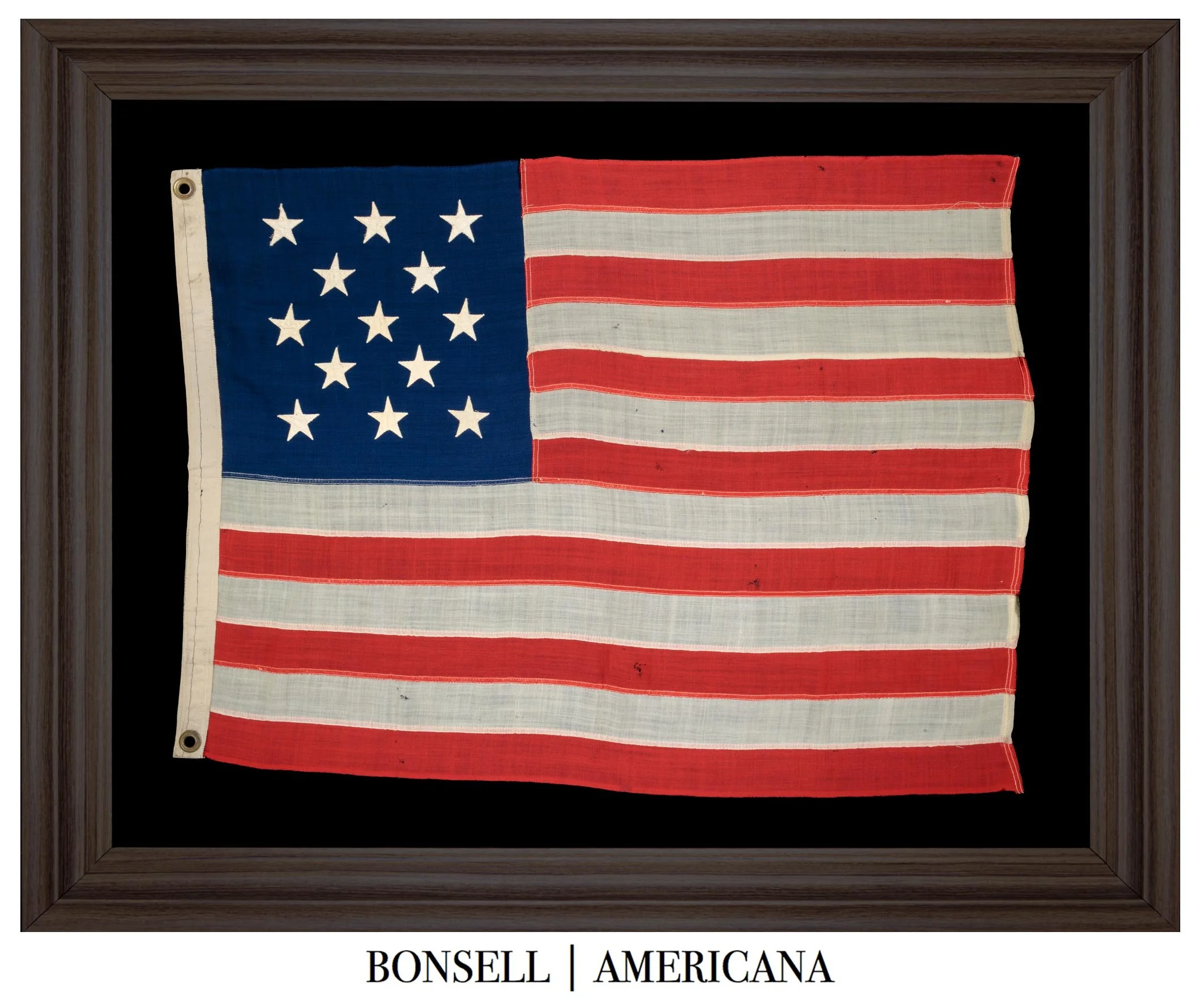
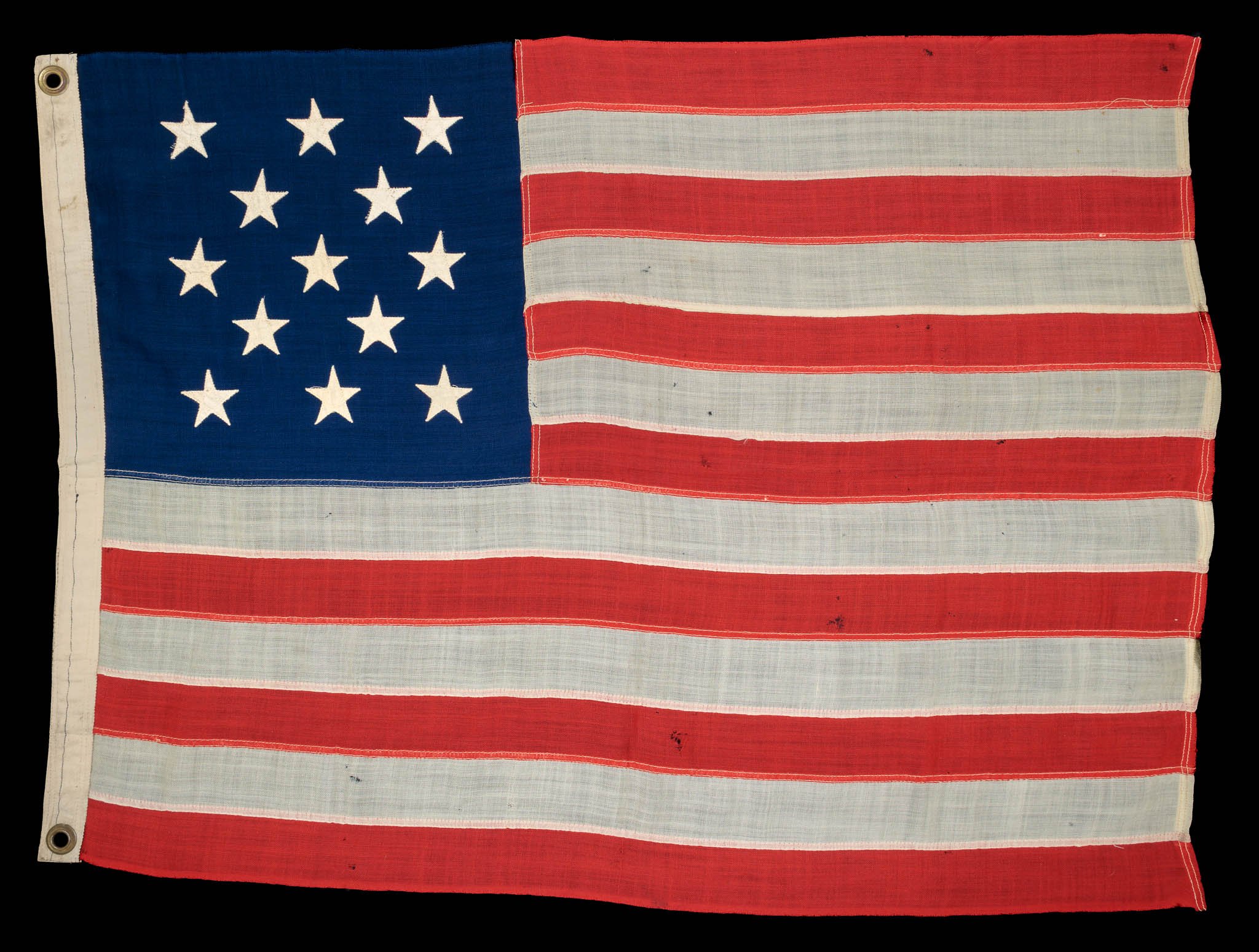
Offered is a 13-star antique American flag in the 3-2-3-2-3 configuration, constructed of wool bunting with double-appliquéd cotton stars and dating to approximately 1895–1926.
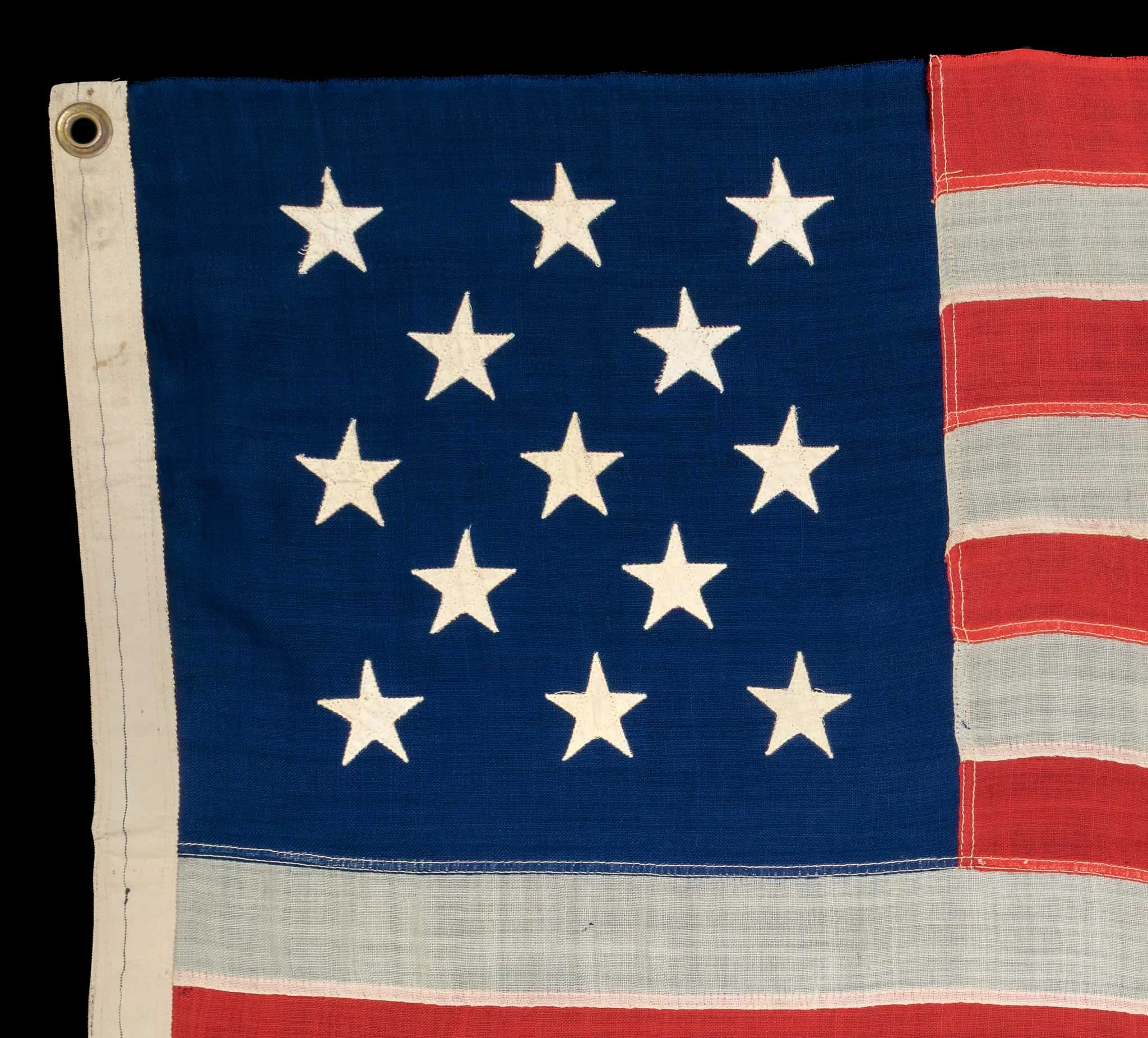
The star arrangement consists of three stars in the first row, two in the second, three in the third, two in the fourth, and three in the fifth. Visually, this produces a diamond-shaped core framed by four corner stars. The configuration is commonly associated with Francis Hopkinson and is often referred to as the “Hopkinson pattern.” While no surviving example can be definitively linked to the first national flag, many historians attribute the original design of the American flag to Hopkinson, a member of the Continental Congress and a signer of the Declaration of Independence.
Hopkinson submitted a formal petition to the Continental Congress requesting compensation for having furnished the design of “the flag of the United States of America.” He initially asked to be paid with a quarter cask of public wine and later requested monetary compensation. Although Congress acknowledged his role, payment was refused on the grounds that others had been consulted in the process. Regardless of the outcome, his documented claim provides firmer historical footing than the later Betsy Ross narrative, which emerged decades after the Revolution and lacks contemporary documentation.
The 13-star count represents the original thirteen colonies and was formally adopted on June 14, 1777, when Congress resolved:
“Resolved, that the flag of the United States be made of thirteen stripes, alternate red and white, that the union be thirteen stars, white on a blue field, representing a new constellation.”
From 1777 until May 1, 1795, the 13-star flag served as the official national flag of the United States. With the admission of Vermont and Kentucky, the star count increased to 15. After that date, however, the 13-star flag did not disappear. Instead, it evolved into a powerful and enduring symbol of the nation’s founding.
By the early nineteenth century, the 13-star count had come to represent the Revolutionary generation and the origins of American independence. Such flags were displayed during the return tour of General Lafayette in 1824–1825, when public ceremonies across the country emphasized continuity with the founding era. They appeared again during periods of heightened nationalism, including the Mexican War (1846–1848) and especially during the Civil War (1861–1865), when affirmations of unity and constitutional permanence carried particular resonance.
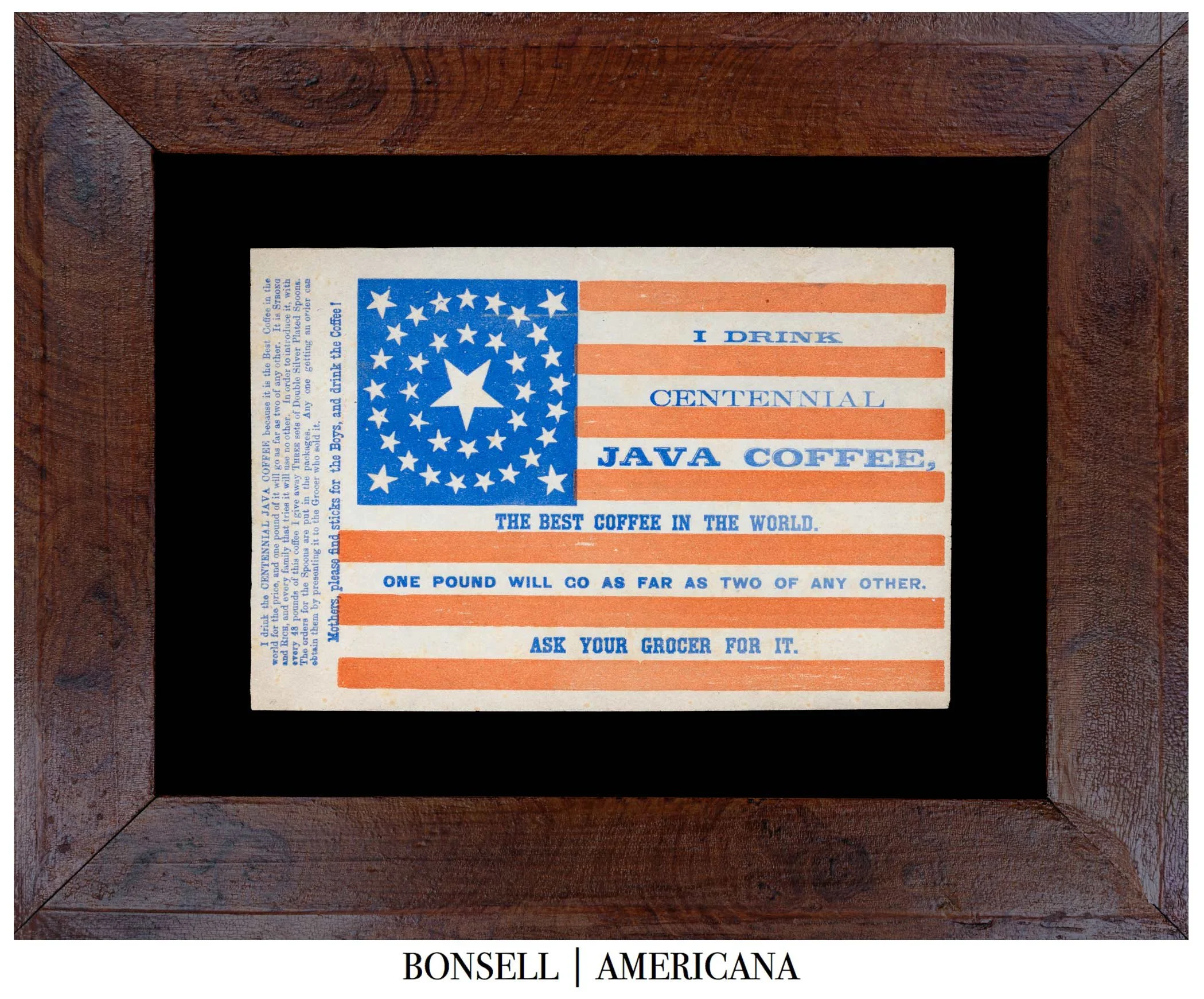
The Centennial International Exhibition of 1876 in Philadelphia further strengthened the association between the 13-star flag and Revolutionary commemoration. The centennial year prompted renewed interest in early American imagery, and 13-star flags were produced in meaningful numbers for decorative and ceremonial use. This revival of Revolutionary symbolism extended into the late nineteenth and early twentieth centuries, particularly in connection with patriotic anniversaries, veterans’ organizations, civic observances, and the approach to the 150th anniversary of American independence in 1926.
The present example belongs to that late nineteenth- to early twentieth-century revival period. Its construction characteristics are consistent with commercial flag production between approximately 1895 and 1926. The canton and stripes are made of wool bunting, the preferred material for outdoor flags due to its durability and ability to shed wind. The lengths of bunting are machine-stitched together, reflecting industrial manufacturing methods rather than hand-sewn construction.
The stars are fashioned of cotton and are double-appliquéd—applied to both sides of the canton so that the flag presents correctly from either orientation. They are secured with a zig-zag machine stitch, a method patented in 1892 and widely adopted thereafter. This stitching technique provides a reliable chronological indicator and places the flag securely in the post-1892 period.
The hoist is made of cotton twill and fitted with rolled-rim brass grommets. The grommets exhibit the warm golden tone and mellow oxidation typical of aged brass rather than plated steel. Brass was commonly used in quality commercial flag production during this period due to its resistance to corrosion, particularly for outdoor and maritime use. The rolled-rim style seen here is consistent with late nineteenth- and early twentieth-century manufacture and supports the circa 1895–1926 dating.
This example also exhibits somewhat squarer proportions than what later became standard. The proportions of the United States flag were not formally regulated until the 1912 executive order issued under President William Howard Taft, which specified the arrangement and relative dimensions of the stars and stripes for official government use. Prior to that standardization, flag makers exercised broad discretion in overall proportions, canton dimensions, and star spacing. As a result, pre-1912 flags frequently display meaningful variation in aspect ratio. The squarer presentation seen here reflects that earlier flexibility and is entirely consistent with a circa 1895–1926 date range.
The 3-2-3-2-3 configuration remained popular well into the twentieth century because it offers both visual balance and strong geometric clarity. The central diamond anchors the design, while the four corner stars stabilize the canton composition. Among the various 13-star arrangements employed during the revival period—including wreath patterns, medallions, staggered rows, and circular configurations—the 3-2-3-2-3 pattern maintained a particularly direct association with early national imagery.
Importantly, 13-star flags produced during this era were not intended to reflect the contemporary number of states in the Union. Rather, they functioned symbolically. They invoked the founding generation and the nation’s original compact, serving as emblems of continuity rather than literal enumerations of statehood. They were frequently displayed at civic buildings, maritime installations, patriotic celebrations, and commemorative events where reference to Revolutionary heritage was deliberate and understood.
Within that historical and manufacturing context, this flag represents a well-constructed commercial example from the height of the early American revival movement. Its materials, stitching techniques, hardware, and proportions align with established production practices of the late nineteenth and early twentieth centuries. It stands as a deliberate and historically grounded evocation of the nation’s beginnings, executed with the industrial craftsmanship characteristic of its era.
Conservation Process: This flag was hand sewn to silk organza, and both were hand sewn to cotton fabric. The silk organza provides a strong layer of protection and a professional appearance. The flag, the silk organza, and the cotton fabric were then hand sewn to a mounting board. To prevent the black dye in the cotton fabric from seeping into the flag, it was first washed in a standard wash and then in a dye setting wash. The flag is positioned behind Optium Museum Acrylic.
Frame: The frame features a swan profile with a gently scooped face and a stepped outer molding that creates defined depth and shadow. It is finished in a dark walnut wood veneer with visible grain variation and warm brown tonal shifts. The overall presentation is architectural and substantial without appearing overly ornate.
Condition Report: The flag exhibits scattered small holes and minor tears in the striped field, consistent with age and use. There is modest handling evidence along the hoist. Overall, the wool bunting retains good structural integrity, and the colors remain strong.
Collectability Level: The Great – Perfect for Rising Collectors
Date of Origin: 1895-1926
Number of Stars: 13
Associated War: Spanish-American War (1898) and World War I (1914-1918)
Associated State: Original 13 Colonies