Exceptional Large-Scale 36 Star Antique American Flag with Haloed Medallion | Descended in the Family of Union Veteran Elon Nelson Lee | Nevada Statehood | Circa 1865–1867







Exceptional Large-Scale 36 Star Antique American Flag with Haloed Medallion | Descended in the Family of Union Veteran Elon Nelson Lee | Nevada Statehood | Circa 1865–1867
Price: Call 618-553-2291, or email info@bonsellamericana.com
Frame Size (H x L): 38” x 53”
Flag Size (H x L): 26 ¾” x 41 ¾”
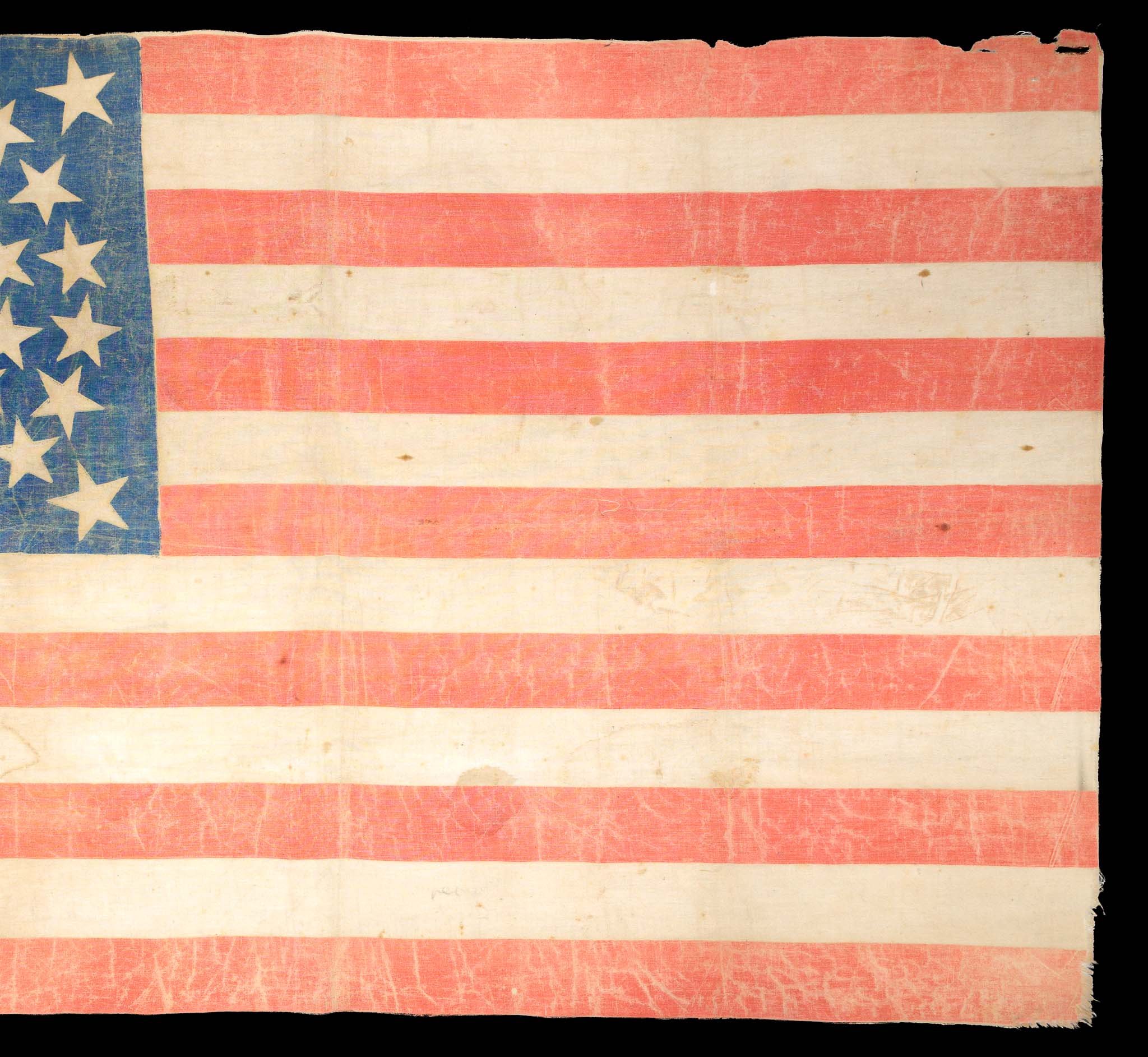
Offered is a remarkable 36-star American national flag, printed on coarse, glazed cotton, and dating to the immediate post–Civil War period. This unusually large example features one of the most visually sophisticated star configurations of the nineteenth century: a medallion pattern centered by a boldly rendered, haloed star. The flag is further distinguished by its generous scale, its striking color palette, and an extraordinary body of accompanying documentation tracing its descent within a Union household directly involved in both military and humanitarian service during the Civil War.
Flags of this quality, scale, and documentation are rare. Taken together, the object and its provenance present a compelling artifact of Union victory, postwar remembrance, and nineteenth-century American civic life.
STAR COUNT, CONFIGURATION, AND SCALE
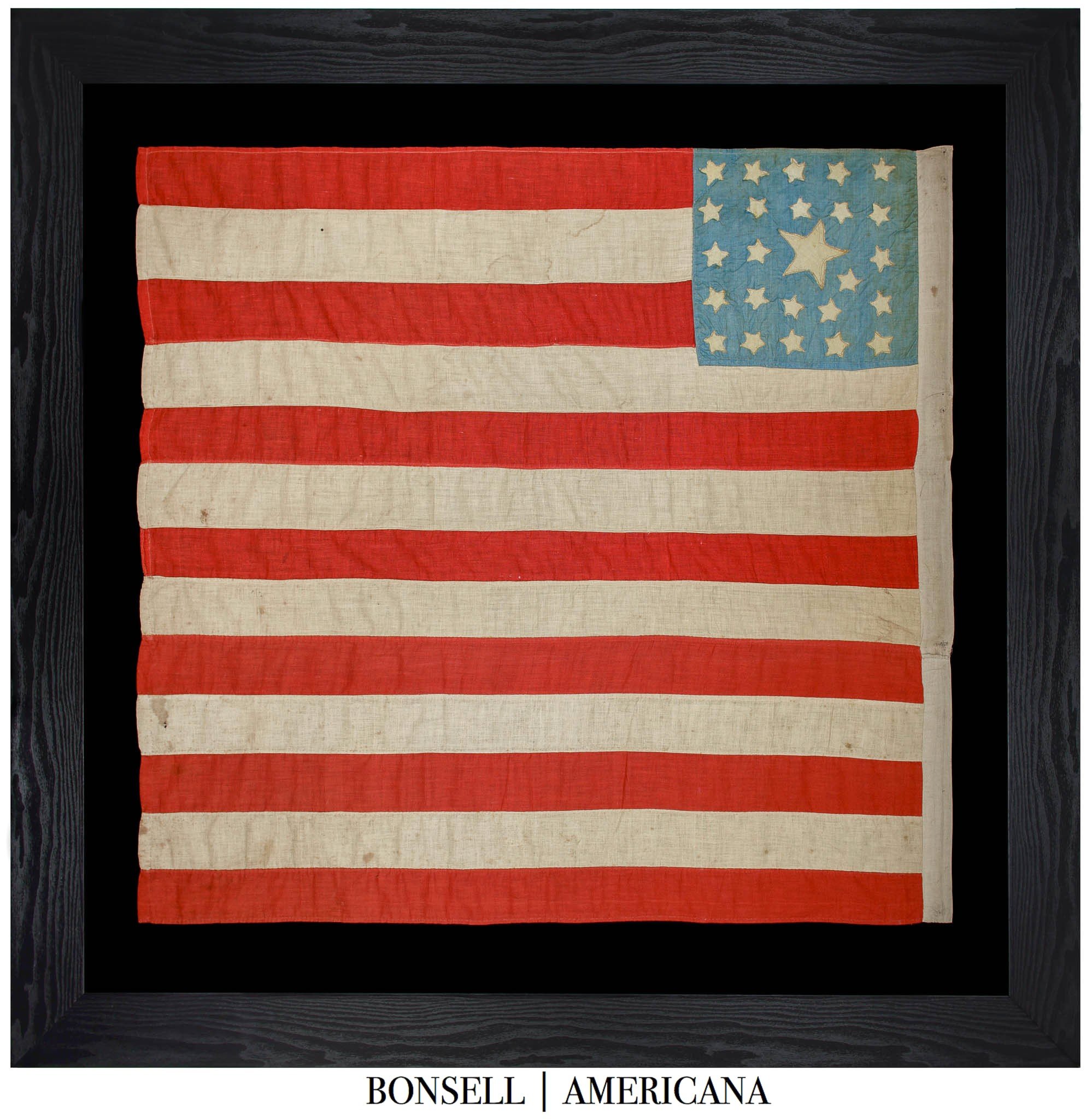
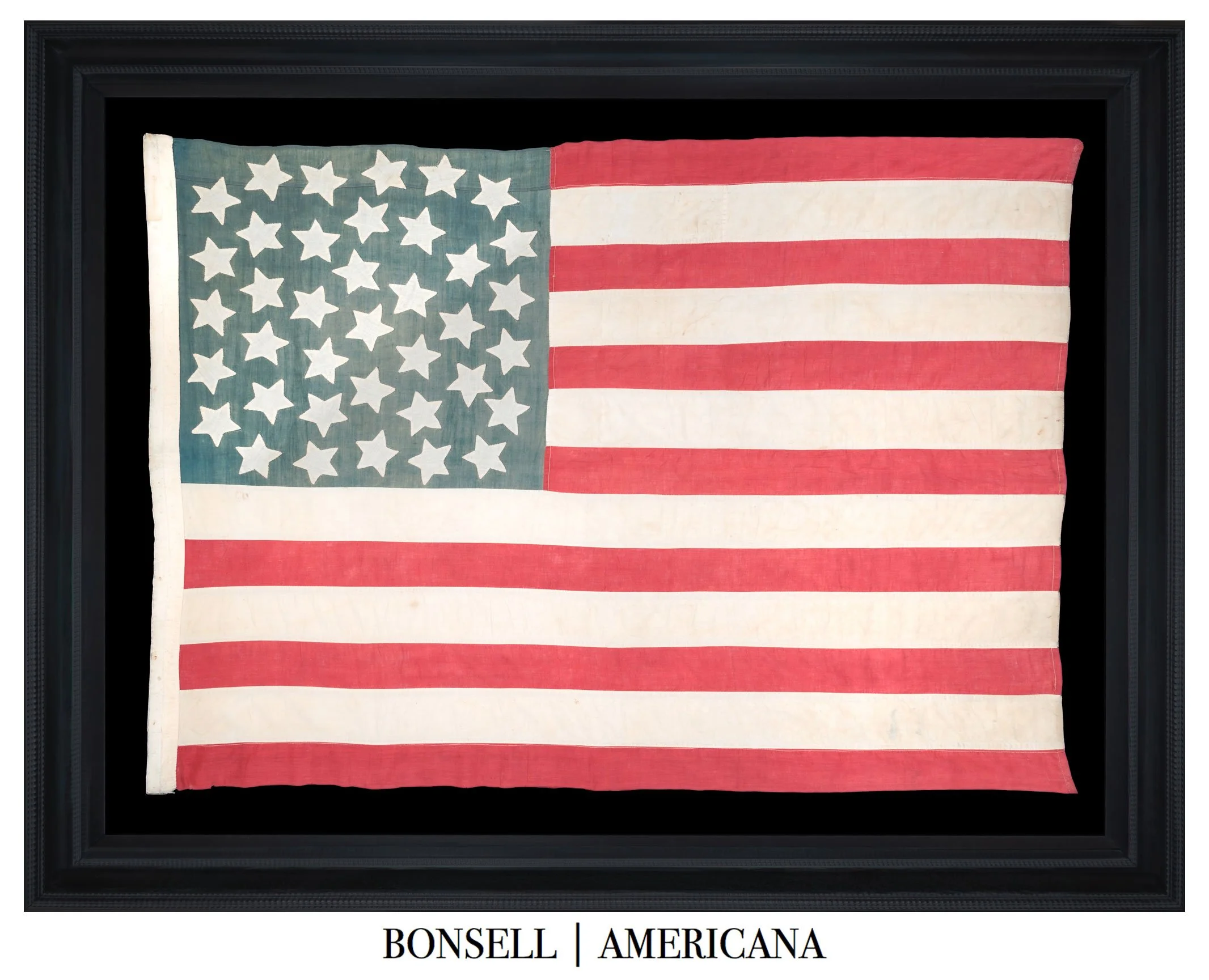
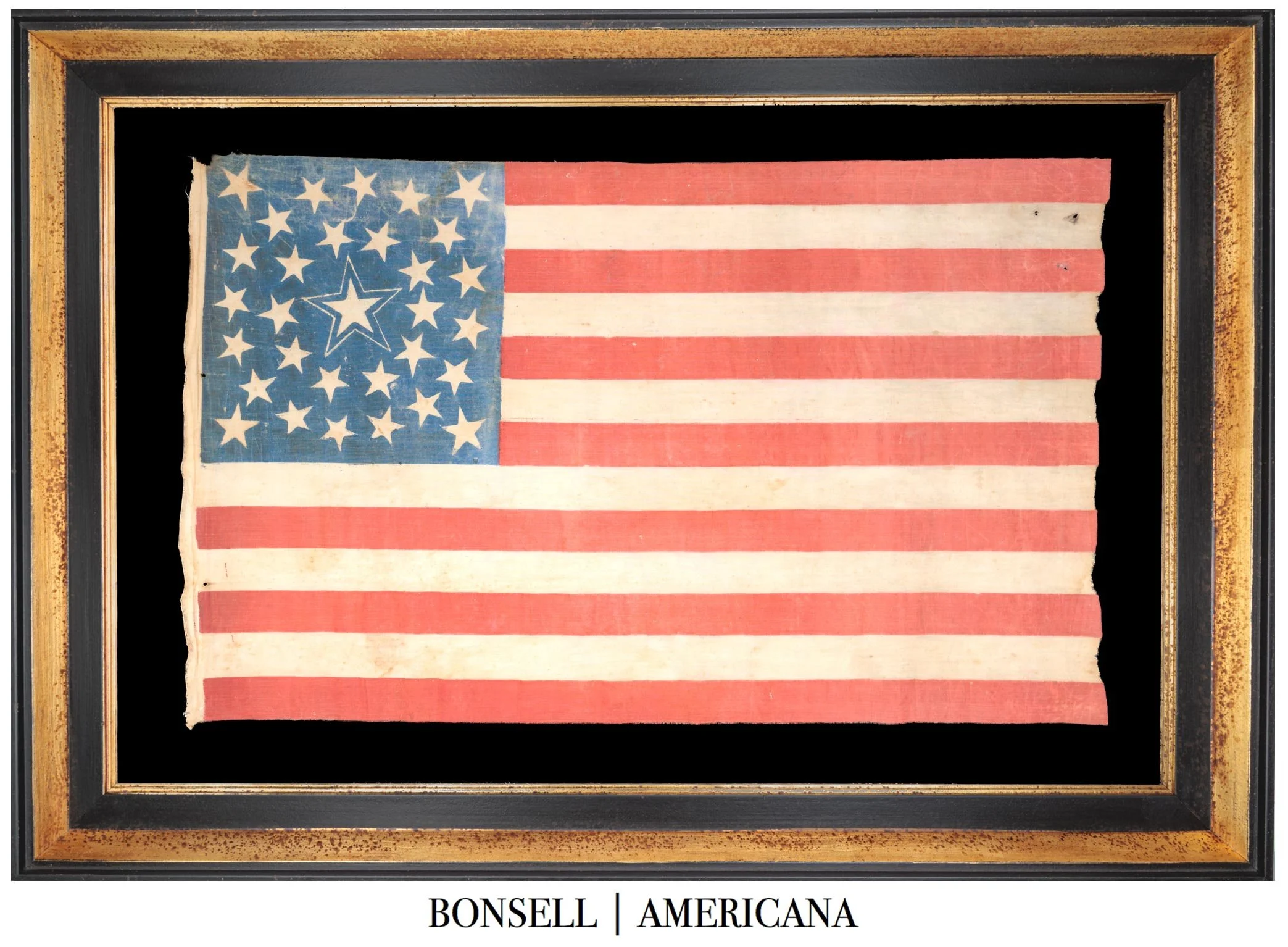
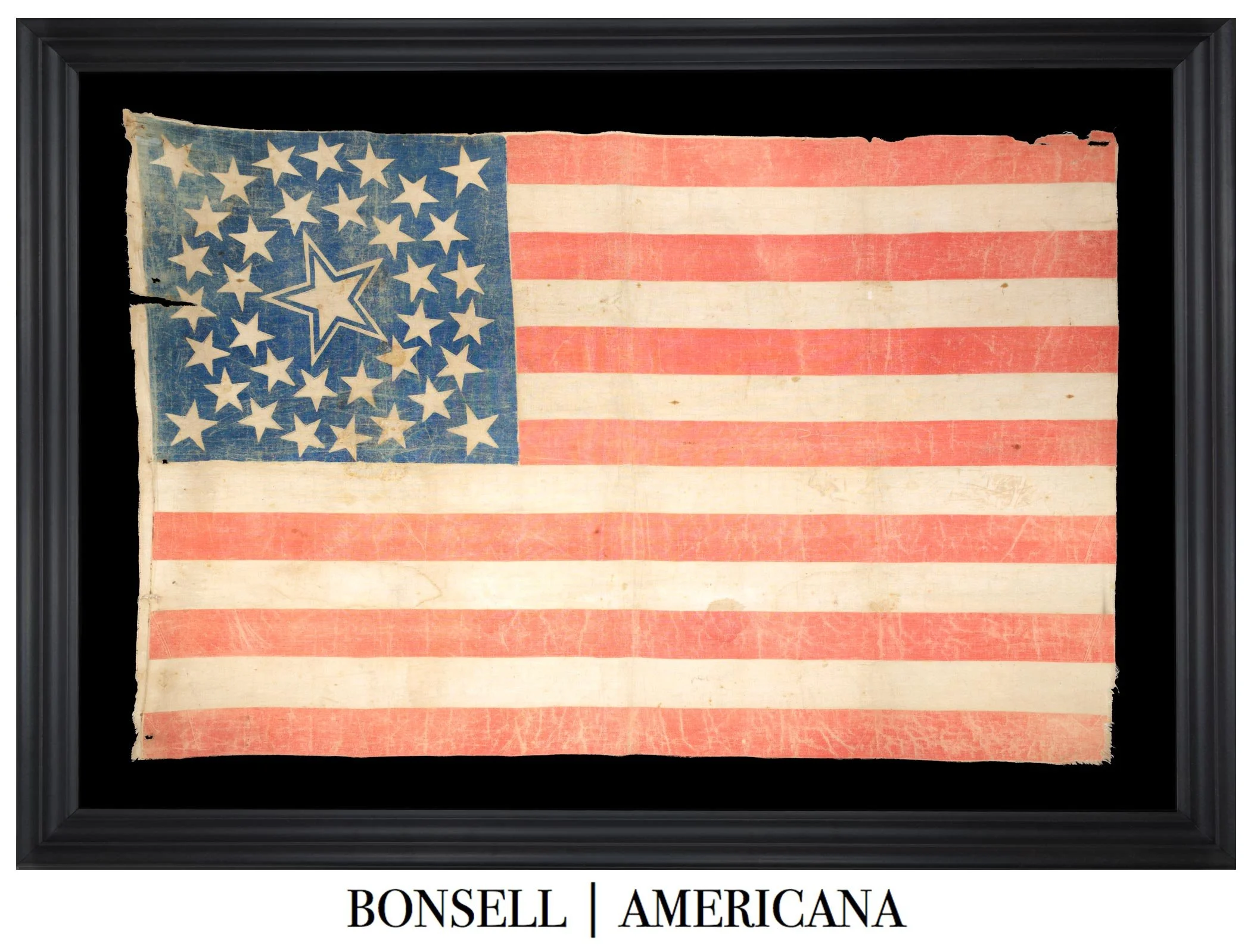
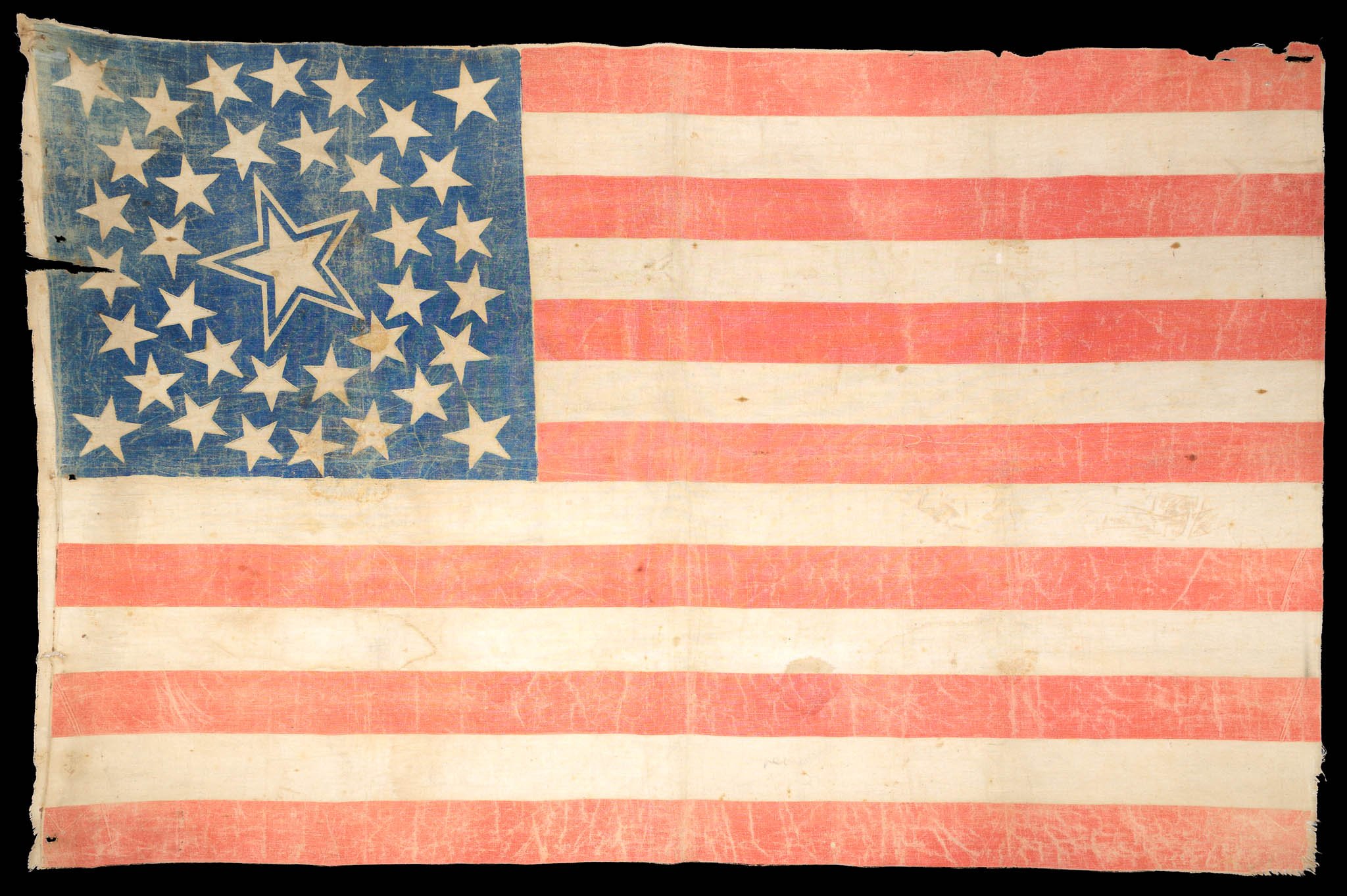
The flag bears 36 stars, representing the admission of Nevada as the 36th state. The stars are arranged in a classic medallion configuration, one of the most visually dynamic and carefully considered layouts employed by nineteenth-century flag makers.
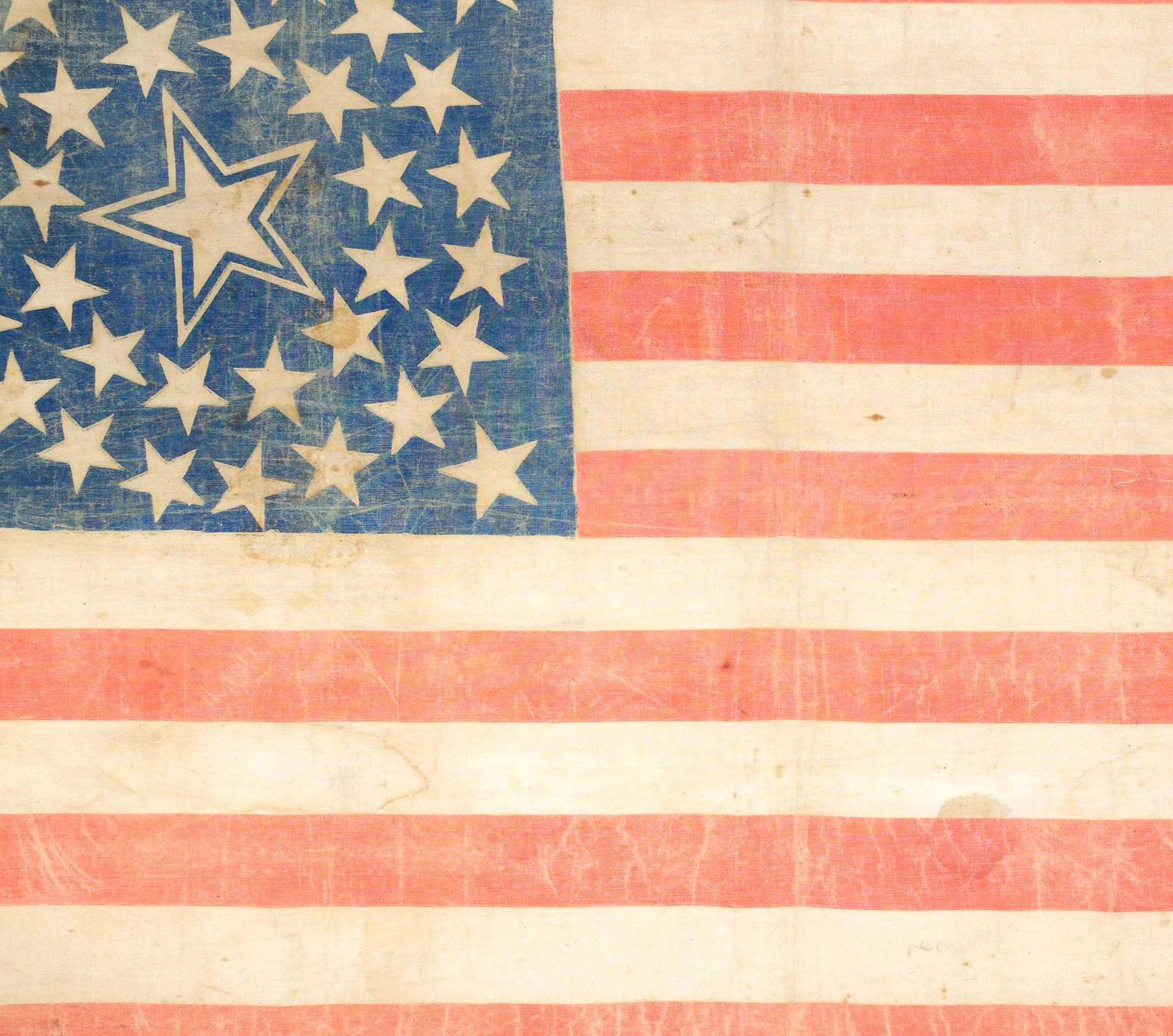
At the center of the canton lies a large, canted star, boldly outlined and visually dominant. This central device is encircled by concentric rings of smaller stars, forming a balanced and deliberate composition. Completing the design are additional stars positioned to fill the remaining field, creating a sense of motion and cohesion that distinguishes medallion patterns from later, rectilinear layouts.
Of particular note is the haloed treatment of the center star. Within the large central star appears a secondary, smaller star enclosed by a faint outline, producing a layered, dimensional effect. Haloed stars of this type are scarce and appear to be the hallmark of a single, as yet unidentified, nineteenth-century manufacturer. Surviving examples of haloed center star flags are known across several star counts — including 30-star, 34-star, 35-star, 36-star, and 42-star examples — but they remain uncommon in all forms, particularly in large formats such as this.
This flag is a large example within the category of haloed medallion flags, exceeding the dimensions of most comparable examples we have handled. Its scale amplifies the visual impact of the star configuration, allowing the central device and surrounding rings to read clearly and forcefully from a distance. Large medallion flags were well suited to prominent display — whether in public settings, civic gatherings, or significant domestic interiors — and their survival rate is markedly lower than that of smaller parade or hand-held flags.
CONSTRUCTION, MATERIALS, AND COLOR
The flag is printed on coarse, glazed cotton, a textile commonly employed for nineteenth-century civilian and ceremonial flags. The glaze provided a modest sheen and helped stiffen the fabric, allowing printed imagery to register crisply while remaining lightweight.
The stars and stripes were applied through a stamping or printing process, rather than appliqué. This method allowed for efficient production while still accommodating creative freedom in star arrangement — a freedom that flag makers would gradually abandon as industrial standardization increased toward the end of the century. Printed cotton flags of this type were distinct from wool bunting flags, which were more commonly produced for naval and military use. Cotton examples were intended for patriotic display, political events, commemorations, and domestic settings.
The canton presents as a muted, slate-blue field, while the red stripes have mellowed to a warm salmon-to-orange hue. This coloration is characteristic of mid-nineteenth-century dye chemistry and long-term oxidation. During this period, red dyes were most commonly derived from madder root and cochineal, both of which could produce a range of tones depending on concentration, mordants, and exposure to light. Over time, these dyes often shift away from deep crimson toward softer, warmer hues, lending early flags a distinctive and highly valued patina.
THE 36-STAR FLAG IN HISTORICAL CONTEXT
Nevada was admitted to the Union on October 31, 1864, in the midst of the Civil War. As was customary, however, the official adoption of a new star count did not occur until the following July 4, 1865, meaning that 36-star flags became official several months after the conclusion of hostilities.
As such, the 36-star flag occupies a unique position in American history. It was the first official national flag of the postwar United States and remained in use throughout the early years of Reconstruction, until July 4, 1867, when the 37-star flag was introduced to mark Nebraska’s statehood.
Nevada’s admission itself was politically and economically significant. Despite its small population, the territory’s vast mineral wealth — most notably the Comstock Lode — played a critical role in financing the Union war effort. President Abraham Lincoln and congressional Republicans also recognized the strategic value of Nevada’s electoral votes during the pivotal 1864 election. In an extraordinary technological feat, Nevada’s entire state constitution was transmitted by telegraph to Washington, D.C., enabling rapid admission.
Flags bearing 36 stars thus became potent symbols of Union preservation, victory, and national continuity at the moment when the country sought to define itself anew.
FAMILY NOTE, PROVENANCE, AND DOCUMENTATION
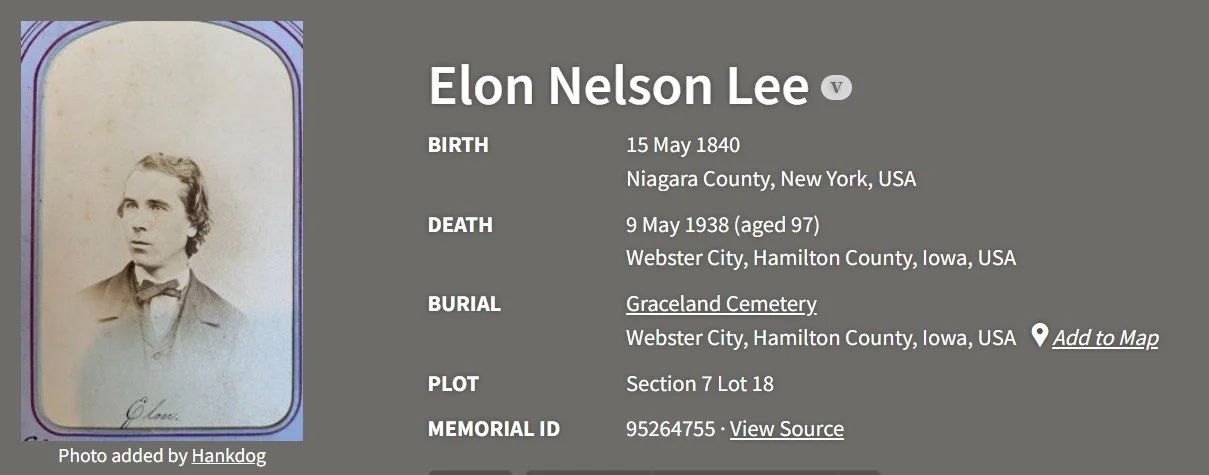
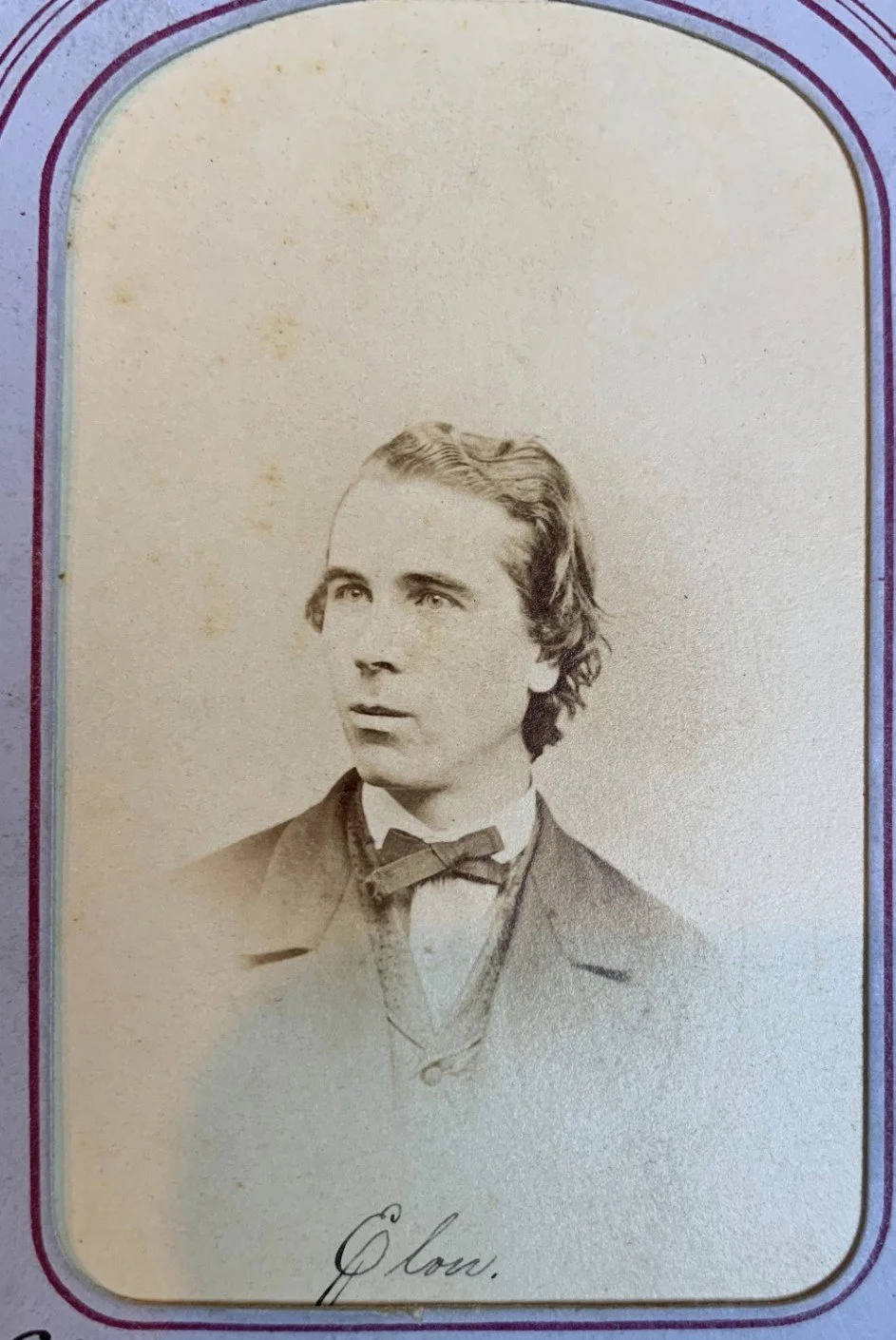
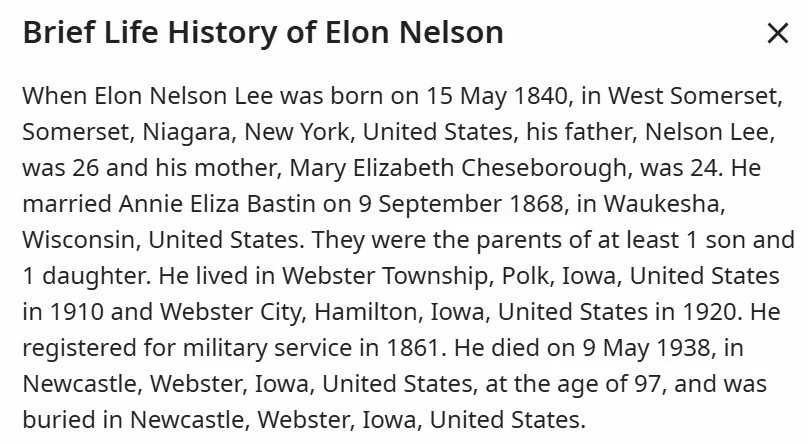
Accompanying the flag is an extensive written note provided by a direct descendant, outlining the family history of Elon Nelson Lee, a Union veteran in whose household the flag was preserved. According to the family account, the flag was passed from Lee to later generations and remained within the family well into the twentieth century. In the early 1950s, it was given by Lee’s granddaughter to her daughter and stored wrapped in tissue in a drawer at the base of a bookcase, where it remained carefully preserved until it was ultimately passed down again.
What distinguishes this note is not sentiment alone, but its remarkable consistency with a wide body of independent documentation, including military records, university publications, genealogical society material, and published county histories. The family narrative aligns precisely with known service dates, locations, and postwar life events, elevating it from anecdotal history to credible provenance.
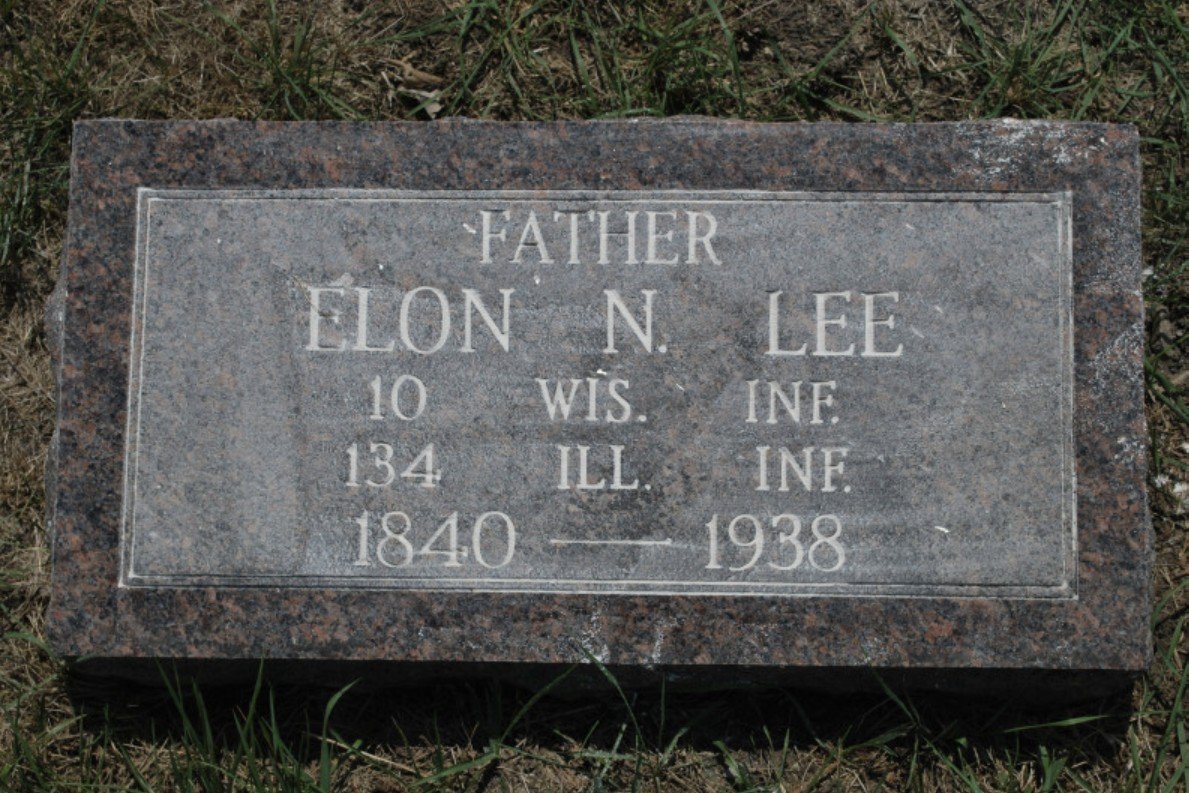
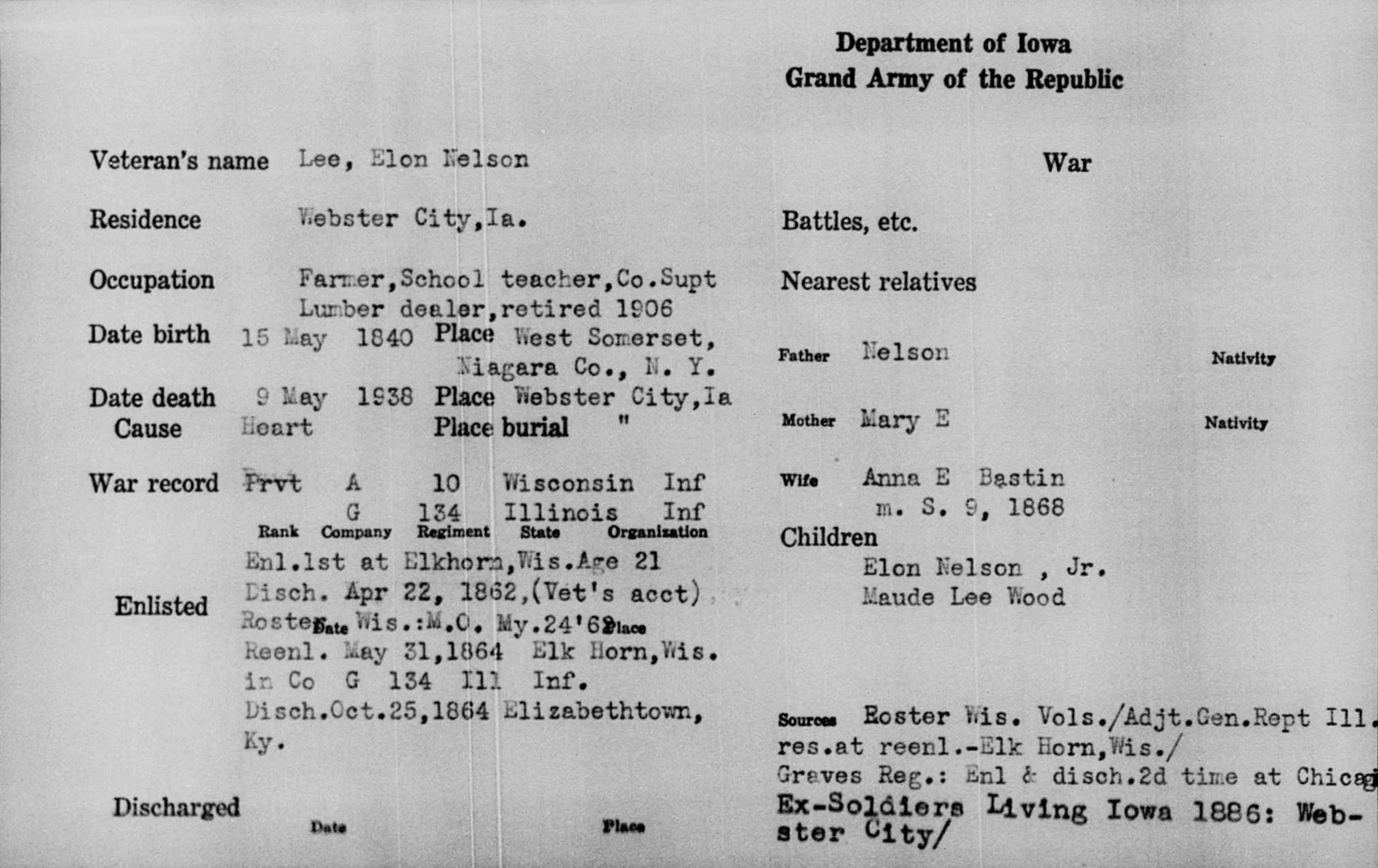
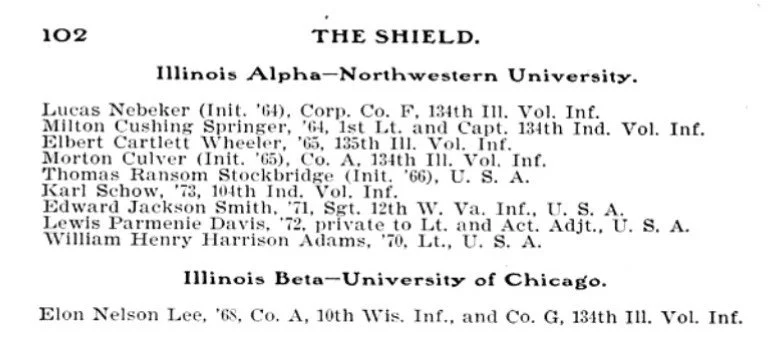
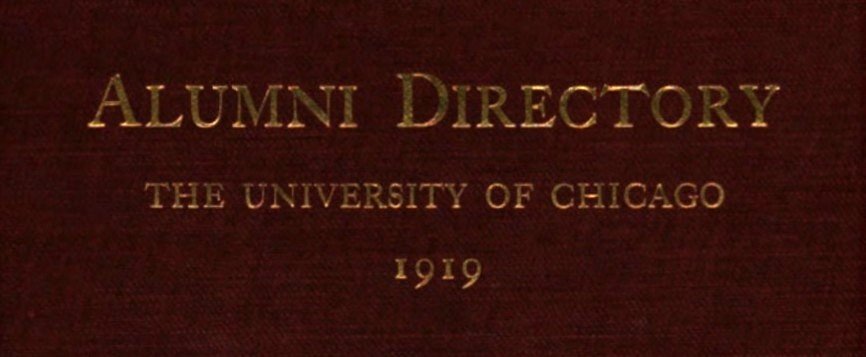
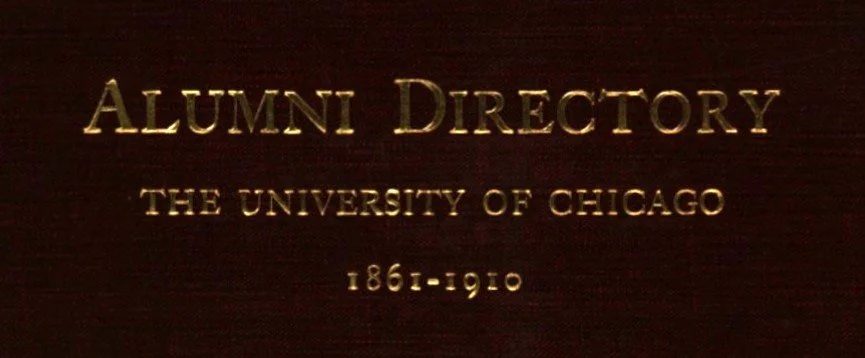
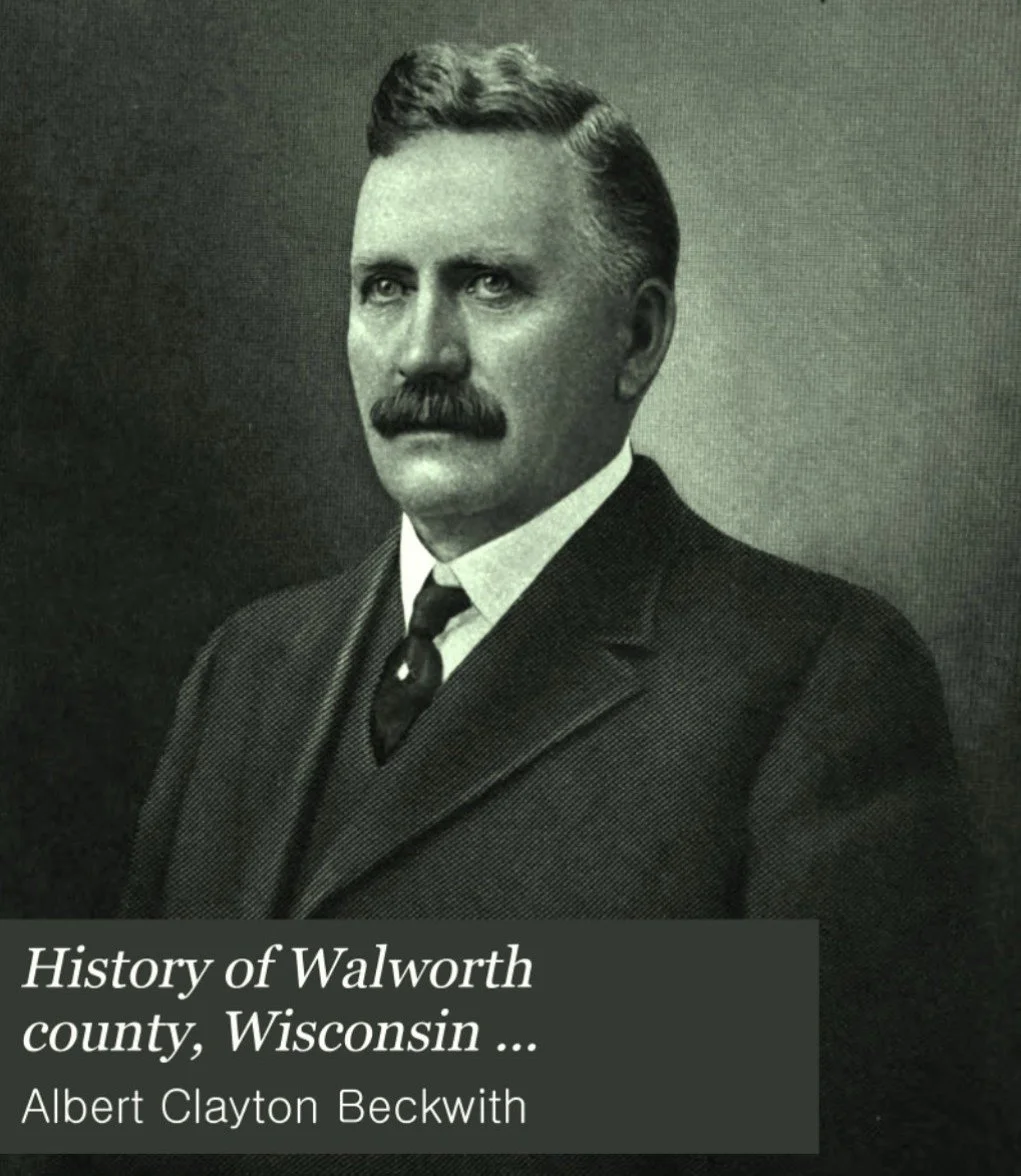
The flag descends in the family of Elon Nelson Lee (1840–1938), whose life and service are documented across multiple independent sources, including Grand Army of the Republic records; regimental rosters for the 10th Wisconsin Infantry and the 134th Illinois Infantry; University of Chicago student and alumni publications; fraternity and alumni records (The Shield); county and genealogical histories from Wisconsin and Iowa; and family letters, diaries, and typed transcriptions. Few privately held American flags are accompanied by such a broad and internally consistent documentary record.
ELON NELSON LEE: SERVICE, EDUCATION, AND CIVIC LIFE
Elon Nelson Lee enlisted twice in the Union Army. His first enlistment was in Company A, 10th Wisconsin Infantry, a regiment that saw service in the Western Theater. During this term, Lee fell seriously ill while stationed in Kentucky and was ultimately discharged in 1862. Though officially diagnosed with tuberculosis of the lungs, later family accounts suggest pneumonia resulting from measles as the more likely cause.
In 1864, while attending the University of Chicago, Lee joined fellow students and faculty in enlisting for a second term of service. He entered Company G, 134th Illinois Infantry, a 100-day regiment raised for rear-area security and logistical duties, freeing veteran troops for frontline service. Lee was discharged later that year in Elizabethtown, Kentucky. While not associated with major battlefield engagements, his service reflects the broader reality of Union military life in the Western Theater, where disease, supply operations, and occupation duties were as consequential as combat.
Lee returned to the University of Chicago following his wartime service and completed his studies, earning the degree of S.B. (Bachelor of Science) with the Class of 1868, reflecting period academic conventions. In civilian life, he became a school superintendent, farmer, and lumber dealer, ultimately residing in Webster City, Iowa. His professional trajectory reflects the civic engagement and upward mobility characteristic of many educated Union veterans during the Reconstruction and post-Reconstruction eras.
An extraordinary dimension of this flag’s history lies in the documented wartime service of Lee’s mother, Mary Elizabeth Lee. Published county histories and genealogical records confirm that she traveled south in 1862 to care for her ailing son in Kentucky. Witnessing widespread suffering among wounded and sick soldiers, she became actively involved in sanitary aid and hospital service, working in Louisville, Danville, Nashville, and Murfreesboro. Her efforts were supported by credentials and letters from state officials and the Chicago Sanitary Aid Society, situating the Lee household as active participants in the Union war effort on both military and civilian fronts.
A FLAG OF UNION MEMORY AND CONTINUITY
This 36-star flag should be understood not as a battlefield relic, but as a postwar emblem of Union victory and remembrance, preserved within a household that had lived the war intimately. Its medallion configuration, haloed center star, large scale, and warm coloration reflect the artistic freedom of nineteenth-century flag making at its height.
Its survival, coupled with exceptional documentation, offers a rare opportunity to study an object that bridges the lived experience of the Civil War with the national identity forged in its aftermath. Few flags encapsulate this transition as completely or as credibly as this example.
Conservation Process: The flag was hand sewn to a cotton fabric backing, which was then hand sewn to a mounting board. To prevent dye migration from the black cotton, the fabric was pre-washed and treated with a dye-setting wash prior to mounting. The flag is displayed behind Optium Museum Acrylic.
Frame: The frame is a deep-profile moulding with a simple, classical profile, finished in a dark cocoa-brown tone. Its broad face provides visual support without ornament, allowing the flag to remain the primary focus. The subdued finish is well suited to the display of nineteenth-century textiles.
Condition Report: The flag presents in very attractive, honest condition, with strong overall eye appeal. There is expected age-related wear, including scattered staining, minor fabric losses along the hoist and edges, and areas of surface abrasion consistent with nineteenth-century glazed cotton flags that saw use and long-term storage. The canton retains good visual integrity, with the haloed center star remaining crisp and legible despite light wear and toning. The stripes exhibit pleasing oxidation and mellowed coloration, contributing to a warm, balanced presentation that enhances the flag’s historic character rather than detracting from it.
Collectability Level: The Extraordinary – Museum Quality Offerings
Date of Origin: 1864-1867
Number of Stars: 36
Associated War: Civil War (1861-1865)
Associated State: Nevada
Additional Research Materials
The historical account presented here derives from extensive family documentation provided by a direct descendant of Elon Nelson Lee. While the underlying letters, diaries, and related writings remain in the possession of the family, their existence and content are well documented. For reasons of privacy, the family member’s name is not published; however, it is retained on file. Should a future owner wish to pursue further research, we would be pleased to facilitate an introduction, at the family’s discretion.