Outstanding 48 Star Antique Flag Salesman Sample | Striking Stacked Construction | Arizona Statehood | Circa 1912–1930
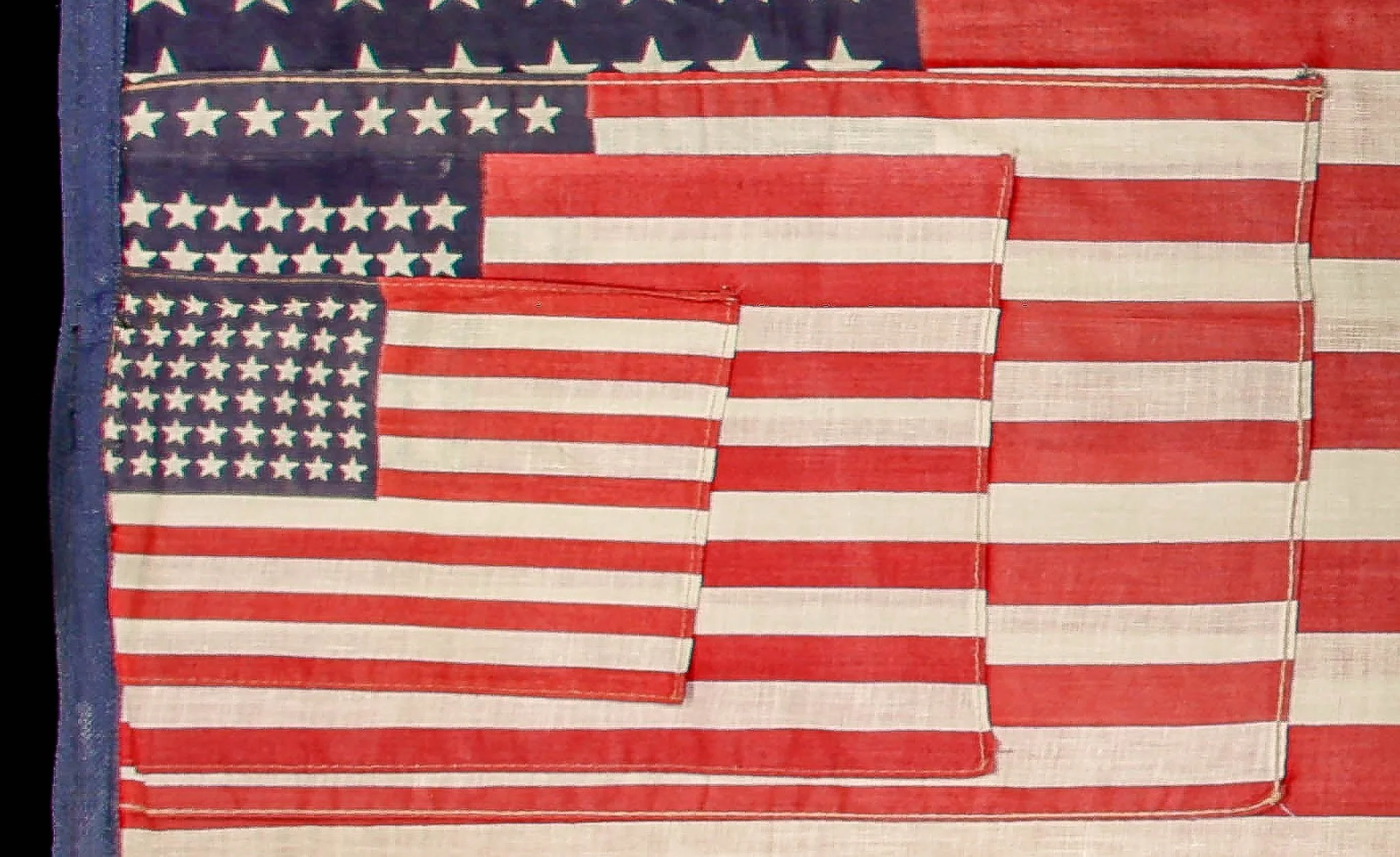
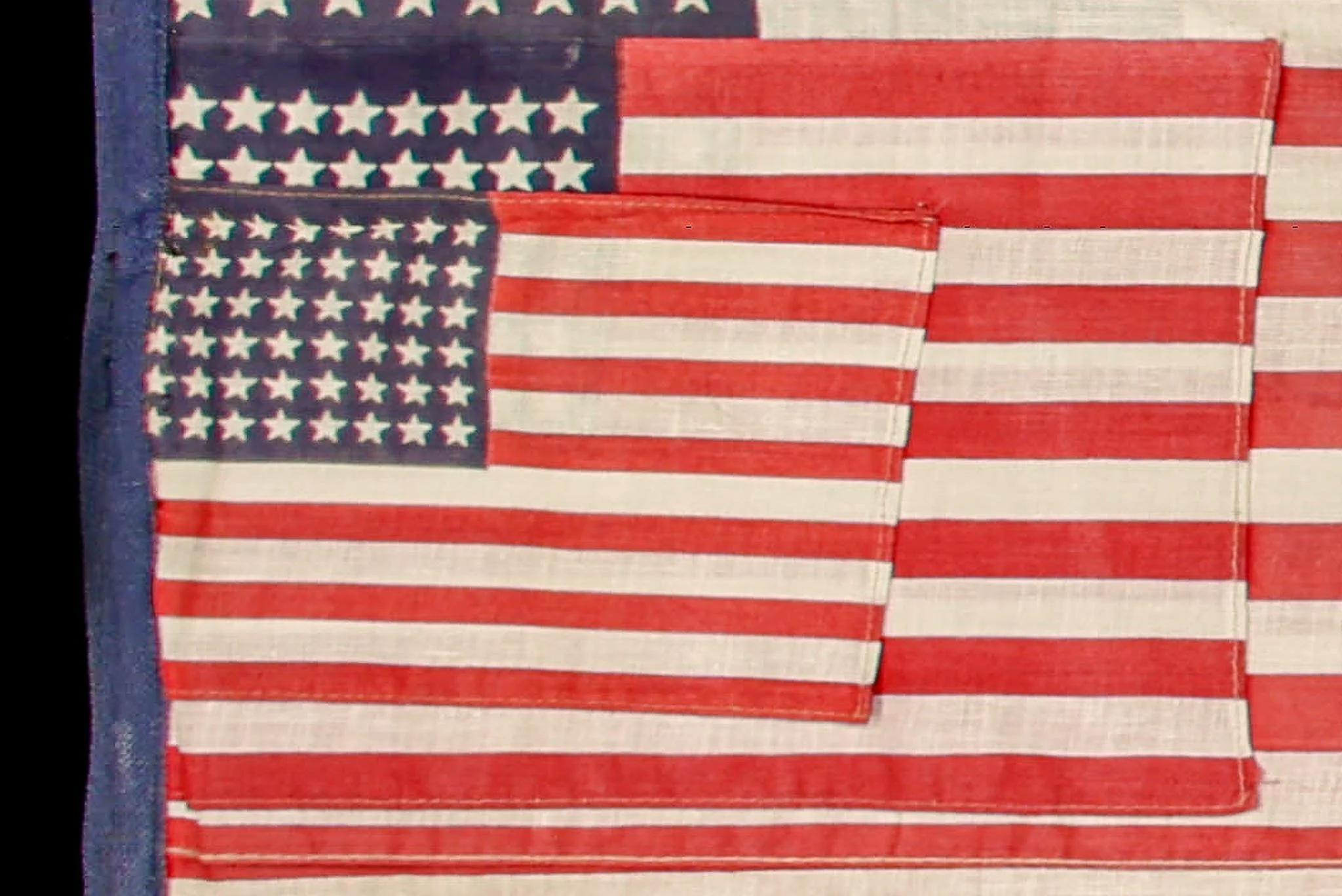
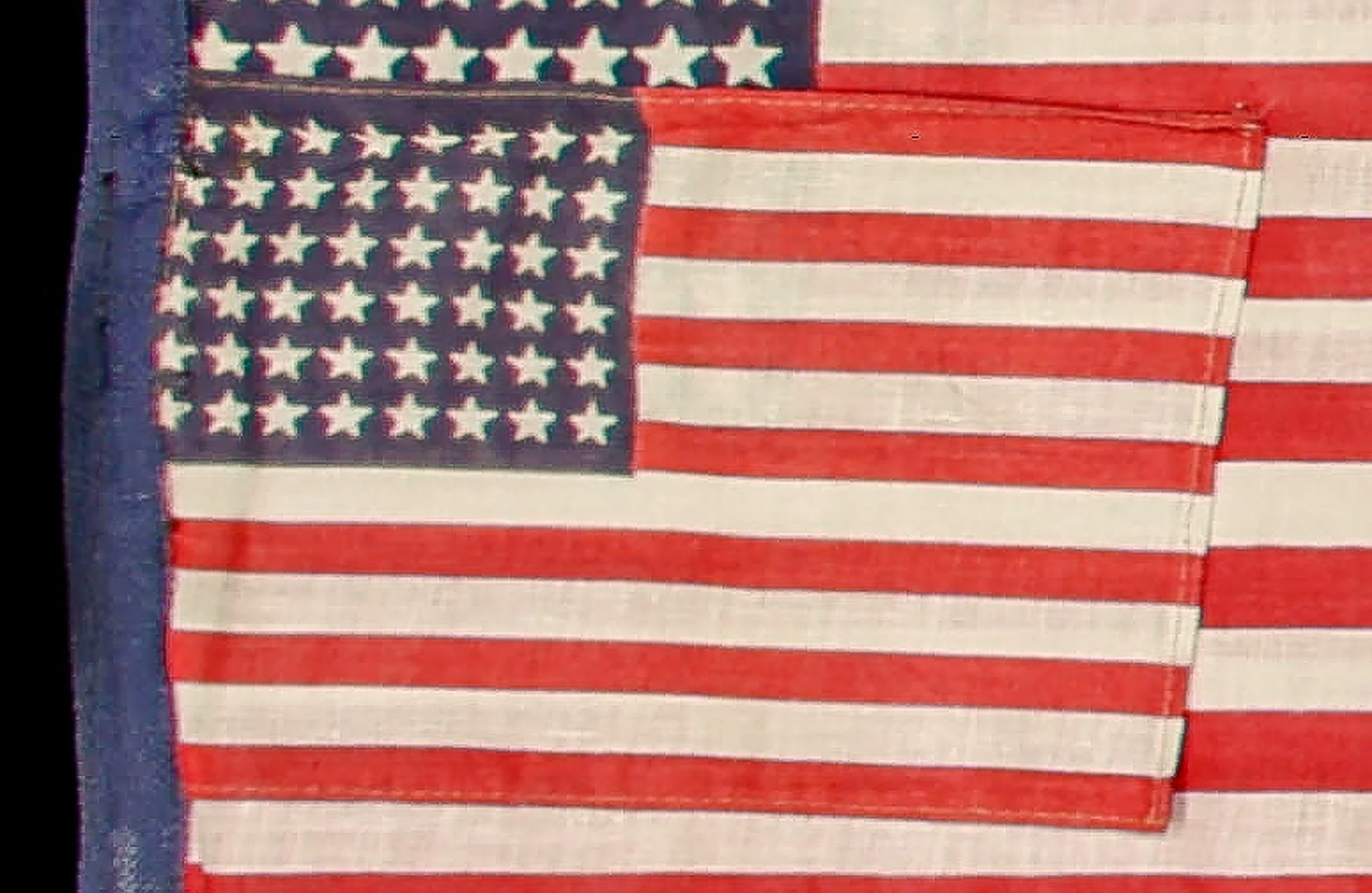
Outstanding 48 Star Antique Flag Salesman Sample | Striking Stacked Construction | Arizona Statehood | Circa 1912–1930
Price: Call 618-553-2291, or email info@bonsellamericana.com
Frame Size (H x L): 40.75” x 46.75”
Flag Size (H x L): 29” x 46.75”
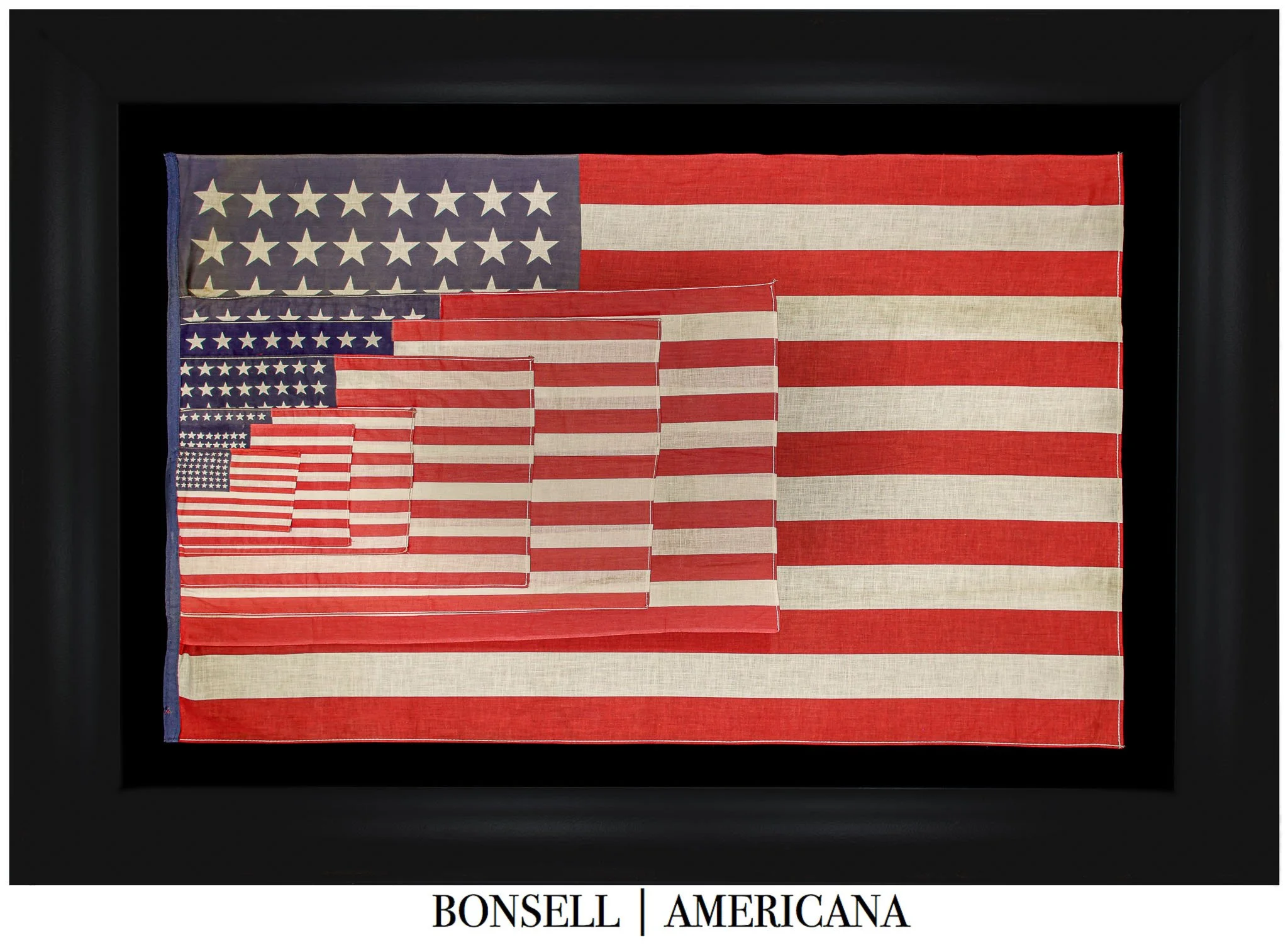
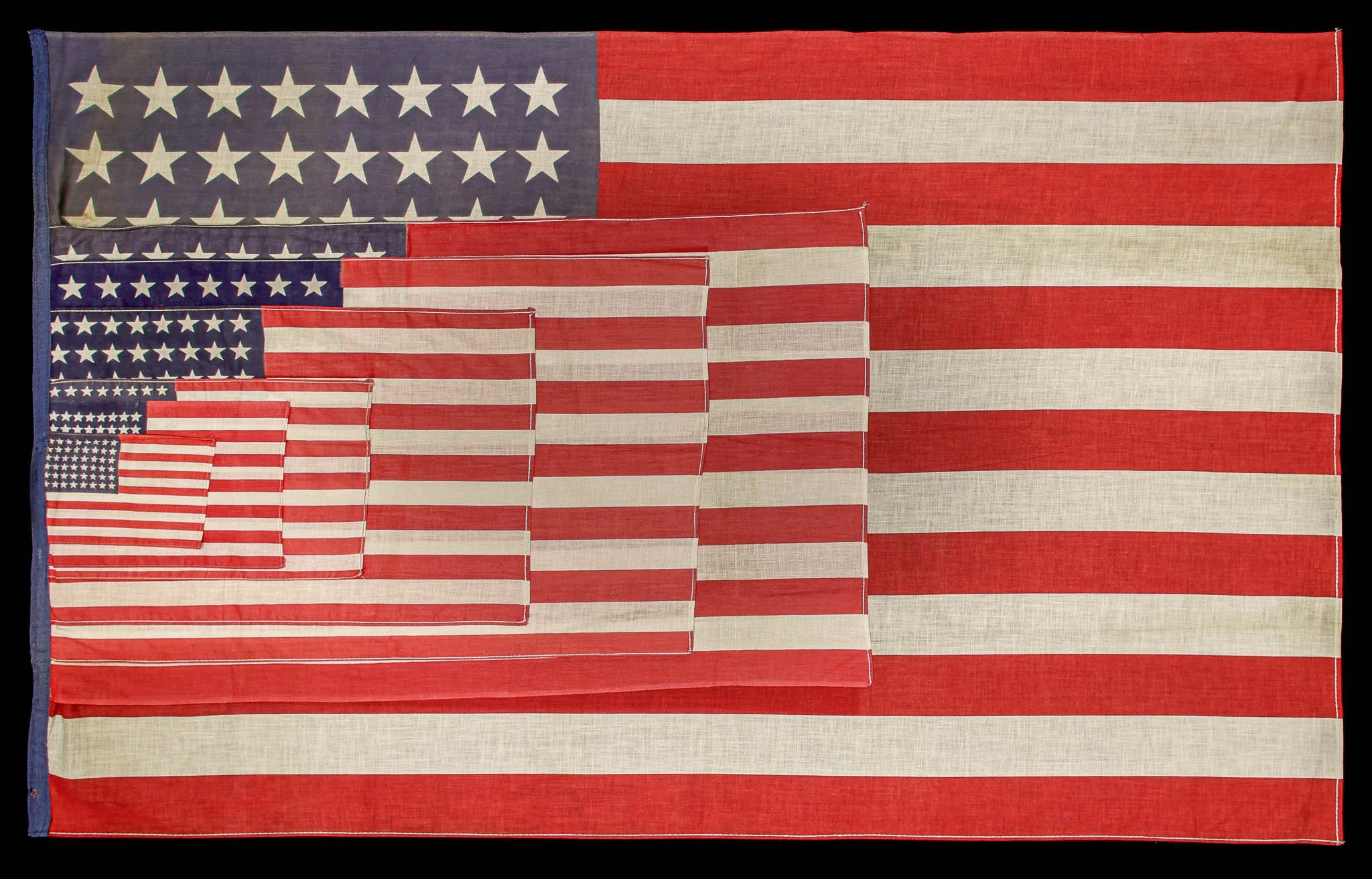
Offered is an exceptional 48-star antique American flag salesman sample, dating to the period between 1912 and circa 1930. Salesman samples such as this were produced in limited numbers during the late 19th and early 20th centuries, serving as compact, portable representations of a manufacturer’s full-size offerings. Traveling salesmen relied on these reduced examples to present styles, construction, and materials to retailers, while shopkeepers, in turn, used them to demonstrate available products to prospective customers without the need to unfurl full-scale flags. Because they were utilitarian tools rather than objects intended for public display, survival rates are extraordinarily low.
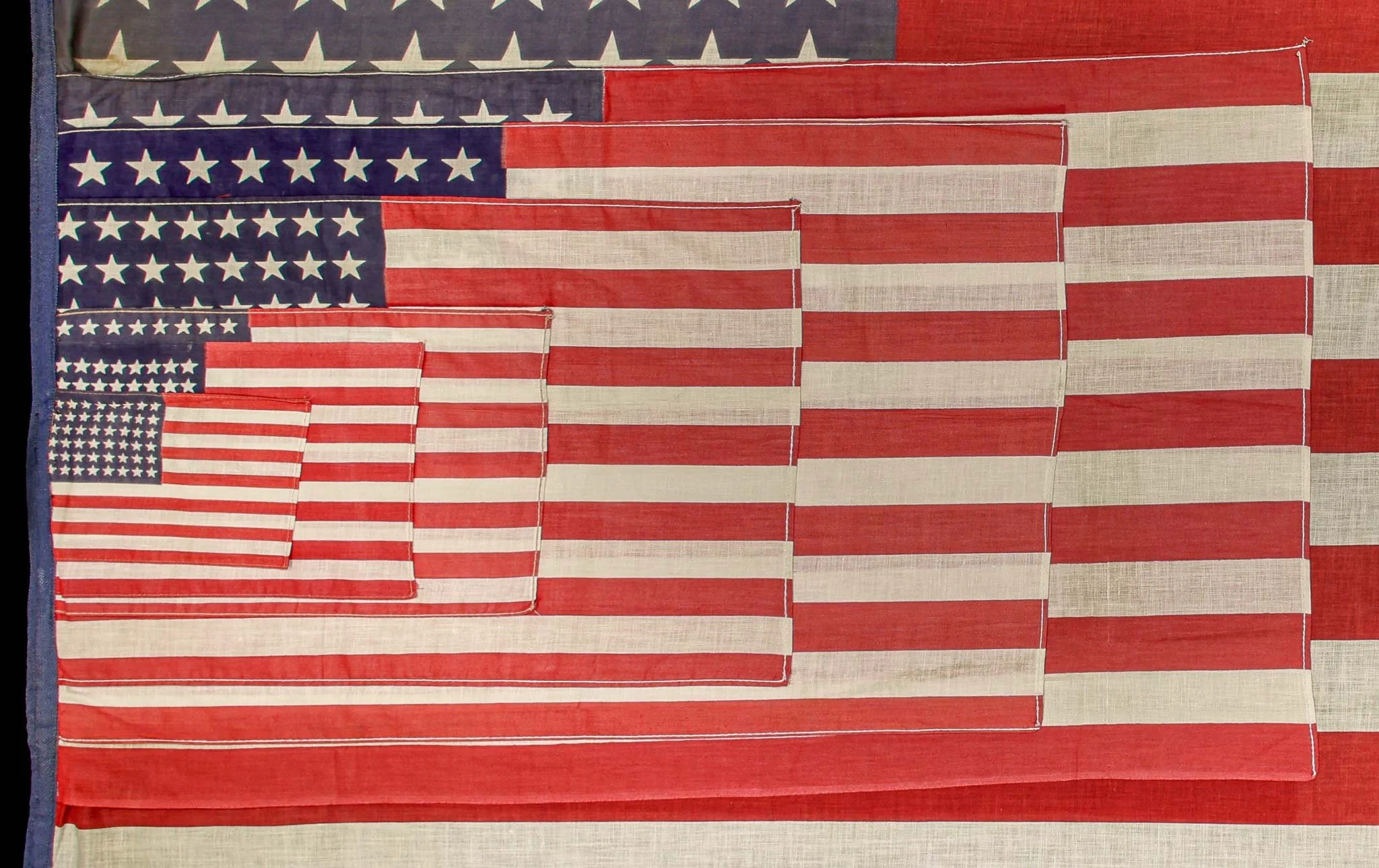
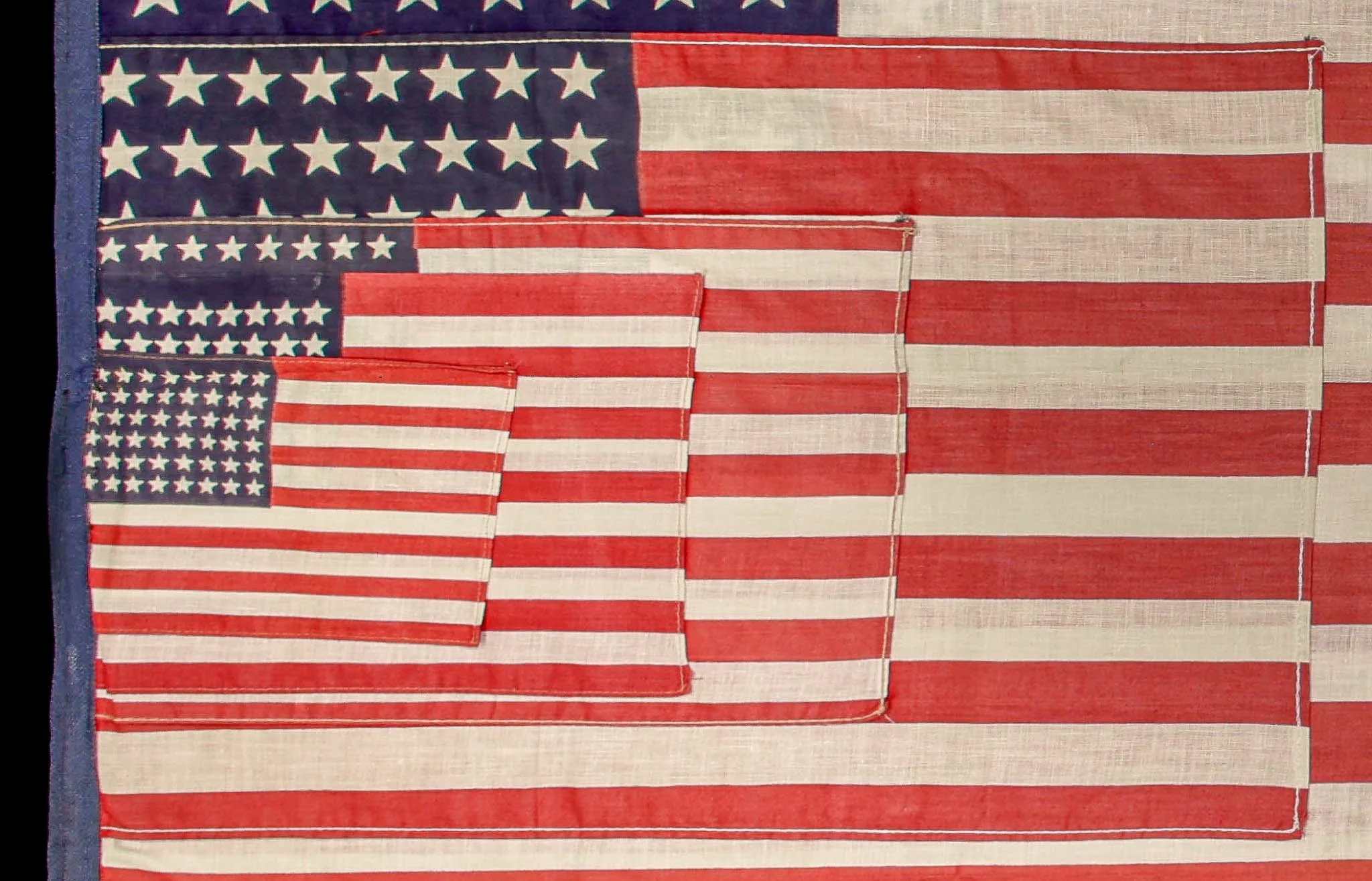
This remarkable example is composed of seven individual cotton flags, carefully stacked and joined in descending size, with the largest flag forming the base and progressively smaller flags layered atop it. The resulting visual effect is both graphic and sophisticated, offering a clear demonstration of scale, proportion, and workmanship while simultaneously functioning as a striking work of American folk art. Its appearance bears a notable resemblance to Jasper Johns’ 1958 painting Three Flags, in which a large, medium, and small American flag are similarly superimposed. Johns’ work—acquired by the Whitney Museum of American Art in 1980 for $1 million—has become one of the most celebrated images in postwar American art. While this flag salesman sample predates Johns’ painting by several decades, the compositional parallel underscores the enduring visual power of the layered flag motif in American culture.
Flag salesman samples are among the rarest forms of American patriotic textiles. Fewer than a dozen are known to exist across all star counts, and 48-star examples are represented by only a small handful of documented specimens. These appear in two distinct formats: one in which the individual flags are smaller and joined by a white cotton header, and another—such as the present example—in which the flags are larger and joined by a blue cotton header. A notable example of the latter format once resided in the esteemed Richard Pierce collection. Beyond the 48-star format, only one 38-star sample and one 45-star sample are presently known, bringing the total number of documented flag salesman samples to approximately seven.
Collectors value flag salesman samples not only for their extreme scarcity, but also for their dual role as historical artifacts and visually compelling objects. Unlike standard parade or garrison flags, these pieces document the commercial side of American flag production, providing insight into how manufacturers marketed their wares and how retailers engaged customers. The stacked, graduated presentation transforms a practical sales aid into an object of considerable aesthetic presence, one that bridges the worlds of folk art, design history, and national symbolism. In the case of 48-star examples, this appeal is further enhanced by the flag’s long official lifespan and its association with some of the most transformative decades in American history.
Until 1912, American flag makers enjoyed broad freedom in arranging the stars within the canton, resulting in a wide variety of whimsical and folk-influenced patterns. Early 48-star flags often display staggered or offset star arrangements. This changed in June of 1912, when President William Howard Taft issued Executive Order No. 1556, mandating a standardized rectilinear configuration for the 48-star flag, arranged in six horizontal rows of eight stars each. The sampler offered here exhibits this precise rectilinear pattern, strongly indicating production in or after 1912. Based on construction methods and materials, it is reasonable to conclude that it predates the widespread changes in flag manufacture that occurred around 1930.
The 48-star flag commemorates the admission of New Mexico and Arizona as the 47th and 48th states, on January 6 and February 14, 1912, respectively. The design officially became the national flag on July 4, 1912, and remained so for an extraordinary forty-seven years—the longest official tenure of any American flag. It flew during the administrations of Presidents Taft, Wilson, Harding, Coolidge, Hoover, Roosevelt, Truman, and Eisenhower, and during some of the most consequential events in the nation’s history, including World War I, World War II, and the Korean War.
The 48-star flag was ultimately replaced on July 4, 1959, following the admission of Alaska to the Union and the adoption of the 49-star flag. Today, 48-star flags are widely regarded as emblematic of early-20th-century America, and salesman samples such as this stand among the most coveted and intellectually rich forms of American patriotic textiles.
Conservation Process: This flag was hand sewn to cotton fabric, and both were hand sewn to a mounting board. To prevent the black dye in the cotton fabric from seeping into the flag, it was first washed in a standard wash and then in a dye setting wash. The flag is positioned behind Optium Museum Acrylic.
Frame: The flag is presented in a deep, black-painted frame with a softly scooped profile and a lightly weathered surface that reveals subtle undertones of warm brown beneath the finish. The design is both substantial and refined, with a gently burnished texture that complements the age and character of the flag. Its depth allows the textile to be recessed slightly, giving the presentation a shadowbox effect that enhances contrast and visual presence.
Condition Report: Overall, the flag presents very well, with strong, vibrant coloration and excellent graphic impact in the stacked format. There is expected age and handling wear, including light soiling and soft creasing from prior folding/display. Close inspection reveals minor fraying and small edge wear—most noticeably at a few corners and along the hoist binding—along with a few tiny pinprick holes consistent with age and use.
Collectability Level: The Best – Perfect for Advanced Collectors
Date of Origin: 1912-1930
Number of Stars: 48
Associated War: WWI
Associated State: Arizona