Spectacular and Scarce 31 Star American Parade Flag | Medallion Configuration with Haloed Center Star | California Statehood | Circa 1850–1858
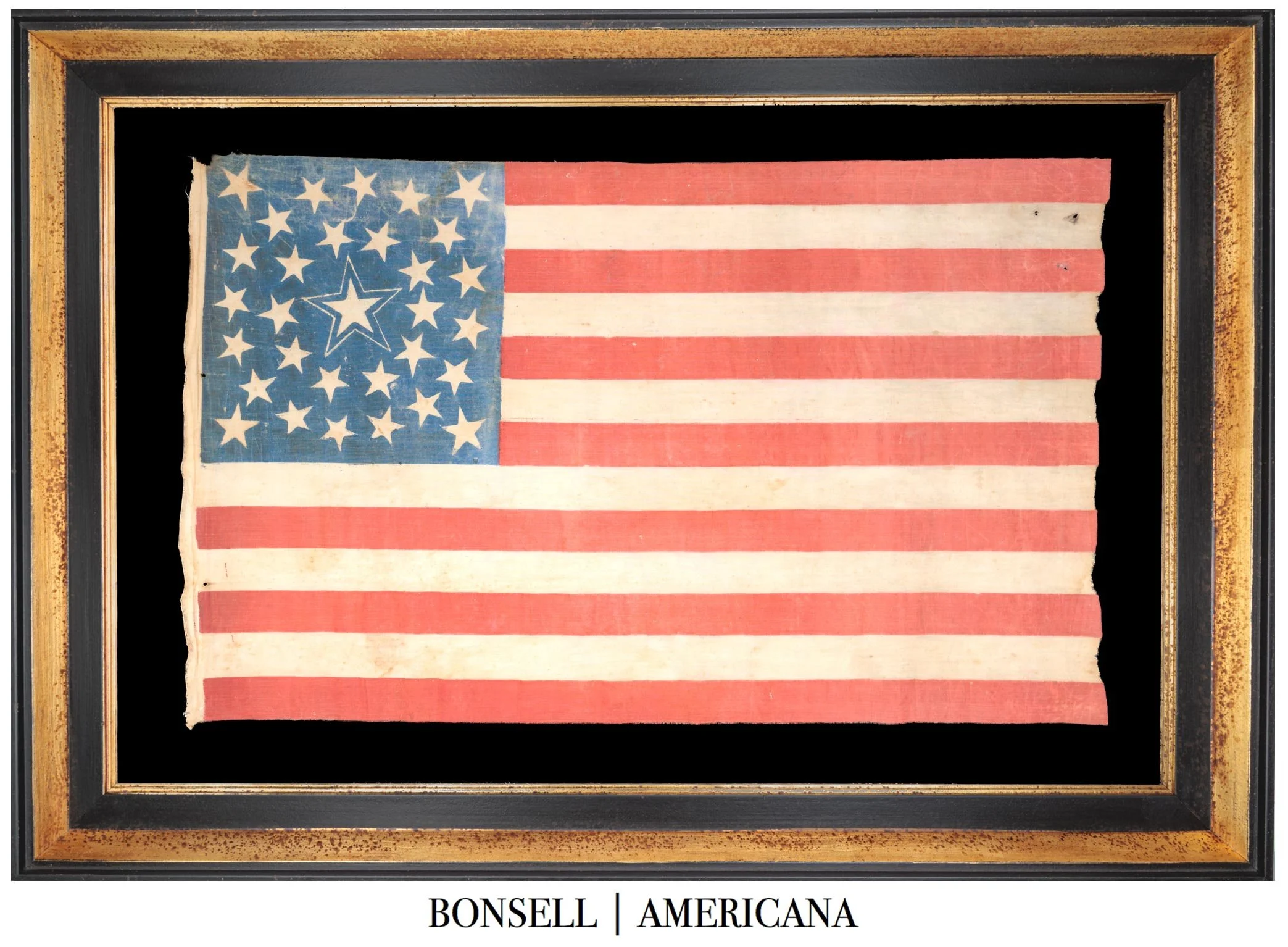
Spectacular and Scarce 31 Star American Parade Flag | Medallion Configuration with Haloed Center Star | California Statehood | Circa 1850–1858
Price: Call 618-553-2291, or email info@bonsellamericana.com
Frame Size (H x L): 33.25” x 48”
Flag Size (H x L): 22.25” x 37”
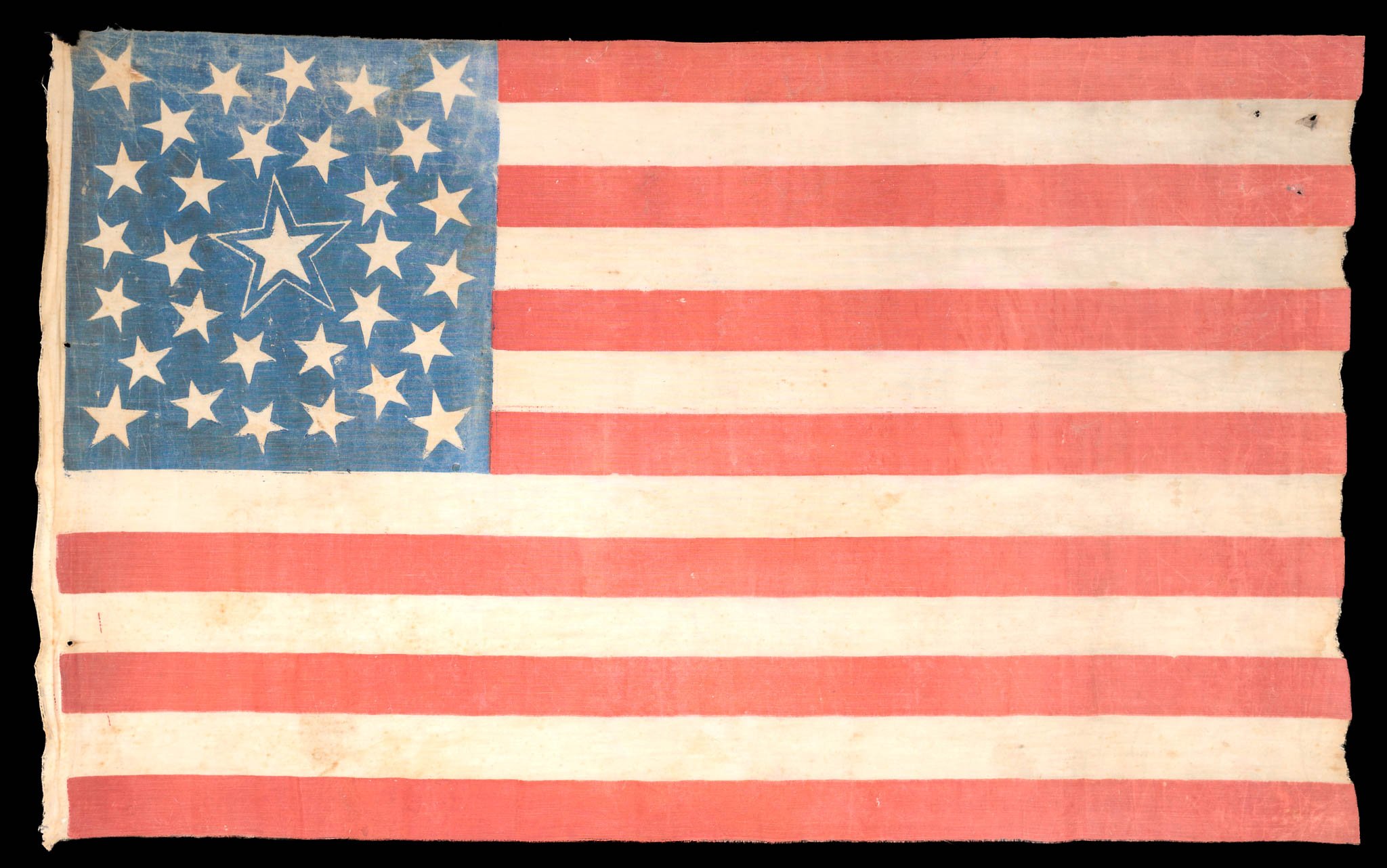
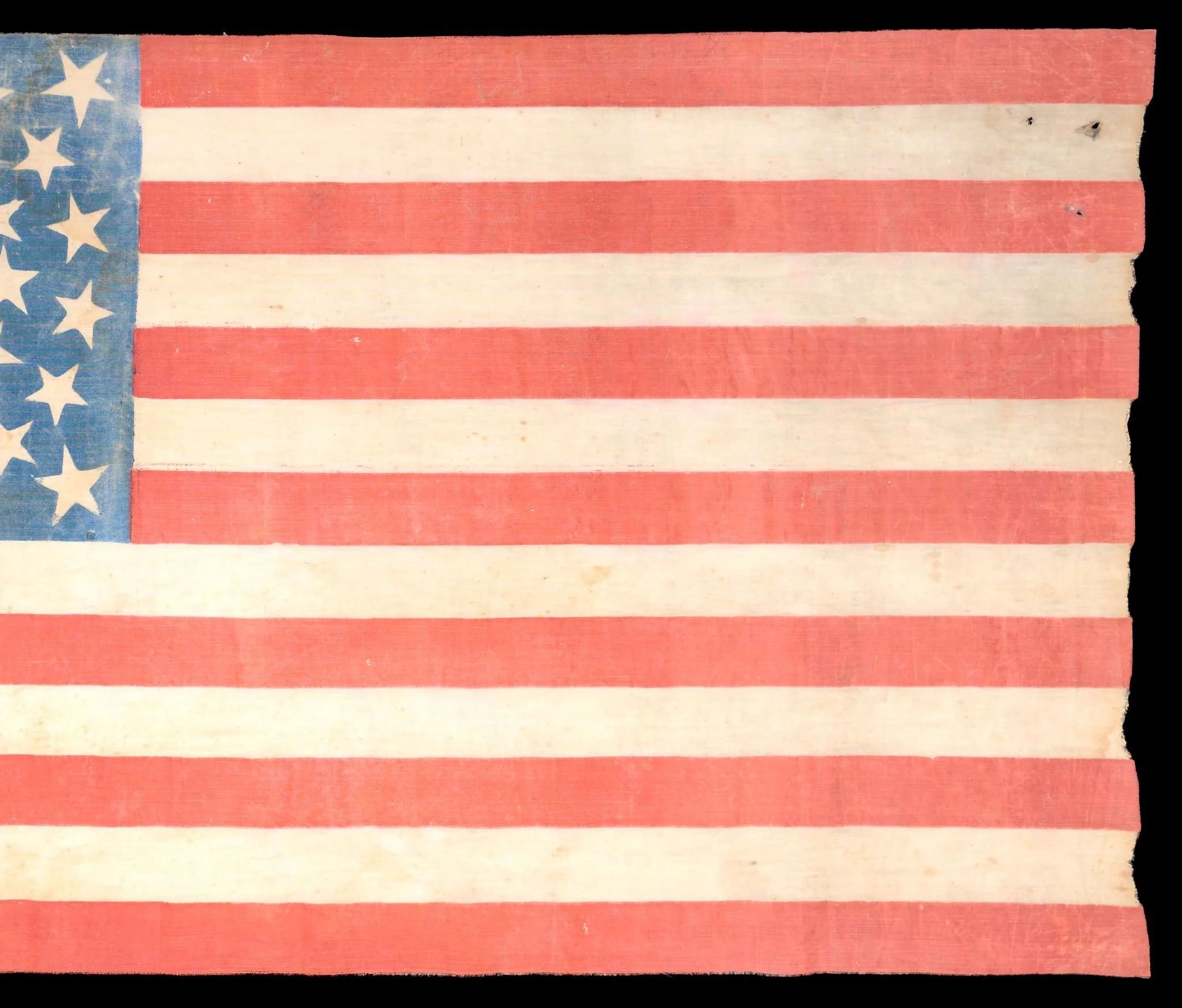
Offered is a rare and highly desirable 31-star American parade flag, printed on glazed cotton and dating to the period between 1851 and 1858, during the official use of the 31-star count. Flags of this era are among the rarest and most coveted of all surviving American flags, both because they predate the Civil War and because the use of the national flag in everyday American life was still comparatively limited. Prior to the outbreak of the Civil War in 1861, Americans did not commonly display the Stars & Stripes for general patriotic decoration in the way that later generations would. The widespread civilian use of the American flag is largely a post-Civil War phenomenon, fueled by wartime nationalism, veterans’ organizations, political campaigning, public schools, and the country’s growing industrial ability to mass-produce patriotic textiles. As a result, flags made before the Civil War survive in extraordinarily small numbers relative to those produced afterward. Among 19th century flags as a whole, pre-Civil War examples comprise only a tiny fraction of surviving material.
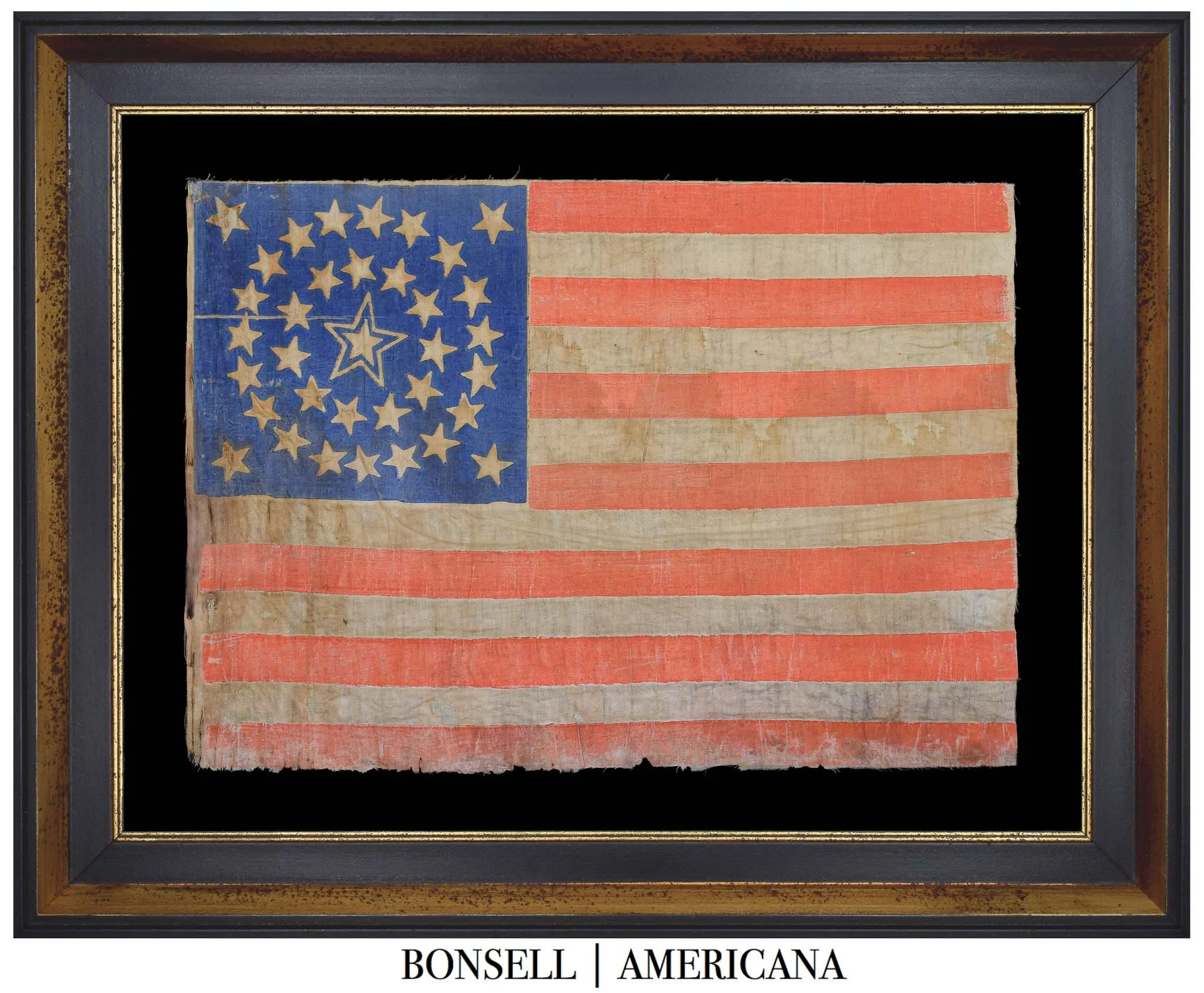
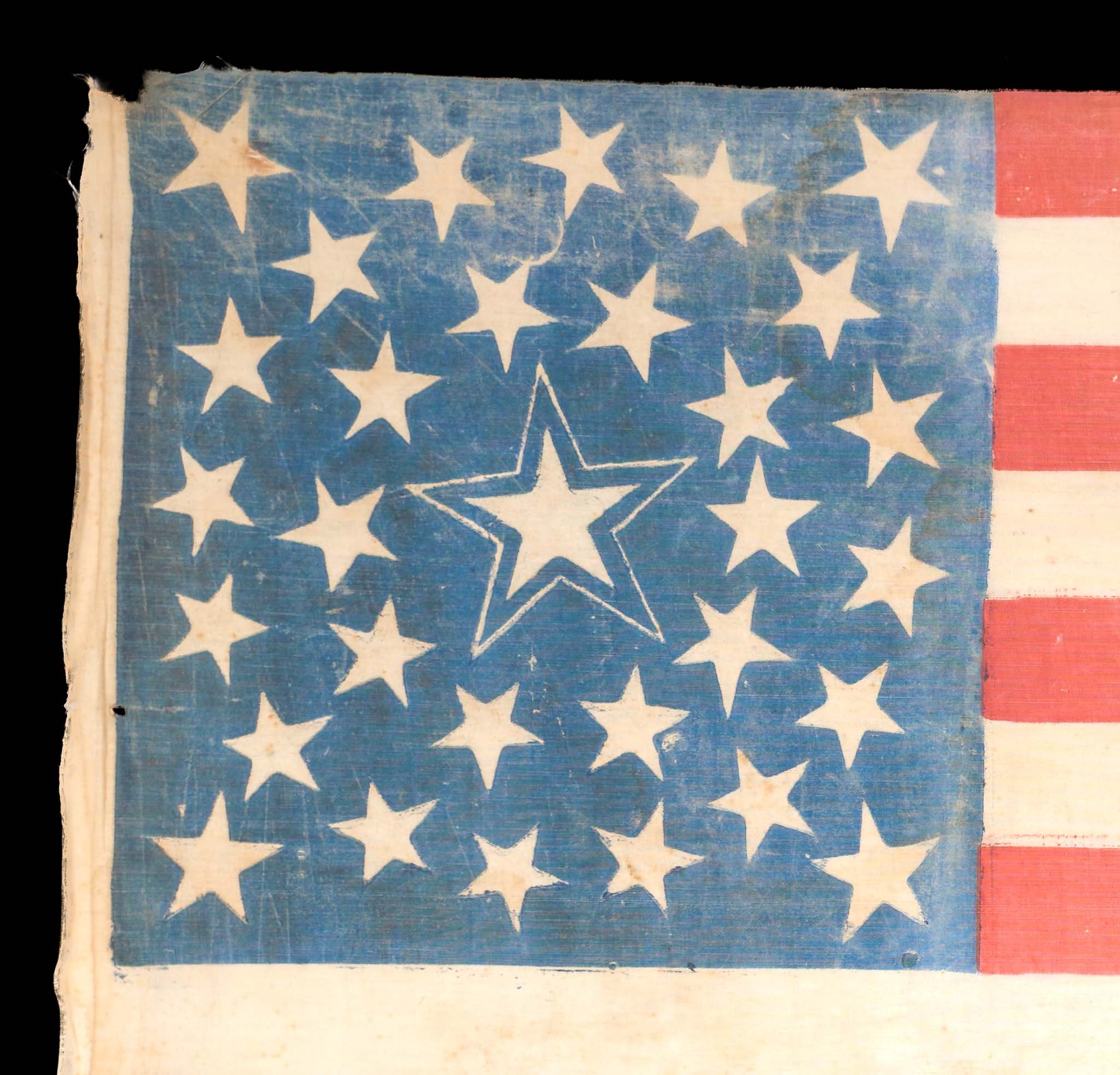
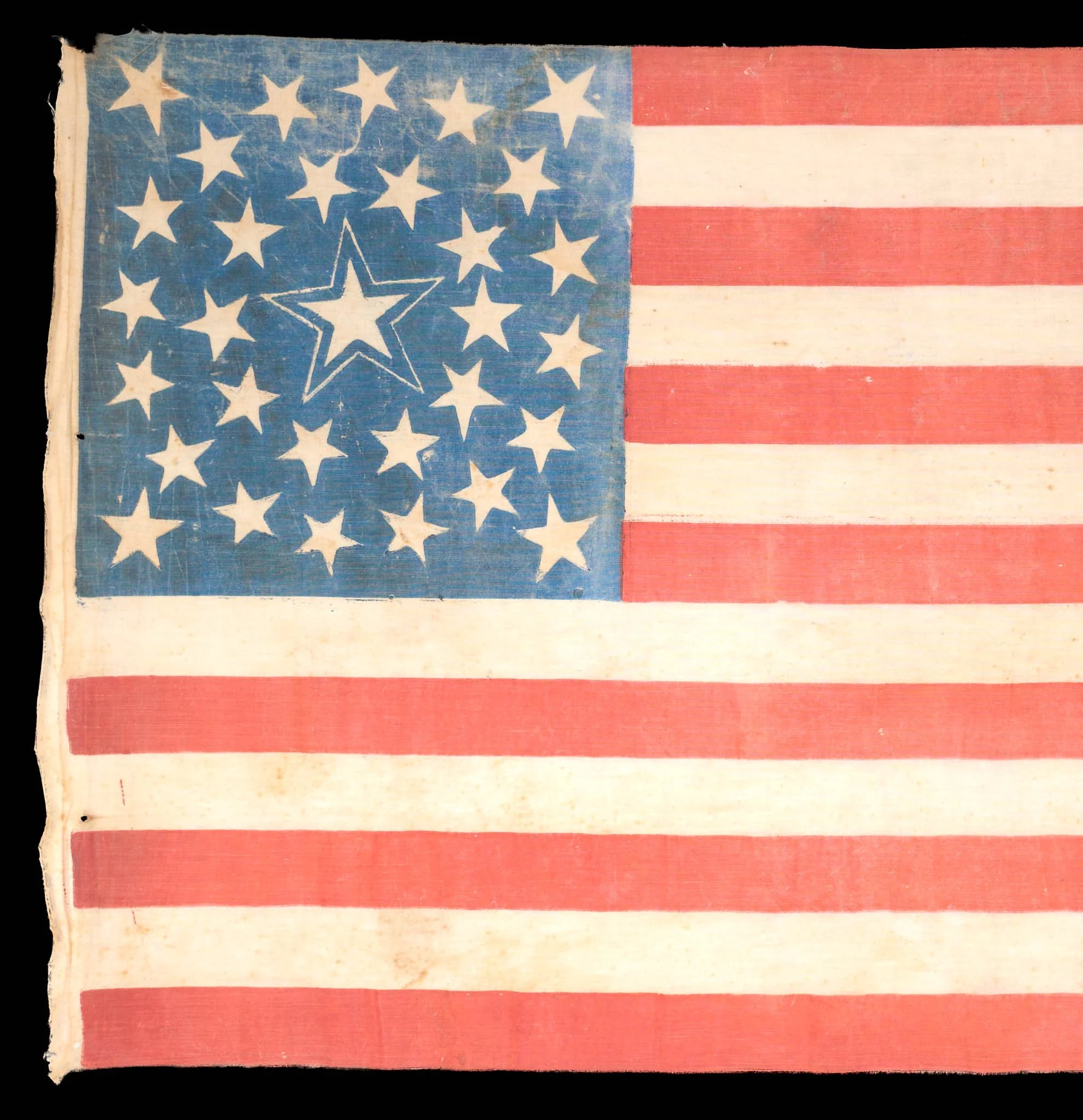
This example is particularly compelling for both its visual impact and its unusually attractive star arrangement. The stars are configured in a striking medallion pattern that consists of a large center star, surrounded by two concentric wreaths of smaller stars, with a single flanking star positioned in each corner of the canton. Medallion patterns are among the most sought-after of all 19th century arrangements, prized for their balance, folk quality, and strong graphic presentation. While linear configurations would eventually become standardized in the 20th century, 19th century flag makers enjoyed considerable freedom in arranging stars, resulting in an extraordinary range of whimsical and artistic patterns. Medallions are widely considered among the most beautiful of these arrangements and are especially associated with mid-19th century American parade flags.
The oversized center star is especially significant. Sometimes referred to as a “center star,” this feature differs from what collectors commonly call a “Great Star” or “Great Luminary” configuration. In a Great Star arrangement, the smaller stars collectively form the shape of one large star. In a center star design such as this one, however, the large star occupies the middle of the canton independently, while the surrounding stars radiate outward around it in concentric fashion. In many examples of this type, the center star was intended to represent the newest state admitted to the Union. In the case of a 31-star flag, that state was California.
Particularly noteworthy is the construction of the center star itself. Rather than consisting solely of a single bold outline, it includes a secondary outer border that creates a luminous “halo” effect around the star. Haloed stars are among the most visually dynamic elements found on printed parade flags of the period and are strongly associated with a small and distinctive family of mid-19th century printed flags. The exact maker of these haloed flags remains unidentified, yet surviving examples reveal enough similarities in execution, scale, printing style, and artistic treatment to strongly suggest common manufacture. Comparable haloed examples are known in 30-star, 31-star, 34-star, 35-star, 36-star, and 42-star counts, among others, forming one of the more recognizable and beloved groups within early printed American flags.
This flag belongs to a particularly early generation of printed parade flags. The earliest known printed American parade flags date to the late 1830s and early 1840s, shortly after advances in textile printing technology made such production commercially viable. Twenty-six star examples, representing Michigan statehood, are generally regarded as the earliest surviving printed parade flags, dating between approximately 1837 and 1845. This 31-star example was therefore produced only a relatively short time later, placing it very near the beginning of printed flag production in the United States. Surviving examples from this formative period are scarce in all star counts, and especially so in counts preceding the Civil War.
The coloration of the stripes is especially attractive. Rather than displaying the deep saturated red commonly associated with later flags, the stripes exhibit a warm orange-red hue that is characteristic of many mid-19th century textiles. This coloration is generally attributed to the use of natural dyes such as madder and cochineal, both of which were widely employed during the period before the later standardization of synthetic aniline dyes. Over time, these pigments often mellow into softer tones ranging from salmon to burnt orange, lending early American flags a distinctive warmth that collectors find especially appealing. The canton likewise displays a beautiful dusty blue coloration that differs markedly from the darker navy tones seen on later examples. Because official standards governing the precise shades of red and blue had not yet been firmly established, considerable variation existed among textile makers during the mid-19th century, contributing to the highly individual character of flags from this era.
California’s admission to the Union—and the resulting creation of the 31-star flag—occurred during one of the most transformative moments in American history. The discovery of gold at Sutter’s Mill in 1848 triggered the California Gold Rush, one of the largest mass migrations in world history. Tens of thousands of fortune seekers from across the United States and abroad flooded into the territory with astonishing speed. Between 1848 and 1850, California’s non-native population exploded, creating urgent pressure for civil government and eventual statehood. Unlike many western territories that spent years or decades under territorial administration before entering the Union, California moved toward statehood with remarkable rapidity.
The question of California’s admission also became deeply entangled in the sectional tensions surrounding slavery in the years leading to the Civil War. As the nation expanded westward following the Mexican-American War, fierce political debate erupted over whether new territories would permit slavery. California sought admission as a free state, upsetting the delicate balance between free and slave states in Congress. Its admission ultimately formed a central component of the Compromise of 1850, the complex legislative package engineered primarily by Henry Clay in an effort to preserve the Union. Signed into law in September of that year, the compromise temporarily eased sectional conflict while simultaneously revealing just how fragile the national political balance had become.
California officially entered the Union on September 9th, 1850, as the 31st state. In accordance with the Third Flag Act of 1818, however, new stars were not officially added to the American flag until the following Independence Day. Thus, the 31-star flag became official on July 4th, 1851. It remained the official national flag until July 3rd, 1858, after which the 32-star count replaced it following the admission of Minnesota. The official lifespan of the 31-star flag therefore spanned just seven years, encompassing a period of extraordinary expansion, political volatility, western migration, and accelerating national change immediately preceding the Civil War.
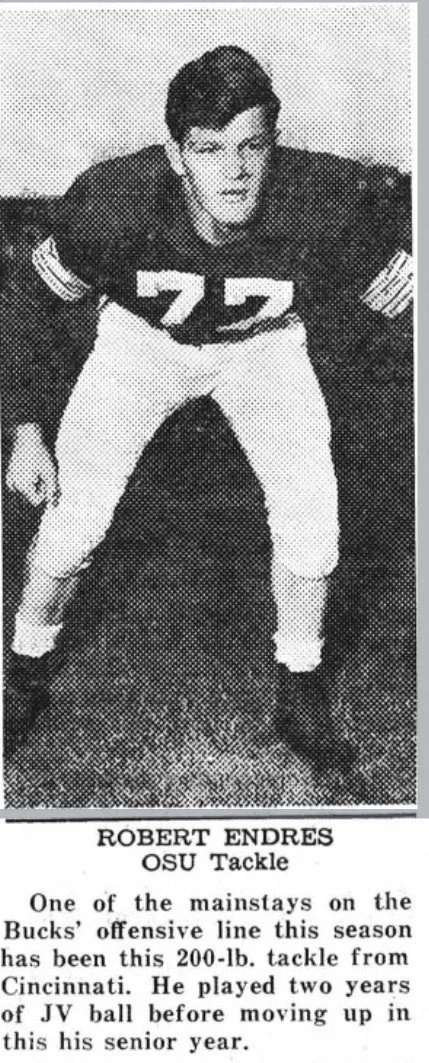
An interesting aspect of this particular example is its provenance, as the flag at one point belonged specifically to Robert Endres, from whose family it was acquired. Endres played football at Ohio State University, serving as an offensive tackle for the Buckeyes during the mid-20th century. Contemporary coverage described him as a dependable mainstay on the offensive line, following two years of junior varsity play before advancing to the varsity squad in his senior year. While unrelated to the flag’s original period of manufacture, the association adds an appealing layer of Americana, linking this mid-19th century national textile to a later tradition of American collegiate athletics.
Because relatively few flags were made during this era—and because even fewer survived the passage of more than 170 years—authentic 31-star parade flags rank among the rarest and most desirable of all 19th century American flags. Examples featuring highly graphic medallion arrangements, especially those with haloed center stars and strong folk characteristics, occupy an especially important place within advanced collections of early American textiles and political Americana.
Conservation Process: This flag was hand sewn to cotton fabric, and both were hand sewn to a mounting board. To prevent the black dye in the cotton fabric from seeping into the flag, it was first washed in a standard wash and then in a dye setting wash. The flag is positioned behind Optium Museum Acrylic.
Frame: This offering is in our Large Distressed Black and Gold Frame.
Condition Report: The flag displays moderate to modest wear consistent with its age and use, including scattered soiling, minor foxing, and areas of pigment loss and fading throughout. There is light fraying and minor loss along the fly end and hoist, accompanied by a few tiny holes and small areas of fabric separation. The glazed cotton has mellowed beautifully over time, resulting in especially attractive coloration in both the dusty blue canton and the warm orange-red stripes. Overall, the flag presents exceptionally well and retains outstanding visual impact, particularly in the dramatic haloed medallion configuration.
Collectability Level: The Extraordinary – Museum Quality Offerings
Date of Origin: 1850-1858
Number of Stars: 31
Associated State: California