Early 20th Century Tobacco Advertising Felts | Native American Portraits and Geometric Motifs | Circa 1910–1915
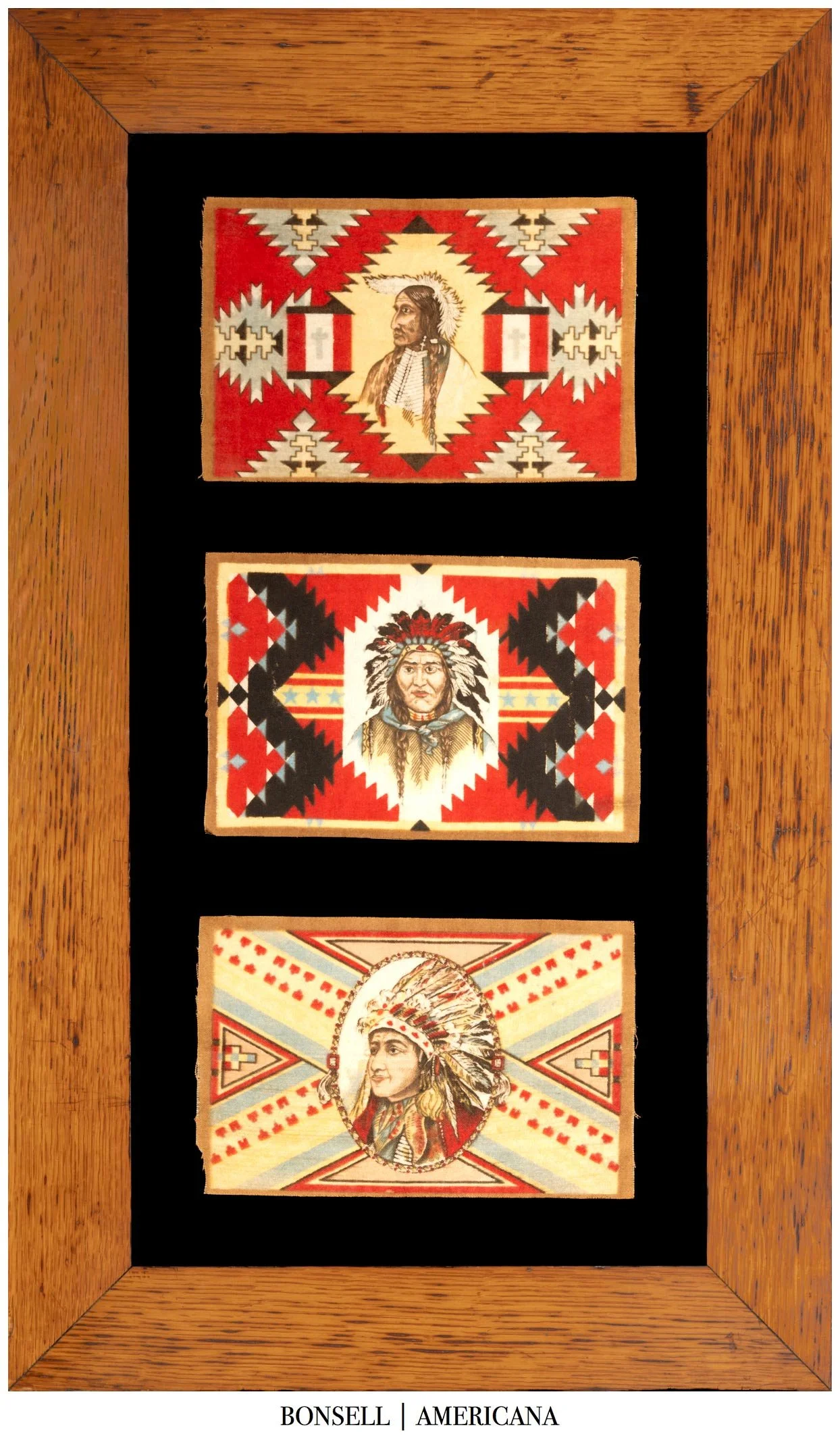
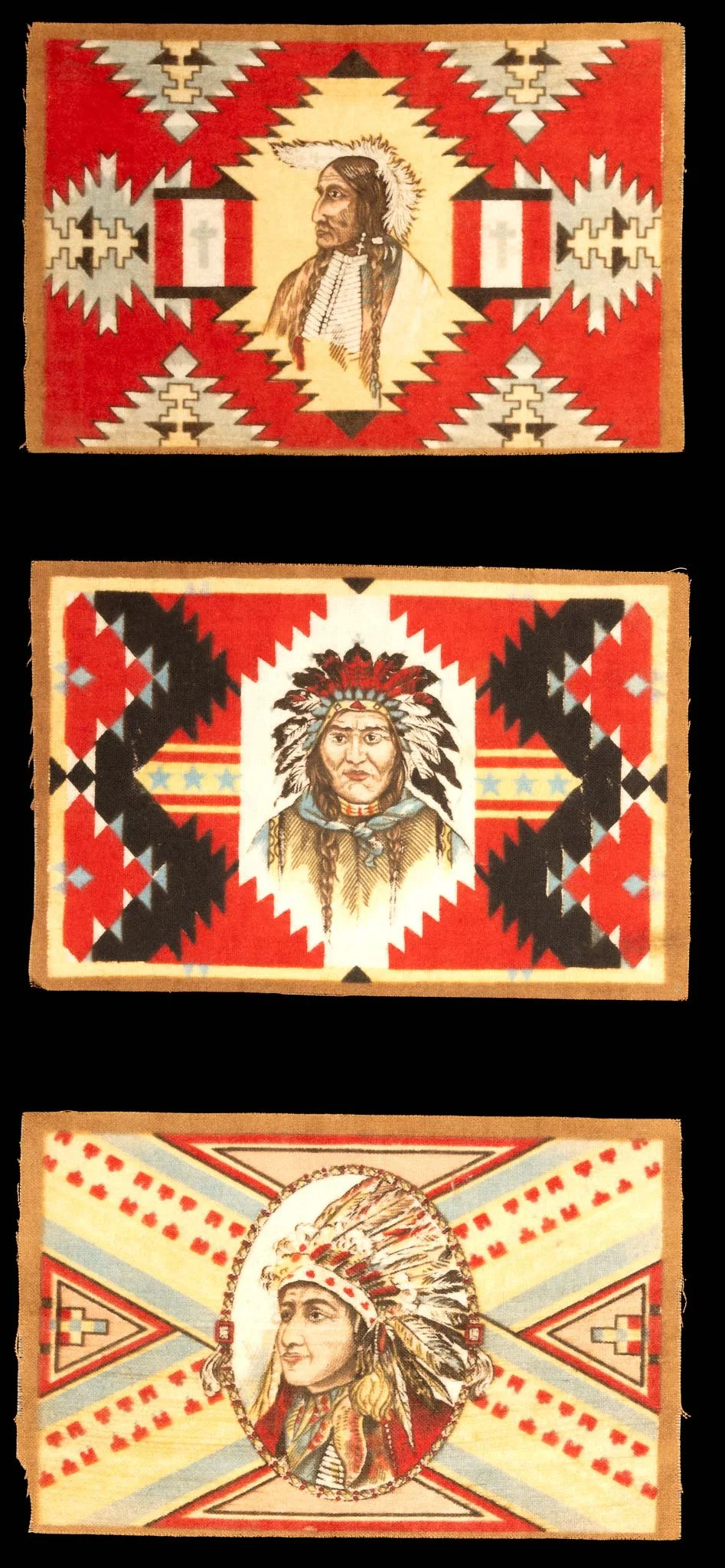
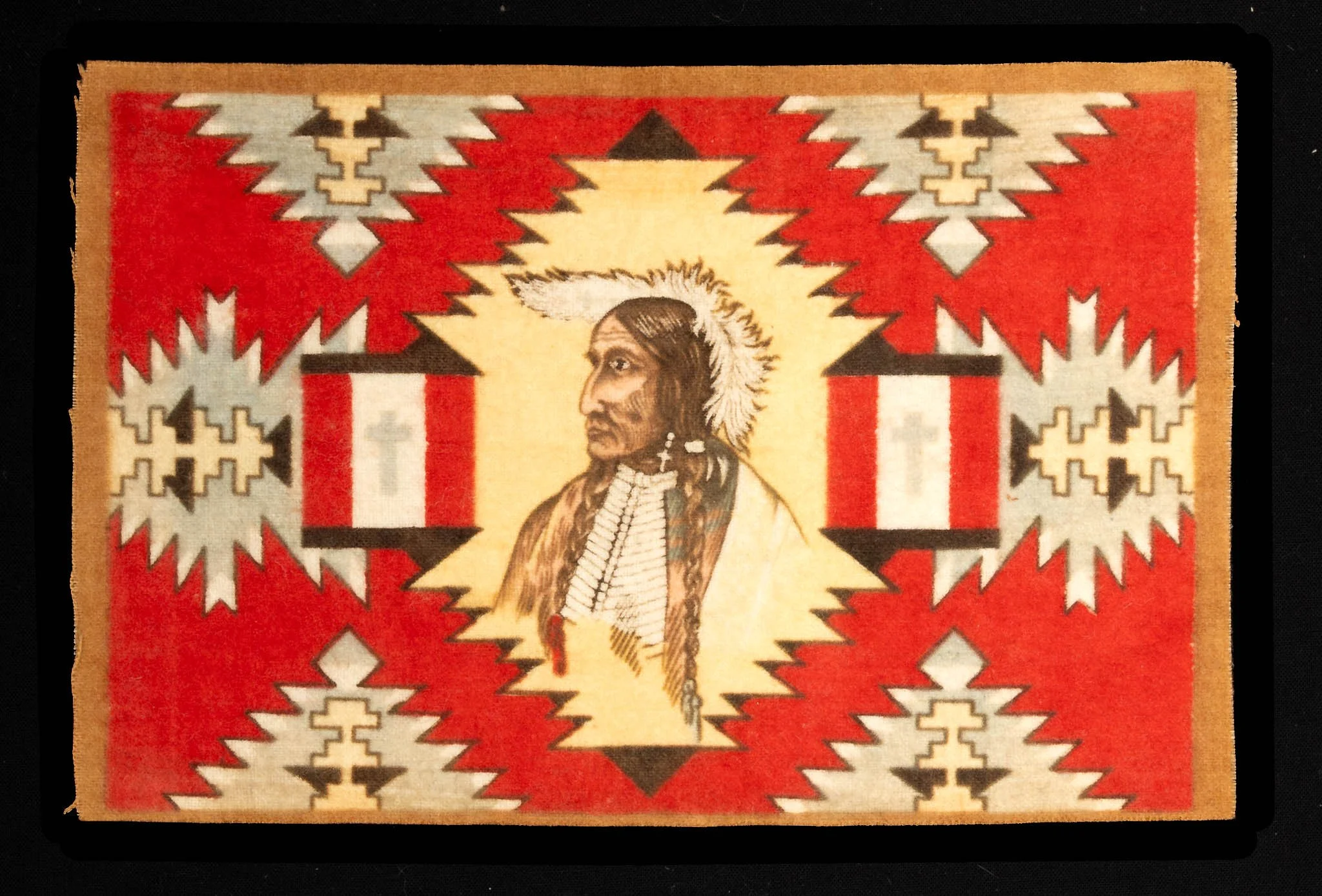

Early 20th Century Tobacco Advertising Felts | Native American Portraits and Geometric Motifs | Circa 1910–1915
Frame Size (H x L): 26 ½” x 16”
Quilt Size (H x L): 5 ½” x 8 ½”
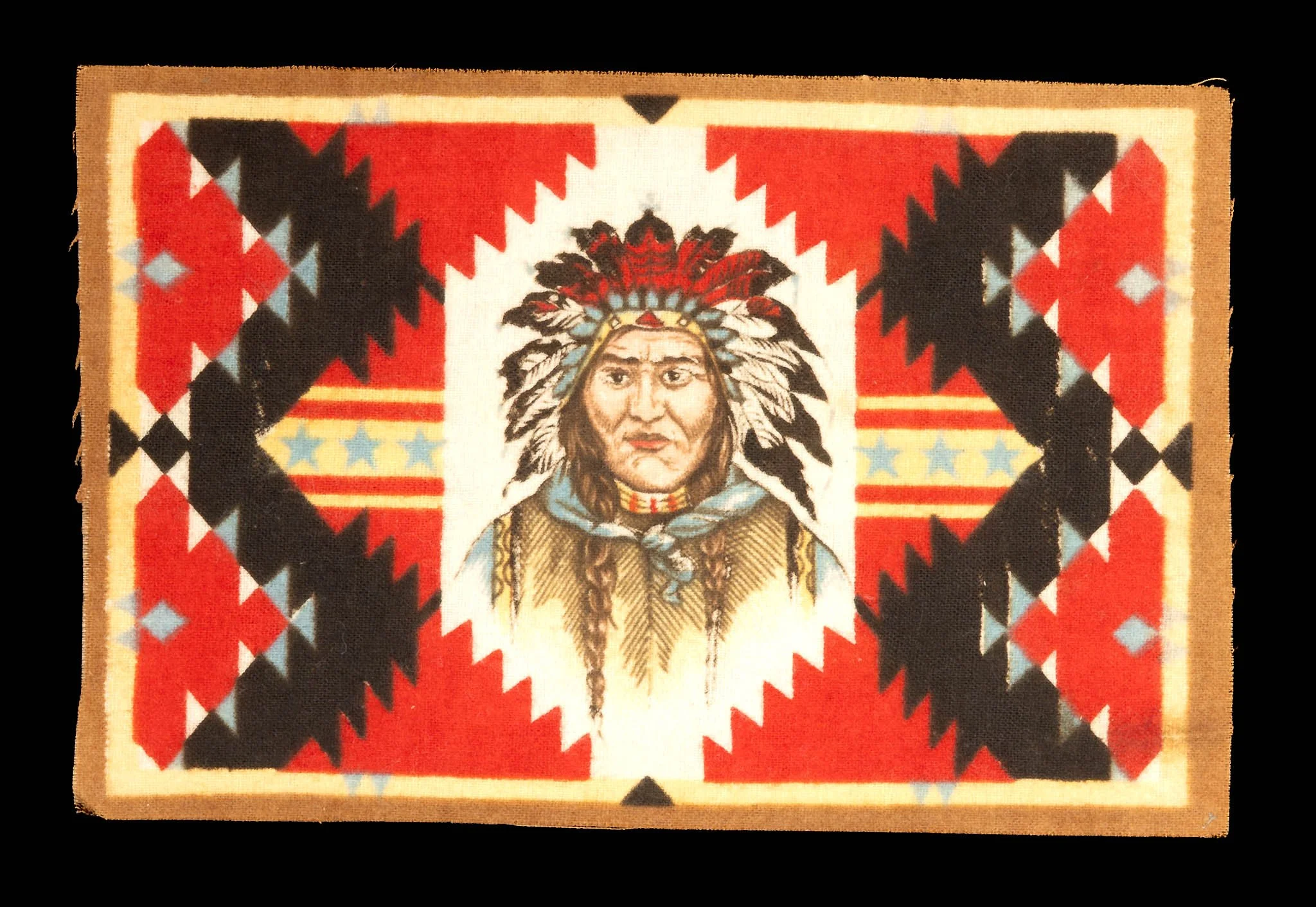
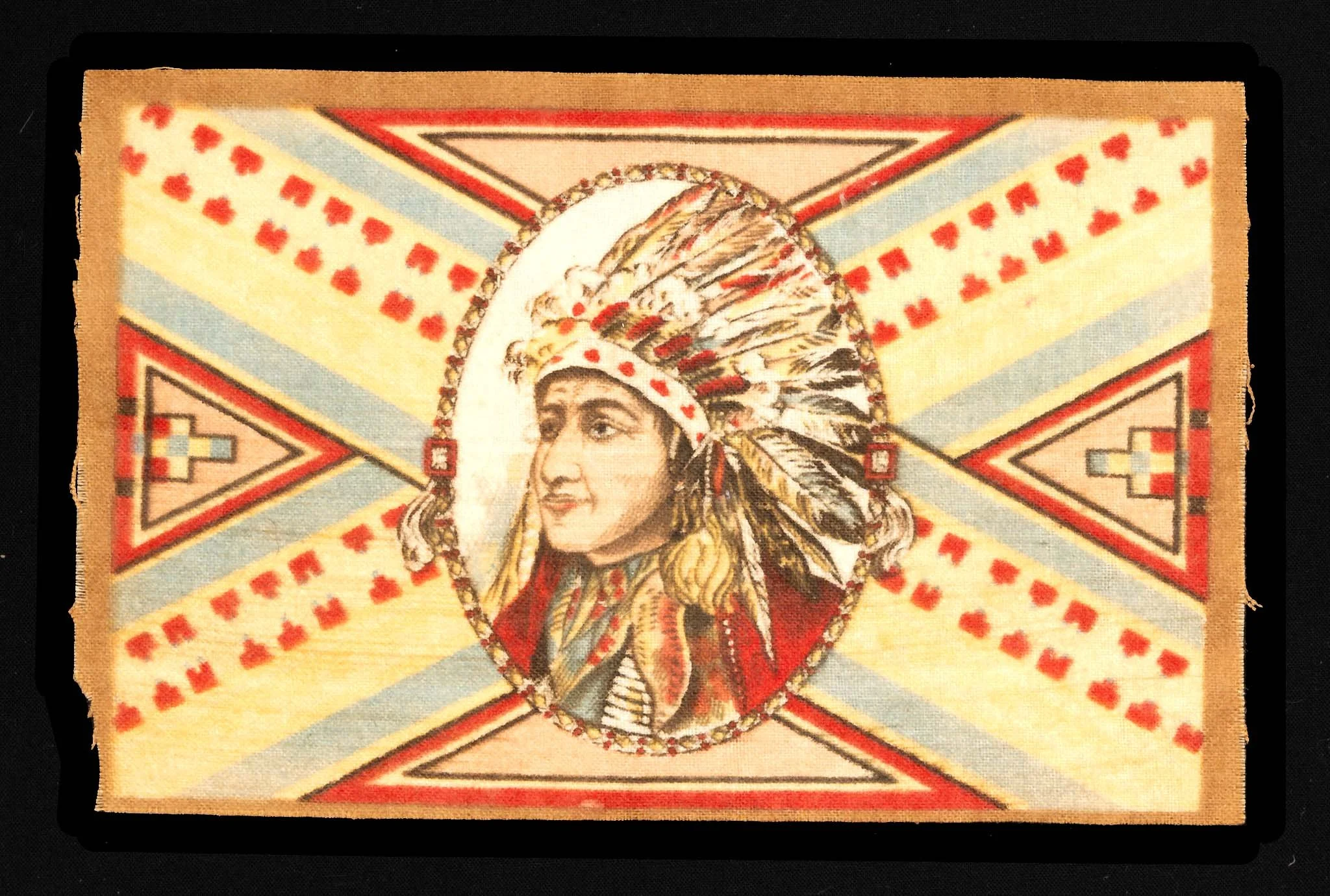
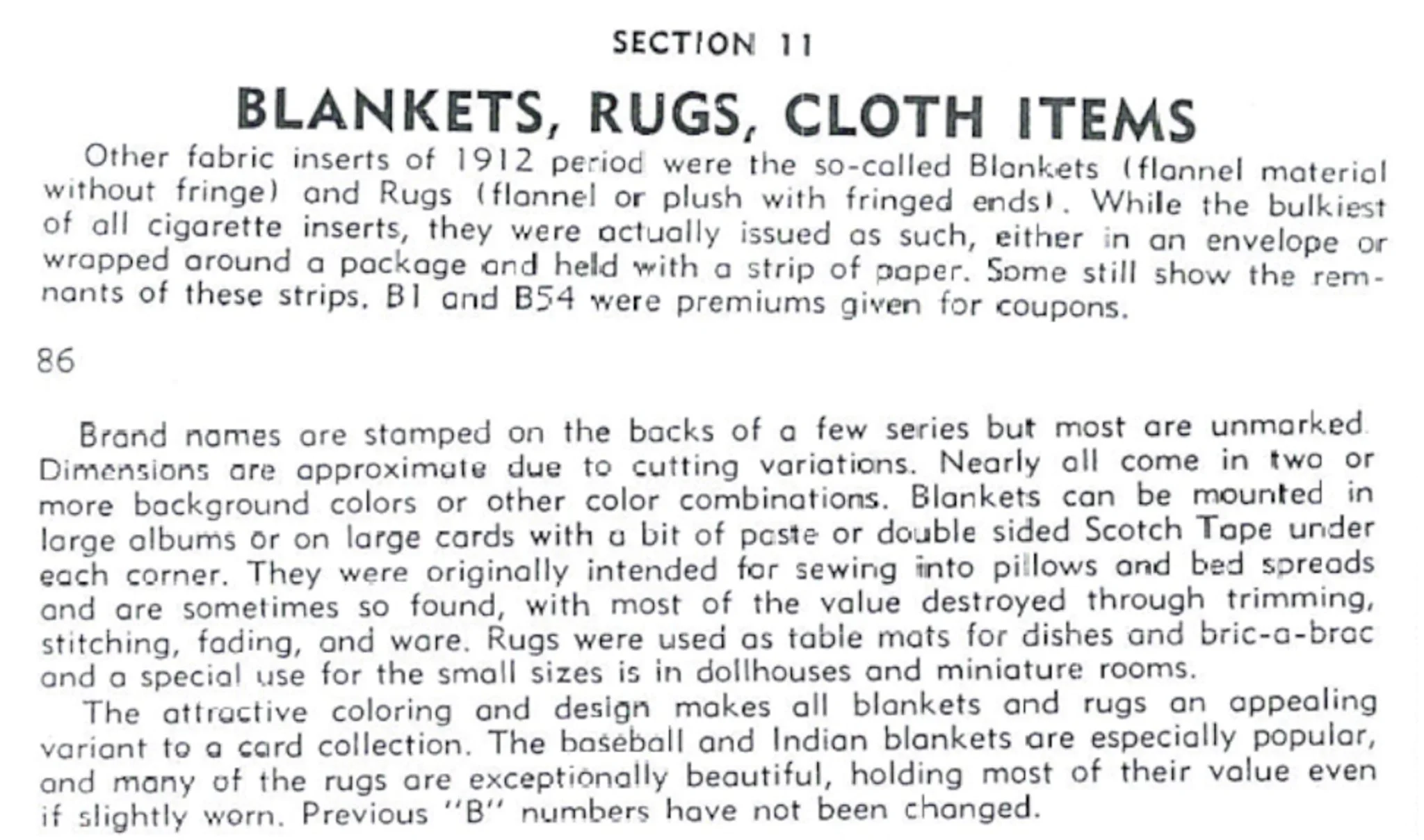
Offered is a group of three early 20th-century tobacco felts featuring portraits of Native Americans surrounded by geometric designs inspired by traditional Southwestern textiles. Dating to circa 1910–1915, each textile is multicolored printed on woven fabric. Commonly referred to as tobacco felts, tobacco flannels, or miniature Indian blankets, these textiles were distributed as promotional premiums by tobacco companies during the early decades of the 20th century.
During this period, American tobacco companies employed a variety of promotional strategies to encourage repeat purchases and establish brand loyalty. Among the most popular were collectible cards and printed textiles depicting a wide range of subjects, including national flags, prominent historical figures, athletes, collegiate insignia, animals, and Native American imagery. Unlike paper tobacco cards, textile premiums also served a decorative and practical purpose. Women frequently collected and incorporated them into quilts, pillows, table coverings, and other household furnishings.
The examples offered here are consistent with the series classified as B12, Type 1, in Jefferson Burdick’s American Card Catalog, an authoritative reference for antique tobacco cards and related advertising premiums. This classification encompasses miniature blankets featuring central portraits of Native Americans. Although certain tobacco textiles bear manufacturer identification, many were produced without permanent advertising marks. The specific tobacco brand associated with these examples remains undetermined.
Each of the three textiles features a distinct portrait and surrounding geometric composition. The uppermost example depicts a Native American in profile, wearing a feathered headpiece and bone breastplate, surrounded by stepped diamonds and symmetrical cross motifs. The middle example features a forward-facing portrait with an elaborate feathered headdress, flanked by horizontal bands of five-pointed blue stars and bold red and black geometric elements. The lowermost example features a portrait enclosed within an oval medallion, surrounded by broad diagonal bands of pale blue and yellow, accented by repeating red motifs.
The designs reflect the widespread American fascination with Native American culture and the American West during the late 19th and early 20th centuries. At the time, imagery associated with the West was increasingly incorporated into commercial advertising, popular entertainment, postcards, and decorative household goods. While these textiles were commercially manufactured rather than Indigenous-made, their designs draw upon the geometric vocabulary of traditional Native American weaving, particularly that associated with the American Southwest.
The three examples complement one another particularly well, sharing a consistent palette of red, black, golden yellow, cream, and pale blue while exhibiting distinctly different portraits and geometric arrangements. Together, they represent an attractive intersection of early American advertising, textile history, and Western Americana.
Conservation Process: The felts were hand sewn to cotton fabric, and the combination was hand sewn to a mounting board. To prevent the black dye in the cotton from seeping into the felts, the cotton was first washed in a standard wash and then in a dye setting wash. The felts are positioned behind Optium Museum Acrylic.
Frame: The three textiles are presented in an antique oak frame featuring a broad, flat profile, pronounced wood grain, and a rich, warm patina. The understated profile of the frame and contrasting black background complement the vivid colors and geometric designs of the textiles.
Condition: All three textiles remain in very good condition, retaining strong coloration and well-defined printed imagery. There is minor fraying and wear along the perimeter edges, along with scattered instances of light discoloration and minor surface wear. There are no significant holes, nor tears.
Collectability Level: The Good – Perfect for Beginning Collectors and Gifts
Date of Origin: 1910-1915