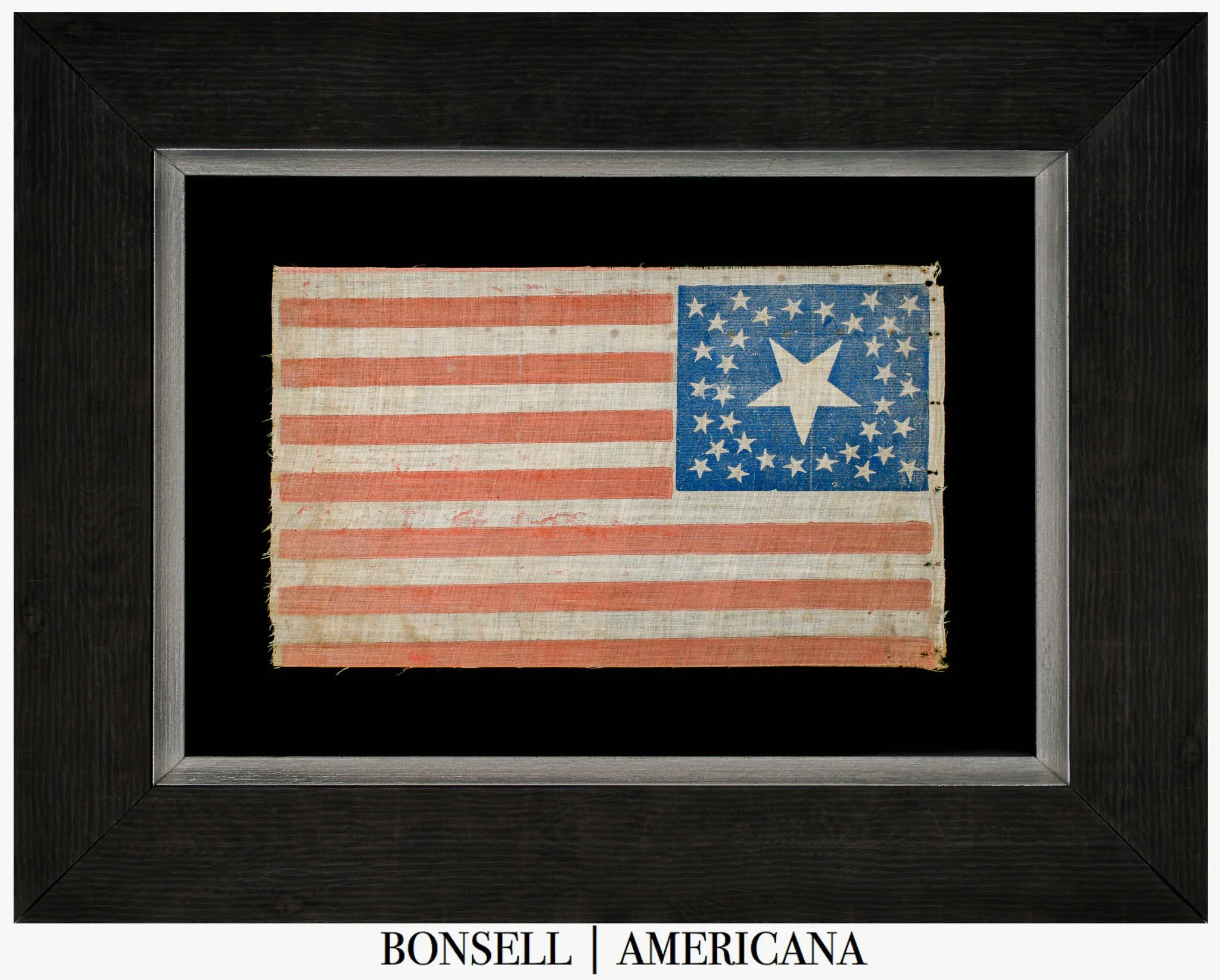
Exceptional 38 Star Antique American Flag | Elaborate Medallion with Four Oversized Corner Stars | Press-Dyed Wool | Circa 1876
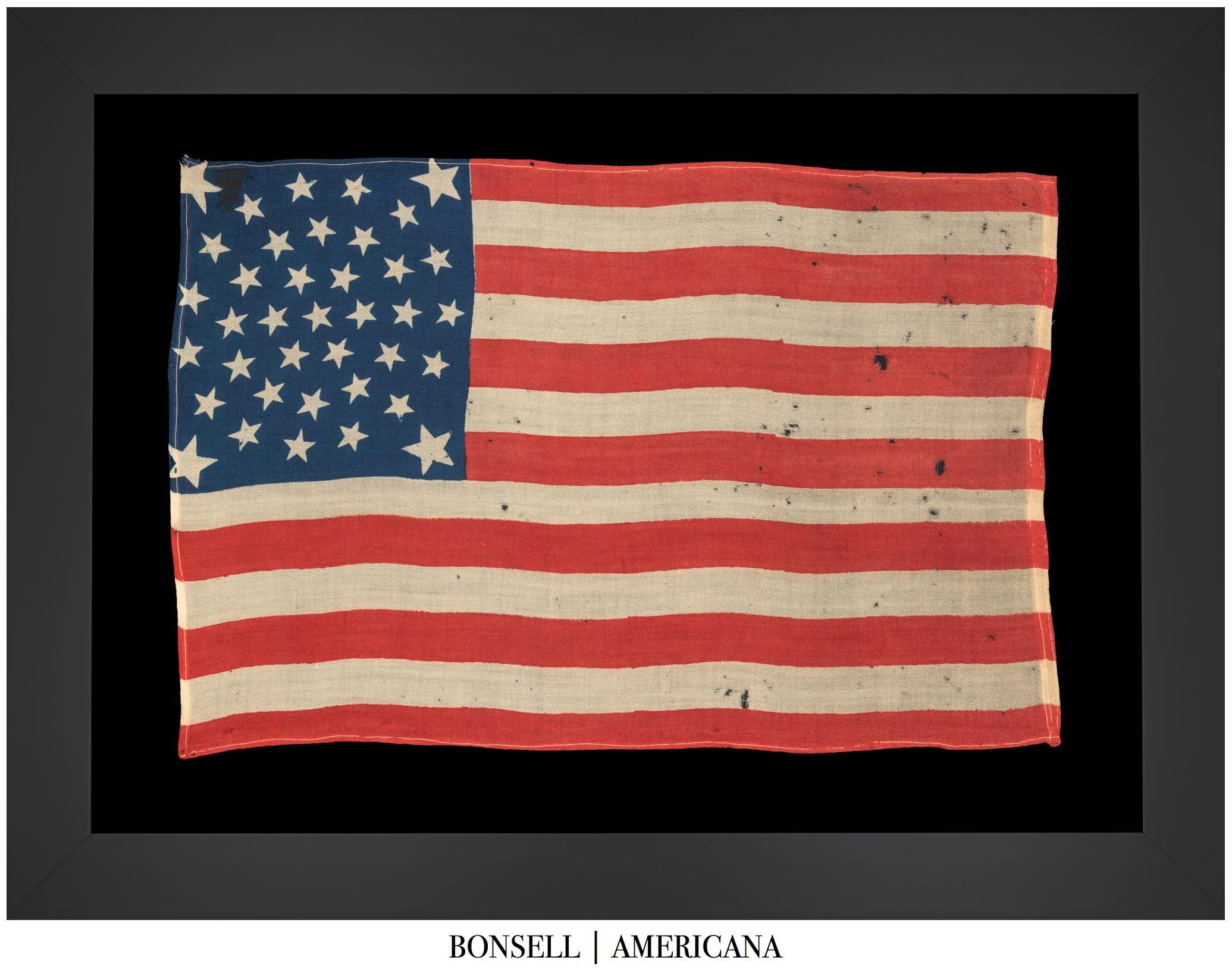
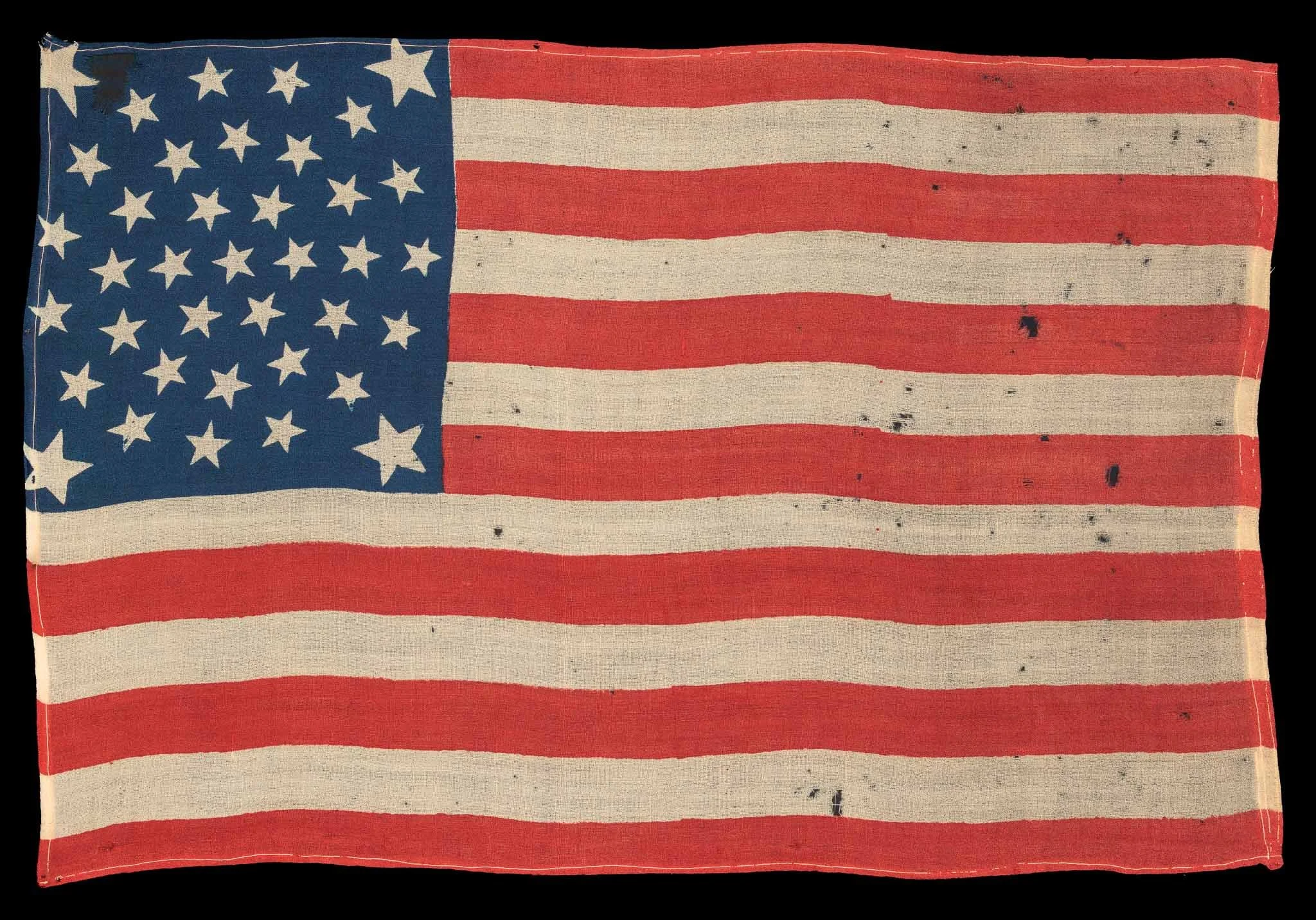
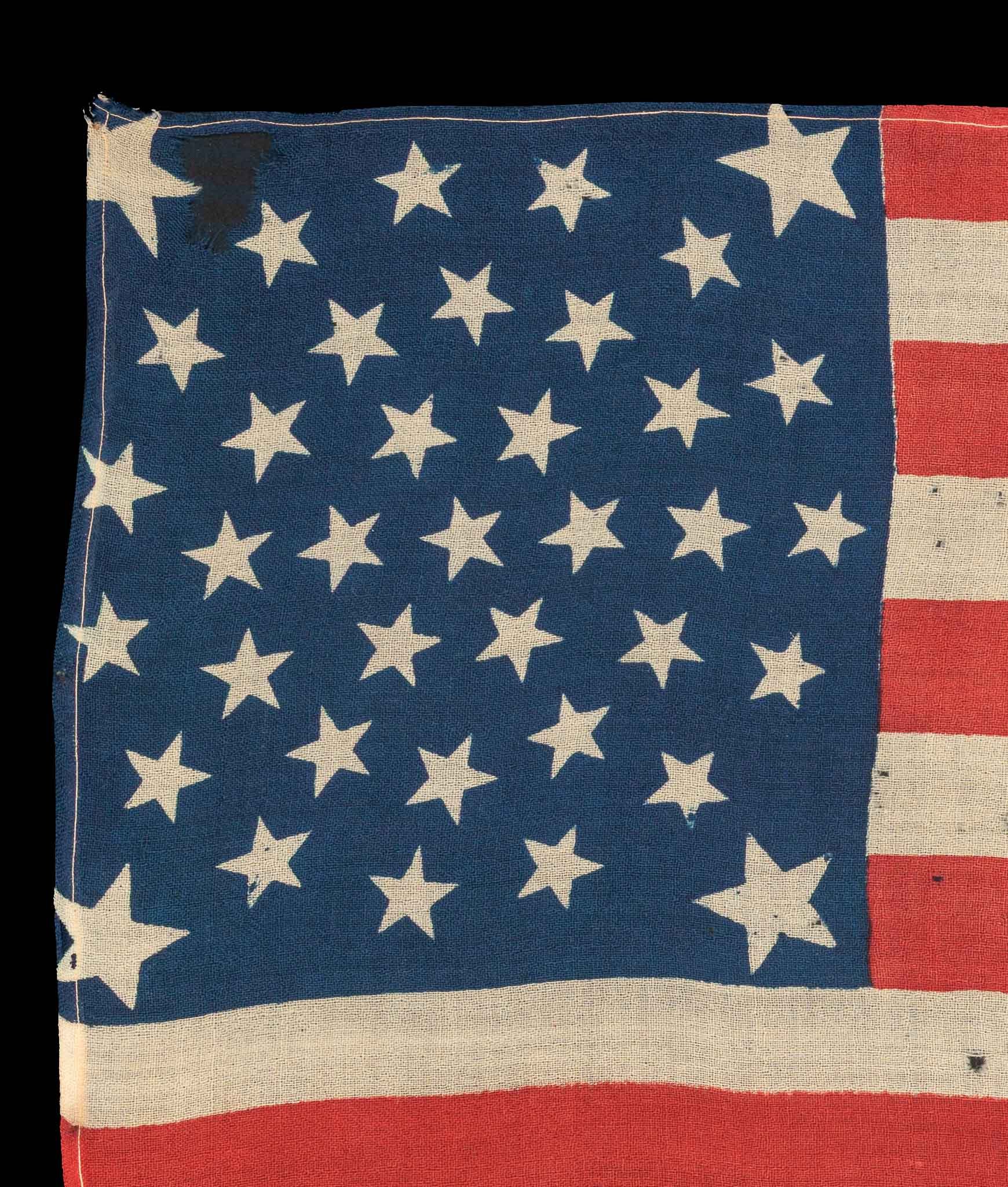
Exceptional 38 Star Antique American Flag | Elaborate Medallion with Four Oversized Corner Stars | Press-Dyed Wool | Circa 1876
Price: Call 618-553-2291, or email info@bonsellamericana.com
Frame Size (H x L): 32.5” x 43.5”
Flag Size (H x L): 21” x 33”
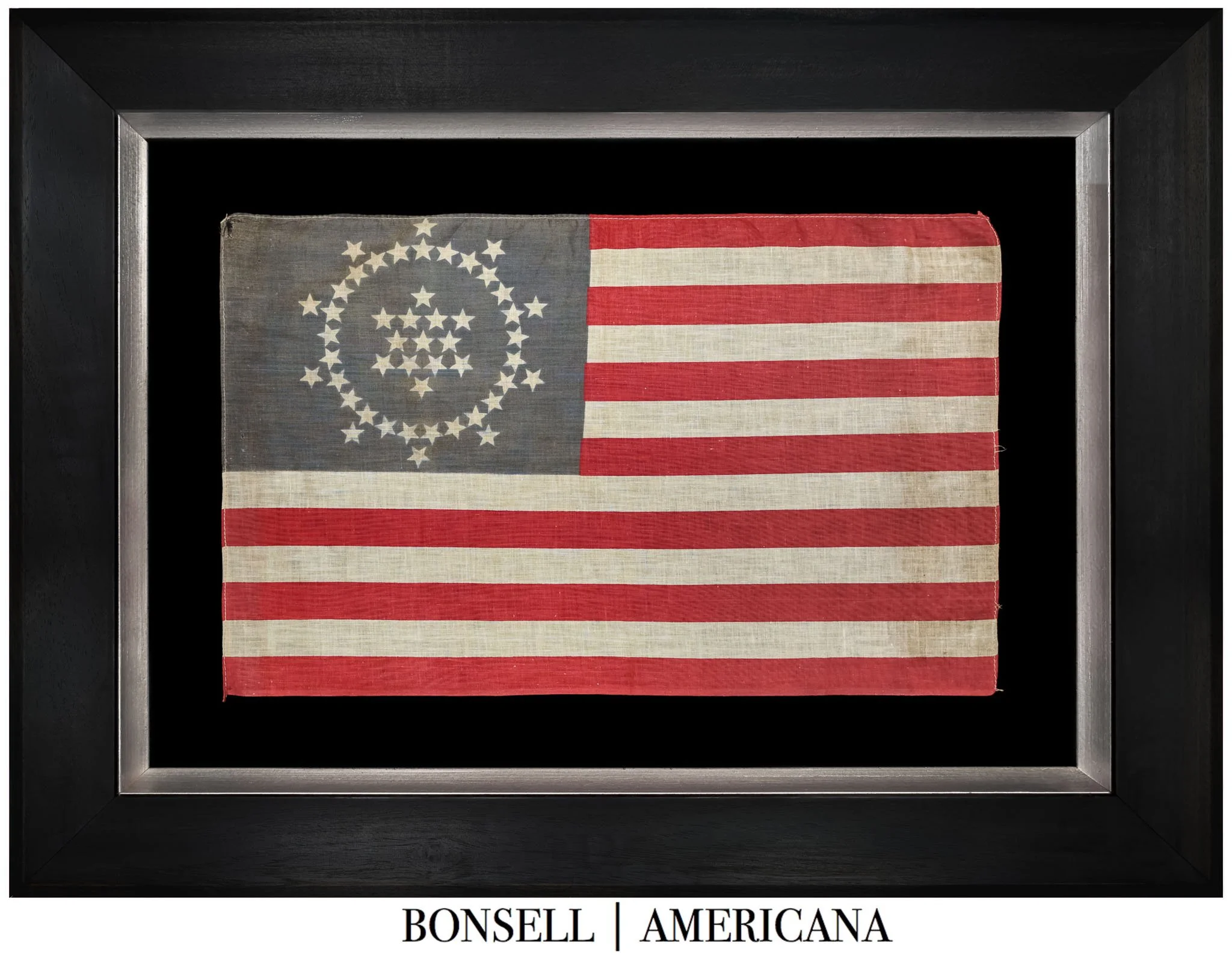
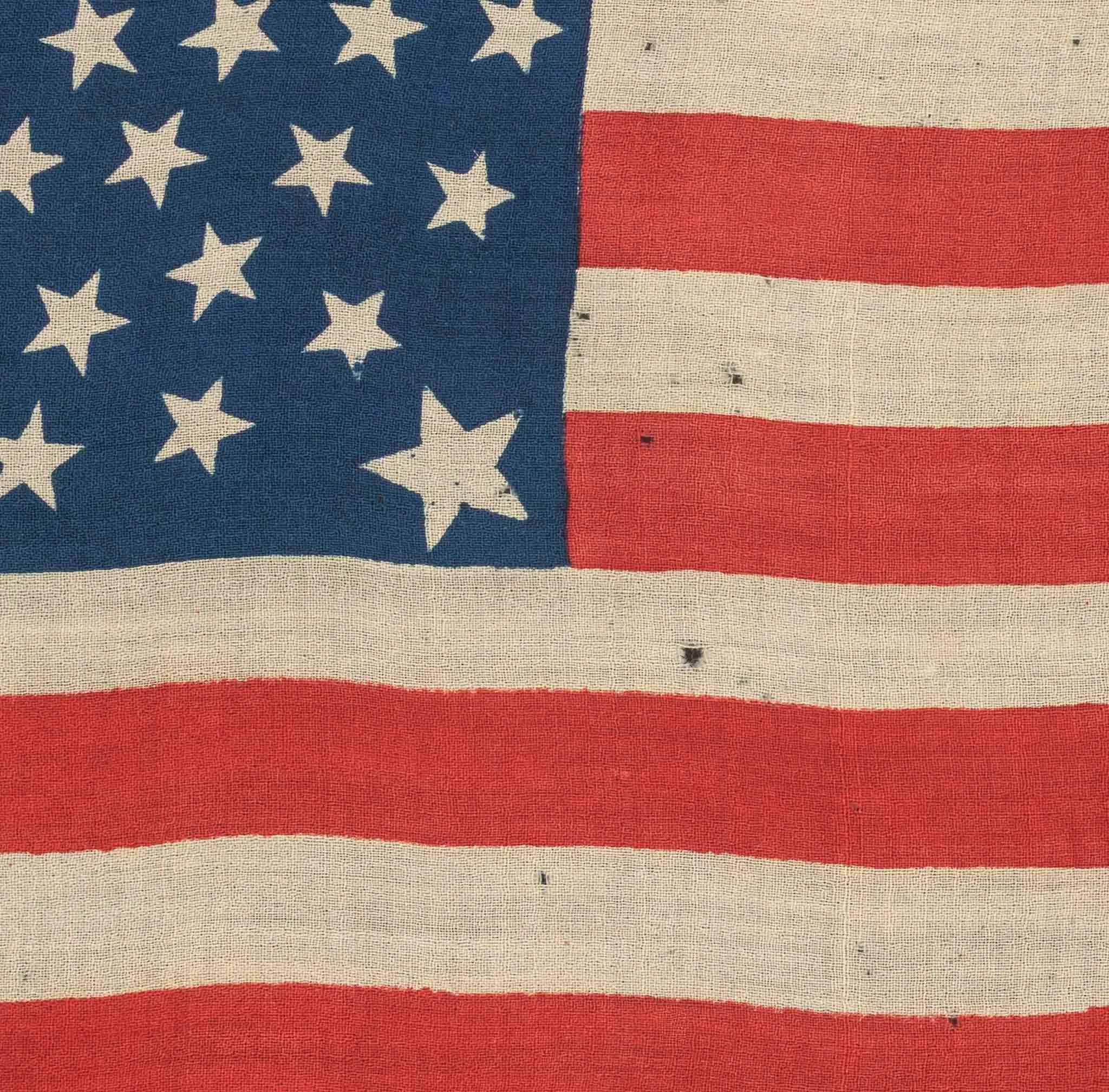
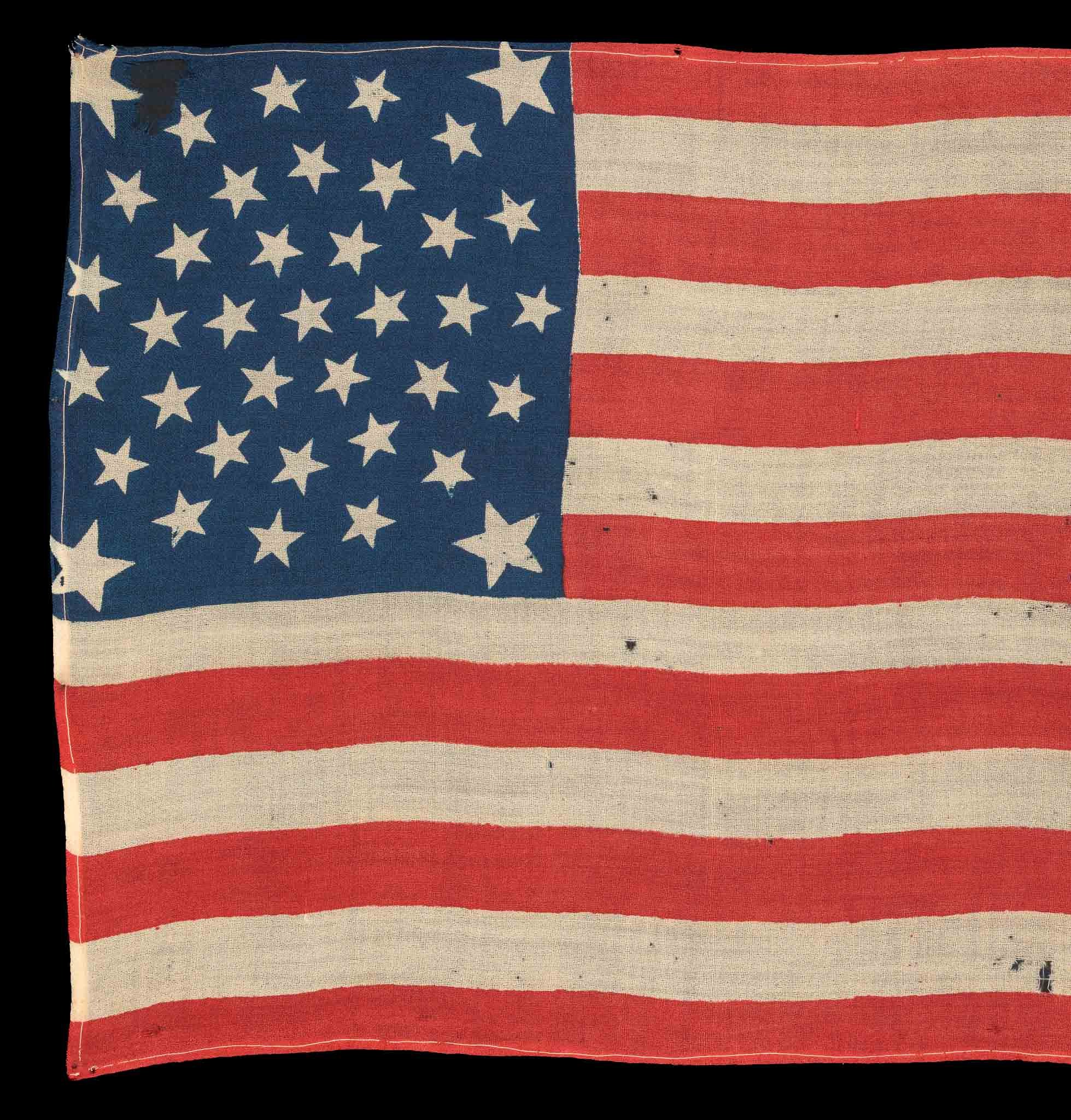
Offered is a 38-star American flag with a distinctive medallion configuration. The canton contains a single center star surrounded by three concentric rings, with four substantially larger stars positioned at the corners. The stars within the medallion are uniform in size, while the four flanking stars form a bold outer framework around the circular design. Unlike many medallion patterns, which emphasize an oversized center star, this example reverses the usual hierarchy by placing its largest stars at the perimeter. The result is an unusual and particularly effective interpretation of the 38-star constellation.
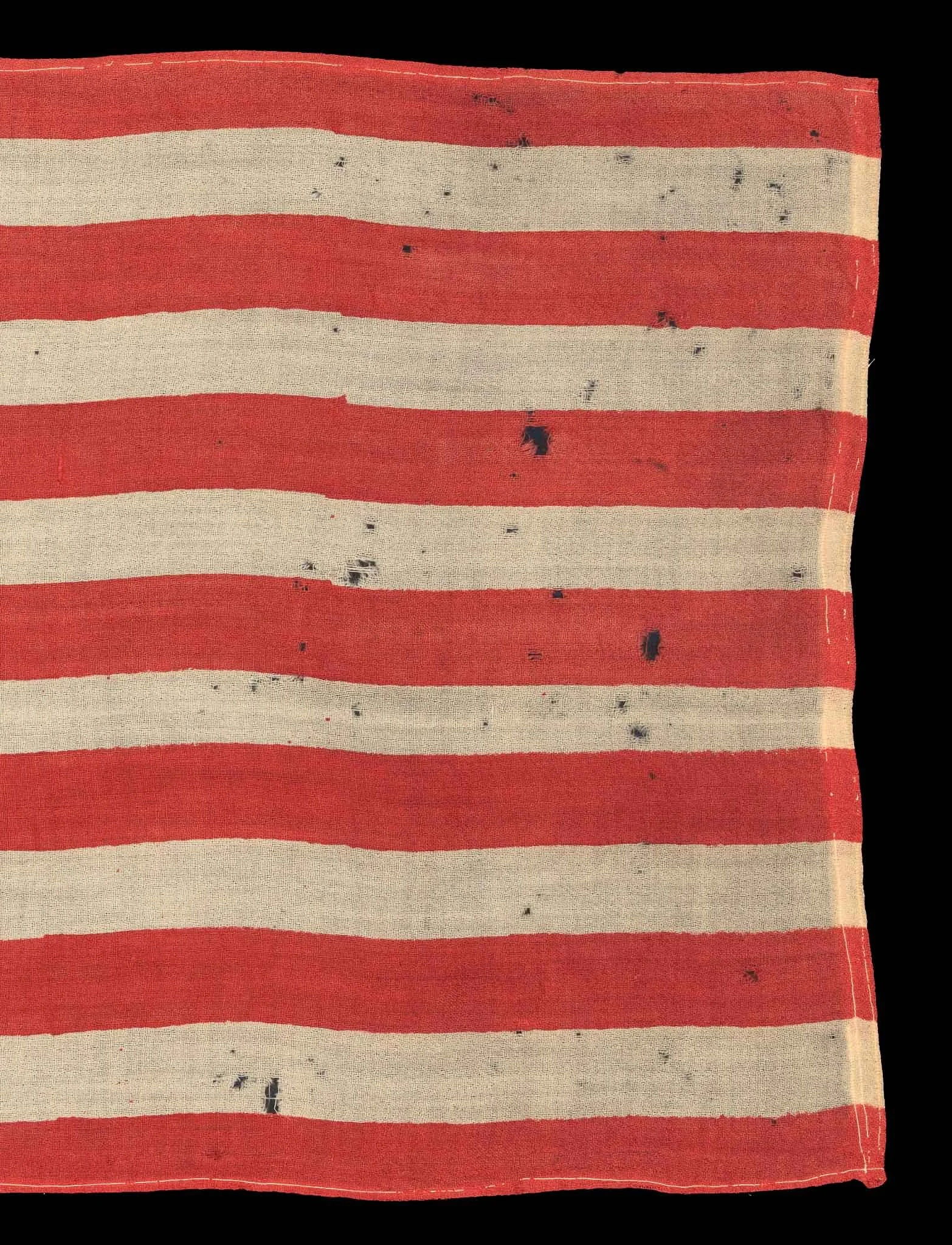
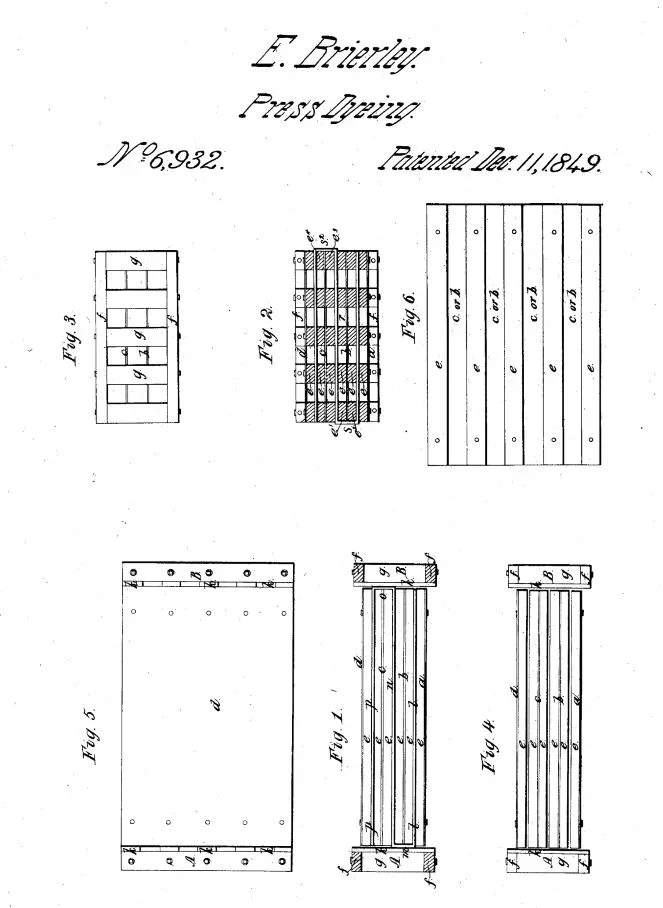
The flag is made of wool and was produced by a process generally described as press dyeing. An early American patent for this method was issued to E. Brierley in 1849 for a system employing a dyeing frame that controlled which portions of the fabric were exposed to the dye. The technique permitted stars, cantons, and stripes to be created directly in the fabric while leaving selected areas undyed. Press dyeing never became nearly as commonplace as conventional printing, and surviving examples often display characteristic irregularities where color migrated beyond its intended boundaries. These are visible on this flag in the minor blue bleeding within some of the white stars and red migration into portions of the white stripes.
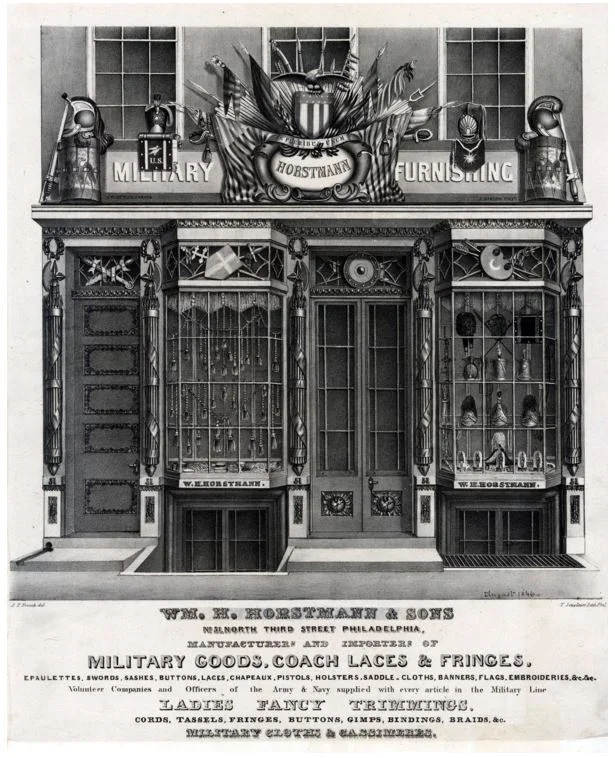
This flag can be attributed to Wm. H. Horstmann & Sons of Philadelphia based on its construction and its relationship to a small group of similarly manufactured press-dyed wool flags, including examples bearing the Horstmann name. Horstmann was one of the nation's foremost military outfitters during the 19th century. An early trade advertisement for the firm at 51 North Third Street in Philadelphia identifies it as a manufacturer and importer of military goods and specifically lists banners and flags among its products, alongside swords, pistols, uniforms, epaulettes, and other military furnishings. The firm's extensive involvement in military and patriotic goods makes the attribution particularly appropriate for a flag of this type.
The Philadelphia connection is particularly noteworthy. The Centennial International Exhibition opened there in 1876 to commemorate the 100th anniversary of American independence and became the first world's fair held in the United States. Its buildings and grounds were extensively decorated with flags and patriotic textiles, creating substantial demand for this type of material. Surviving Horstmann flags associated with the period include press-dyed wool examples with 38 stars and other configurations. While an undocumented example such as this cannot be conclusively assigned to the Exhibition itself, its construction, probable Philadelphia manufacture, and 38-star configuration place it firmly within the material culture of the Centennial era.
The use of wool is itself noteworthy. Most small decorative and parade flags of the period were printed on cotton or silk, materials well suited to inexpensive production and temporary display. Wool bunting was more commonly employed for durable flags intended for extended use. The combination of wool fabric, press-dyed decoration, and an elaborate medallion therefore places this flag within a comparatively specialized category of 19th-century flag production.
The 38-star flag represents Colorado statehood. Colorado entered the Union on August 1, 1876, less than a month after the nation's Centennial on July 4, earning its enduring nickname, the "Centennial State." Under the Flag Act of 1818, a new star formally entered the national flag on the July 4 following a state's admission, so the 38-star flag became official on July 4, 1877. The preceding 37-star flag technically remained official throughout 1876, although flag makers routinely anticipated forthcoming star counts, and 38-star flags were produced and displayed during the Centennial year in anticipation of Colorado's admission.
The 38-star flag remained official through July 3, 1890. On July 4 of that year, it was replaced by the 43-star flag following the admission of North Dakota, South Dakota, Montana, Washington, and Idaho.
With its elaborate medallion, oversized corner stars, wool construction, press-dyed manufacture, and probable association with Horstmann, this is an especially interesting example of Centennial-era flagmaking. Its combination of an unusual star configuration and uncommon method of manufacture distinguishes it from the more familiar cotton parade flags of the period.
Conservation Process: This flag was hand sewn to cotton fabric, and both were hand sewn to a mounting board. To prevent the black dye in the cotton fabric from seeping into the flag, it was first washed in a standard wash and then in a dye setting wash. The flag is positioned behind Optium Museum Acrylic.
Frame: The flag is mounted in a modern frame with a broad, flat profile and satin black finish. Its clean, understated design gives the presentation a substantial contemporary look while keeping attention focused on the flag.
Condition Report: The flag exhibits scattered small holes, minor losses, and areas of staining and discoloration throughout, with additional wear along the edges and corners. A more noticeable hole is present at the upper left corner of the canton, affecting the corner star and adjacent fabric. The colors remain strong overall, and the wool retains a notably complete appearance despite these age-related condition issues.
Collectability Level: The Best – Perfect for Advanced Collectors
Date of Origin: 1876-1889
Number of Stars: 38
Associated War: The Indian Wars (1860-1890)
Associated State: Colorado