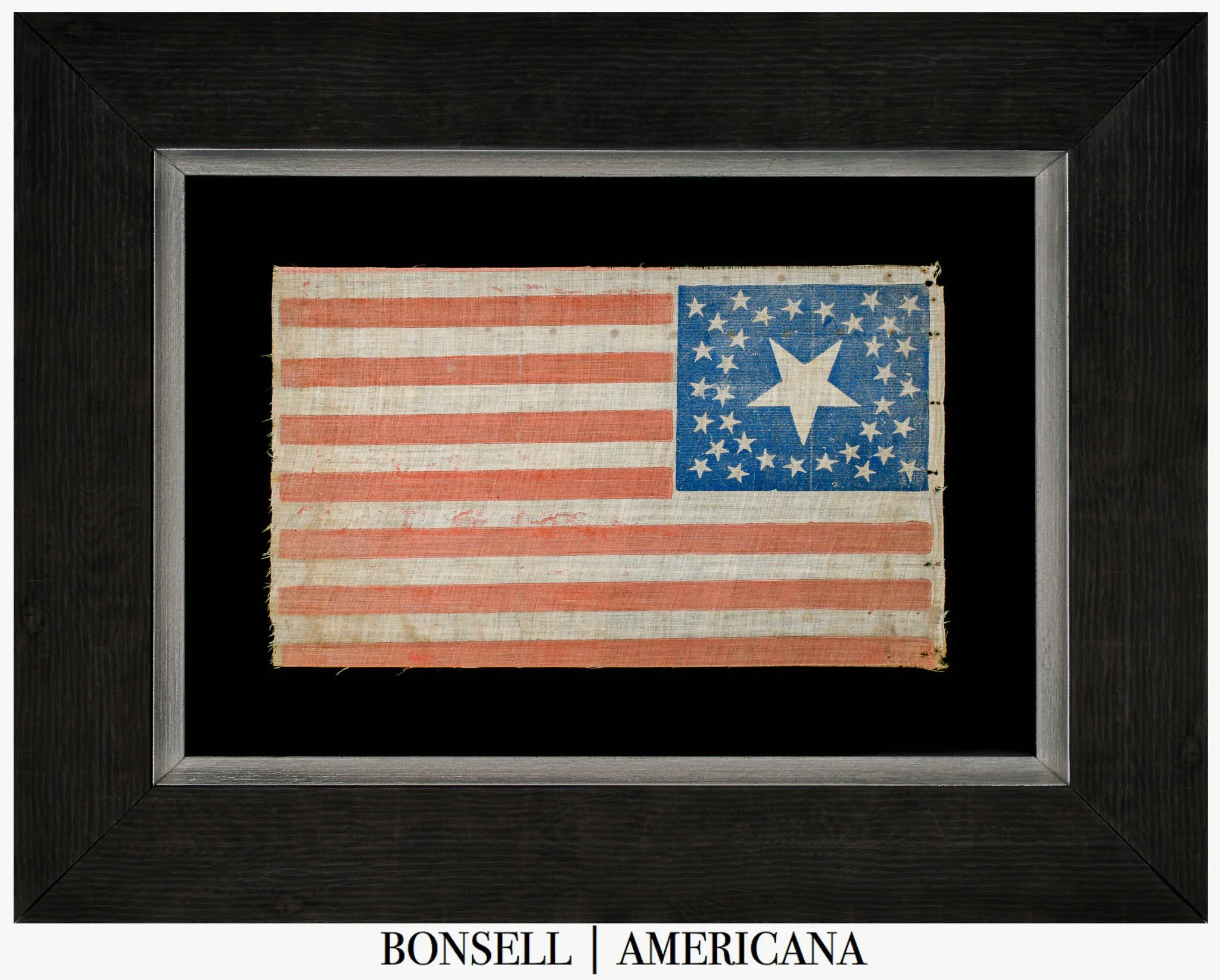
Rare 30 Star Antique American Flag | Elaborate Medallion with Haloed Center Star | Wisconsin Statehood | Circa 1848–1851
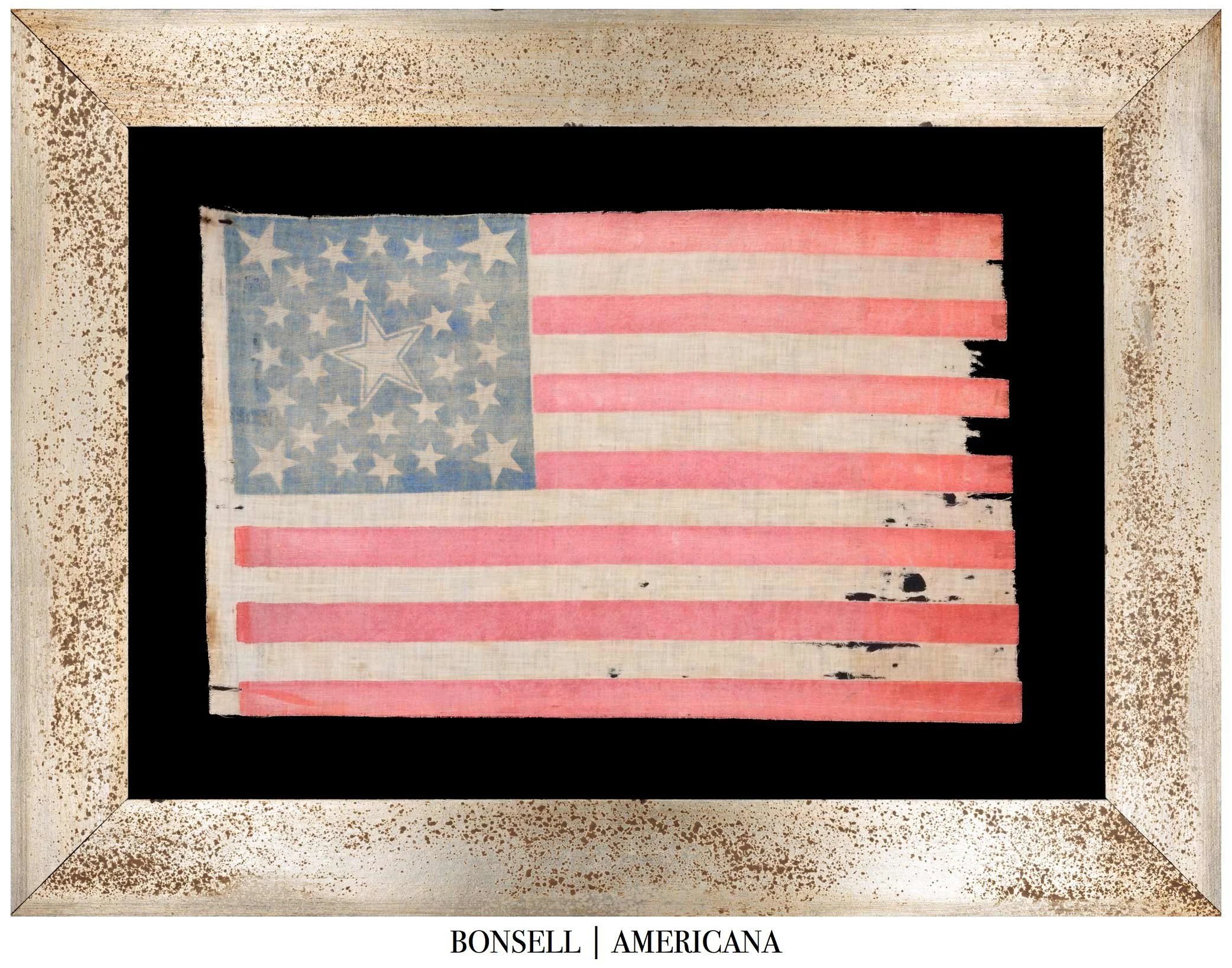
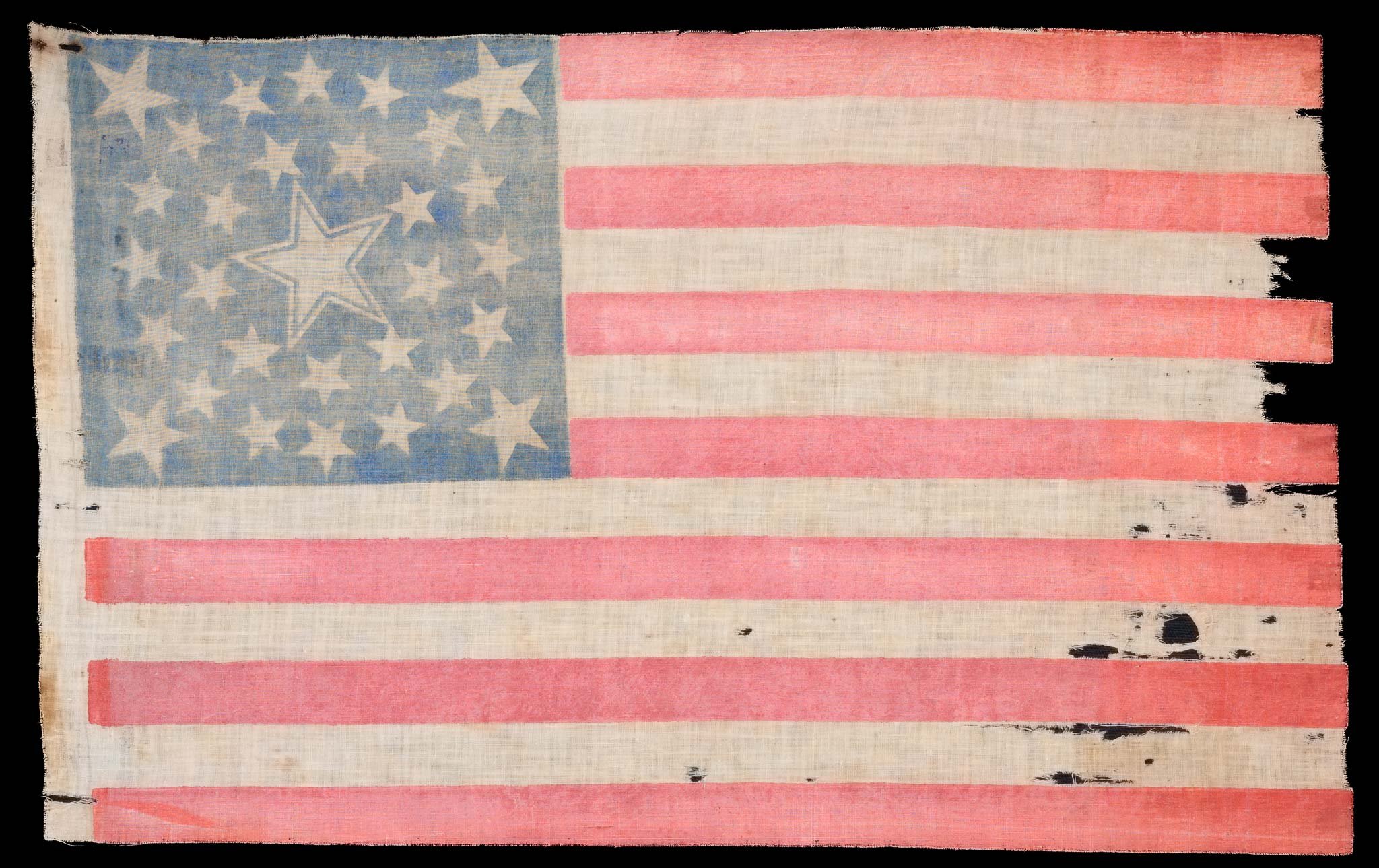
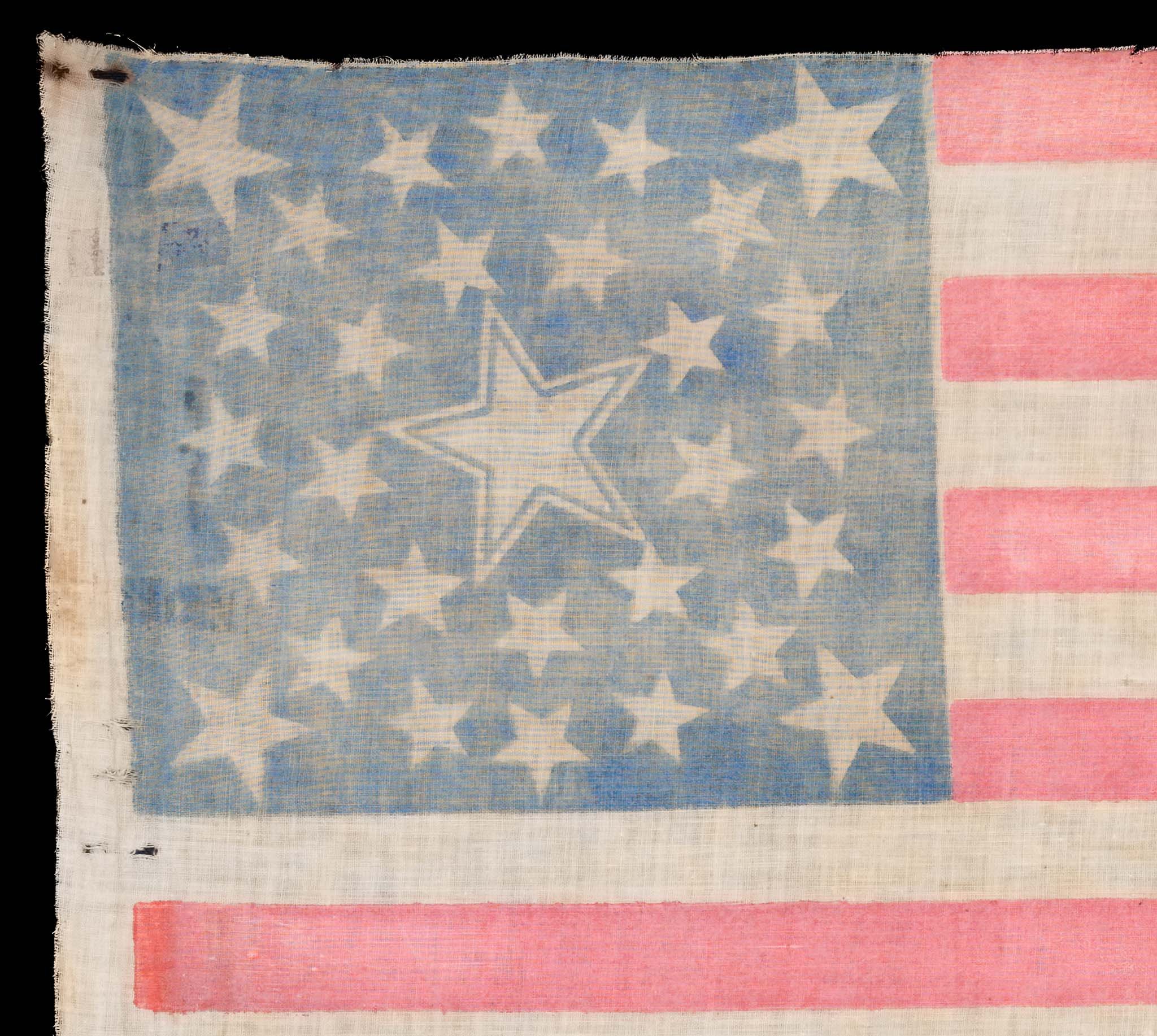
Rare 30 Star Antique American Flag | Elaborate Medallion with Haloed Center Star | Wisconsin Statehood | Circa 1848–1851
Price: Call 618-553-2291, or email info@bonsellamericana.com
Frame Size (H x L): 26” x 34 ½”
Flag Size (H x L): 14 ¾” x 23”
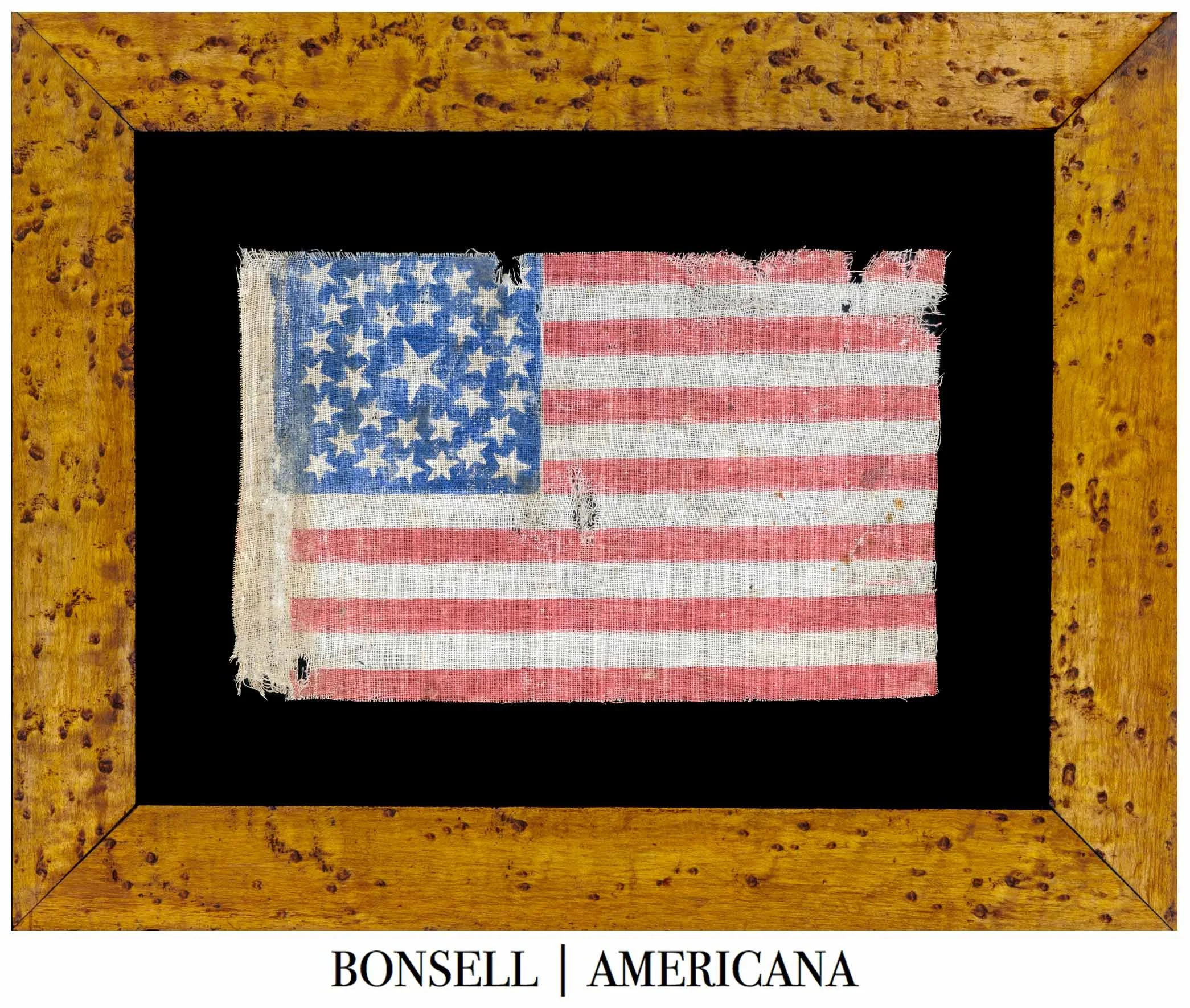
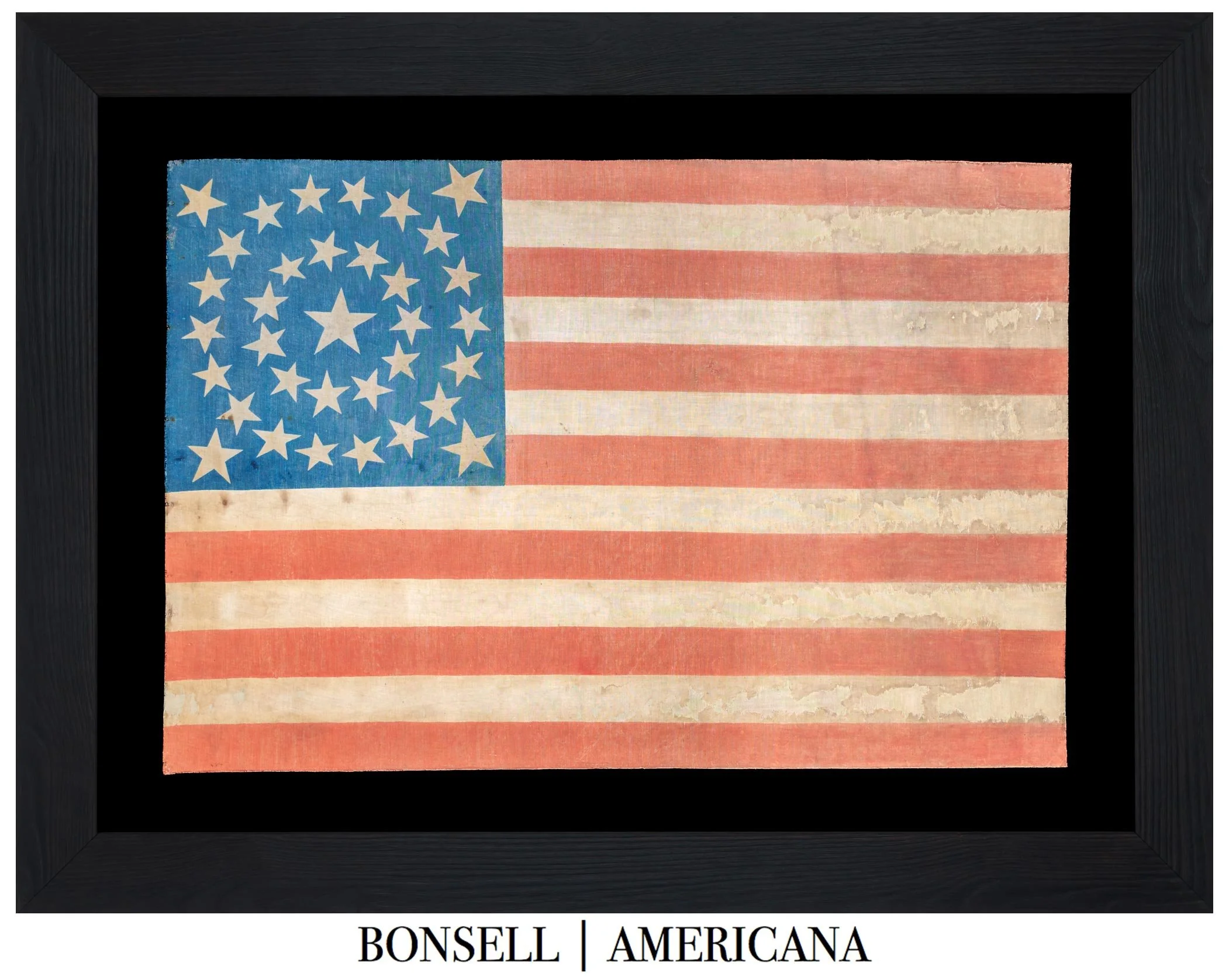
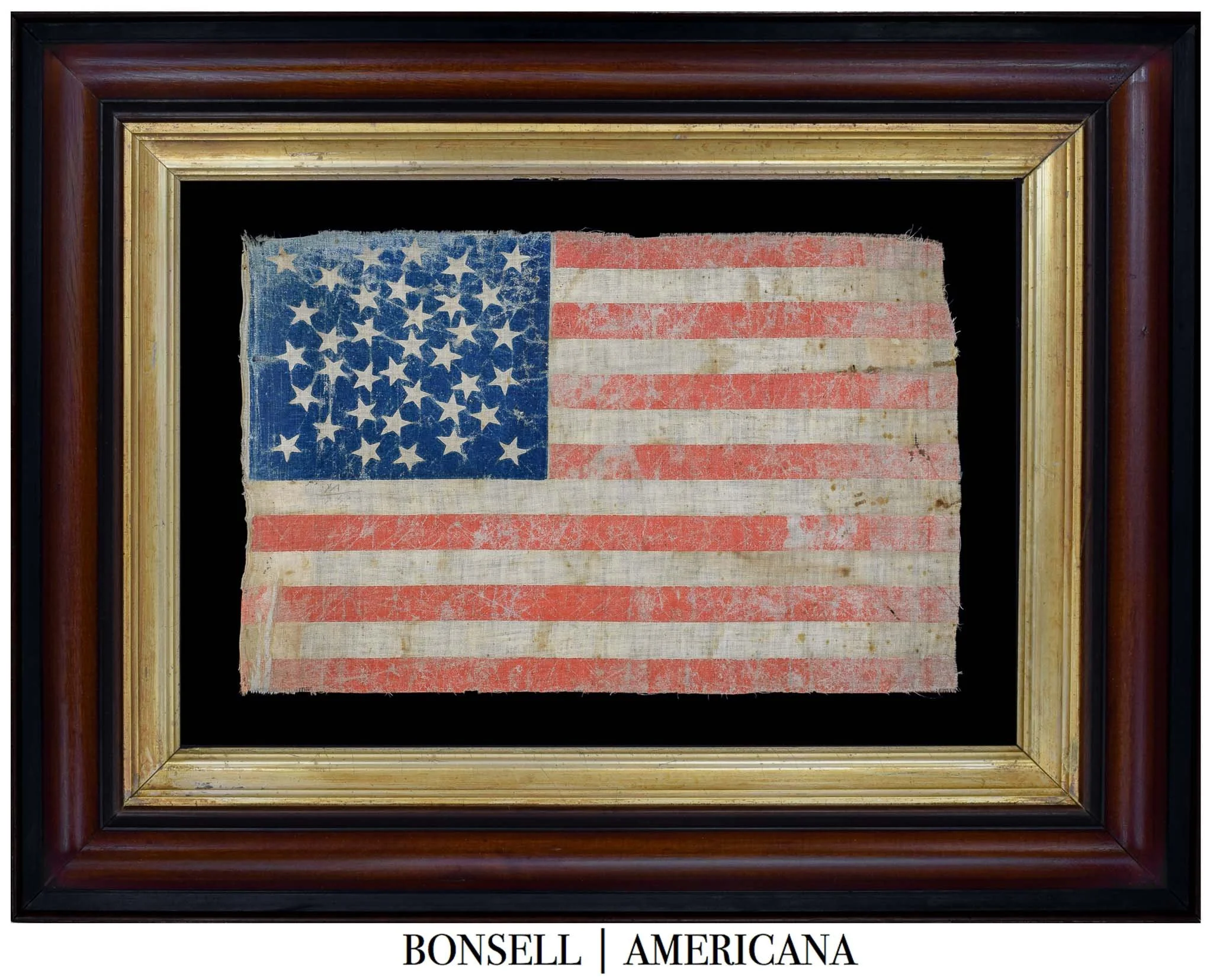
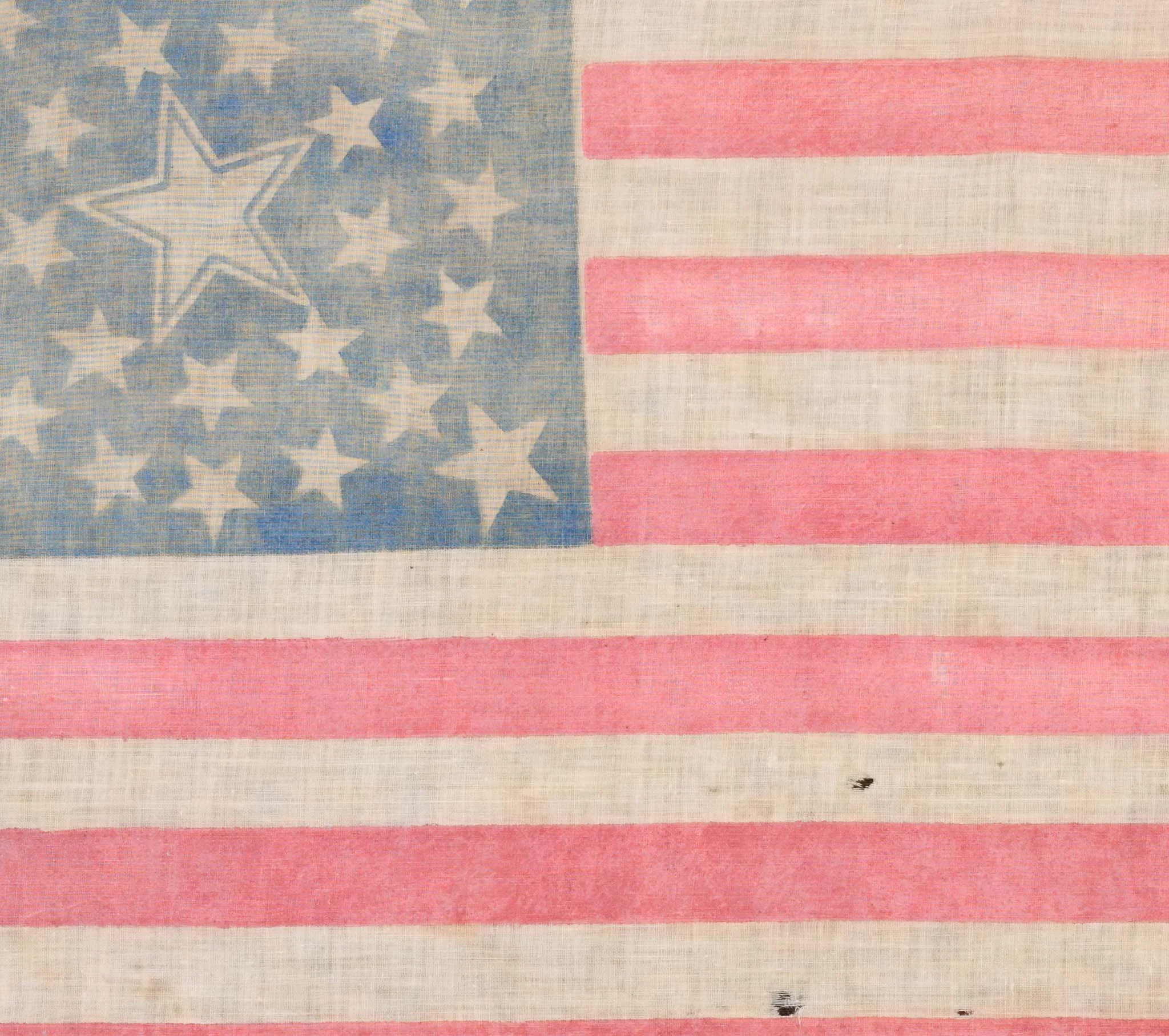
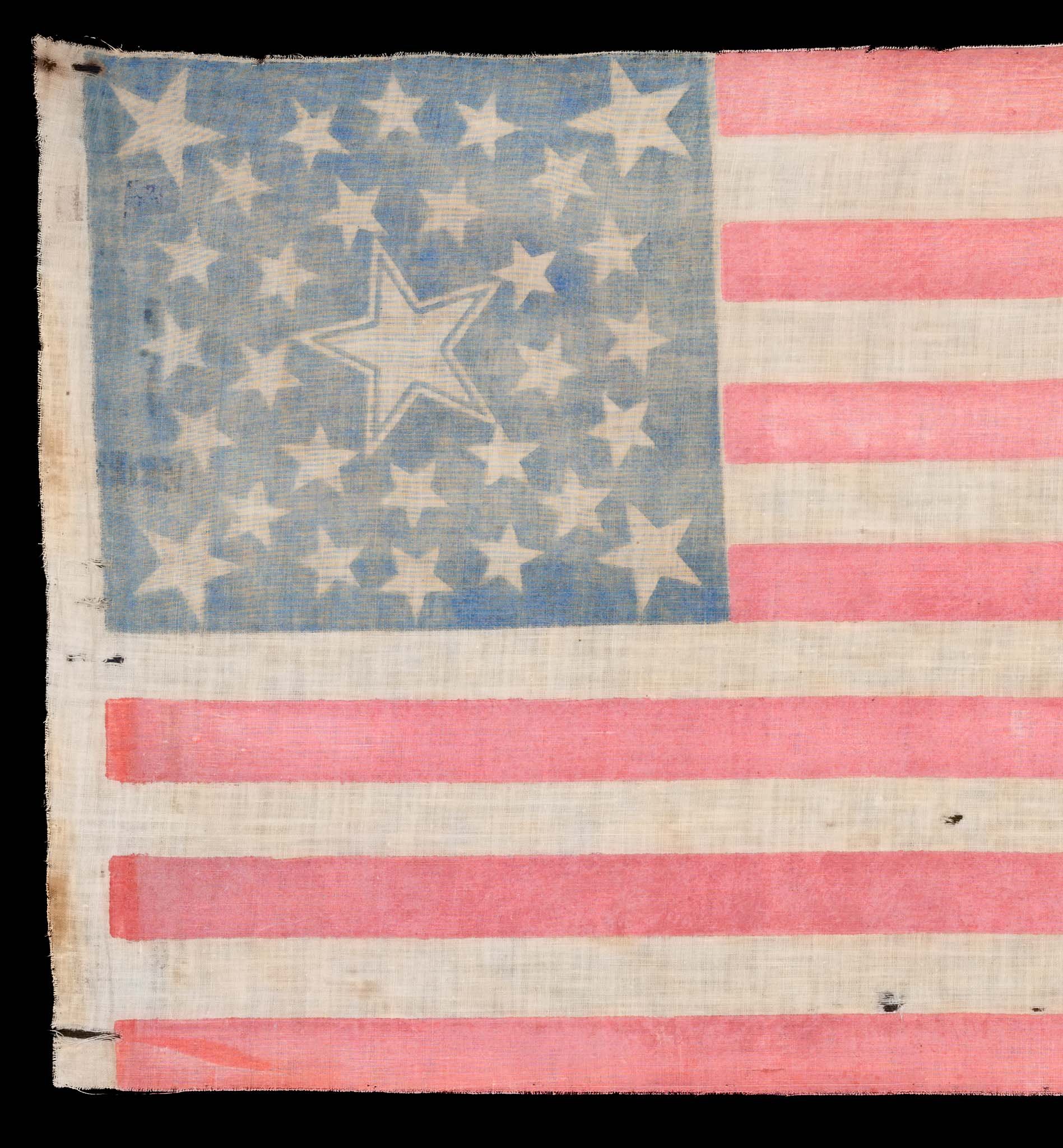
Offered is an exceptional 30-star antique American flag, printed on cotton and dating to one of the earliest periods of commercially printed American flags. The canton features an elaborate medallion configuration centered by a large, haloed star, making this a particularly striking example of an already exceedingly scarce star count.
The 30-star flag represents the admission of Wisconsin as the 30th state. Wisconsin entered the Union on May 29, 1848, and under the Flag Act of 1818 its star was officially added to the American flag on July 4 of that year. The 30-star flag remained official until July 3, 1851, when California's admission resulted in the 31-star flag.
Flags dating to the years before the Civil War survive in comparatively small numbers, particularly those intended for public, political, or celebratory use. The American flag had not yet assumed the near-universal place in civic and domestic life that it would acquire during and after the Civil War. Even within the military, the familiar Stars and Stripes was adopted gradually. Army regulations of 1834 prescribed a Stars and Stripes national color for artillery, while infantry was not authorized to carry the Stars and Stripes as its national color until 1841.
This flag therefore belongs to a formative period in the development of the American flag as a widely recognized national emblem. Its printed construction is especially noteworthy. Printed parade flags became increasingly important as inexpensive flags could be produced for political rallies, public celebrations, parades, and other civic events, but examples from the 1840s remain exceptionally early. This flag dates only about a decade after the 26-star period of 1837–1845 and well before the enormous expansion in flag production brought about by the Civil War.
The star configuration is among the most compelling features of the flag. Rather than employing simple horizontal or vertical rows, the maker arranged the stars in an elaborate medallion. A large star occupies the center of the canton, surrounded by concentric arrangements of smaller stars, with additional stars positioned toward the corners. The resulting design is both highly graphic and distinctly representative of the freedom enjoyed by 19th-century flag makers.
There was no federally prescribed arrangement of the stars during this period. The Flag Act of 1818 established that the flag would contain one star for each state, with additional stars added on the Fourth of July following a state's admission, but it did not dictate how those stars were to be arranged. Makers were therefore free to employ circles, medallions, Great Stars, staggered rows, and numerous other patterns. The federal government did not standardize the arrangement and proportions of the national flag until 1912, during the administration of President William Howard Taft.
At the center of this example is an unusually large, canted star surrounded by a narrow outlined or "haloed" border. This type of device is sometimes described by collectors as a center star and should be distinguished from a Great Star, in which numerous smaller stars are themselves arranged to form the outline of one large star. Here, the center star is an individual printed element around which the remainder of the constellation is organized.
The oversized center star is traditionally interpreted on flags of this type as representing the newest state—in this case Wisconsin. Whether every maker consciously intended that symbolism cannot be established, but the placement would have been particularly appropriate in 1848, when Wisconsin's admission was the event that brought the national constellation to 30 stars.
The halo surrounding the center star is another notable feature. Similar haloed center-star devices appear on a small group of printed American flags from the middle decades of the 19th century and are immediately recognizable for their distinctive appearance. The identity of the printer remains unknown, but similarities in printing style and canton design among surviving examples suggest that related flags may have originated with the same maker or closely associated manufacturers. On this example, the pale outline around the large star creates a strong focal point within an already complex medallion.
The historical moment represented by the flag is equally important. The 30-star period encompassed the presidential election of 1848, held only months after Wisconsin entered the Union. Whig nominee Zachary Taylor, a celebrated general of the Mexican-American War, faced Democratic nominee Lewis Cass and former President Martin Van Buren, who ran as the candidate of the newly organized Free Soil Party. Taylor won the election, propelled in large part by his national reputation as a military hero.
Taylor's supporters organized political clubs, rallies, and public gatherings around the image of "Old Rough and Ready," while the Free Soil campaign made the expansion of slavery into the western territories a central national political issue. The election took place as the country confronted the enormous territorial gains resulting from the Mexican-American War and the increasingly contentious question of whether slavery would expand westward.
A small printed flag such as this would have been well suited to the political and public gatherings of the period. Without specific provenance it is impossible to assign this particular example to the Taylor campaign, but its 1848–1851 date, portable format, and printed cotton construction place it squarely within the type of flag used at political rallies, parades, patriotic celebrations, and other public events during the era.
Taylor's presidency proved remarkably brief. He died on July 9, 1850, roughly 16 months after taking office, and was succeeded by Vice President Millard Fillmore. His administration coincided with rapidly increasing sectional conflict surrounding slavery and the territories acquired from Mexico, placing the 30-star period immediately before the political crises of the 1850s that eventually culminated in the Civil War.
The survival of any printed American flag from this period is notable. The combination present here—a 30-star count, pre-Civil War manufacture, elaborate medallion configuration, oversized haloed center star, and early printed cotton construction—places this example among the more visually distinctive forms produced during the formative years of the American flag. It represents Wisconsin's entry into the Union, the presidential politics of 1848, and an era when flag makers were still free to interpret the national constellation with extraordinary creativity.
Conservation Process: This flag was hand sewn to cotton fabric, and both were hand sewn to a mounting board. To prevent the black dye in the cotton fabric from seeping into the flag, it was first washed in a standard wash and then in a dye setting wash. The flag is positioned behind Optium Museum Acrylic.
Frame: The flag is housed in a wide, contemporary frame with a softly sloped profile and an aged silver finish. The surface is deliberately distressed, with warm brown and muted gold undertones showing through the silver, giving the frame an understated, timeworn appearance that complements the flag without competing with it.
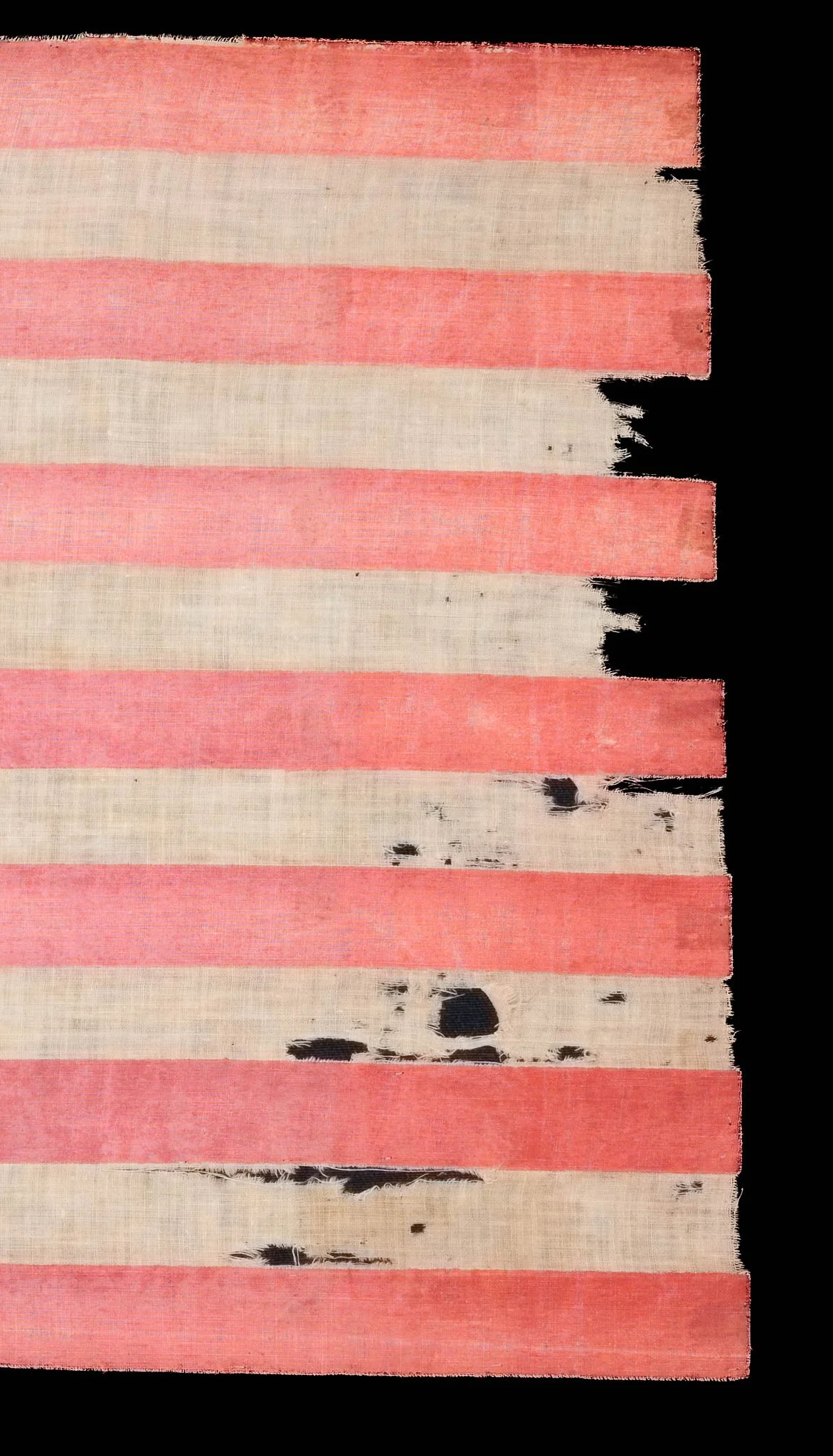
Condition Report: The flag is in good condition for its age, with strong overall presentation and attractive, softly faded color. There is scattered fabric loss and fraying, concentrated primarily along the fly end and in several areas of the lower white stripes, along with minor staining and small scattered losses elsewhere. Despite these condition issues, the canton and distinctive haloed medallion configuration remain well preserved and highly legible.
Collectability Level: The Best – Perfect for Advanced Collectors
Date of Origin: 1848-1851
Number of Stars: 30
Associated State: Wisconsin