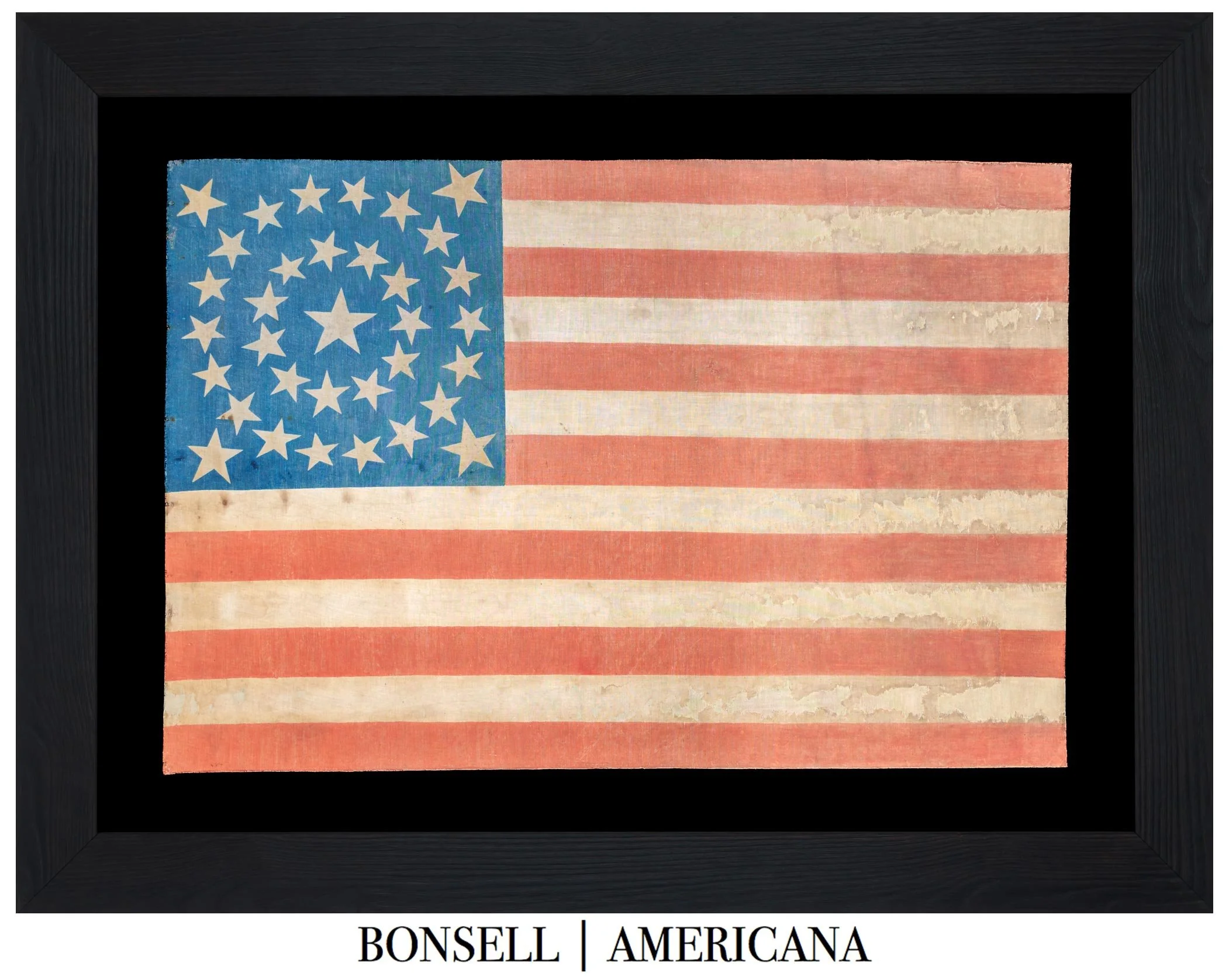
Attractive and Folksy 38 Star American Flag with MEMORIAL DAY Overprint | Civil War Veteran Commemorative | Colorado Statehood | Circa 1884
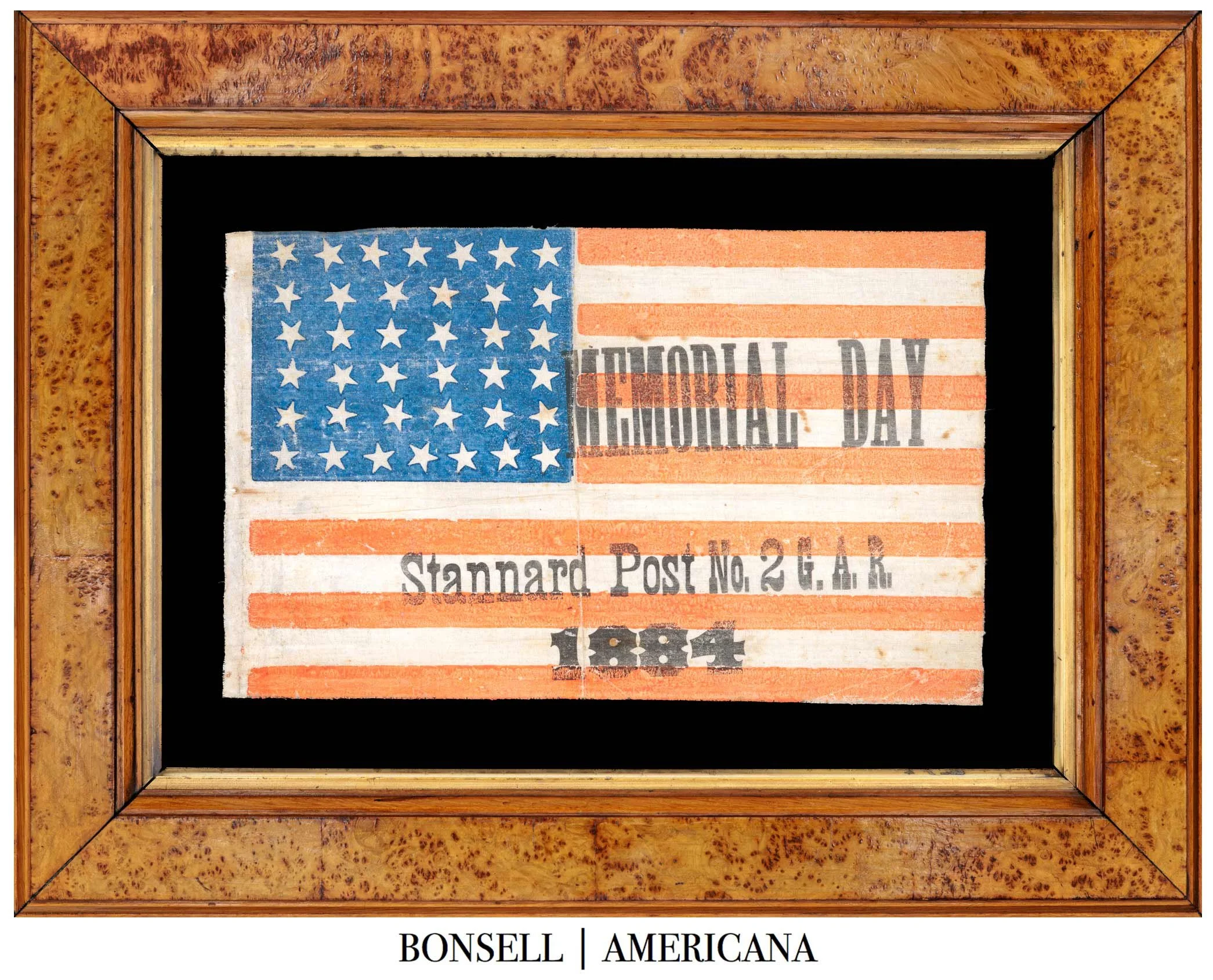
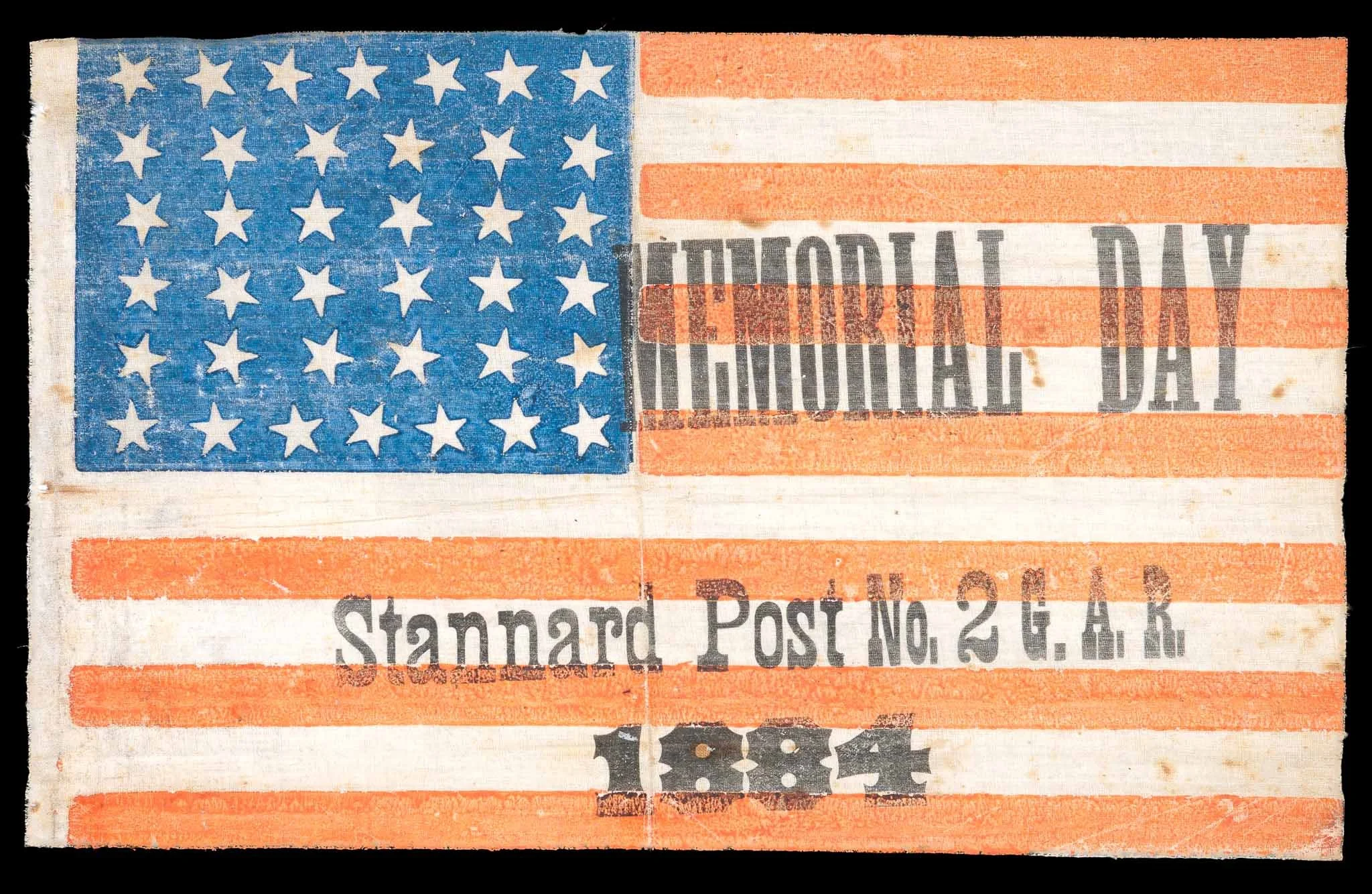
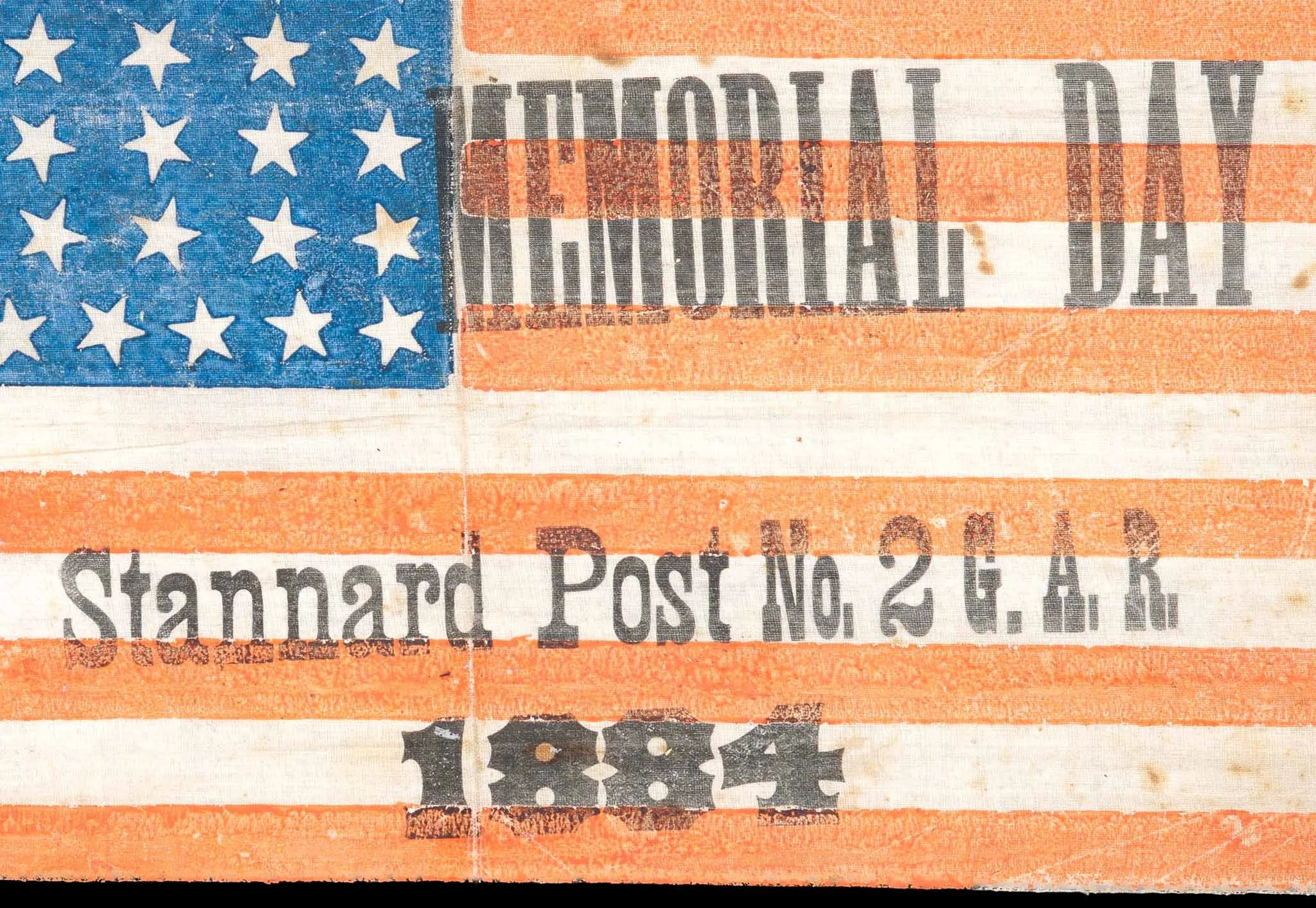
Attractive and Folksy 38 Star American Flag with MEMORIAL DAY Overprint | Civil War Veteran Commemorative | Colorado Statehood | Circa 1884
Frame Size (H x L): 16.75” x 22”
Flag Size (H x L): 9” x 14”
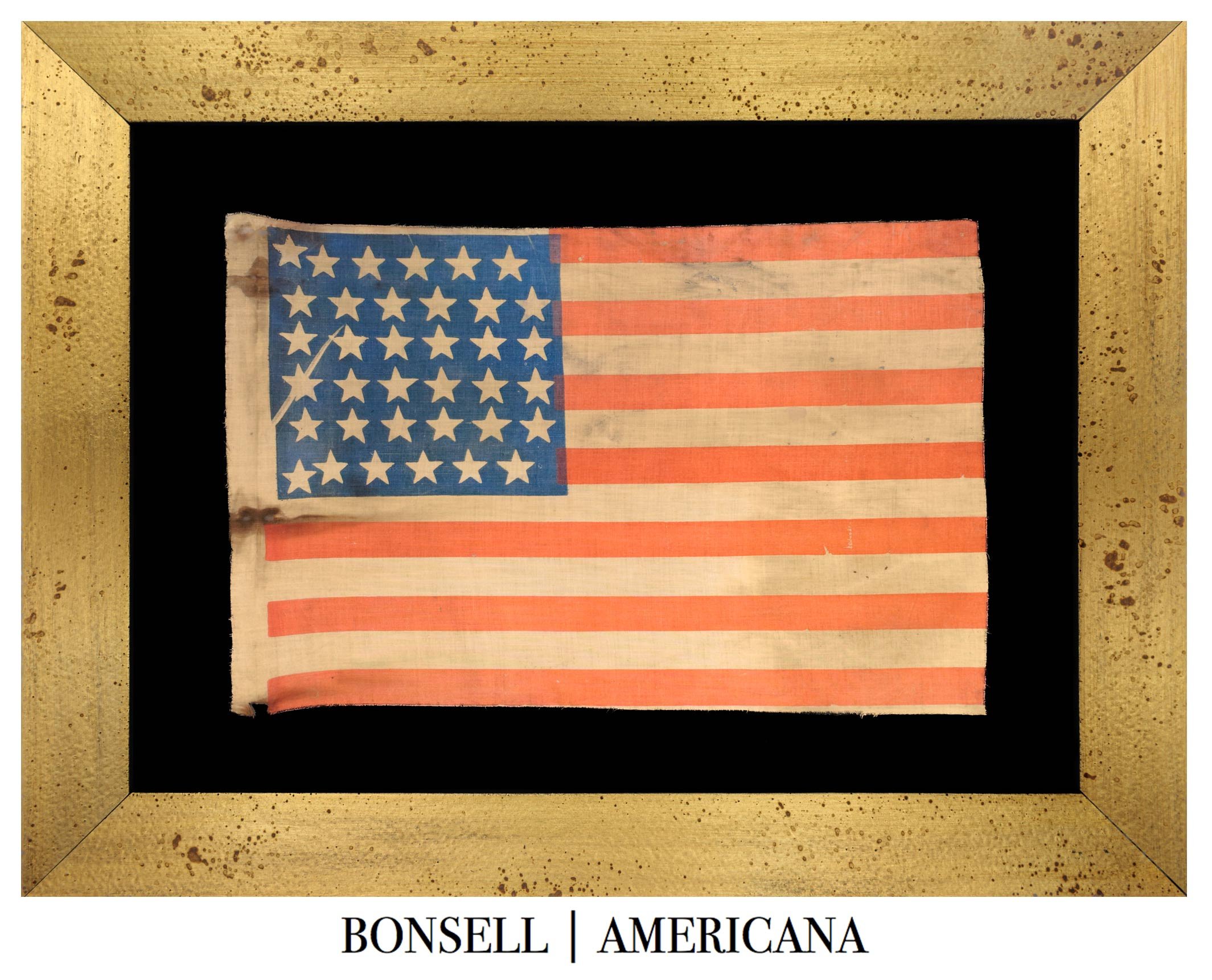
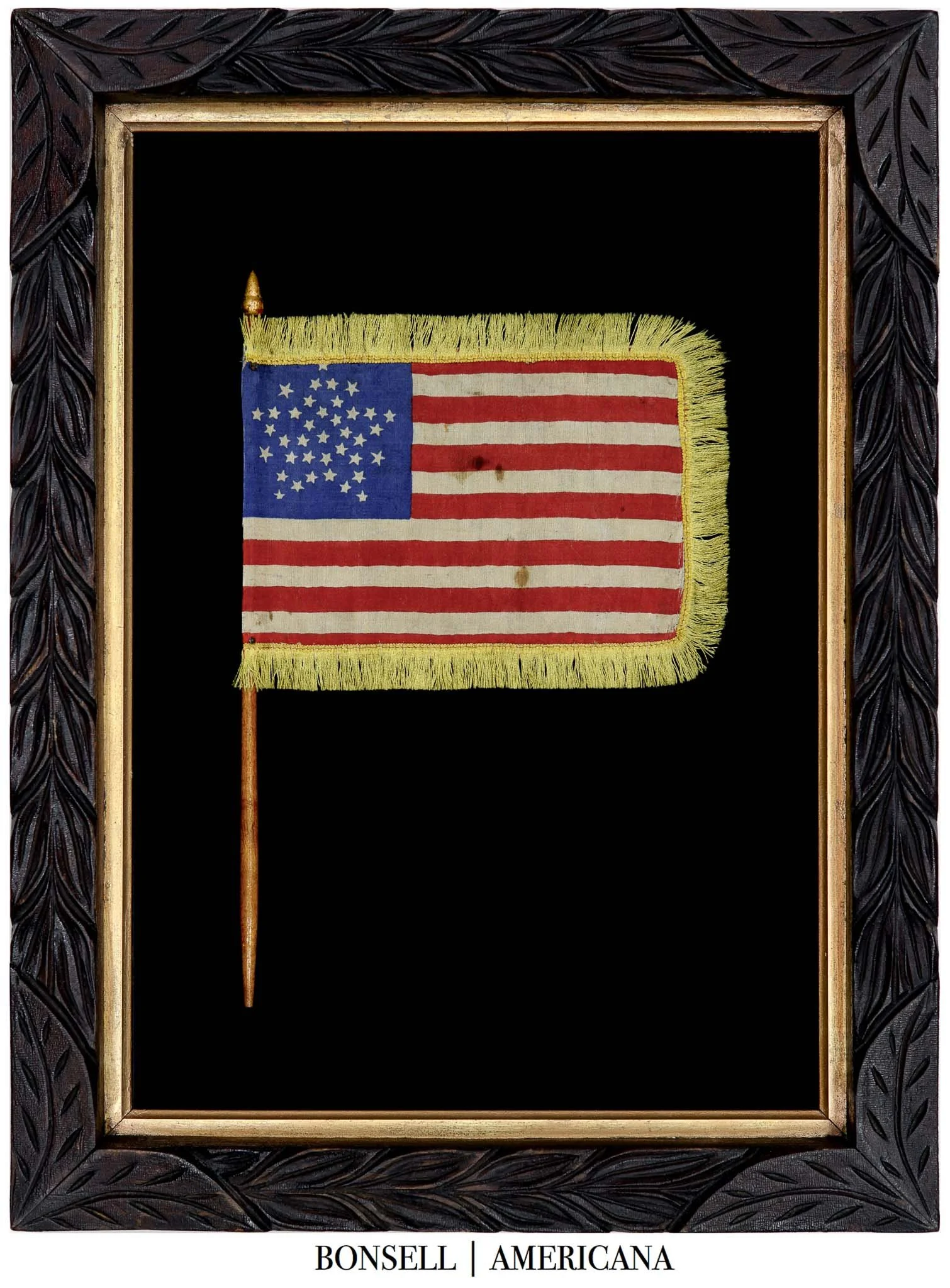
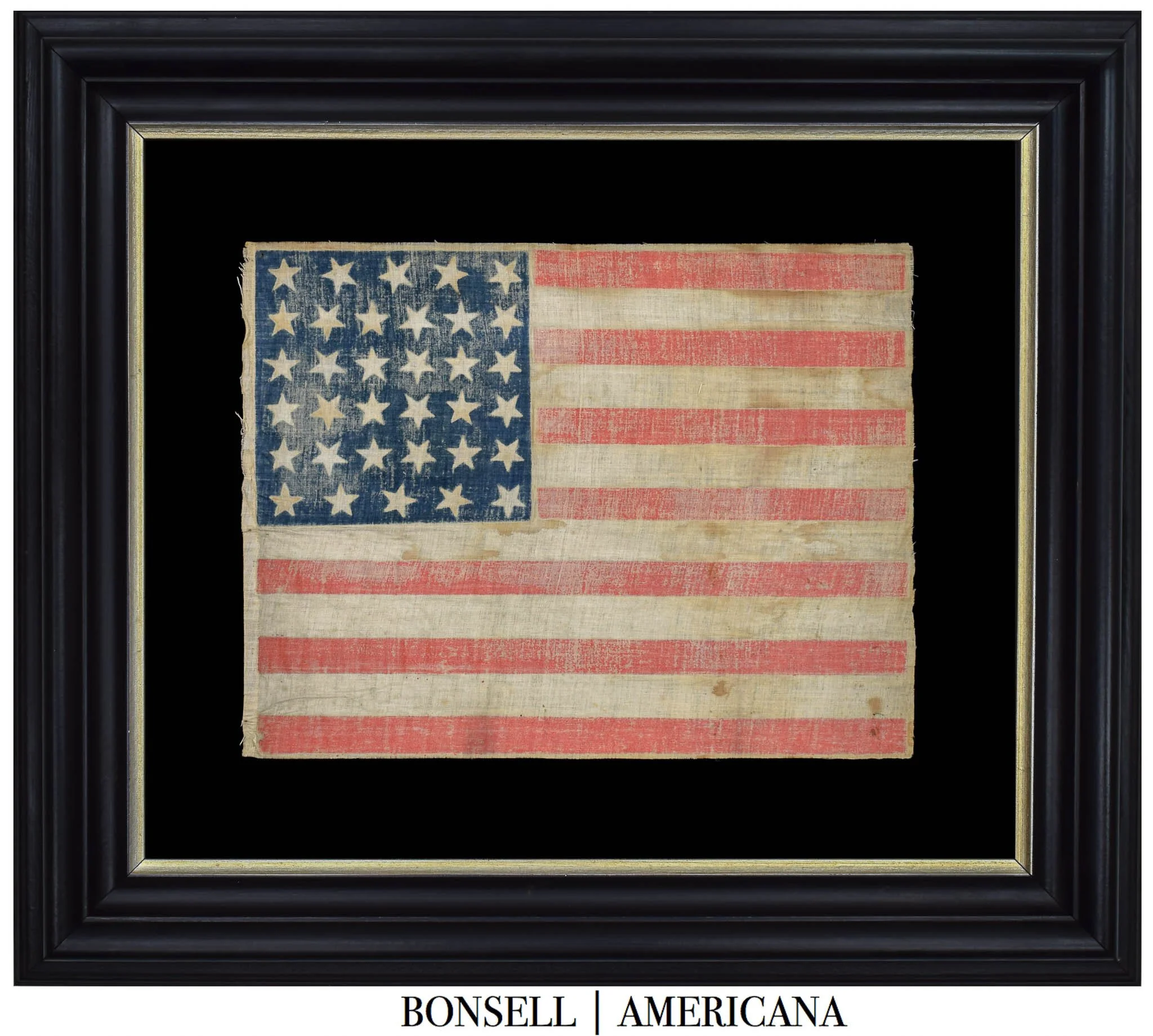
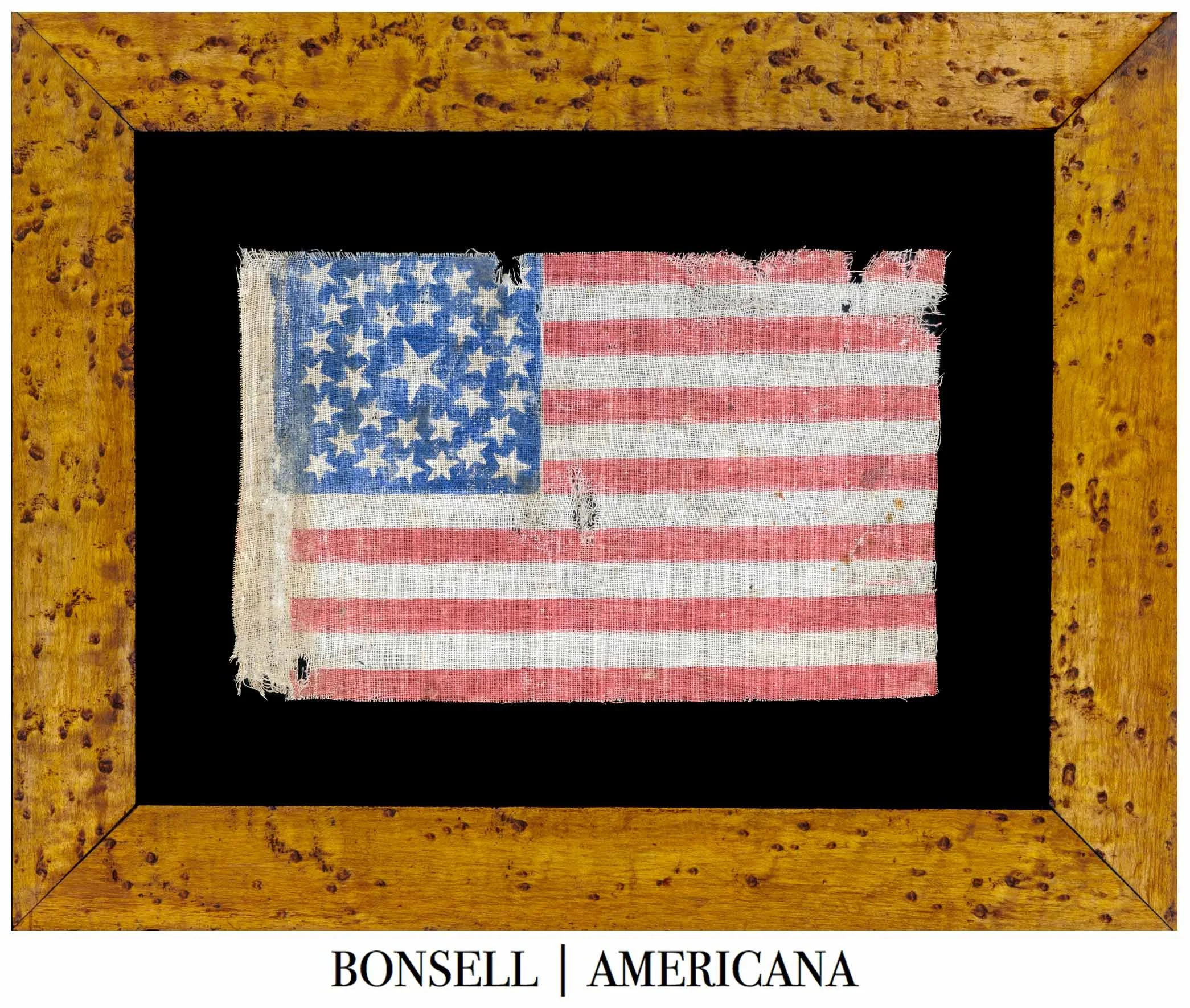
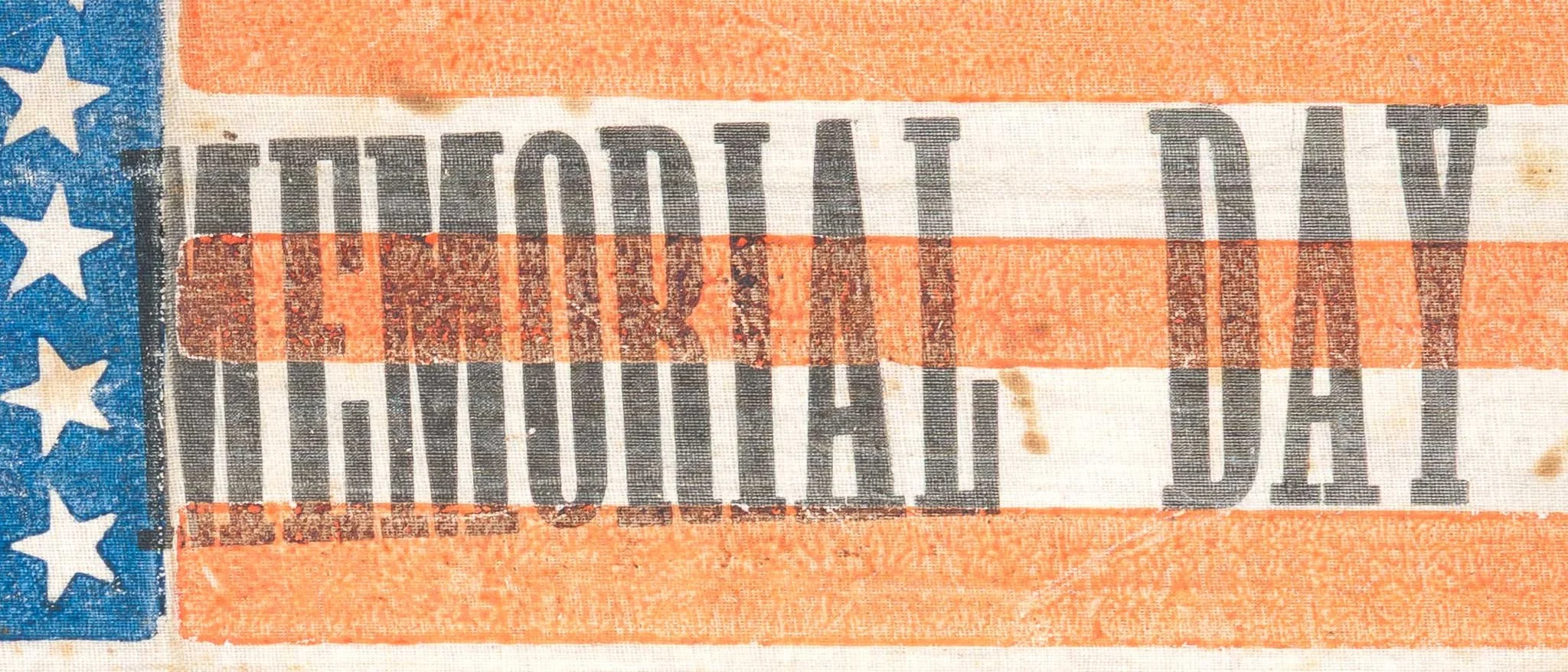
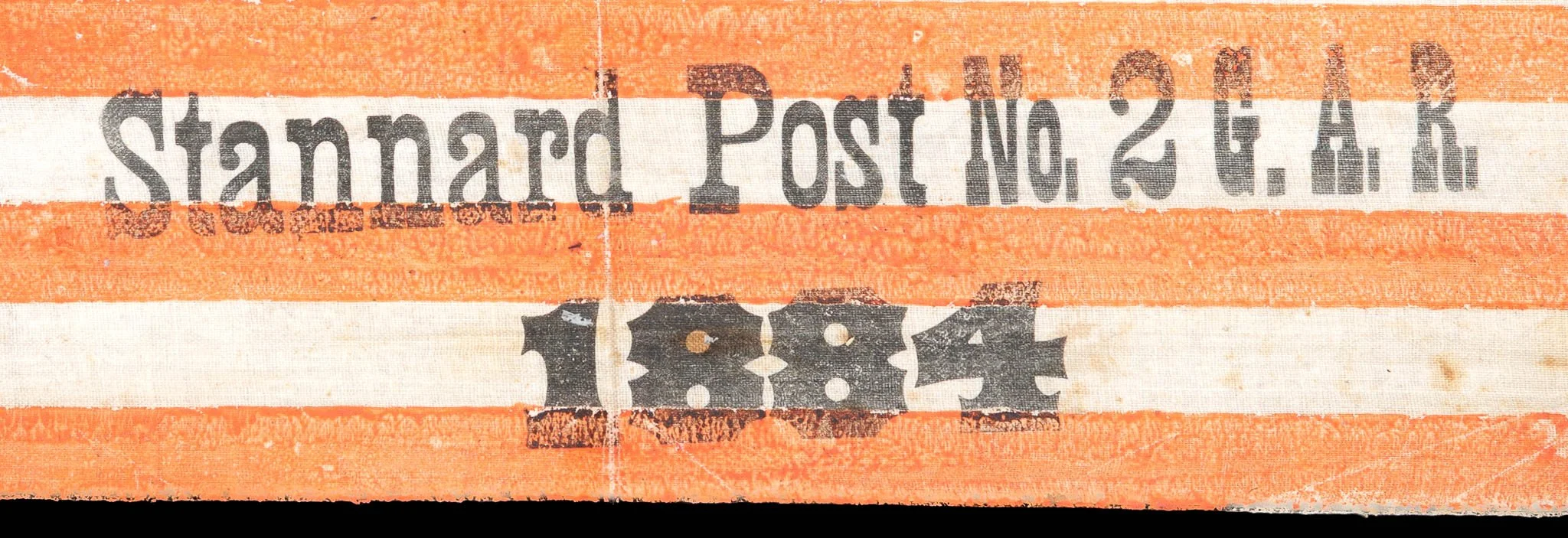
Offered is a 38-star American parade flag, printed on glazed cotton and overprinted for MEMORIAL DAY with a secondary, stamped overprint, referencing Stannard Post No. 2 of the Grand Army of the Republic (G.A.R.), dated 1884.
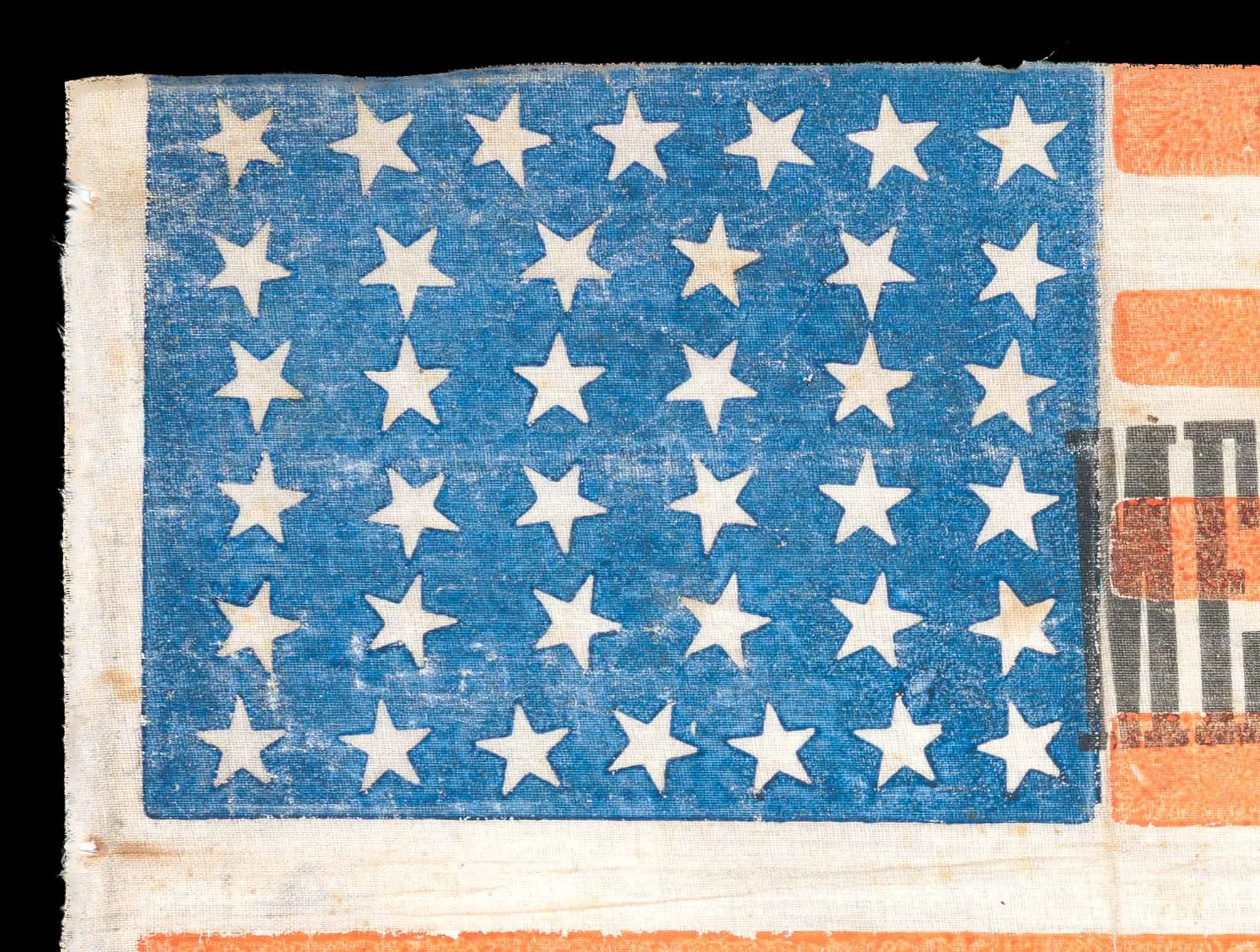
The canton displays a 7-6-6-6-6-7 star configuration, with stars arranged in generally linear rows and canted in varying directions, lending a lively, almost animated quality to the field. The stripes present in a particularly attractive orange-red tone, a result of period pigments and printing techniques, and provide strong visual contrast against the blue canton. Across the striped field appears the boldly applied, all-capital MEMORIAL DAY overprint, printed at a slight angle. The typography is somewhat crude, yet visually compelling, with additional text reading “Stannard Post No. 2 G.A.R.” and the date “1884,” offering the rare advantage of a clearly documented moment of use. This is the first example of this specific overprint and flag that we have encountered.
The presence of the MEMORIAL DAY overprint, combined with the identification of Stannard Post No. 2, firmly anchors this flag within the culture of Civil War remembrance. The Grand Army of the Republic, founded in 1866, was the leading fraternal organization of Union veterans, and its posts were deeply involved in the establishment and perpetuation of Memorial Day observances across the United States. These events were among the most important civic rituals of the late 19th century, involving parades, cemetery ceremonies, speeches, and the decoration of soldiers’ graves. Flags such as this were produced for precisely these occasions, often in limited quantities and for local use, which contributes to their rarity today.
Stannard Post No. 2 was located in Burlington, Vermont, and was named in honor of General George Jerrison Stannard, a Union officer best known for his leadership at the Battle of Gettysburg. The identification of a specific G.A.R. post is particularly desirable, as it ties the object to a defined community of veterans and a known geographic location. Unlike generic patriotic flags, this example was created for a specific group and event, elevating both its historical and interpretive value.
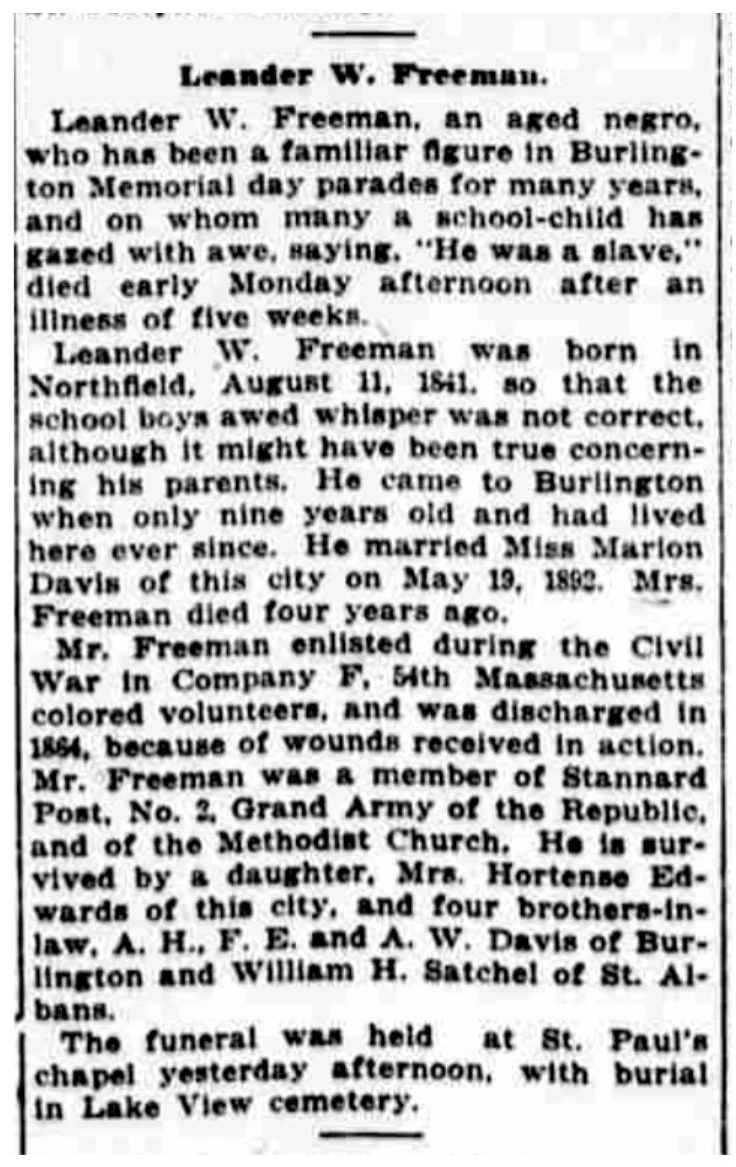
Of further interest is documentary evidence connecting the post to its membership. Period records, including the obituary of Leander W. Freeman, identify him as a member of Stannard Post No. 2. Freeman, an African American veteran who served in Company F of the 54th Massachusetts Colored Volunteers, represents an important and often underrepresented dimension of G.A.R. membership. His presence within the post underscores the degree to which African American veterans participated in these organizations and in Memorial Day observances, particularly in Northern communities. While it cannot be said that this flag was directly associated with Freeman himself, the documented connection between the post and one of its members adds a meaningful layer of human context and historical depth.
The 38 stars on this flag represent Colorado’s admission to the Union on August 1st, 1876. Known as the “Centennial State,” Colorado achieved statehood just 28 days after the nation’s 100th anniversary. Although the 38-star flag did not become official until July 4th, 1877, it remained in use through July 3rd, 1890, spanning a period of westward expansion, industrial growth, and national consolidation following the Civil War. By the date of this flag’s overprint—1884—the star count was fully official and widely produced, placing this example firmly within its proper historical context rather than among earlier anticipatory issues made for the Centennial.
The printing method and material further support an 1880s date. The use of glazed cotton, along with printed application of color, is consistent with parade flags of the period. The slightly irregular saturation of the pigments, especially in the stripes, contributes to the warm, almost burnished appearance that clients find particularly appealing. The overprint reflects the practical realities of such commemorative objects—standard flags customized for local events through secondary application.
Flags with specific Memorial Day overprints tied to named G.A.R. posts are rare, particularly those bearing a clear and early date. The combination of a desirable 38-star count, strong visual presentation, documented year of use, and direct association with a Grand Army post in Burlington makes this an especially compelling example. It stands not only as a patriotic object, but as a tangible artifact of post-war remembrance, community and identity.
Conservation Process: This flag was hand sewn to cotton fabric, and both were hand sewn to a mounting board. To prevent the black dye in the cotton fabric from seeping into the flag, it was first washed in a standard wash and then in a dye setting wash. The flag is positioned behind Optium Museum Acrylic.
Frame: The flag is housed in a handsome antique frame of birdseye maple, displaying dense, highly figured grain with warm, honeyed tones typical of 19th-century examples, likely dating to the mid- to late-1800s. A narrow gilded liner provides a refined inner border. The surface exhibits a naturally aged patina consistent with its period, enhancing its depth and character.
Condition Report: The flag shows moderate overall wear consistent with age and use, including scattered foxing, minor staining, and areas of pigment loss, particularly within the overprint and along the stripes. There is a vertical fold line through the center with associated light fabric breakdown, accompanied by minor fraying and edge wear along the perimeter. Despite these condition issues, the fabric remains stable, with strong visual presentation and legibility of both the star field and the MEMORIAL DAY overprint.
Collectability Level: The Great – Perfect for Rising Collectors
Date of Origin: 1884
Number of Stars: 38
Associated War: The Indian Wars (1860-1890)
Associated State: Colorado