Important 34 Star Civil War Parade Flag with Rare Medallion Configuration & Baltimore Lincoln Funeral Note | Kansas Statehood | Circa 1861-1863
Important 34 Star Civil War Parade Flag with Rare Medallion Configuration & Baltimore Lincoln Funeral Note | Kansas Statehood | Circa 1861-1863
Price: Call 618-553-2291, or email info@bonsellamericana.com
Frame Size (H x L): 33” x 44”
Flag Size (H x L): 22” x 33”
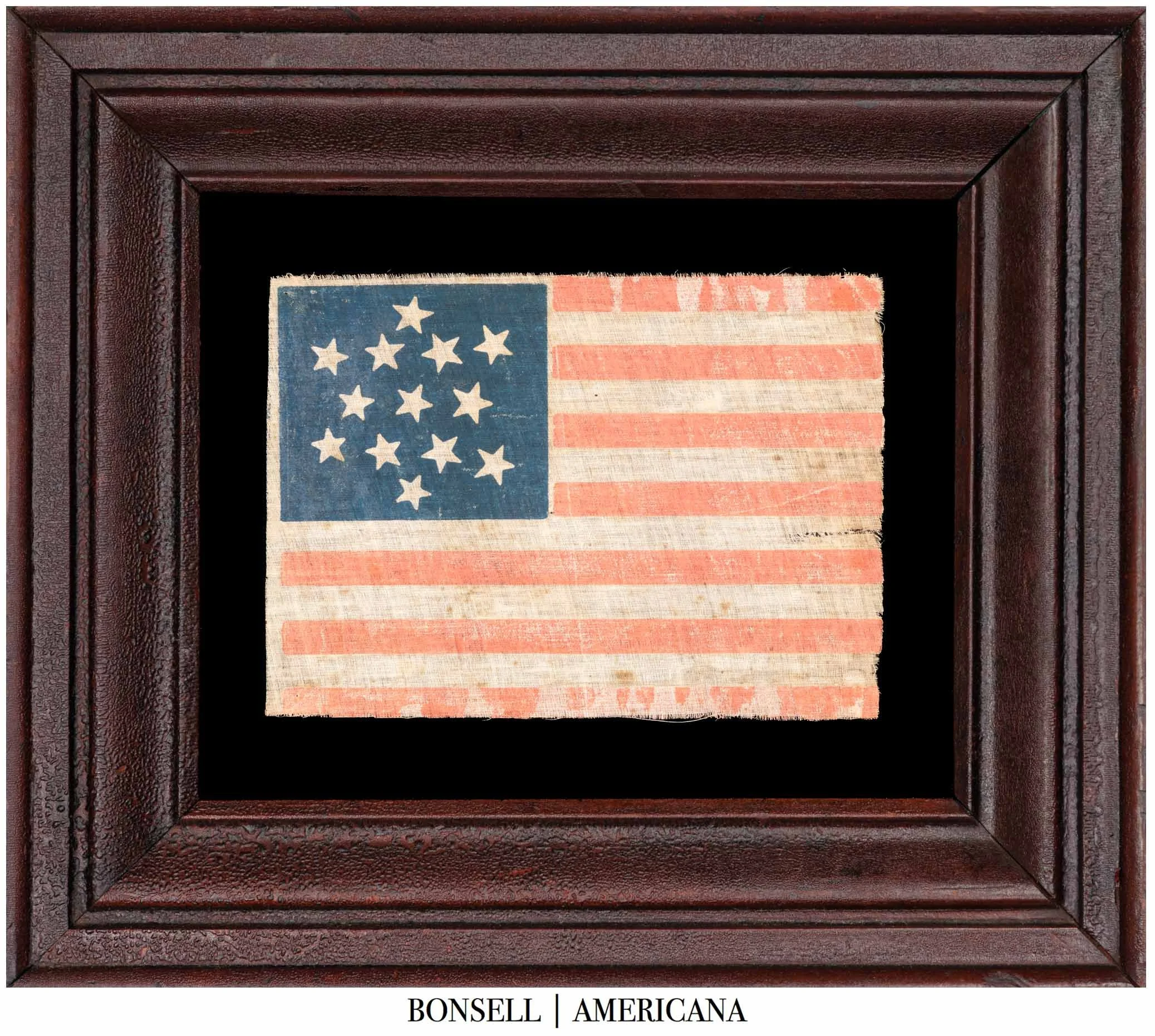
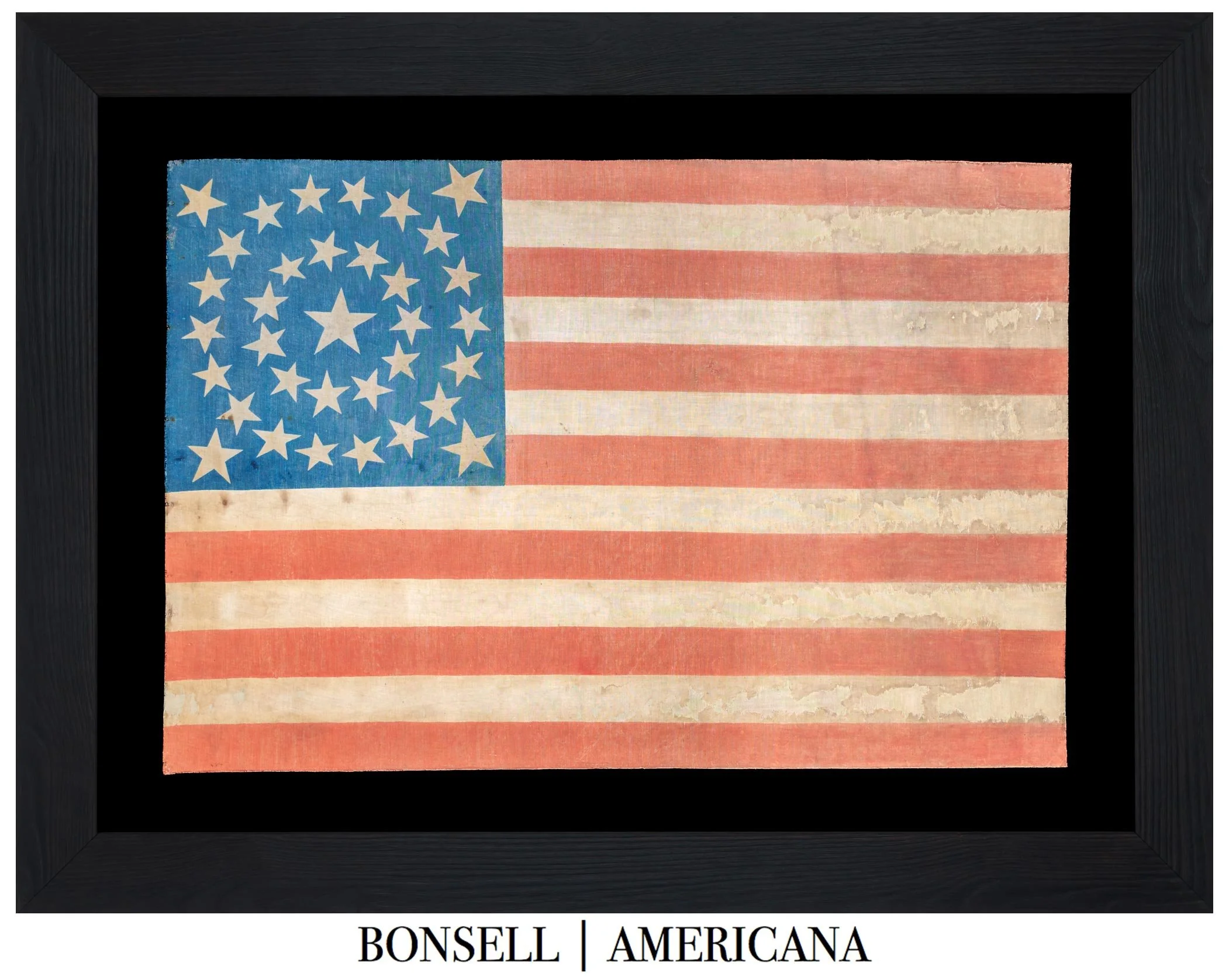
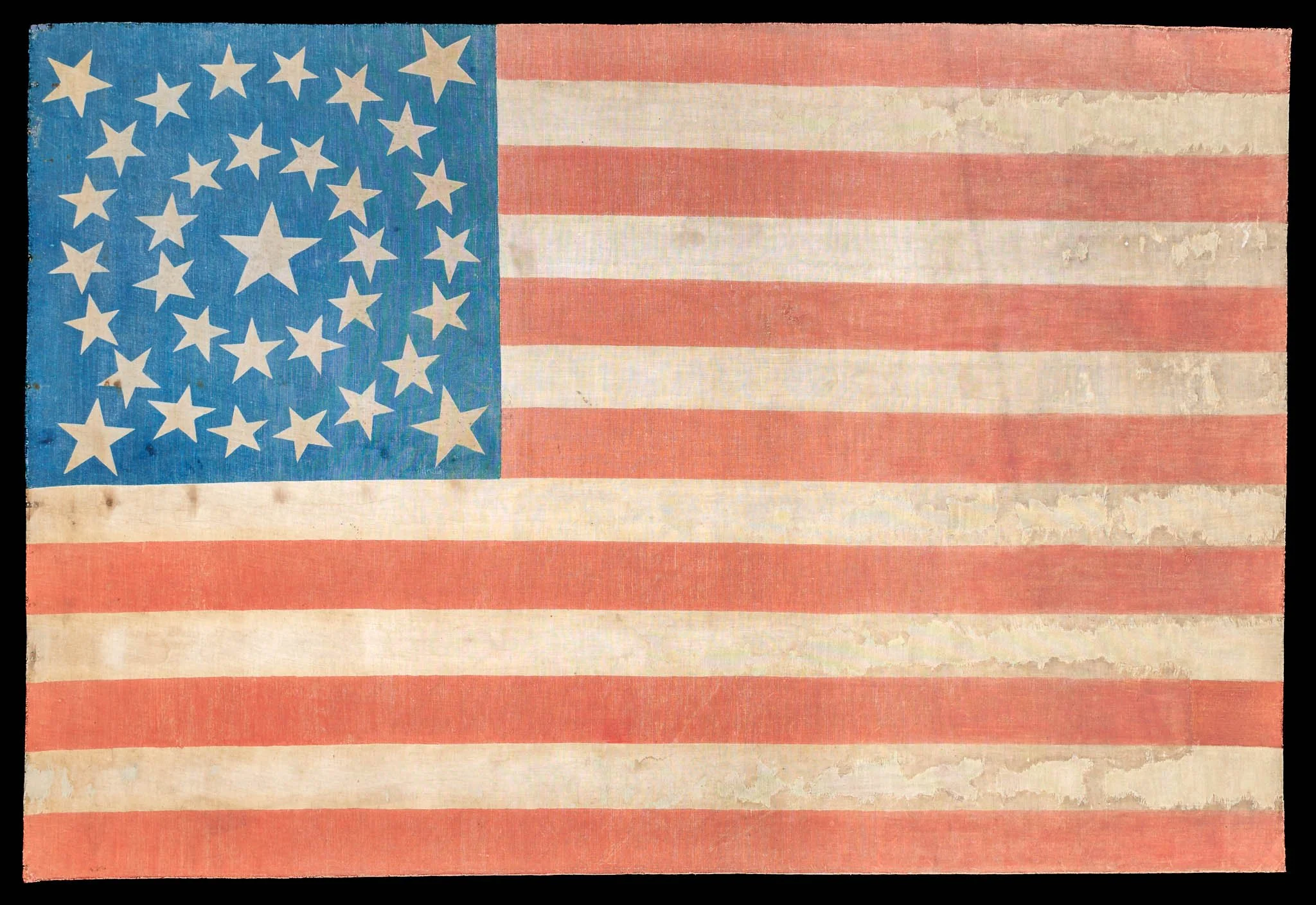
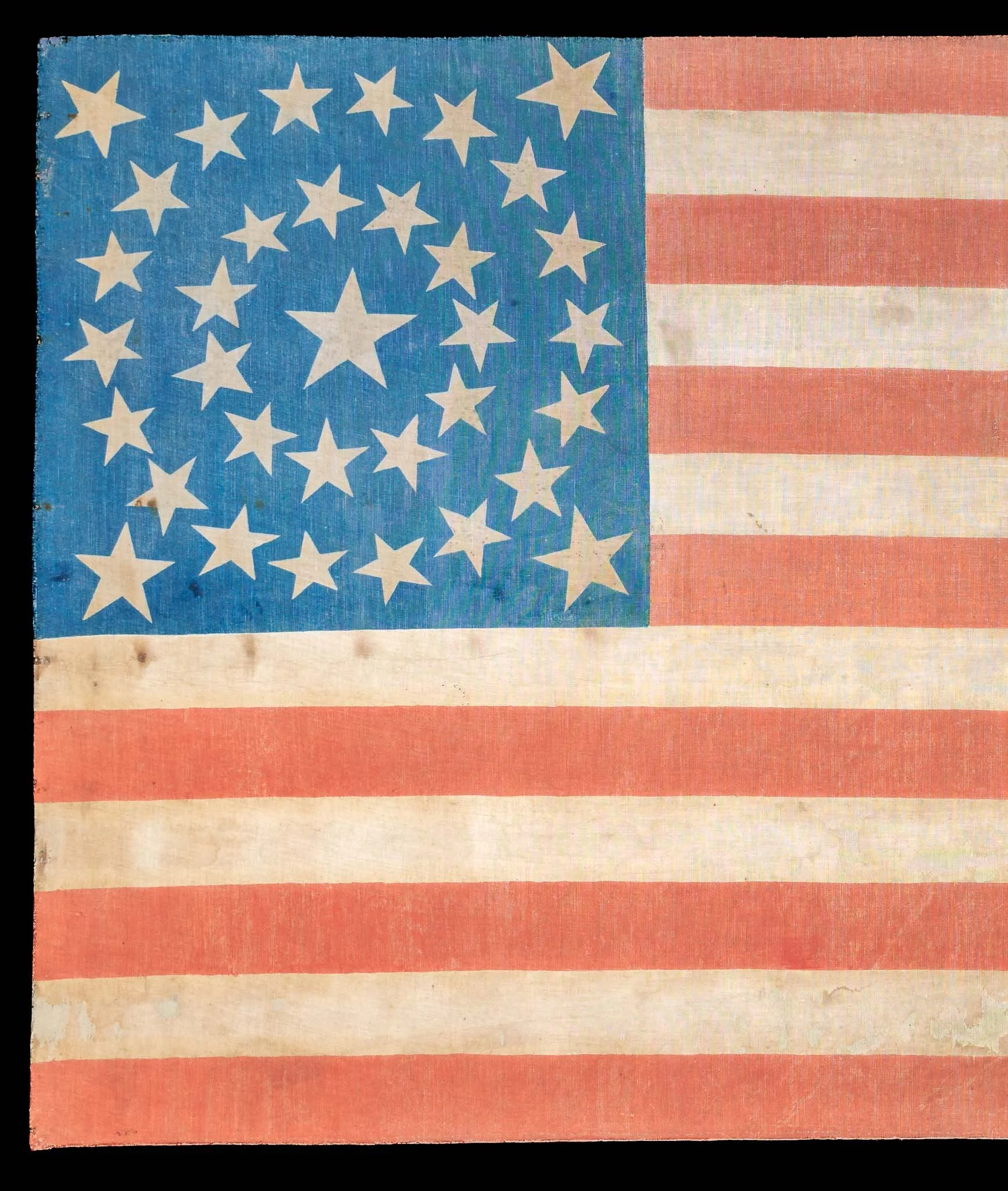
Offered is a 34-star American national flag, printed on glazed cotton and dating to the opening years of the Civil War, between 1861 and 1863.
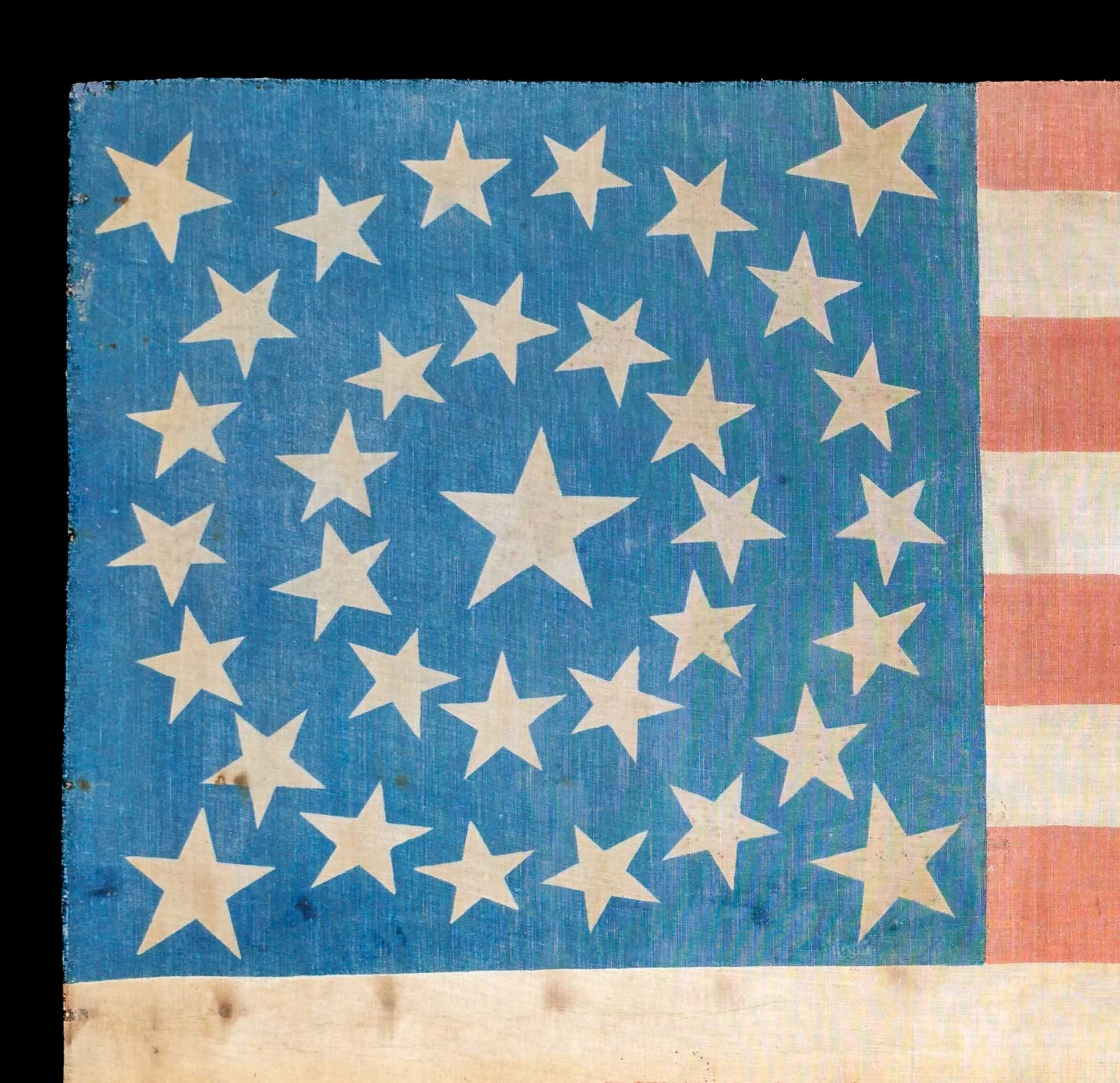
The configuration of stars on this example is particularly noteworthy. At the center rests a single oversized star, representing Kansas, the newest state in the Union. Surrounding it is an inner wreath of eleven smaller stars, while an outer ring of eighteen stars completes the medallion configuration. Four medium-sized stars flank the design near the corners of the canton. The stars are canted in varying directions and exhibit irregular, folk-oriented geometry, lending the canton a visually animated quality.
The design possesses the sort of visual energy collectors seek in early American textiles. Rather than rigid uniformity, one finds subtle inconsistencies in star shape, orientation, and spacing that reflect the handmade aesthetic sensibilities still present in American flag production during the mid-nineteenth century. The oversized center star anchors the composition, while the rotating orientations of the surrounding stars create movement throughout the canton. We have handled many 34-star flags over the years, including numerous medallion examples, yet we have never encountered another precisely of this style. In our view, this strongly suggests a very scarce, and perhaps singular, surviving variety.
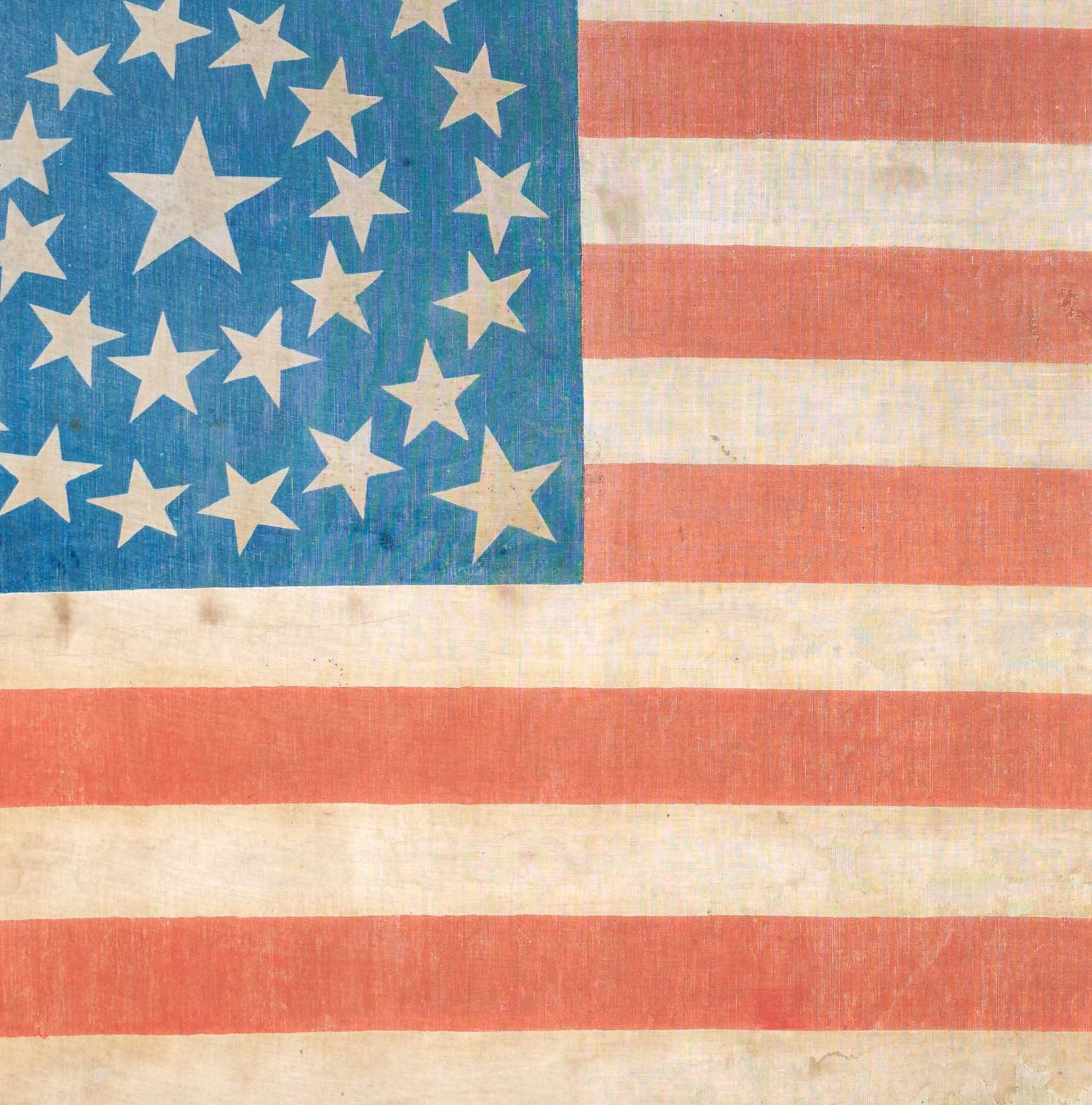
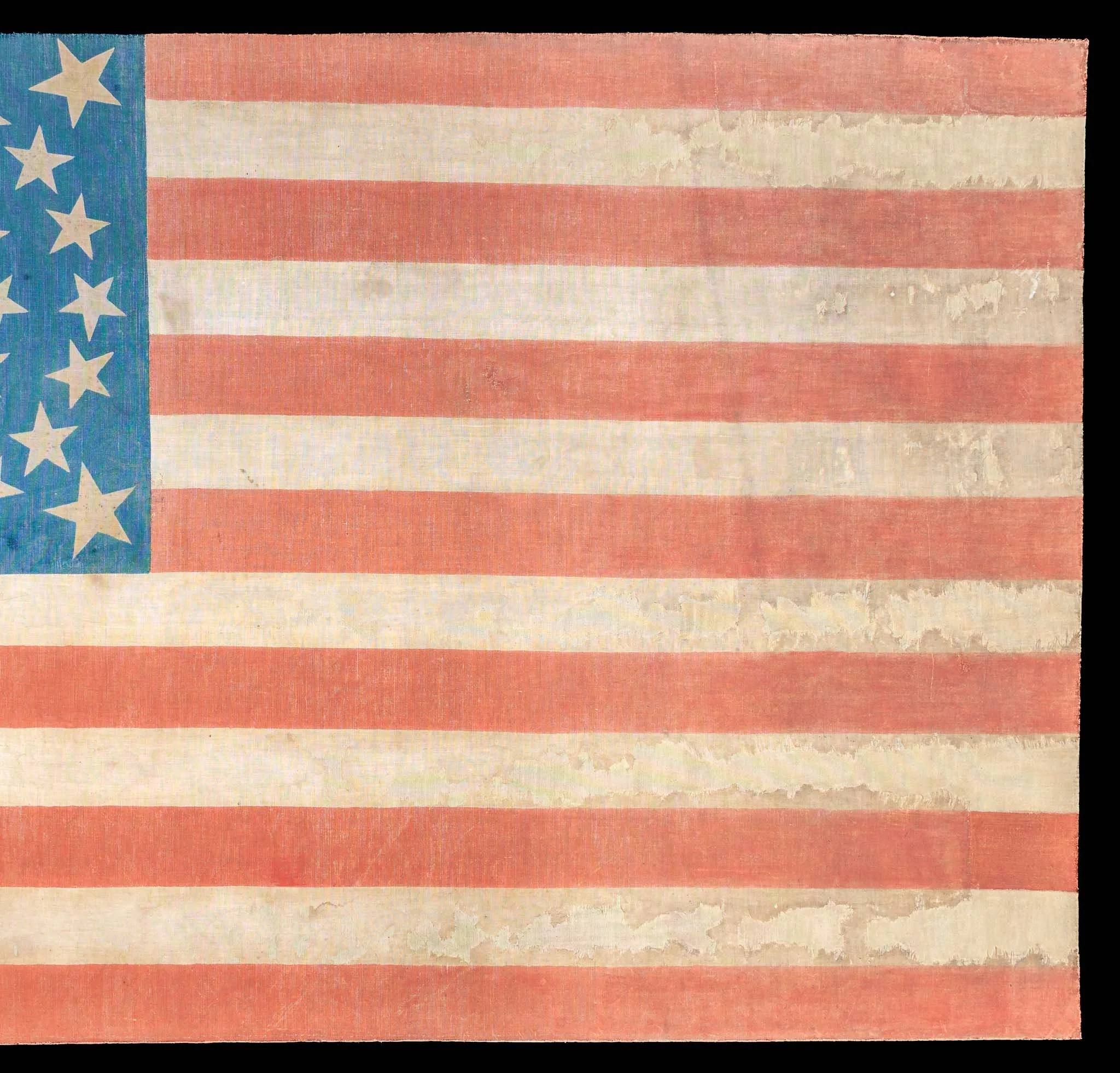
The coloration is equally appealing. The blue canton displays a strong Civil War-period blue, while the red stripes retain a warm tone characteristic of early printed pigments on glazed cotton. The surface exhibits the subtle sheen associated with glazed cotton construction, a finishing process frequently employed on mid-nineteenth century parade flags to provide visual crispness and modest resistance to dirt and moisture. The glazing remains visible across portions of the surface and contributes to the flag’s period character.
The flag survives in what is arguably the ideal scale for a Civil War-era parade flag: large enough to display boldly, yet small enough to have been intended for true patriotic use by a private citizen. Even among surviving Civil War flags, examples of this size are especially desirable.
The 34-star flag represents the admission of Kansas as the 34th state on January 29th, 1861. The official addition of the star occurred on July 4th of the same year, just months after the inauguration of Abraham Lincoln and only weeks after the outbreak of the Civil War. Because flag makers commonly anticipated official star counts, many 34-star flags were produced immediately upon Kansas statehood, prior even to the firing on Fort Sumter. The 34-star flag remained official until July 4th, 1863, when the 35-star flag entered service following the admission of West Virginia.
Among the most important and collectible of all nineteenth century American flags are 34-star and 35-star examples, which represent the primary star counts under which the Civil War was fought. Lincoln served almost his entire presidency beneath the 34-star flag, and the vast majority of the conflict’s defining events—from First Bull Run through Gettysburg—occurred while this count remained official. Flags from this era are especially coveted because patriotic display by private citizens prior to the Civil War was comparatively uncommon. Before 1861, the American flag was used principally for military and maritime identification, and most surviving examples from the antebellum era were massive garrison or ship flags intended for visibility at great distances. The explosion in small printed parade flags arose primarily from the emotional and political fervor surrounding the Civil War itself. As a result, authentic surviving parade flags of the period are both rare and historically important.
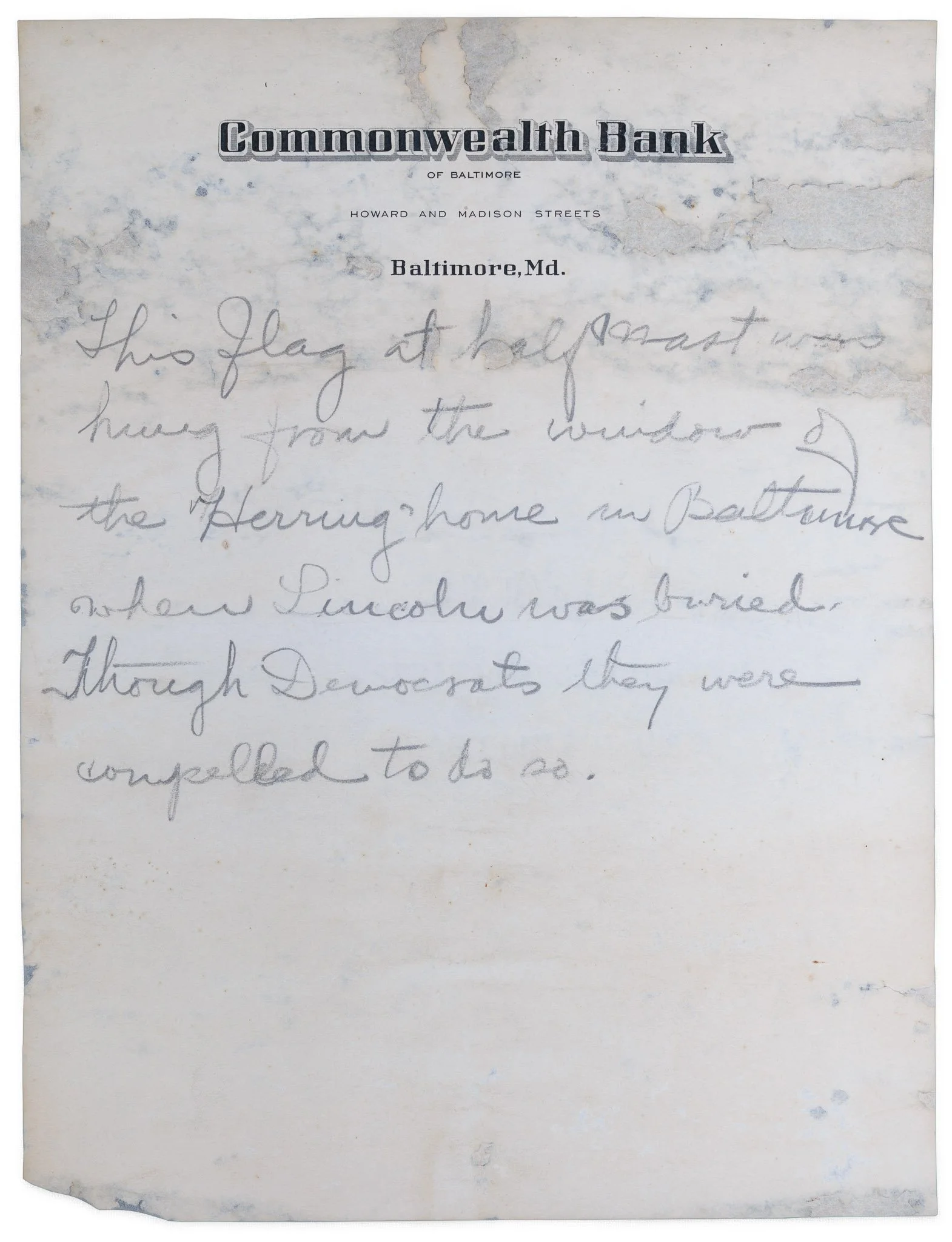
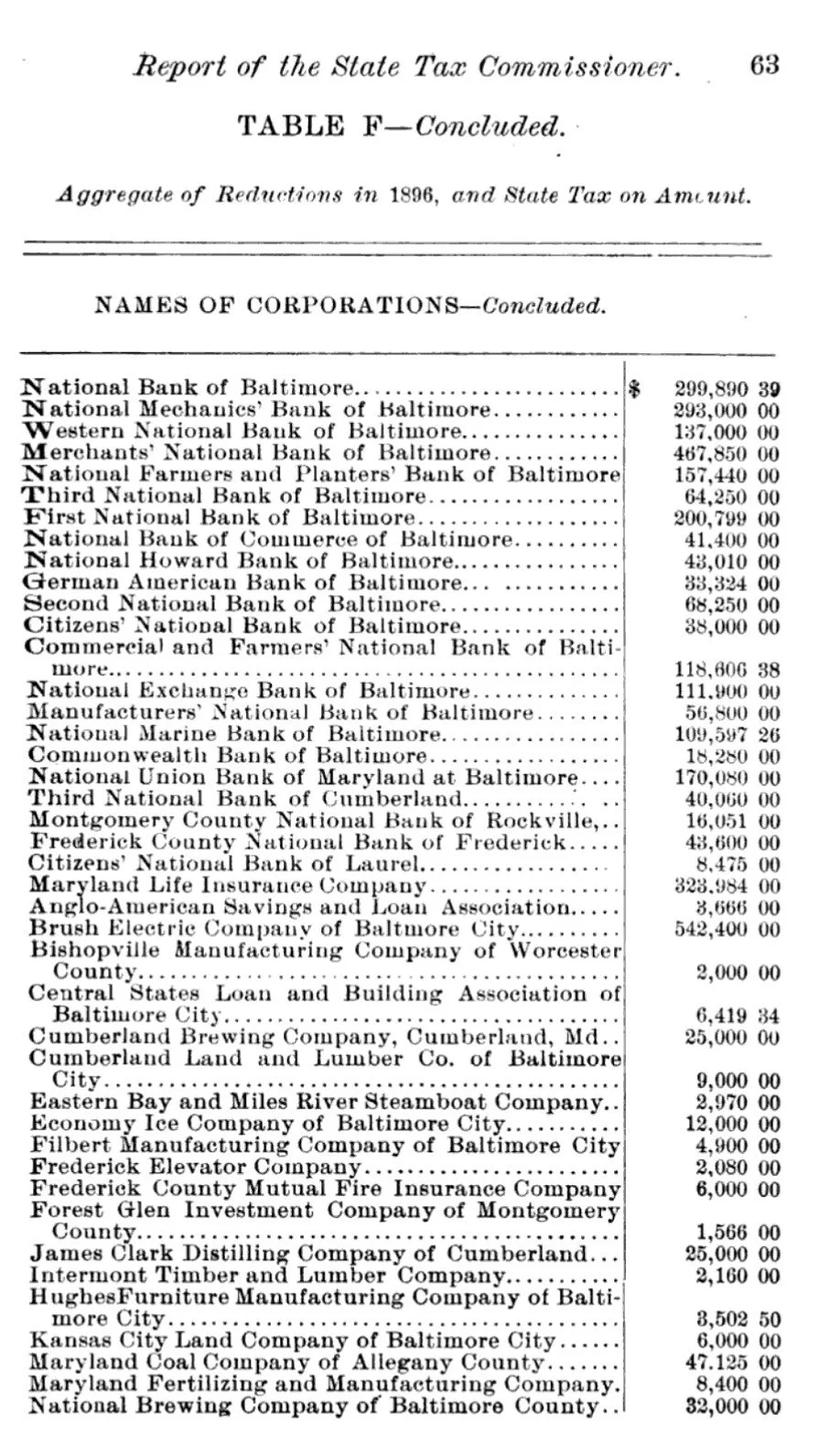
What elevates this flag further, however, is the remarkable handwritten note that accompanies it. Written on letterhead from the Commonwealth Bank of Baltimore, located at Howard and Madison Streets, the note reads:
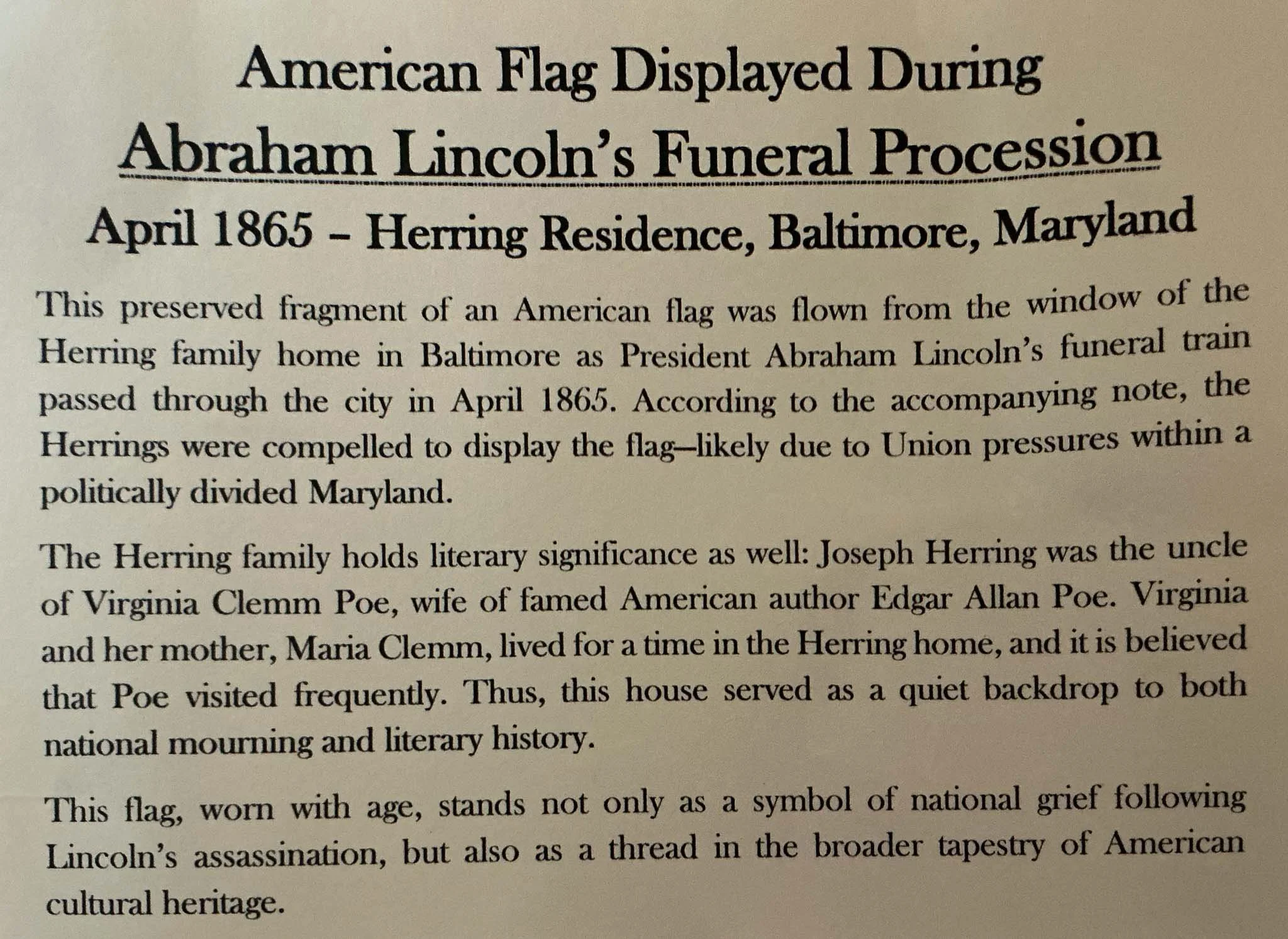
“This flag at half mast was hung from the window of the Herring home in Baltimore when Lincoln was buried. Though Democrats they were compelled to do so.”
The significance of this statement is difficult to overstate. In nearly two decades handling and studying antique American flags, we have encountered very few notes of this nature, and none carrying quite this degree of political candor. The wording is concise and direct. Most importantly, it contains precisely the sort of socially revealing commentary one would expect from a genuine family or community remembrance rather than a later embellished story.
The phrase “Though Democrats they were compelled to do so” provides a glimpse into the divided political atmosphere that existed in Maryland during the Civil War and immediately following Lincoln’s assassination. Maryland occupied a uniquely fragile position during the conflict. Though it remained in the Union, the state contained substantial Southern sympathies, particularly among Democrats and conservative urban residents of Baltimore. Union troops had occupied Baltimore early in the war following violent unrest in 1861, and political tensions remained severe throughout the conflict.
When Lincoln was assassinated in April of 1865, the nation entered a period of public mourning. As Lincoln’s funeral train made its journey from Washington toward Springfield, Illinois, cities throughout the North and border states staged mourning observances. Buildings were draped in black crepe, church bells tolled, and flags appeared throughout urban streetscapes in public displays of grief and national unity. Baltimore, despite its divided loyalties, participated heavily in these ceremonies.
Within this context, the note becomes especially compelling. The implication is that the Herring family—identified by the writer as Democrats—displayed the flag publicly despite political sympathies that may not have aligned fully with Lincoln or the Union cause. Whether motivated by civic pressure, social expectation, fear of scrutiny, genuine mourning, or some combination thereof, the act was apparently memorable enough to be recorded decades later in handwritten form. The note preserves a revealing moment: a politically divided household navigating public expectation in one of the most emotionally charged weeks in American history.
Particularly interesting is the phrase “compelled to do so.” Such wording suggests that the display was perceived not merely as patriotic decoration, but as an act carrying political and social consequence. We have encountered Civil War flags accompanied by family stories, but never one whose associated documentation speaks so openly about political tension and reluctant public patriotism. It transforms the flag from a Civil War textile into a tangible artifact connected to the complexity surrounding Lincoln’s death and the Union victory.
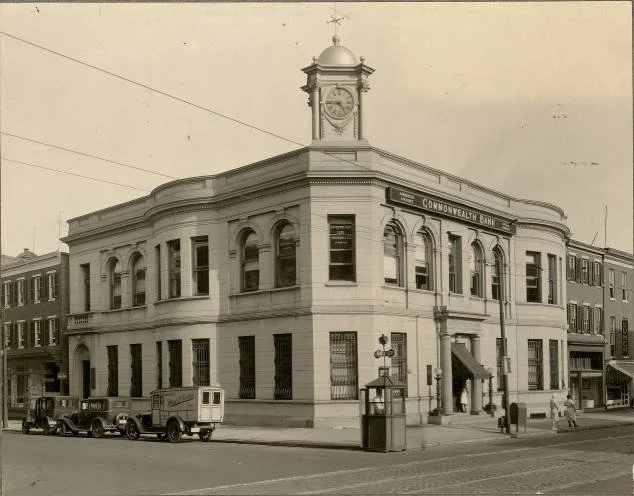
Research into the Commonwealth Bank of Baltimore reveals that it was an established Baltimore institution operating by at least the 1890s, with its substantial building at Howard and Madison Streets constructed in the mid-1890s. The handwritten note, therefore, almost certainly dates to the late nineteenth or early twentieth century, placing it relatively close to the events it describes and well within the range of living memory.
An additional note accompanied the flag when acquired from Brendan Synnamon, owner of The Union Drummer Boy in Gettysburg, one of the nation’s best Civil War artifact galleries. Brendan is widely respected within the field of Civil War material culture and has spent decades handling, authenticating, and researching important artifacts related to the conflict. In addition to his work as a dealer, lecturer, and preservation advocate, Brendan has also served as an appraiser for the Antiques Roadshow. Brendan acquired the flag from the estate of longtime collector Stan Smullen, who reportedly purchased it directly from the Herring family estate.
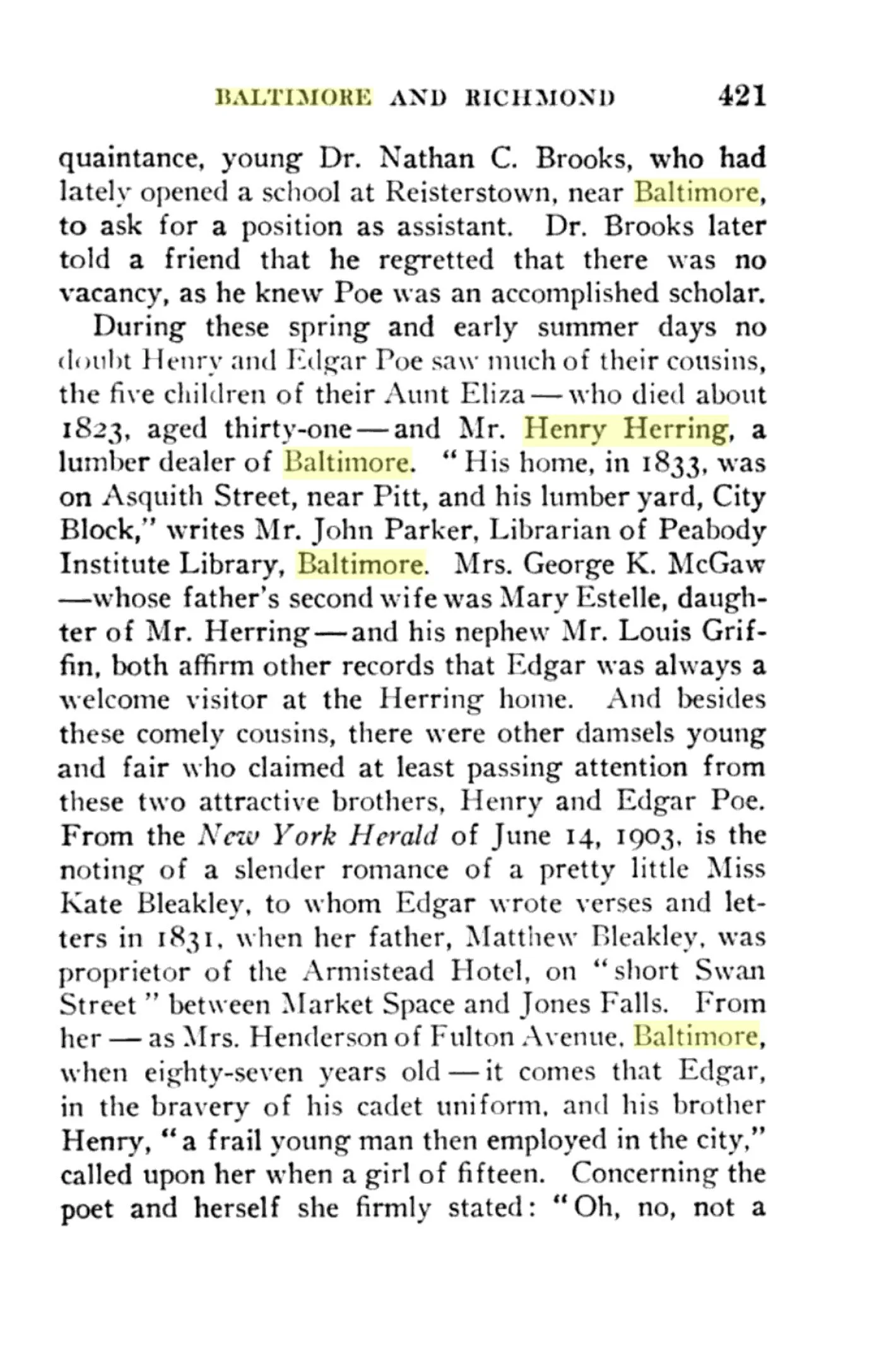
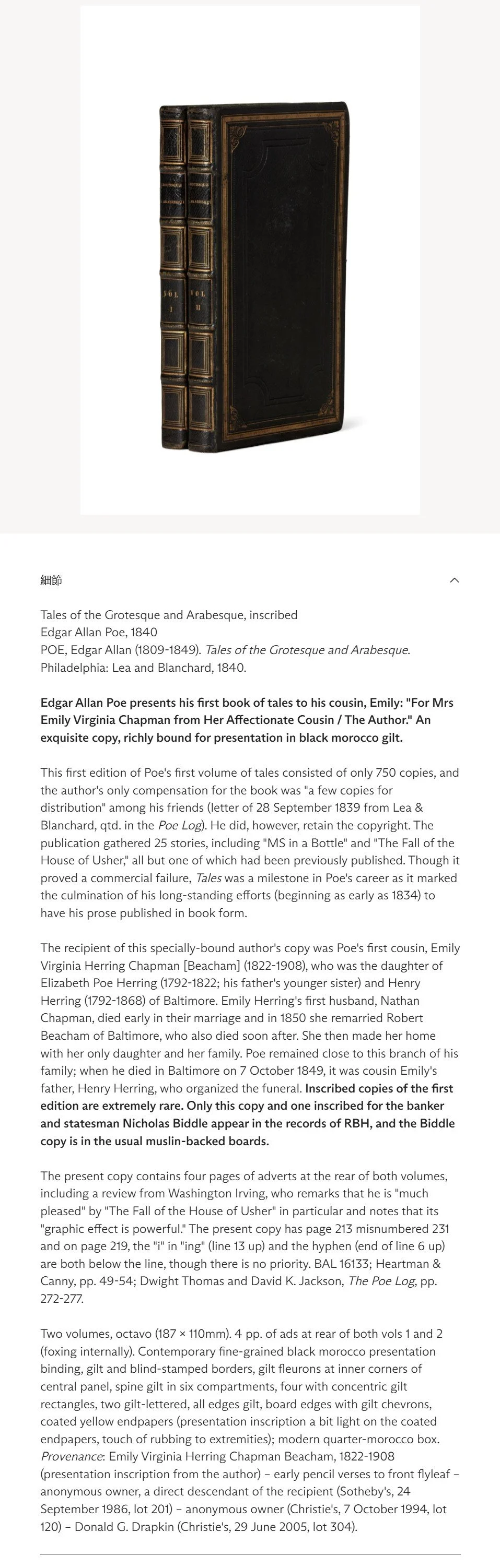
The Herring family itself holds noteworthy historical and literary associations tied to Edgar Allan Poe. Henry Herring, a prominent Baltimore lumber dealer and the husband of Poe’s aunt, Elizabeth Poe Herring, maintained a household that Poe is known to have visited during his time in Baltimore. Historical accounts further record that Herring participated in the arrangements surrounding Poe’s death and burial in 1849, reportedly providing the coffin used for the funeral and assisting with related matters. The association with both the Herring family and the events surrounding Lincoln’s funeral procession through Baltimore adds another layer of historical interest to an already remarkable Civil War-era flag.
Regardless, the accompanying documentation remains exceptional. It is exceedingly rare to encounter a Civil War-period parade flag accompanied by a politically charged written remembrance tied specifically to the mourning ceremonies surrounding Lincoln’s assassination and funeral procession. Combined with the flag’s striking and apparently unique medallion configuration, attractive coloration, and association with one of the defining moments in American history, this example stands among the most interesting 34-star parade flags we have encountered.
Conservation Process: This flag was professionally conserved and restored. It is sewn to silk and positioned behind Optium Museum Acrylic.
Frame: The flag is presented within a hardwood frame finished in matte black with visible grain.
Condition Report: The flag was professionally conserved and restored. There is moderate to significant fading and oxidation throughout, accompanied by scattered soiling, areas of pigment loss, and restoration to the striped field, particularly within the white stripes toward the fly end. Despite this, the flag presents beautifully, with strong overall color, an especially attractive blue canton, and excellent visual impact. The unusual medallion configuration and the extraordinary accompanying note more than justify the conservation work undertaken to preserve this rare Civil War-era survivor.
Collectability Level: The Extraordinary – Museum Quality Offerings
Date of Origin: 1861-1863
Number of Stars: 34
Associated War: The Civil War (1861-1865)
Associated State: Kansas