Spectacular 25 Star Antique American Flag | Featuring a Large Central Star Surrounded by Two Rows Above and Two Below | Circa 1876
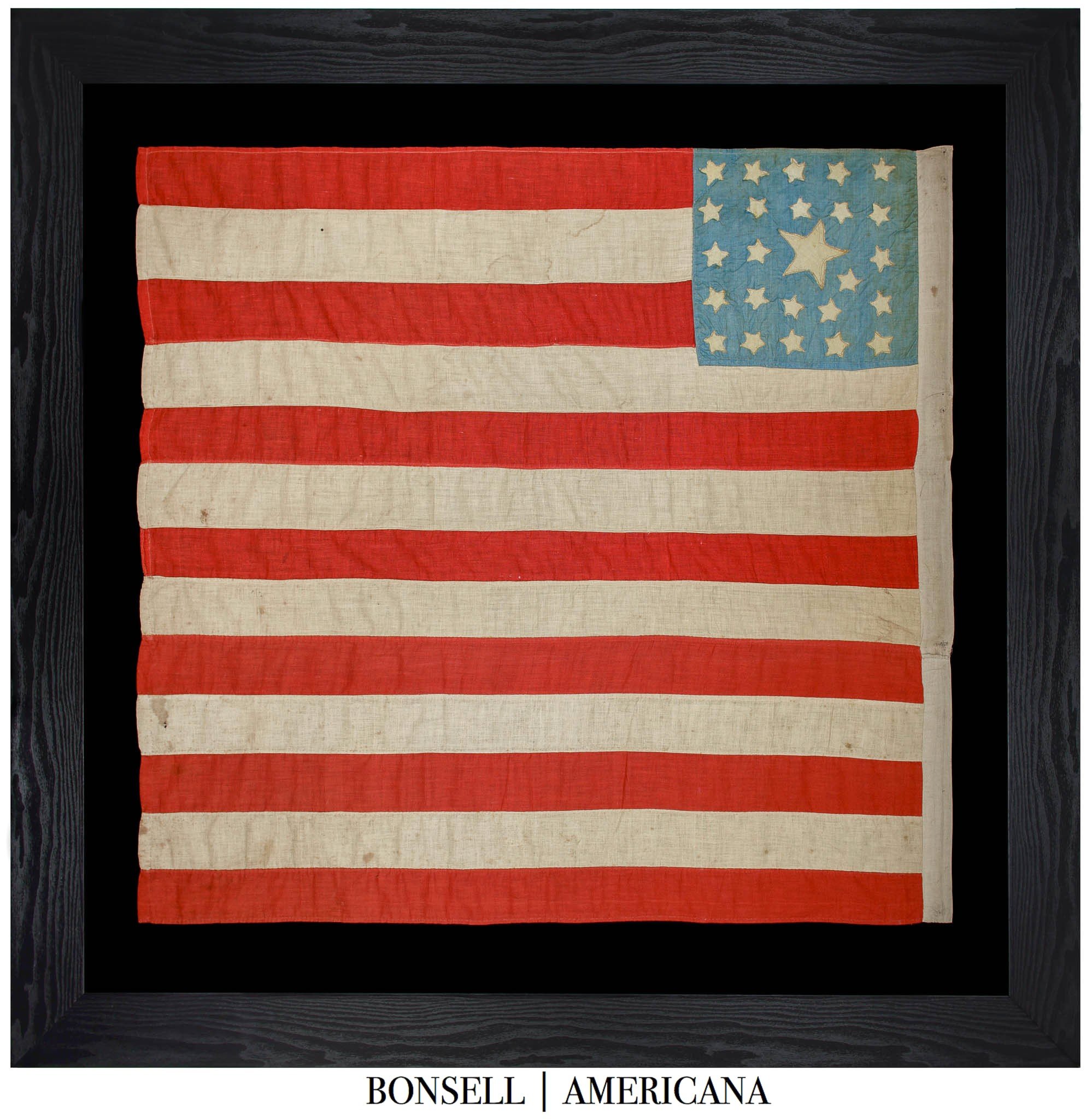
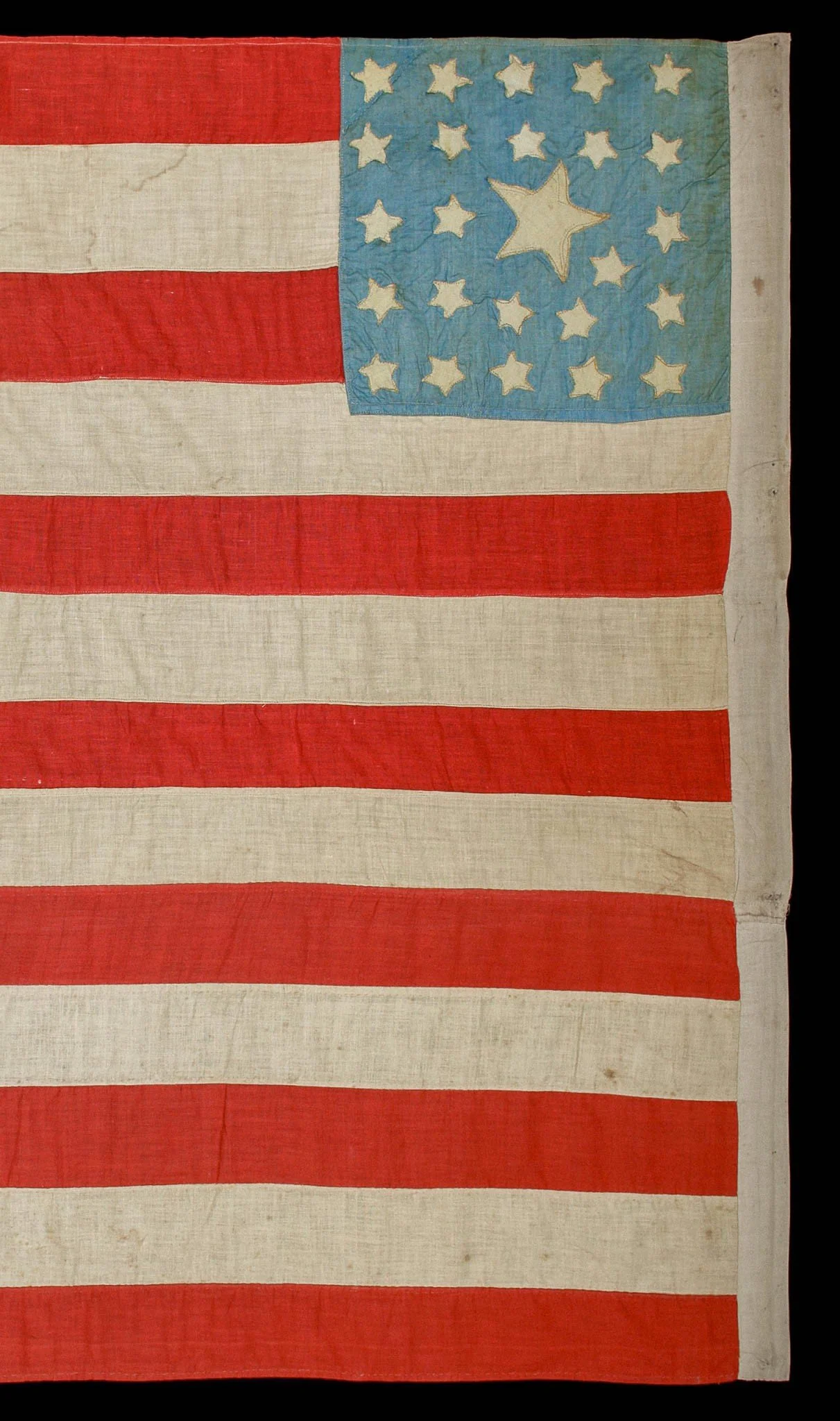
Spectacular 25 Star Antique American Flag | Featuring a Large Central Star Surrounded by Two Rows Above and Two Below | Circa 1876
Price: Call 618-553-2291, or email info@bonsellamericana.com
Frame Size (H x L): 44” x 46”
Flag Size (H x L): 33” x 35”
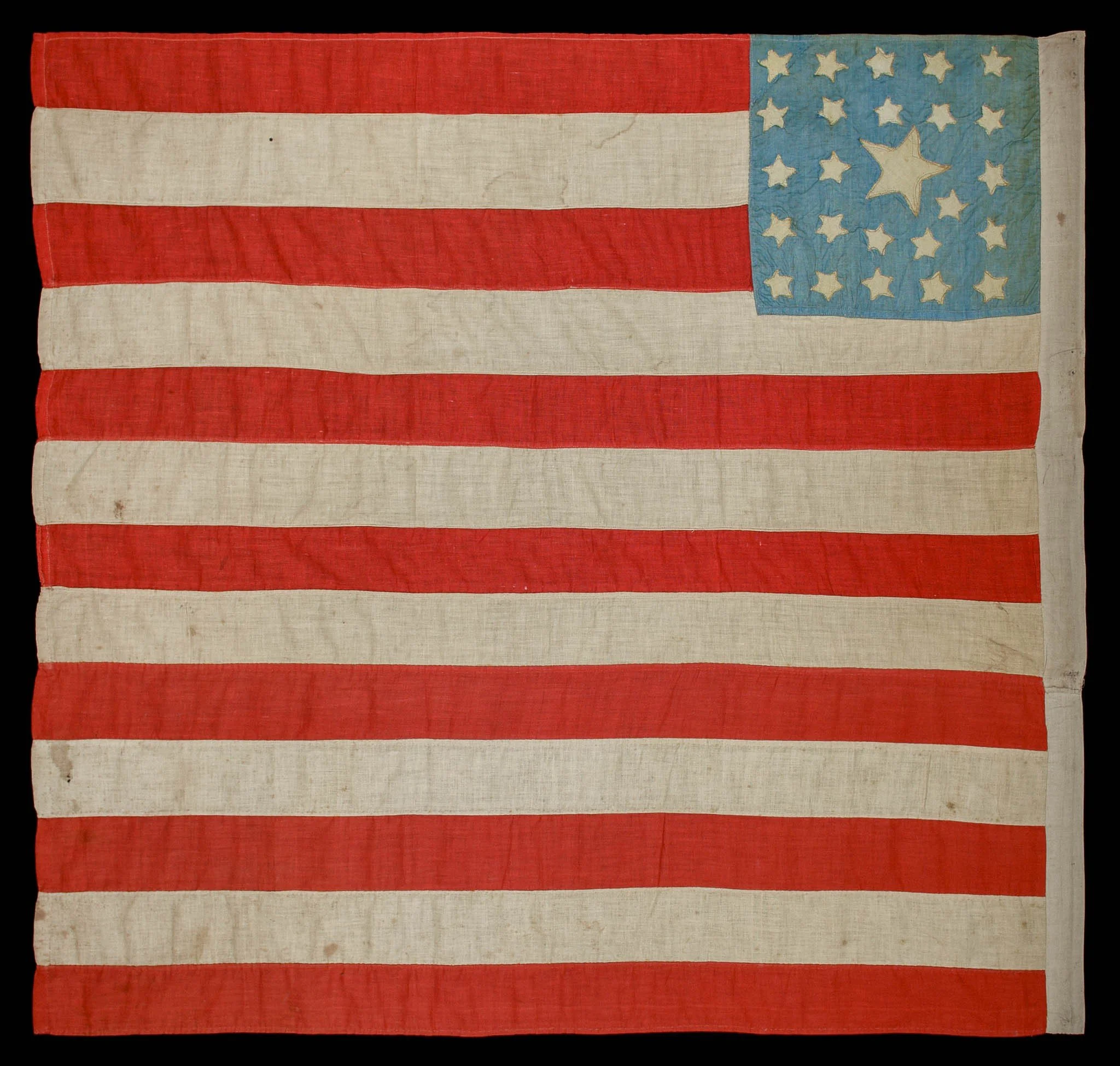
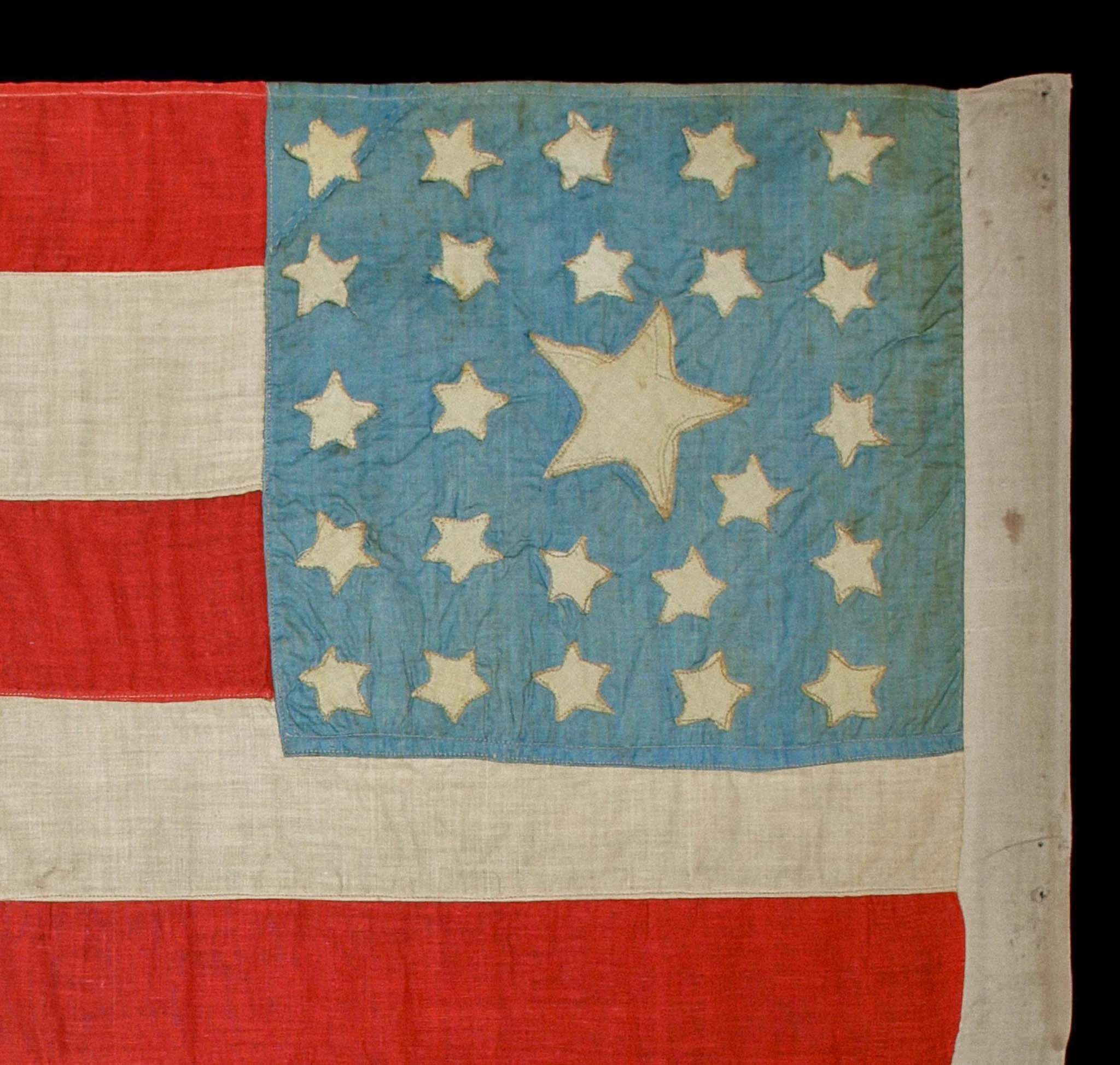
Offered is a 25-star American national flag of all-cotton construction, displaying a distinctive constellation built around a large central star. Surrounding it are two loose rows of smaller stars above and two below, creating a sense of balance while retaining the irregular, handmade quality typical of folk-produced flags.
The canton is small and nearly square, positioned high on the field so that it rests on the white stripe second from the bottom. This placement shortens the canton relative to the field, emphasizing its compact form and giving the design a visually dynamic character. The overall proportions are roughly square, a format that enhances the flag’s sense of balance and separates it from the long, narrow forms that became common later in the 19th century.
Measuring approximately 33 by 35 inches, the flag is ideal for framing and interior display. Many sewn examples from the period are too large for practical presentation; this scale combines visual strength with versatility, a major reason why flags of this size are especially desirable to collectors.
The blue canton has aged to a smoky tone between slate and denim, a color typical of 19th-century cotton dyes. Flags of this era often show variation in blue, from indigo to pale sky shades, depending on the dye and wash process used. Here, the softened blue complements the ivory stars and muted red stripes, producing a cohesive, aged palette. The combination of color, scale, and the canton’s high placement gives the flag a compact, well-composed appearance with strong visual appeal.
CONSTRUCTION
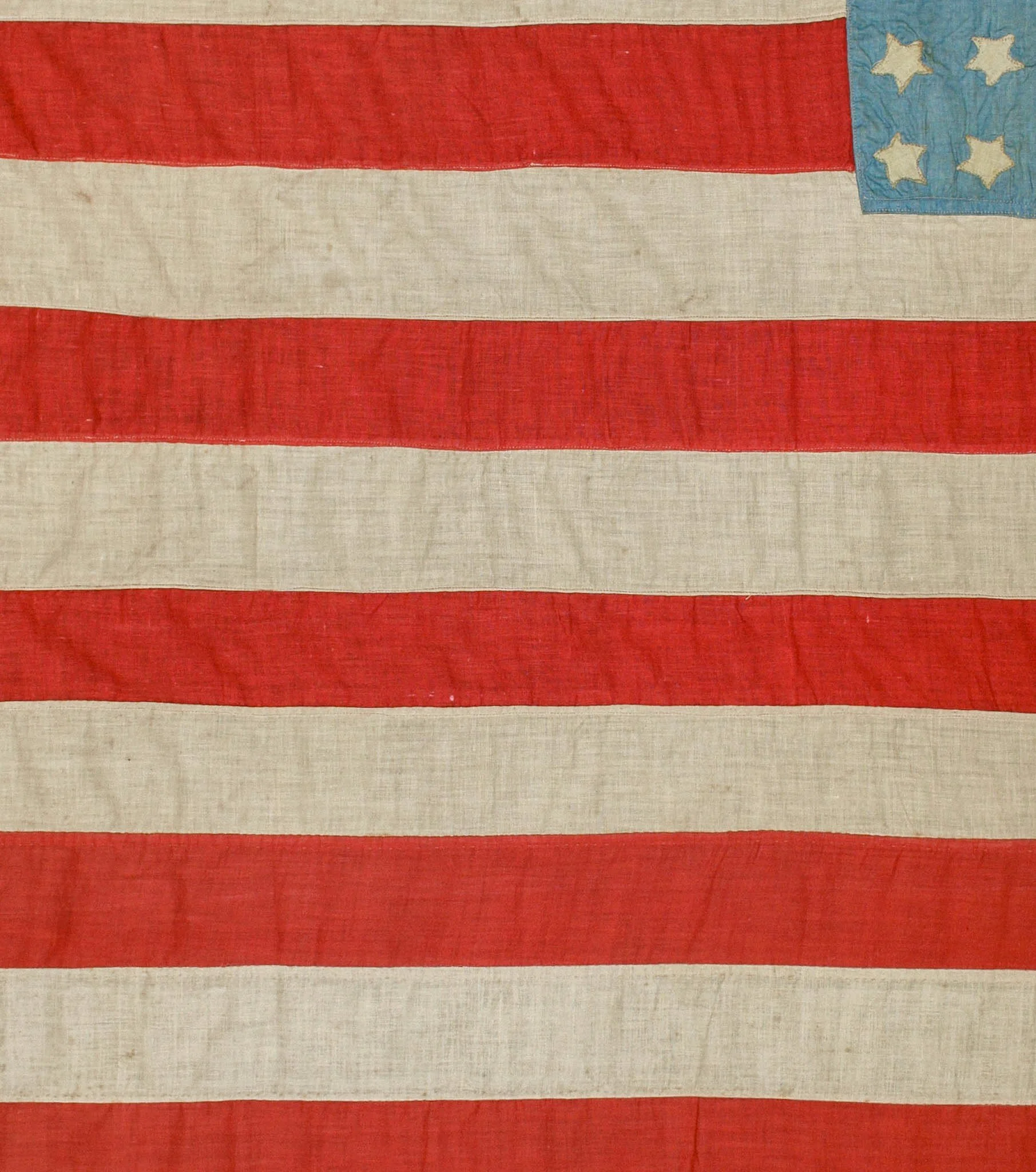
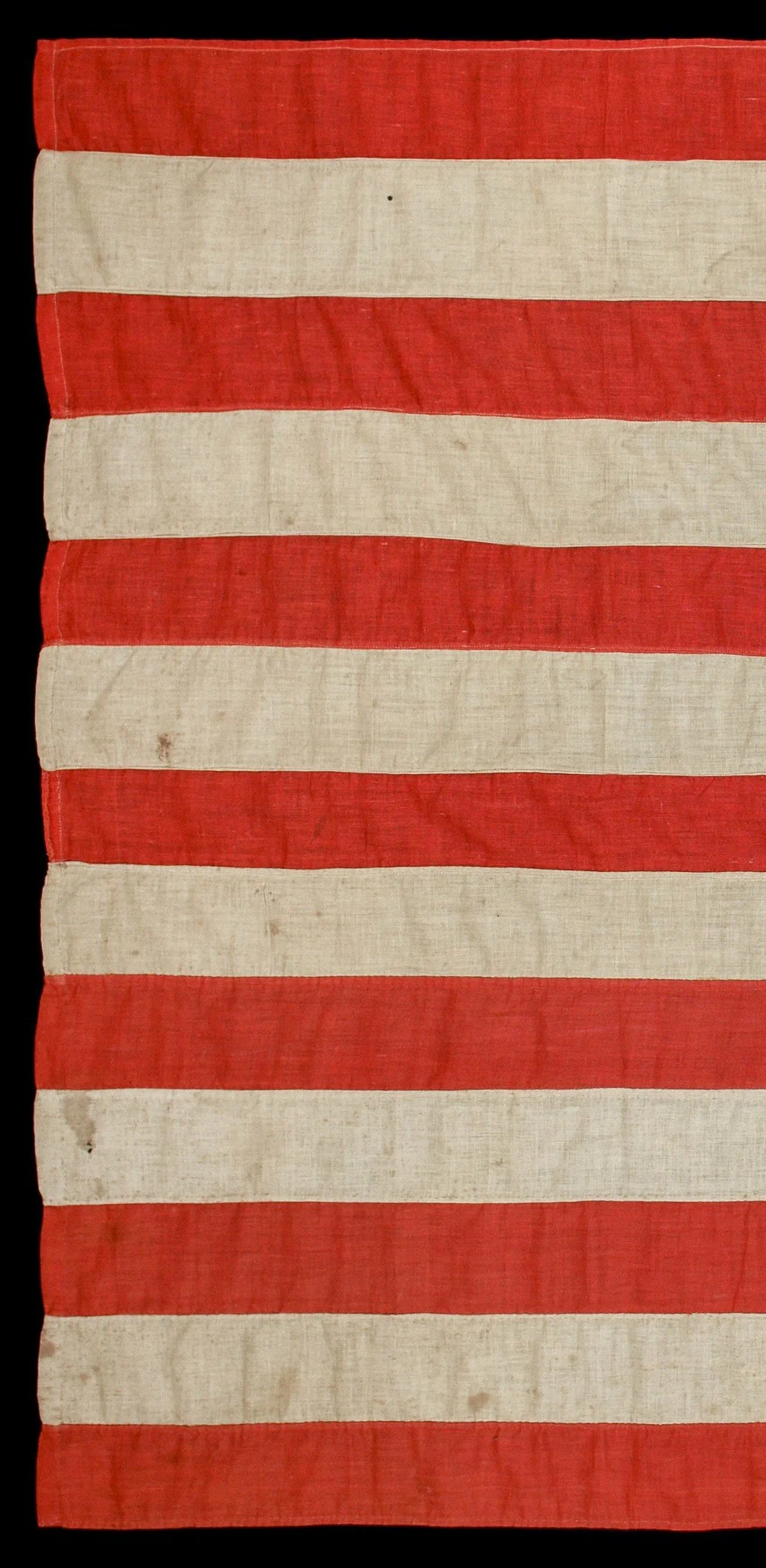
Made entirely of plain-weave cotton, the flag was intended for decorative or domestic use rather than military or maritime service. The stripes are treadle-sewn, showing the even looping characteristic of small home or workshop machines from the 1870s. The stars are double-appliquéd and sewn to both sides of the canton in white thread, brightening the blue field and reinforcing the design. Each star is carefully cut but slightly irregular, showing that they were positioned and stitched by hand using an early foot-powered machine.
The hoist edge lacks grommets or a separate binding, suggesting that it was likely tacked or pinned when displayed. The fly end is turned under and finished with a single line of machine stitching, a simple but sturdy method typical of Centennial-period flags. Every detail—the cotton fabric, white-thread sewing, and square proportions—matches the methods and materials used around 1876.
HISTORICAL CONTEXT
While a 25-star flag would officially correspond to the short period between July 4, 1836, and July 3, 1837, following Arkansas’s admission to the Union, this example was made several decades later. Its materials and machine stitching place it firmly in the Centennial era.
In 1876, the United States celebrated its 100th anniversary with widespread patriotic display. Streets, buildings, and homes across the country were draped in bunting, and parades featured flags of every size and design. At the Philadelphia Centennial Exposition and in towns nationwide, flags appeared on storefronts, homes, and clothing.
During the celebrations, 13-star flags recalling the original colonies and 38-star flags anticipating Colorado’s admission were the most common. Between these symbolic extremes, some makers produced nonstandard designs—reviving early star counts or creating imaginative layouts. This 25-star example fits within that tradition, expressing both nostalgia and creative independence.
The flag likely commemorated the nation’s growth while allowing the maker to experiment with composition and balance. A smaller star count gave room for design freedom that a crowded 37-star field would not. Sewn cotton examples like this were often made for parades, public events, or home display. While thousands of printed parade flags were produced during the Centennial year, sewn examples were fewer, and surviving specimens are now scarce. The flag’s modest size, square form, and individualized star pattern reflect the personal craftsmanship and pride characteristic of the Centennial generation.
SIGNIFICANCE
This flag is a rare and visually strong survivor from the late 19th century, when Americans marked the nation’s first century by reviving early patriotic imagery. Though its star count references Arkansas’s entry into the Union, its construction places it among the handmade Centennial commemoratives of the 1870s. Few 25-star examples of any kind exist, and this one stands out for its unusual layout, square proportions, and small canton.
For collectors of early American textiles, its appeal lies in the combination of rarity and design. The high-set canton compresses the star field toward the lower stripes, producing a composition that feels both balanced and visually engaging. It bridges folk art and patriotic display, representing the creative ways Americans participated in the Centennial celebrations.
In the years after the Civil War, such handmade flags also reflected a desire for national unity and reconciliation. They were expressions of shared history and identity, created in homes and small workshops across the country. While the Centennial saw the mass production of printed flags, this sewn example preserves the individual craftsmanship of an earlier time—a reminder that even in an age of industry, patriotism often found its purest form in handmade work.
Viewed as design, the flag’s loose rows of stars, oversized center, and compact canton create a rhythm that feels both structured and free. Its proportions, rare star count, and confident simplicity align it with the broader language of American folk design—part history, part abstraction.
When displaying historic flags, it is worth recalling that 19th-century conventions differed from modern practice. Parade flags were often printed on one side of long bolts of cotton or silk, with color bleeding through to form a lighter reverse. Makers sometimes oriented cantons differently depending on how the flag was hung or whether printed text needed to be read. At the time, such variations were entirely acceptable; the flag code and its modern display rules came much later. This historical context underscores how 19th-century Americans viewed the flag—with respect, but also with a degree of freedom that reflected the creative energy of the Centennial era.
In its compact scale and inventive design, this 25-star flag embodies the Centennial generation’s effort to celebrate a century of independence through personal craftsmanship—an enduring expression of national pride rendered in simple, lasting form.
Conservation Process: This flag was hand sewn to cotton fabric, and both were hand sewn to a mounting board. To prevent the black dye in the cotton fabric from seeping into the flag, it was first washed in a standard wash and then in a dye setting wash. The flag is positioned behind Optium Museum Acrylic.
Frame: A square-profile molding with a deep, charcoal-toned surface that mimics the look of hand-grained wood. Subtle linear patterning adds quiet texture and depth, while the finish maintains a restrained sophistication suitable for both period and modern interiors.
Condition Report: The flag shows expected signs of age with minor soiling and light wear scattered throughout the field and along the fly end. There are a few small stains and spots of discoloration consistent with 19th-century cotton. The colors remain strong, with the red and blue well preserved and the white tones evenly aged to a soft ivory. Overall, the flag presents in very good condition for its period, with no significant losses or repairs.
Collectability Level: The Extraordinary – Museum Quality Offerings
Date of Origin: 1876
Number of Stars: 25
Associated War: The Indian Wars (1860-1890)