Unusual 42 Star Antique American Flag | Ancient Order of United Workmen Picnic | Washington Statehood | Circa 1896
Unusual 42 Star Antique American Flag | Ancient Order of United Workmen Picnic | Washington Statehood | Circa 1896
Frame Size (H x L): 10.25” x 7.5”
Flag Size (H x L): 6.5” x 3.5”
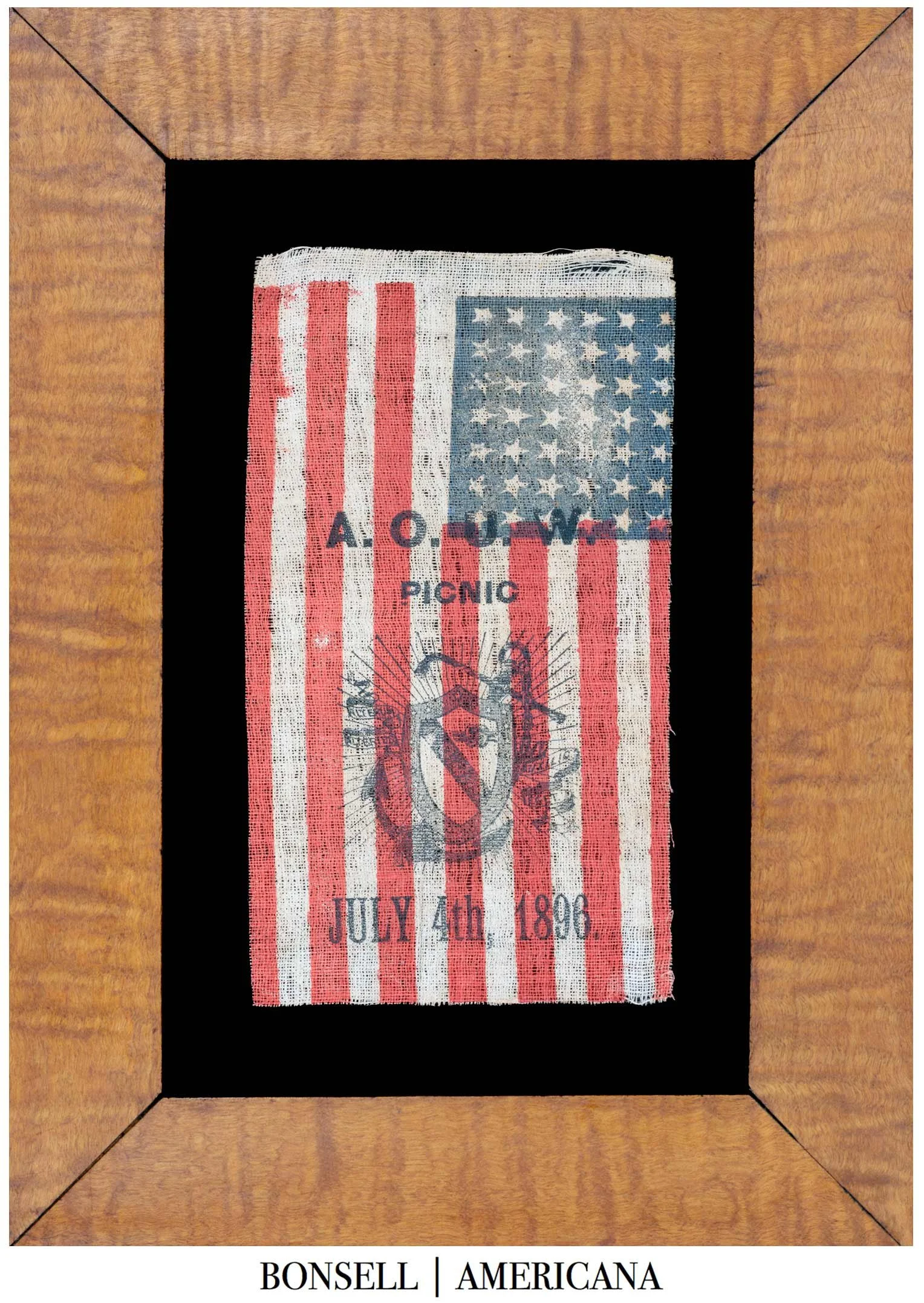
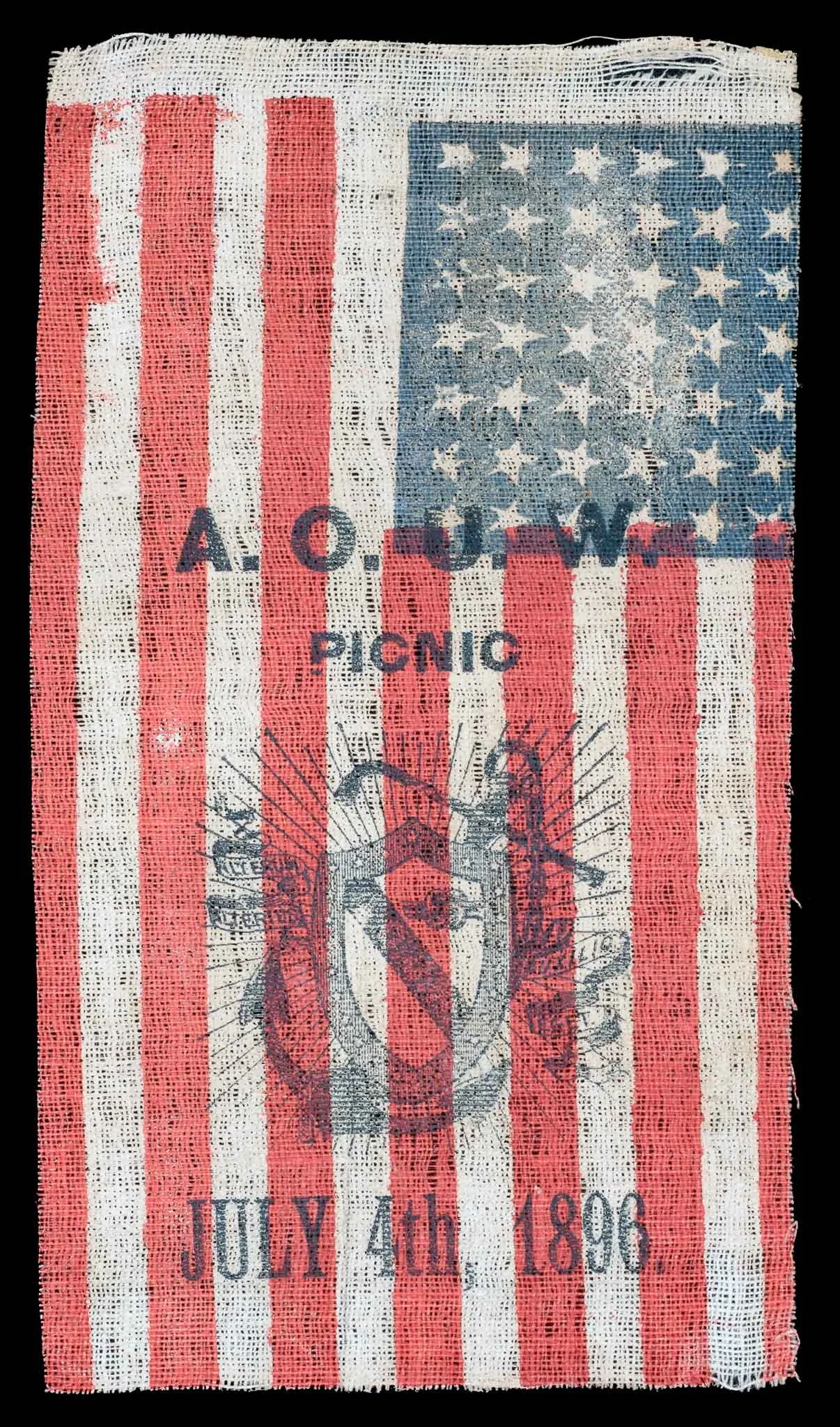
Offered is a vertically oriented and highly unusual 42-star American parade flag, printed on open-weave, plain weave cotton and bearing a commemorative overprint for an Ancient Order of United Workmen (A.O.U.W.) Fourth of July picnic held in 1896. The flag displays a distinctly folk quality, with 42 stars arranged in six linear rows of seven stars each. The stars vary noticeably in shape and placement, lending the design a charmingly irregular appearance despite its commercially printed construction.
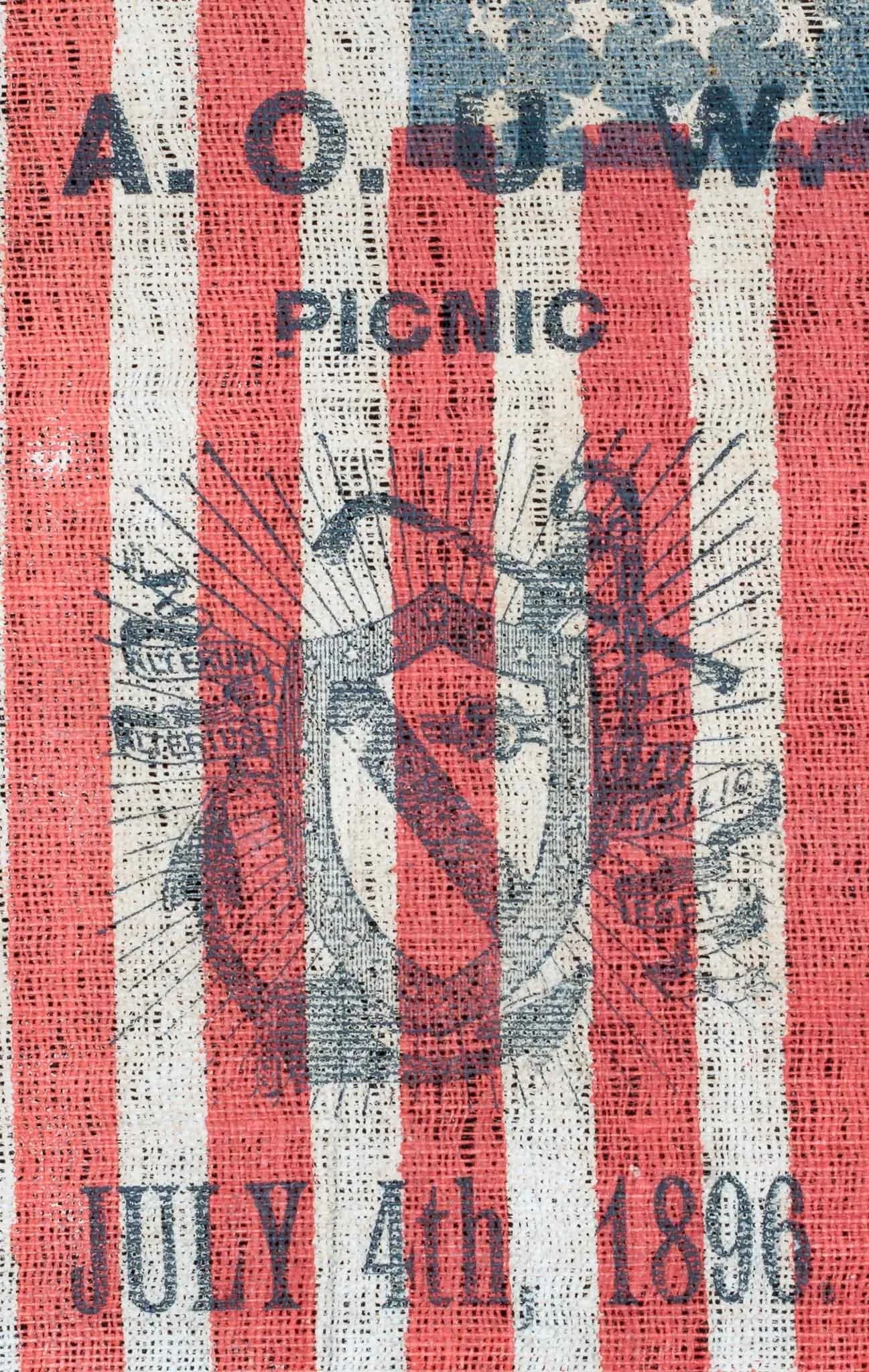
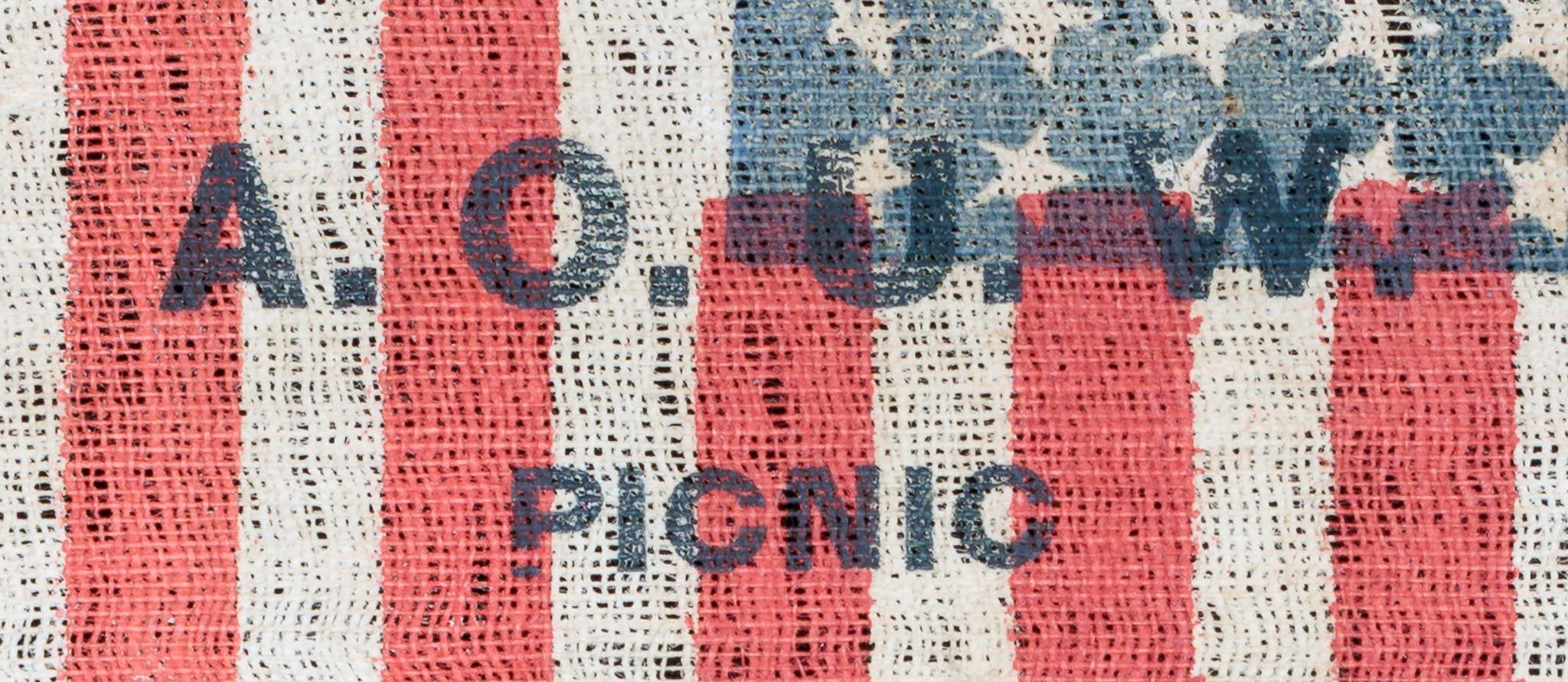
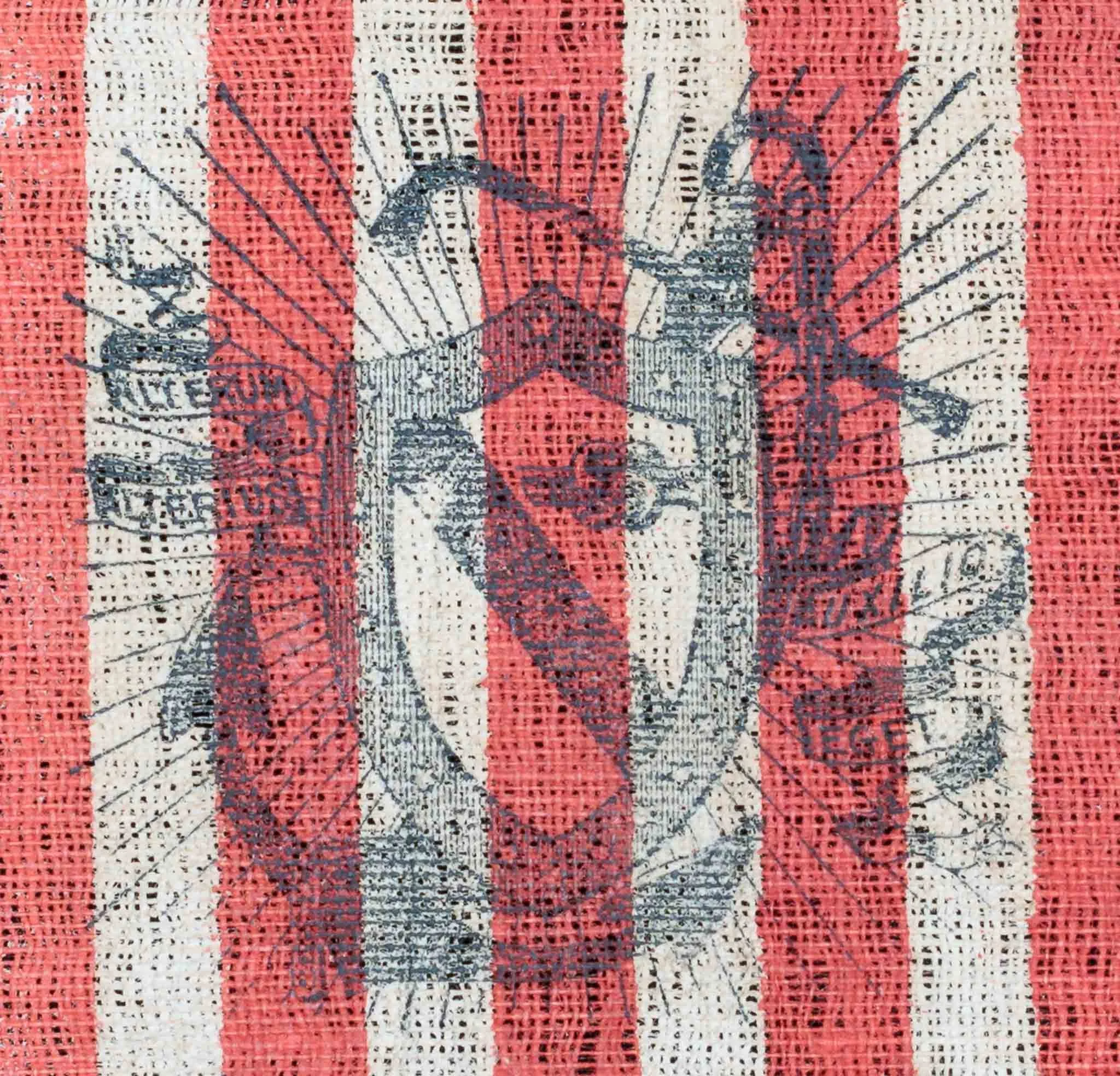
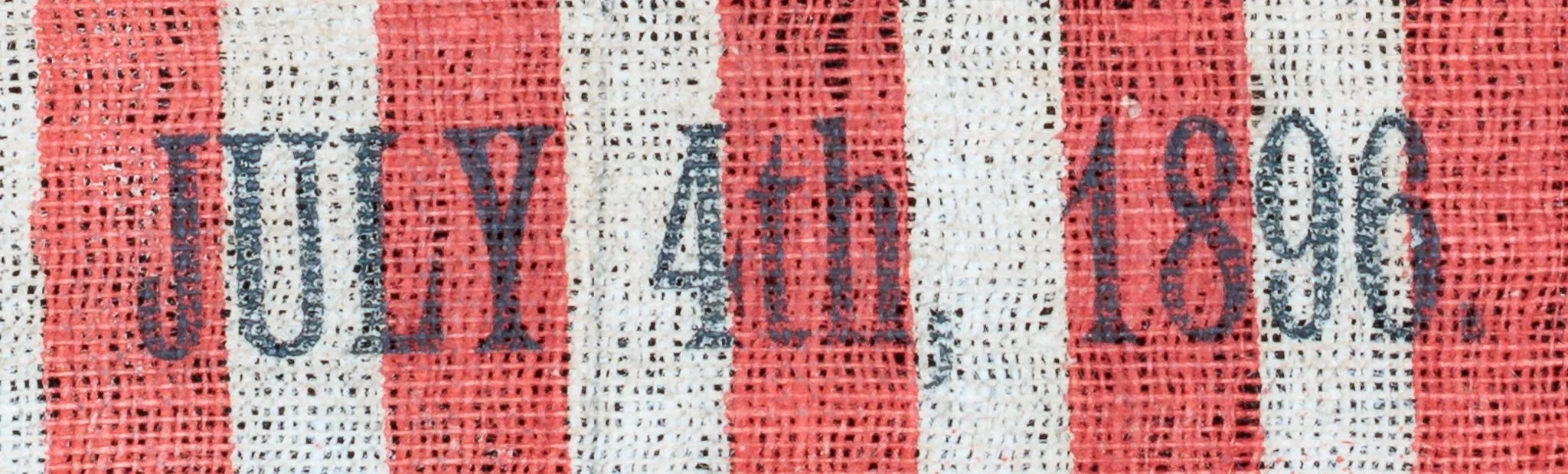
Adding substantially to the appeal of the present example is the overprinted decoration occupying the center of the striped field. Printed in dark blue ink, the design advertises an “A.O.U.W. Picnic” held on July 4th, 1896. At center is the emblem of the Ancient Order of United Workmen, incorporating a shield, anchor, symbols of fraternity and labor, and radiating lines that emphasize the device in a manner reminiscent of a medal or civic badge. Encircling the emblem is the organization’s Latin motto, “alter alterius auxilio eget,” generally translated as “each needs the help of another.” The phrase succinctly expressed the society’s central principle of mutual aid and collective responsibility.
Founded in 1868 by John Jordan Upchurch, the Ancient Order of United Workmen emerged during a period when commercial life insurance remained beyond the reach of many working Americans. The organization combined social fellowship, civic engagement, and a system of mutual financial protection through which members contributed to a fund providing benefits to the families of deceased brethren. The concept proved enormously successful. By the final decades of the 19th century, the A.O.U.W. had become one of the largest fraternal organizations in the nation and served as a model for many later fraternal insurance societies.
Public gatherings formed an important component of lodge life. Picnics, parades, excursions, and Independence Day celebrations provided opportunities for members and their families to gather while simultaneously promoting the organization’s ideals within the broader community. Textiles such as the present example were produced specifically for such occasions and served as both patriotic decorations and commemorative souvenirs. Their survival rate was naturally low, owing to their lightweight construction and intended use during outdoor festivities.
The 42-star count reflects the admission of Washington as the 42nd state on November 11th, 1889. In accordance with the Flag Act of 1818, the 42-star flag became official on July 4th, 1890. Its official period was exceptionally brief, lasting just one year before the admissions of Idaho and Wyoming resulted in the 44-star flag on July 4th, 1891.
Interestingly, the overprint on the present example is dated July 4th, 1896, several years after the official period of the 42-star flag. While this might initially appear contradictory, such discrepancies are frequently encountered on 19th century parade flags and other commercially printed patriotic textiles. Manufacturers often continued to employ existing printing patterns long after a particular star count had passed from official use, especially on inexpensive souvenir, advertising, and commemorative flags. As a result, it is not unusual to encounter late 19th century examples bearing star counts that predate the event or occasion for which they were produced. In this case, the 1896 overprint provides the most reliable evidence for the date of its event-related production and use.
The combination of a 42-star count, folksy presentation, open-weave cotton construction, and dated fraternal overprint creates an object that exists at the intersection of American flag collecting, social history, and fraternal benefit society history.
Conservation Process: The flag was hand sewn to cotton fabric, and both were hand sewn to a mounting board. To prevent the black dye in the cotton fabric from seeping into the flag, it was first washed in a standard wash and then in a dye setting wash. The flag is positioned behind Optium Museum Acrylic.
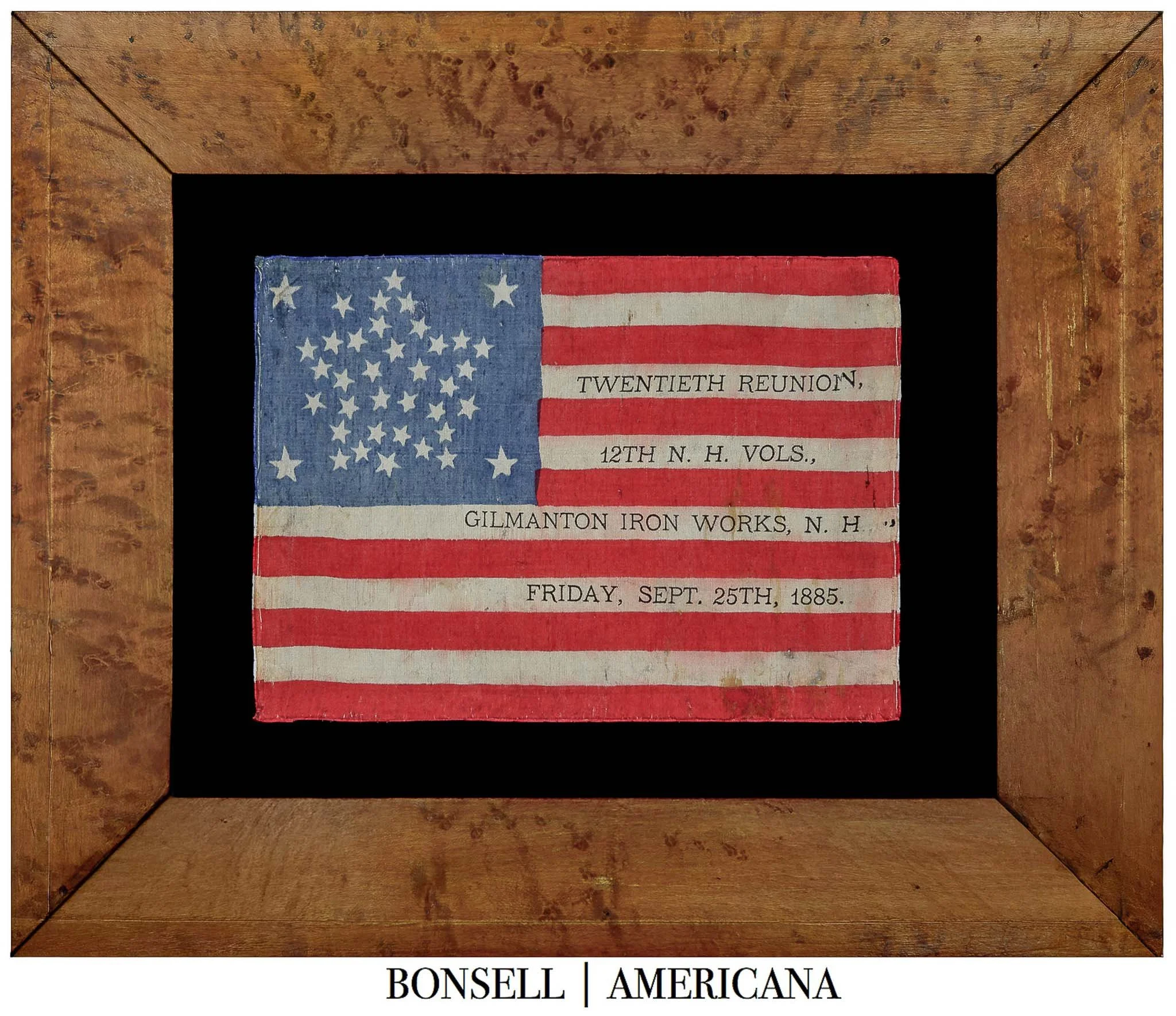
Frame: The flag is in an attractive tiger maple frame. Tiger maple frames are cherished for their striking, wavy grain patterns that shimmer with a unique iridescence, reminiscent of a tiger's coat.
Condition Report: The flag presents with expected wear for its age and lightweight construction, including fraying and small losses along the edges. There is scattered soiling, fading, and surface abrasion throughout, with areas of ink and pigment loss, particularly in the canton.
Collectability Level: The Good – Perfect for Beginning Collectors and Gifts
Date of Origin: 1896
Number of Stars: 42
Associated State: Washington