Unusually Small 13-Star American Flag | Pieced-and-Sewn Wool Construction | Circa 1895–1926
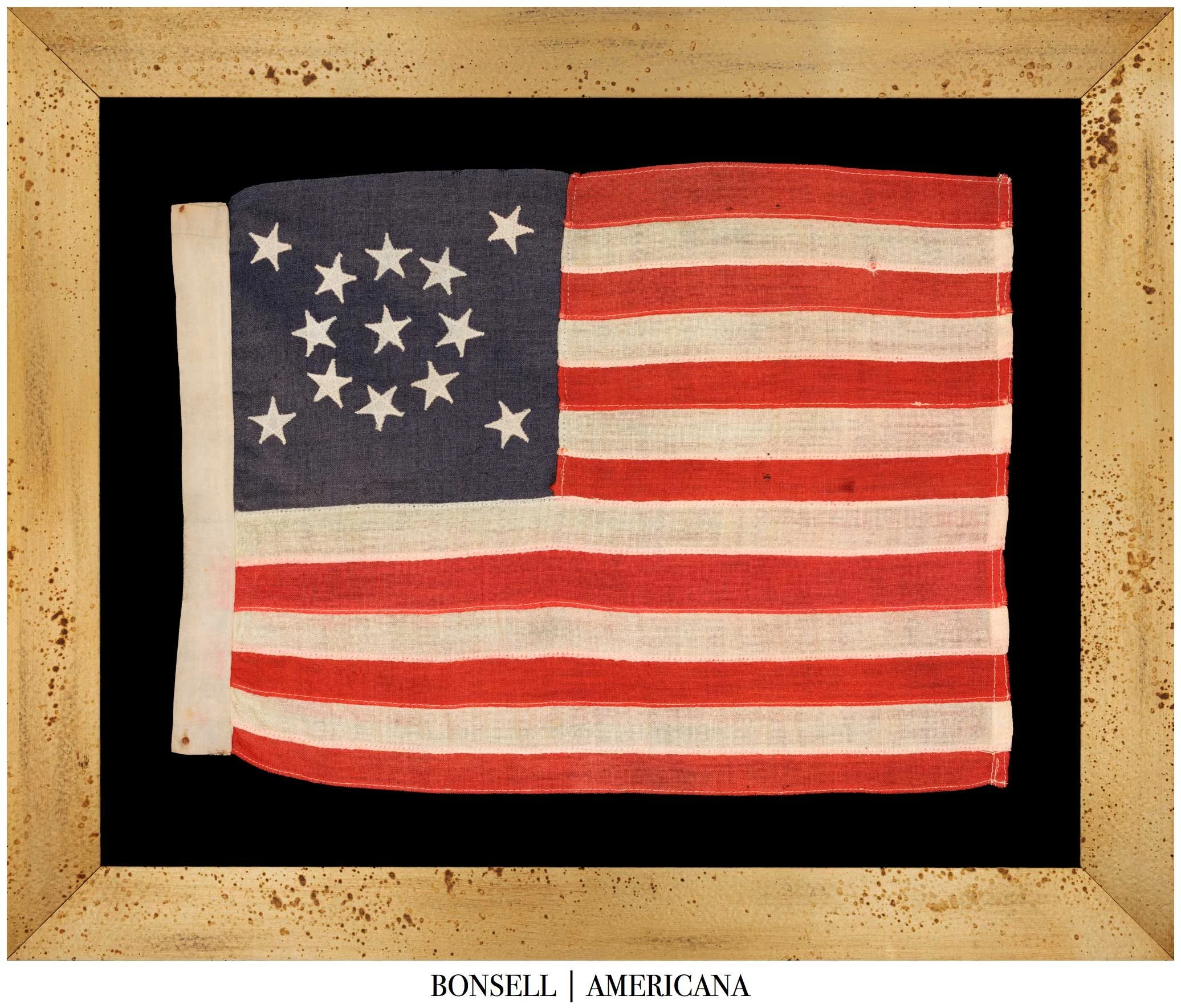
Unusually Small 13-Star American Flag | Pieced-and-Sewn Wool Construction | Circa 1895–1926
Price: Call 618-553-2291, or email info@bonsellamericana.com
Frame Size (H x L): 25” x 30.5”
Flag Size (H x L): 15.5” x 21.25”
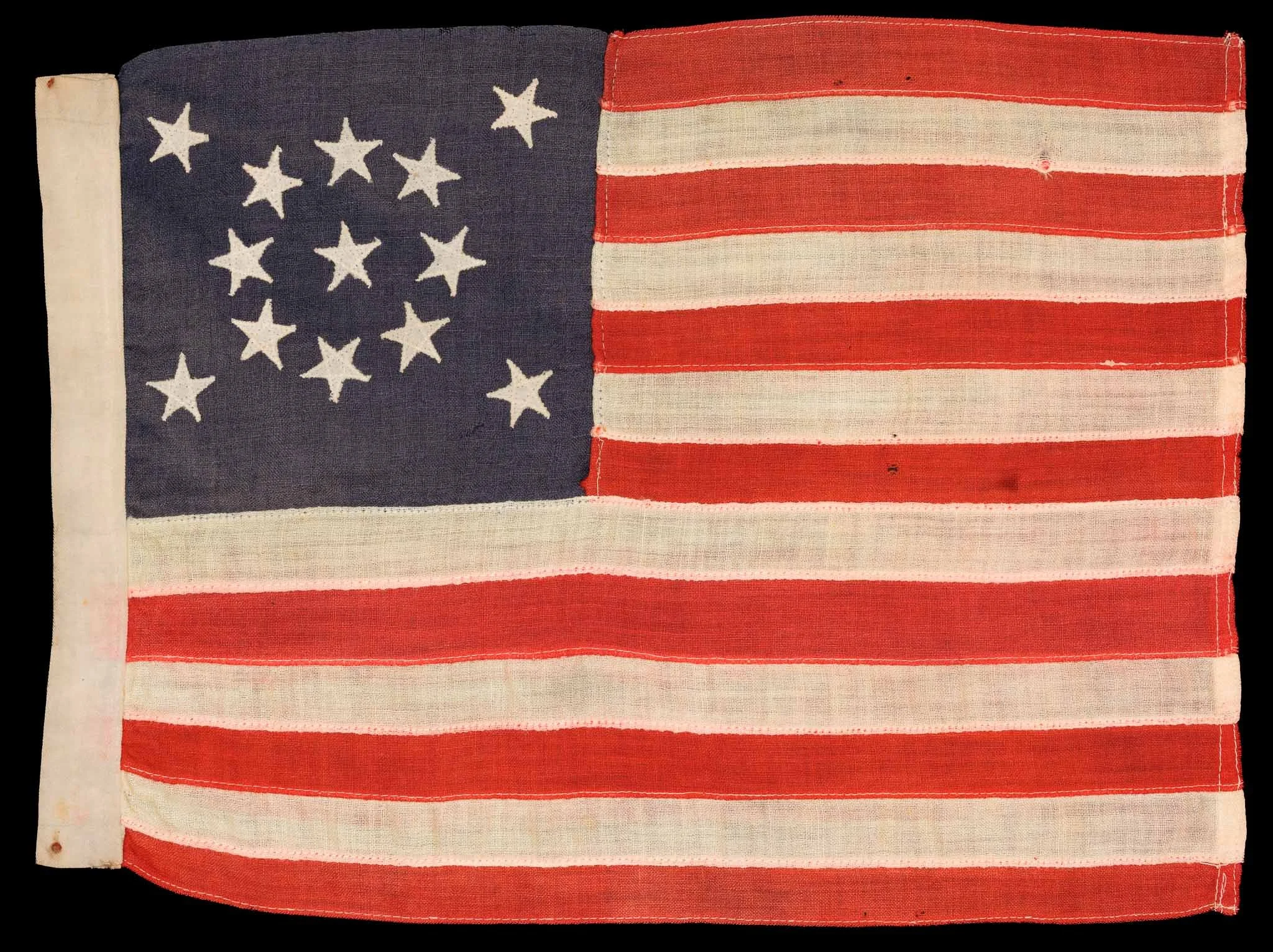
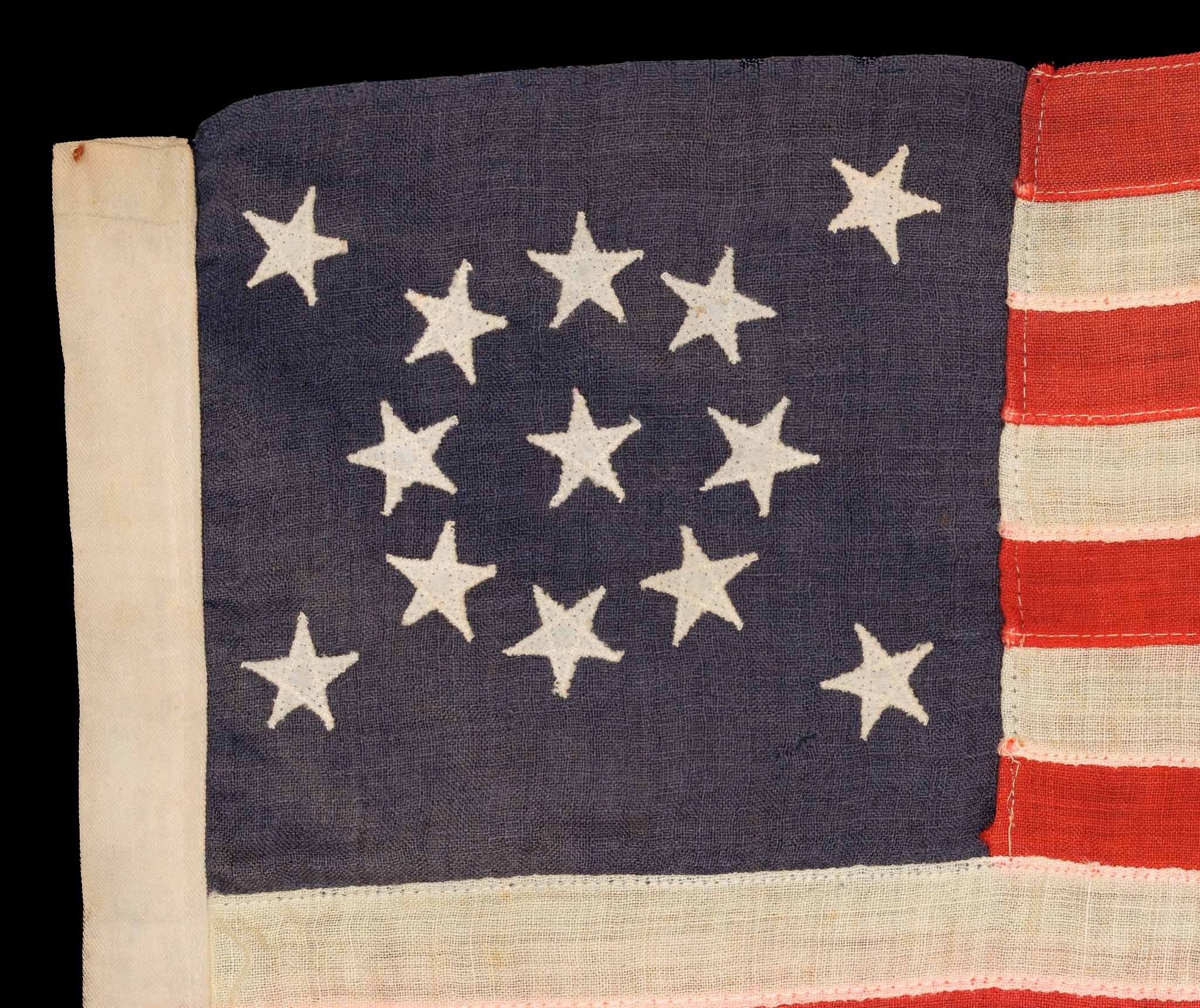
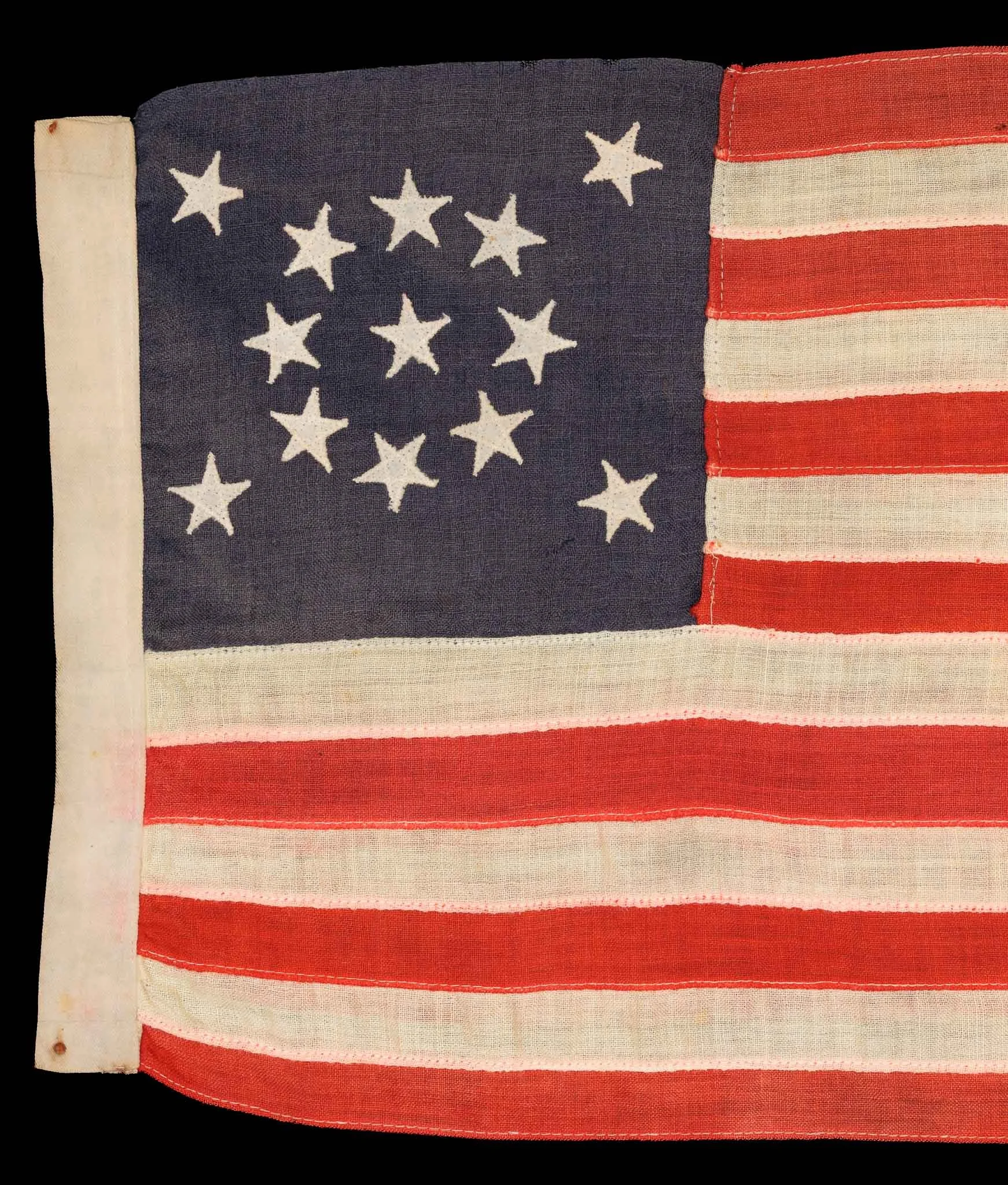
Offered is a 13-star antique American flag of wool bunting with cotton stars that are double-appliquéd—sewn to both sides of the canton so the design presents correctly on either face. It is an unusually small example of a fully pieced-and-sewn flag from the late 19th or early 20th century. While small printed flags were produced in great numbers during this period, traditional sewn flags at this diminutive scale are considerably less common.
The canton displays a classic medallion configuration centered on a single star, surrounded by a circular arrangement of eight stars, with four additional stars positioned toward the corners. The resulting pattern is one of the most recognizable configurations associated with 13-star flags. At this compact scale, the arrangement is particularly effective, allowing the stars to remain comparatively large and distinct while creating a strong, balanced composition within the canton.
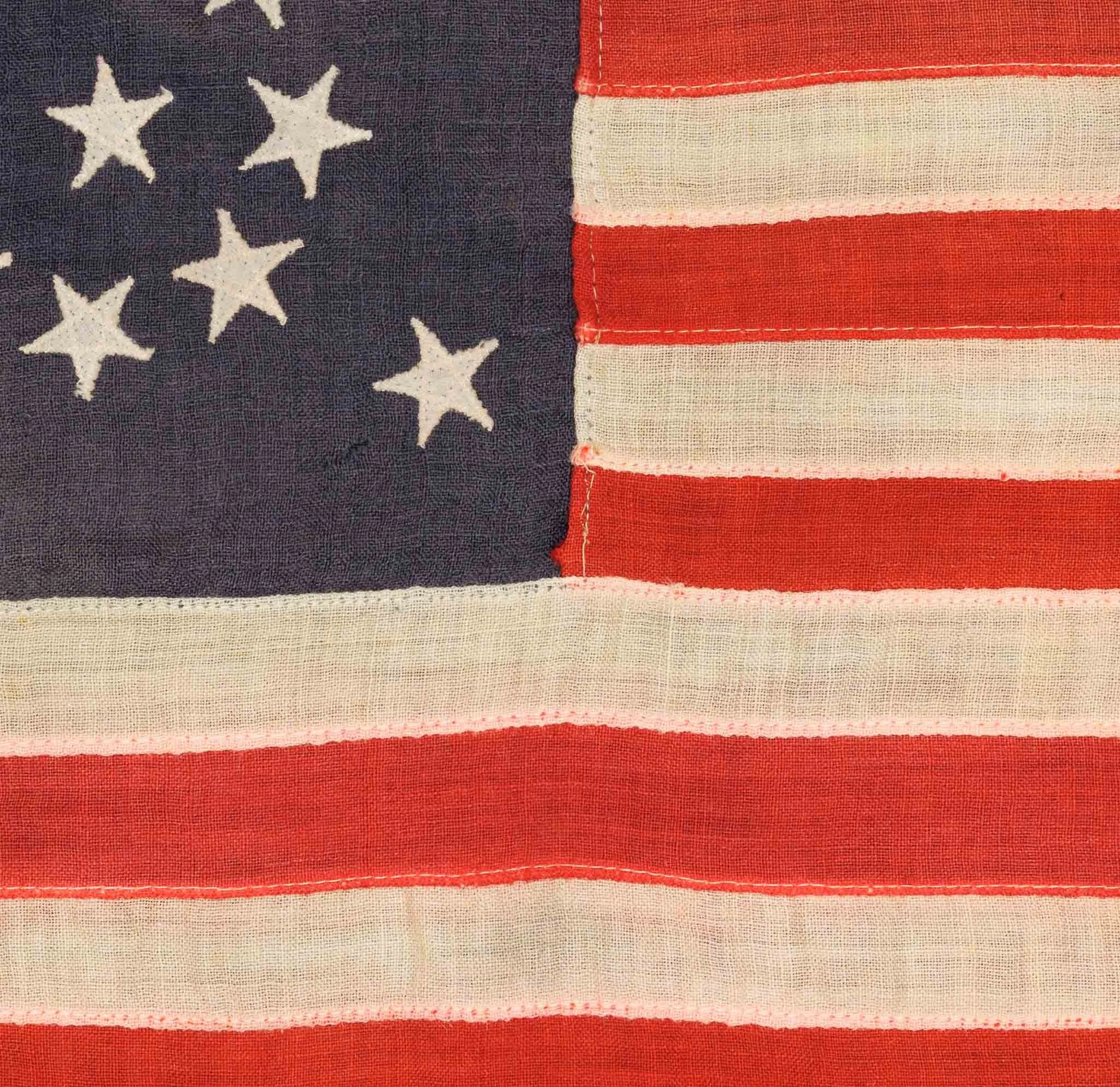
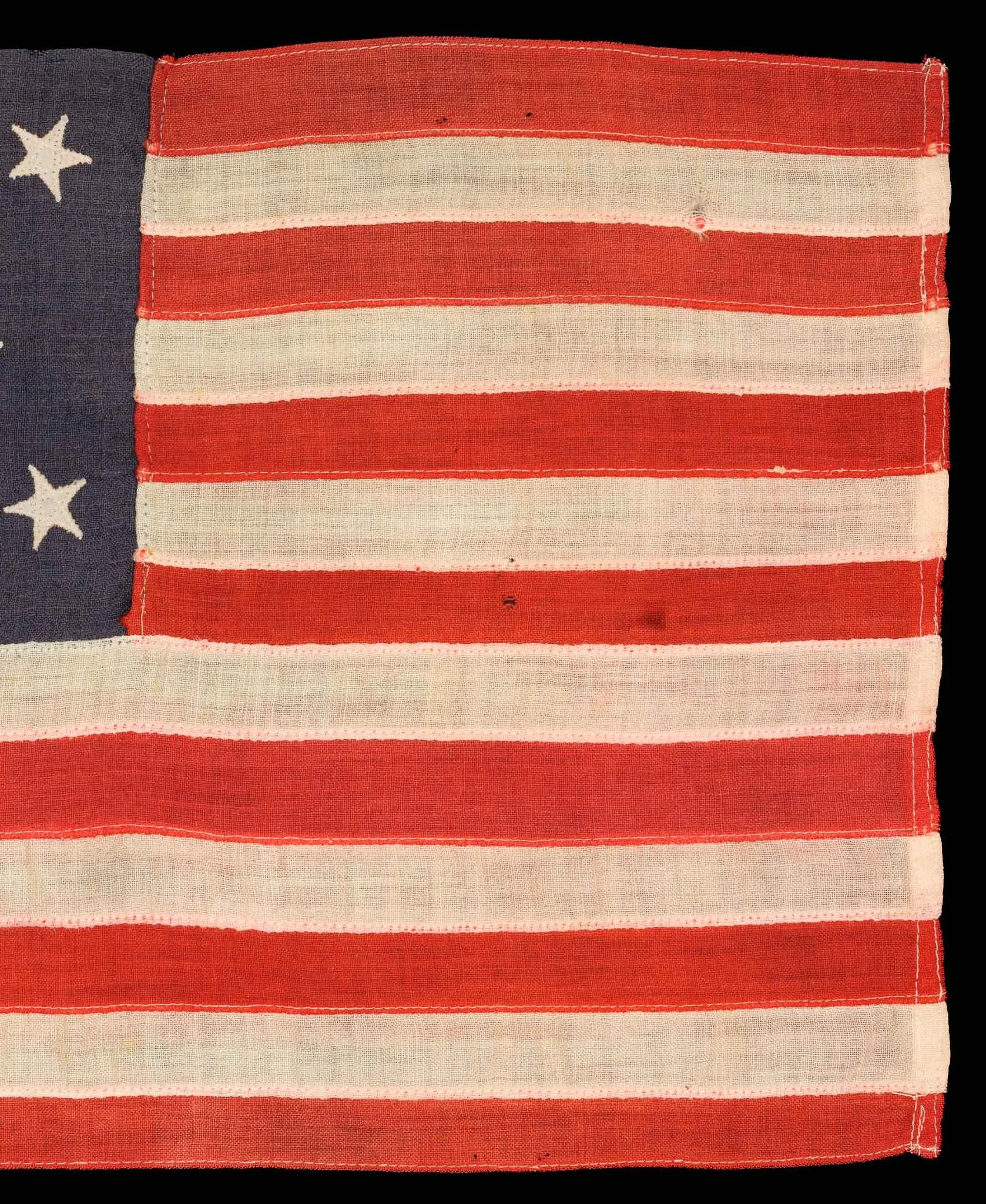
The flag is constructed in the manner of a conventional full-size sewn flag despite its unusually small proportions. The red and white wool-bunting stripes are individually pieced and joined by machine stitching, while the canton is likewise made of wool bunting. The cotton stars are applied to both sides and secured with zig-zag machine stitching. The hoist is made of cotton.
The zig-zag stitching used to secure the stars provides useful chronological guidance. In August 1889, Henry Bowman filed a patent application for a “method of making flags,” which was granted in February 1892 as U.S. Patent No. 469,395. Bowman specifically claimed the use of zig-zag stitching in flag construction, a technique particularly well suited to binding the unfinished edges of appliquéd stars. Similar stitching became increasingly common among commercial flag manufacturers during the 1890s and remained in widespread use during the early decades of the 20th century.
The unusually small scale of the present flag is an important part of its appeal. Although compact, its manufacture required essentially the same basic operations as a substantially larger example: piecing the individual stripes, assembling the canton, cutting and applying the stars, and finishing the hoist. Small sewn flags were practical for boats, architectural display, ceremonial use, and other settings where a conventional large flag would have been unnecessary or impractical. Their reduced scale also favored the use of 13 stars, which could remain individually prominent where the full complement of stars then representing the Union would have required a much smaller and more crowded arrangement.
The 13-star American flag traces its origin to June 14, 1777, when the Continental Congress resolved that the national flag should contain 13 alternating red and white stripes and “thirteen stars, white in a blue field, representing a new constellation.” Although the official star count increased as new states entered the Union, the 13-star configuration never disappeared from American use. Instead, it developed into an intentional reference to the original states and the nation’s Revolutionary founding.
Throughout the 19th century, 13-star flags appeared in military, maritime, commemorative, and patriotic settings. Interest increased considerably around the Centennial of American independence in 1876 and continued during the Colonial Revival of the late 19th and early 20th centuries, when Revolutionary-era imagery enjoyed renewed popularity. The United States Navy also continued to employ 13-star ensigns on small boats into the early 20th century, further reinforcing the design’s association with compact maritime flags. The Sesquicentennial of American independence in 1926 provided another period of heightened interest in the imagery of the founding era.
Based upon its wool-bunting construction, double-appliquéd cotton stars, machine stitching, zig-zag application, and overall form, we date the flag to approximately 1895–1926. Its combination of a classic medallion star configuration and unusually small scale makes it a particularly appealing example of the commercially produced 13-star flags of the late 19th and early 20th centuries.
Conservation Process: This flag was hand sewn to silk organza, and both were hand sewn to cotton fabric. The silk organza provides a strong layer of protection and a professional appearance. The flag, the silk organza, and the cotton fabric were then hand sewn to a mounting board. To prevent the black dye in the cotton fabric from seeping into the flag, it was first washed in a standard wash and then in a dye setting wash. The flag is positioned behind Optium Museum Acrylic.
Frame: The flag is housed in a wide, sloped molding with an aged gold surface, intentionally distressed to evoke the appearance of early gilded frames.
Condition Report: The flag survives in very good overall condition, with strong color and only minor scattered staining, small areas of soiling, and limited wear consistent with age and use. There are a few small holes or separations within the striped field, along with a couple of tack holes and associated stains on the hoist. The fabric remains substantially intact, and the canton and star field present especially well.
Collectability Level: The Great – Perfect for Rising Collectors
Date of Origin: 1895-1926
Number of Stars: 13
Associated War: Spanish-American War (1898)
Associated State: Original 13 Colonies