
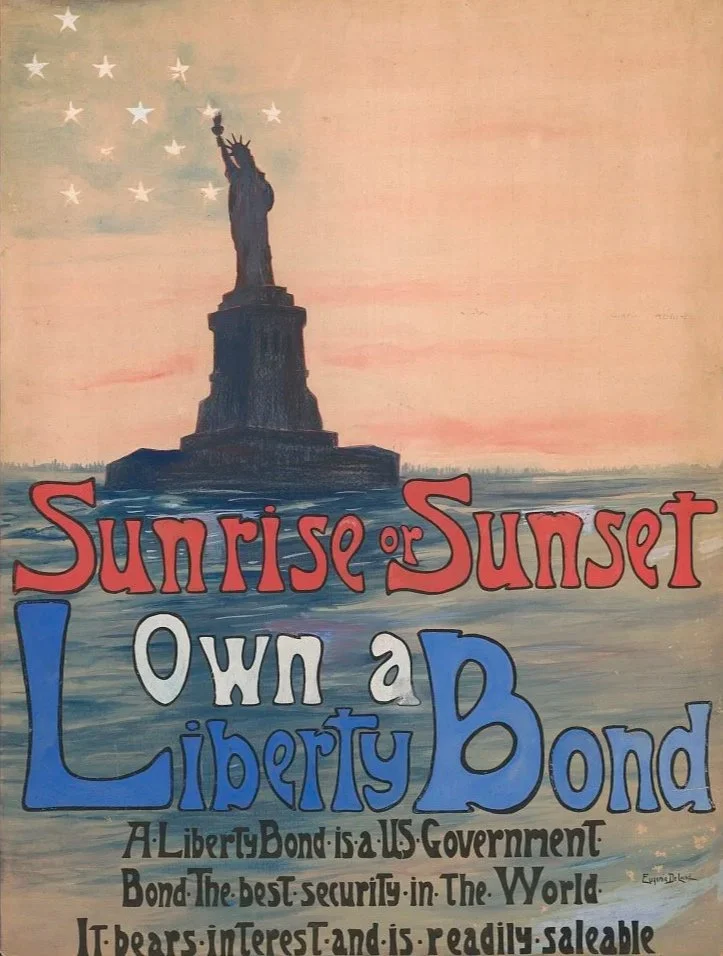
A World War I Liberty Bond poster designed by artist Eugenie DeLand in 1917, featuring the Statue of Liberty silhouetted against a sky painted in the colors of the American flag. The text reads "Sunrise or Sunset, Own a Liberty Bond," with smaller print identifying Liberty Bonds as U.S. Government bonds described as "the best security in the world" that "bear interest and are readily saleable." Liberty Bonds were a cornerstone of the U.S. war financing strategy, with the government ultimately running four Liberty Loan drives between 1917 and 1918 that raised approximately $17 billion to fund American participation in the war.
The Barnum & Bailey Greatest Show on Earth
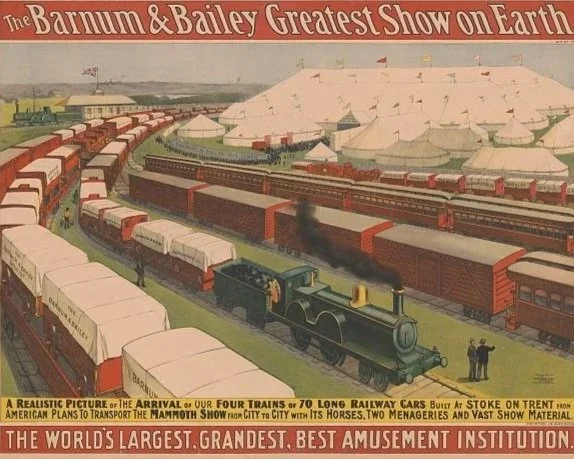
By the late 19th century, the Barnum & Bailey Greatest Show on Earth traveled the country by rail, bringing a massive entertainment operation to towns and cities across the United States. This 1899 poster highlights the scale of the circus’s arrival, with long trains carrying performers, animals, and equipment needed to build a temporary spectacle. Railroads made it possible to move an entire traveling enterprise from stop to stop, reflecting both the reach of American industry and the growing demand for large-scale public entertainment at the turn of the century.
Little Red School House
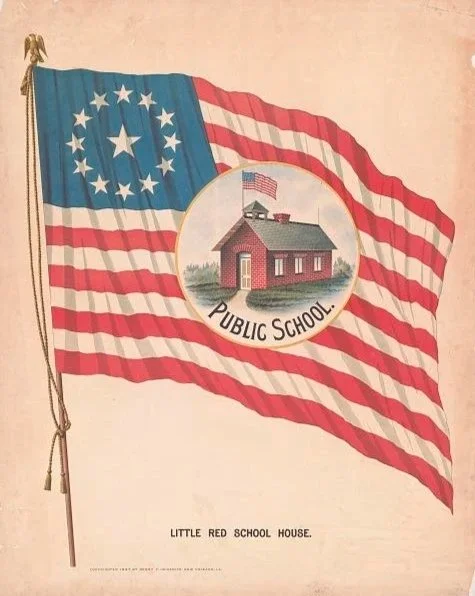
1897, Little Red School House shows the American flag with a small one-room schoolhouse set inside its field of stars. The school flies its own flag, tying public education directly to national pride. At the end of the nineteenth century, the common school was widely viewed as the place where young Americans learned not only reading and arithmetic, but also civic duty.
Abraham Lincoln, "That a government of the people shall not perish from the earth"
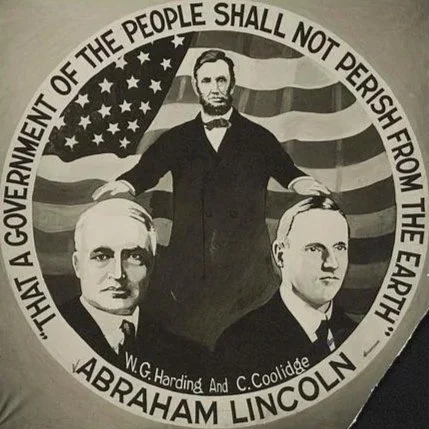
During the 1920 presidential race, this campaign image shows Abraham Lincoln standing before the American flag, his hands raised above Warren G. Harding and Calvin Coolidge. Around them is a line from the Gettysburg Address: “that a government of the people shall not perish from the earth.” The message is clear. By placing their ticket alongside Lincoln’s likeness and words, Republicans tied Harding and Coolidge to the legacy of the Union and the idea of steady leadership at a time when the country was adjusting to peace after World War I.
The Constitution of the United States "the signing"
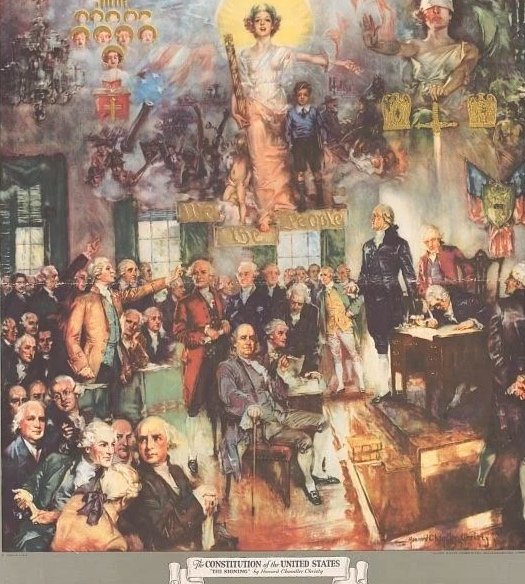
Late-19th-century interpretation of the signing of the U.S. Constitution in 1787, when delegates gathered in Philadelphia to shape the framework of the new nation. Figures associated with the Constitutional Convention, including George Washington, who presided over the meeting, and Benjamin Franklin, are shown alongside symbolic images representing liberty, law, and the American people.
Hurrah for the Old Flag!
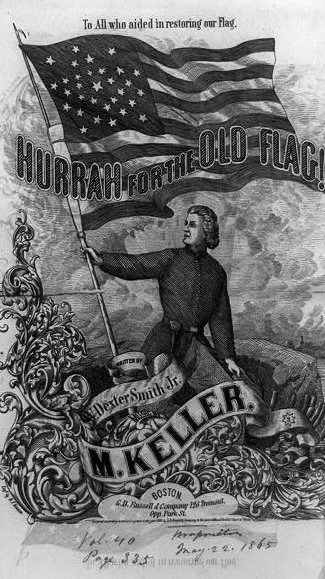
1865 sheet music cover for “Hurrah for the Old Flag!” by W. Dexter Smith Jr., with music by M. Keller, shows a Union soldier holding the American flag at the end of the Civil War. Published as the war concluded, songs like this were meant to celebrate the preservation of the Union and honor those who served. Sheet music was a common form of home entertainment in the 19th century, and patriotic titles were especially popular in the months following victory.
Our Country's Flag
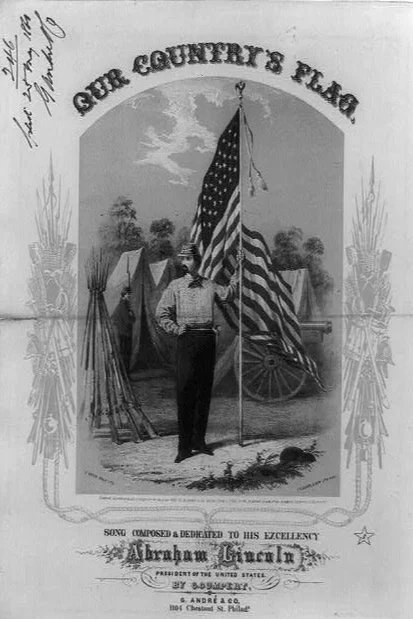
This 1861 print comes from the first months of the Civil War, when the Union was trying to hold together. A single soldier stands in front of a camp, gripping the American flag while rifles, tents, and a cannon sit nearby. The flag is shown as something to be protected and defended at a time when the country’s future was unclear. Issued as the cover for a patriotic song dedicated to Abraham Lincoln, representing how popular art was used to build support for the Union and reinforce the flag as a symbol of loyalty and national resolve.
Col. Fremont Planting the American Standard on the Rocky Mountains
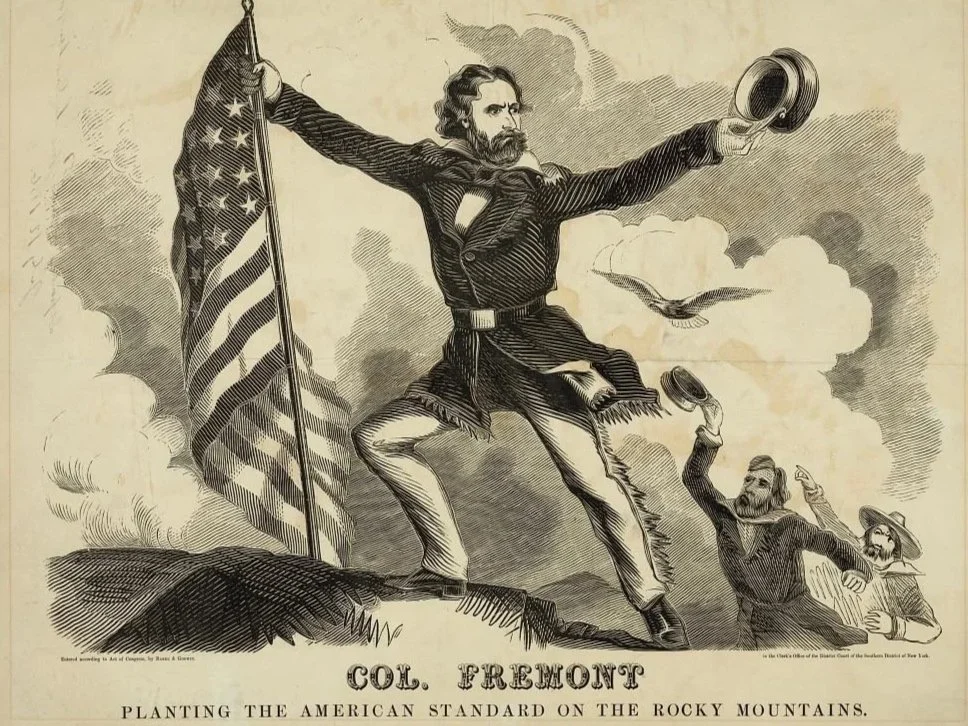
1856 image shows John C. Fremont cast as a frontier figure, standing on a mountain peak and raising the American flag. It was created during his presidential campaign and borrows heavily from the public’s memory of his western expeditions in the 1840s. Images like this helped link national politics to westward expansion and the idea of American destiny. By presenting Fremont as both explorer and leader, the print reflects how mid-19th-century campaigns used familiar frontier symbols to build trust and stir patriotism.