
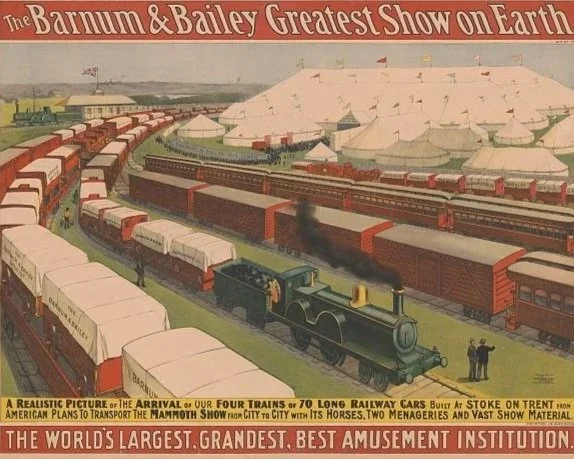
By the late 19th century, the Barnum & Bailey Greatest Show on Earth traveled the country by rail, bringing a massive entertainment operation to towns and cities across the United States. This 1899 poster highlights the scale of the circus’s arrival, with long trains carrying performers, animals, and equipment needed to build a temporary spectacle. Railroads made it possible to move an entire traveling enterprise from stop to stop, reflecting both the reach of American industry and the growing demand for large-scale public entertainment at the turn of the century.
Chicago, Illinois. Union Station Concourse
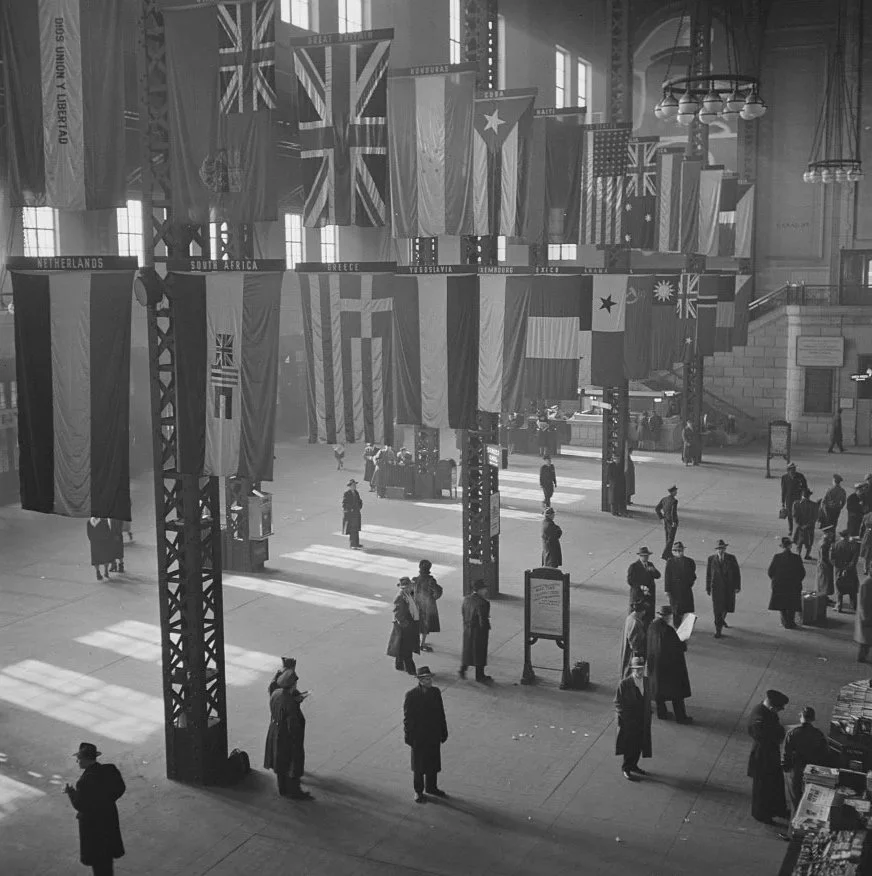
Travelers move through Chicago’s Union Station beneath a display of Allied flags during the height of World War II. The concourse, filled with civilians and servicemen, served as a critical hub for troop movements, wartime industry travel, and daily life on the home front. The presence of international flags underscores the alliance of nations fighting against Axis powers, while the steady flow of passengers highlights how railroads remained essential to mobilization and coordination across the country.
High bridge near Buena Vista
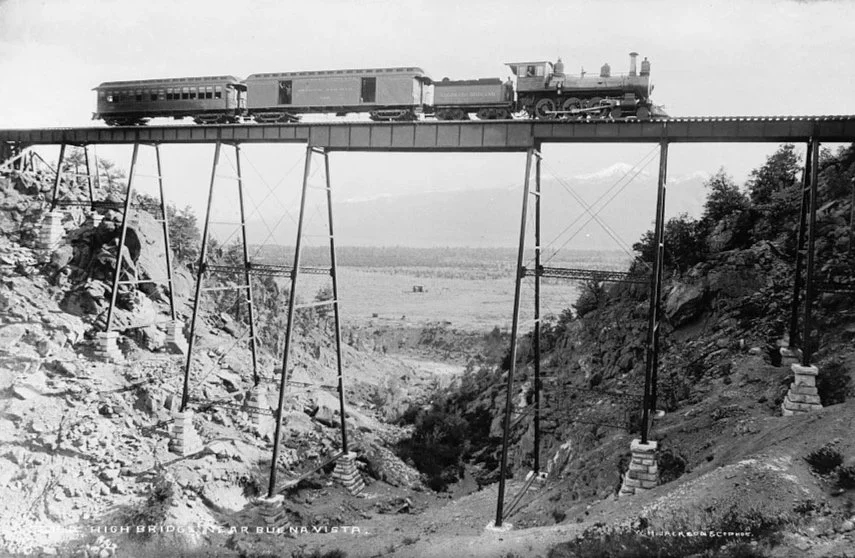
Steam locomotive crossing a tall trestle bridge near Buena Vista, a reminder of how railroads pushed through difficult terrain as the country expanded. The narrow bridge and steep drop below show the kind of engineering required to carry rail lines across canyons and ravines. Structures like this made it possible to move people, supplies, and resources into remote areas, supporting settlement and local industry. Scenes like this capture how railroads physically reshaped the landscape and helped link growing communities across the West.