
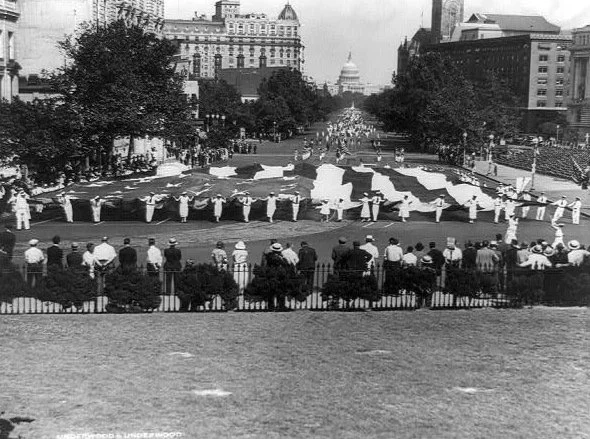
Massive American flag being carried down Pennsylvania Avenue in 1932, with the U.S. Capitol rising in the background. Hundreds of people are needed just to keep the flag moving, turning it into the main event of the parade. The country was deep in the Great Depression at the time, and scenes like this were meant to reinforce a sense of unity and pride when everyday life was uncertain. Civic groups regularly organized parades and public displays to remind people of shared traditions and national identity.
Woman Suffrage Parade, Wash., D.C.
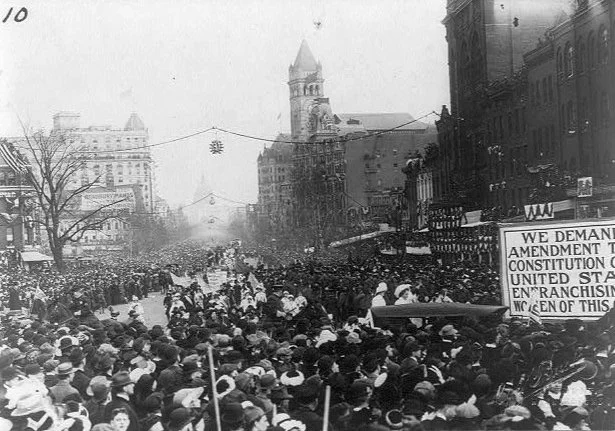
Taken in 1913, this photograph captures the woman suffrage parade filling Pennsylvania Avenue in Washington, D.C., as crowds stretch toward the Capitol and the old Post Office tower. Marchers carried clear demands for voting rights, turning the street into a public forum at a time when women were still excluded from the ballot. The parade drew national attention by placing the issue front and center just before a presidential inauguration. Moments like this helped push women’s suffrage from protest to policy, laying the groundwork for the 19th Amendment a few years later.
American Flag Amid Rubble Following September 11th
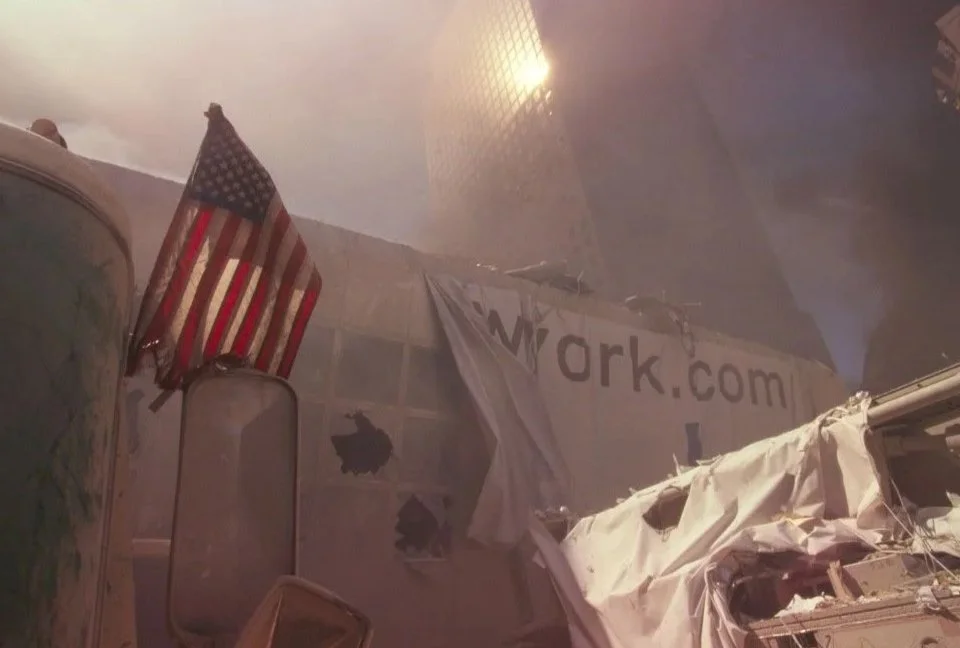
Taken on September 11, 2001, an American flag set among the wreckage at the World Trade Center in New York City in the hours after the attacks. Twisted metal, torn surfaces, and smoke frame a scene of sudden loss and confusion as the city and the country tried to understand what had just happened. The flag was not a planned display, but something placed by hand in the middle of destruction, reflecting how people reached for familiar symbols in an unfamiliar moment.