
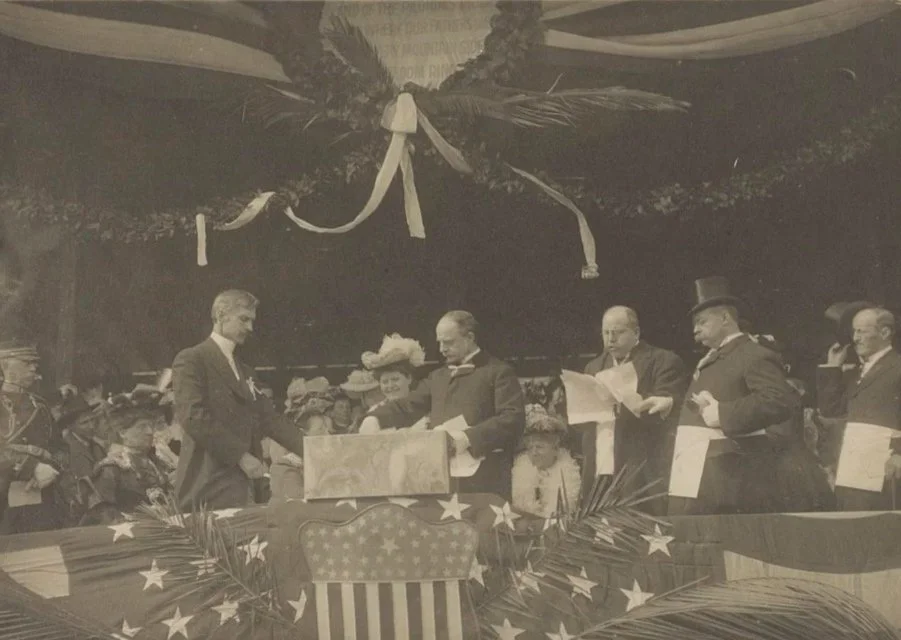
On April 21, 1904, President Theodore Roosevelt attended the cornerstone laying ceremony for Memorial Continental Hall in Washington, D.C., the headquarters building of the Daughters of the American Revolution. Roosevelt stands on a flag-draped platform reviewing documents alongside a group of dignitaries, with women in the elaborate hats typical of the Edwardian period seated nearby. The DAR, founded in 1890, was at the height of its influence during the Progressive Era, and Roosevelt's participation reflected the period's strong interest in patriotic heritage organizations.
Horse Shows. Horse And Wagon
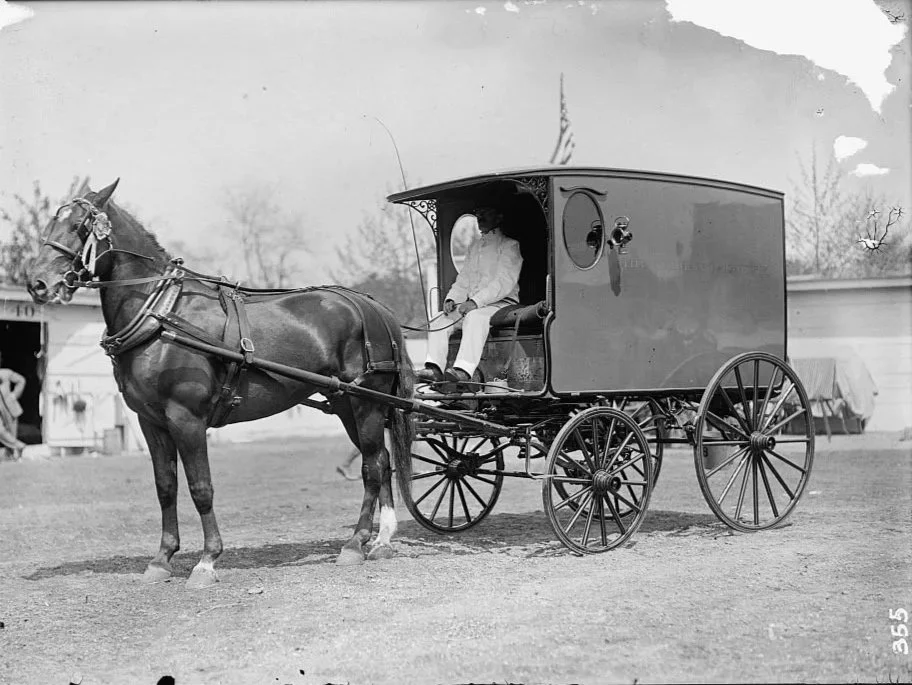
At the 1911 National Capital Horse Show in Washington, D.C., a driver sits in an enclosed wagon pulled by a harnessed horse on display for judges and spectators. Horse shows at the time focused on breeding, training, and the quality of equipment, reflecting how important horses still were for transportation and work.
G.A.R. PARADE GREAT FLAG AT CAPITOL
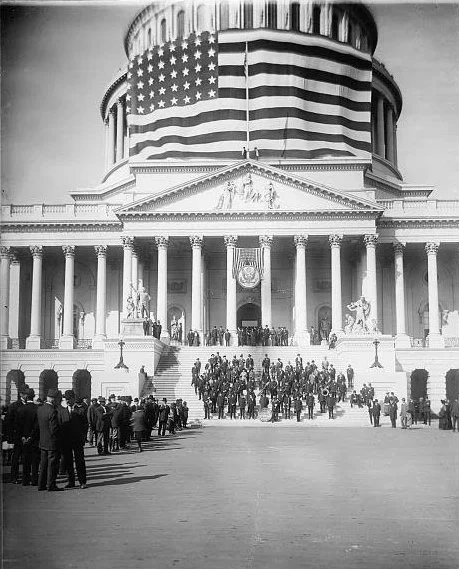
Veterans of the Grand Army of the Republic gather at the U.S. Capitol beneath a massive American flag during a commemorative parade in the early 20th century. Formed by Union veterans of the Civil War, the organization played a major role in shaping public memory of the conflict and advocating for soldiers’ benefits.
President Roosevelt Reviews ARMY Day Parade. WASHINGTON, D.C. APRIL 6
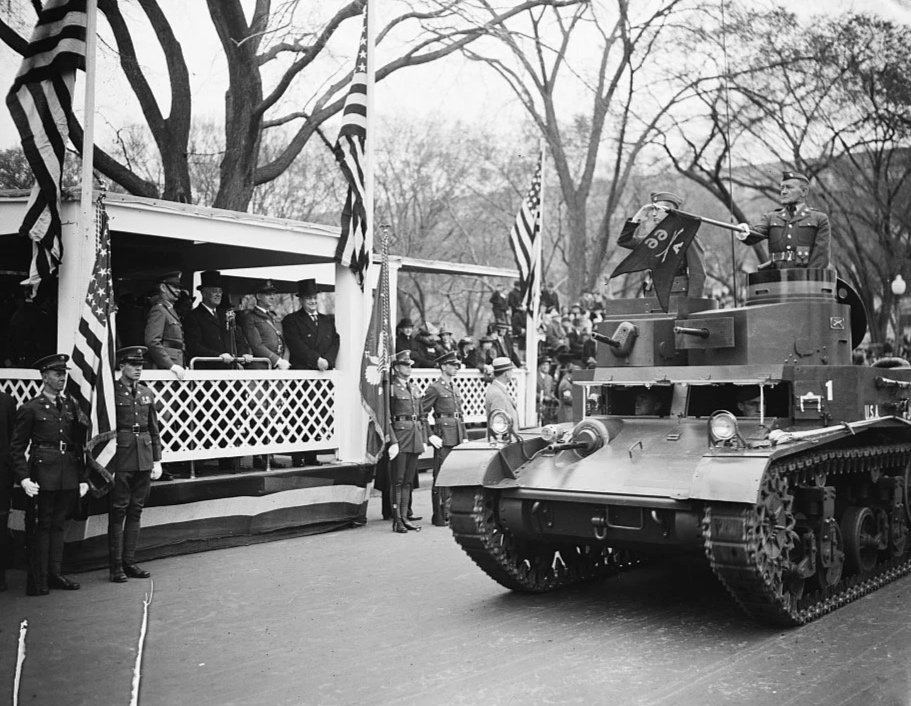
Franklin D. Roosevelt reviews an Army Day parade in Washington, D.C., on April 6, 1938, as armored vehicles pass the presidential stand and soldiers present arms. The annual observance marked the anniversary of America’s entry into World War I and served to highlight the nation’s growing military preparedness during a period of rising global tension.
Washington, D.C. Two Soldiers Await The Arrival of a Troop Train at The Union Station
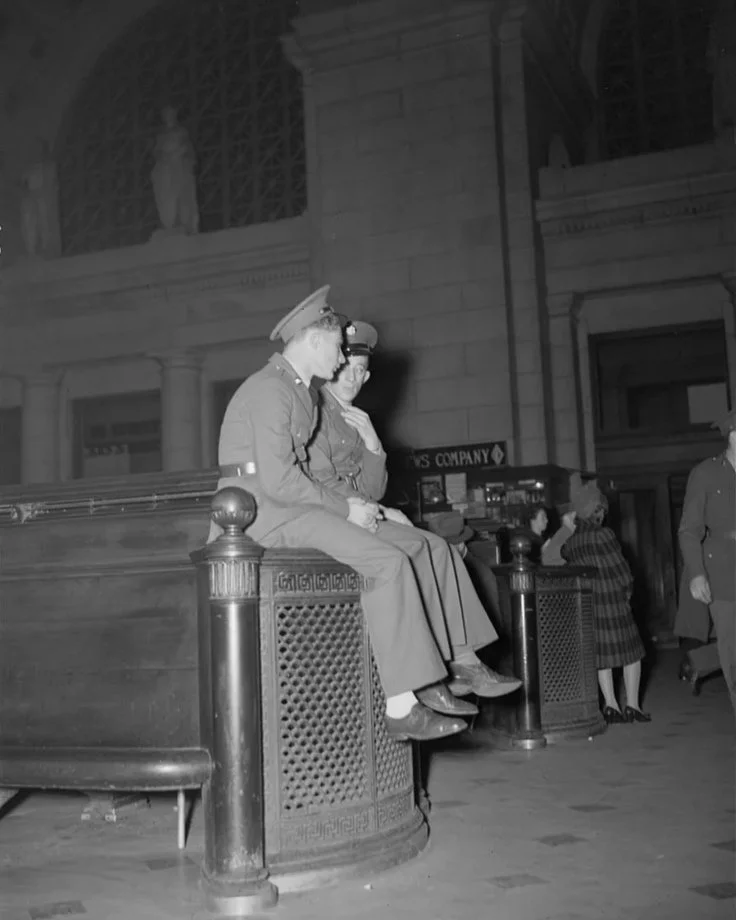
Two U.S. soldiers sit quietly inside Washington, D.C.’s Union Station in November 1942, waiting for a troop train during the height of World War II. Their pause reflects a common moment in wartime travel, when service members moved through major rail hubs on their way to training or deployment. Union Station served as a critical transit point, connecting the capital to military installations across the country, as the nation mobilized millions for service at home and overseas.
Woman Suffrage Parade, Wash., D.C.
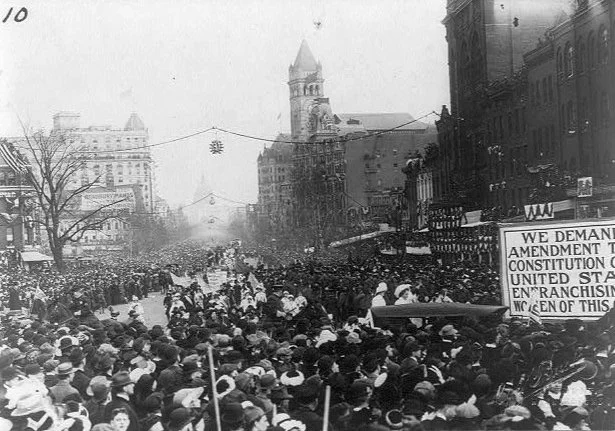
Taken in 1913, this photograph captures the woman suffrage parade filling Pennsylvania Avenue in Washington, D.C., as crowds stretch toward the Capitol and the old Post Office tower. Marchers carried clear demands for voting rights, turning the street into a public forum at a time when women were still excluded from the ballot. The parade drew national attention by placing the issue front and center just before a presidential inauguration. Moments like this helped push women’s suffrage from protest to policy, laying the groundwork for the 19th Amendment a few years later.
General Peyton March and Family ... at the Georgetown, Washington and Lee Football Game
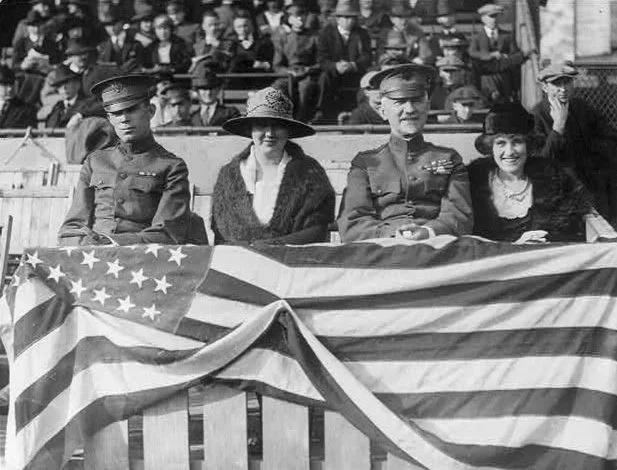
General Peyton March, who served as U.S. Army Chief of Staff during World War I, sits with family and guests at a Georgetown–Washington and Lee football game in Washington, D.C. The American flag draped across the front places the scene firmly in its time, when military leaders were well-known public figures and often appeared at major social events. College football was becoming a popular national pastime, drawing crowds that mixed military officers, civic leaders, and civilians.
The Great Parade, Pennsylvania Avenue, Washington, D.C., U.S.A.
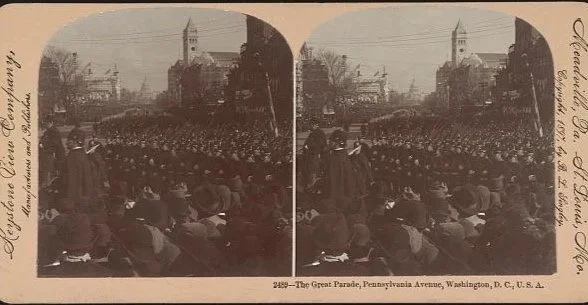
1897 stereograph shows the Great Parade along Pennsylvania Avenue in Washington, D.C., with massive crowds packed along the street and sidewalks. Events like this were central to public life in the nation’s capital, turning major avenues into gathering places for civic celebration and national display. Americans came together in person to mark important moments, long before radio or television, also reflecting the popularity of stereographs, which brought scenes from Washington to viewers across the country.