
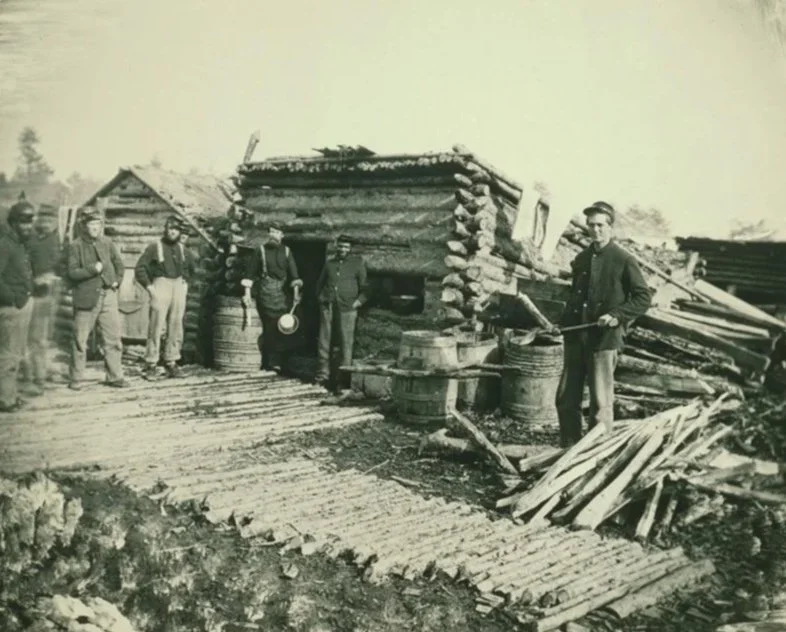
April 1864, Brandy Station, Virginia. Union soldiers of the 6th New York Artillery stand outside their log company kitchen at winter camp. The structure is typical of Civil War winter quarters, built from whatever timber was available, with wooden barrel staves and split logs corduroying the muddy ground. Brandy Station was a major Union staging area during the winter of 1863 to 1864, housing much of the Army of the Potomac as it prepared for Ulysses S. Grant's spring Overland Campaign, which would begin just weeks after this photograph was taken.
New York Gives Rousing Send Off to Her Sons Leaving for War
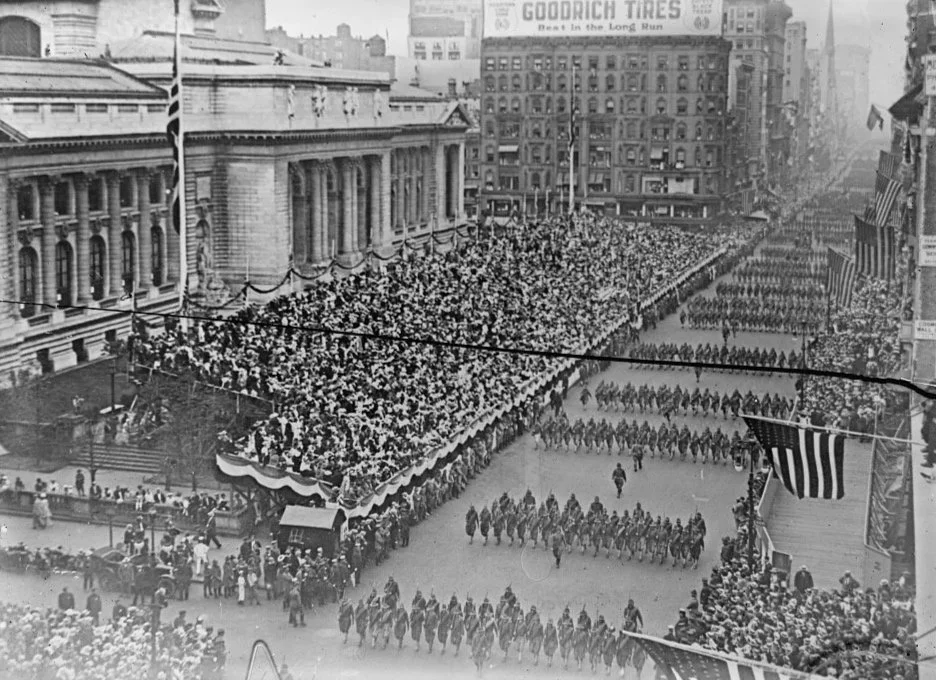
August 30, 1917. Columns of New York National Guard soldiers march down Fifth Avenue past the New York Public Library as thousands of civilians pack the sidewalks and viewing stands to see them off. The United States had entered World War I just four months earlier, in April 1917, and the country was still mobilizing. The National Guard was among the first waves of organized troops to deploy, with New York's guardsmen forming the backbone of what would become the 27th Infantry Division.
New York, New York. Flag Raising Ceremony at the Four Freedoms War Bond Show, on the Plaza of the International Building at Rockefeller Center
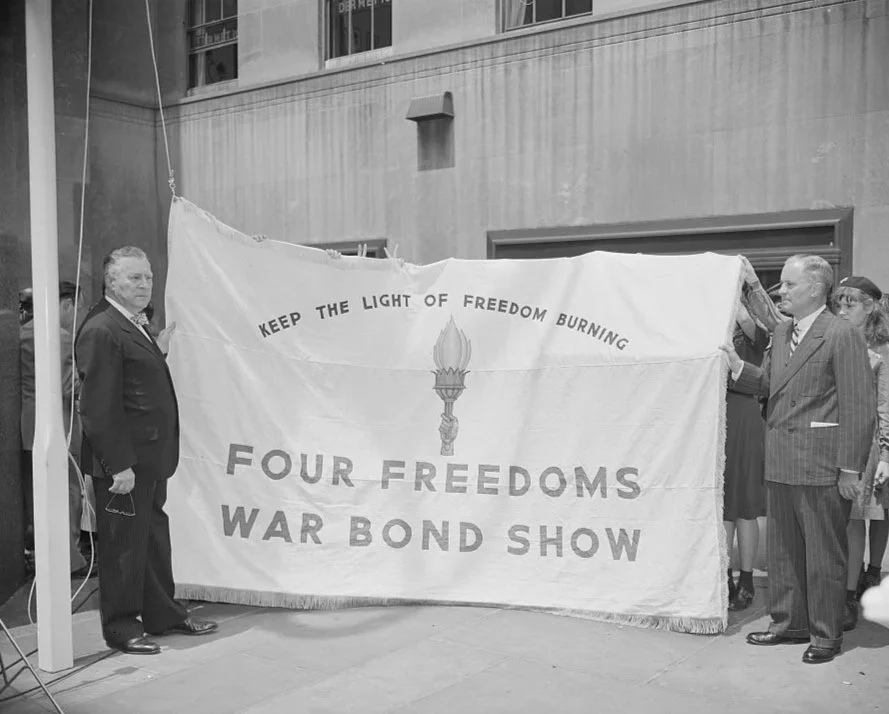
June 1943, Rockefeller Center, New York City. Two men hold a banner reading "Keep the Light of Freedom Burning: Four Freedoms War Bond Show" at a flag raising ceremony on the plaza of the International Building. The Four Freedoms referenced the goals President Franklin Roosevelt laid out in his January 1941 State of the Union address: freedom of speech, freedom of worship, freedom from want, and freedom from fear. Those four principles became central to Allied wartime messaging, most famously through Norman Rockwell's series of paintings published in the Saturday Evening Post in early 1943.
Ceremonies at Laying Corner Stone D.A.R. Hall
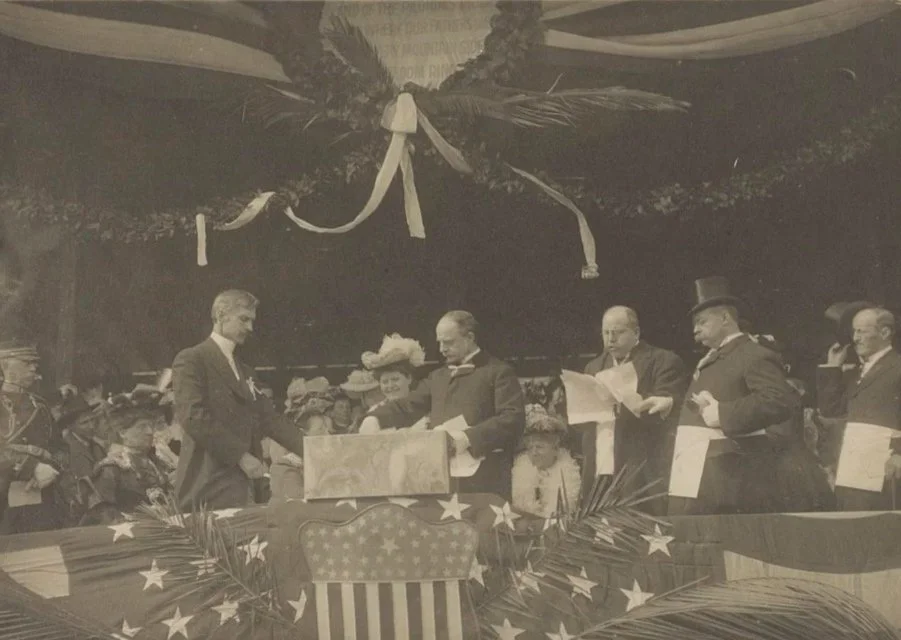
On April 21, 1904, President Theodore Roosevelt attended the cornerstone laying ceremony for Memorial Continental Hall in Washington, D.C., the headquarters building of the Daughters of the American Revolution. Roosevelt stands on a flag-draped platform reviewing documents alongside a group of dignitaries, with women in the elaborate hats typical of the Edwardian period seated nearby. The DAR, founded in 1890, was at the height of its influence during the Progressive Era, and Roosevelt's participation reflected the period's strong interest in patriotic heritage organizations.
Oswego, New York. United Nations Heroes Marching in the Flag Day Parade During United Nations Week
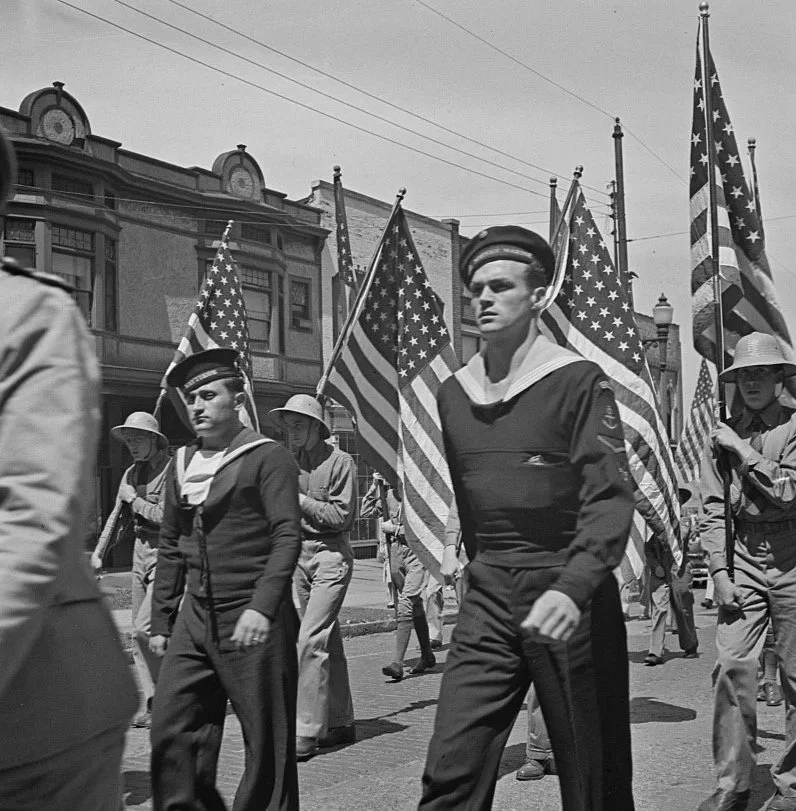
Flag Day, June 1943. U.S. Navy sailors and Army soldiers march through the streets of Oswego, New York, as American flags line the parade route during United Nations Week. With World War II in full swing, events like this served a dual purpose: honoring the flag and reinforcing public support for the Allied war effort. The "United Nations" reference was the wartime term for the Allied coalition, formalized in January 1942 when 26 nations signed the Declaration by United Nations pledging to fight the Axis powers together.
Dedication Exercises
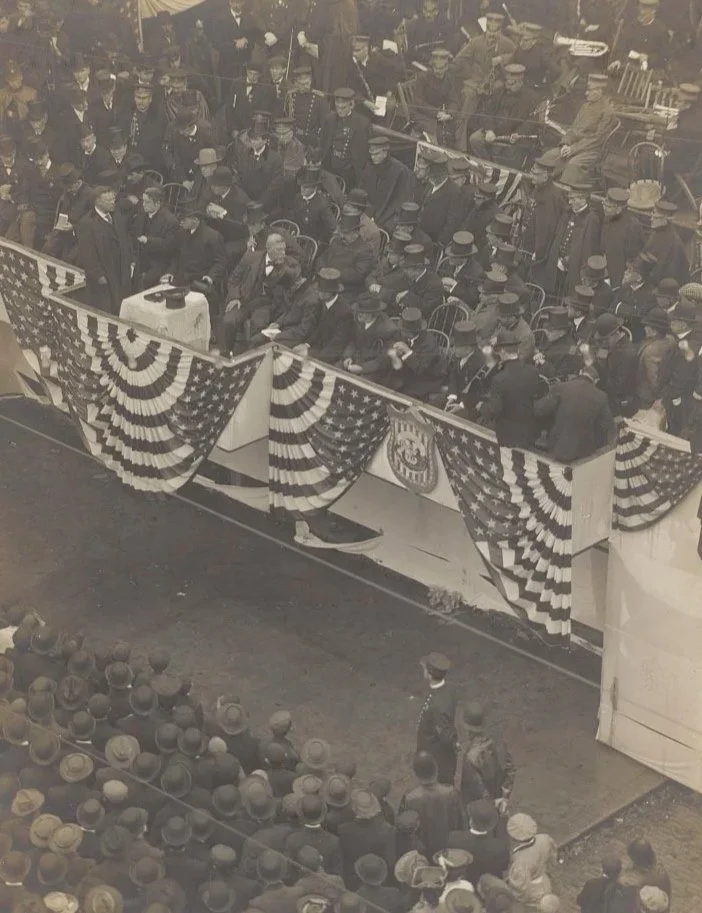
On October 23, 1906, President Theodore Roosevelt stood at a flag-draped platform to deliver remarks at a public dedication ceremony. The elevated stage was packed with dignitaries and officials while a brass band occupied the rear. Below, crowds of citizens filled the streets, nearly all wearing the dark suits and hats typical of the Edwardian era.
First Quarter of 1943 Kentucky Derby from Infield
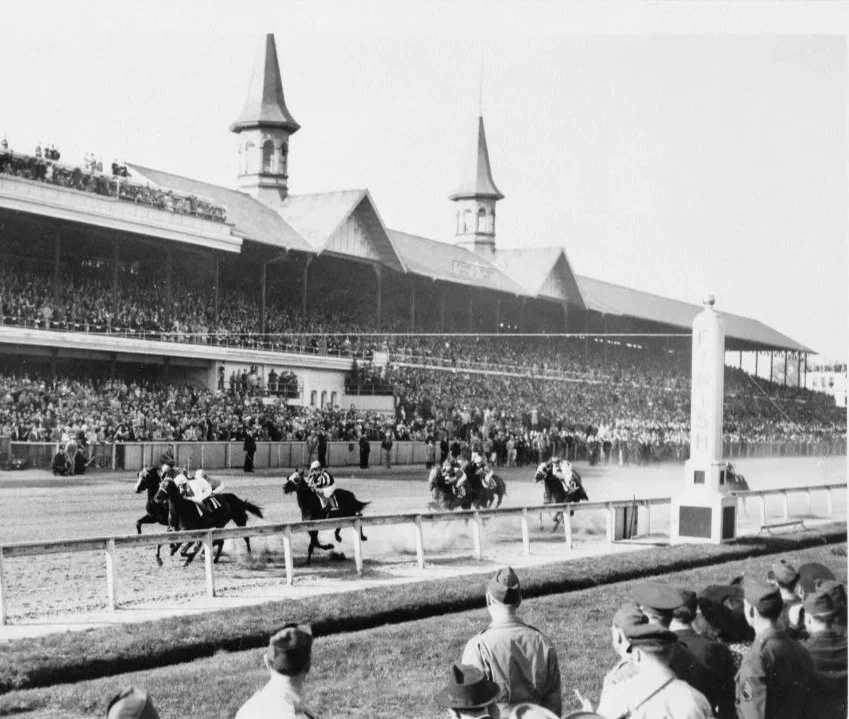
During the 1943 Kentucky Derby in Louisville, horses race past the grandstand as a packed crowd watches from multiple tiers. The event took place during World War II, when major sporting traditions continued despite wartime restrictions on travel and resources. Known as one of the country’s leading horse races since the late nineteenth century, the Derby remained a major public gathering, drawing attention from across the nation.
"Lemonade Stand" Mr. Hersey, Prop. and Mr. O'Reilly
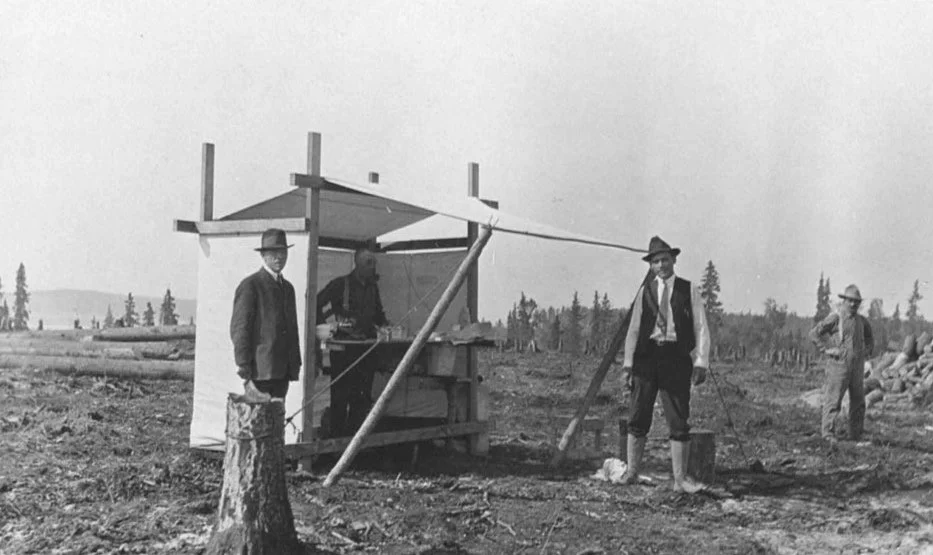
In 1916, two men operate a makeshift “lemonade stand” in a cleared field, likely serving workers in a logging or land-clearing area. A simple wooden structure with a canvas cover provides shade for basic supplies, while cut stumps and felled timber stretch across the background, marking an active work site. Such small, informal setups were common in remote areas, offering food and drink to laborers far from towns and established businesses.
Horse Shows. Horse And Wagon
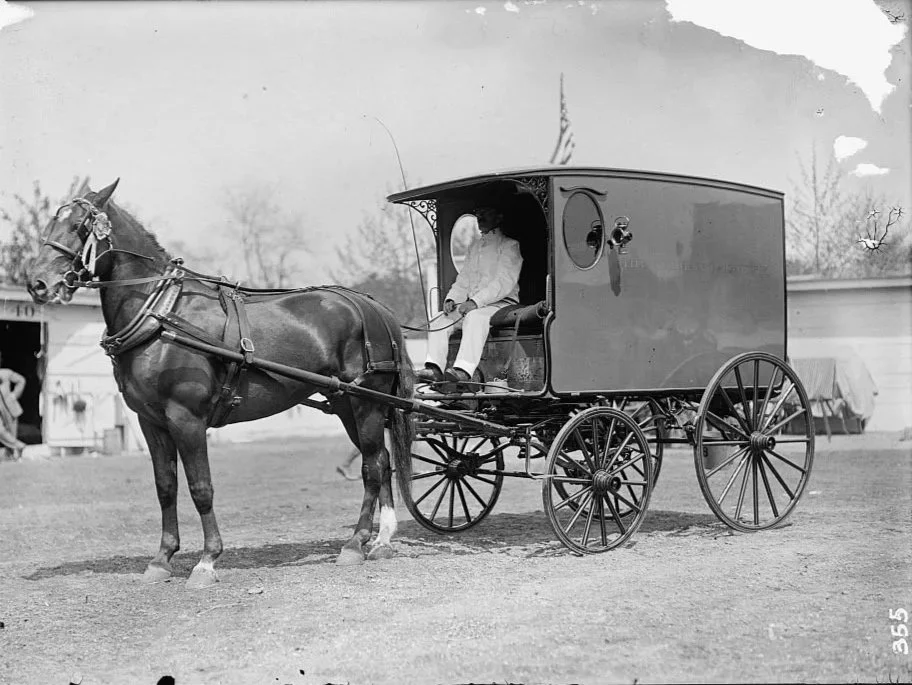
At the 1911 National Capital Horse Show in Washington, D.C., a driver sits in an enclosed wagon pulled by a harnessed horse on display for judges and spectators. Horse shows at the time focused on breeding, training, and the quality of equipment, reflecting how important horses still were for transportation and work.
The New President Takes The Oath of Office. The Wilcox Home in Which President Roosevelt was Sworn In
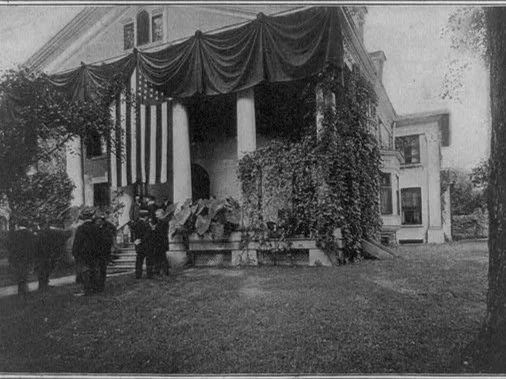
In September 1901, a small gathering assembled on the porch of the Wilcox home in Buffalo, New York, where Theodore Roosevelt took the oath of office following the assassination of William McKinley. The house, draped in American flags, became an unexpected setting for a pivotal moment in national history as Roosevelt assumed the presidency amid uncertainty and mourning.
Farmers on Main Street, Saturday Night. Iowa Falls, Iowa
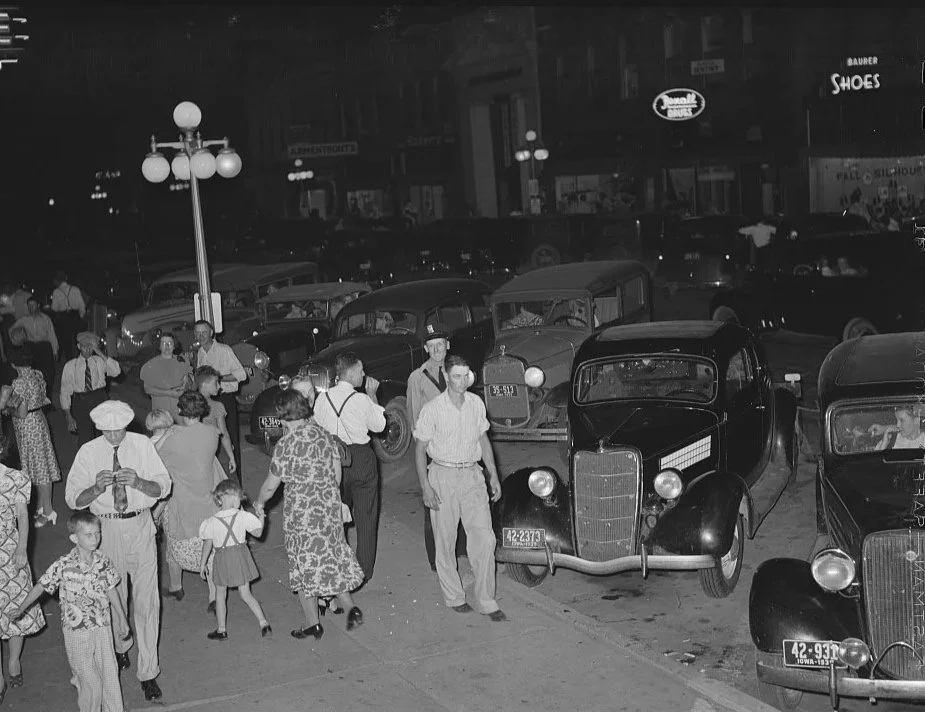
Farm families and townspeople fill the sidewalks and streets of Iowa Falls, Iowa, on a Saturday night in 1939, as automobiles line the curb under the glow of streetlights. The gathering reflects a weekly ritual in rural communities, when residents came to town to shop, socialize, and take part in public life after a week of work. Men, women, and children move easily between parked cars and storefronts, illustrating the central role of Main Street as both marketplace and meeting place.
Farmer Crossing the Main Street of Town, Eufaula, Oklahoma
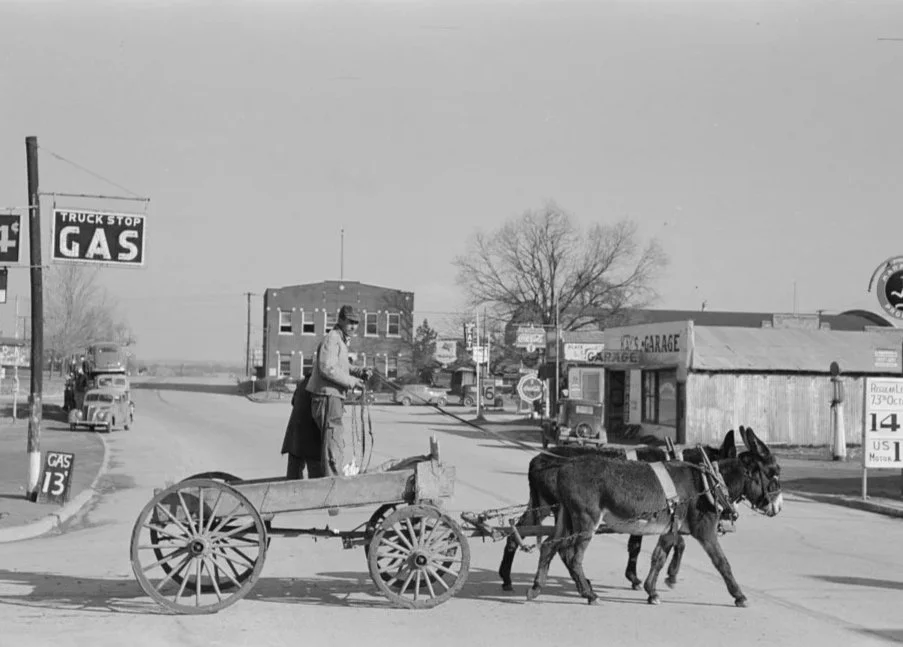
A farmer guides a mule-drawn wagon across the main street of Eufaula, Oklahoma, in 1940, passing through a town where older agricultural traditions meet the growing presence of automobiles, gas stations, and roadside businesses. Hand-painted signs advertising fuel prices and garages line the street, underscoring the expanding influence of the automobile, while the wagon and its driver represent enduring self-reliance and the rhythms of farm work. Captured during the late Depression era.
Boy on Float in Fourth of July Parade. Vale, Oregon
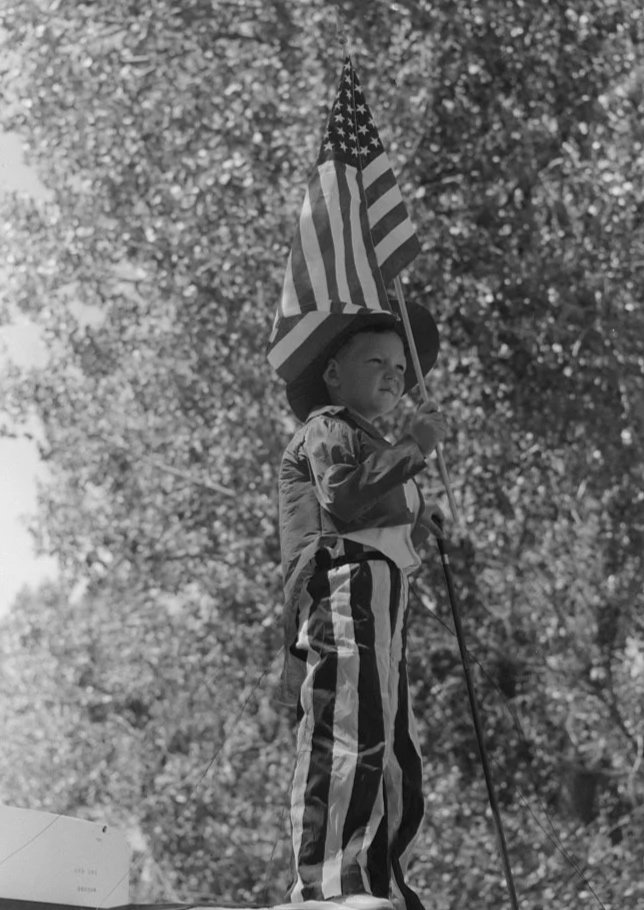
A young boy stands atop a parade float in Vale, Oregon during a Fourth of July celebration in 1941, holding an American flag while dressed in patriotic attire. Community parades like this were a central feature of small-town life, bringing residents together to mark national holidays with displays of civic pride. Occurring just months before the United States entered World War II, such moments reflected a generation on the edge of global conflict while still rooted in local traditions.
Participants, Some Carrying American flags, Marching in the Civil Rights March from Selma to Montgomery, Alabama in 1965
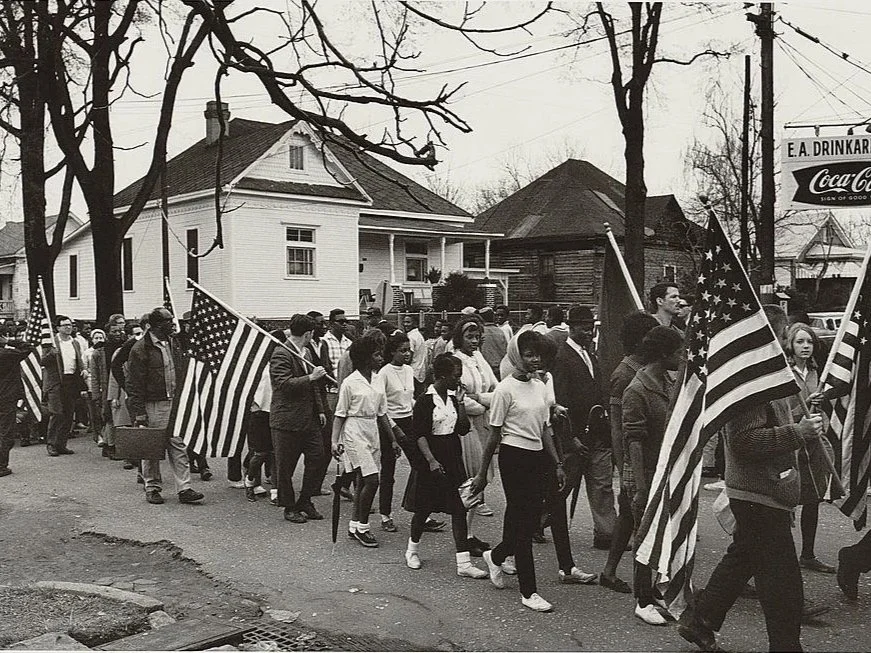
Marchers move along a residential street during the 1965 Selma to Montgomery campaign, many carrying American flags as they press forward in support of voting rights for African Americans. Organized after years of disenfranchisement and intimidation, the demonstrations drew national attention to the barriers faced in the South. The presence of ordinary men, women, and young people underscored the broad base of the movement and its commitment to nonviolent protest.
Fourth of July Parade, Watertown, Wisconsin
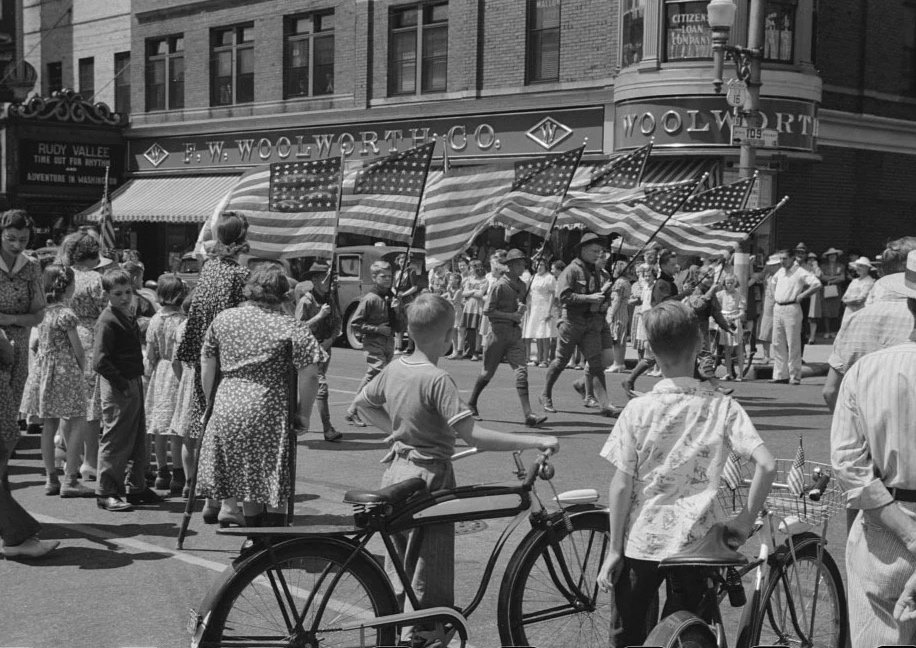
A Fourth of July parade moves through downtown Watertown, Wisconsin in 1941, with marchers carrying American flags past storefronts and gathered spectators. Children stand at the curb with bicycles, watching as the procession passes, reflecting the strong community participation typical of small-town celebrations. Taking place just months before the United States entered World War II, such events carried added meaning as public expressions of unity and patriotism.
Entrance to Champaign County Fair, Ohio
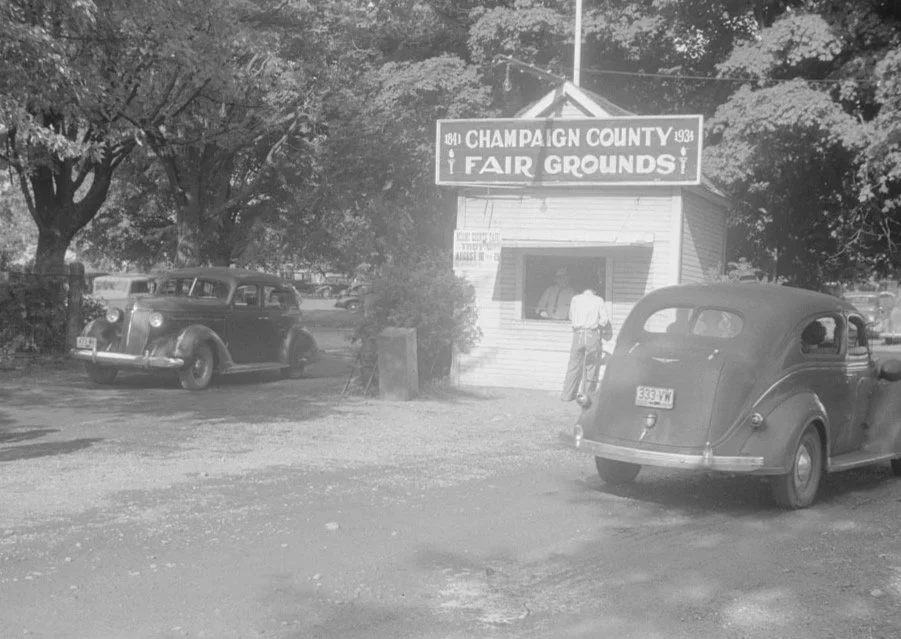
An entrance booth at the Champaign County Fair in Ohio in 1938 reflects the enduring role of county fairs as centers of community life in rural America. Automobiles line the grounds as visitors arrive, signaling the growing mobility of the era even during the final years of the Great Depression. County fairs brought together agriculture, entertainment, and local commerce, offering a place for families to gather, farmers to showcase their work, and small towns to maintain social ties.
Roadside Stand Near Birmingham, Alabama
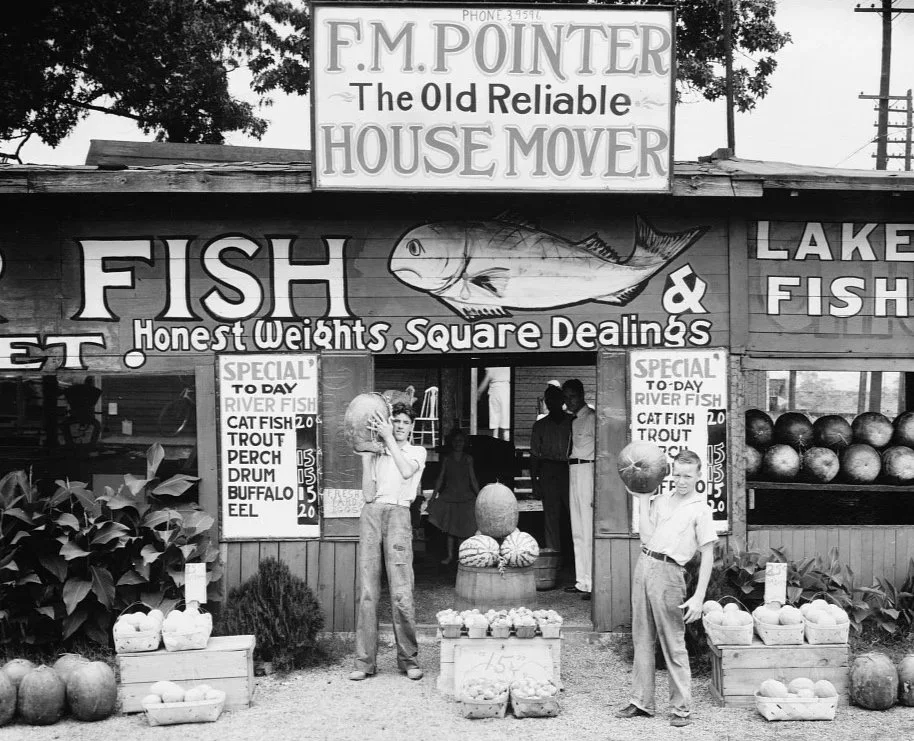
A roadside stand near Birmingham, Alabama in 1936 reflects the everyday commerce of the Great Depression era, where small businesses combined multiple trades to serve local communities. Signs advertise fresh fish alongside produce, while watermelons are stacked in crates and on the ground for passing customers. The prominent “honest weights, square dealings” slogan speaks to the importance of trust in an economy strained by hardship.
G.A.R. PARADE GREAT FLAG AT CAPITOL
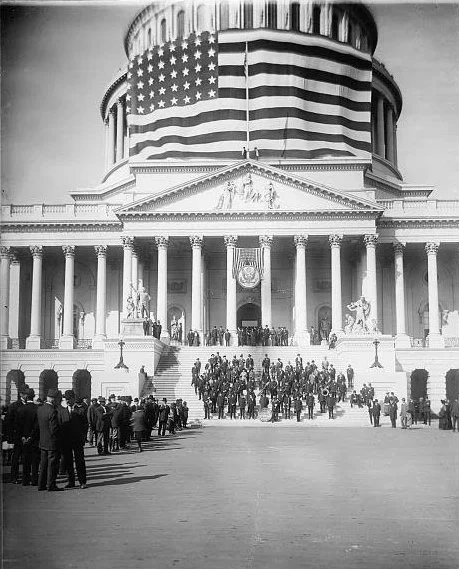
Veterans of the Grand Army of the Republic gather at the U.S. Capitol beneath a massive American flag during a commemorative parade in the early 20th century. Formed by Union veterans of the Civil War, the organization played a major role in shaping public memory of the conflict and advocating for soldiers’ benefits.
World Series, Crowd in Stands, 10/24
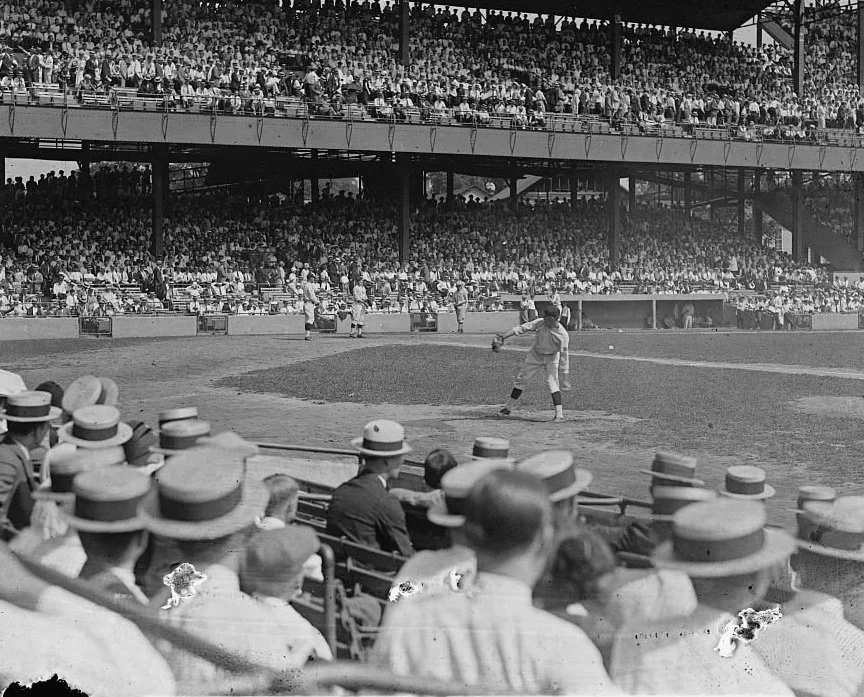
A packed grandstand watches a World Series game in October 1924, as a pitcher delivers from the mound before thousands of spectators in straw hats and suits. Baseball had become the nation’s defining pastime by the early 20th century, drawing large crowds and uniting cities around their teams.
President Roosevelt Reviews ARMY Day Parade. WASHINGTON, D.C. APRIL 6
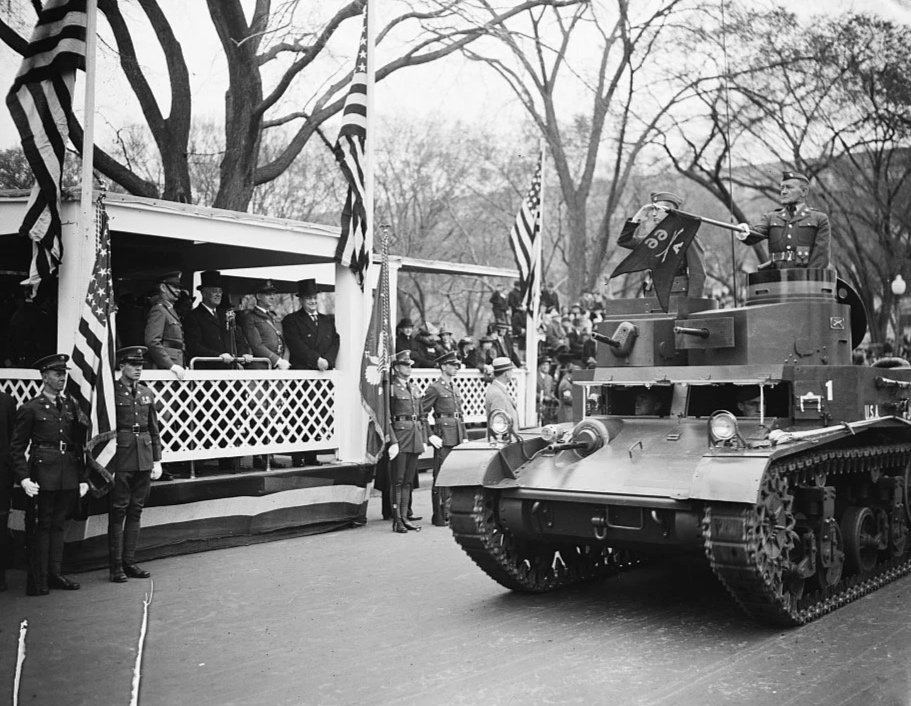
Franklin D. Roosevelt reviews an Army Day parade in Washington, D.C., on April 6, 1938, as armored vehicles pass the presidential stand and soldiers present arms. The annual observance marked the anniversary of America’s entry into World War I and served to highlight the nation’s growing military preparedness during a period of rising global tension.