Schwab & Wolf “Buffalo Hunt” Western Textile | New York | Circa 1907

Schwab & Wolf “Buffalo Hunt” Western Textile | New York | Circa 1907
Frame Size (H x L): 34” x 34”
Textile Size (H x L): 23” x 23”
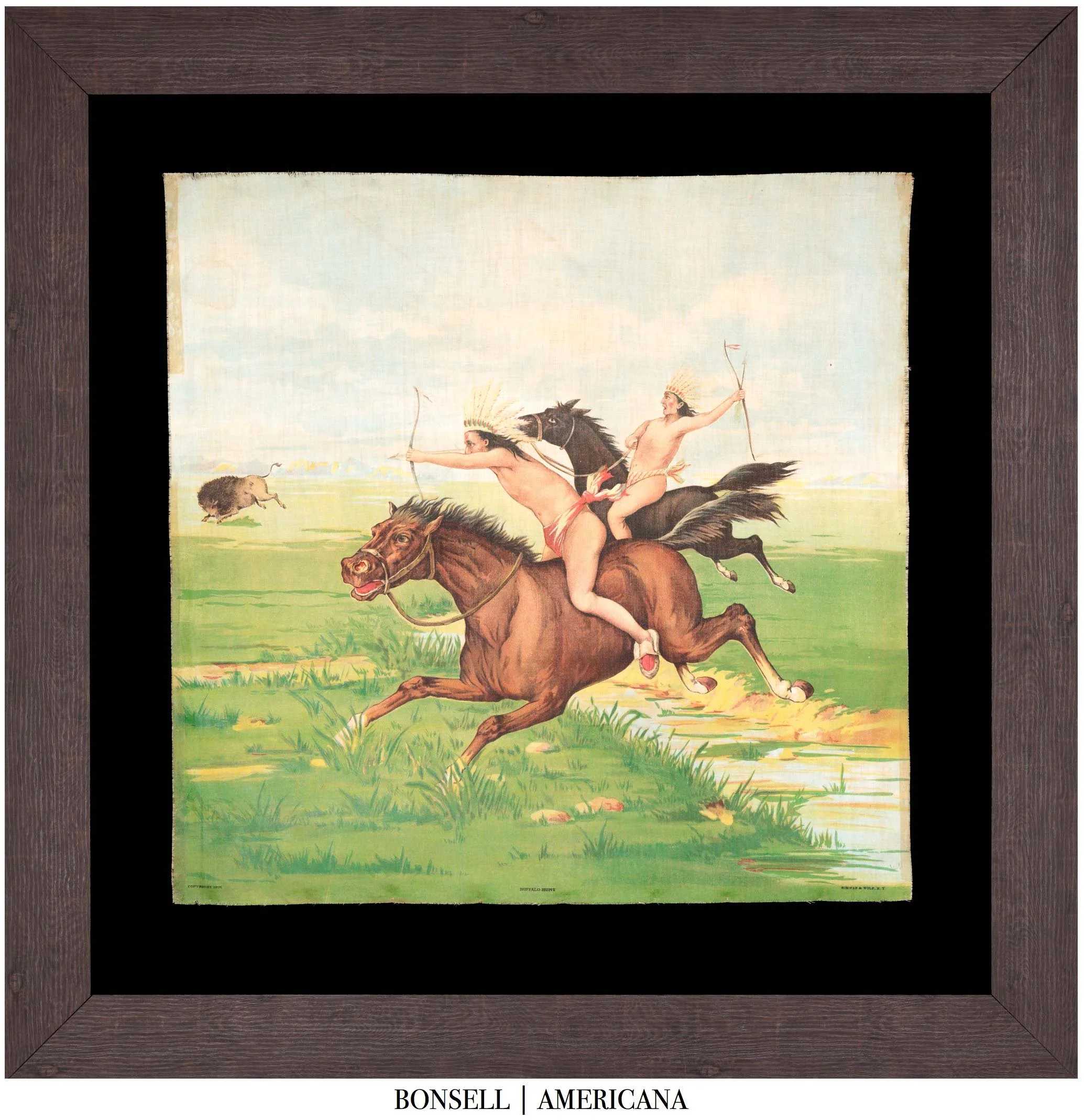
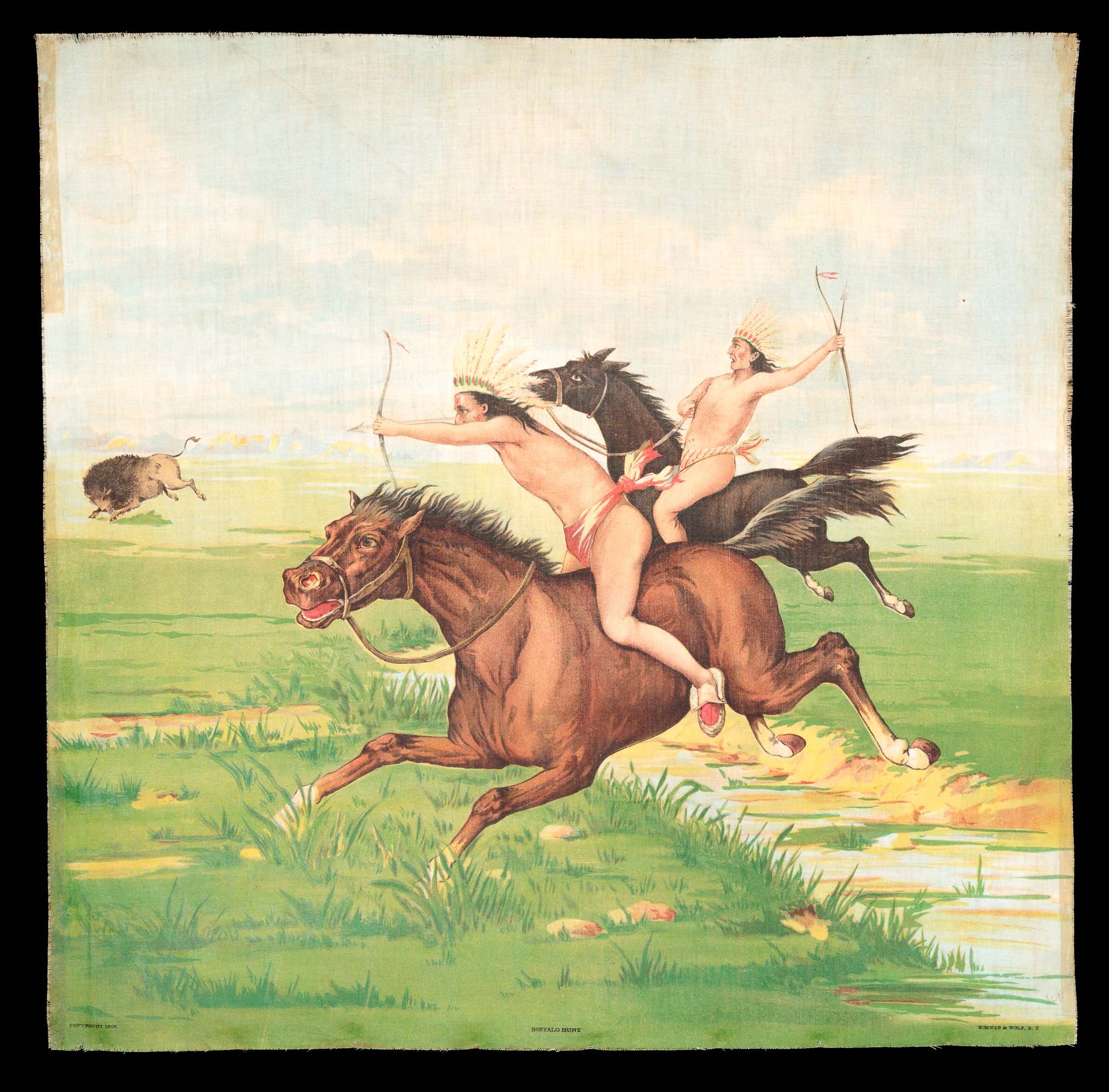
Offered is a lithographed linen textile made by Schwab & Wolf of New York in 1907. It features two Native American hunters on horseback pursuing buffalo across an open Western landscape. Printed along the lower margin is the title, “BUFFALO HUNT,” together with the manufacturer’s name and date.
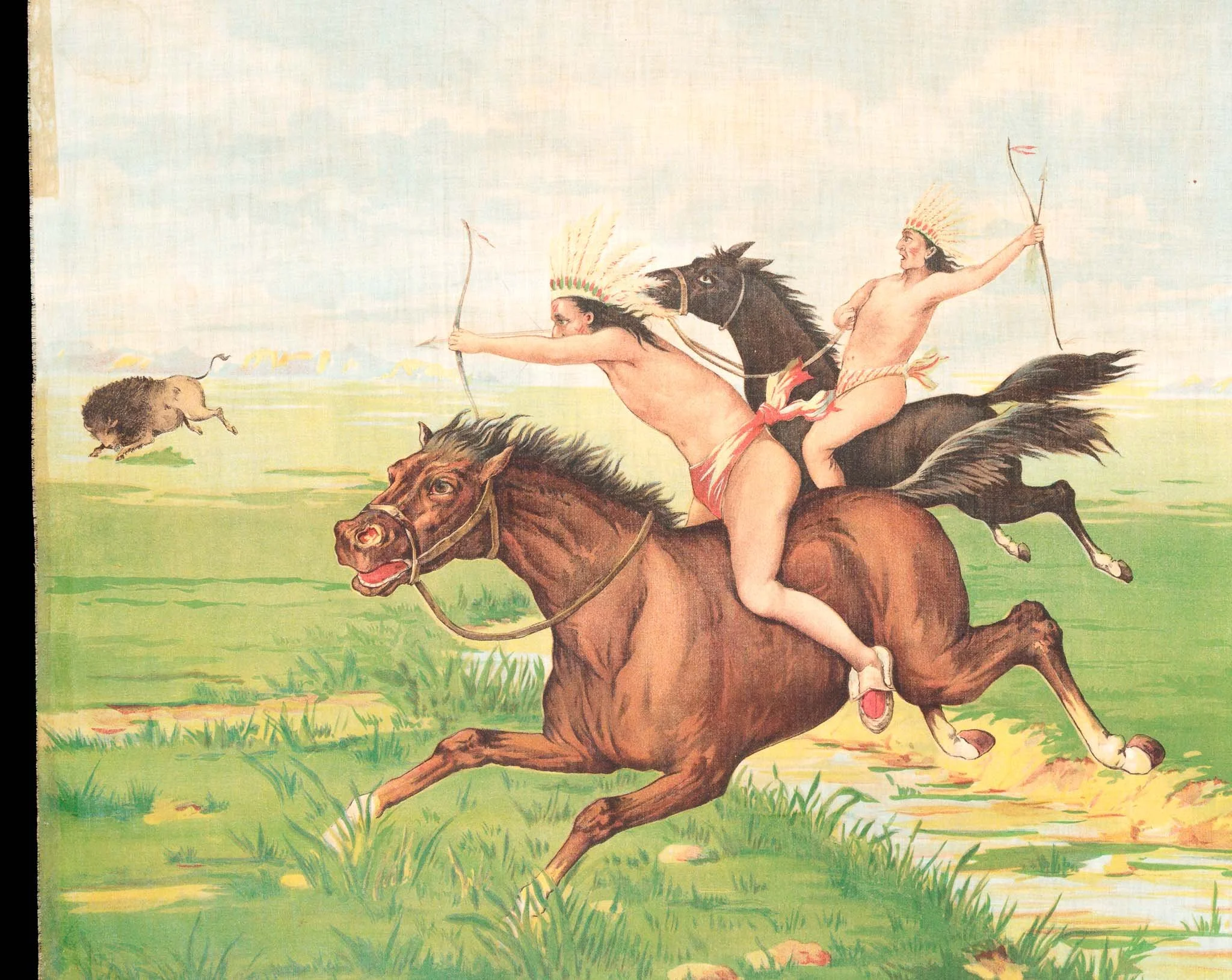
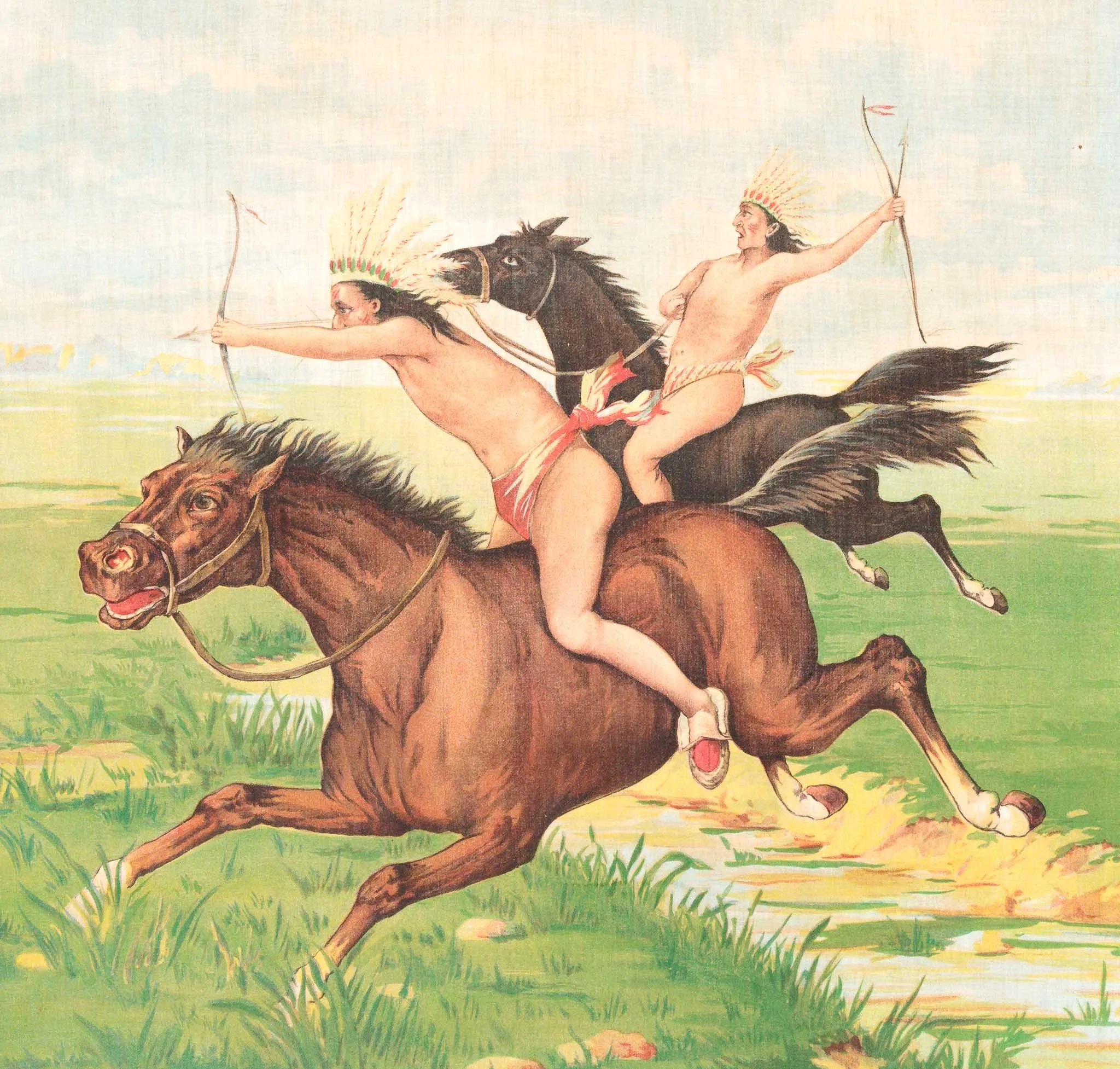
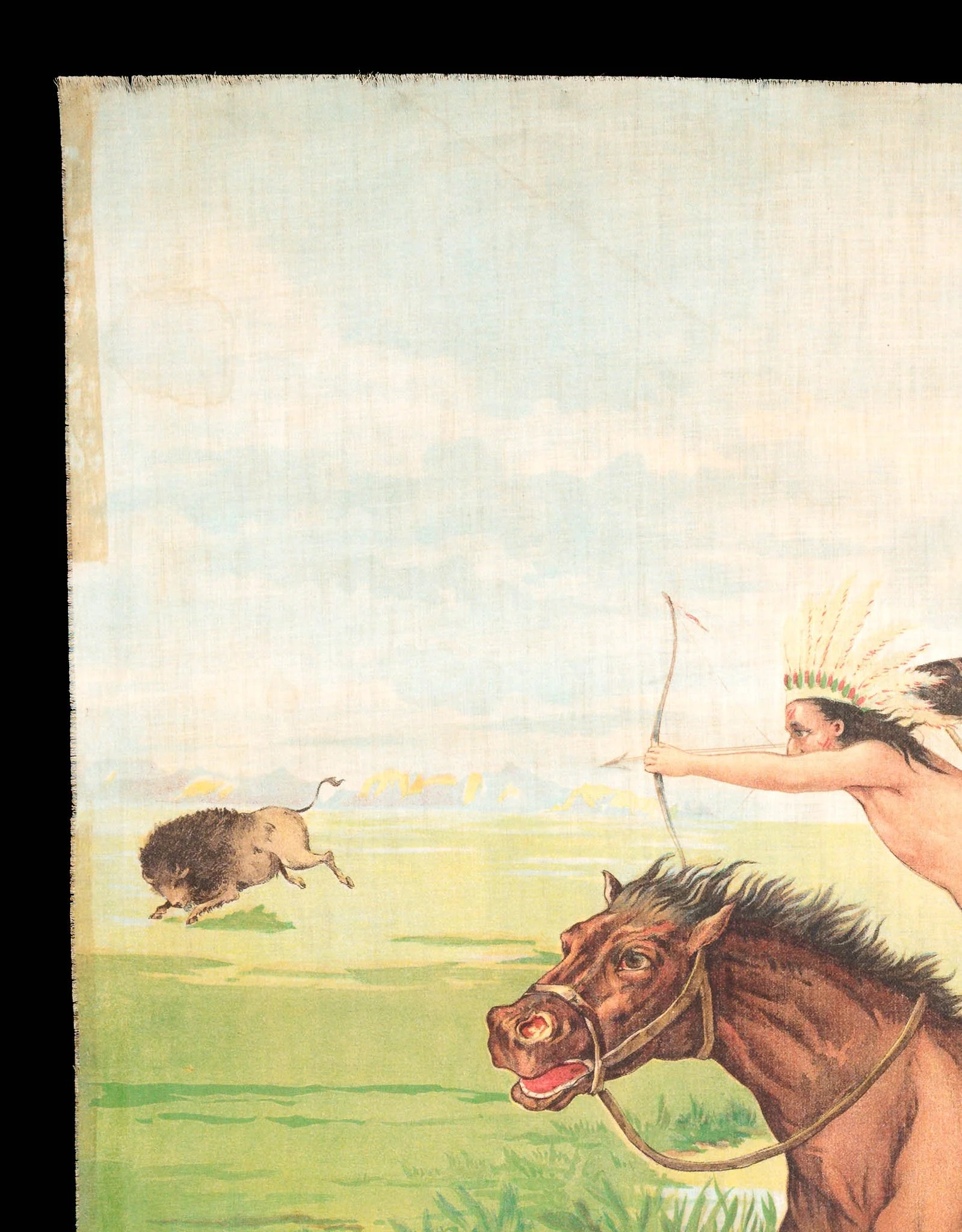
The image is organized around the two horses and their riders, both shown at full gallop. The foremost hunter rides a chestnut horse and draws a bow toward a buffalo visible at the left of the composition, while a second hunter follows on a dark horse carrying a spear or lance. The prairie landscape, distant mountains, and broad sky provide a restrained backdrop for the principal action.
Schwab & Wolf was a New York firm active by at least the turn of the 20th century and involved in both conventional textile manufacturing and printed novelty goods. It operated within the city’s established textile and dry-goods trade and developed a substantial line of copyrighted pictorial designs. Surviving examples and contemporary copyright records document subjects ranging from sporting and military scenes to patriotic, Native American, and other topical imagery. This broader body of work places Buffalo Hunt within an identifiable line of commercial pictorial textiles rather than as an isolated design.
Western imagery remained highly popular with American audiences when this textile was produced. During the late 19th and early 20th centuries, paintings, illustrated publications, Wild West exhibitions, advertising, and popular entertainment helped establish a familiar visual vocabulary centered on buffalo, Native American life, cowboys, and the Western frontier. By 1907, the great buffalo herds of the 19th-century Plains had largely disappeared, and scenes such as this increasingly represented an earlier period of the American West.
Buffalo hunting had been central to the economy and material culture of numerous Plains tribes. Buffalo supplied meat as well as hides, sinew, bone, and other materials used in daily life. The widespread adoption of the horse transformed hunting practices and made the mounted buffalo hunt an important feature of life on the Plains during portions of the 18th and 19th centuries. The Schwab & Wolf image draws upon this history, although its composition is best understood as a commercial interpretation intended for an early 20th-century audience rather than as an ethnographic depiction.
The lithographic process allowed Schwab & Wolf to reproduce detailed, multicolored imagery directly on fabric, giving these textiles much of the visual character of contemporary chromolithographic prints while retaining the texture and flexibility of linen. Other surviving examples demonstrate that the firm applied the same approach to a wide range of subjects, including Western, patriotic, military, and sporting themes.
Dating precisely to 1907, Buffalo Hunt is an unusual surviving example of Schwab & Wolf’s pictorial textile production and of the continuing popularity of Western subject matter in American decorative arts during the opening decade of the 20th century. Its documented maker, date, and subject provide a particularly strong context for understanding this specialized category of American printed textile.
Conservation Process: This textile was hand sewn to cotton fabric, and both were hand sewn to a mounting board. To prevent the black dye in the cotton fabric from seeping into the textile, it was first washed in a standard wash and then in a dye setting wash. The textile is positioned behind Optium Museum Acrylic.
Frame: The textile is housed in a modern, wide, dark-stained wood frame with a simple profile and visible grain, giving it a restrained, period-appropriate appearance.
Condition Report: The textile is in good overall condition, with strong color and a largely intact printed surface. There is minor toning and scattered discoloration, most noticeable in the lighter areas of the sky and along the edges, together with light fraying at the perimeter and a few small areas of wear.
Collectability Level: The Great – Perfect for Rising Collectors
Date of Origin: 1907