Extremely Rare 13 Star Antique Flag with a Six-Pointed Star Configuration | An Exceptional and Early Parade Flag | Circa 1848-1865
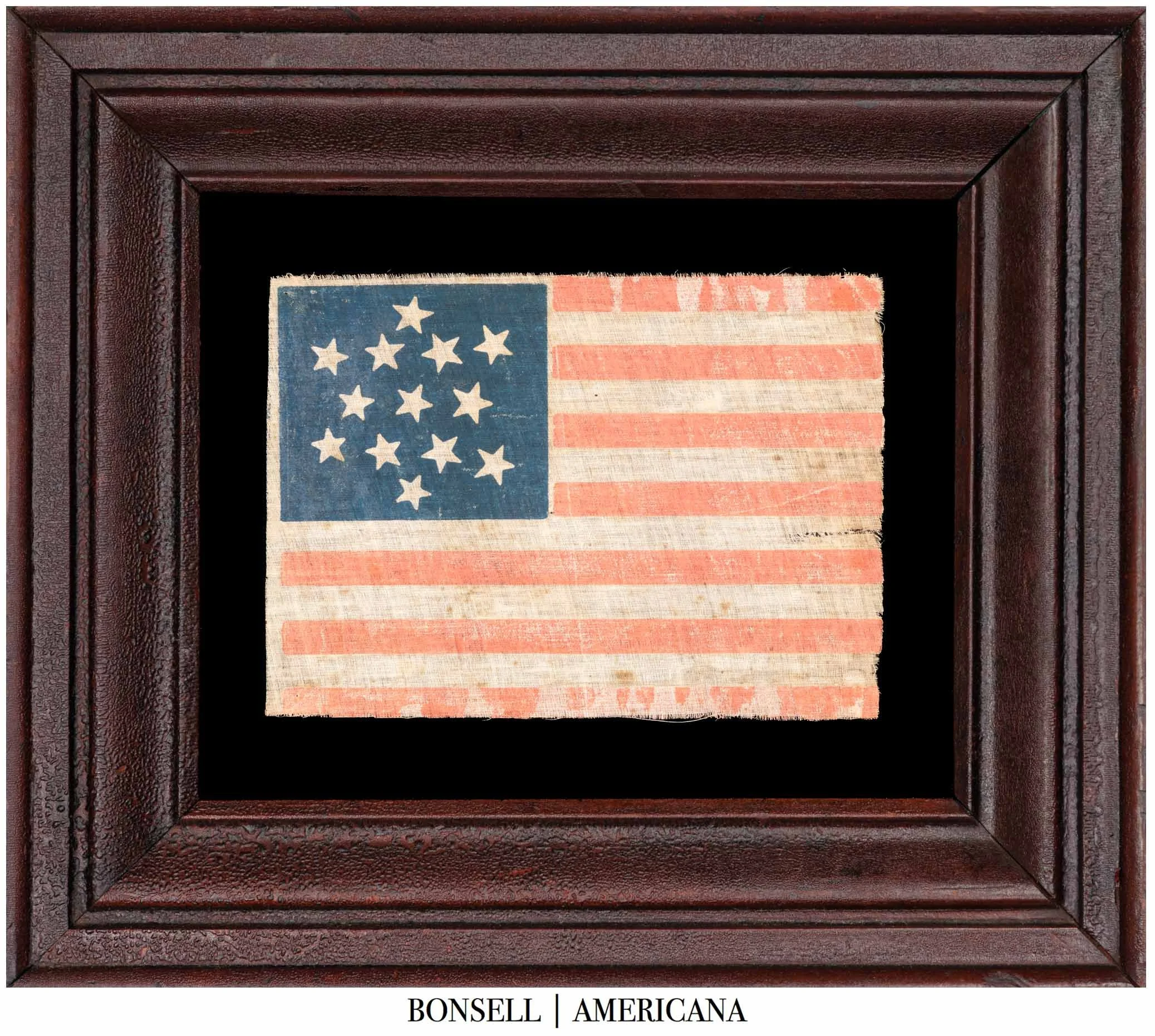
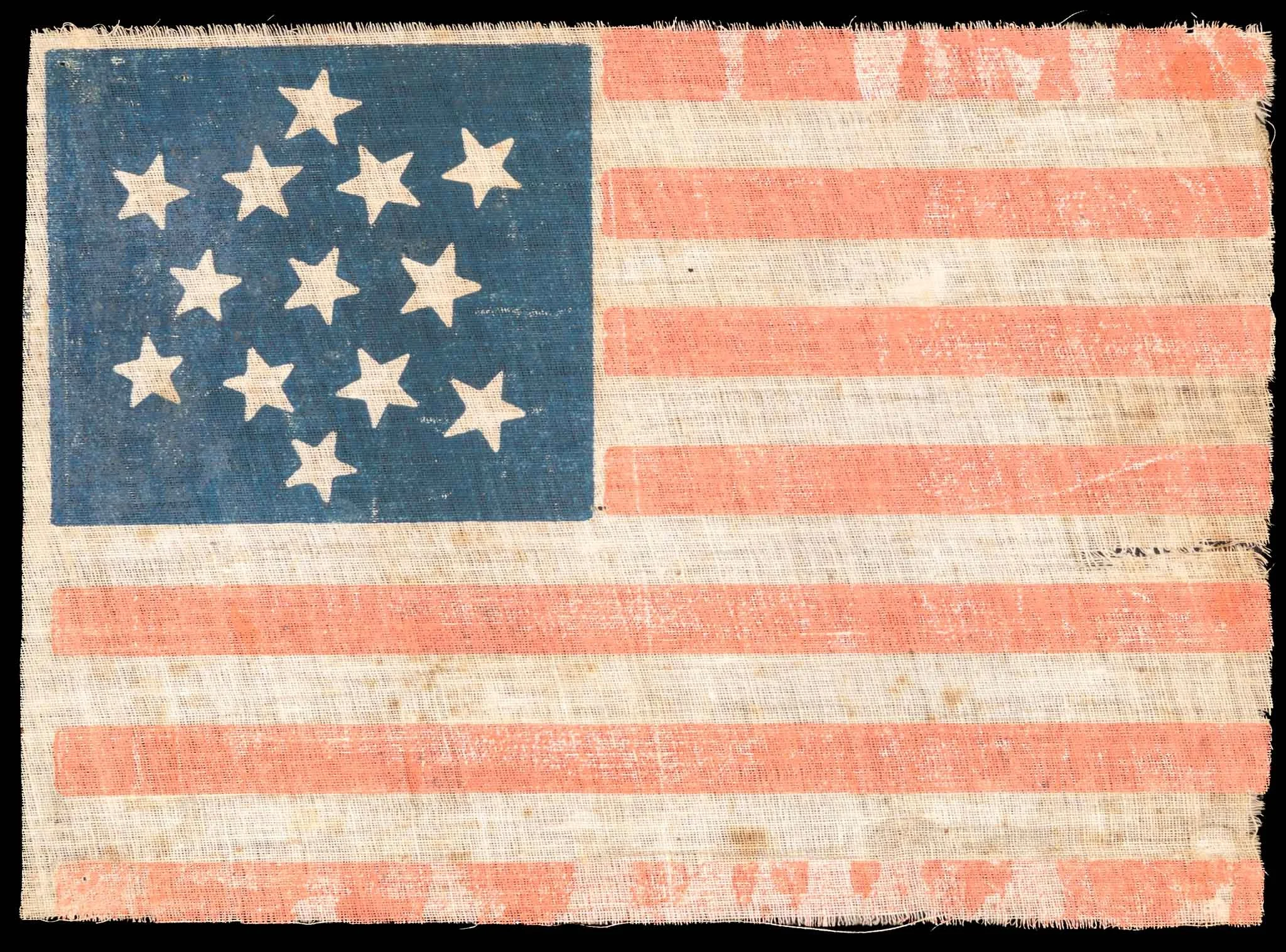
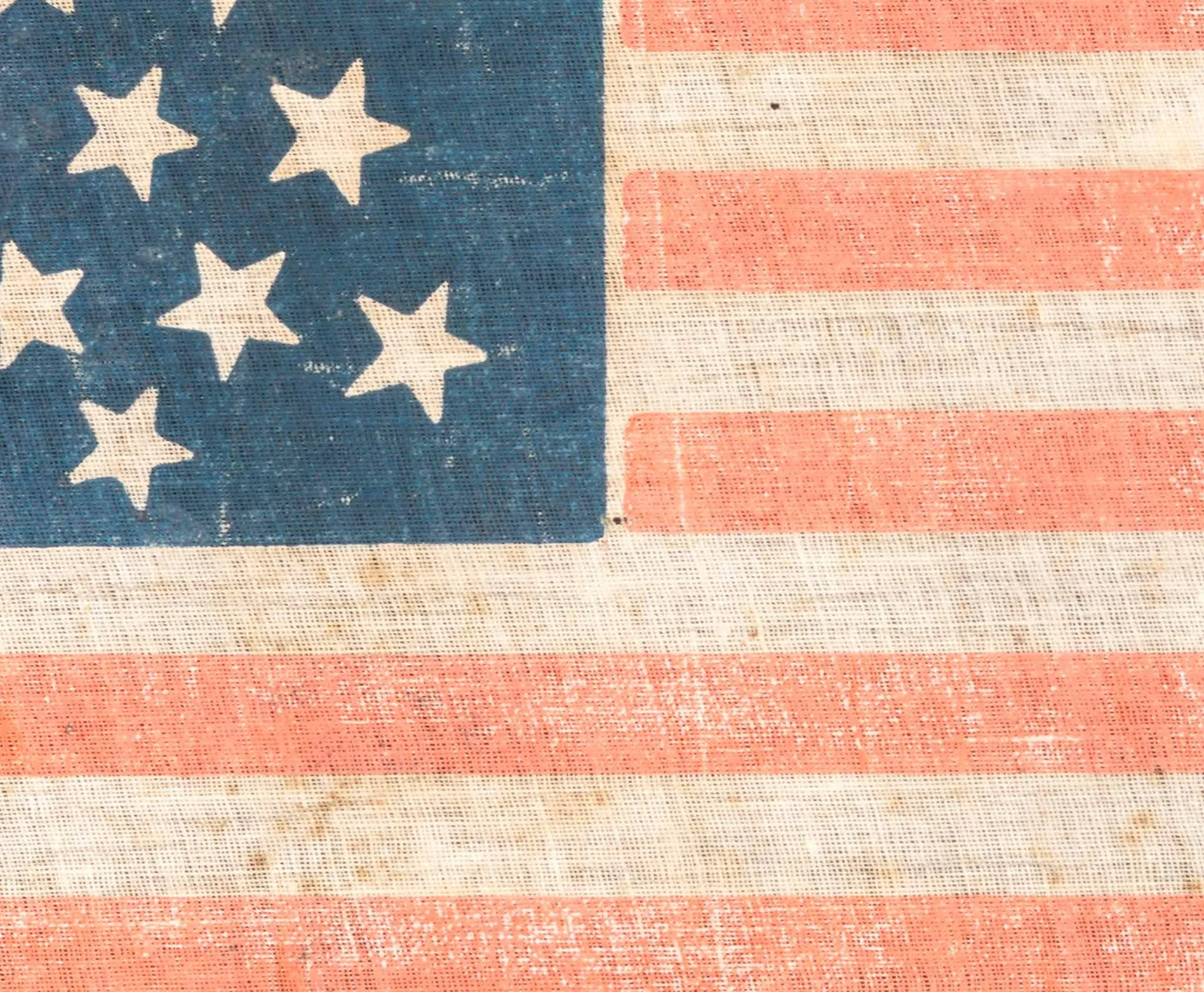
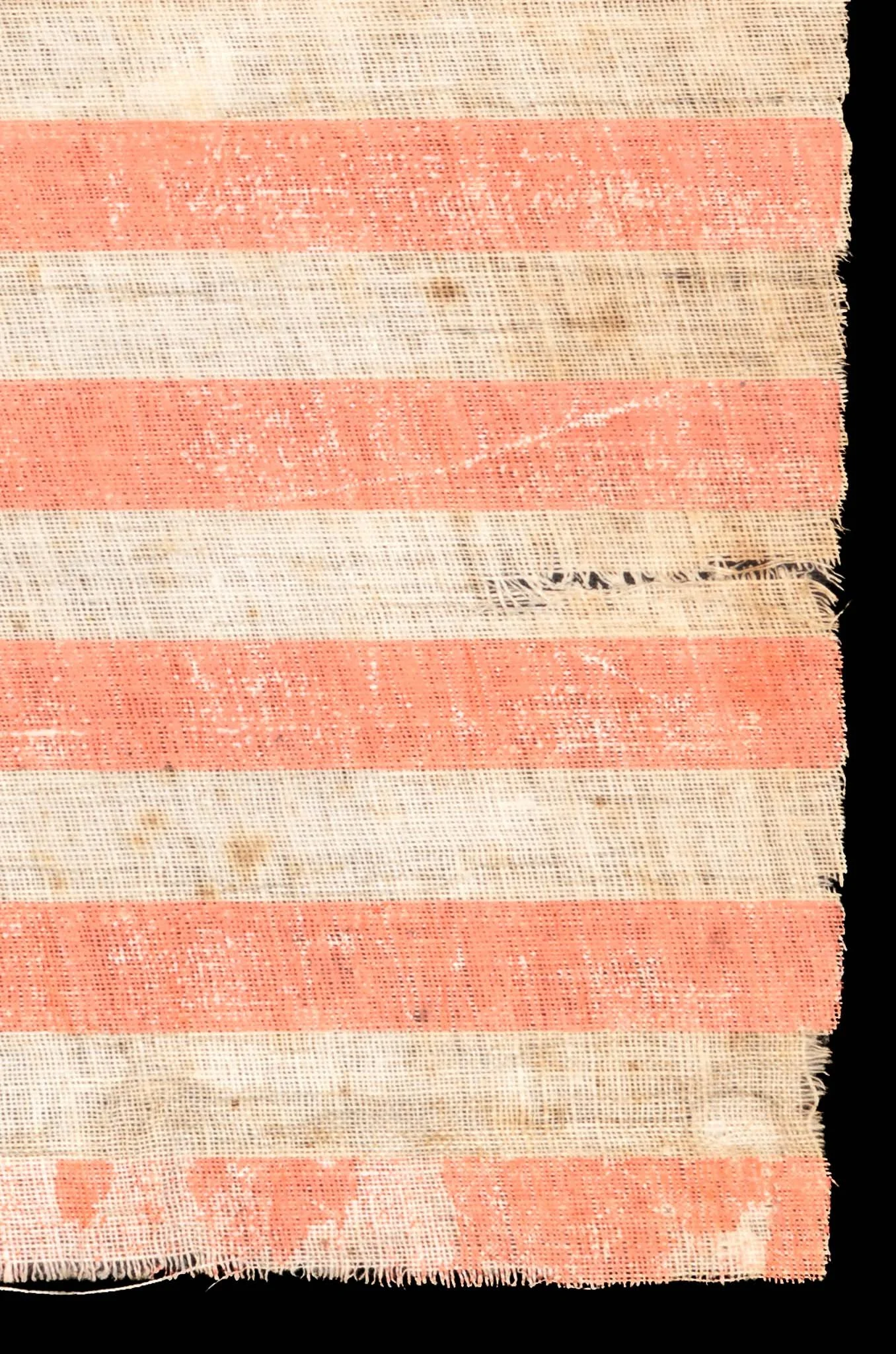
Extremely Rare 13 Star Antique Flag with a Six-Pointed Star Configuration | An Exceptional and Early Parade Flag | Circa 1848-1865
Price: Call 618-553-2291, or email info@bonsellamericana.com
Frame Size (H x L): 12” x 14”
Flag Size (H x L): 5.5” x 8”
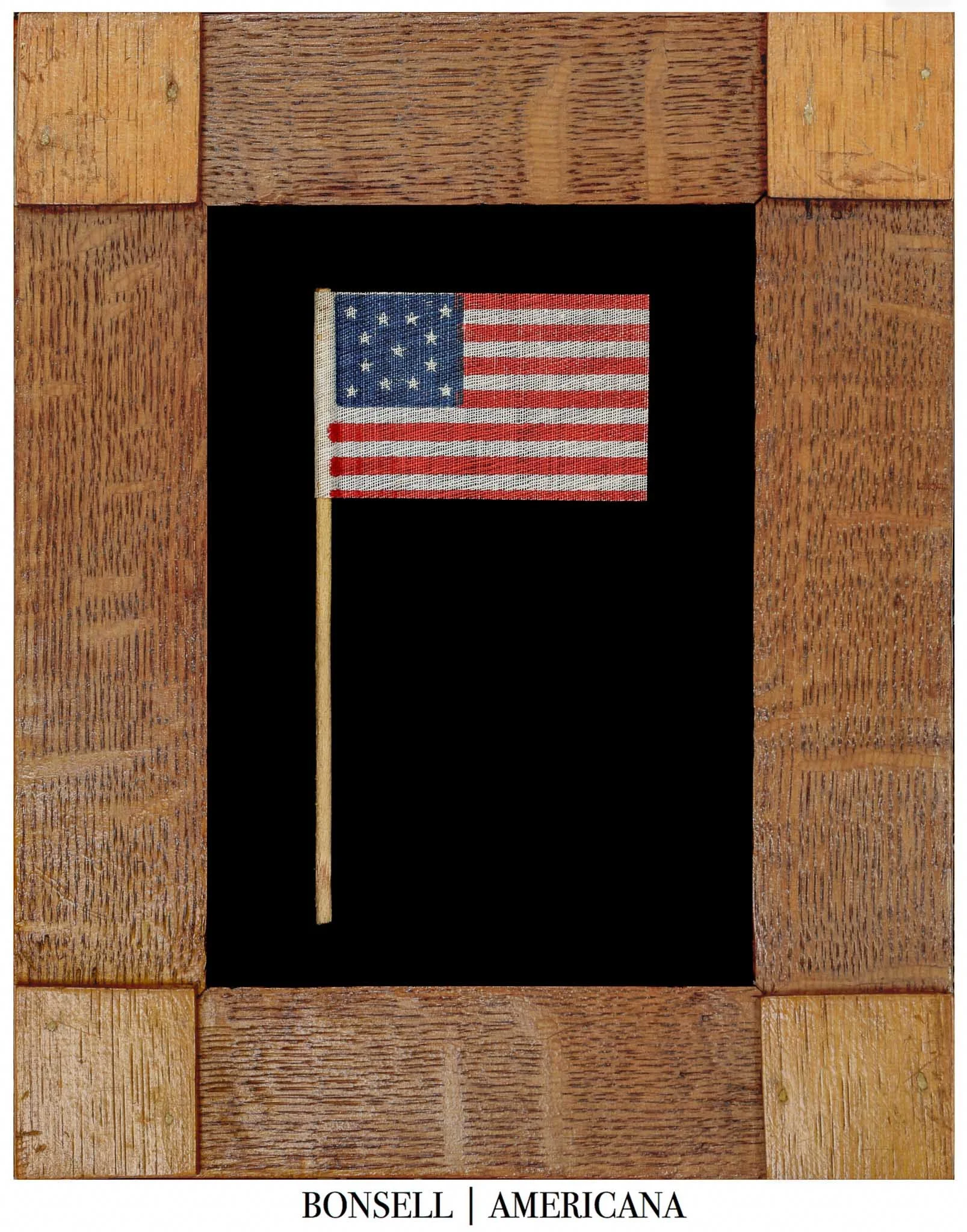
Offered is a 13-star antique American parade flag, printed on glazed cotton, and exhibiting one of the rarest star configurations found on any 19th-century printed American flag. The 13 stars are arranged to form a large, six-pointed version of the “Great Star” or “Great Luminary” pattern, in which a larger star is created from a constellation of smaller stars.
Great Star flags are highly prized among collectors, but this six-pointed interpretation is far more unusual than the five-pointed versions more commonly encountered in American flag design. The result is both graphic and mysterious: a bold, star-shaped device that immediately distinguishes this flag from nearly all other 13-star parade flags.
Printed parade flags exhibiting this pattern are extremely rare and are known in what we refer to as small, medium, and large varieties. The example offered here is the medium version, measuring approximately 5.5" x 8". Within this scarce family, the medium variety is limited to just four or five known examples, one of which includes a “Lincoln & Hamlin” overprint from Abraham Lincoln’s 1860 presidential campaign.
The flag dates to approximately 1848–1865. The beginning of this date range is based on the early use of printed parade flags in presidential campaigning by 1848, while the latter date corresponds with the conclusion of the Civil War. The rarity of this six-pointed star configuration, together with the flag’s coarse glazed cotton, early printing method, dyes, and the existence of the related Lincoln & Hamlin campaign example, strongly supports a date from the Civil War era or earlier.
The reason for arranging the stars in this six-pointed form is unknown, though two principal explanations are plausible.
As a first theory, the six-pointed star may reference the constellation of stars above the eagle on the Great Seal of the United States. The Great Seal, adopted in 1782, was created to authenticate official documents of the federal government and became one of the nation’s most important symbols. Francis Hopkinson played a key role in designing the Great Seal and has also often been credited as a designer of the United States flag, in contrast to the more familiar but historically debated Betsy Ross tradition. Although original sketches for the stars on the Great Seal were more loosely arranged, the engraver of the original die selected a six-pointed star form, likely influenced by European heraldic convention.
As a second, alternative theory, the configuration may be visually related to the Star of David, also known as the Shield of David. Modern viewers naturally recognize the six-pointed form in that context. The symbol itself dates back centuries and was used historically in decorative, ancestral, and religious contexts, though its widespread adoption as a primary emblem of Jewish identity developed more fully over time. By the 19th century, its use among European Jewish communities had increased, making the association possible within the period of this flag’s manufacture.
That said, the Star of David interpretation should be treated as a possibility rather than a certainty. The six-pointed form may instead have been selected because it was a balanced, visually logical, and highly effective way to arrange 13 stars into one larger star-shaped device. Whatever the maker’s intention, the result is among the most distinctive star patterns known in early American printed flags.
The flag is printed on glazed cotton, a material commonly associated with early parade flags. These small printed flags were inexpensive, portable, and intended for temporary display at political rallies, patriotic events, civic gatherings, and public celebrations. Their survival is often precarious because they were not generally made as permanent objects. The coarse weave, irregular printing, and softened red and blue pigments give this example the surface and character collectors associate with early printed cotton flags.
Prior to the Civil War, private use of the American flag was comparatively limited. Most early parade flags made for the civilian market appear to have been used in political rallies, campaign events, and other public gatherings. The known Lincoln & Hamlin example in this same general style is therefore especially important. It suggests that flags of this pattern were likely produced for political display, even when surviving examples do not bear printed campaign text.
While we may never know whether this flag was intended to reference the Great Seal, the Star of David, another historical source, or simply the most elegant arrangement of 13 stars into a six-pointed device, its importance is clear. It belongs to one of the rarest families of 13-star printed parade flags known to survive. Small in scale but powerful in design, it is an exceptional example for collectors of early American flags, political textiles, and rare patriotic printed cottons.
The original use of the 13-star flag dates to June 14, 1777, when the Continental Congress adopted the first official flag resolution. The resolution stated: “Resolved, that the flag of the United States be made of thirteen stripes, alternate red and white, that the union be thirteen stars, white on a blue field, representing a new constellation.” Thirteen-star flags were official from 1777 until 1795, but they have remained in use throughout American history.
The 13-star count was later used for a wide variety of patriotic, military, political, and commemorative purposes. Small U.S. Navy boats used 13-star flags as ensigns from 1795 until 1916, in part because fewer stars were easier to distinguish at a distance on small flags. Commercial flag-makers mirrored this practice, and some private vessels also flew 13-star flags during the same general period.
Thirteen-star flags were also flown in connection with major patriotic events, including observances following George Washington’s death in 1799, celebrations of the nation’s 50th anniversary in 1824, and public commemorations surrounding General Lafayette’s return to the United States in 1824–1825. Lafayette’s tour inspired celebrations in New York, Boston, Philadelphia, and many other communities throughout the country.
The 13-star flag also carried special meaning during the Mexican War and the Civil War. Both conflicts inspired renewed patriotic display, and during the Civil War especially, the flag became a powerful public symbol of Union, liberty, and national preservation. In that context, the 13-star count deliberately recalled the original colonies and the founding struggle for American independence.
Thirteen-star flags were again widely displayed during the Centennial celebrations of 1876, most notably at the Centennial International Exhibition in Philadelphia. By that time, the 13-star flag had become both a historic emblem and a flexible patriotic device, capable of referring to the Revolution, the Founding generation, national unity, and American endurance.
This example is especially compelling because it combines that historic 13-star symbolism with one of the rarest and most visually arresting star patterns known in early printed American flags. Its small scale, coarse glazed cotton, early printing, and six-pointed Great Star configuration make it a remarkable survivor from the formative period of American political and patriotic display.
Conservation Process: The flag was hand sewn to cotton fabric, and both were hand sewn to a mounting board. To prevent the black dye in the cotton fabric from seeping into the flag, it was first washed in a standard wash and then in a dye setting wash. The flag is positioned behind Optium Museum Acrylic.
Frame: A handsome 19th-century American frame with a rich, dark, hand-finished surface exhibiting pronounced craquelure throughout, indicative of age and original finish. The textured, slightly irregular surface and warm tonality provide a strong visual counterpoint to the textile, enhancing its period presence without distraction.
Condition Report: Condition is very good for an early printed parade flag of this type, with expected oxidation, minor staining, surface soiling, and scattered pigment loss throughout. There is fraying along the perimeter, especially at the fly end and along the top and bottom edges, with small areas of thread separation and fabric loss. A small horizontal tear is present near the fly end. The printed colors remain attractive, with a pleasingly faded red and strong blue canton, and the overall presentation is excellent.
Collectability Level: The Best – Perfect for Advanced Collectors
Date of Origin: 1848-1865
Number of Stars: 13
Associated War: The Civil War (1861-1865)
Associated State: Original 13 Colonies