
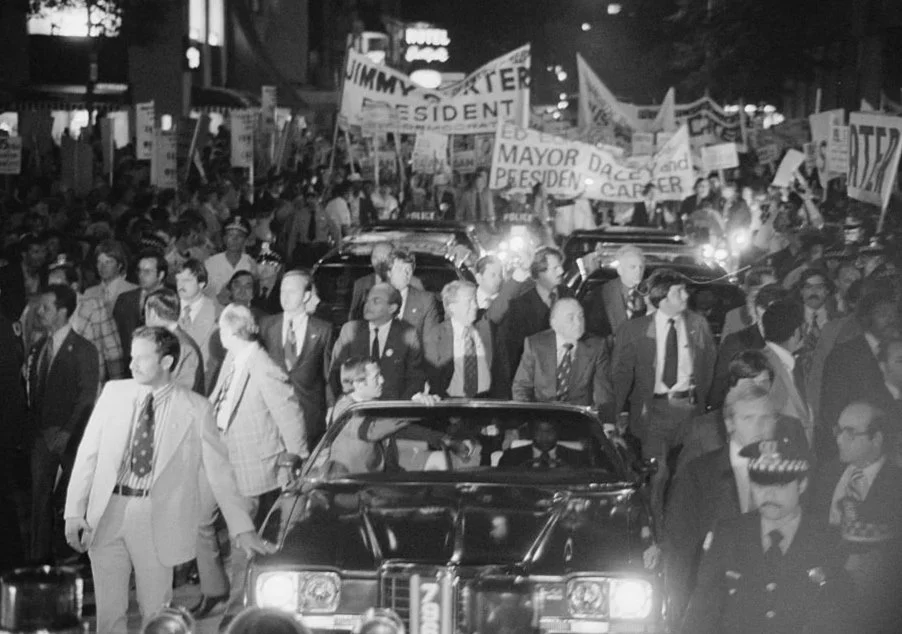
On September 9, 1976, Jimmy Carter rode through downtown Chicago in a torchlight parade during a campaign stop, with Mayor Richard J. Daley at his side. Crowds packed the streets, holding signs and banners as the motorcade made its way through the city at night. Carter, then the former governor of Georgia, was pushing hard in major cities as he worked to win the presidency.
Flag Factory
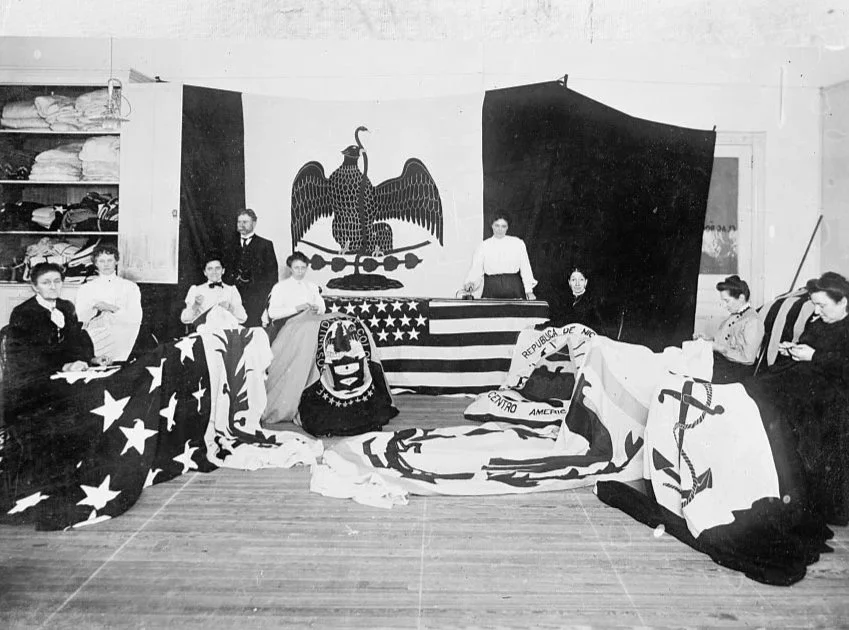
1913 workers in a flag factory cutting, stitching, and assembling large banners by hand. Finished and half-completed flags are spread across the floor and draped over tables, including American designs and others made for foreign governments. Shops like this supplied the flags seen at parades, public buildings, and civic events across the country. It’s a straightforward look at the craft and labor behind the symbols that filled American streets in the early twentieth century.
Abraham Lincoln, "That a government of the people shall not perish from the earth"
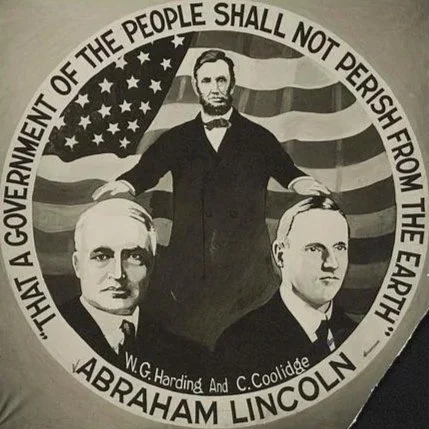
During the 1920 presidential race, this campaign image shows Abraham Lincoln standing before the American flag, his hands raised above Warren G. Harding and Calvin Coolidge. Around them is a line from the Gettysburg Address: “that a government of the people shall not perish from the earth.” The message is clear. By placing their ticket alongside Lincoln’s likeness and words, Republicans tied Harding and Coolidge to the legacy of the Union and the idea of steady leadership at a time when the country was adjusting to peace after World War I.
ARMY, U.S. Return of Washington, D.C. Soldiers
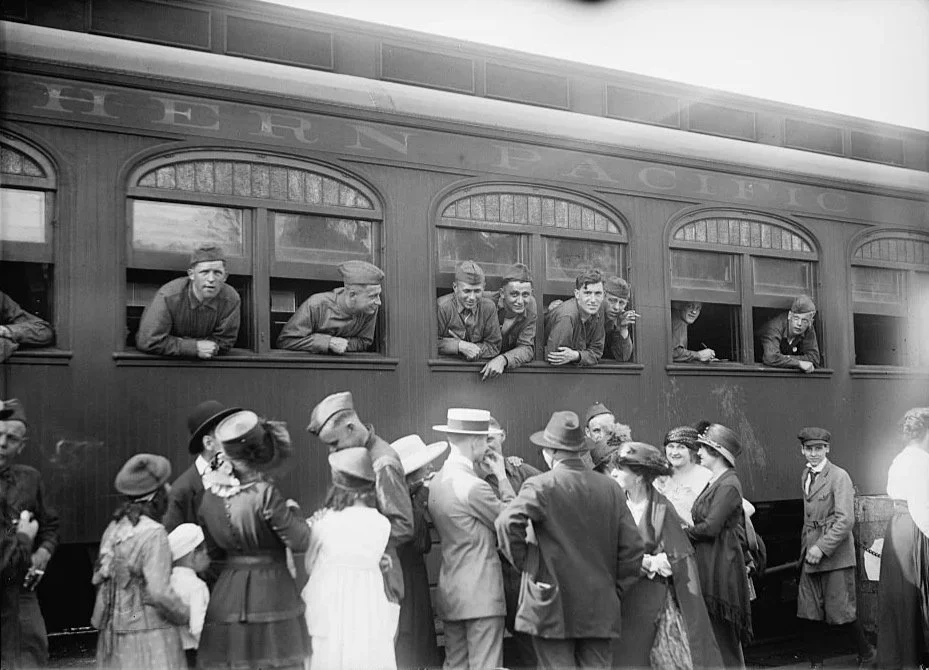
Soldiers arriving home from World War I lean out of a railcar window, scanning the crowd below. Friends and family wait alongside the train, dressed for the occasion, ready to welcome them back. Across the country, scenes like this unfolded as units returned from Europe after the Armistice. Train stations became gathering points where communities met the men who had served overseas and watched them step back into civilian life.
Detroit, Michigan. Ford Workers Carrying American Flag and Union Banners in the Labor Day Parade
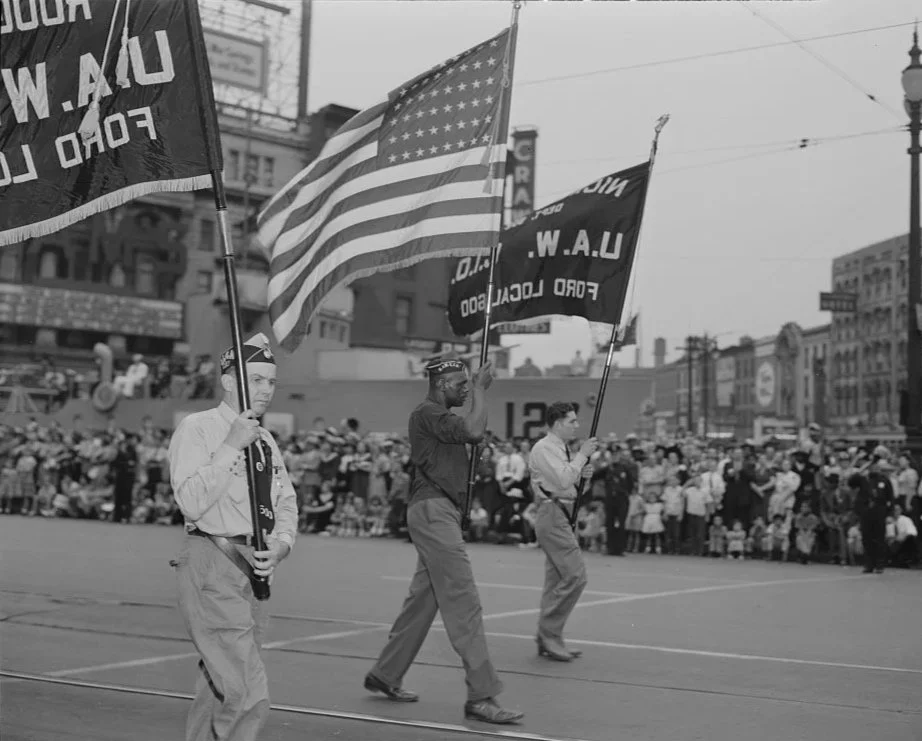
September 1942, Ford workers took to the streets of Detroit for the Labor Day parade, carrying the American flag along with United Auto Workers banners. The city was deep into wartime production, with auto plants turning out tanks, aircraft engines, and other military equipment. Organized labor had become a powerful presence in the industry, representing thousands of workers who kept the assembly lines moving.
General Pershing Making a Memorial Day Address, 1919
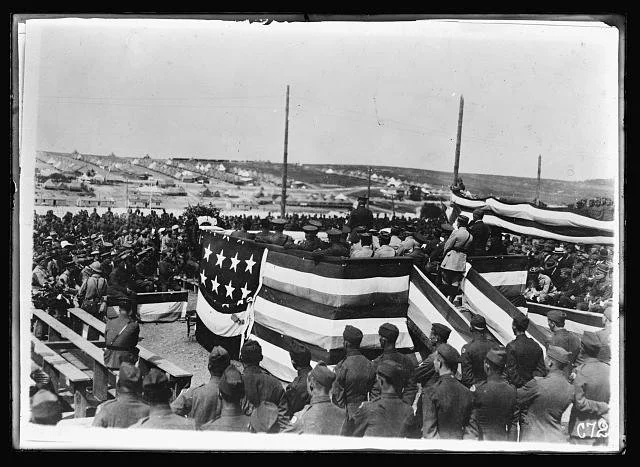
June 1919, General John J. Pershing spoke at a Memorial Day ceremony in Romagne, France, before American troops of the A.E.F. and French soldiers. The reviewing stand is covered in American flags, and rows of servicemen stand at attention across the hillside. The gathering came just months after the Armistice, near ground where many had fallen in the Meuse-Argonne offensive. As the war ended and units waited to head home, ceremonies like this honored the dead and reminded those present of the scale and sacrifice of America’s involvement in the First World War.
Civil War Veteran and Amputee Henry A. Seaverns
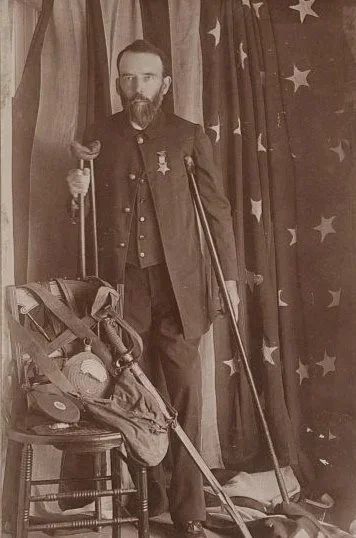
Portrait showing Civil War veteran Henry A. Seaverns of the 11th and 39th Massachusetts Infantry Regiments. He stands in uniform in front of an American flag, steady on crutches, the result of wounds suffered during the war. His sword, canteen, and other equipment are set beside him, simple reminders of his time in the ranks. Like many Union veterans, Seaverns remained involved in postwar organizations that preserved the memory of the conflict and the cause for which they fought.
Parade. Fourth of July, Vale, Oregon
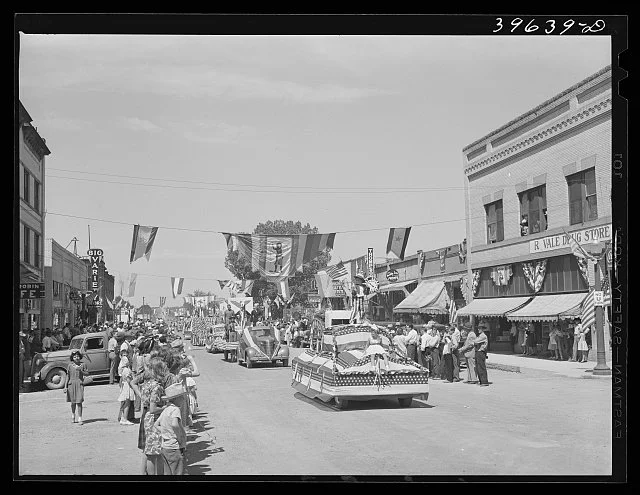
In July 1941, the town of Vale, Oregon marked the Fourth of July with a patriotic parade down its main street. Photographed by Russell Lee, it shows American flags strung overhead, and residents gathered along the sidewalks in front of local storefronts. Just months before the United States entered World War II, communities like this were already expressing national pride in public celebrations.
Surrender of Cornwall
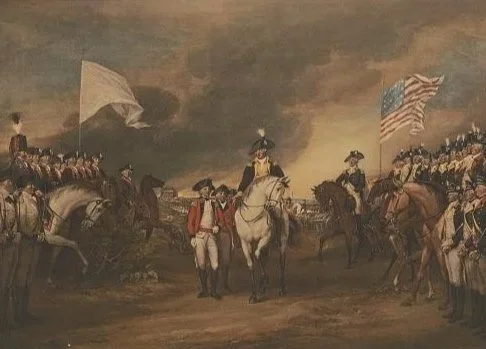
The surrender of British General Charles Cornwallis at Yorktown in 1781, the final major battle of the American Revolution. American and French troops stand in formation as the British formally yield, marking the collapse of Britain’s campaign in the colonies. General George Washington’s leadership is central to the scene, symbolizing the unity that brought the war to a close.
Banquet Scene with Flag Draping
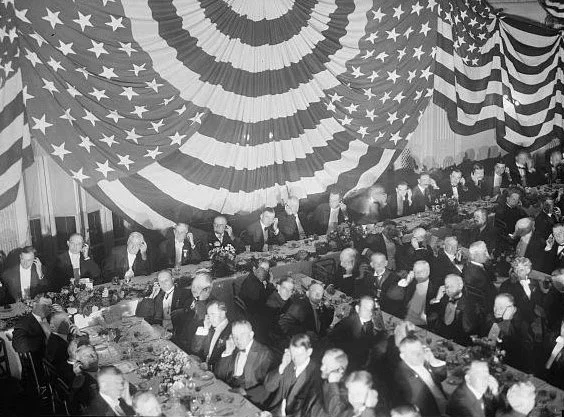
Photographed between 1913 and 1917, this banquet scene shows a large gathering of formally dressed men seated beneath oversized American flags and patriotic bunting. Many hold listening devices to one ear, reflecting the early use of telephone or radio technology at public events, likely to hear a remote speaker or live transmission. The setting suggests a civic or political dinner at a time when industry, government, and communication were rapidly modernizing.
Judge of Racing Events. Imperial County Fair, California
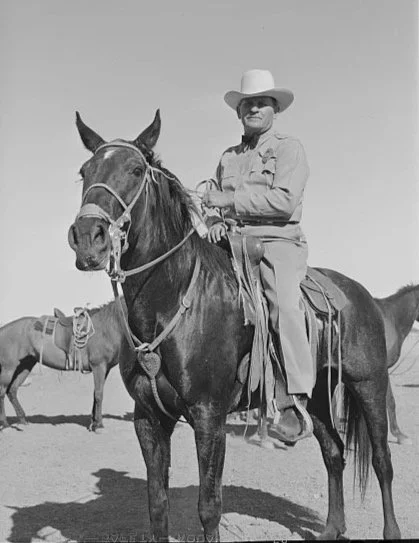
A racing judge on horseback at the Imperial County Fair in California. County fairs were central events in rural communities, bringing together agriculture, competition, and local pride. Horse racing and riding contests reflected the region’s ranching traditions and the working role horses still played in western life. Even with the country at war, gatherings like this continued, showing how local traditions carried on alongside the larger demands of the time.
Allegory of America as the Youngest Nation
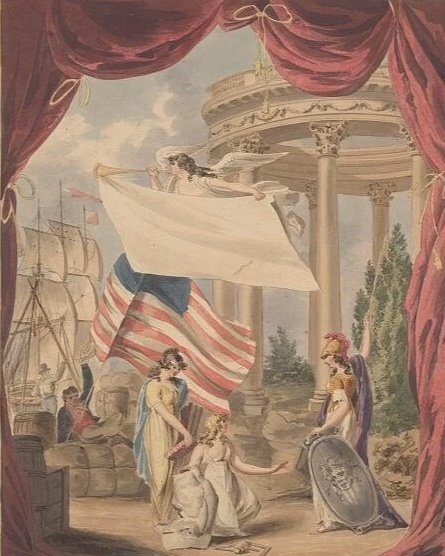
Drawing by John Rubens Smith presents the United States as a young nation finding its place in the world. America is shown as a child, guided forward while Britannia points toward a temple symbolizing liberty and constitutional government. Figures representing agriculture and commerce stand nearby, underscoring the economic base of the new republic.
Women in Industry, War Time Production
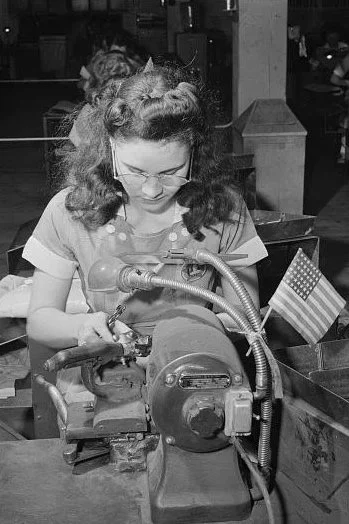
1942 image shows a factory worker focused on the job at hand, grinding drill points that would be used to build American ships, planes, and weapons during World War II. With so many men serving overseas, women stepped into industrial roles that kept the war effort moving at home. Factory work like this wasn’t just a paycheck—it was seen as service. The small American flag by her machine says what words didn’t need to: this was part of the fight, carried out on the production floor.
Washington, D.C. Vice President Henry A. Wallace in His Victory Garden
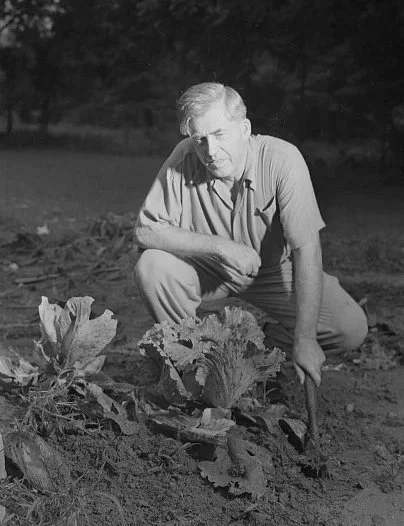
Vice President Henry A. Wallace tending his victory garden in Washington, D.C., during World War II. Victory gardens became common across the country as Americans were encouraged to grow their own vegetables to ease demand on the national food supply. Backyards, schoolyards, and city lots were turned into small farms in support of the war effort.
Red Cross, American. Sanitary Railroad Car
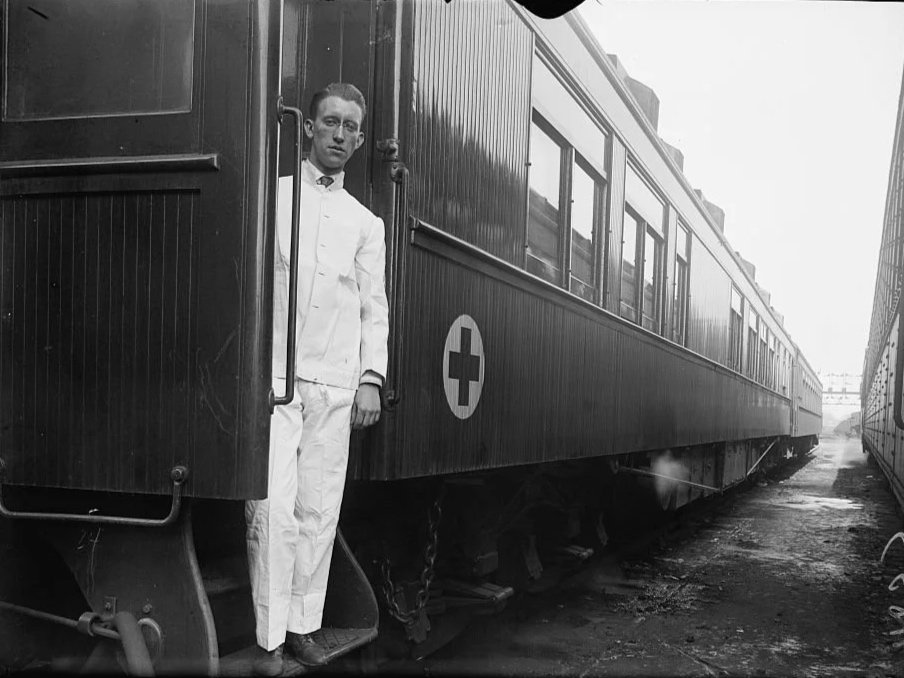
The American Red Cross sanitary railroad car, was part of the massive support network built during World War I. These specially outfitted railcars were used to move wounded soldiers and deliver medical care as troops flowed through rail hubs on their way to ports and training camps. Railroads were the backbone of wartime logistics, and the Red Cross played a hands-on role alongside the military.
Presidential Escort Crossing Gros Ventre River
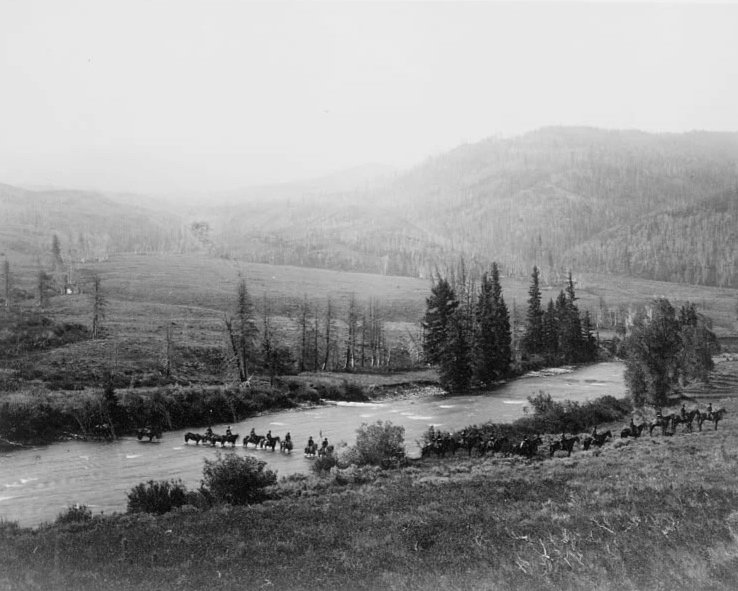
1883 photograph shows a presidential escort on horseback crossing the Gros Ventre River in western Wyoming, during a tour that passed through Yellowstone National Park. The scene reflects how travel in the American West was still rugged and slow, even for national leaders, with rivers crossed on horseback rather than by bridge.
President-elect John F. Kennedy with His Wife Jacqueline Kennedy, Giving His Acceptance Speech at the Hyannis Armory
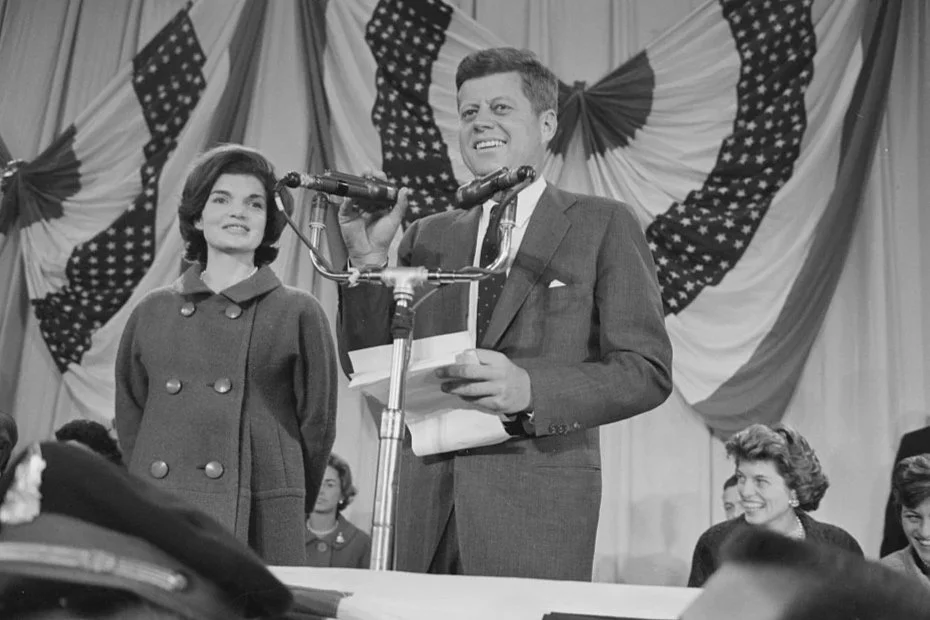
John F. Kennedy speaking to supporters on November 9, 1960, after winning the presidential election, with Jacqueline Kennedy at his side in Hyannis, Massachusetts. Kennedy’s victory marked a generational shift in American leadership at the height of the Cold War. At 43, he became the youngest elected president, representing both continuity in American institutions and the promise of a new political era.
The Constitution of the United States "the signing"
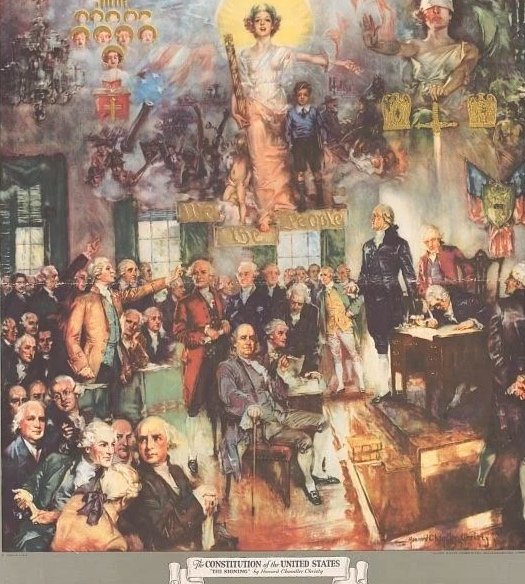
Late-19th-century interpretation of the signing of the U.S. Constitution in 1787, when delegates gathered in Philadelphia to shape the framework of the new nation. Figures associated with the Constitutional Convention, including George Washington, who presided over the meeting, and Benjamin Franklin, are shown alongside symbolic images representing liberty, law, and the American people.
Hurrah for the Old Flag!
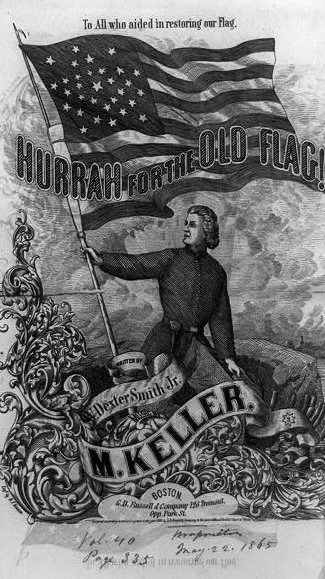
1865 sheet music cover for “Hurrah for the Old Flag!” by W. Dexter Smith Jr., with music by M. Keller, shows a Union soldier holding the American flag at the end of the Civil War. Published as the war concluded, songs like this were meant to celebrate the preservation of the Union and honor those who served. Sheet music was a common form of home entertainment in the 19th century, and patriotic titles were especially popular in the months following victory.
View of Vintage Car at the Hackberry General Store, Route 66, Hackberry, Arizona
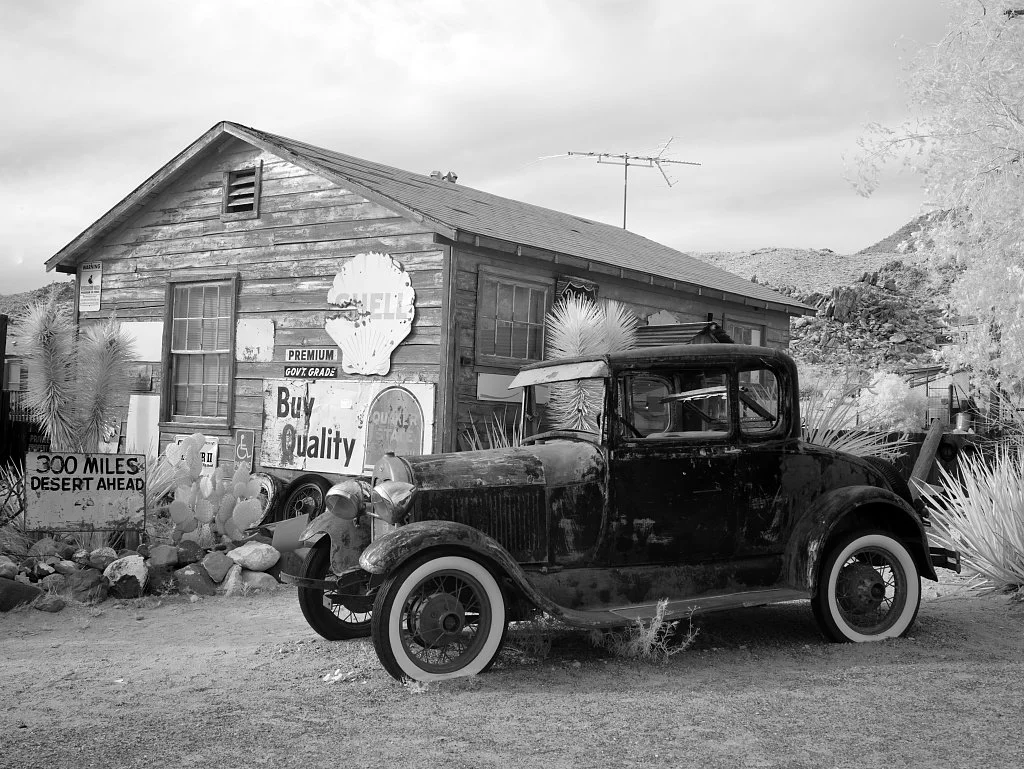
An old car parked outside the Hackberry General Store in Hackberry, Arizona, along Route 66, photographed in 2004 by Carol M. Highsmith. The worn vehicle, faded signs, and simple wooden building reflect the era when Route 66 was a lifeline for small desert towns, serving travelers heading west or back east. Places like Hackberry depended on highway traffic for survival, offering fuel, food, and a brief rest in an otherwise remote landscape. As newer interstates bypassed these routes, many towns faded, leaving behind scenes like this.