
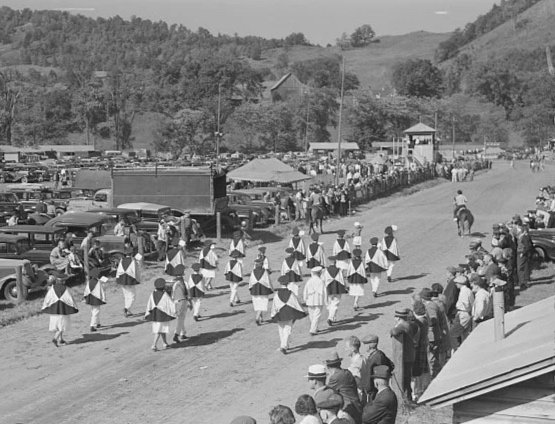
A parade passes through the fairgrounds during the annual fair in Tunbridge, Vermont in September 1941. Marchers move down the dirt road as spectators line the route and automobiles crowd the nearby fields. Agricultural fairs like the Tunbridge World’s Fair were important gatherings for rural communities, bringing together farm families for exhibitions, entertainment, and local tradition just months before the United States entered World War II.
Window Shoppers Watching Toy Display in Downtown Providence, Rhode Island
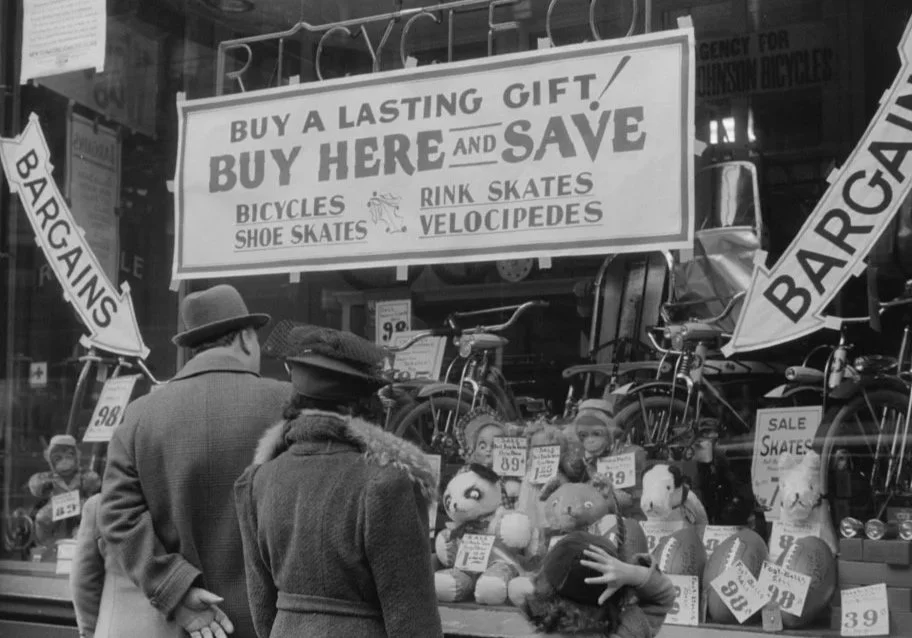
Window shoppers pause outside a toy store in downtown Providence, Rhode Island in December 1940, studying a display filled with bicycles, roller skates, dolls, and other Christmas gifts. Large signs advertising bargains hang above the window, a familiar sight in American storefronts of the era. Scenes like this were common in cities across the country, where holiday displays drew families to the sidewalks and offered a glimpse of the season’s most sought-after toys. Photographed by Jack Delano during a period when the nation was emerging from the Great Depression and only a year away from entering the Second World War.
Inauguration of Pres. McKinley
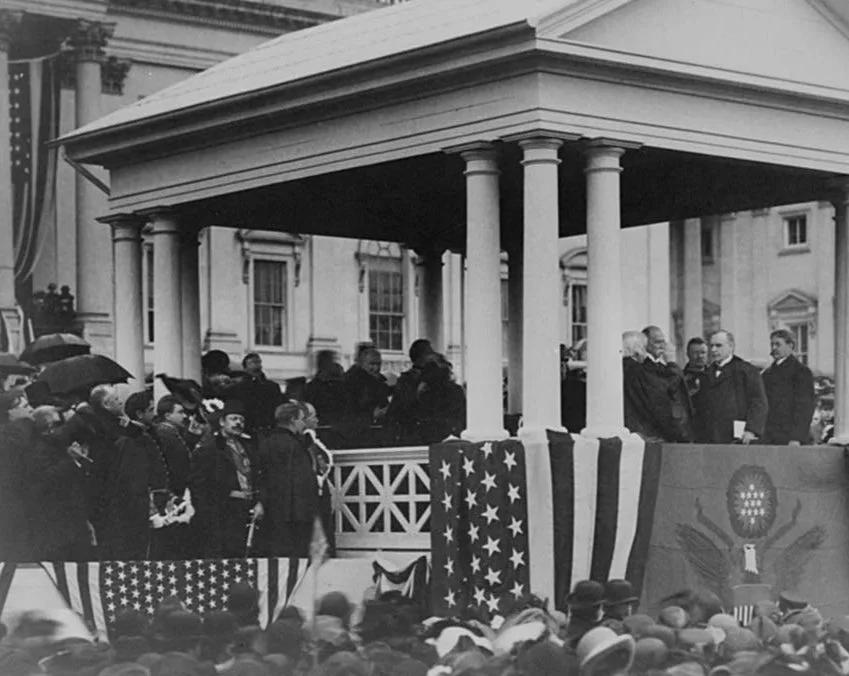
Crowds gathered at the United States Capitol in Washington, D.C., on March 4, 1901, for the inauguration of President William McKinley. A temporary platform trimmed with American flags and patriotic bunting stood outside the Capitol as government officials, military officers, and invited guests assembled for the ceremony. Thousands of spectators filled the grounds to witness the public oath of office, a tradition that had long drawn citizens to the capital.
Charleston, South Carolina. Flag-Raising Ceremony at Fort Sumter. Awaiting the Arrival of Gen. Anderson and Invited Guests to Inaugurate the Ceremony of Raising the Flag
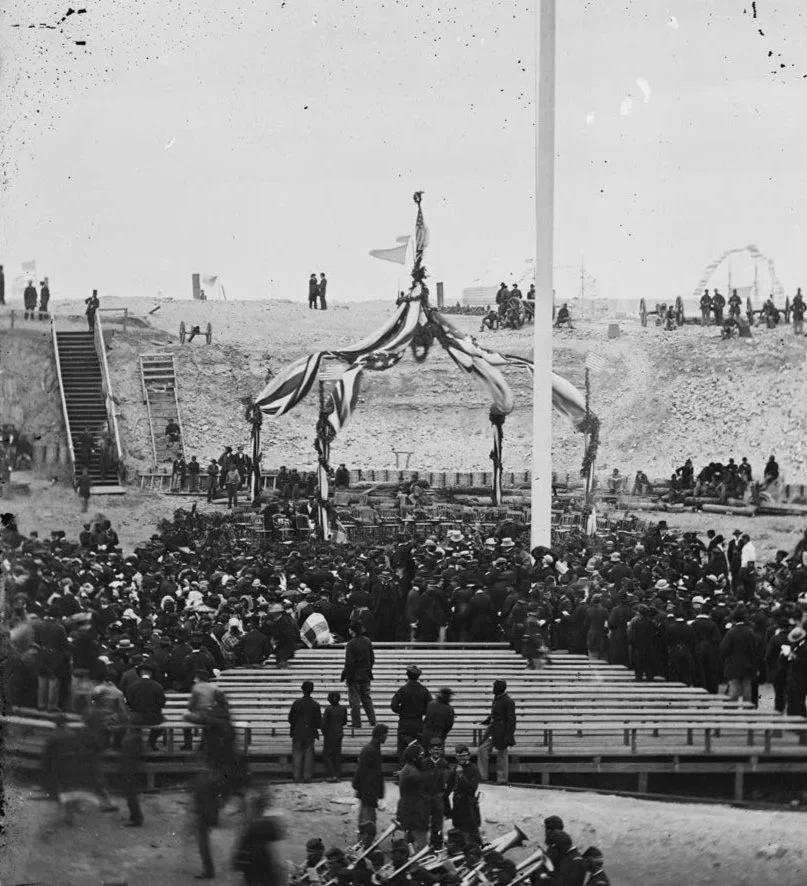
Crowds filled the interior of Fort Sumter in Charleston Harbor on April 14, 1865, waiting for the flag to be raised again over the fort where the Civil War had begun. A simple platform trimmed with bunting stood at the center, surrounded by soldiers, officials, and civilians who had come to witness the moment. Major General Robert Anderson, who surrendered the post in 1861, returned to lift the same flag that had been lowered at the start of the conflict. Four years of war had passed, and the ceremony served as a public sign that the Union had been restored.
The Crowd Clustered like Bees on the German Guns in the Place de la Concorde, Paris, while Celebrating the Signing of the Armistice with Germany
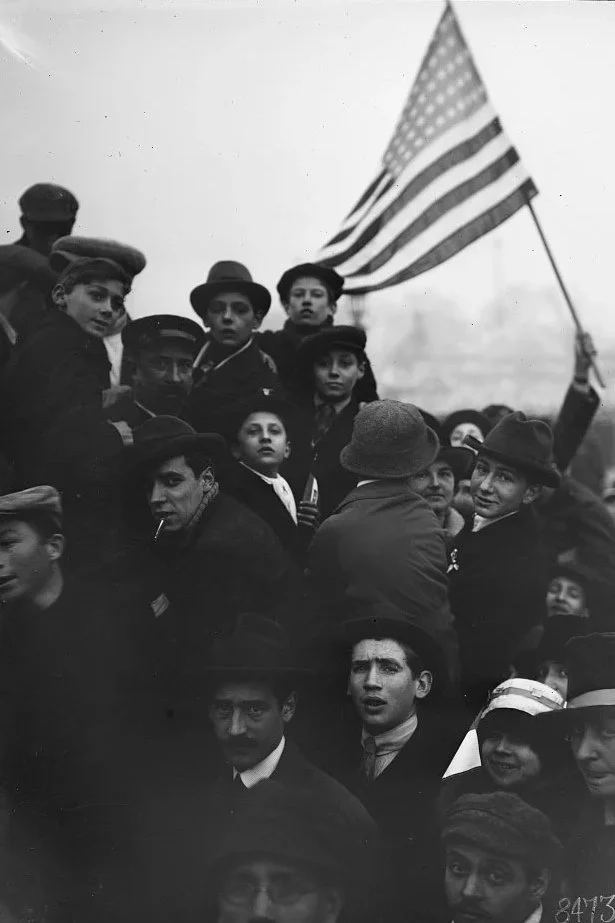
Crowds packed the Place de la Concorde in Paris as news spread that the Armistice with Germany had been signed, ending the fighting in World War I. Men and boys climbed atop captured German guns, pressing together for a view and lifting an American flag above the celebration. After four years of industrial warfare that drew in nations across the globe, the silence of the guns was met with relief and public jubilation.
Daisies Gathered for Decoration Day, May 30, 1899

On May 30, 1899, a group of students gathered daisies in a classroom decorated with American flags for Decoration Day. The flowers were meant to be placed on the graves of Civil War soldiers, a tradition that had taken root in communities across the country. By the late nineteenth century, schools played a role in marking the holiday, teaching children to remember the Union dead. More than thirty years after the war, its memory was still woven into everyday American life.
President Woodrow Wilson Speaking to a Crowd From the Back of a Train, January, 1916
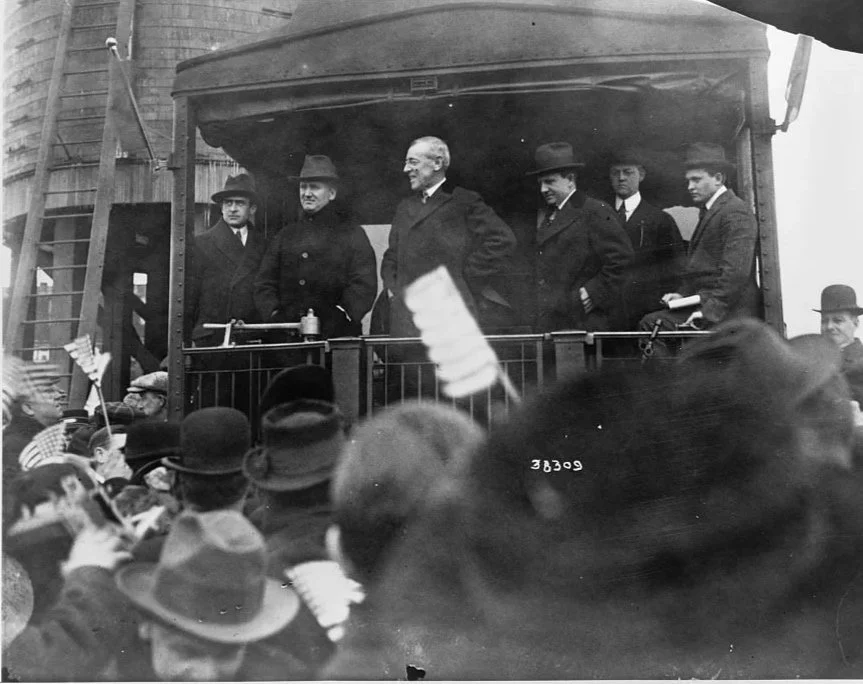
In January 1916, President Woodrow Wilson spoke from the back of his train during a cross-country tour calling for greater military preparedness. Stops in towns like Waukegan, Illinois, brought large crowds who gathered near the tracks to hear him in person. With war already raging in Europe, Wilson argued that the United States needed to strengthen its defenses, even as many Americans hoped to remain neutral. The whistle-stop tour captures a turning point, as the nation weighed its place in a conflict it would enter the following year.
Flag Flies Over PT Boat

During World War II, sailors trained aboard Navy PT boats at the motor torpedo boat center in Melville, Rhode Island. An American flag flies above the small craft as crew members stay alert on deck, scanning the sky and horizon. PT boats were fast, lightly built vessels used for patrol and surprise attacks in coastal waters after Pearl Harbor. Training focused on speed, coordination, and constant readiness, preparing young crews for long hours and sudden action at sea.
Little Red School House
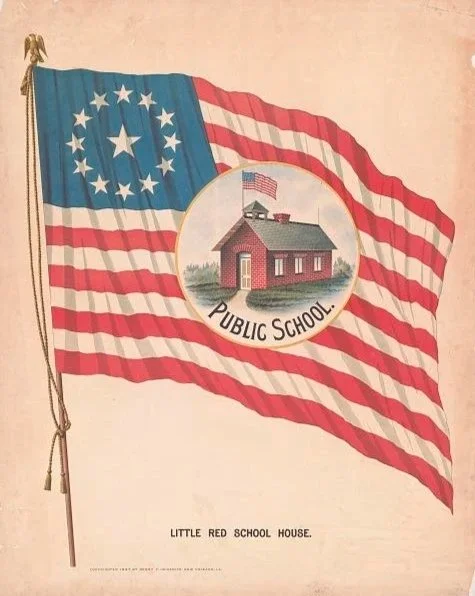
1897, Little Red School House shows the American flag with a small one-room schoolhouse set inside its field of stars. The school flies its own flag, tying public education directly to national pride. At the end of the nineteenth century, the common school was widely viewed as the place where young Americans learned not only reading and arithmetic, but also civic duty.
Geraldine Farrar and Secretary McAdoo Selling War Bonds on Flag Draped Platform
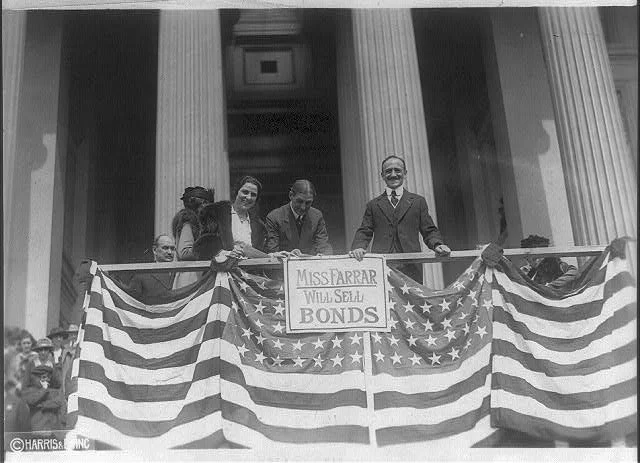
Around 1918, opera singer Geraldine Farrar joined Treasury Secretary William G. McAdoo on a platform draped in American flags to help sell war bonds during World War I. A sign announcing that Farrar would sell bonds made clear that her name was part of the draw. The government regularly called on well-known performers to attract crowds and encourage people to invest in the war effort.
Liberty Loan Crowds
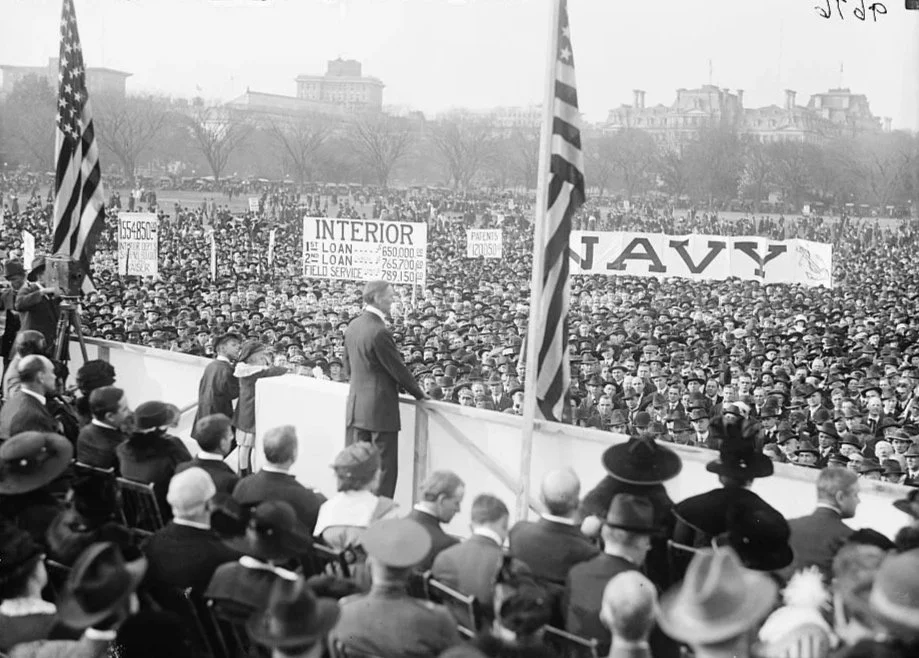
In 1917, thousands filled the grounds in Washington, D.C., for a Liberty Loan rally held to raise money for the First World War. From the platform, a federal official—likely Treasury Secretary William G. McAdoo—spoke to the crowd about buying war bonds to support American troops overseas. Large signs tracked loan totals, reminding everyone of the scale of the effort.
Jimmy Carter and Mayor Richard J. Daley Ride in a Torchlight Parade During a Campaign Stop in Chicago, Illinois
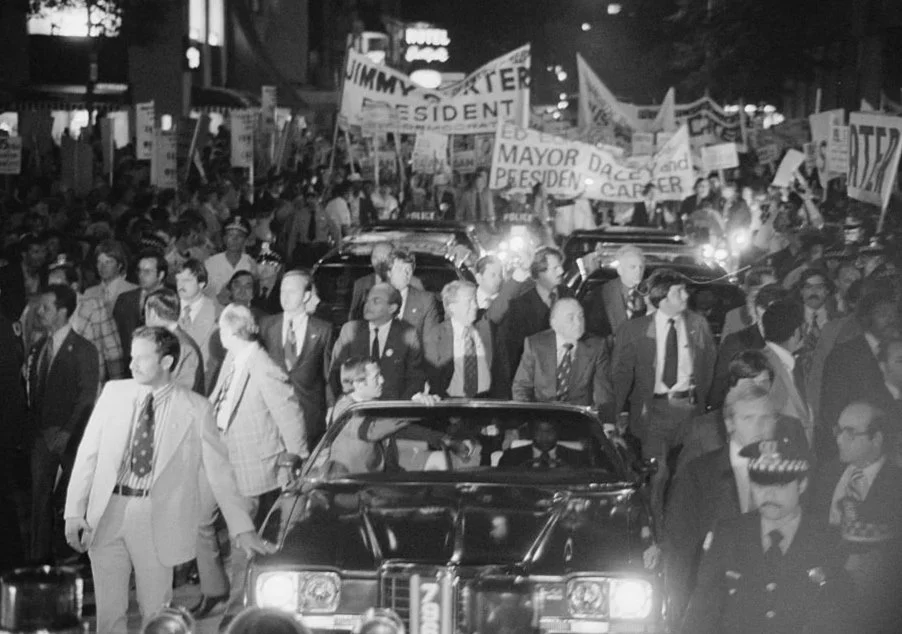
On September 9, 1976, Jimmy Carter rode through downtown Chicago in a torchlight parade during a campaign stop, with Mayor Richard J. Daley at his side. Crowds packed the streets, holding signs and banners as the motorcade made its way through the city at night. Carter, then the former governor of Georgia, was pushing hard in major cities as he worked to win the presidency.
Flag Factory
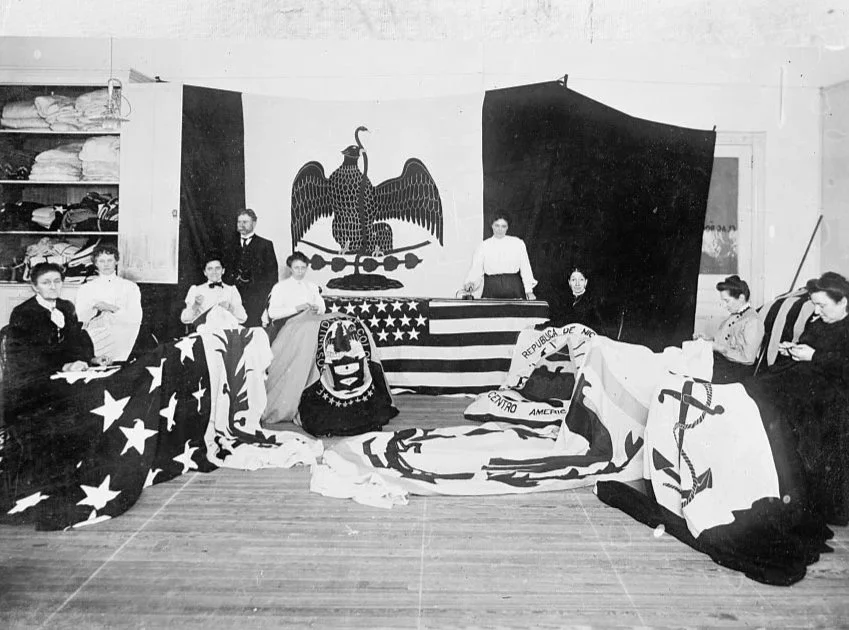
1913 workers in a flag factory cutting, stitching, and assembling large banners by hand. Finished and half-completed flags are spread across the floor and draped over tables, including American designs and others made for foreign governments. Shops like this supplied the flags seen at parades, public buildings, and civic events across the country. It’s a straightforward look at the craft and labor behind the symbols that filled American streets in the early twentieth century.
Abraham Lincoln, "That a government of the people shall not perish from the earth"
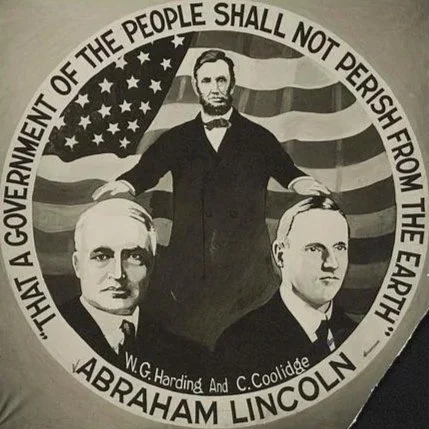
During the 1920 presidential race, this campaign image shows Abraham Lincoln standing before the American flag, his hands raised above Warren G. Harding and Calvin Coolidge. Around them is a line from the Gettysburg Address: “that a government of the people shall not perish from the earth.” The message is clear. By placing their ticket alongside Lincoln’s likeness and words, Republicans tied Harding and Coolidge to the legacy of the Union and the idea of steady leadership at a time when the country was adjusting to peace after World War I.
ARMY, U.S. Return of Washington, D.C. Soldiers
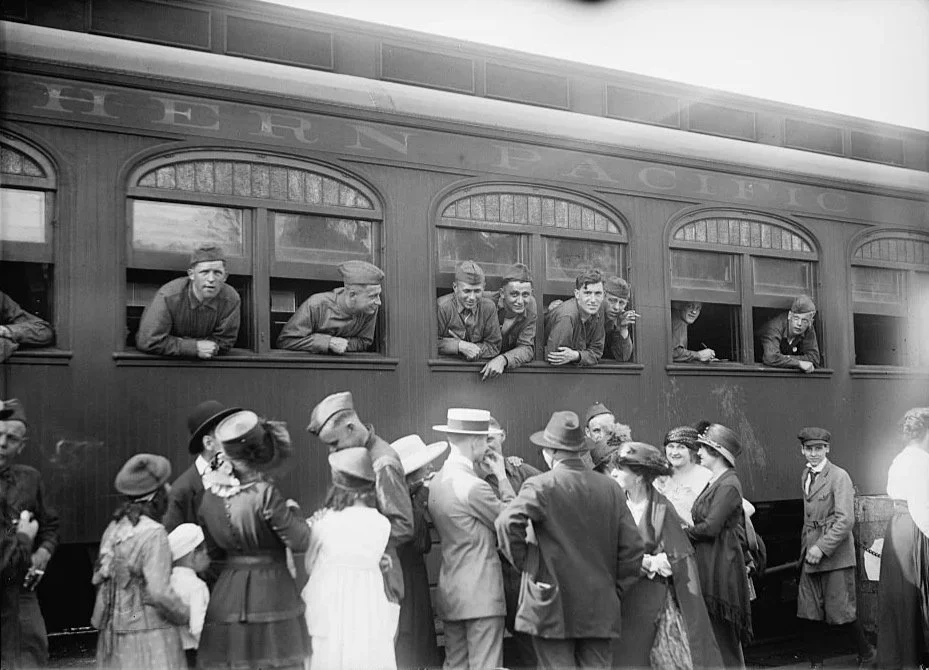
Soldiers arriving home from World War I lean out of a railcar window, scanning the crowd below. Friends and family wait alongside the train, dressed for the occasion, ready to welcome them back. Across the country, scenes like this unfolded as units returned from Europe after the Armistice. Train stations became gathering points where communities met the men who had served overseas and watched them step back into civilian life.
Detroit, Michigan. Ford Workers Carrying American Flag and Union Banners in the Labor Day Parade
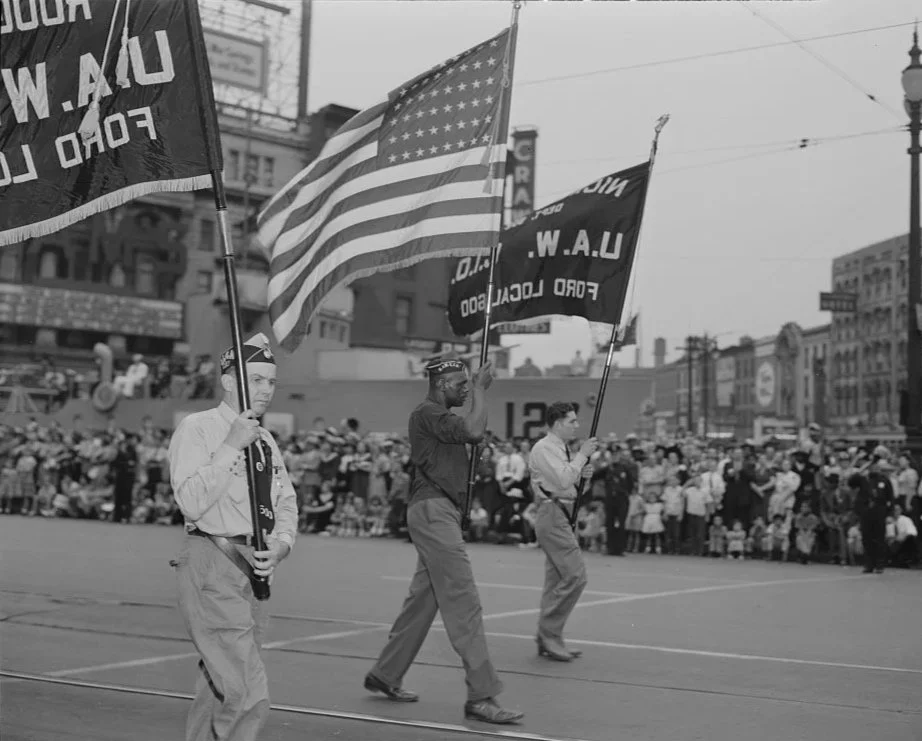
September 1942, Ford workers took to the streets of Detroit for the Labor Day parade, carrying the American flag along with United Auto Workers banners. The city was deep into wartime production, with auto plants turning out tanks, aircraft engines, and other military equipment. Organized labor had become a powerful presence in the industry, representing thousands of workers who kept the assembly lines moving.
General Pershing Making a Memorial Day Address, 1919
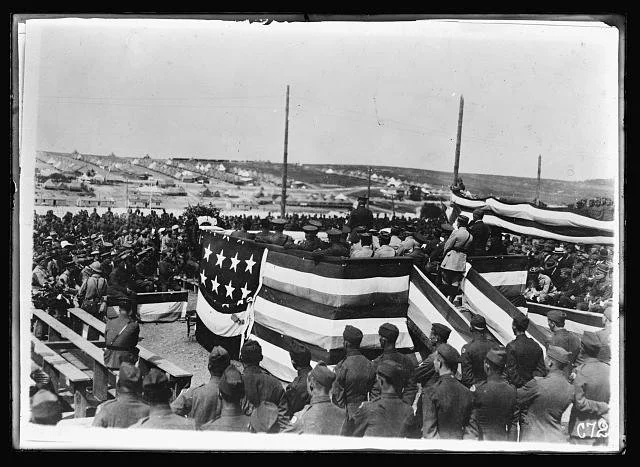
June 1919, General John J. Pershing spoke at a Memorial Day ceremony in Romagne, France, before American troops of the A.E.F. and French soldiers. The reviewing stand is covered in American flags, and rows of servicemen stand at attention across the hillside. The gathering came just months after the Armistice, near ground where many had fallen in the Meuse-Argonne offensive. As the war ended and units waited to head home, ceremonies like this honored the dead and reminded those present of the scale and sacrifice of America’s involvement in the First World War.
Civil War Veteran and Amputee Henry A. Seaverns
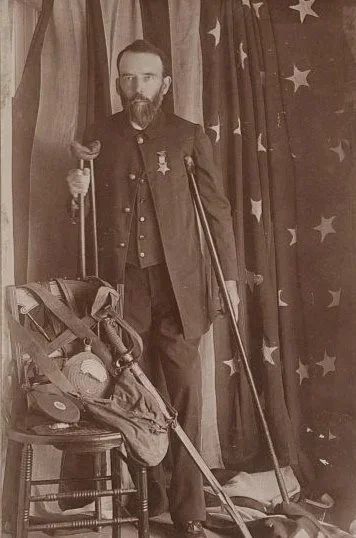
Portrait showing Civil War veteran Henry A. Seaverns of the 11th and 39th Massachusetts Infantry Regiments. He stands in uniform in front of an American flag, steady on crutches, the result of wounds suffered during the war. His sword, canteen, and other equipment are set beside him, simple reminders of his time in the ranks. Like many Union veterans, Seaverns remained involved in postwar organizations that preserved the memory of the conflict and the cause for which they fought.
Parade. Fourth of July, Vale, Oregon
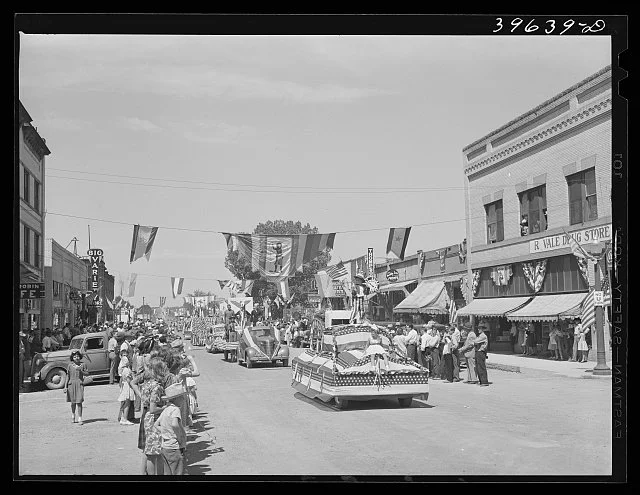
In July 1941, the town of Vale, Oregon marked the Fourth of July with a patriotic parade down its main street. Photographed by Russell Lee, it shows American flags strung overhead, and residents gathered along the sidewalks in front of local storefronts. Just months before the United States entered World War II, communities like this were already expressing national pride in public celebrations.
Surrender of Cornwall
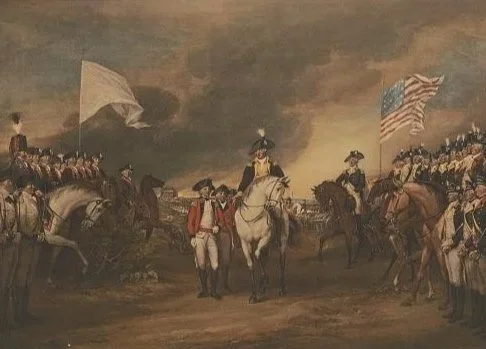
The surrender of British General Charles Cornwallis at Yorktown in 1781, the final major battle of the American Revolution. American and French troops stand in formation as the British formally yield, marking the collapse of Britain’s campaign in the colonies. General George Washington’s leadership is central to the scene, symbolizing the unity that brought the war to a close.